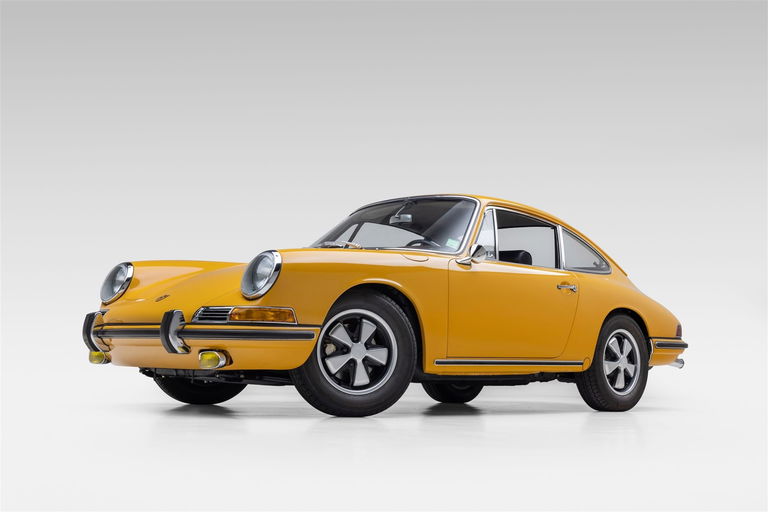
"PP," as it is affectionately known, stands for Plastic Porsche. It is regularly driven with red license plates and is highly respected. There are many excellent cars in the form of Porsche 911s in the 2-liter class, not in the GTP1 or for road use. Please feel free to contact me if you have any further questions. Building such a car now costs upwards of approximately $300,000.
It all started with a test report. In it, Porsche employee Rolf Wütherich summarized the goal of the 911 R project in the fall of 1966: "The aim is to build a vehicle that is superior to our current competitors in terms of power-to-weight ratio." The technician, who became famous as James Dean's racing mechanic, conscientiously performed the necessary calculations: with a curb weight of 800 kg and 210 hp engine power, the power-to-weight ratio was less than 4 kg per hp – 1.5 kg below the competition at the time. With such a vehicle, Porsche could once again dominate GT racing, just as the 356 with Carrera engine had done a decade earlier. It was a major undertaking, as the 911's entry into motorsport had been rather hesitant at first. The factory entry of a slightly modified 911 in the 1965 Monte Carlo Rally was initially followed only by private entries in GT races. However, the successes of privateer Eberhard Mahle in the European Hillclimb Championship in particular led to the idea of developing a purebred racing version of the 911 in Zuffenhausen.
In October 1966, the first lightweight prototype of the 911 R (R = Racing) was built and tested on the new skid pad in Weissach and on the race track in Hockenheim. The performance figures measured during these tests demonstrated the great potential of the idea: With a lap time of 2:17.5 minutes, the 911 R was only 12 seconds slower than the absolute best time set by a Porsche 906 Carrera 6. This lap time is an excellent result for a GT car, as the 906 was a genuine Group 4 racing car in the World Sportscar Championship.
In addition to the low vehicle weight, it is the engine of the 911 R that ensures its outstanding performance. It is powered by a six-cylinder boxer engine, which is very similar to the one used in the Porsche 906 Carrera 6. Equipped with dual ignition, titanium connecting rods, and large triple carburetors, the 901/22 racing engine delivers 210 hp at 8,000 rpm. This enables the 911 R to accelerate from zero to 100 km/h in 5.9 seconds and complete the standing kilometer in just 24.2 seconds – one second faster than a Porsche 904 Carrera GTS and a full 5 seconds ahead of an Alfa Romeo GTA.
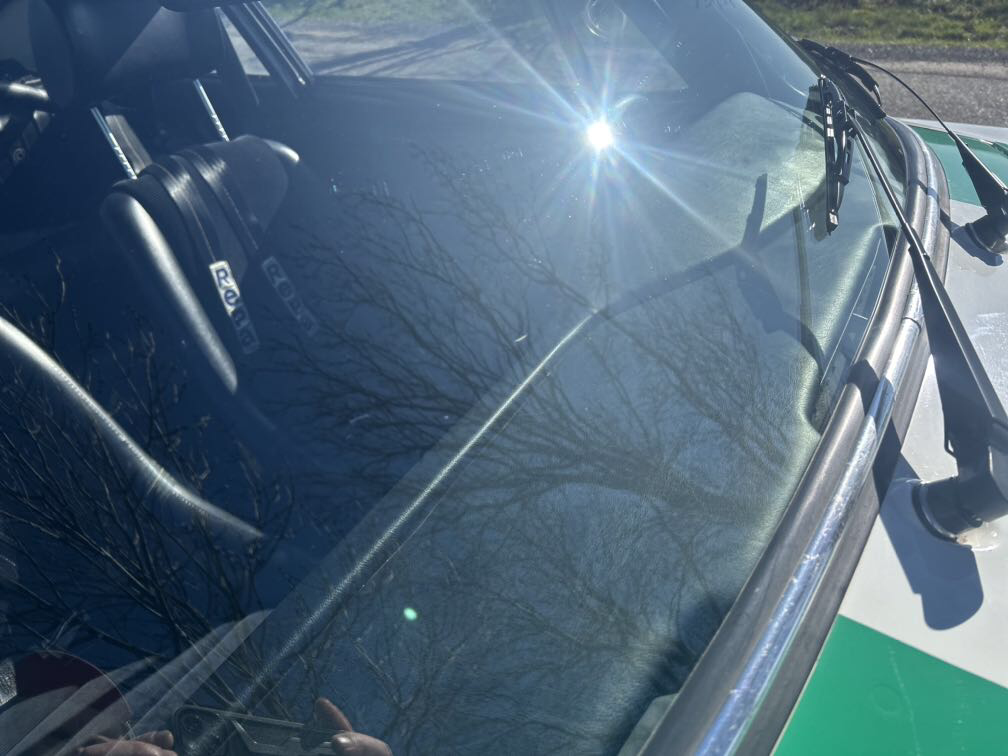
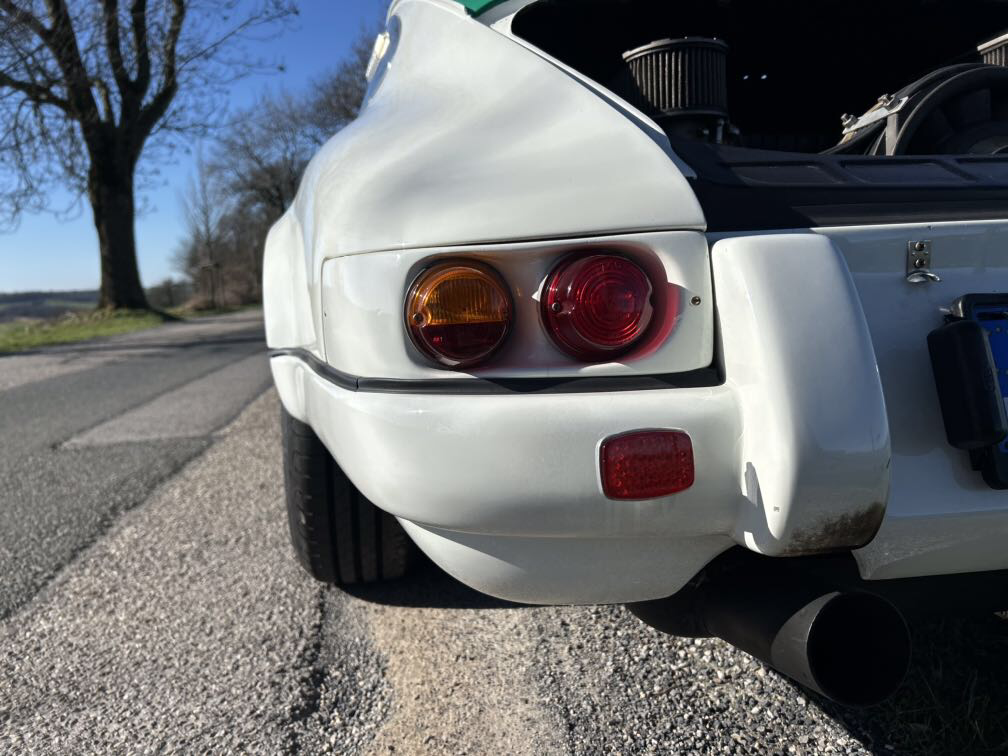
In 1967, four prototypes of the 911 R were built, exploiting all the possibilities of the homologation formula for motorsport. In line with the maxim of maximum lightweight construction, the hood, front fenders, doors, and bumpers were made of glass-fiber-reinforced plastic. These GRP parts were manufactured by the Stuttgart-based company Karl Baur. The weight reduction program affected almost all components: the windshields were made of 4 mm thin glass, the other windows of 2 mm thick Plexiglas. Anything that was not absolutely necessary was omitted. Purism in its purest form. In the emptied interior, two of the five instruments, the ashtray and cigarette lighter, and the passenger sun visor have been removed. The crank mechanism for the side windows has also been dispensed with, with simple leather straps taking over this function. Compared to a standard 911 S – which, at 1030 kg, is anything but a heavyweight – the total weight reduction amounts to 230 kg.
However, Porsche is cautious when it comes to deciding on the number of units to be produced for the first genuine racing 911. With a calculated sales price of DM 45,000, a 911 R is almost twice as expensive as a regular 911 S. In view of the economic downturn that began in the mid-1960s, the 500 vehicles required for GT homologation are a long way off. In May 1967, Porsche's management therefore decided to produce only 19 Type 911 R vehicles. Fifteen of these were intended for sale to private drivers, while the remaining four were to remain at the factory for motorsport use.
Given that homologation as a regular Gran Turismo was now impossible, the factory team was left with only the somewhat exotic 2-liter GT prototype class (GTP) to compete in. The 911 R made its racing debut in July 1967 at the Circuito del Mugello, which was still counted as a World Championship race that year. Behind two Porsche 910s, drivers Vic Elford and Gijs van Lennep took an excellent third place overall in the 911 R. Not only did they leave the entire Alfa fleet behind, they also relegated a Ford GT40 Mk III to fourth place. Hans Herrmann, Vic Elford, and Jochen Neerpasch competed in the 1967 Marathon de la Route endurance race. After 84 hours at the Nürburgring, their 911 R, equipped with a semi-automatic Sportomatic transmission, took the victory. Gerhard Mitter also took first place in the sports car class up to 2 liters in September 1967 at the "ADAC Bergpreis Schwäbische Alb." Further appearances in rallying followed. Vic Elford won the 1967 Rallye Coupe des Alpes, the 911 R repeated its podium finish at Mugello in 1968, and in 1969 Gérard Larrousse took first place in the Rallye Neige et Glace. In the fall, Larrousse secured another overall victory in the Tour de Corse. First place in the 1969 Tour de France, also with Gérard Larrousse, became the most important racing success of a 911 R.









 1965
1965 
 1968
1968 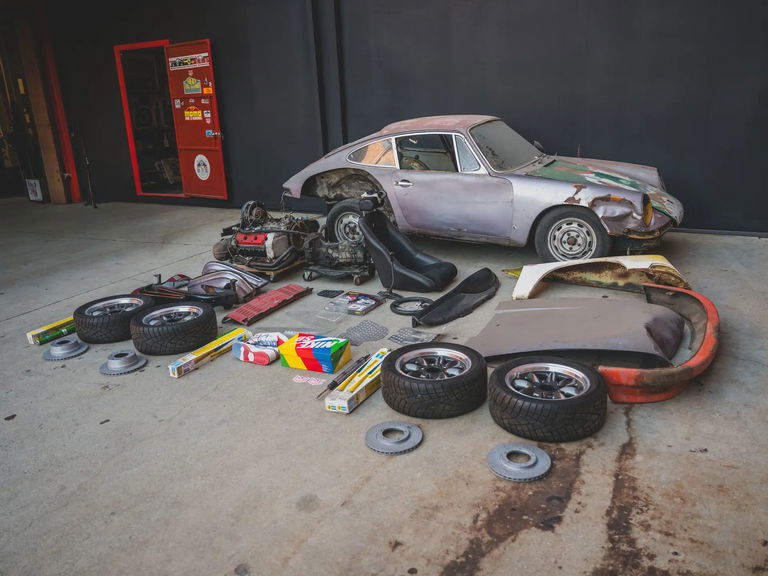
 1968
1968