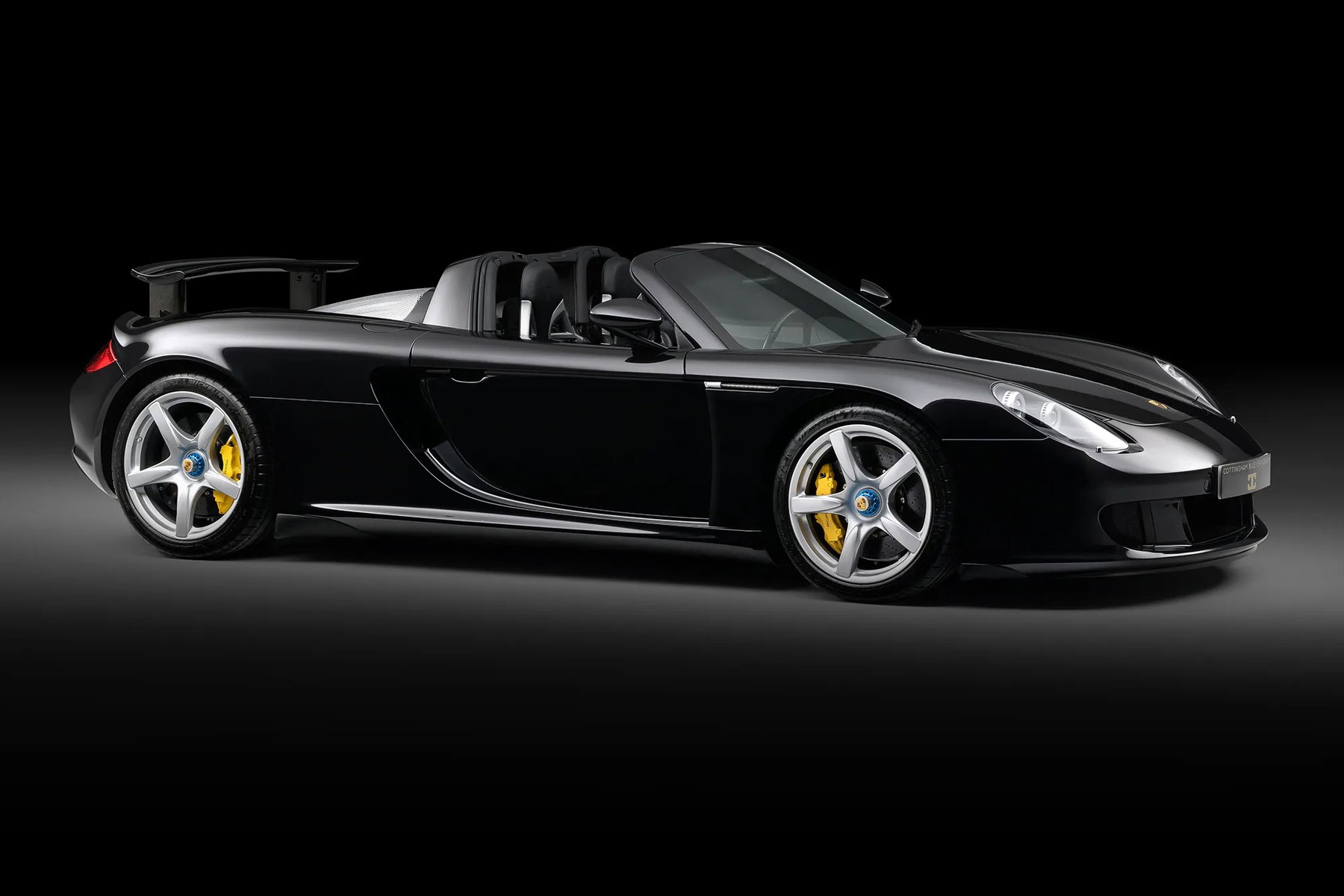
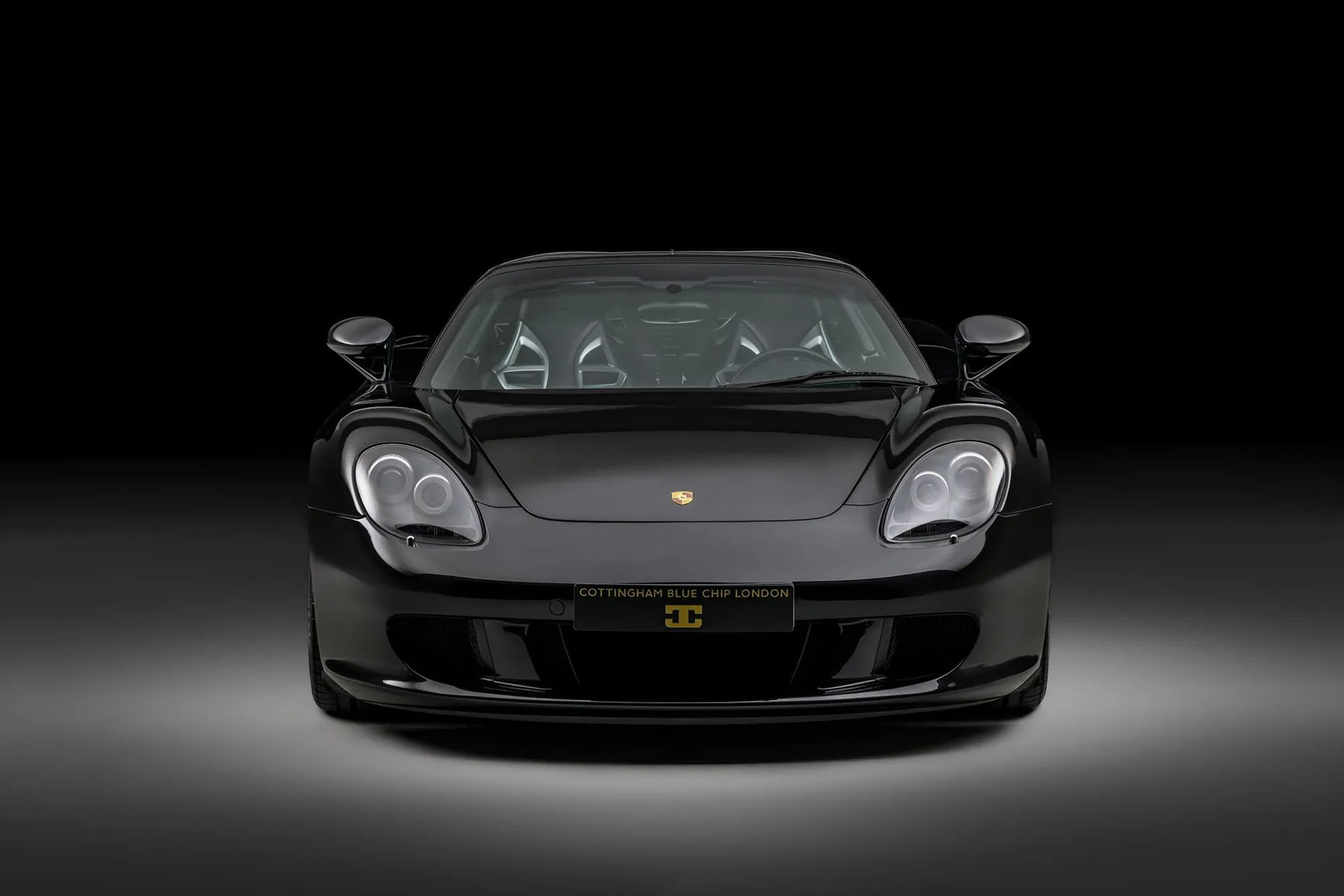
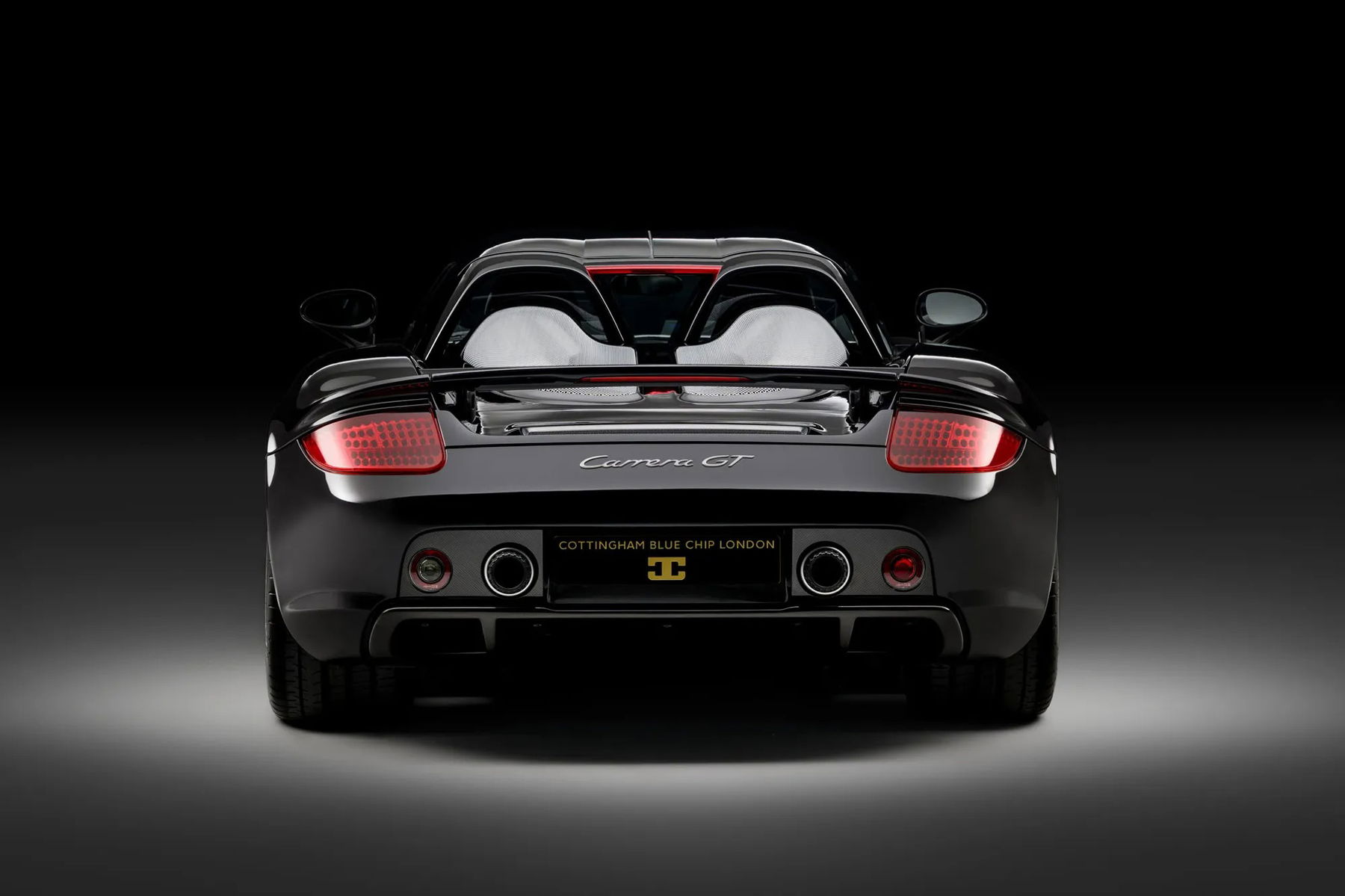
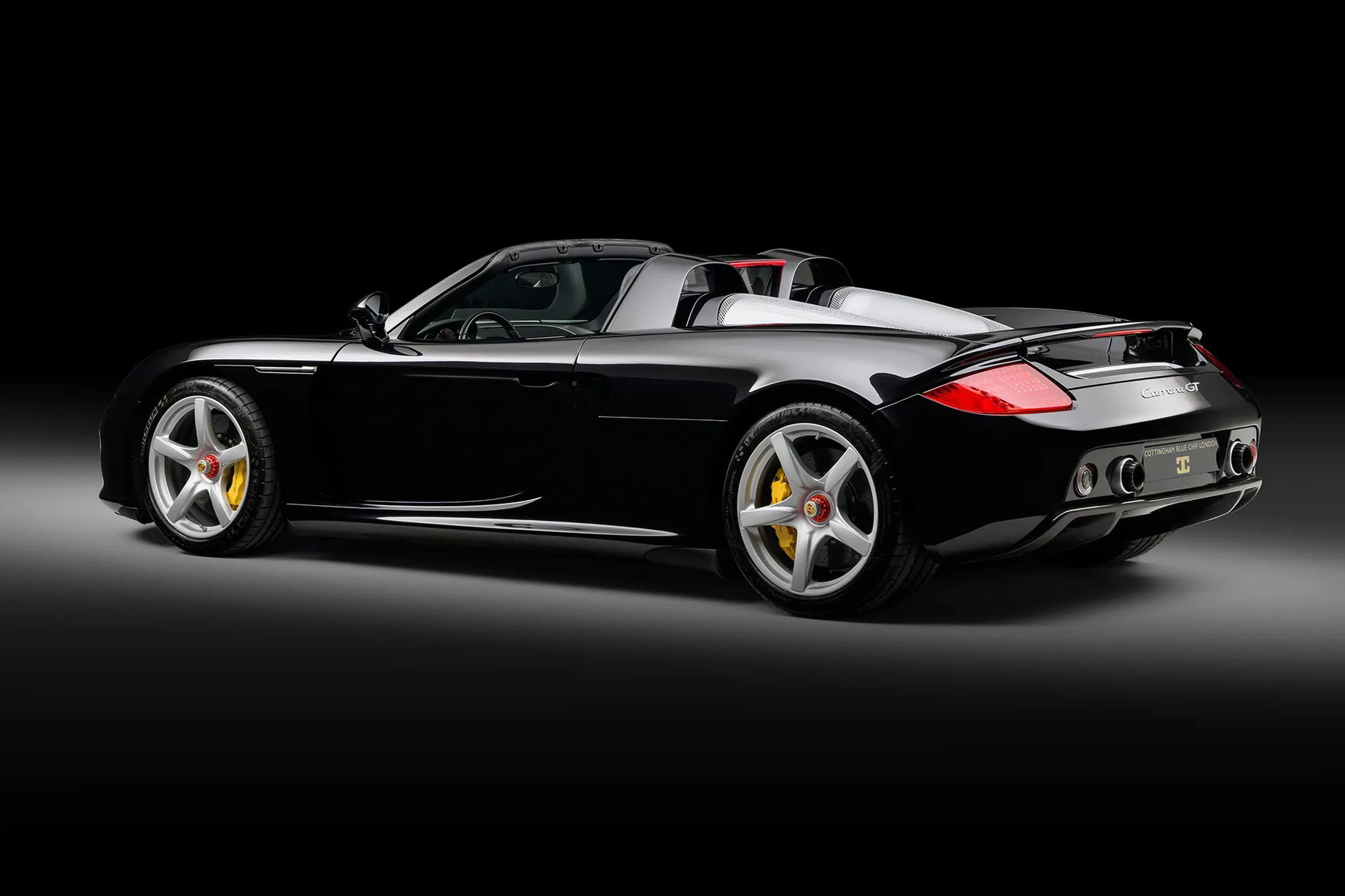
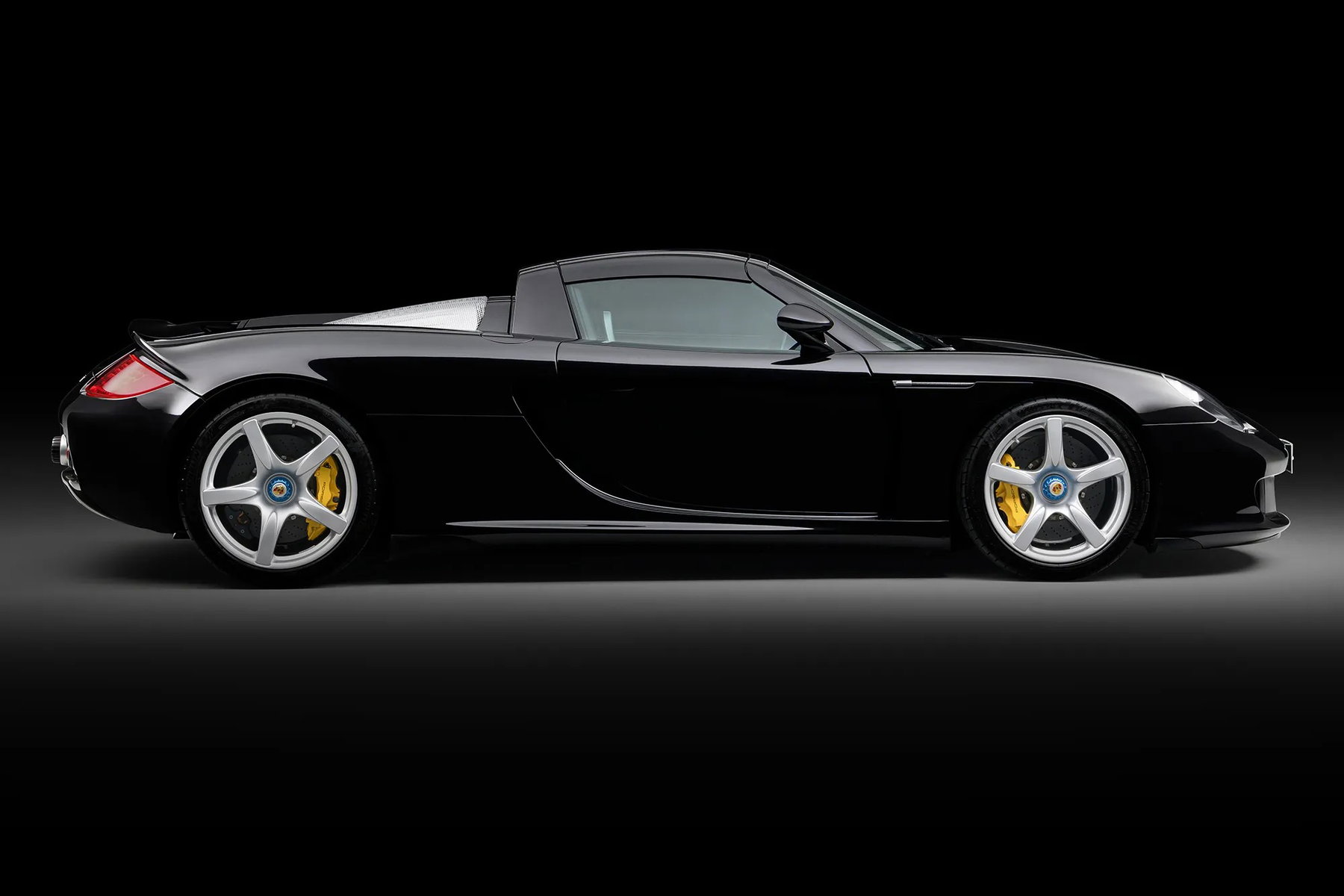
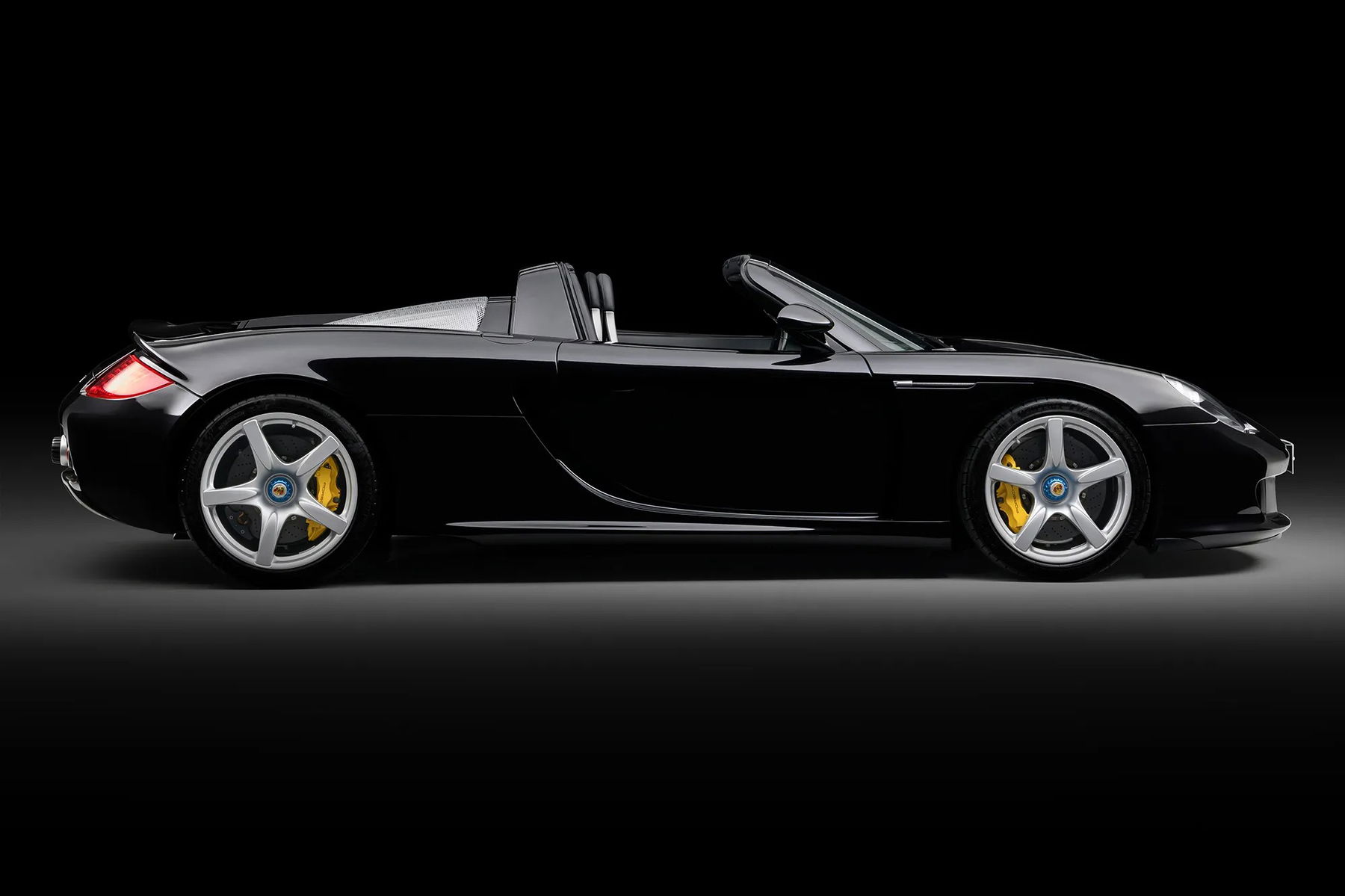
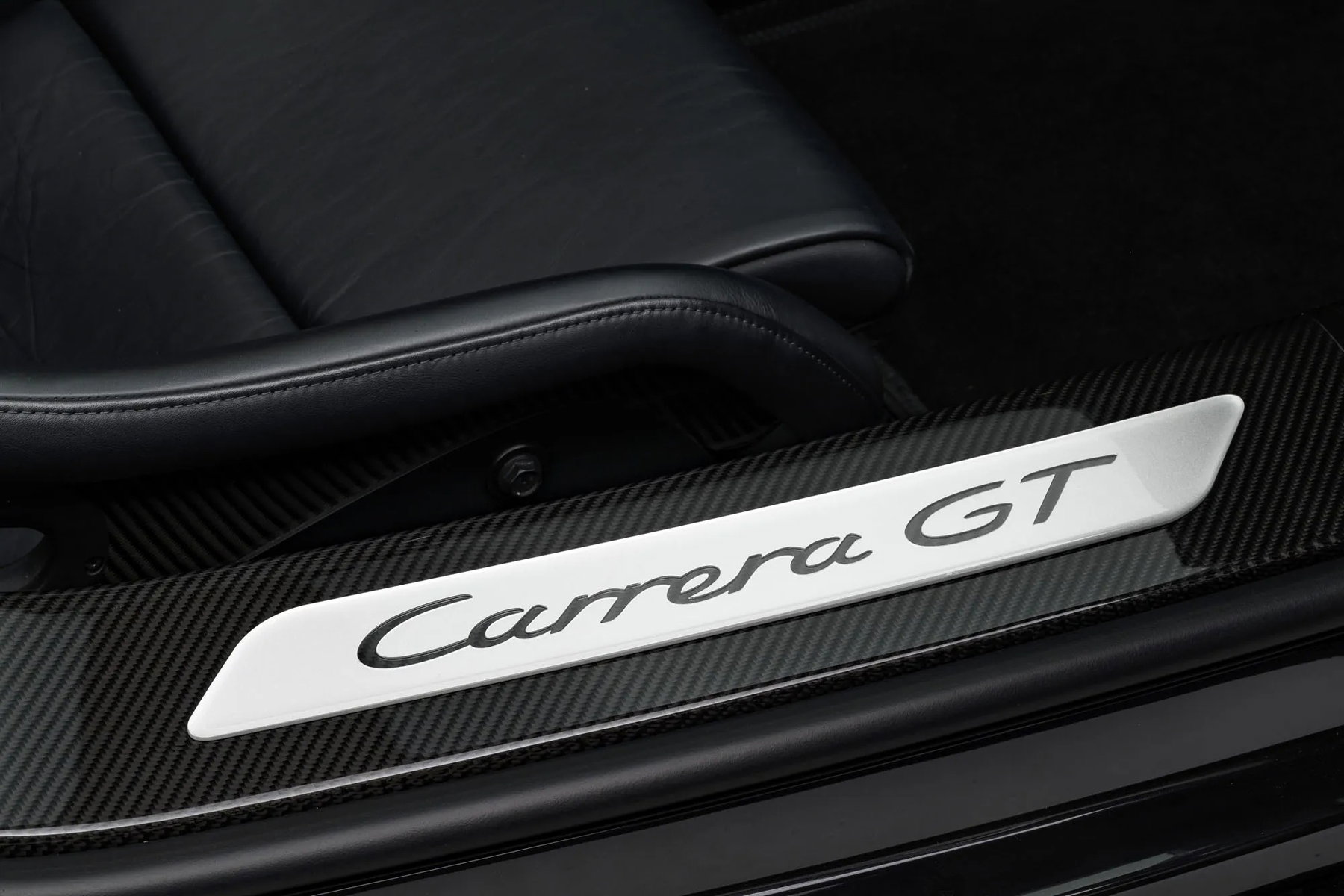
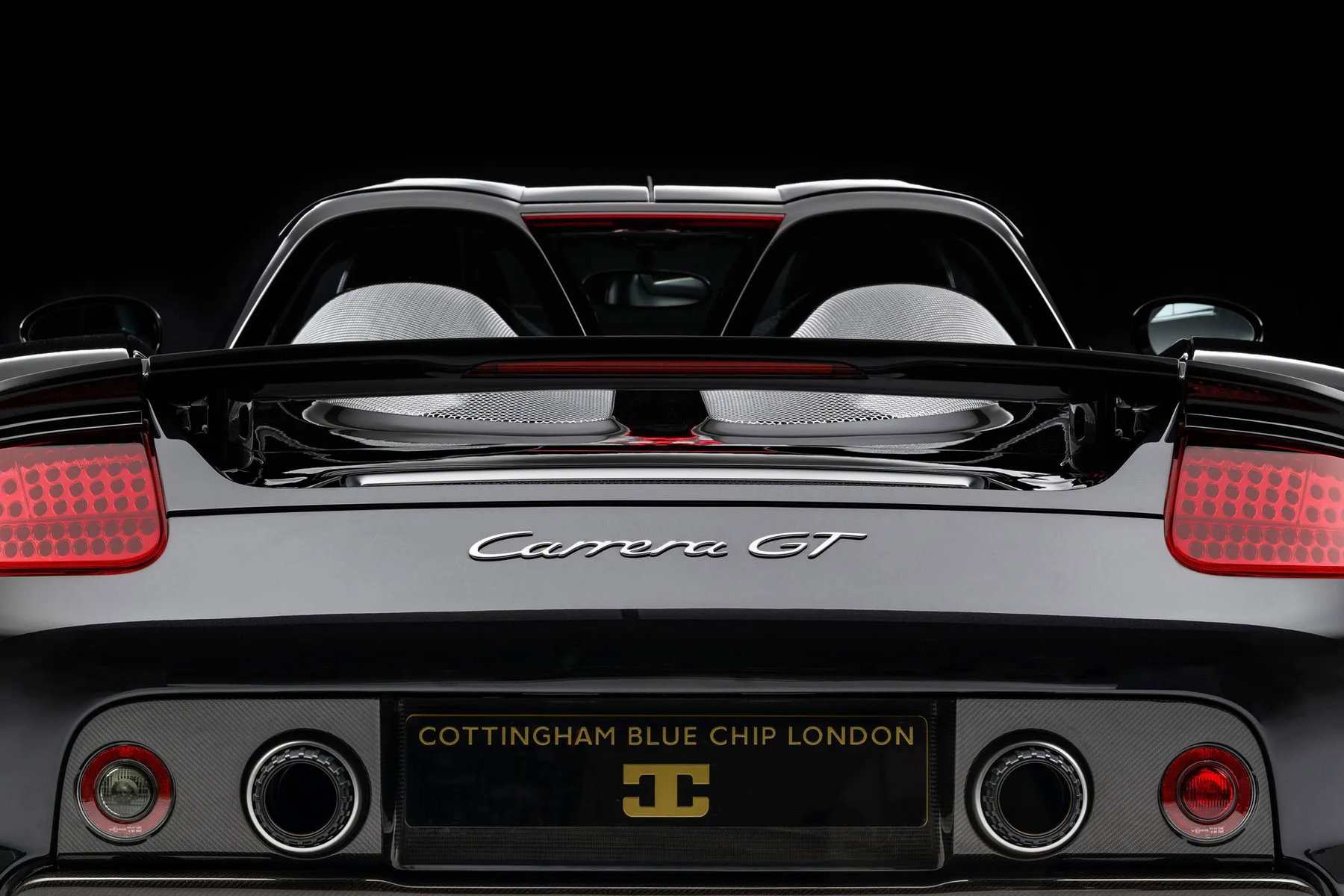
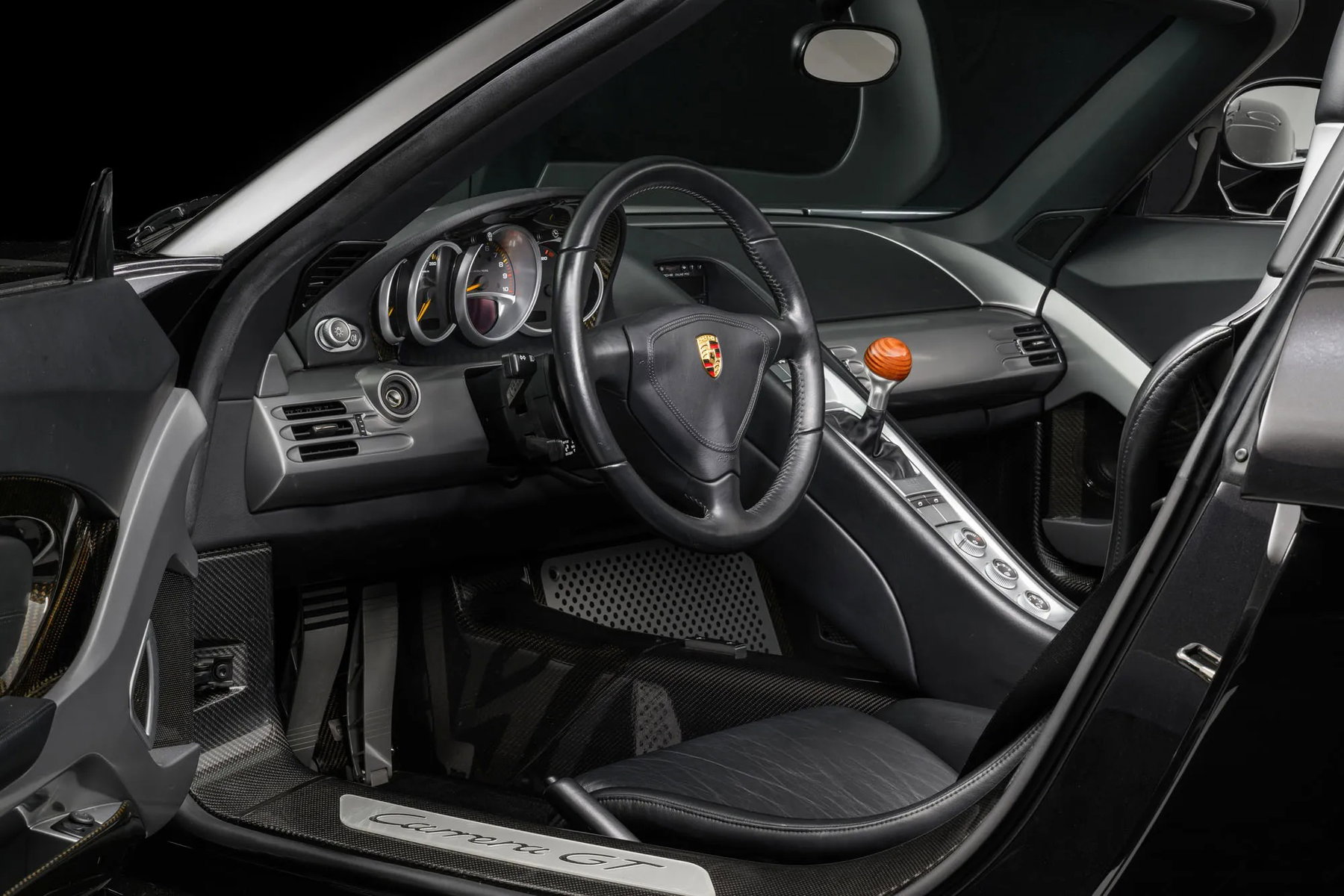
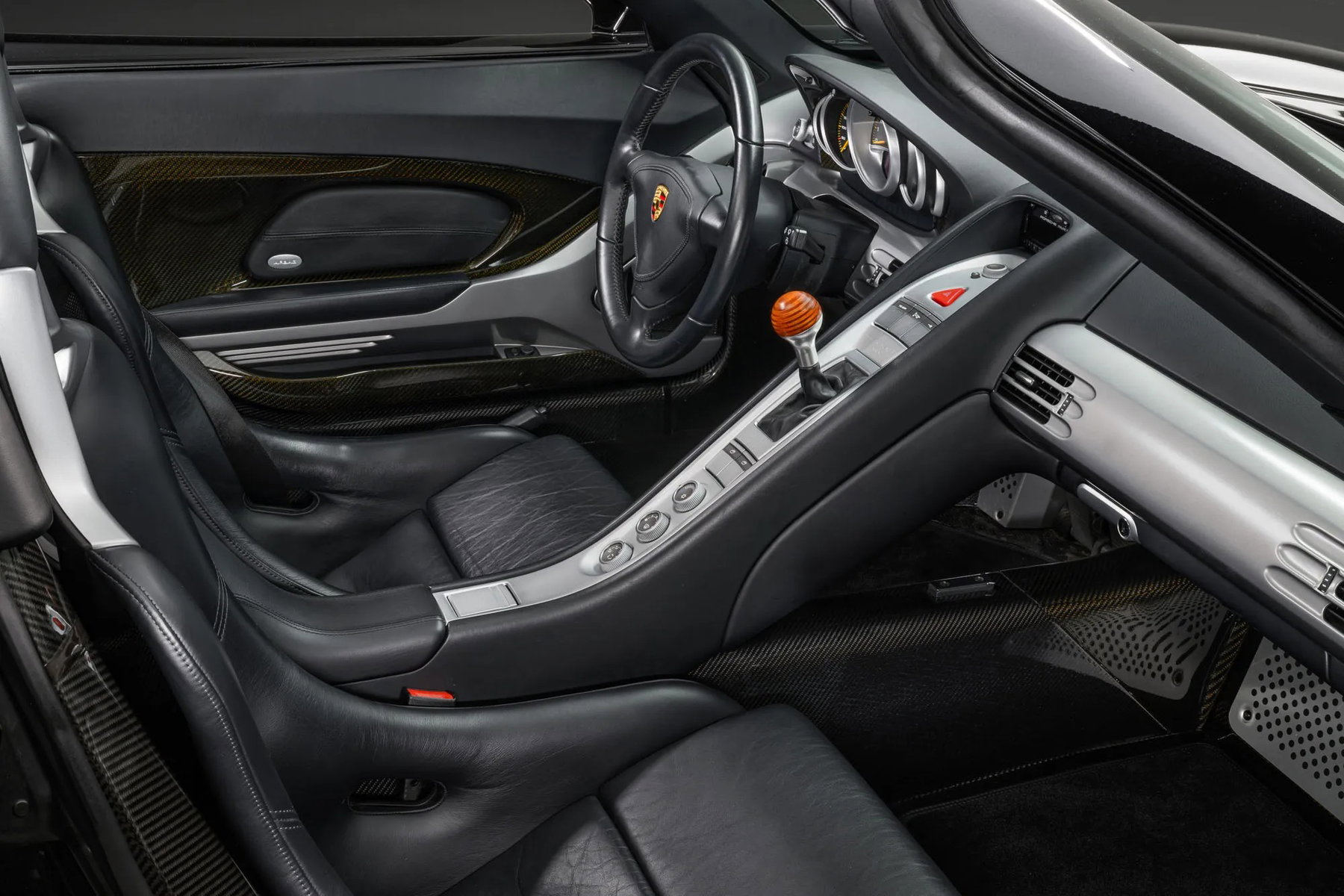
The story of the Porsche Carrera GT starts in the early 1990s. Porsche had designed a 3.5 litre V10 for the Footwork Formula One team, but Footwork pulled out of the partnership leaving Porsche with an engine but no car. After the decision to use the engine in a future prototype, Porsche engineers further developed the V10 with a view to racing it at Le Mans. At the end of the 90s however, Porsche decided to invest their money in producing a 4×4 (the Cayenne) and so the Le Mans project was cancelled. Again, Porsche was left with a V10 that had years of development behind it but no car in which to put it.
After success at Le Mans with the 911 GT1 and LMP1-98, Porsche planned to build a new Le Mans prototype for 1999 with a tradtional Porsche flat-6 – but it was then decided the still born V10 would make a more suitable development powerplant and the chassis was redesigned to accomodate this engine. Ultimately commercial considerations concerning the requirement for an allocation of resources to develop the forthcoming Cayenne SUV thwarted the development of the racecar. It was not untill 2000 at the Paris show that Porsche showed the Carrera GT concept mainly as an attention gathering exercise with 3.5 litre V10 enlarged to 5.7 litre V10. Either way, it worked in that there was real interest in the V10 hypercar and an encouraging order book for the Cayenne meant the car was placed in limited production to be made at the new Porsche manufacturing facility in Leipzig. Porsche started a production run of Carrera GTs in 2004, the first Carrera GT went on sale in the US on January 31, 2004.
This naturally aspirated hypercar was a triumph and by the time production was was finshed in May 2006 1270 had been sold – all in LHD.
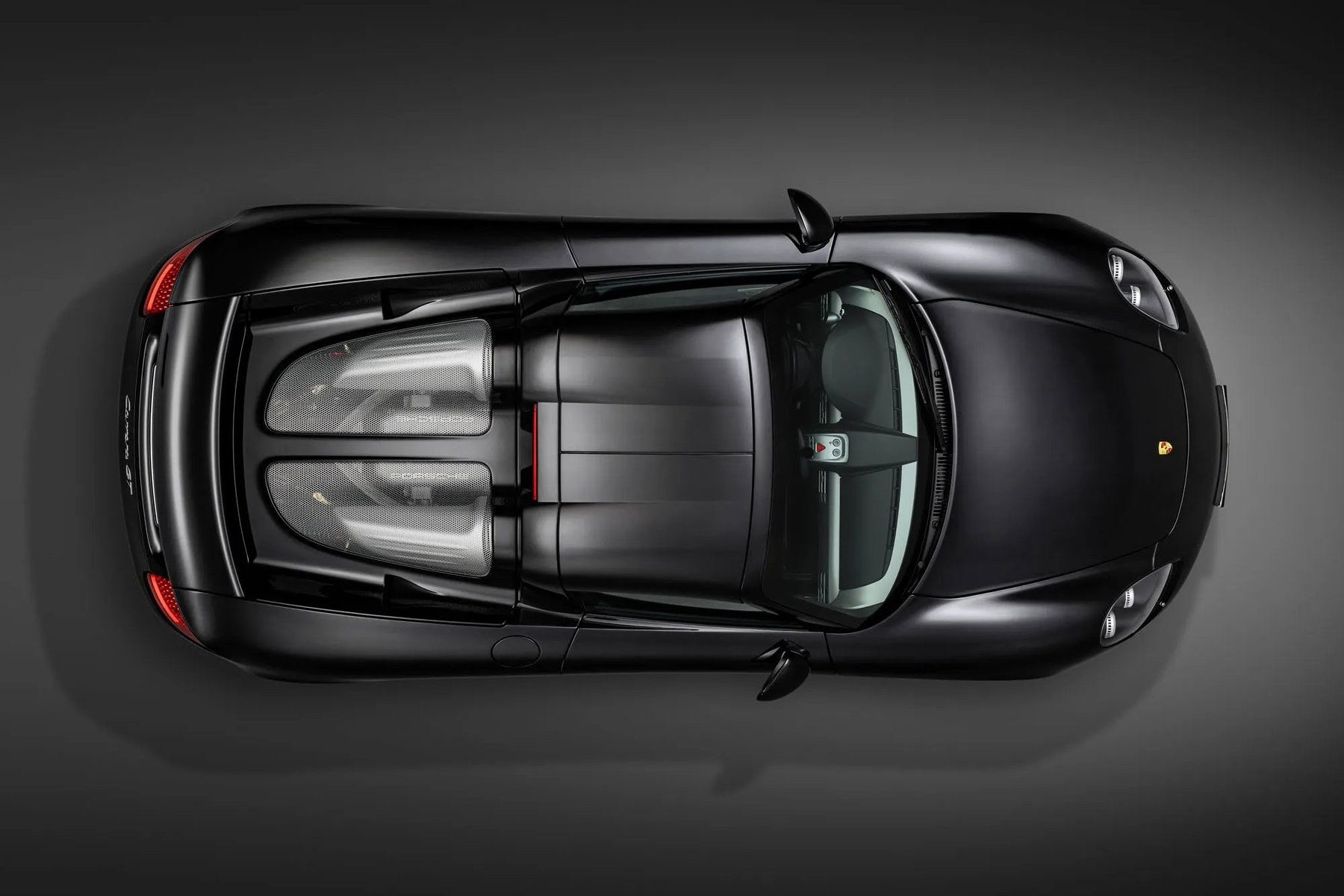
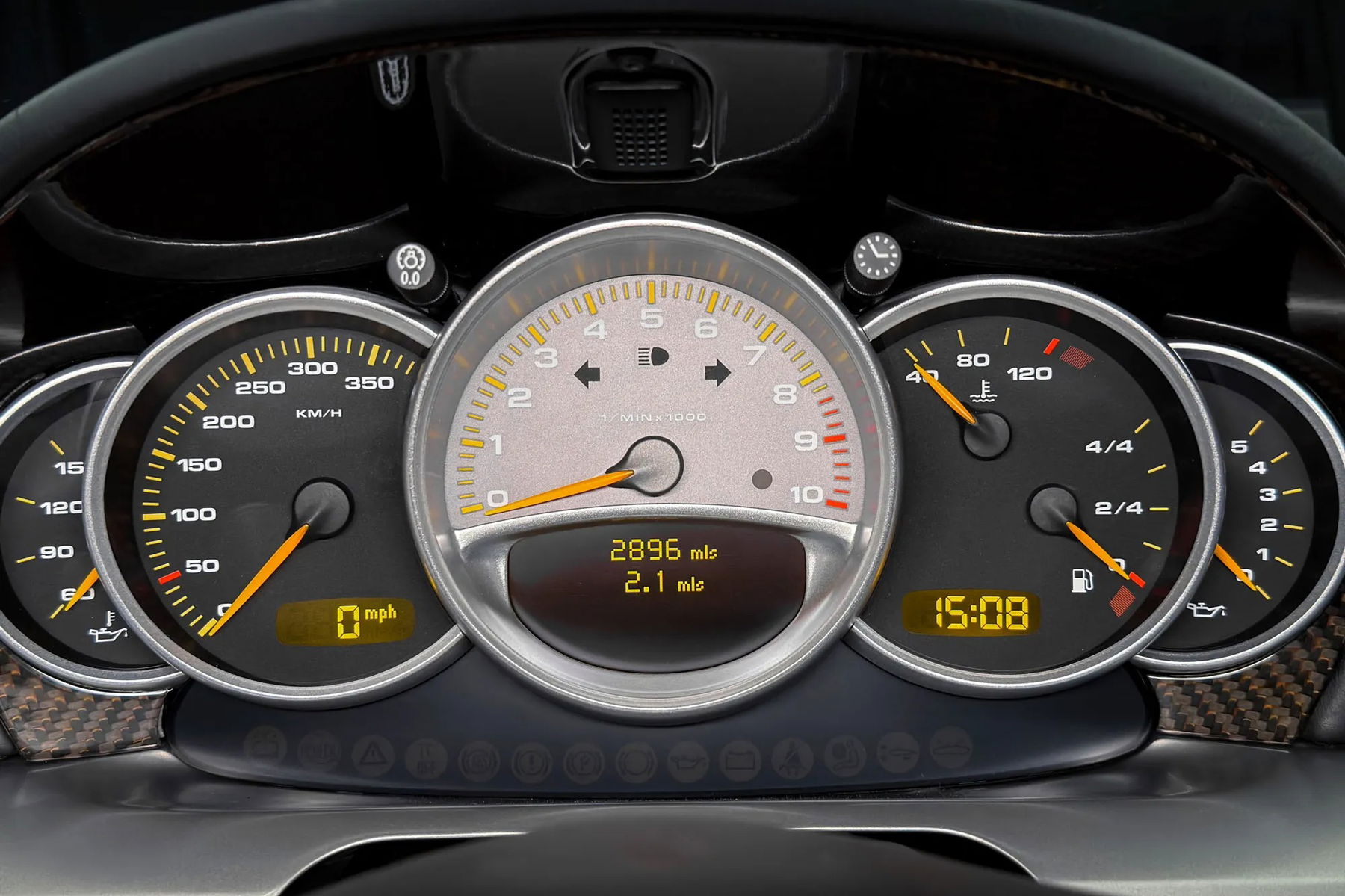
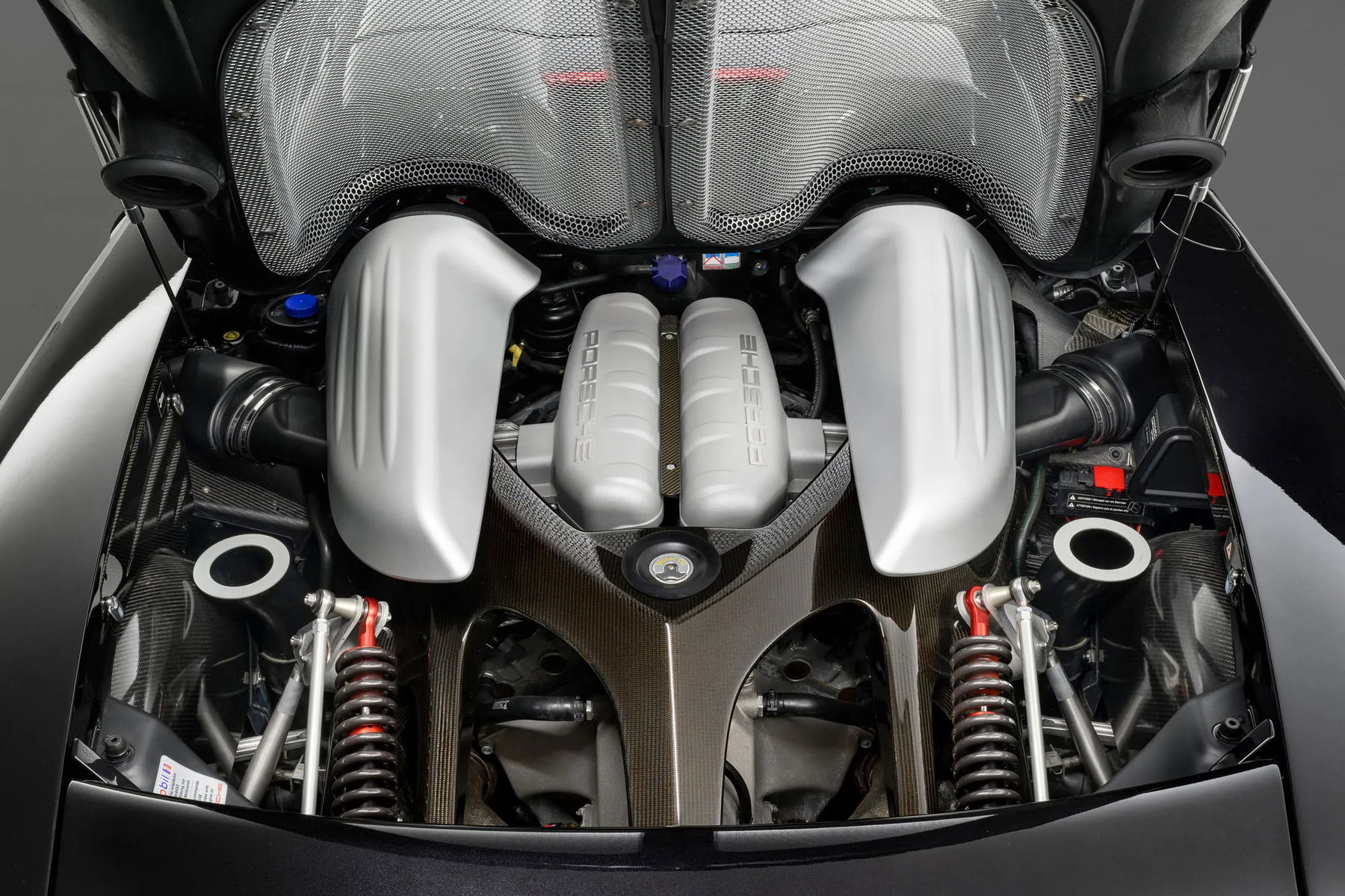
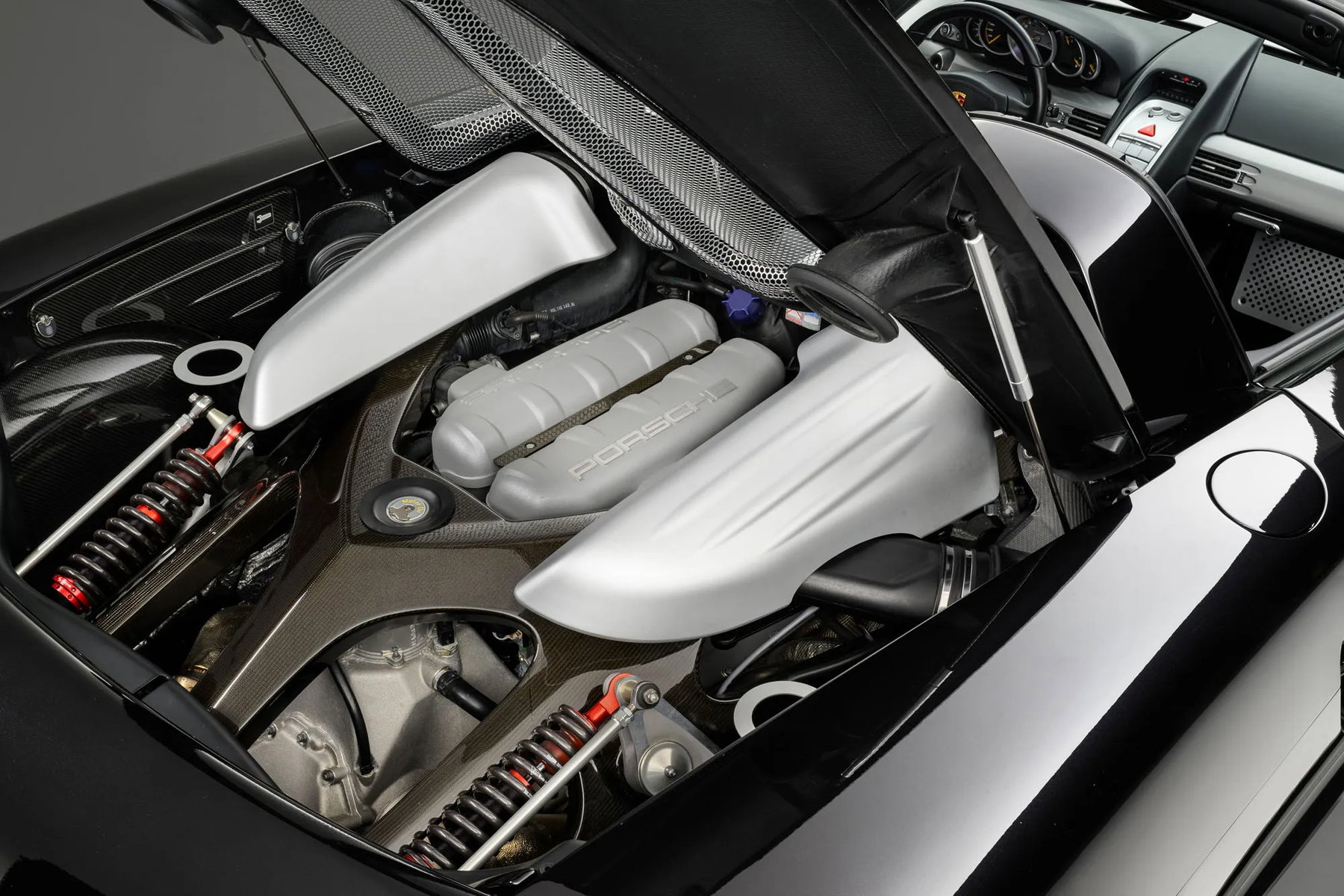
The 5.7 litre V10 engine was a true masterpiece. Engineered to be used in motorsport it was built purely for performance. This was a lightweight (215kg) high revving motor, reaching peak power at 8,000rpm and redlining at 8,200rpm. The engine pulled relentlessly from 3,000rpm all the way up to 8,200rpm with no flat spots in the power delivery, accompanied by a very special soundtrack. Producing 604bhp, 435lb-ft of torque, reaching 62mph in 3.7 seconds and topping out at 206mph.
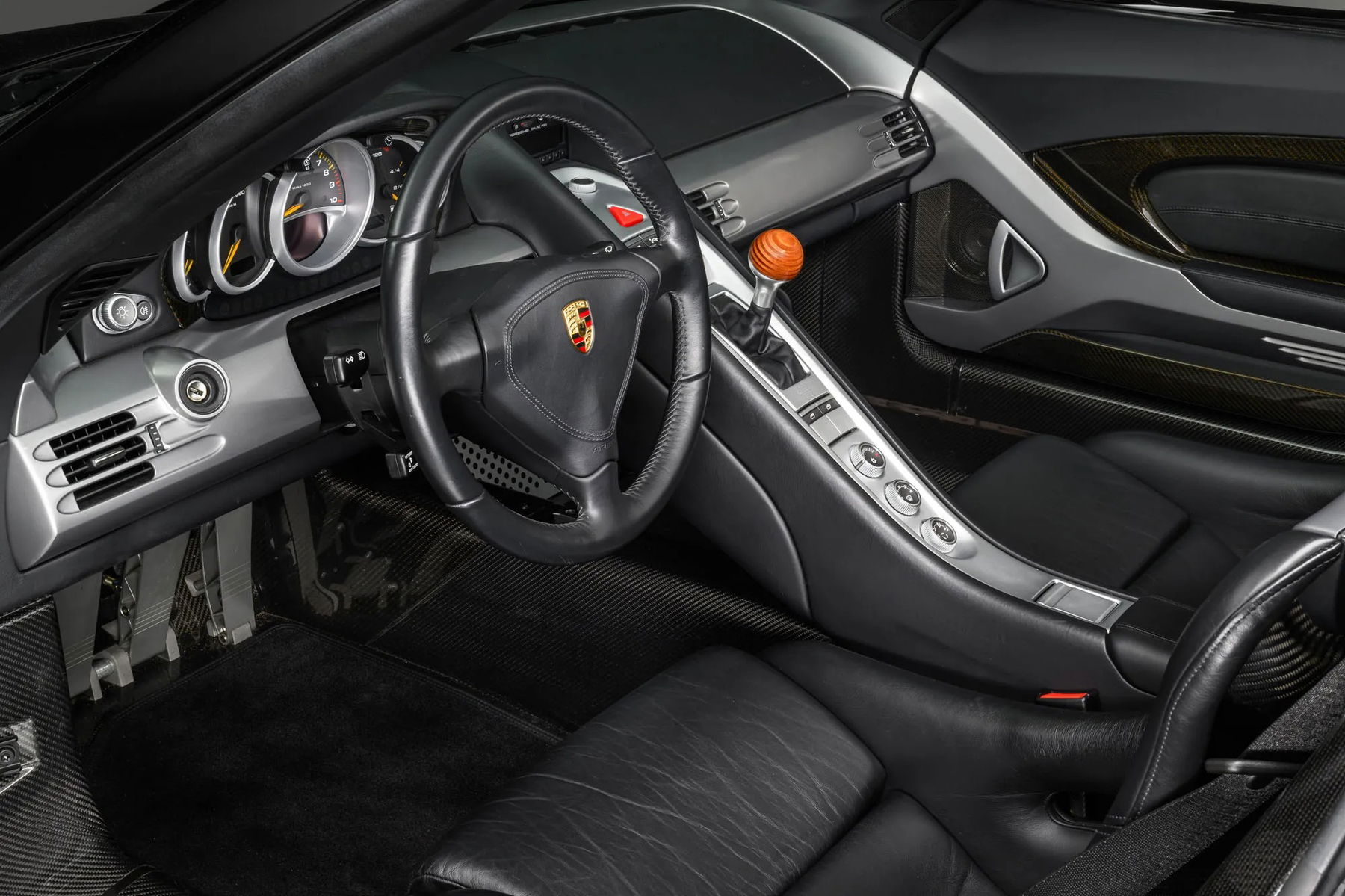
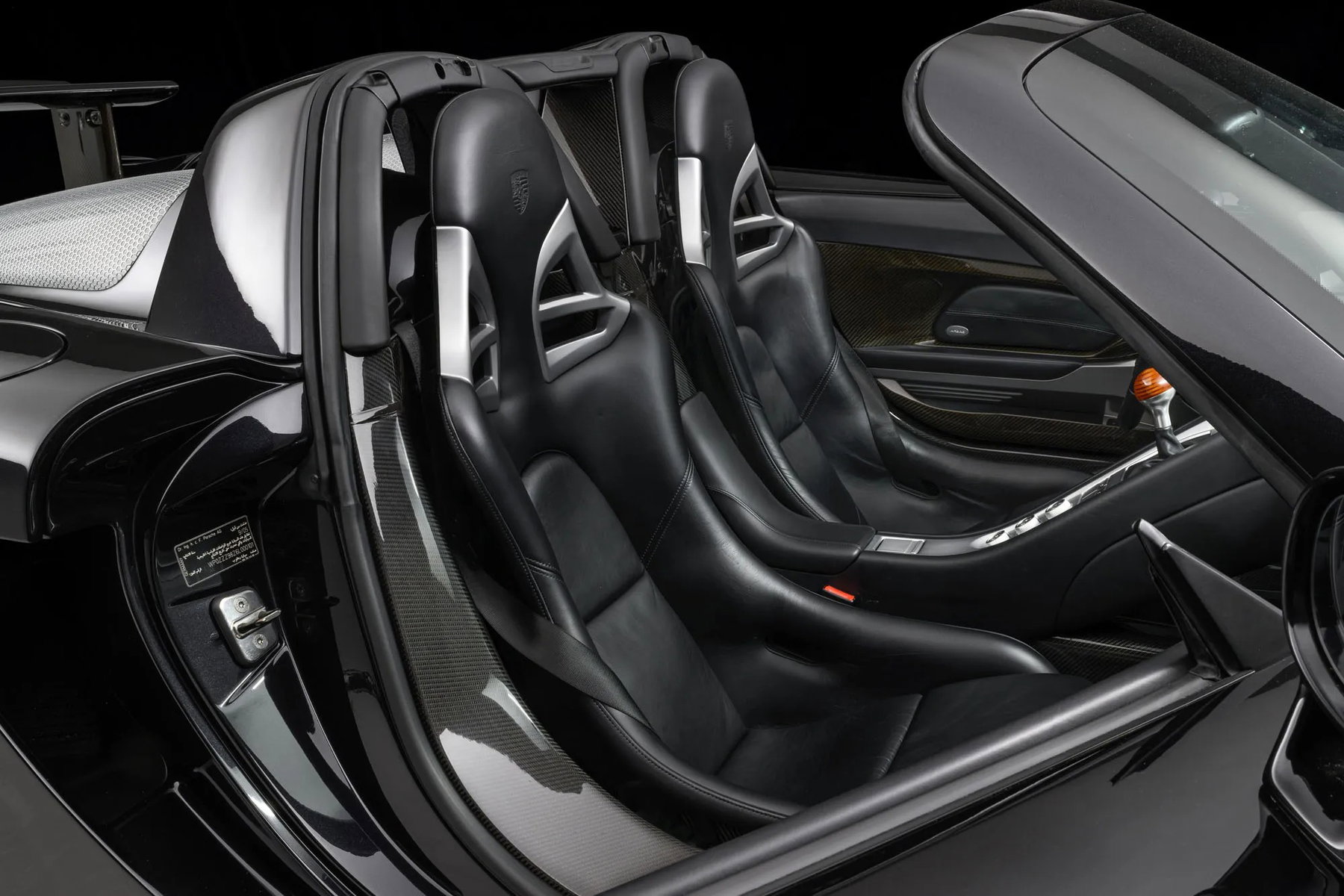
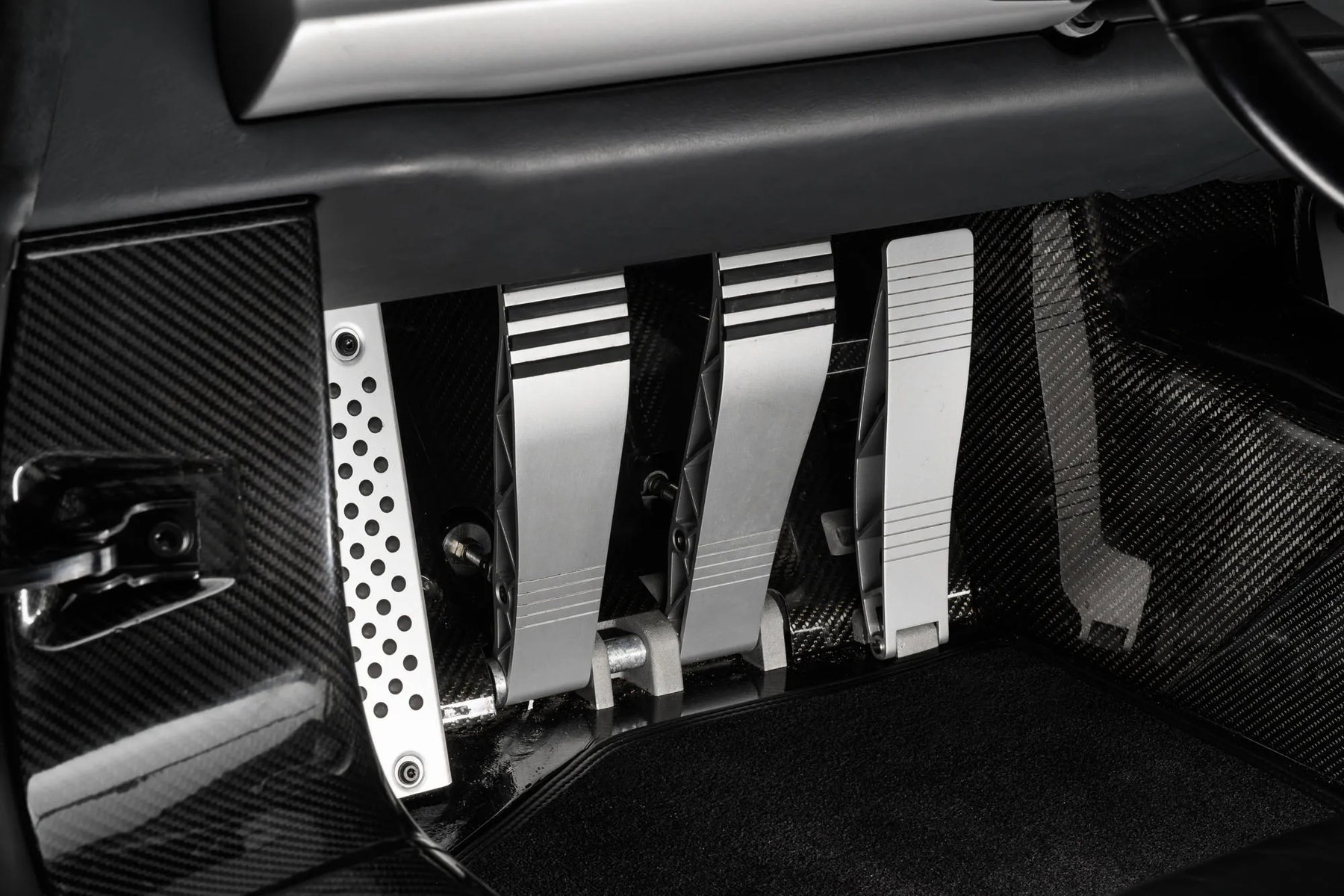
The Carrera GT was very light, weighing just 1,250kg. The chassis was cutting edge, and the first to have both the tub and sub frame made from carbon fibre. The engine was bolted directly to the carbon frame and dry sumped to lower the centre of gravity. Fuel tanks were set either side of the engine in order to distribute weight evenly. Weight was also saved through the lightweight seats and carbon fibre roof.
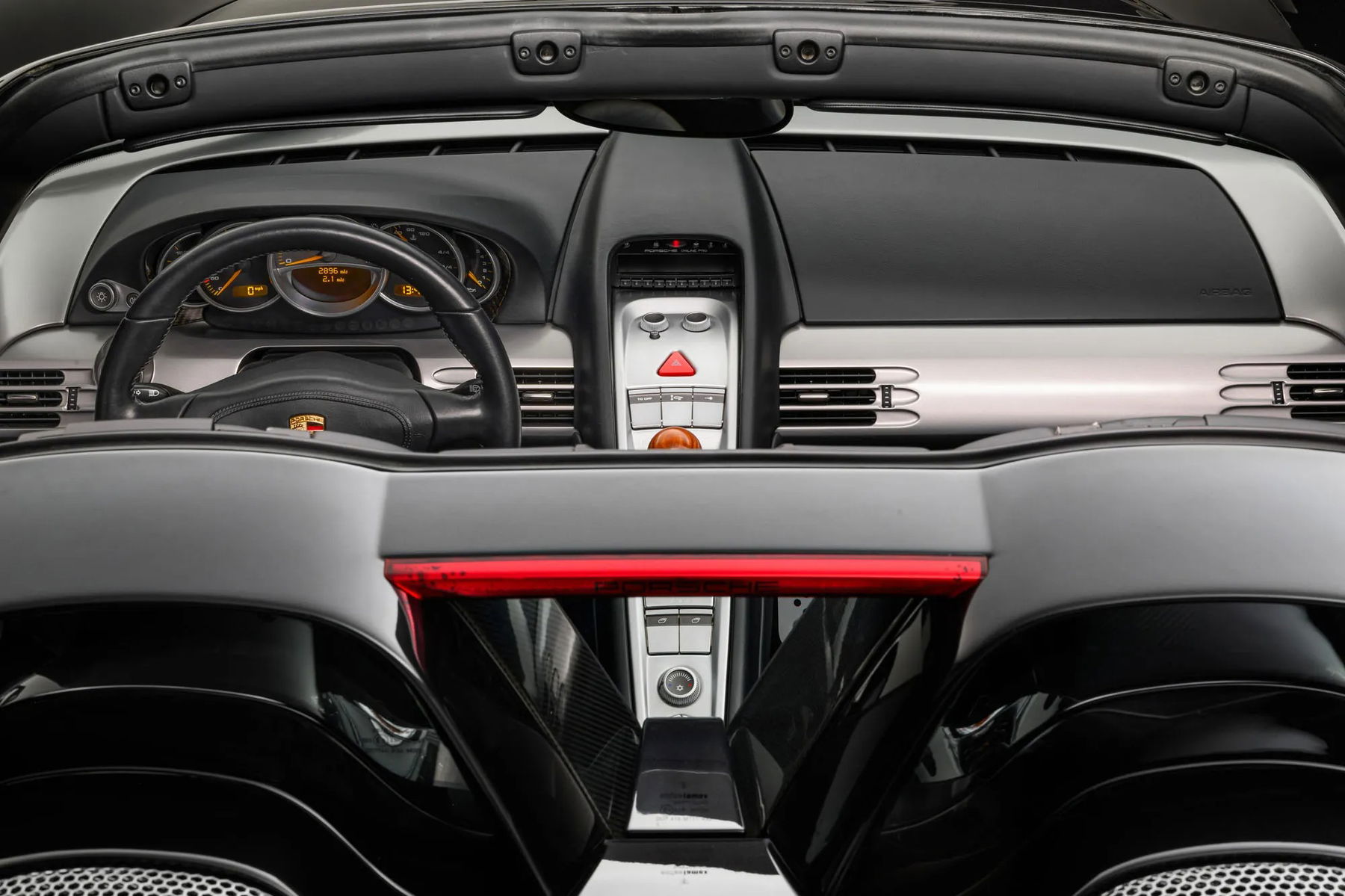
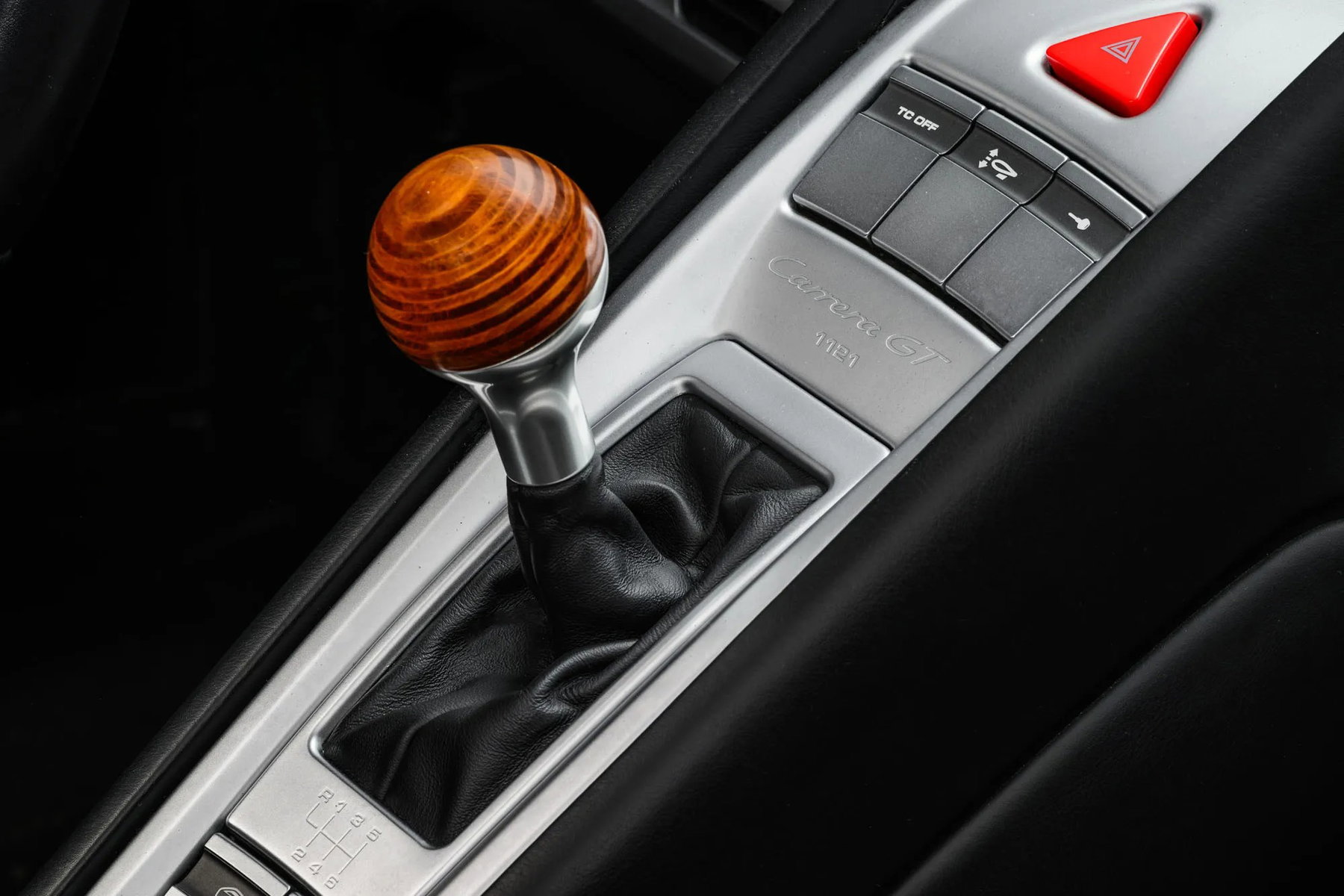
Of course today the Carrera GT is distinguished by the fitment of an analogue manual gearbox but that doesn’t mean the transmission wasn’t state of the art. The lightweight racing clutch was made of multi-plate carbon ceramic. The clutch’s small diameter gave instantaneous rev gain and enabled Porsche to mount it low in the car, which helped to lower the centre of gravity.
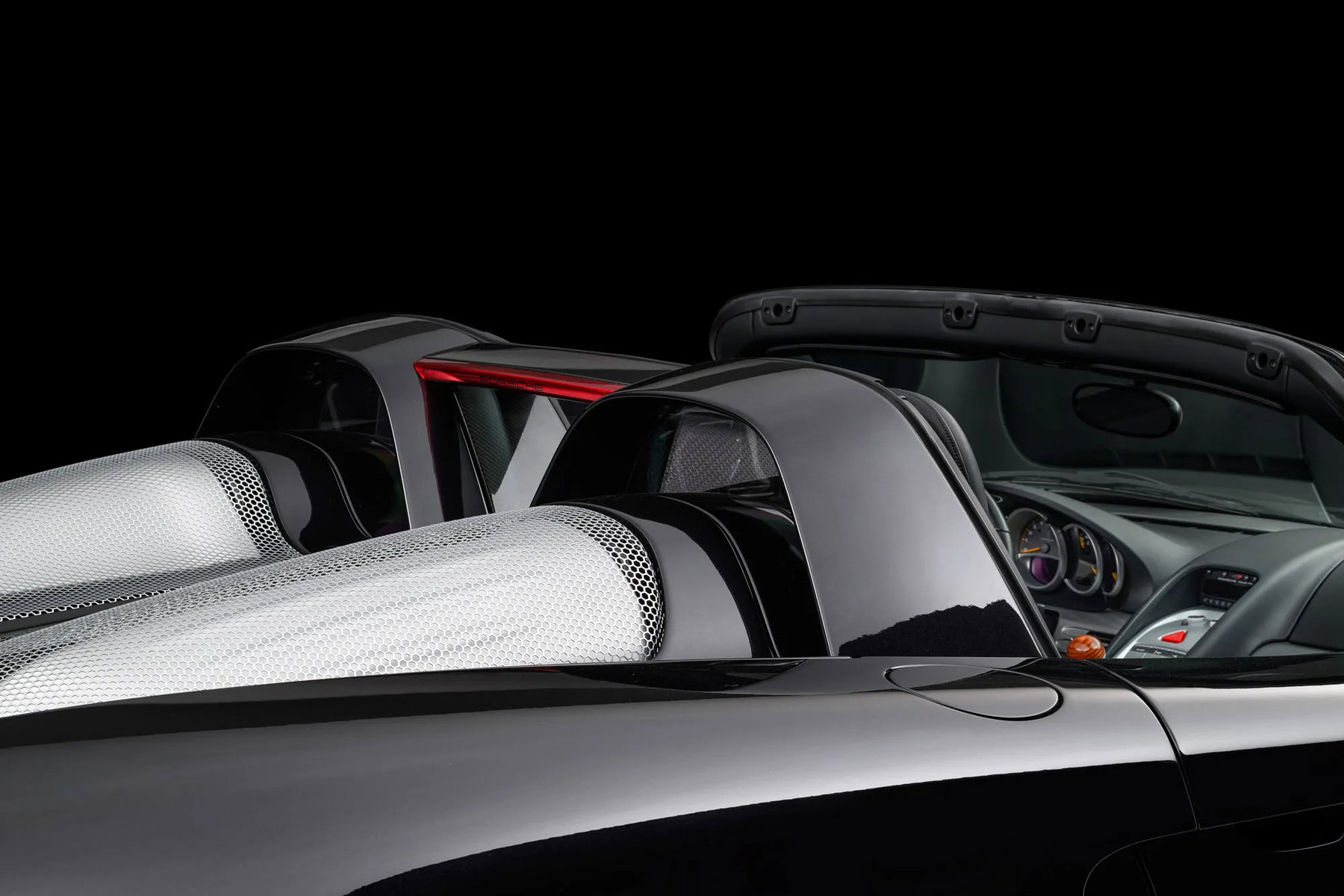
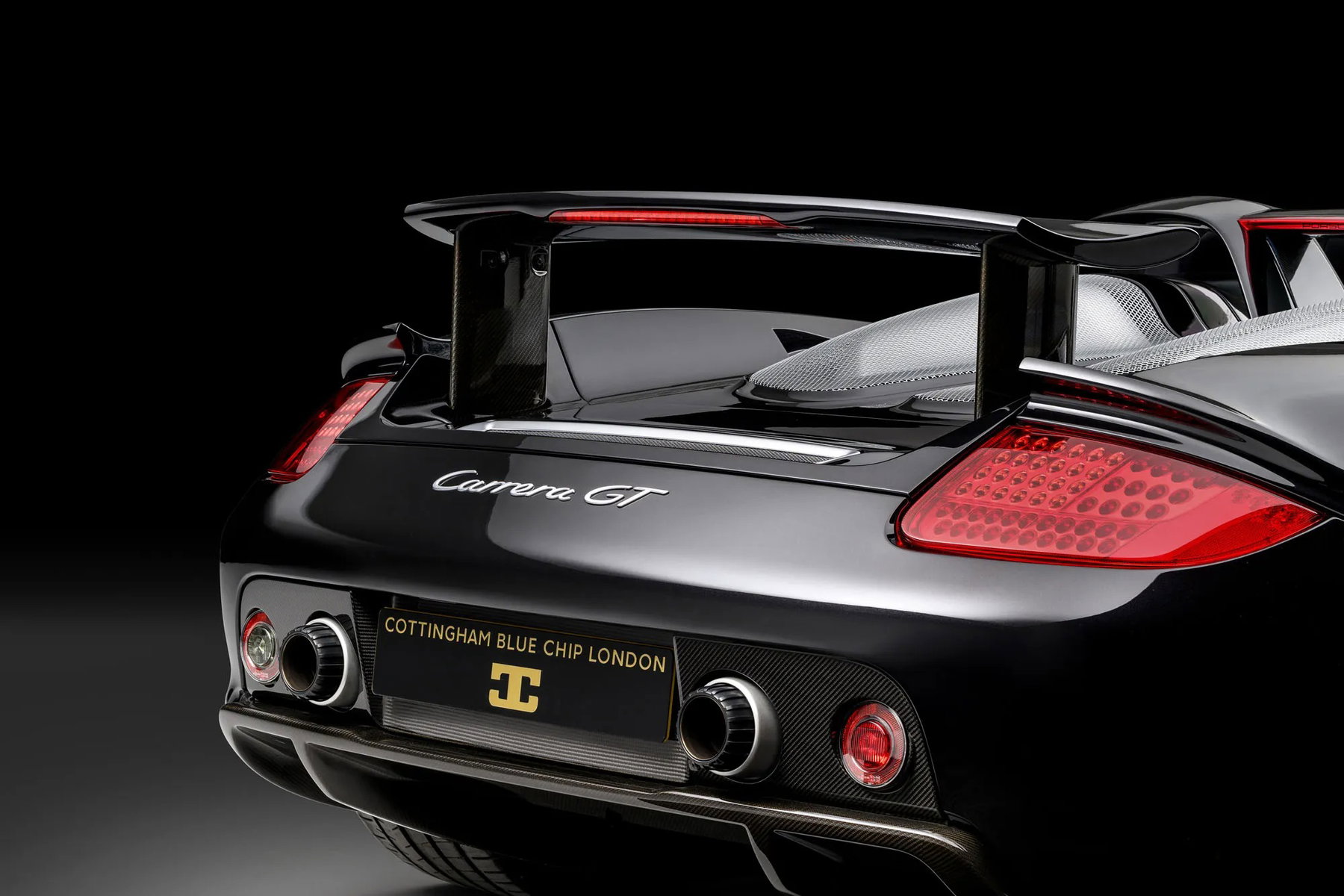
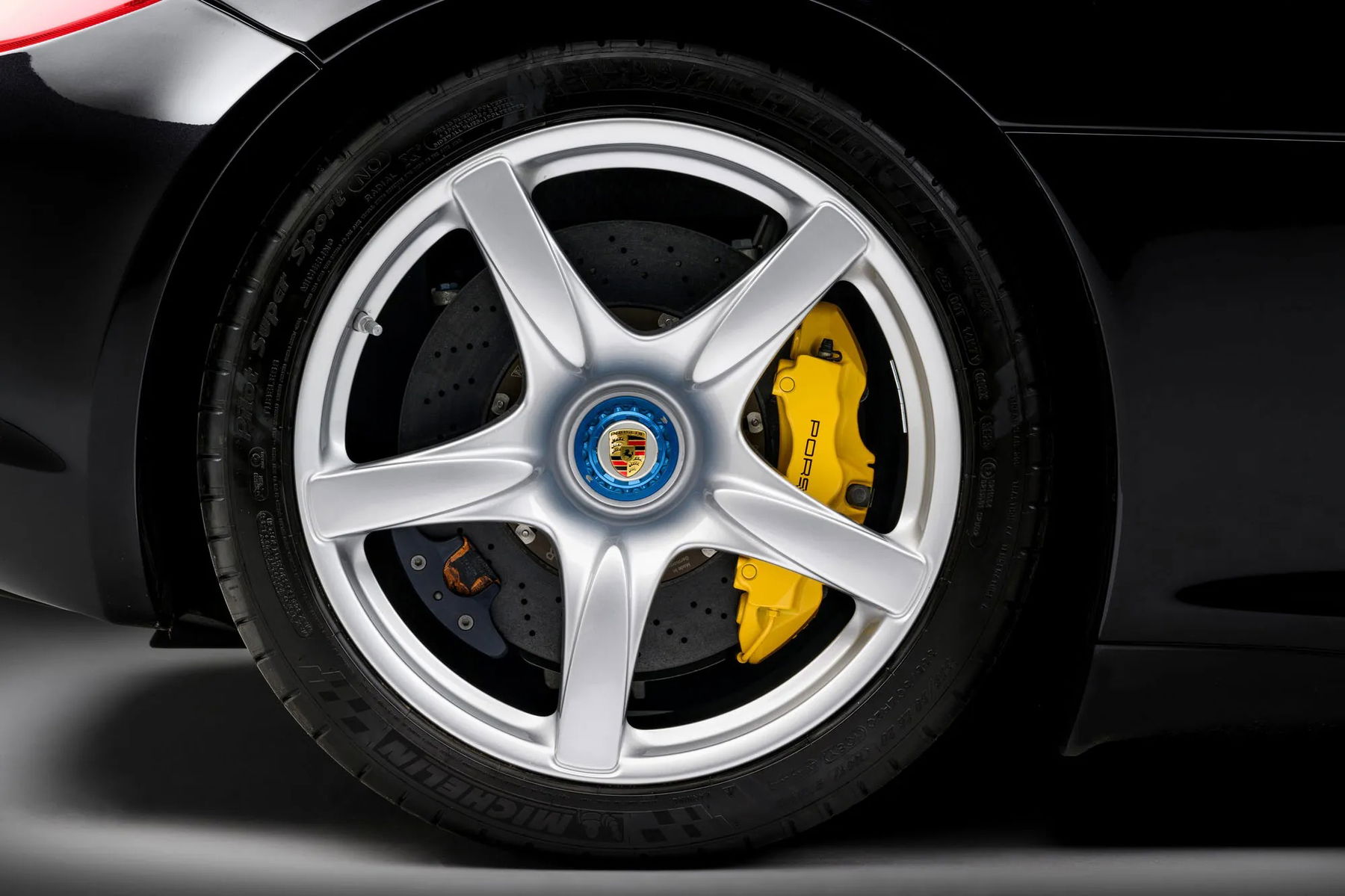
Borrowing heavily from race car design, the Carrera GT had wishbone suspension with inboard dampers. The suspension units themselves were made from structural carbon fibre. The brakes were carbon ceramic with mono-bloc callipers giving huge stopping power. There was a carbon fibre active spoiler which raised up at 78mph to increase downforce, and the huge air scoops on each side of the car channelled cooling air to the V10.
Today the Carrera GT has acquired a mythical status as one of – if not the – ultimate analogue naturally aspirated sports car and the rise in values over the last few years reflect the fact that due to legislation and other factors, cars like this will never be made again.