Some untrue stories are passed down from generation to generation so often that at some point they are believed to be true. This phenomenon is aptly called “urban myth”. What does this have to do with the question of why the Porsche 911 has its key on the left? Well, we need to expand a little on that. Because we are looking for the answer to this question scientifically and logically in order to clarify once and for all why the key is really on the left in Porsches.
What competing stories are there about the Porsche ignition lock mounted to the left of the steering wheel?
Basically, there are two answers to the question of why the ignition lock is to the left of the steering wheel in a Porsche. Both come up again and again. The first and most frequently cited answer relates to motor racing, more specifically to the 24 Hours of Le Mans. Back in the 1950s and 1960s, at the start of the race, drivers would run from one side of the road to their cars on the other side, get in, start the engine and drive off. To make this process as simple and quick as possible, Porsche is said to have positioned the key on the left. This meant that drivers could start the car with their left hand, engage first gear with their right and drive off immediately.
The second common answer sounds much less exciting, but fits the cliché of the thrifty Swabians. Porsche began building its first cars shortly after the Second World War. At this time of reconstruction in Europe, materials were scarce and expensive. For this reason, Porsche is said to have considered positioning the ignition lock to the left. This was to save a bit of cable length of cable from the ignition lock to the starter motor. In return, that meant saving valuable copper and therefore money.
What came first? The key on the left or Porsche’s first Le Mans entrance?
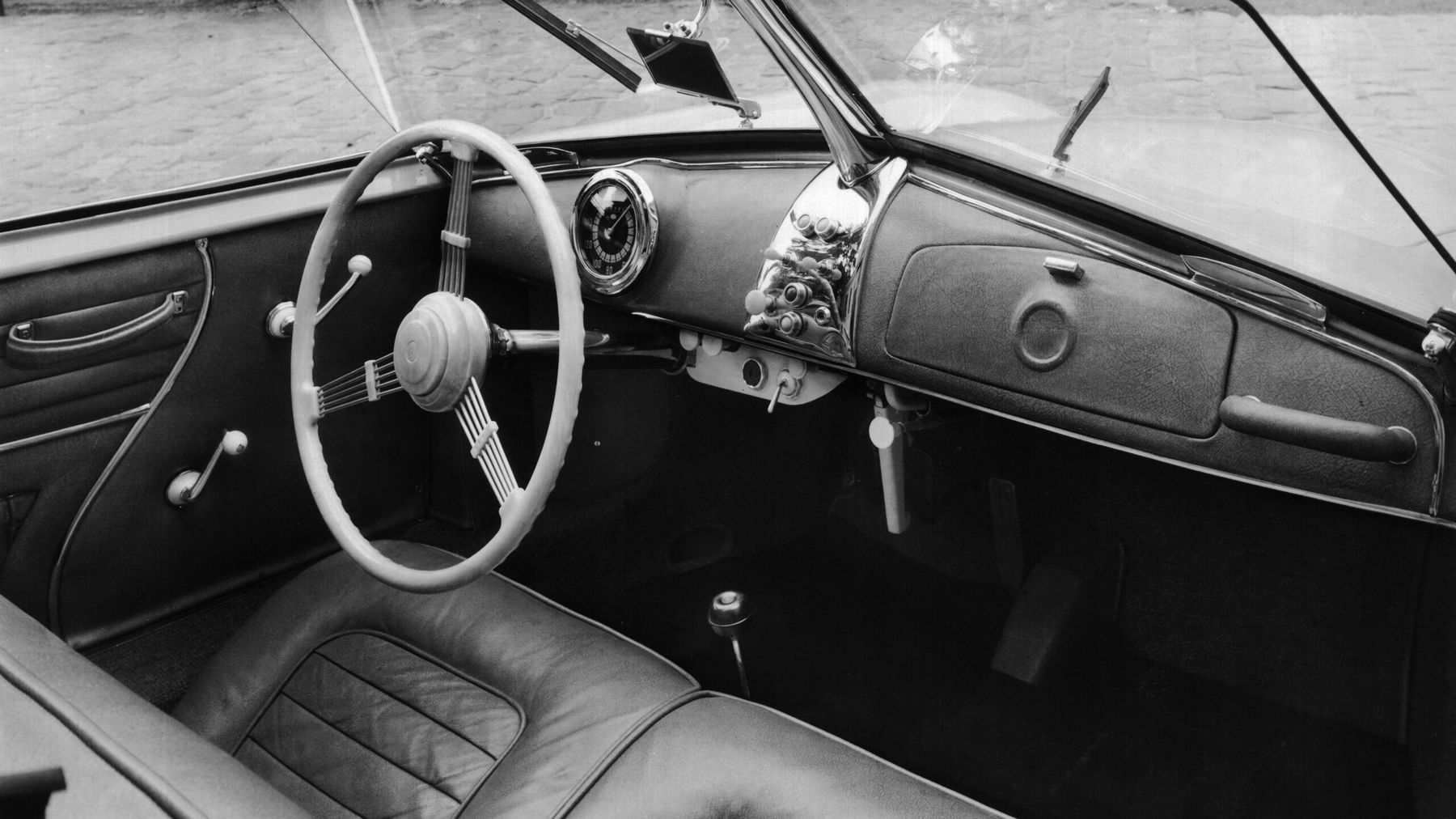
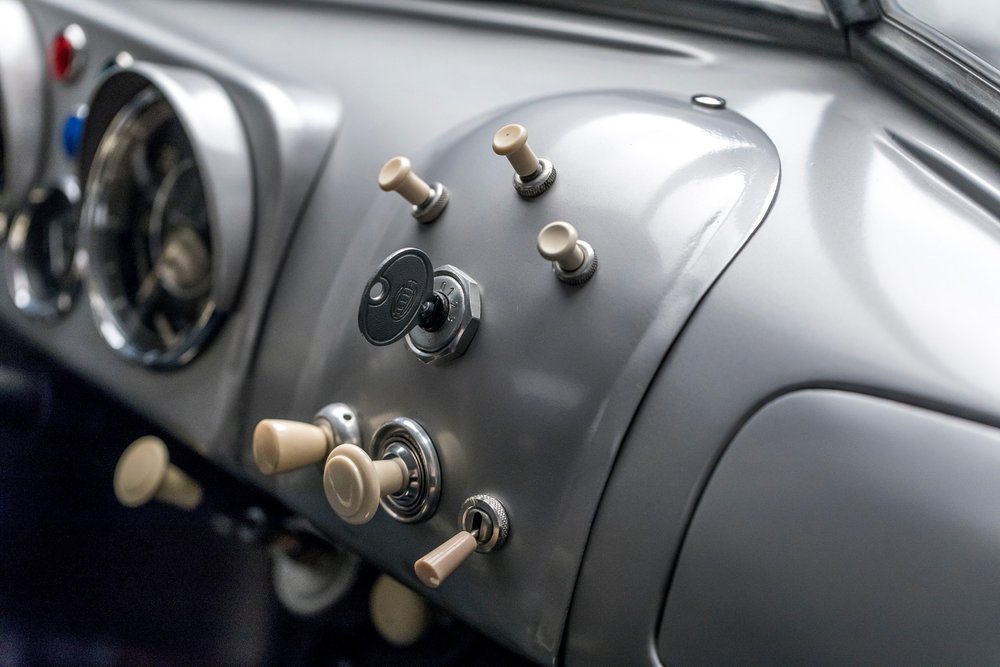
To solve this particular chicken-and-egg problem, it is worth taking a look at the history books – such as the history of the Porsche 356 No. 1 Roadster. The Roadster was the first car to receive its general operating license under the Porsche name on June 8, 1948. And this very Porsche 356 No. 1 Roadster already had the ignition lock on the left! A first indication of the theory of economy and efficiency? Yes and no. Historical photographs show that the 1950 Porsche 356/2 had the ignition lock on the right side. Porsche 356 pre-As then had the key on the left again. The confusion is perfect.
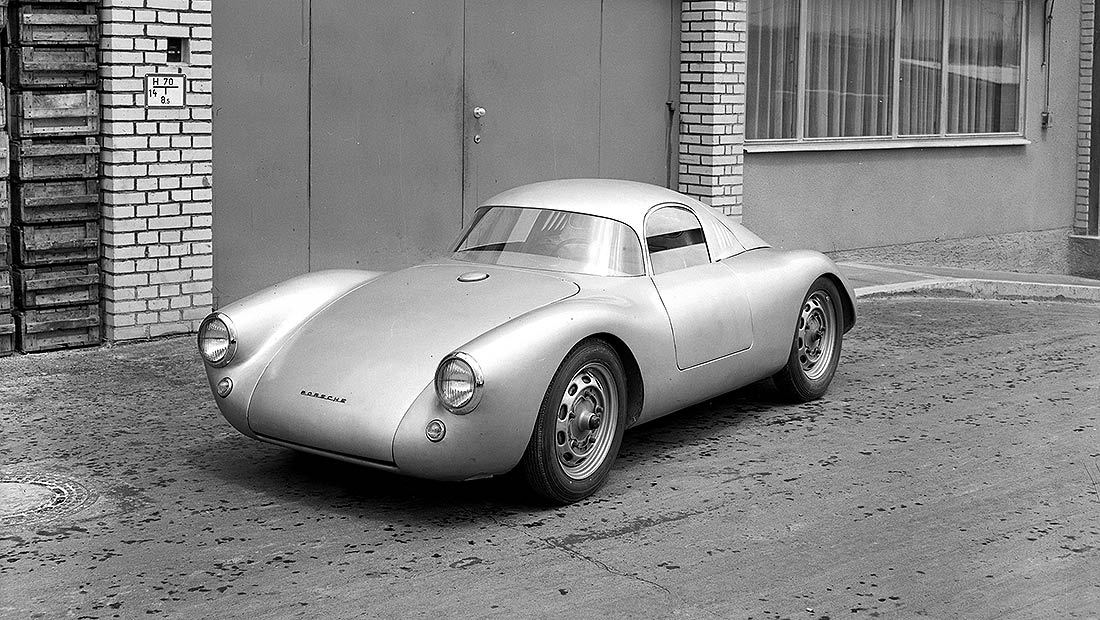
Things become even more diffuse when we look at Porsche’s first participation in the 24 Hours of Le Mans. In 1951, sports cars from Zuffenhausen competed at the Sarthe for the first time. Porsche entered two 356/4 SL Coupés. Starting number 46, driven by Auguste Veuillet and Edmond Mouche, took victory in the class up to 1.1 liters displacement at the first attempt. However, this was achieved without the supposed advantage of the ignition lock on the left-hand side. In his case, it was in the middle of the car, to the right of the steering wheel.
Was the key on the left in later Porsches which competed at Le Mans?
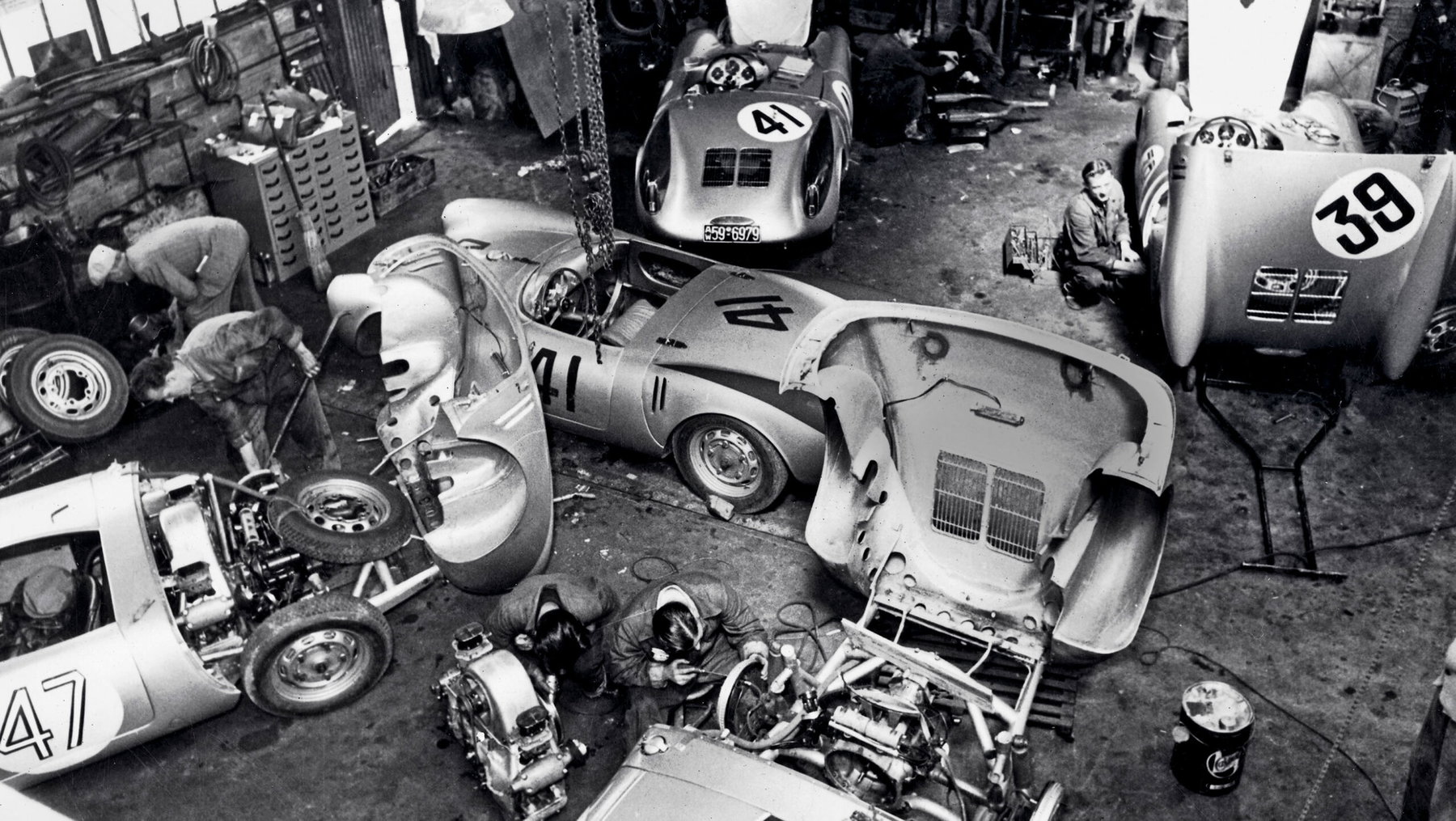
So should Porsche’s positioning of the key on the left have nothing to do with Le Mans at all? Did the Porsche racing cars ever have the key on the left? To find out, we analyzed the entry lists for the 24-hour races at the Sarthe. In 1952, Porsche again entered 356/4s at Le Mans. So no change. In 1953, Porsche KG started with two 356/4s and two 550 Coupés. The 550s were used by the factory until 1955 and cost seven-figure sums today. But they had the steering wheel on the left and the key on the right.
In 1956, Porsche then added a 356 Carrera 1500 to the Le Mans line-up. The ignition lock was then on the left-hand side on these sports models of the 356 series with a vertical shaft engine, which were available from 1955. This is particularly interesting because the 550 models were designed as genuine racing cars. The regular road model, namely the 356, had the key on the left in most cases.
In 1958, the Stuttgart-based company sent thoroughbred open-top racing cars to the starting line with the 718 RSK. Logically, the key should have been on the left in order to be able to make the fastest possible starts at Le Mans, right? No, the Porsche 718 RSK also had the steering wheel on the left and the key on the right. The same applies to its successors, the 718 RS60 and RS61. Even the Porsche 356 B 1600 GS Carrera GTL Abarth used in 1960 had the key on the right side of the steering wheel, unlike most other 356 siblings.
It was not until 1967 that a Porsche with its key on the left competed at Le Mans again
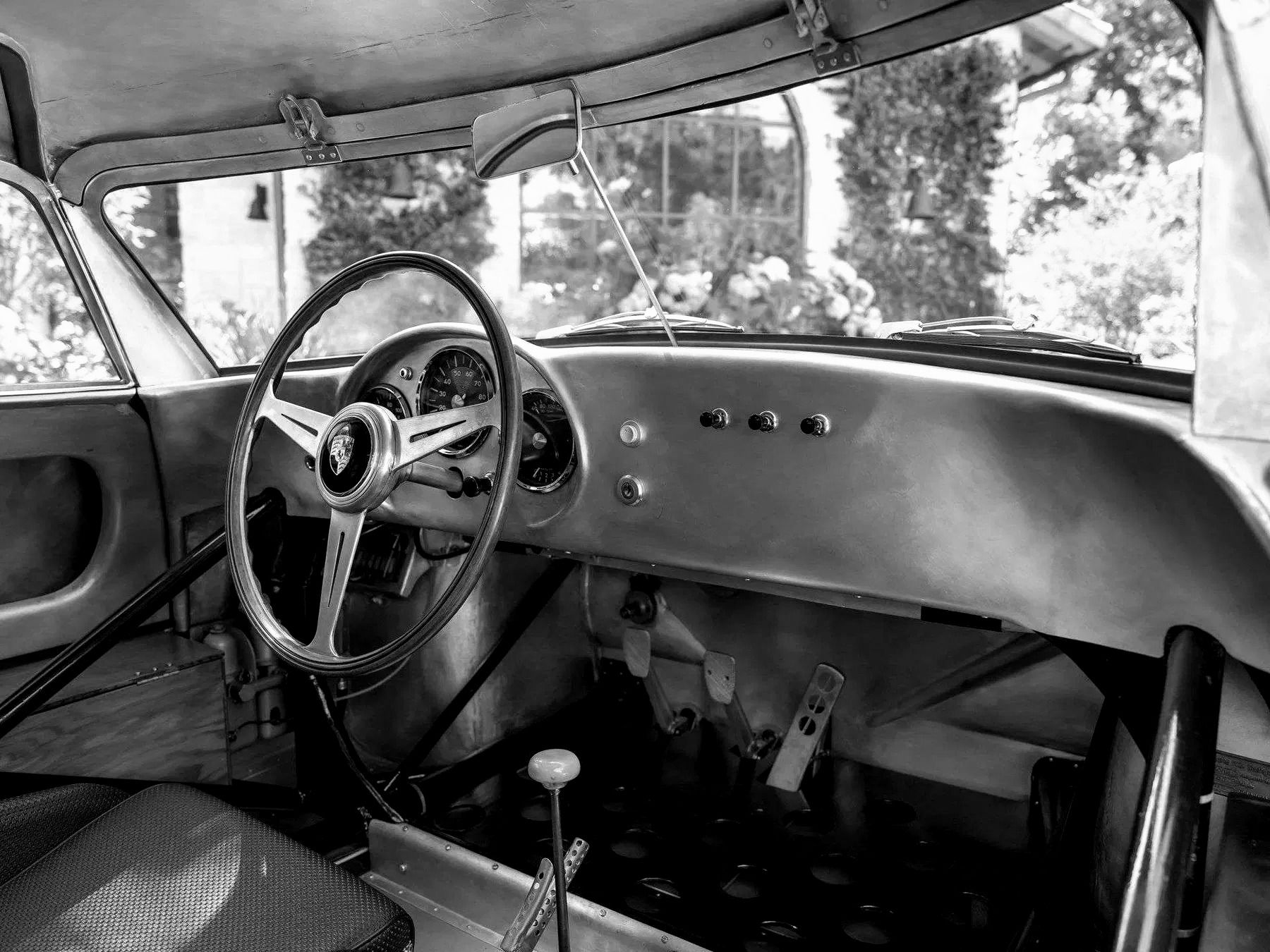
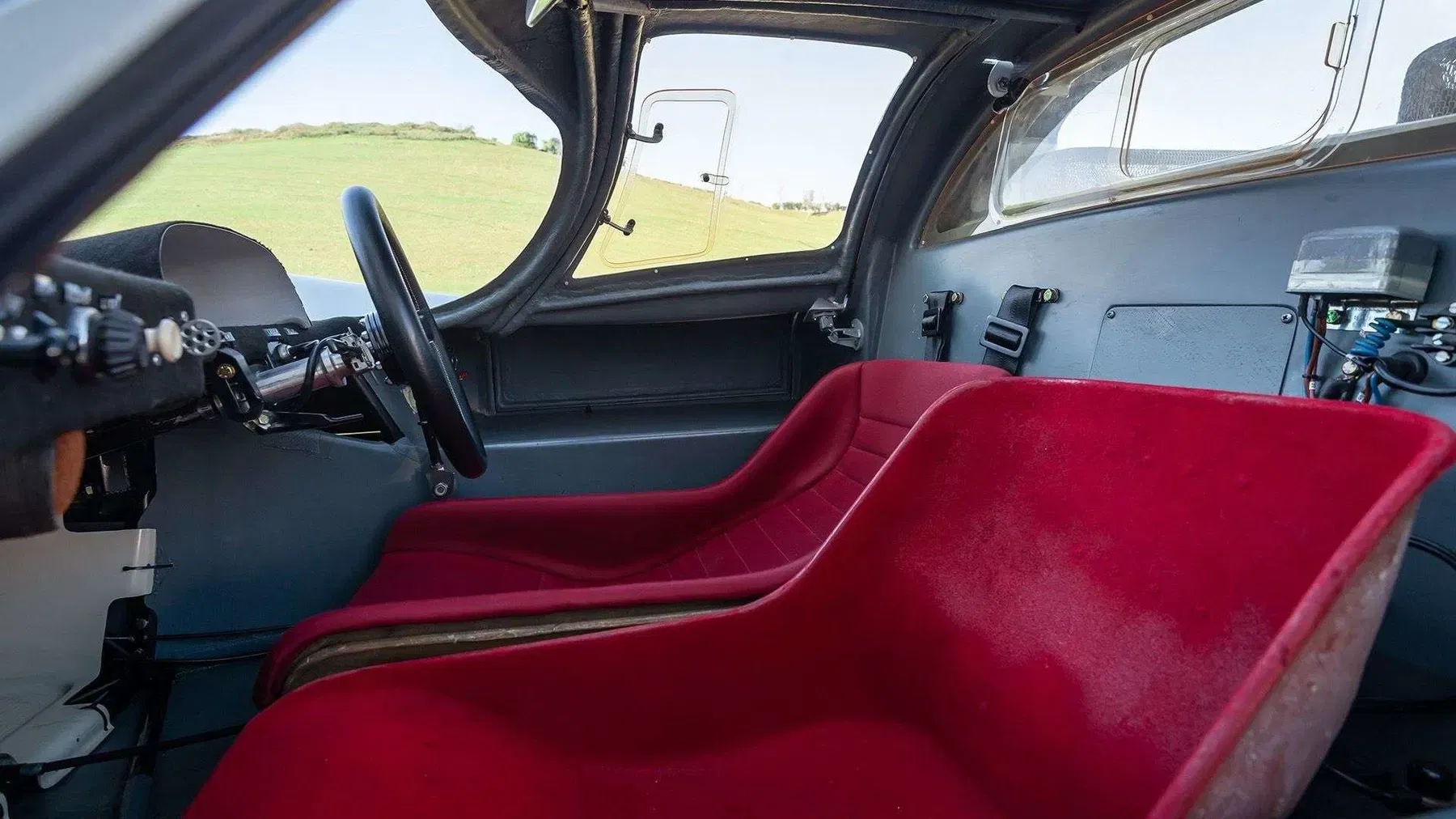
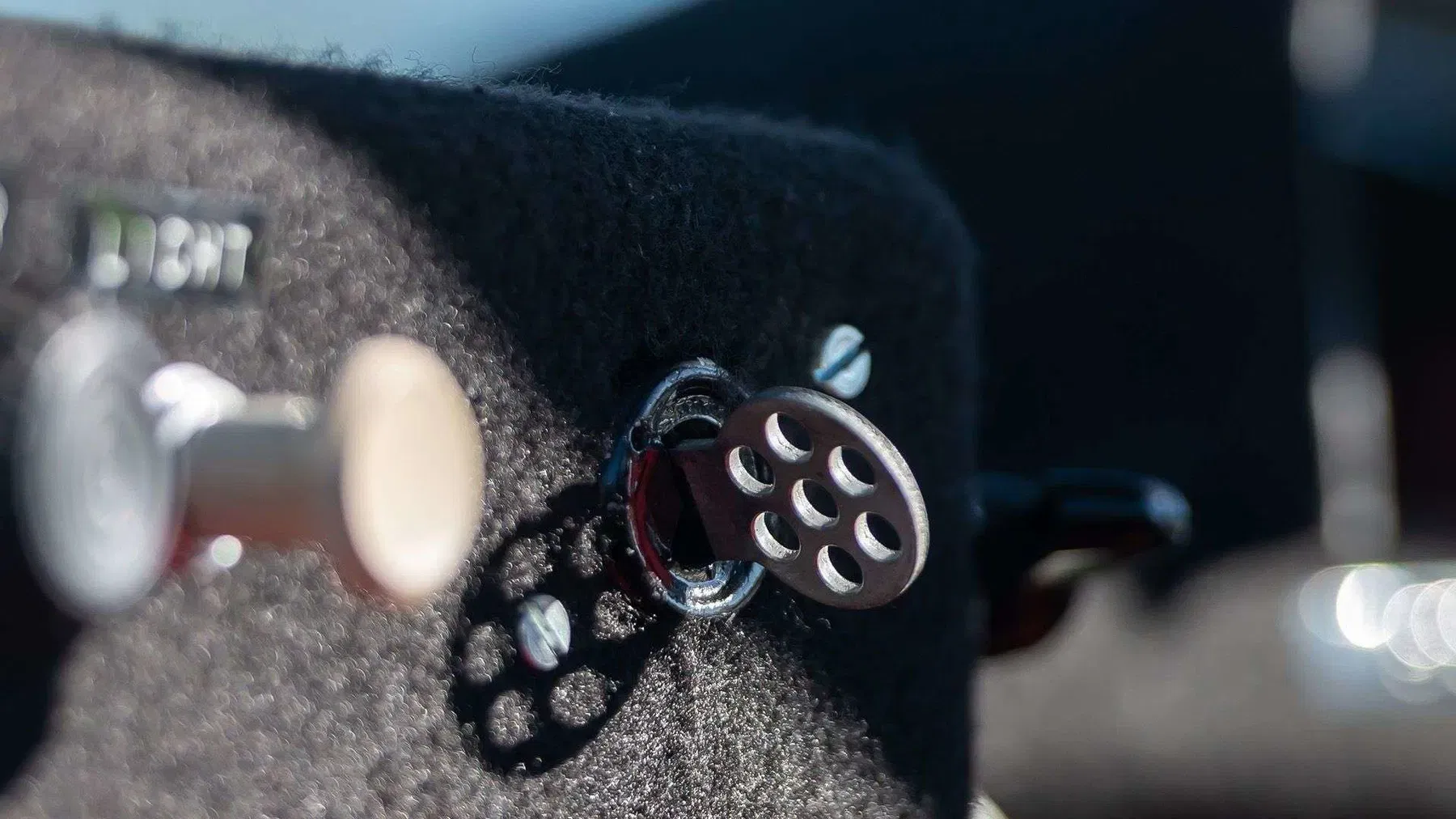
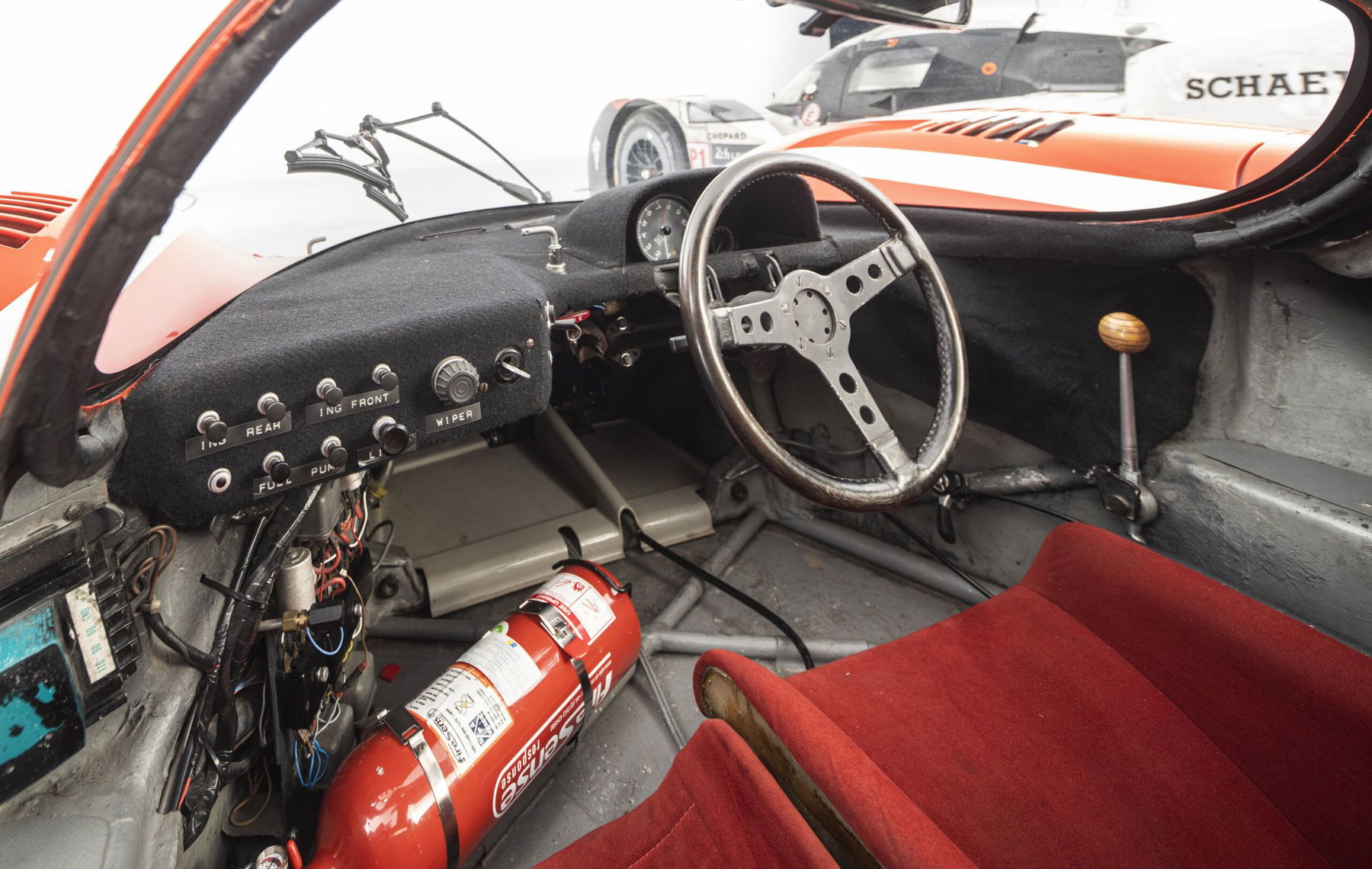
It took almost ten years before a new Porsche model with an ignition lock on the left-hand side competed at Le Mans. In 1967, Porsche entered the 907 at the Sarthe for the first time. It was a special one. Although it had the key on the left, it was a right-hand drive car. At the same time, the gearshift is on the right. So basically the same layout as we know it today from the 911, only with the seat on the right-hand side of the car.
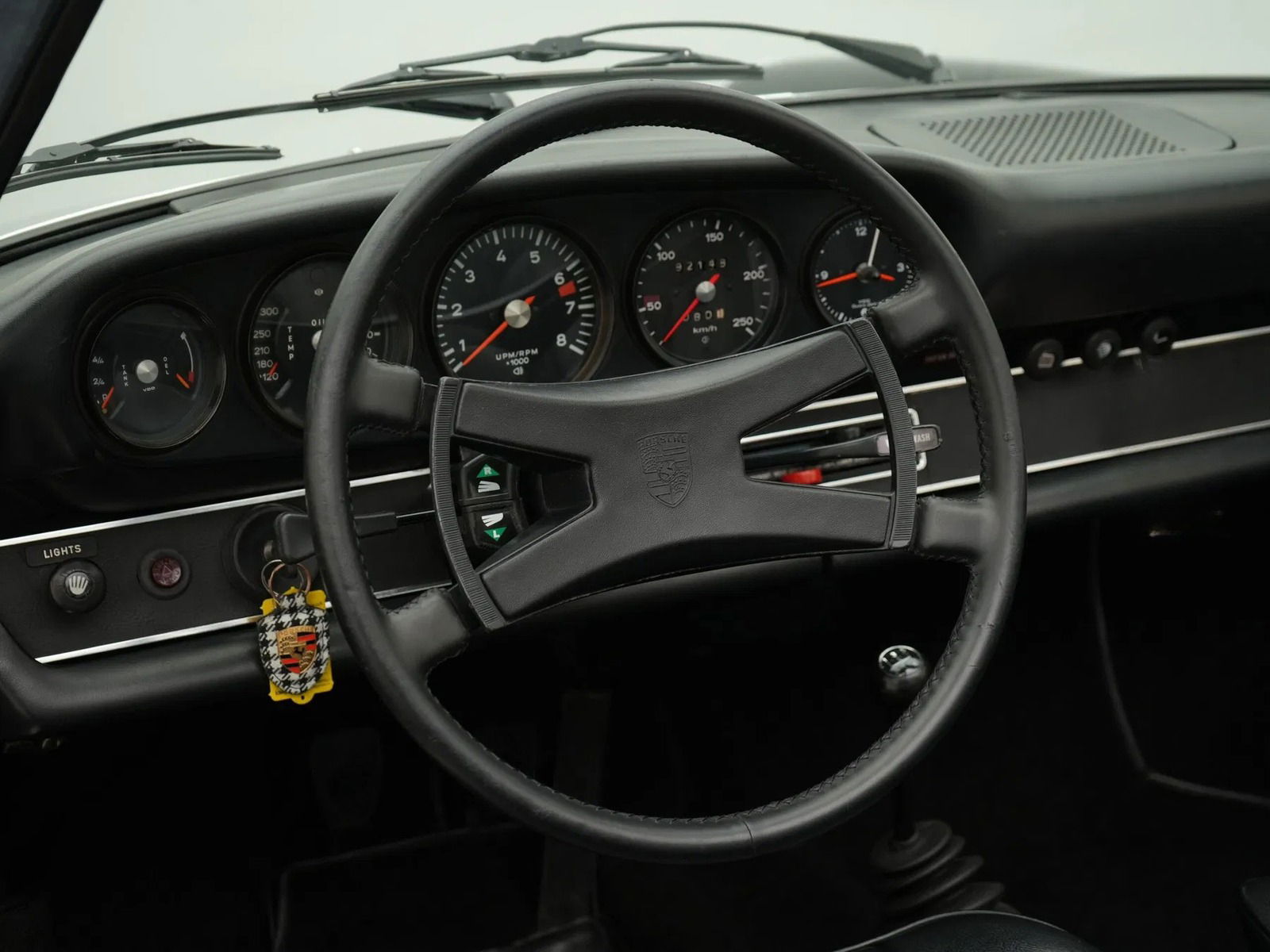
This right-hand drive layout was common in endurance races at the time because it had advantages in terms of weight distribution. Most tracks – including Le Mans – run clockwise and have more right-hand bends. That’s why they preferred to have the driver’s weight on the inside of the bend. Incidentally, a Porsche 911 also competed at Le Mans for the first time in 1967. Porsche entered a total of four 911 S in the race – all left-hand drive cars with the key on the left.
This right-hand drive layout was common in endurance races at the time because it had advantages in terms of weight distribution. Most tracks – including Le Mans – run in a clockwise direction and have more right-hand bends.
The 907’s layout as a right-hand drive car with the shifter on the right and key on the left was also retained by the Porsche 908, which was used from 1968 onwards. In 1969, the Porsche 917 used this layout again in the last year of the classic Le Mans start. The following year, the field started from a stand-still with the drivers already strapped in. In 1971, it was changed to a flying start. From then on, the position of the ignition lock, or later the start button, was no longer important.
In 19 Le Mans starts with Porsche participation, there were only five cars with the key on the left side
Our analysis clearly shows that before 1967, only two Porsche models entered in Le Mans had the ignition lock on the left next to the steering wheel. Interestingly, both of these were 356s, i.e. vehicles based on more or less “normal” road models, while the cars developed with racing in mind always had the ignition lock on the other side until then. It was only after the switch to right-hand drive that the ignition lock on Porsche’s Le Mans racers moved to the left-hand side.
What is true now? Why do many Porsches have the key on the left?
The evidence from racing therefore suggests that Le Mans starts probably are not the reason for the key on the left becoming a Porsche “trademark”. After all, if it had really brought an advantage in competition, the Porsche engineers would have used it. Ultimately, Porsche was successful with numerous class victories up to the end of the classic Le Mans starts anyway. Porsche’s first overall victory only came when this starting procedure no longer existed. Moreover it was the road models where the key on the left of the steering wheel became a trademark.
In this respect, it seems somewhat confusing that Porsche itself openly communicates that the positioning of the key on the left in the 911 goes back to Le Mans. This is the case, for example, in the brochure for the Porsche 996, where it says on page 44 f.: “When our drivers were seeking a few extra tenths at the start of a race, we put the key on the left so they could start the car with one hand while slamming it into gear with the other.”
In this brochure for the first water-cooled Porsche 911, the 996, Porsche even actively advertises that the key was positioned on the left to gain time at the start of a race.
This, in turn, is contradicted by the statement of Klaus Bischof, the long-standing director of the Porsche Museum. In an interview with journalist Dan Neil in 2008, he explained that the ignition lock had been moved to the left in order to save some cable and thus money and weight.
Regardless of where its roots lie, the key on the left remains a genuine Porsche trademark
After this journey through Porsche motorsport history, neither one nor the other story can be verified with certainty. Are perhaps even both theories more like one of the modern legends mentioned at the beginning? Did the positioning of the ignition switch on the left-hand side, which is so characteristic, perhaps simply come about by chance?
Which Porsche was first to have the key on the left?
The very first Porsche ever built, the 356 No. 1 Roadster, had the ignition lock to the left of the steering wheel.
Did all the Porsches then have the key on the left?
No, numerous Porsche models had the ignition lock on the right. For example, the 550, all transaxle models (924, 928, 944, 968) and also the Porsche 914 had the ignition lock on the right side. Even some Porsche 356s had the ignition lock on the right-hand side, such as the 356 Zagato or the 356 A Speedster.
Is the ignition lock on the Porsche 911 always on the left?
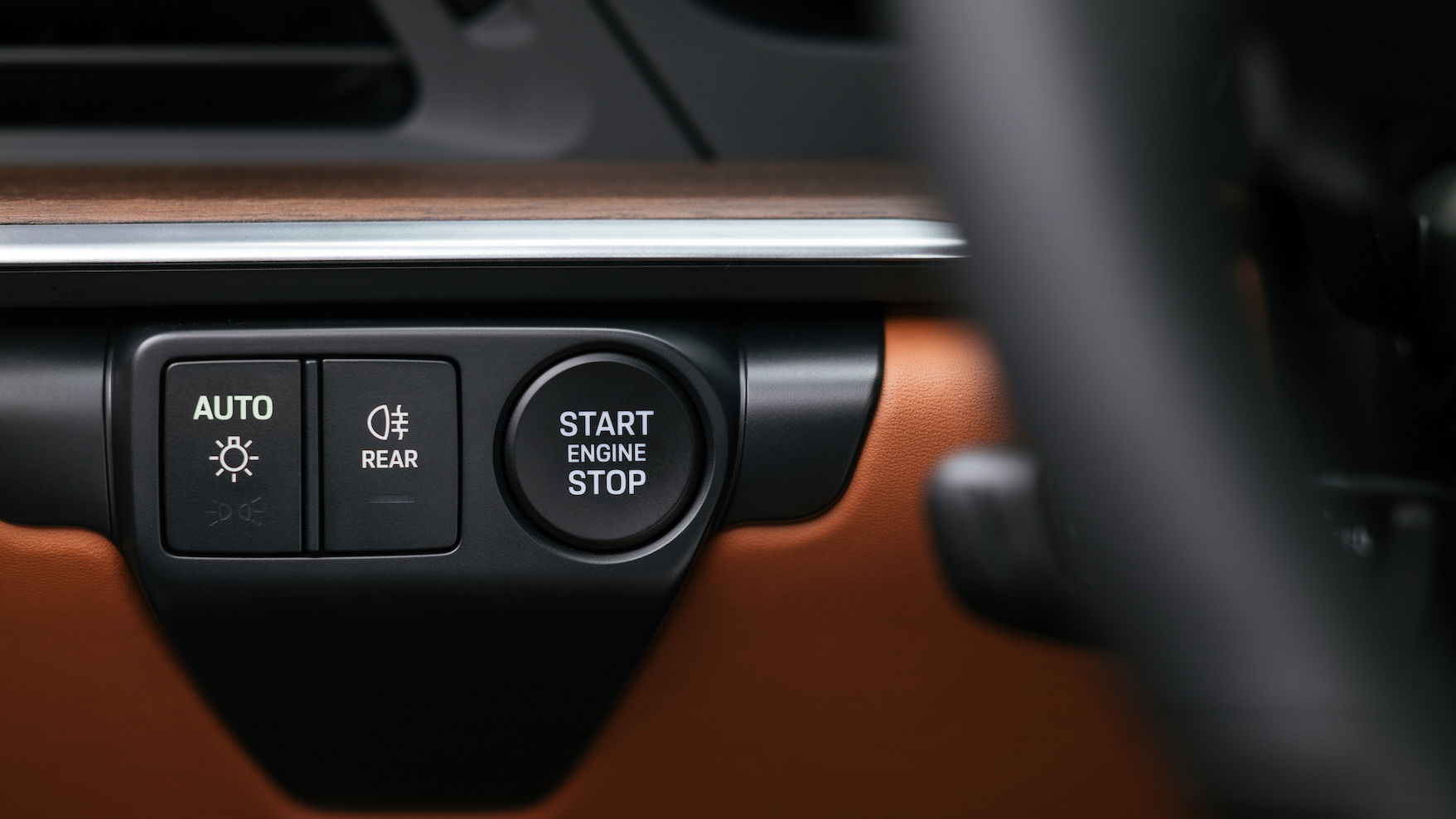
Yes, at least in left-hand-drive Porsche 911s, the key is always on the left. On right-hand drive cars, it is the other way around, with the ignition lock on the right-hand side of the steering wheel. In addition, the Porsche 992.2, i.e. from model year 2025, has an ignition button on most models. Only the GT3 and its derivatives currently still have a rotary switch.
Why is the key on the left in many Porsches?
This question will probably never be resolved beyond doubt. While the long-time director of the Porsche Museum speaks of a post-war cost-cutting measure, official brochures say that it comes from racing to save time at the Le Mans start. There is probably a grain of truth in both versions.
Ultimately, it doesn’t matter, because the result remains the same: A Porsche 911 is unconventional in many respects. It is one of the last modern vehicles to have a rear engine, has remained stylistically true to itself for six decades now and has the key on the left. Period. And it will probably always stay that way – regardless of whether it was originally designed to save money or because of the search for marginal gains in motorsport.







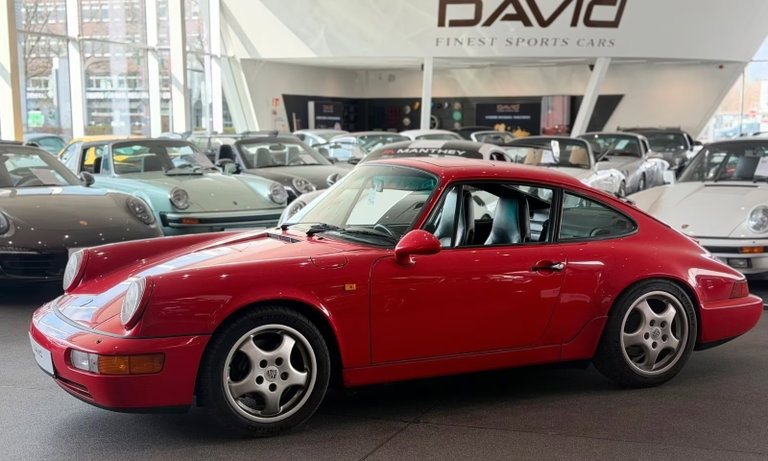
 1989
1989