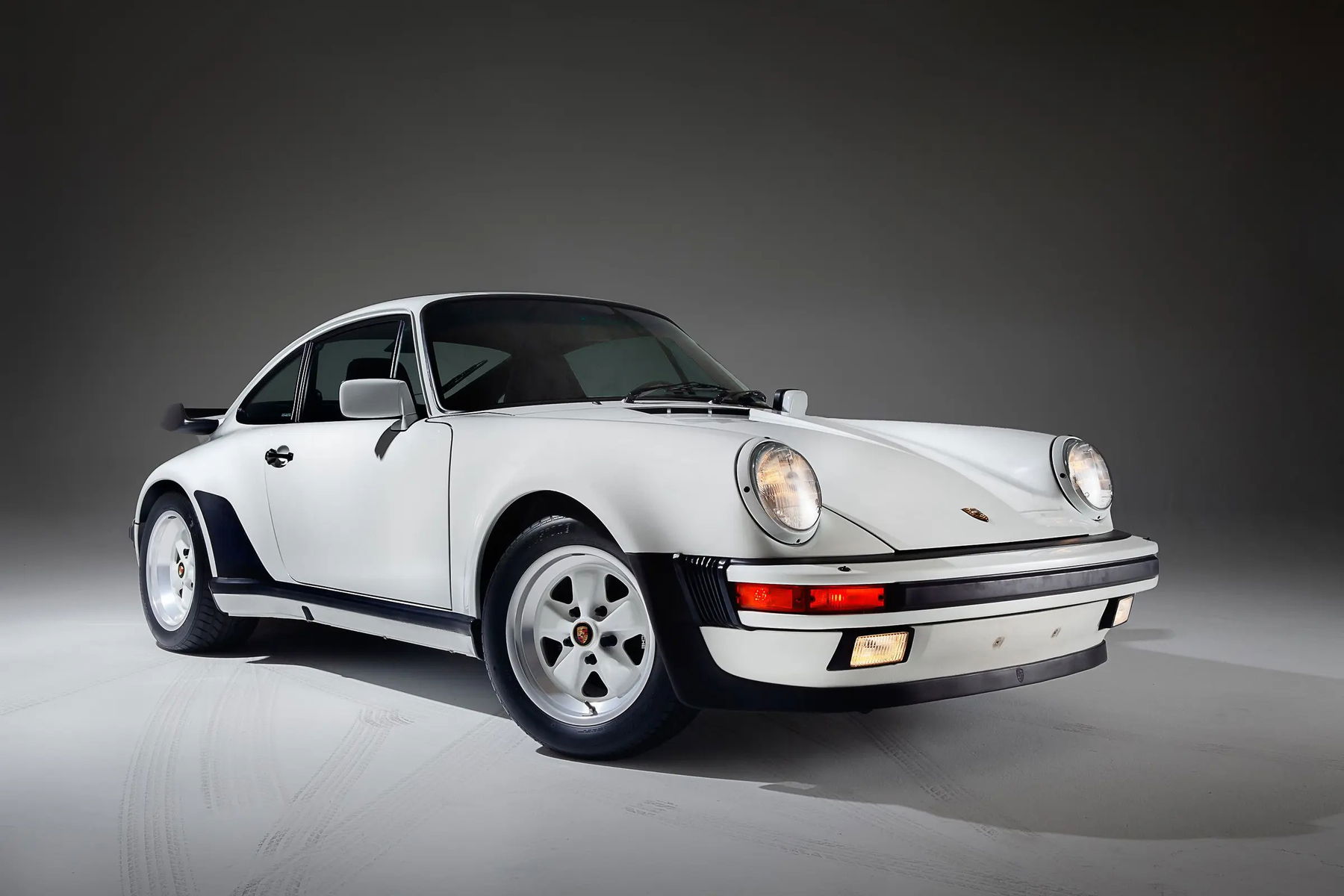
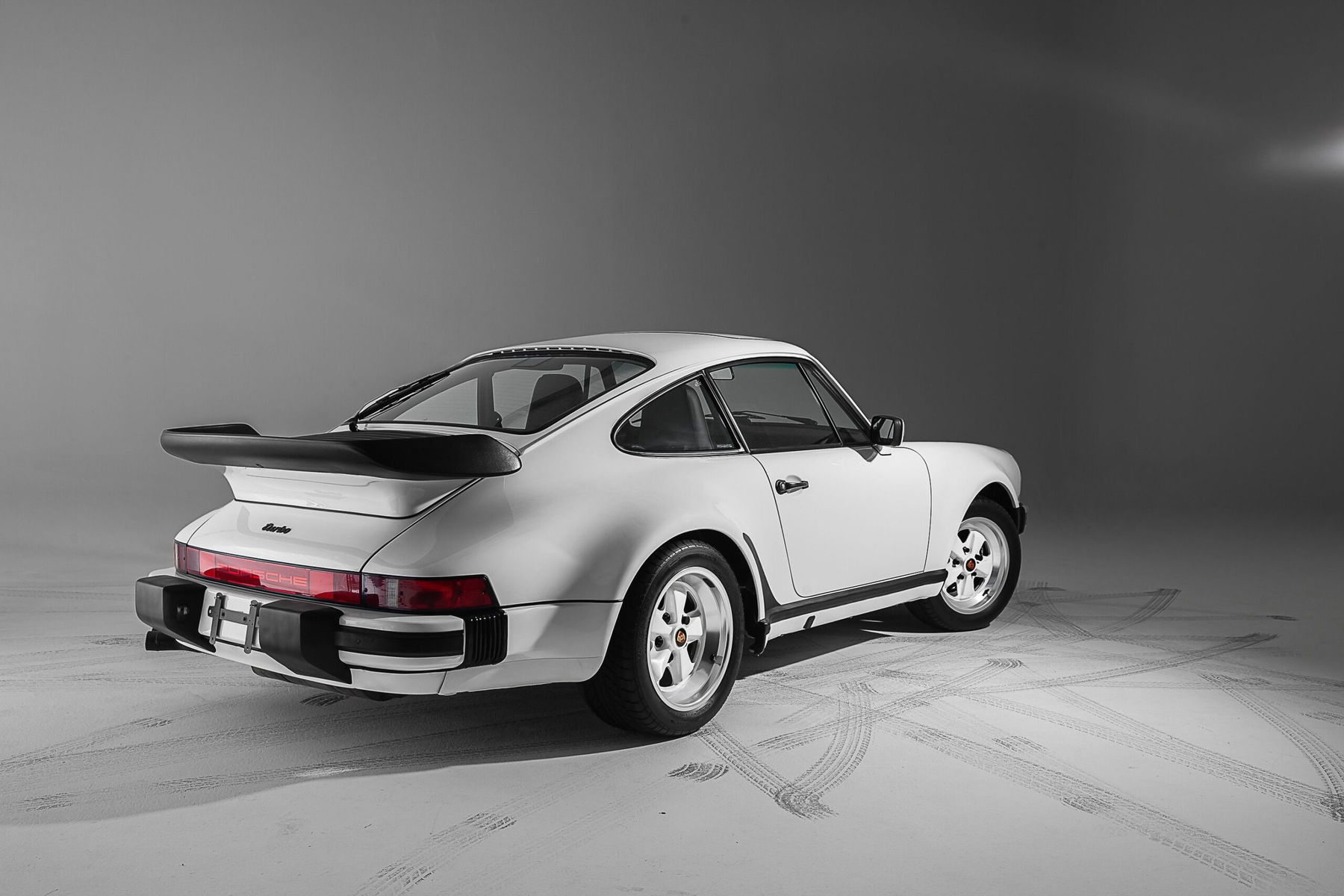
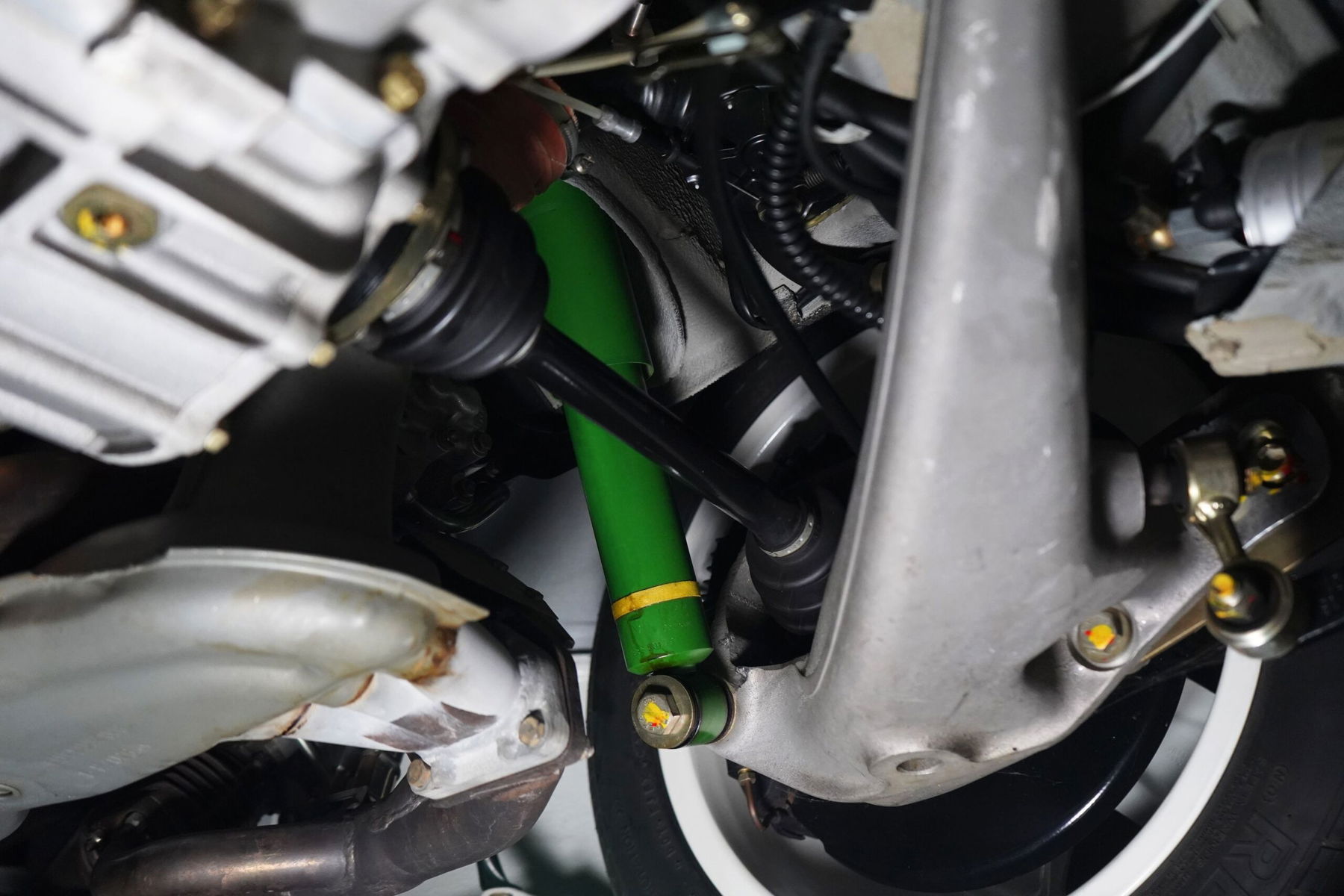
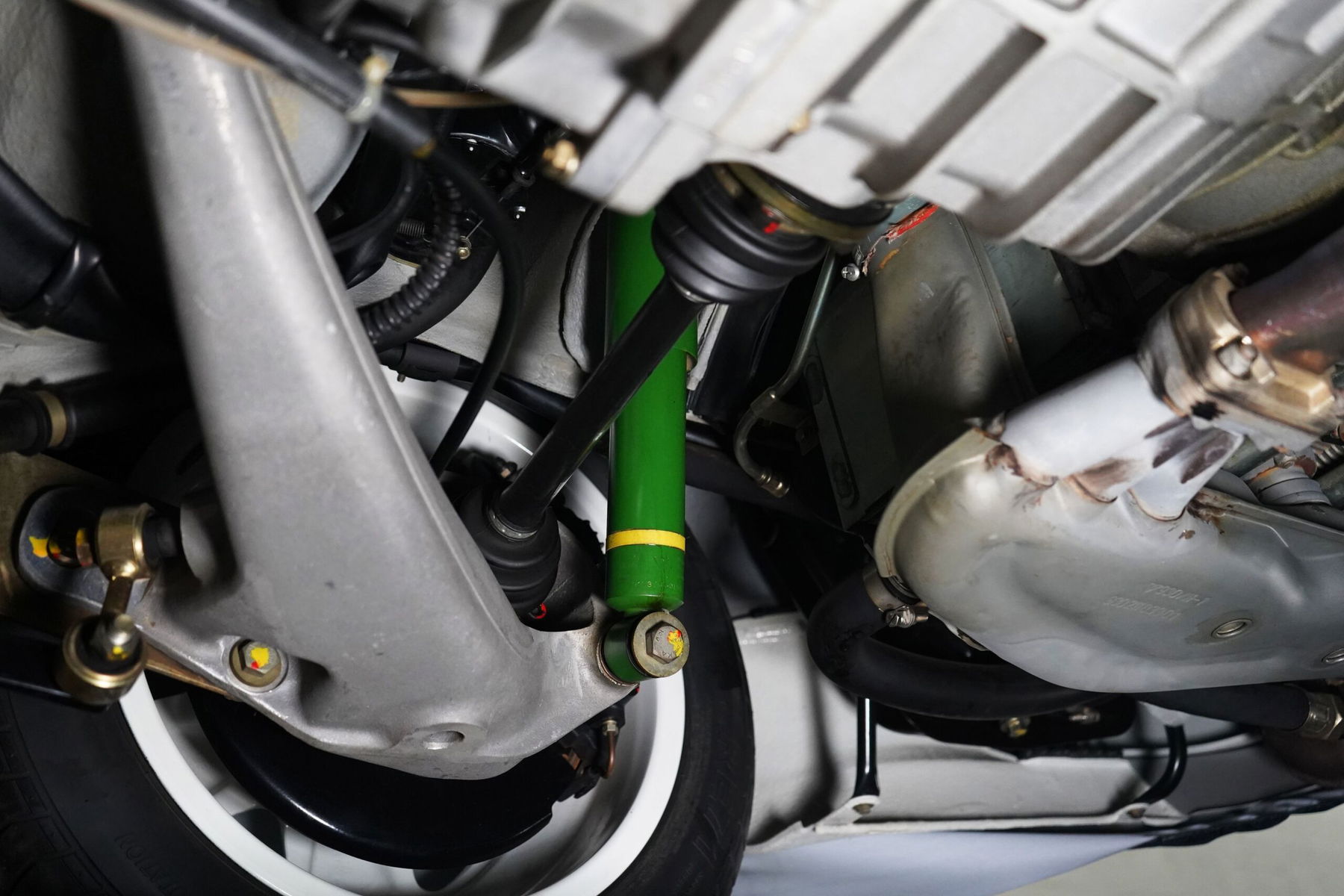
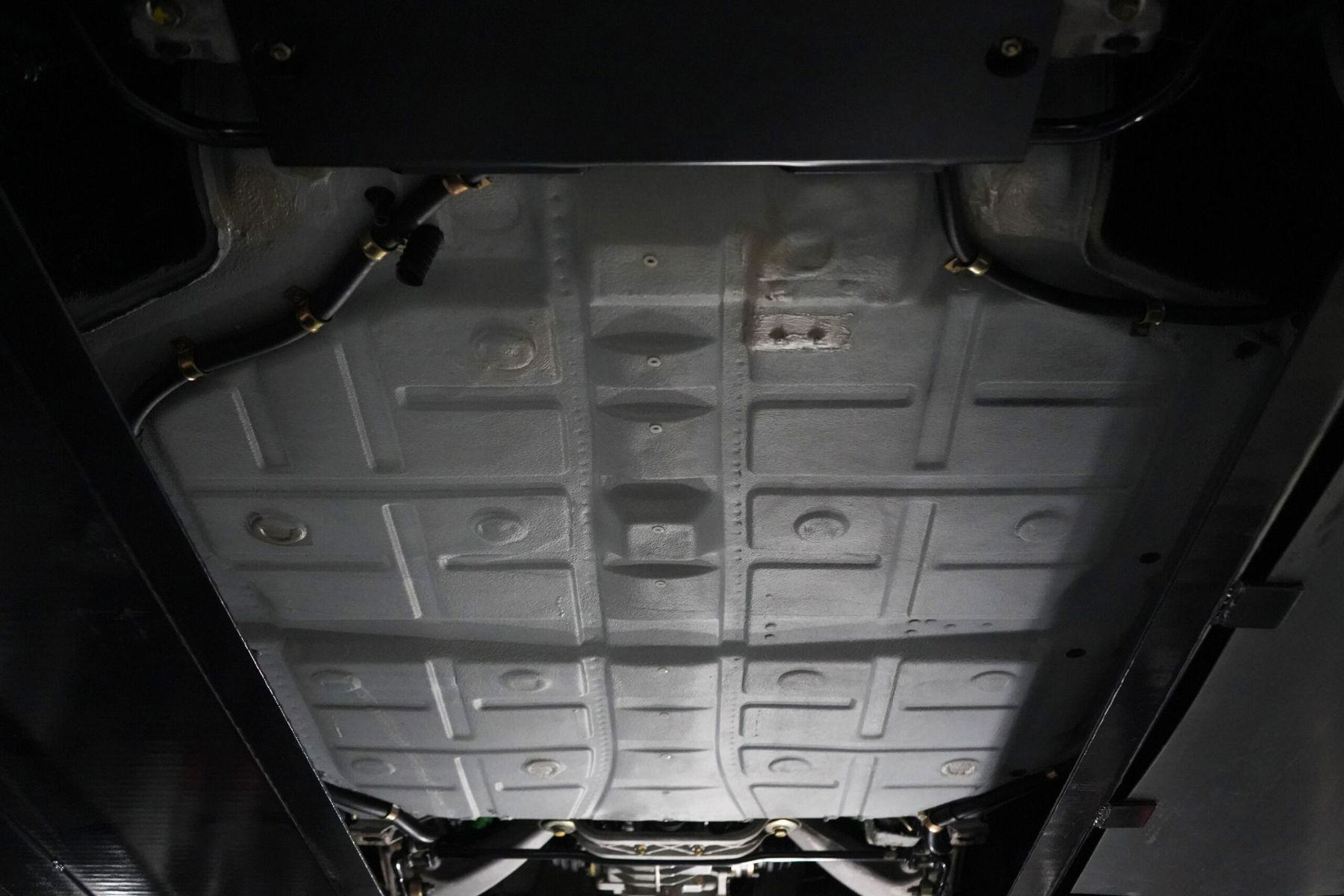
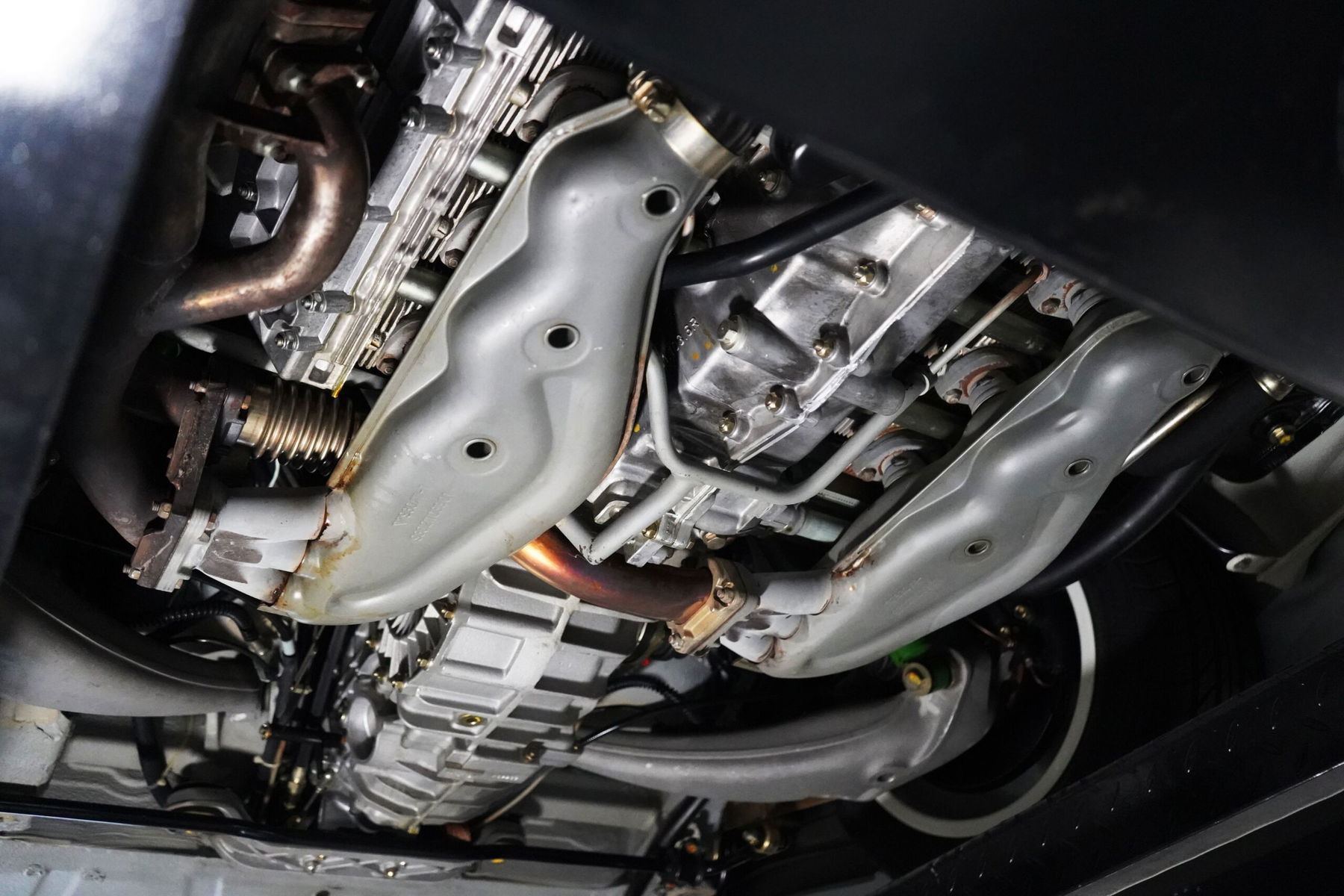
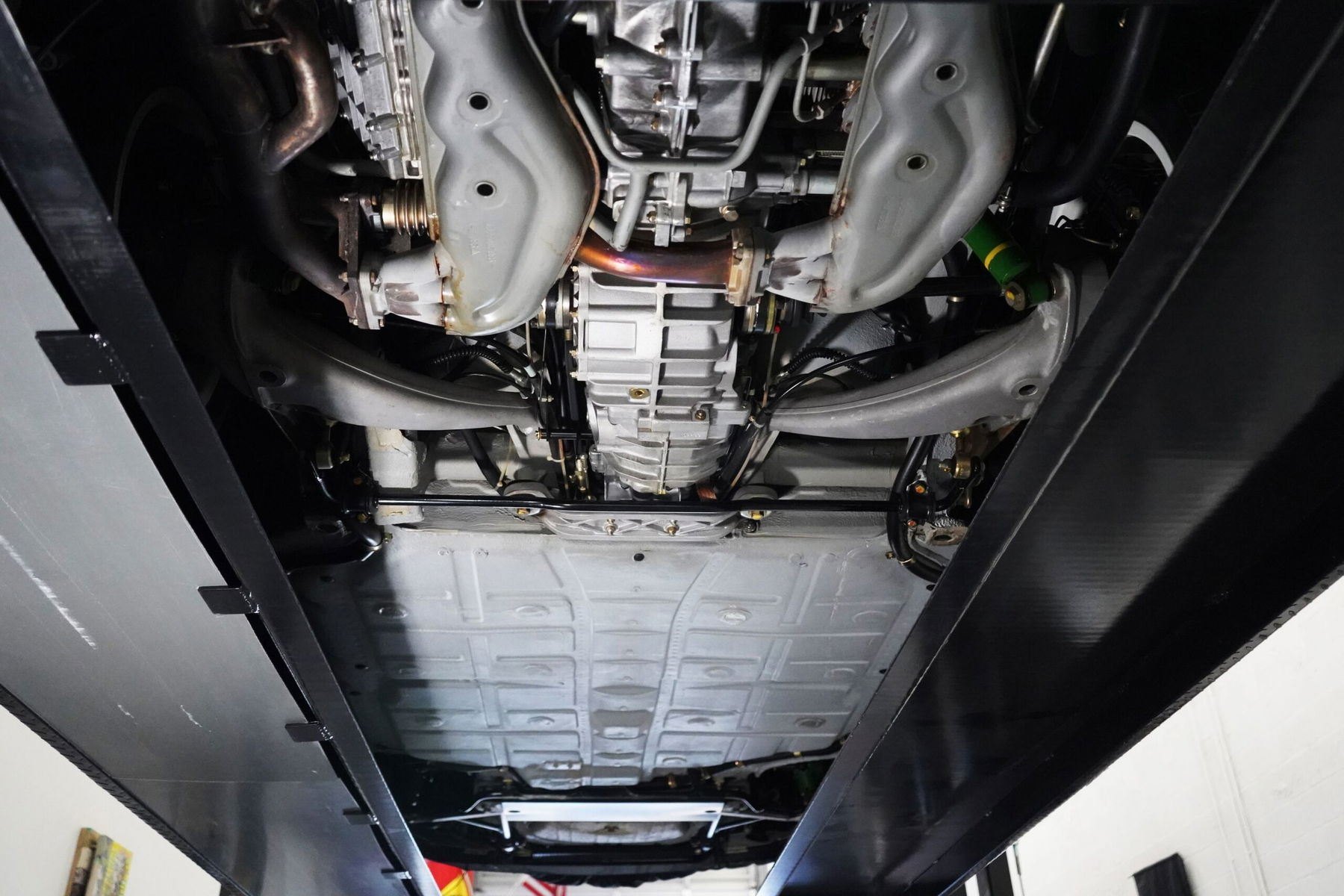
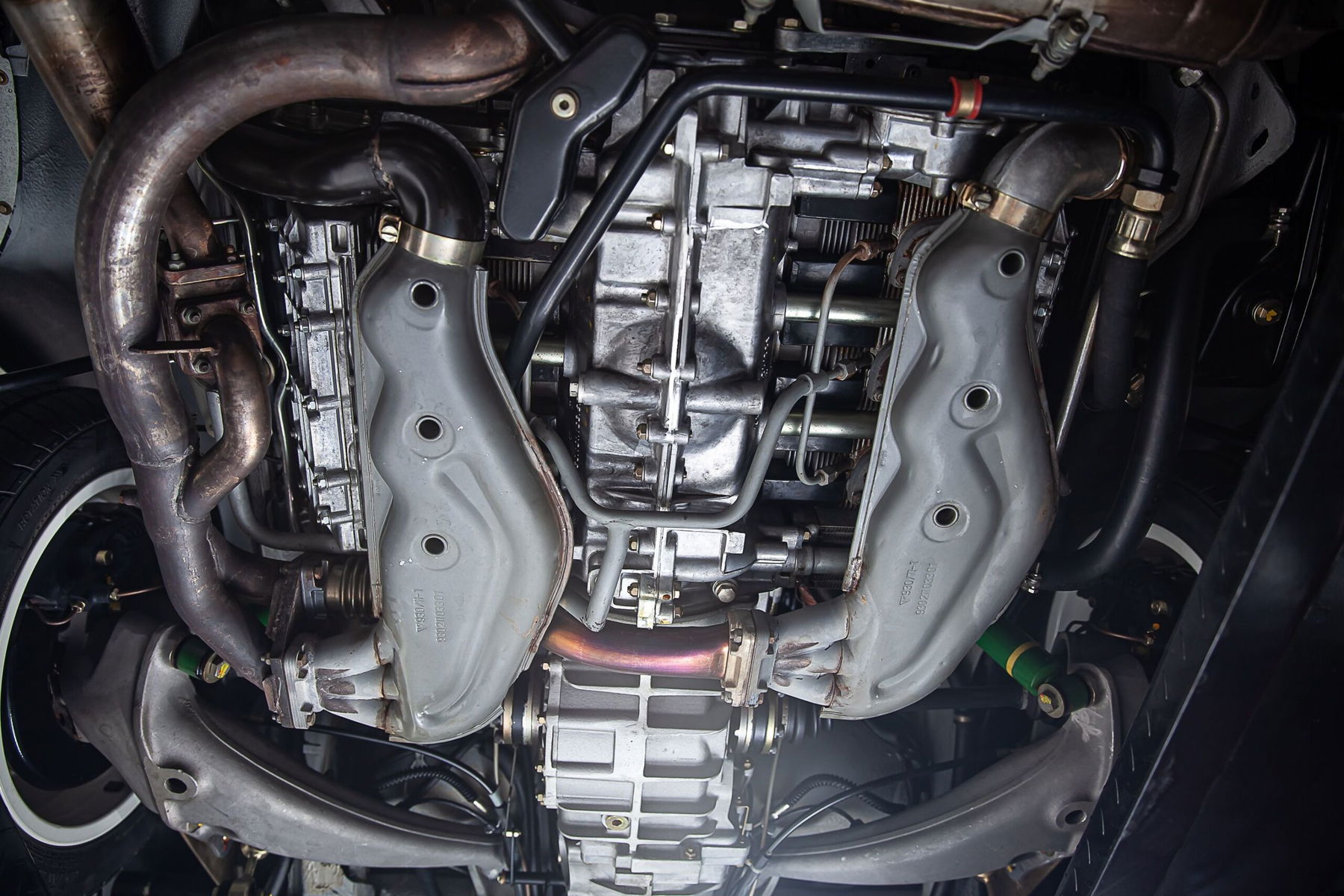
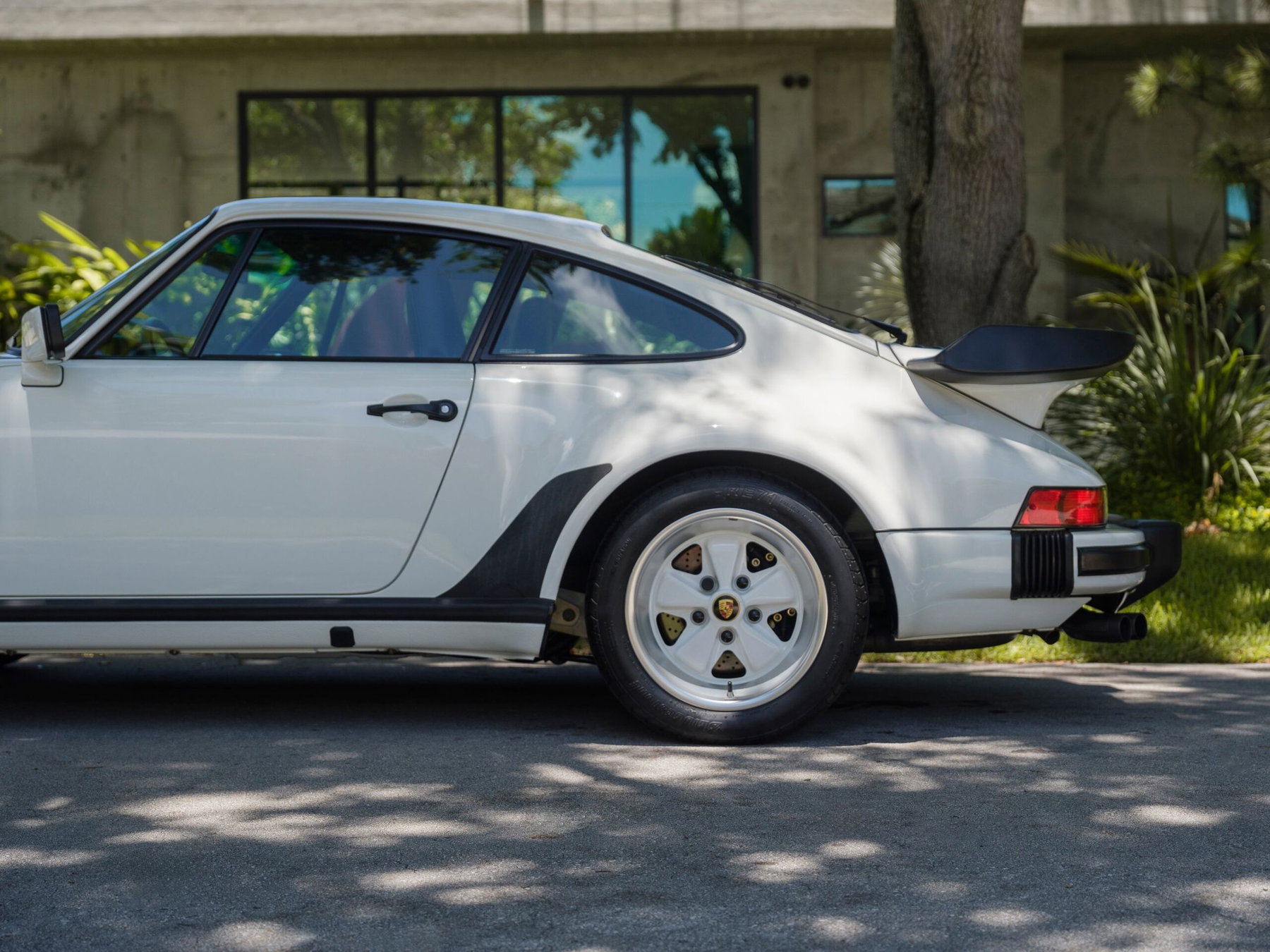
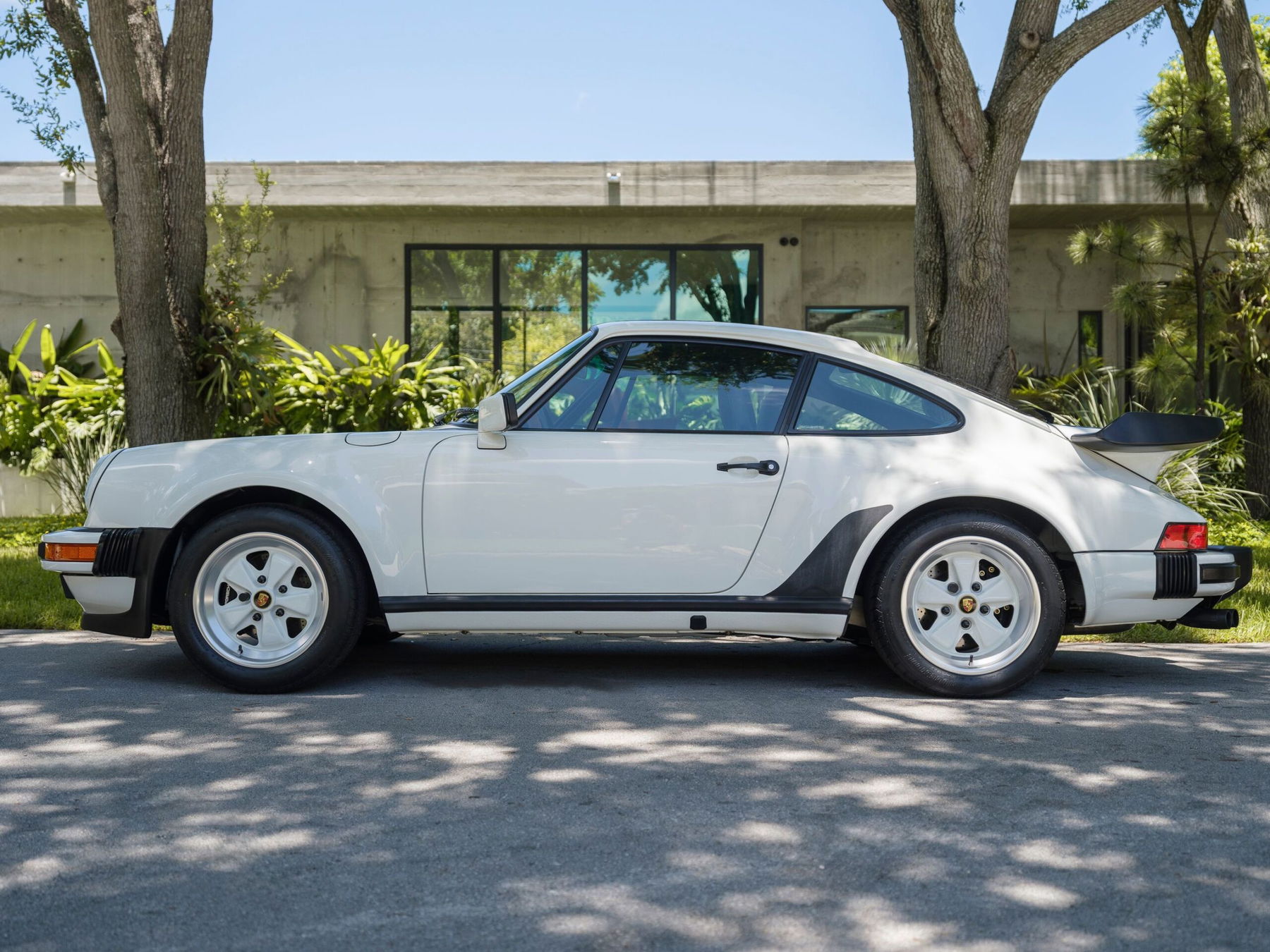
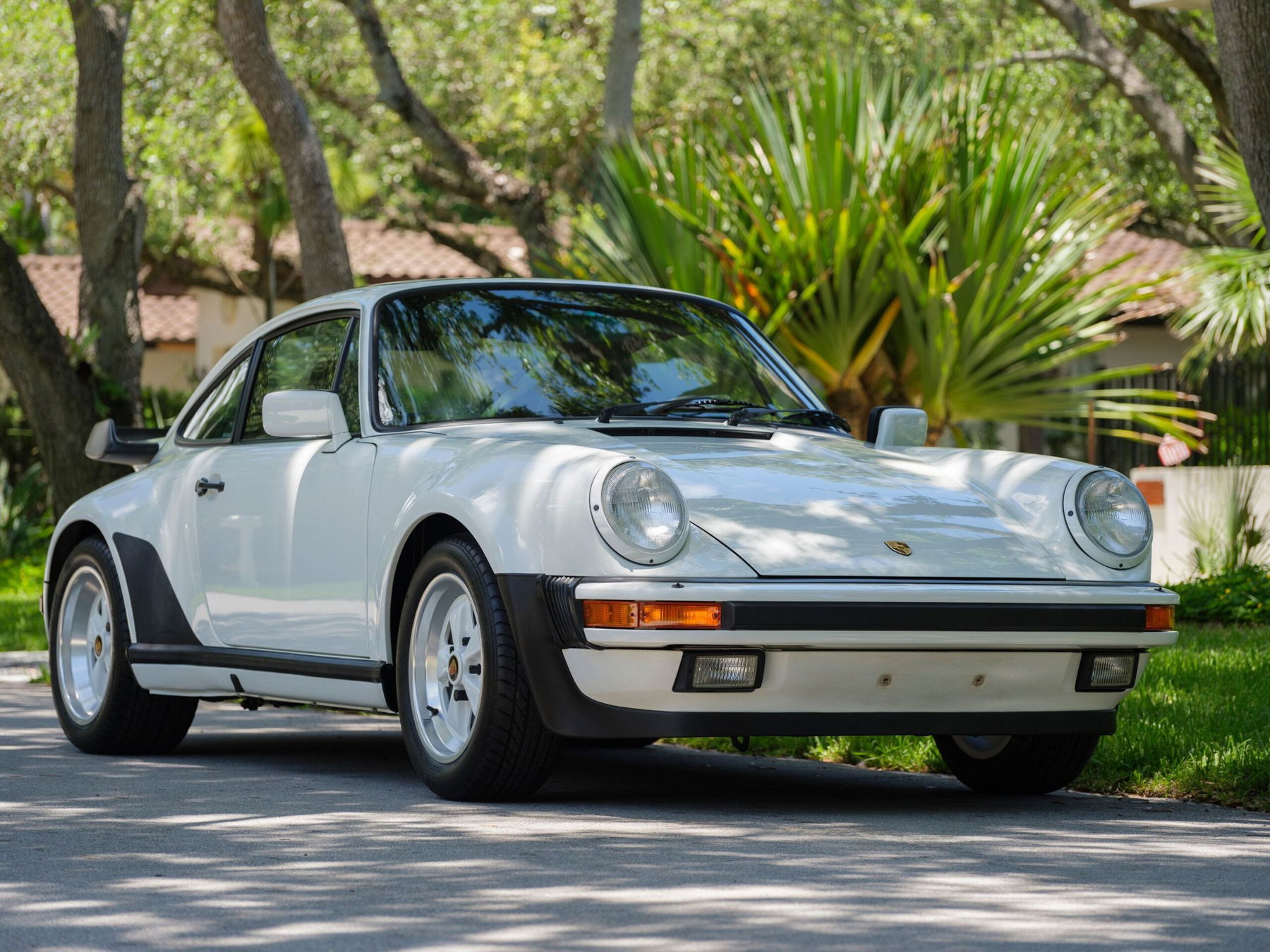
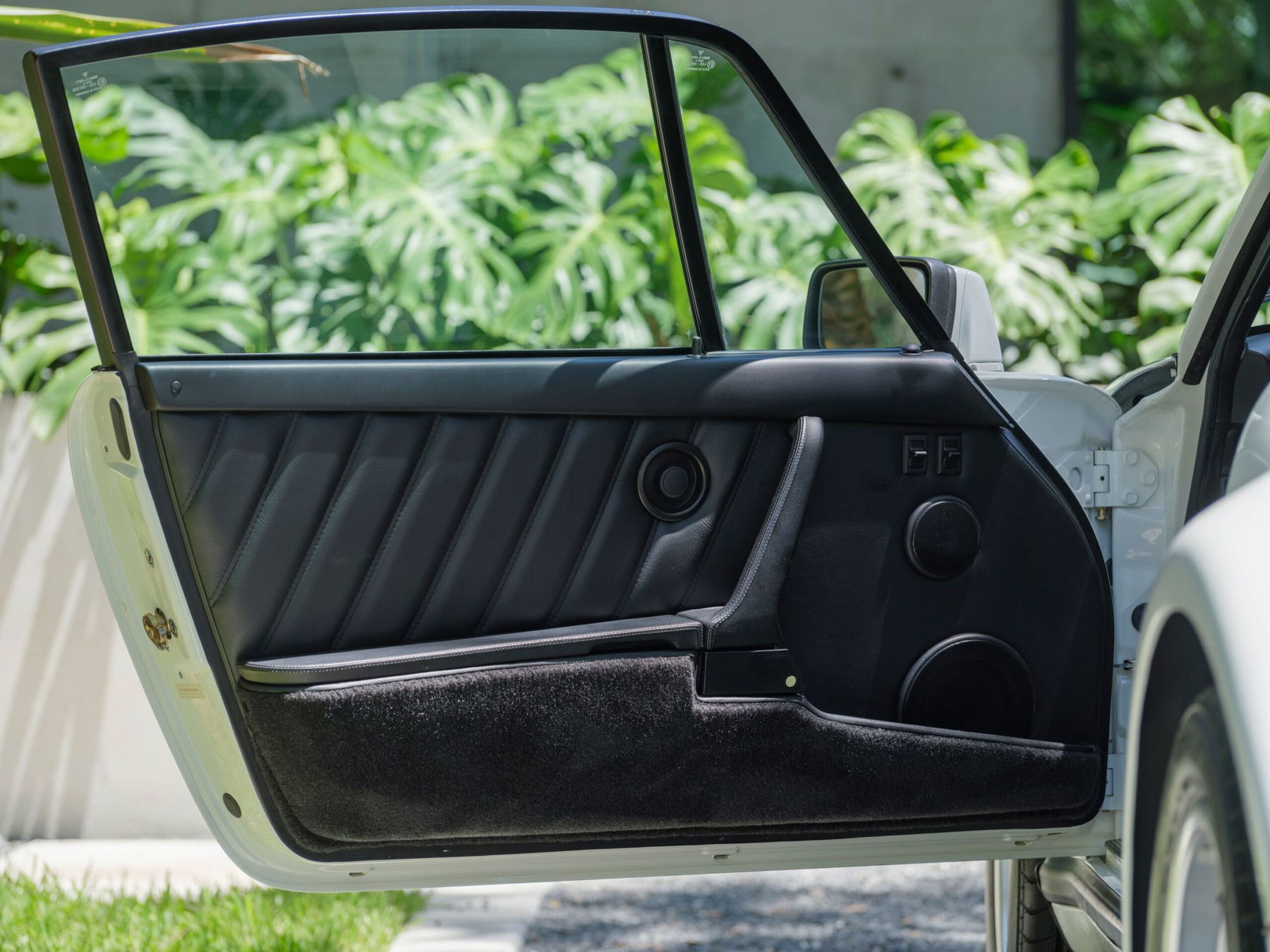
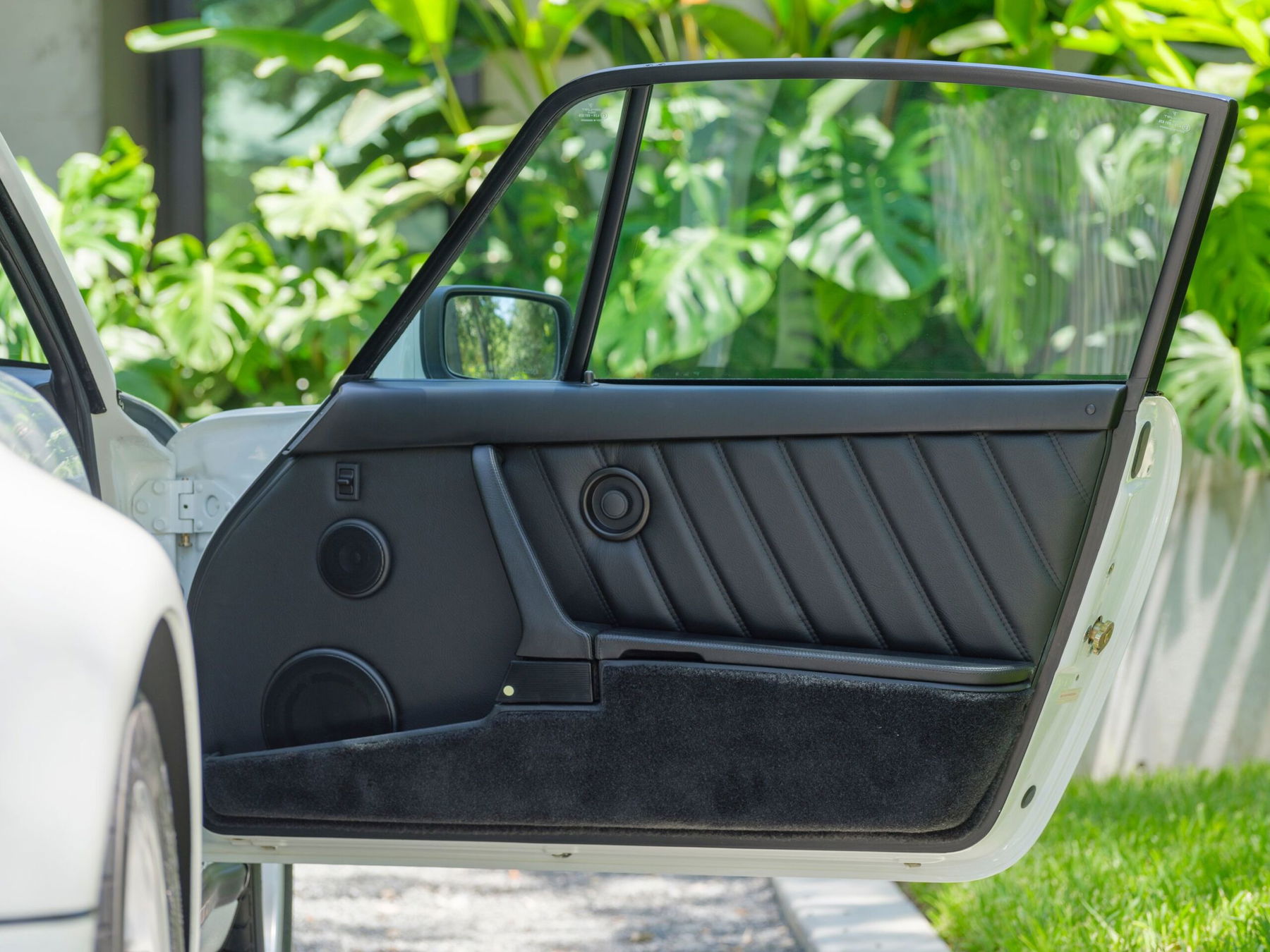
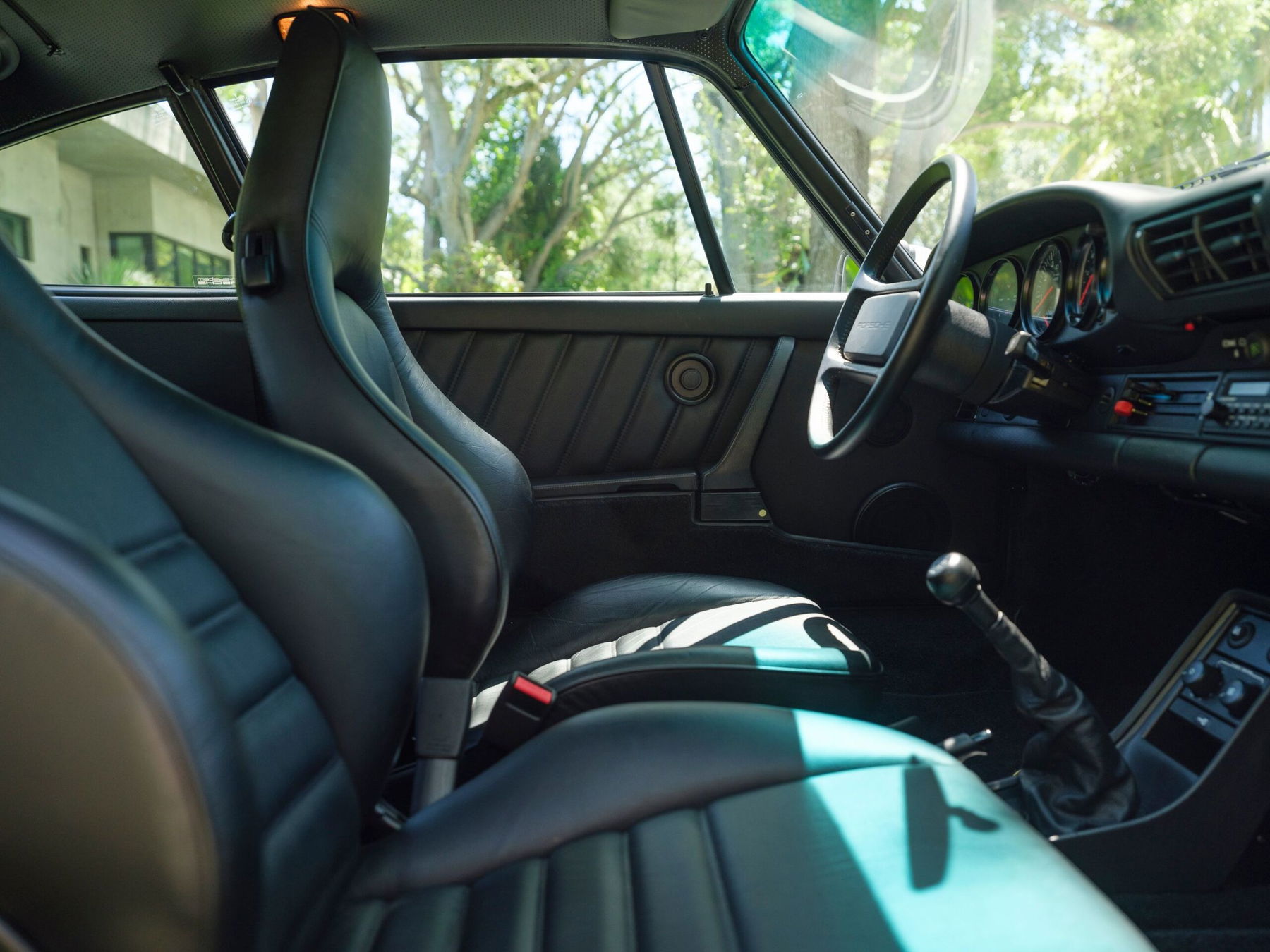
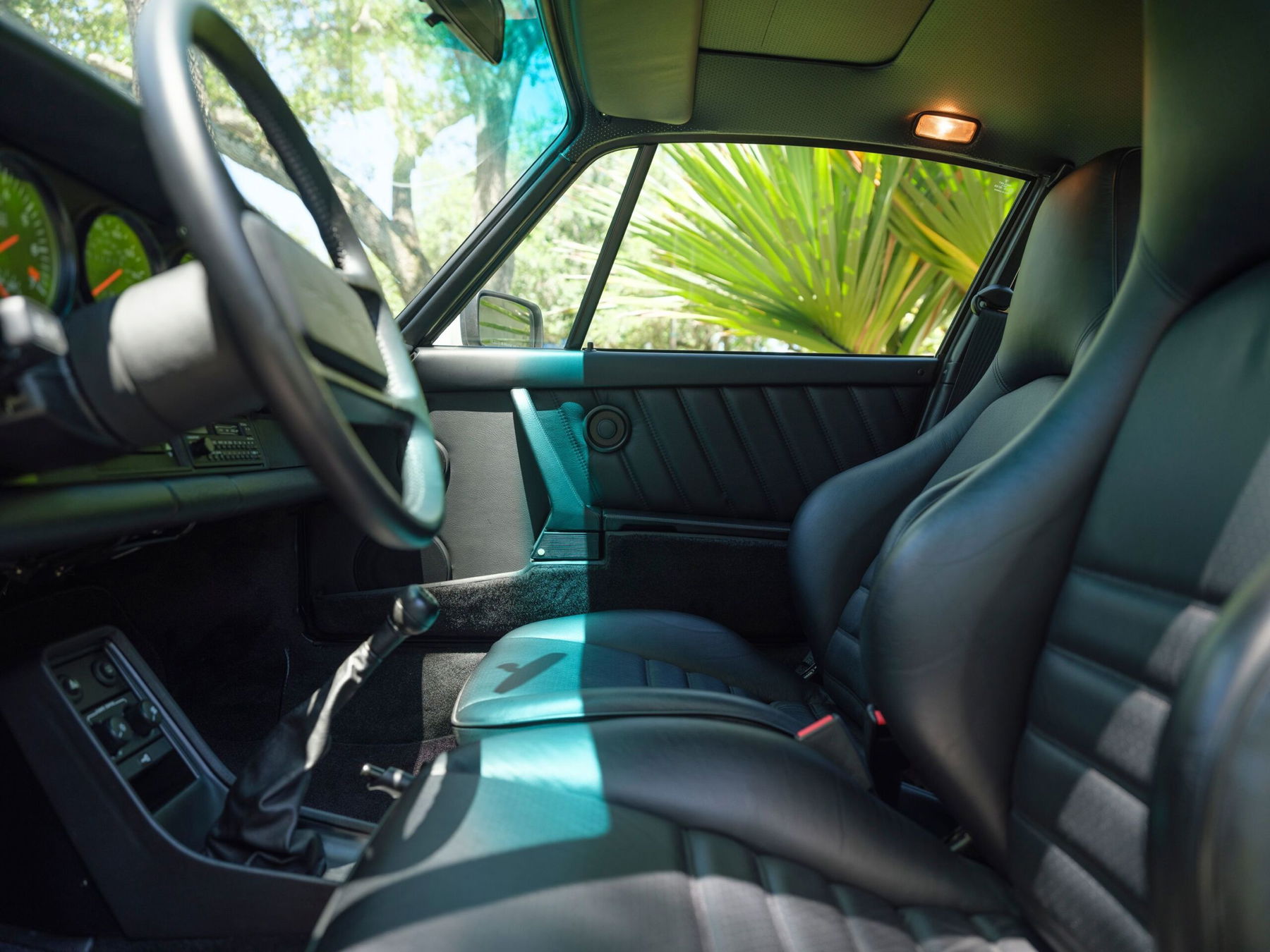
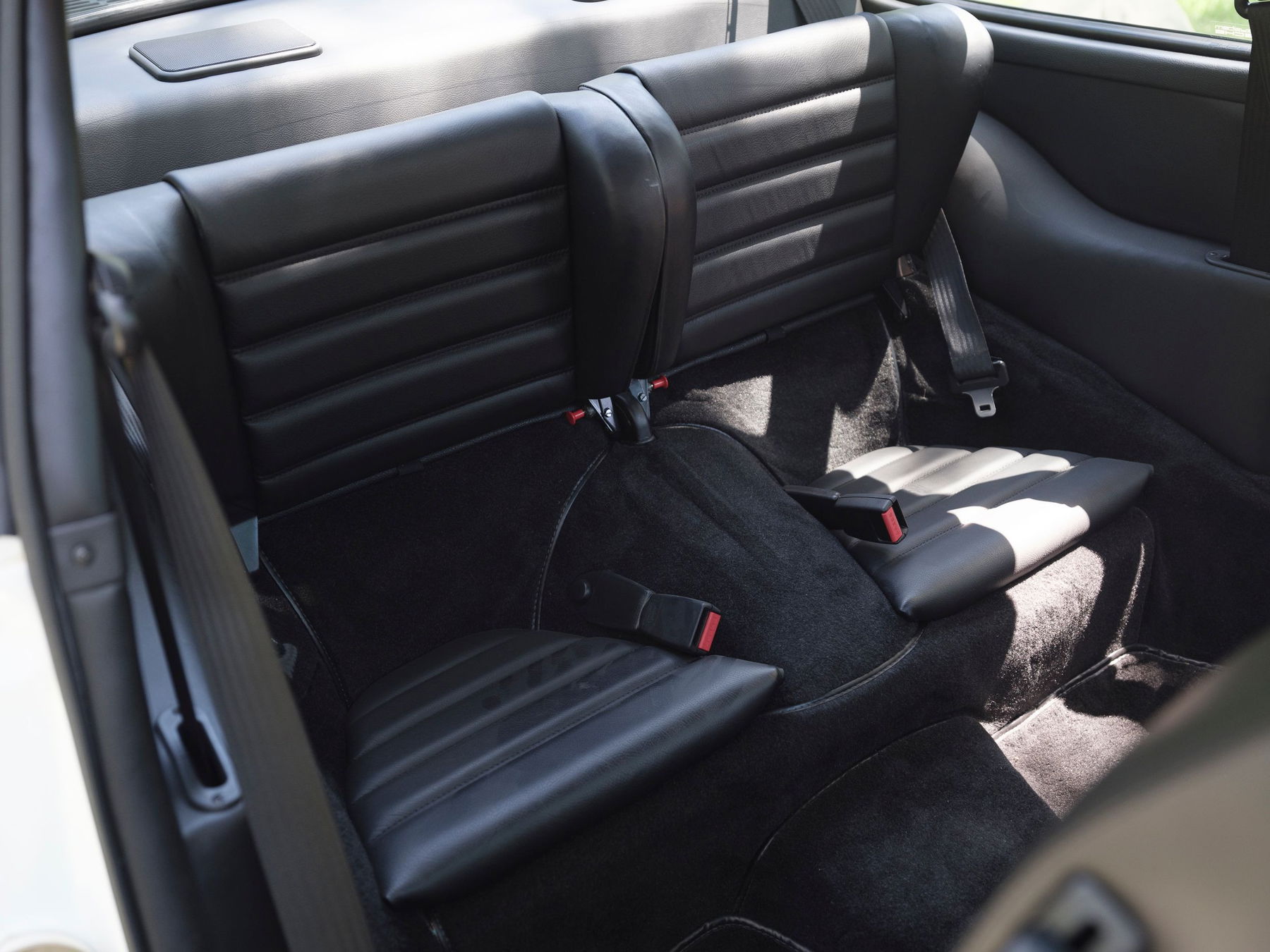
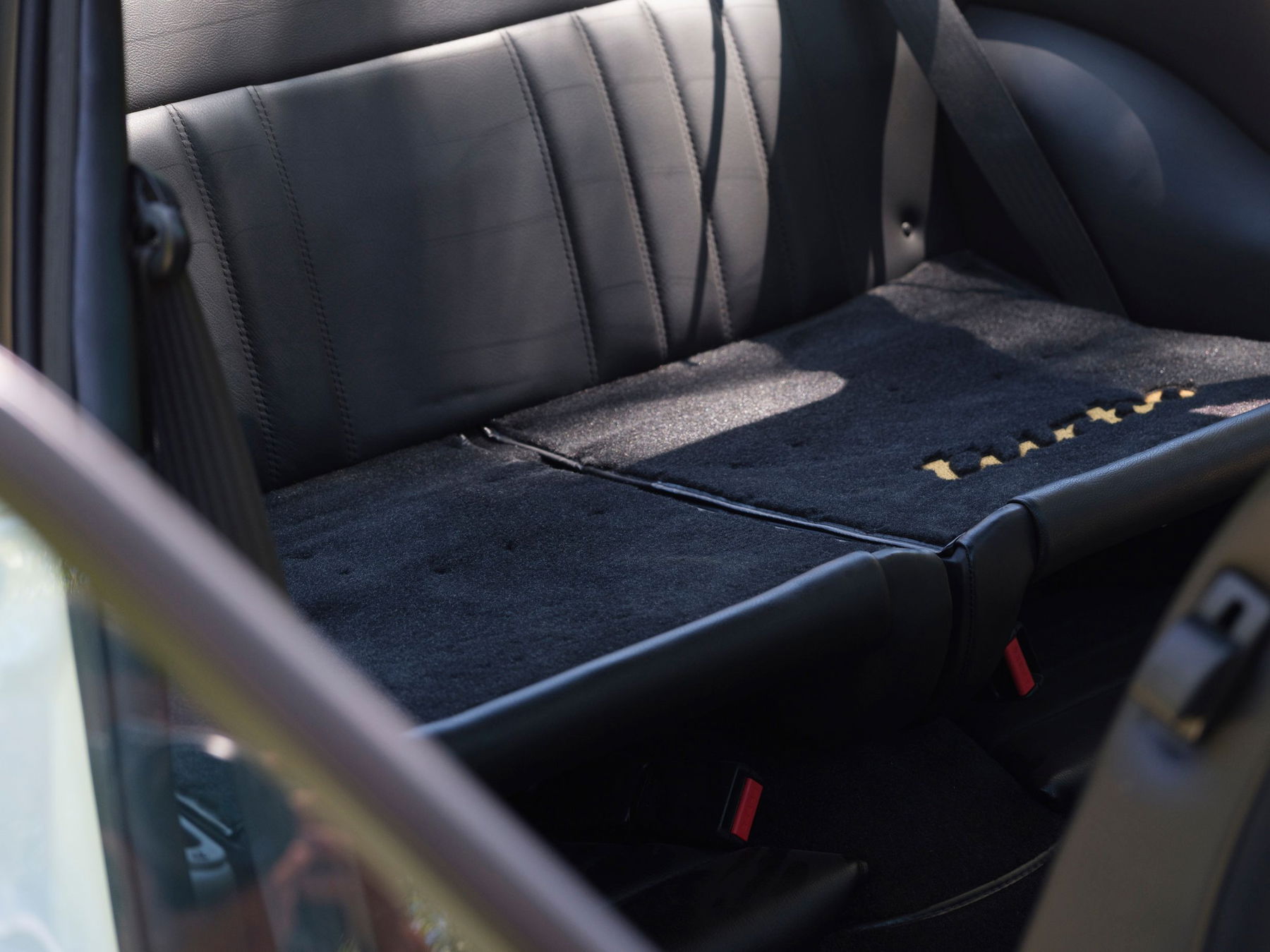
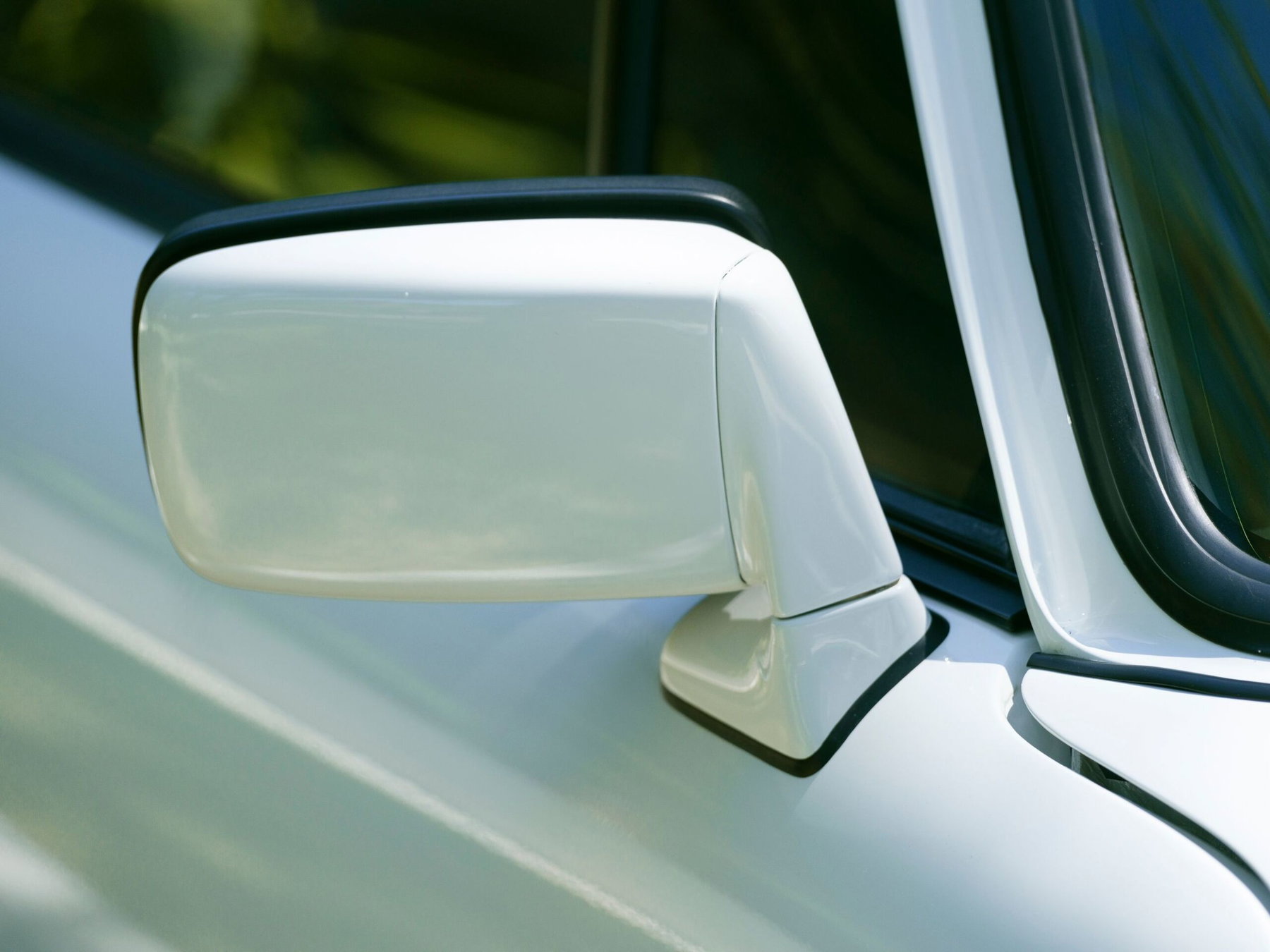
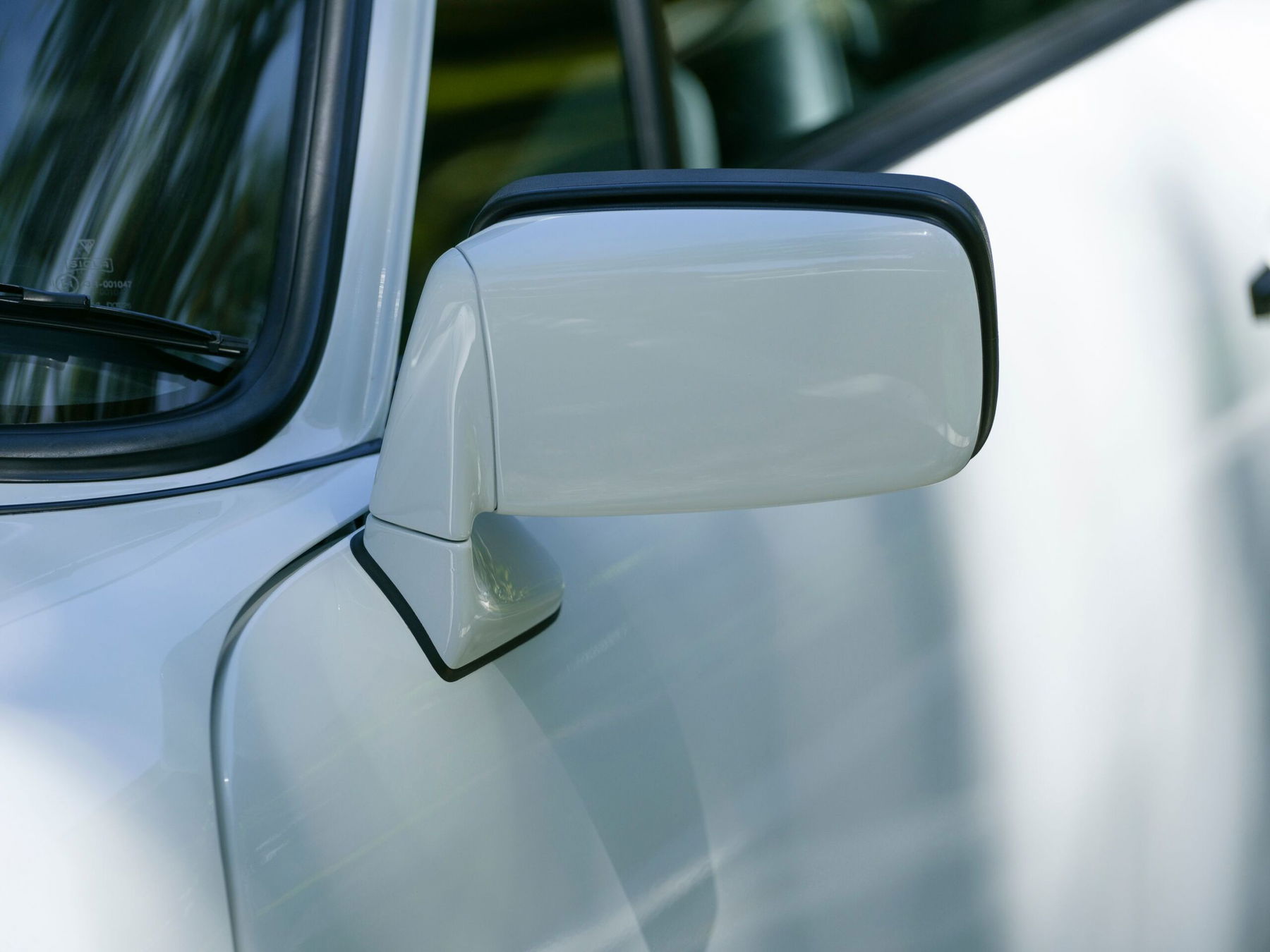
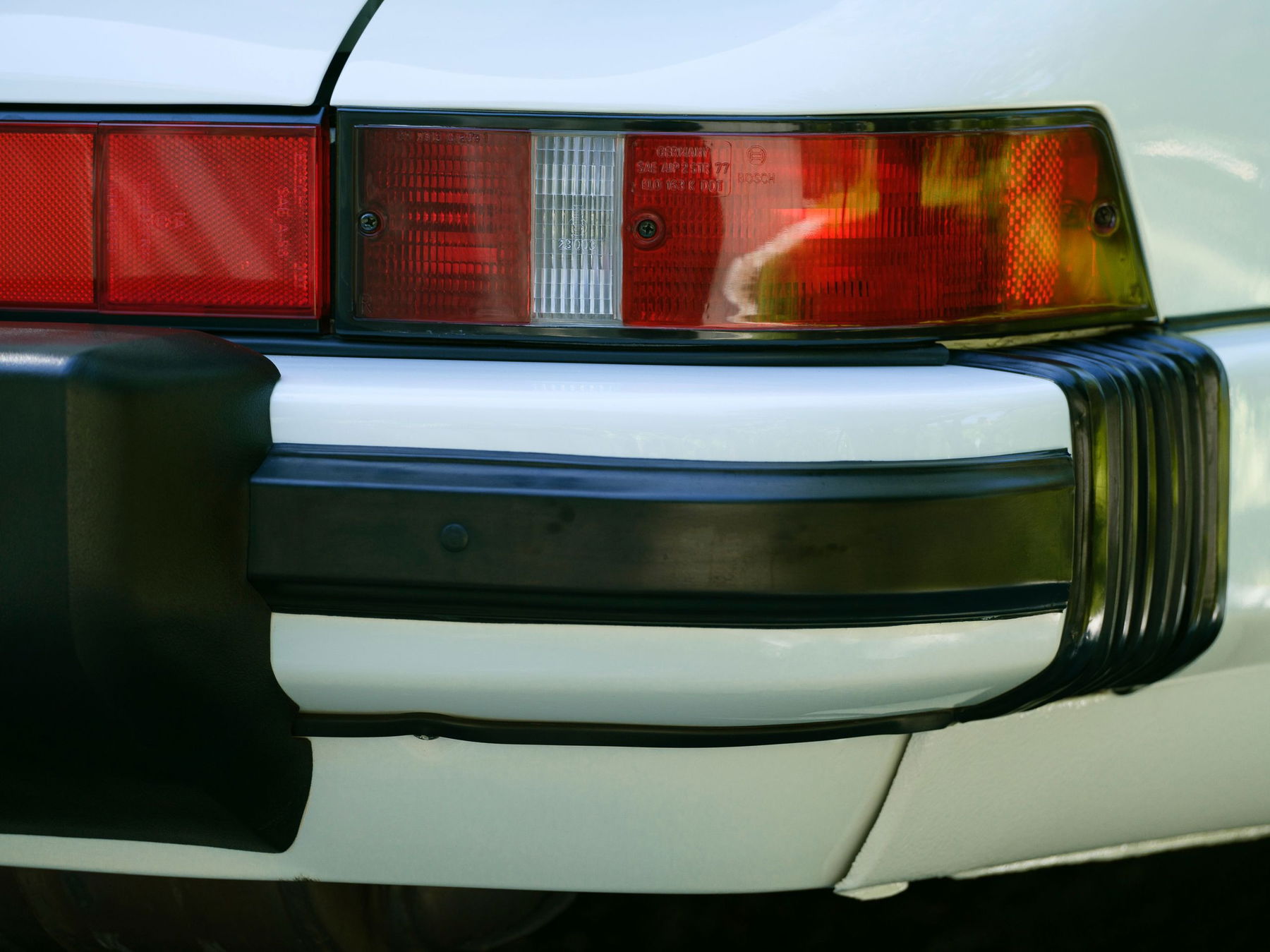
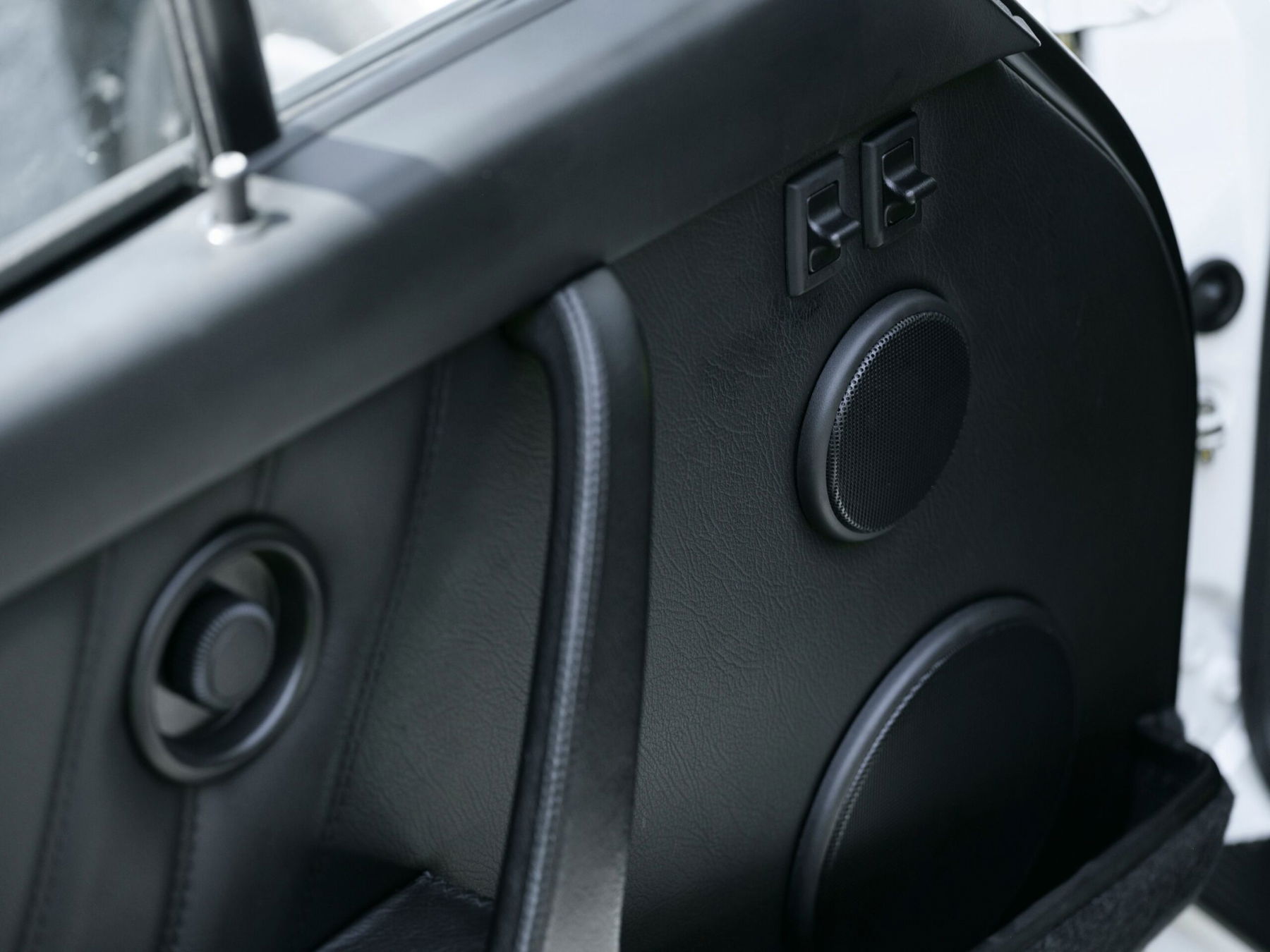
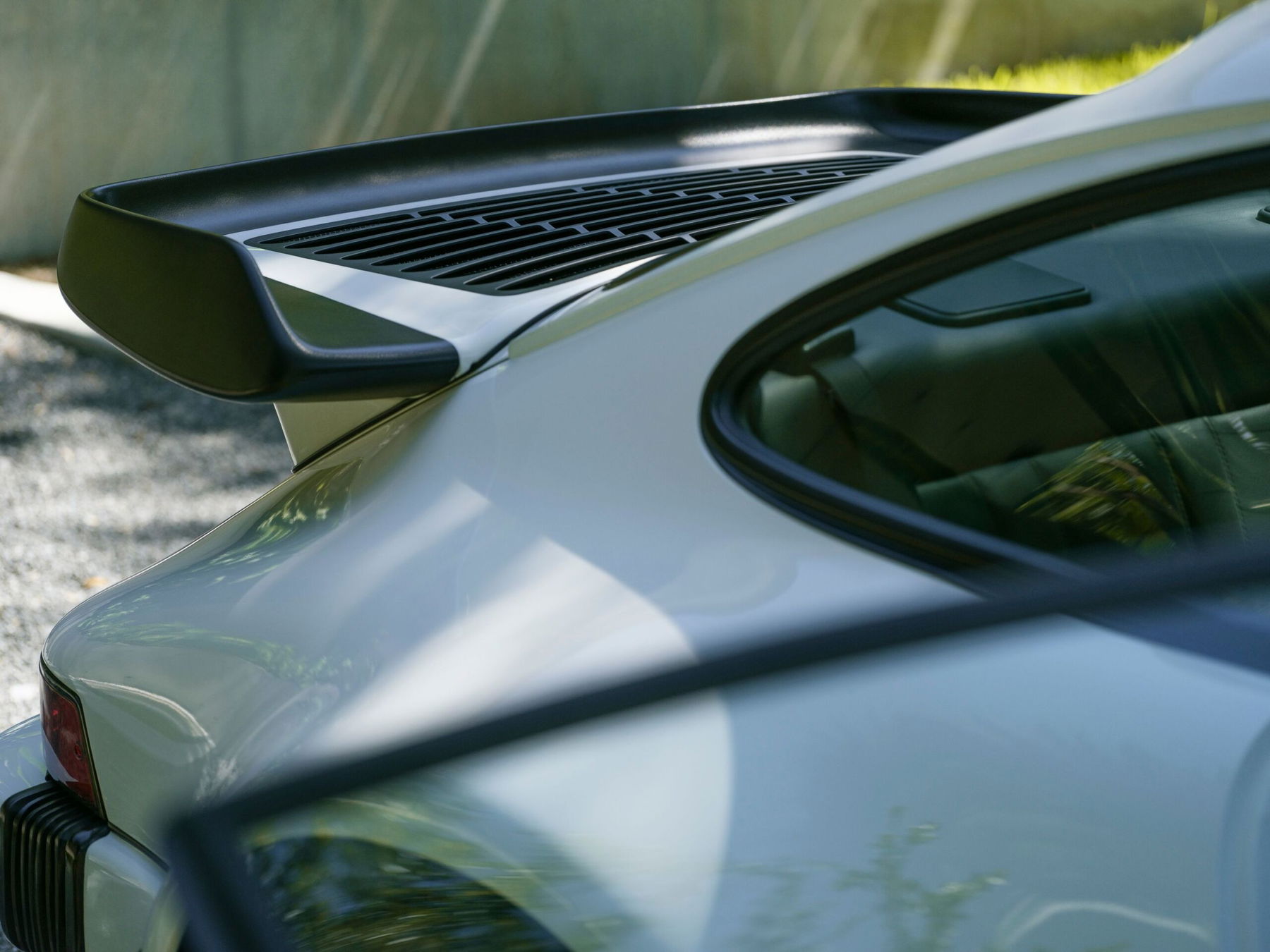
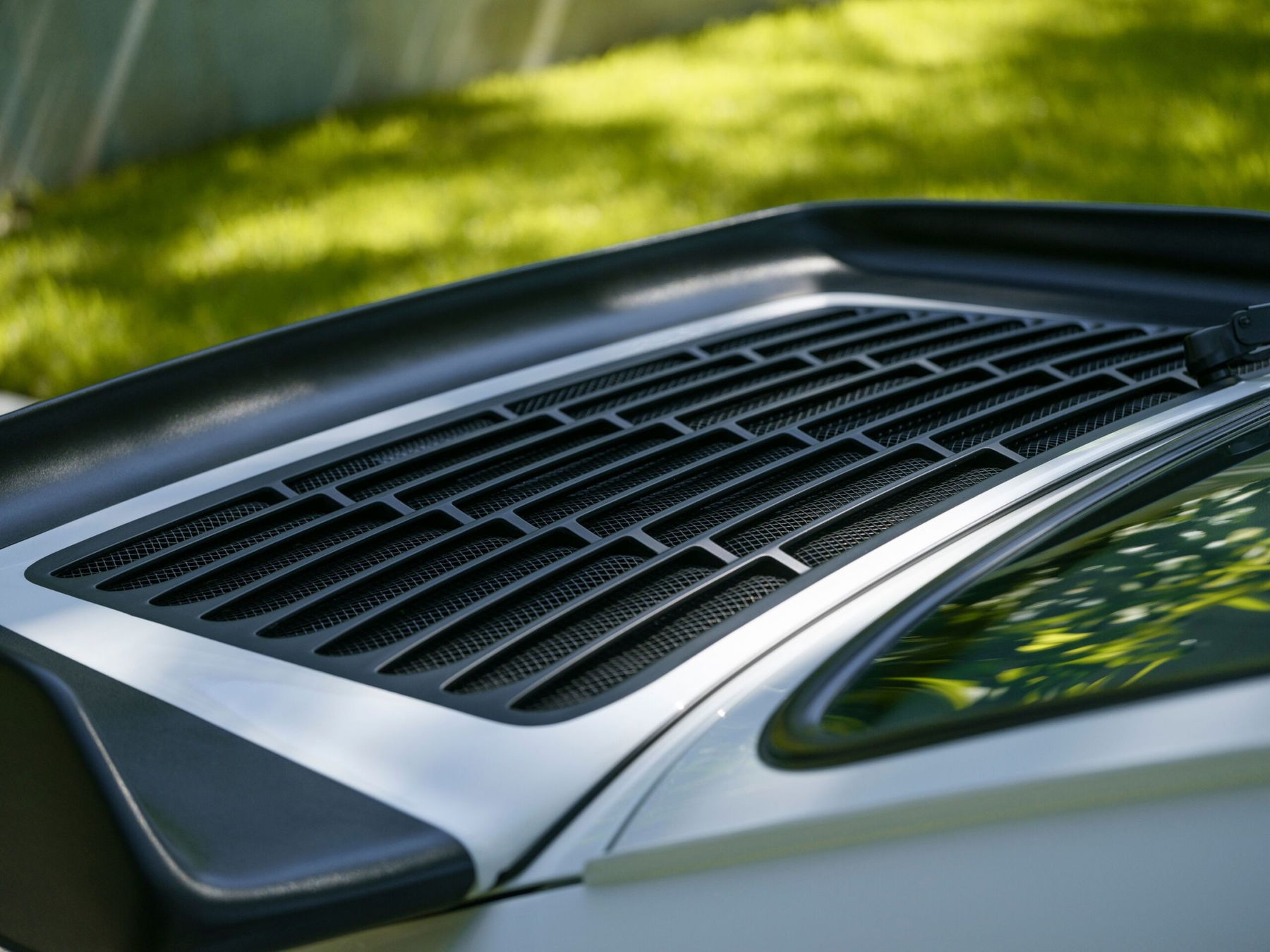
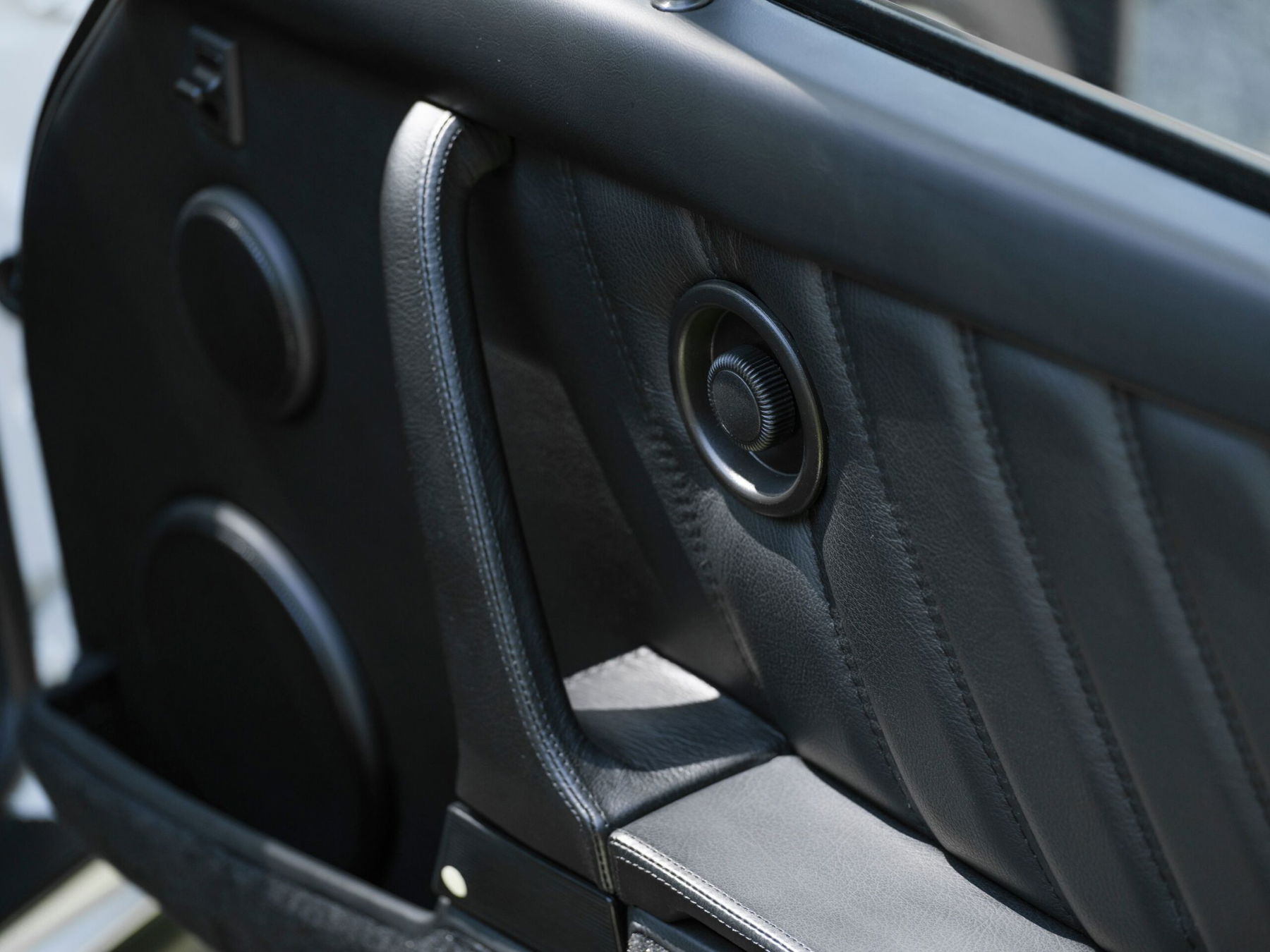
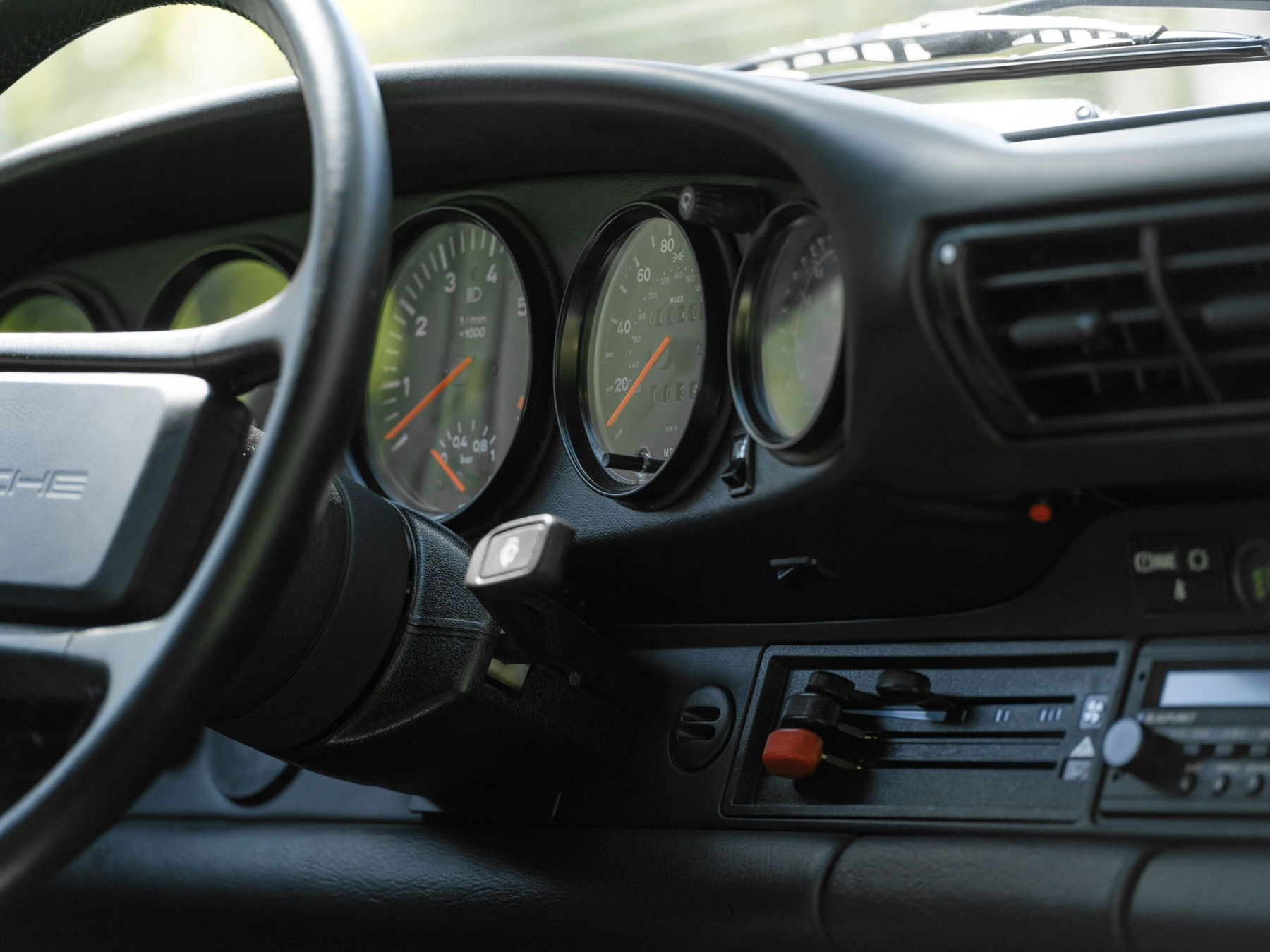
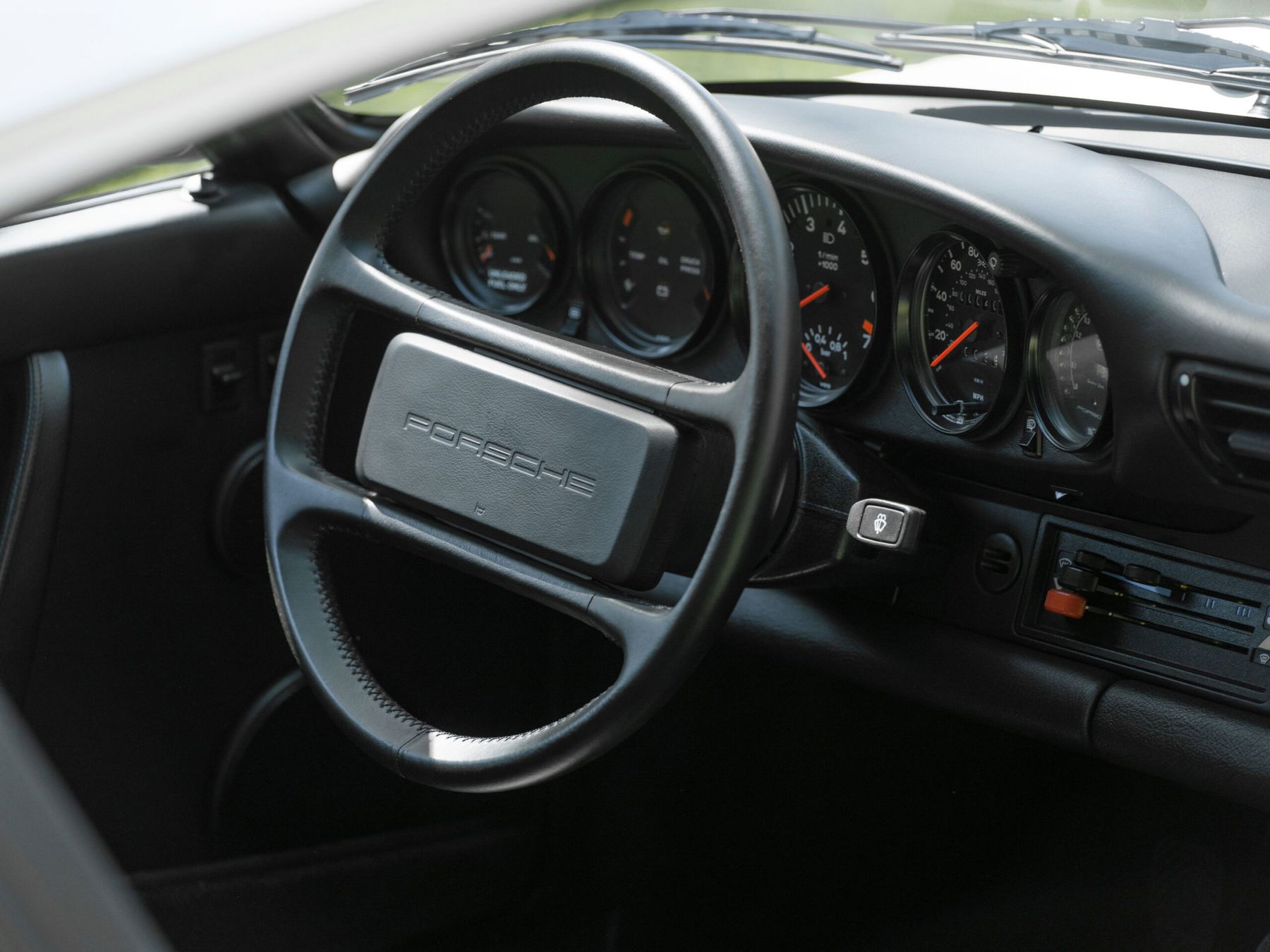
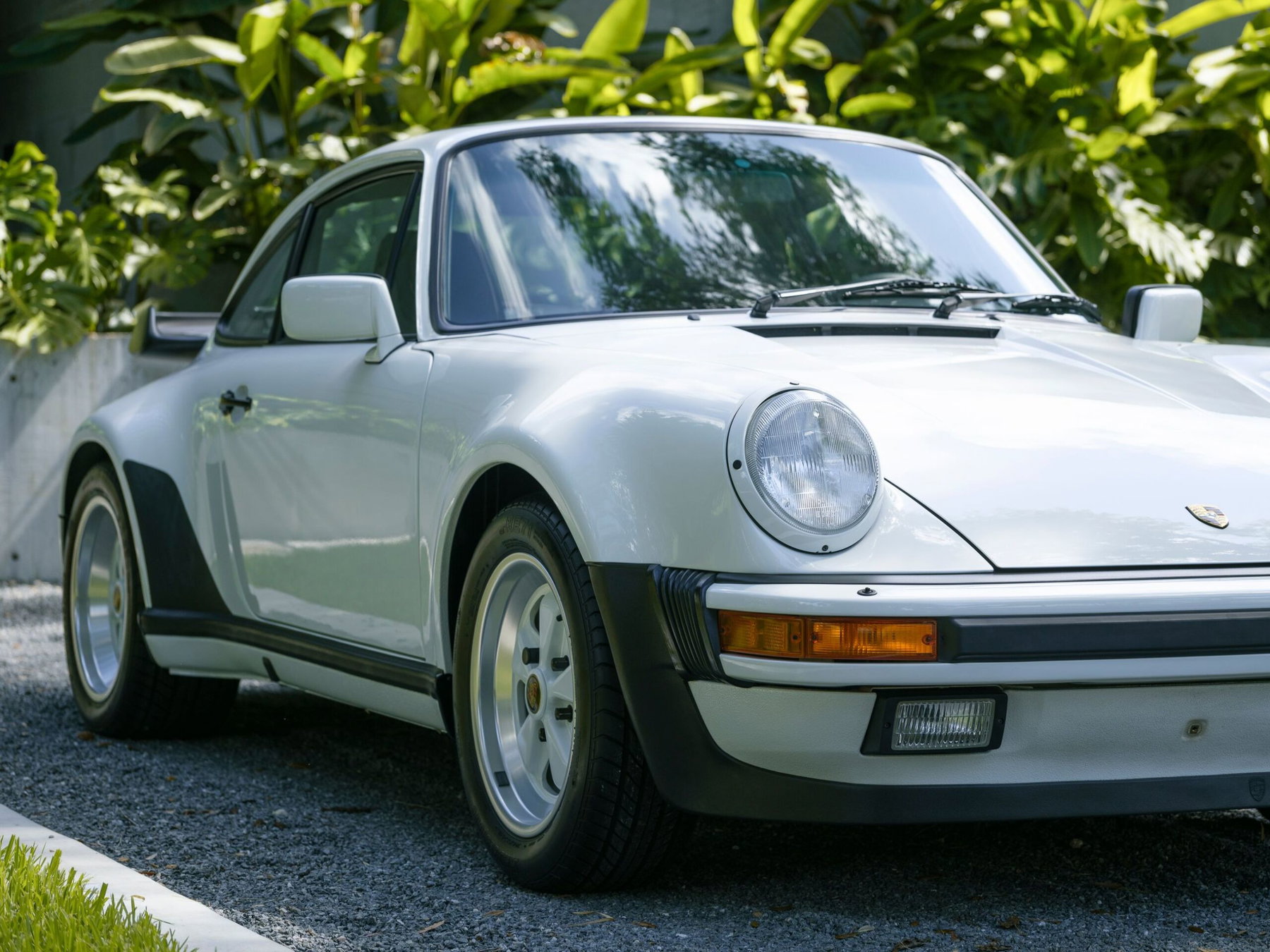
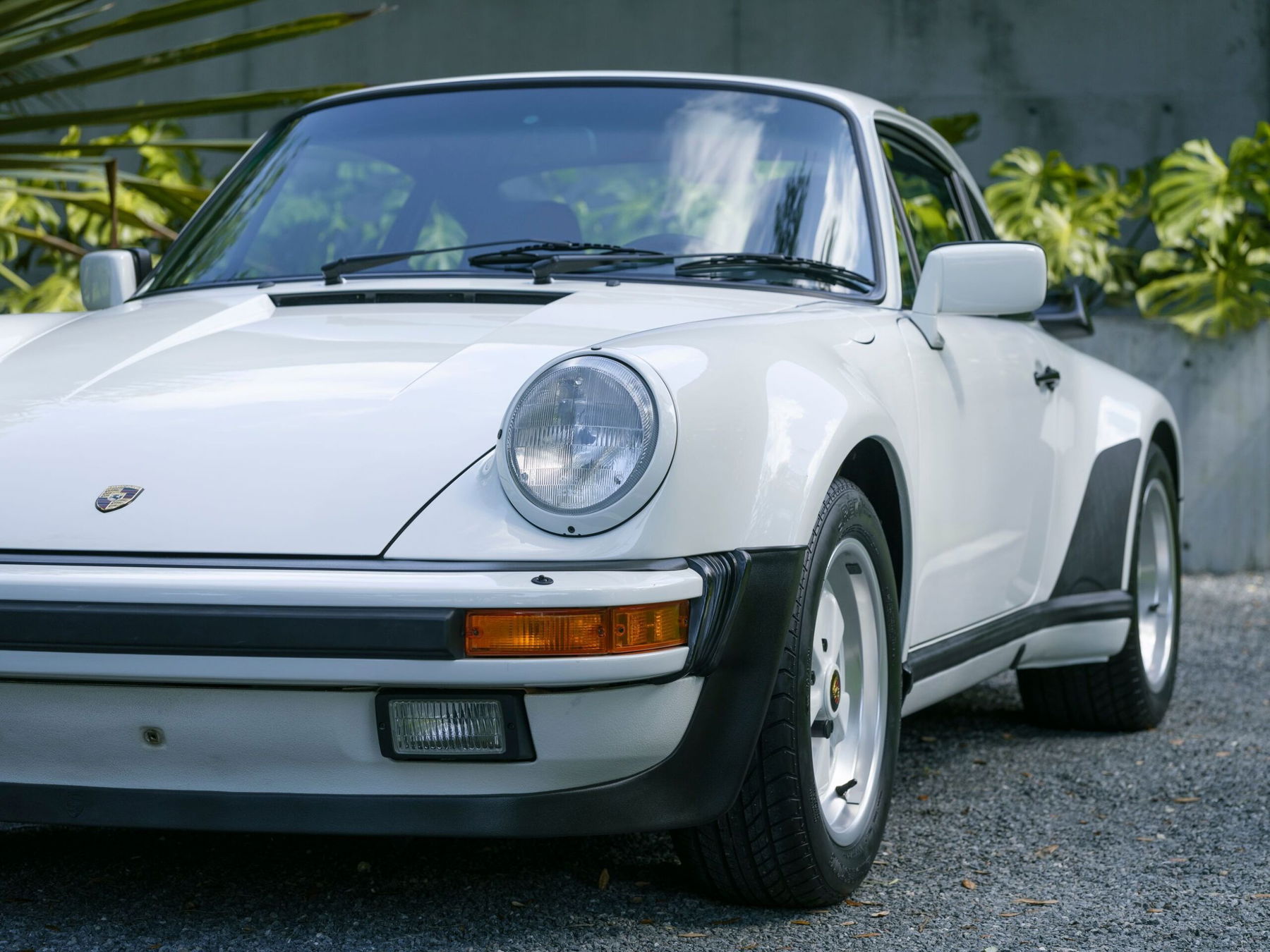
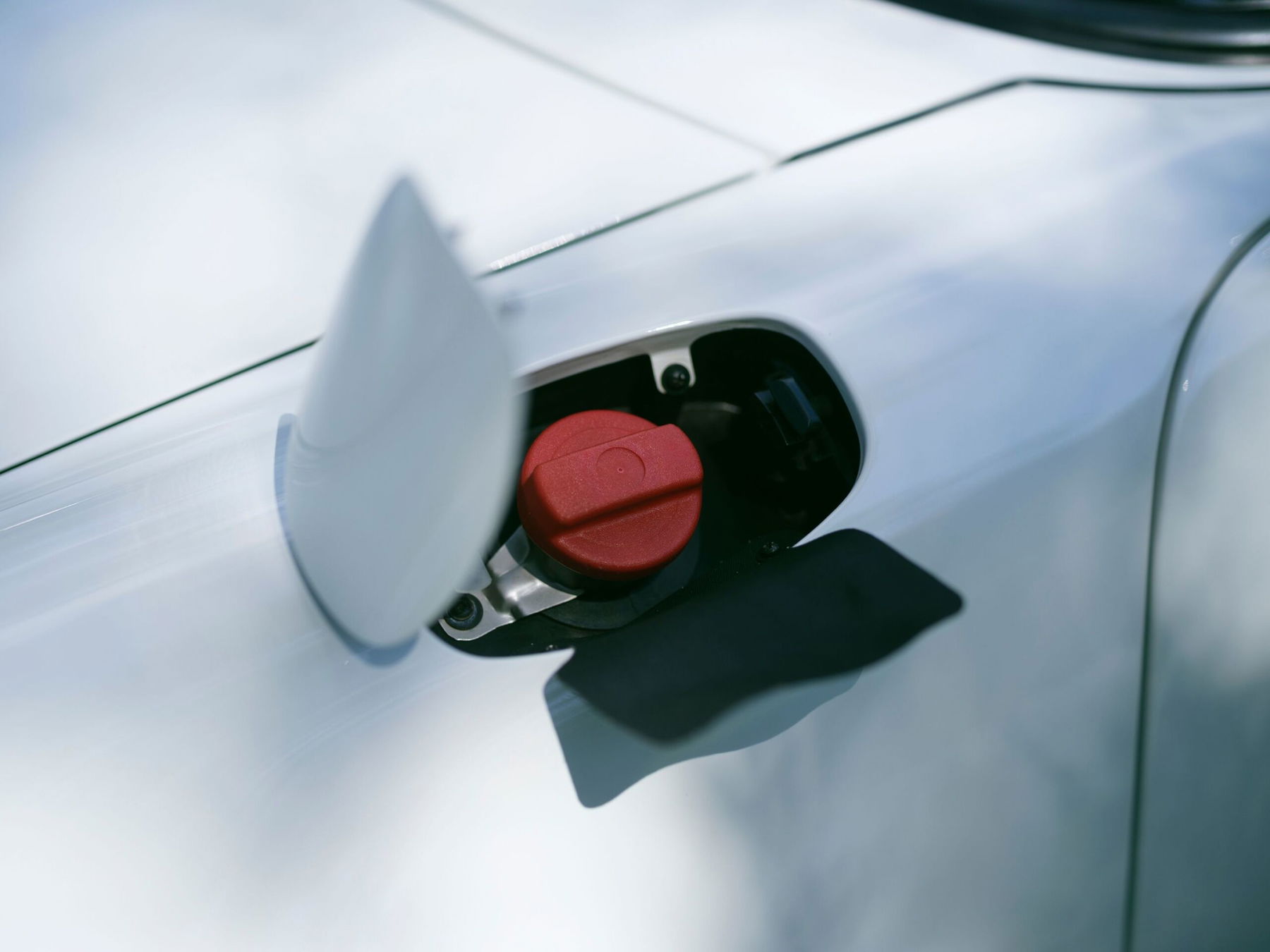
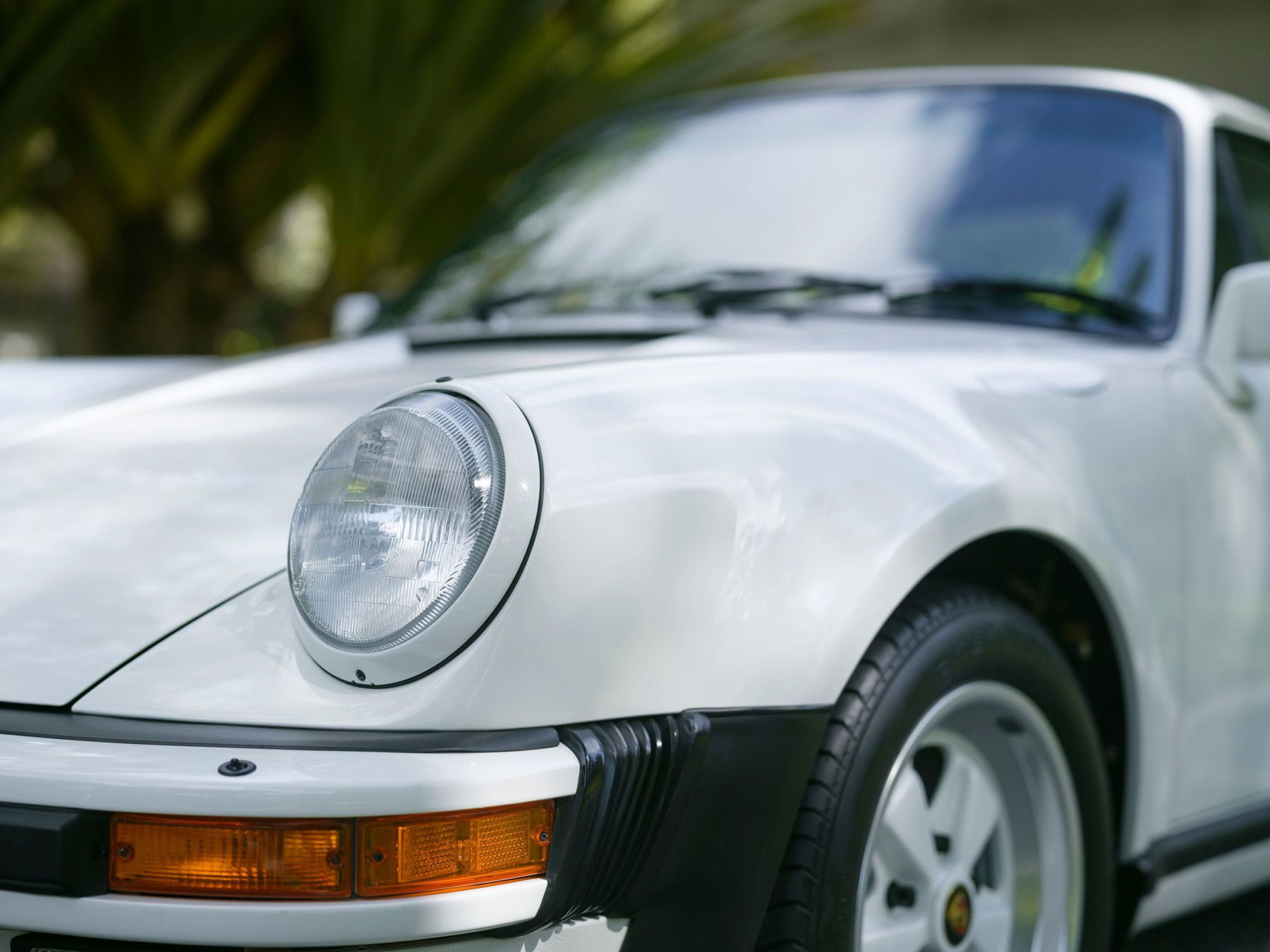
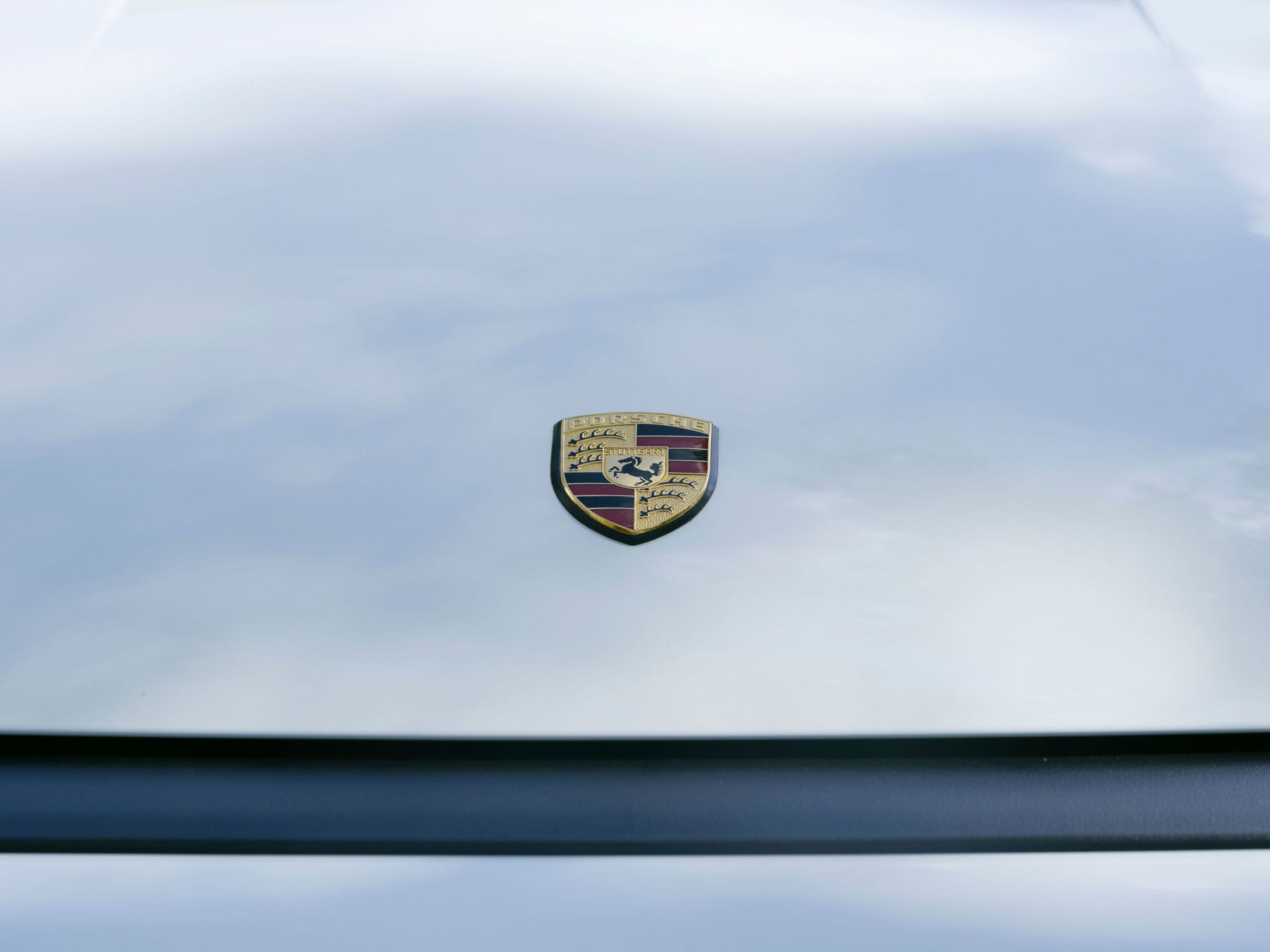
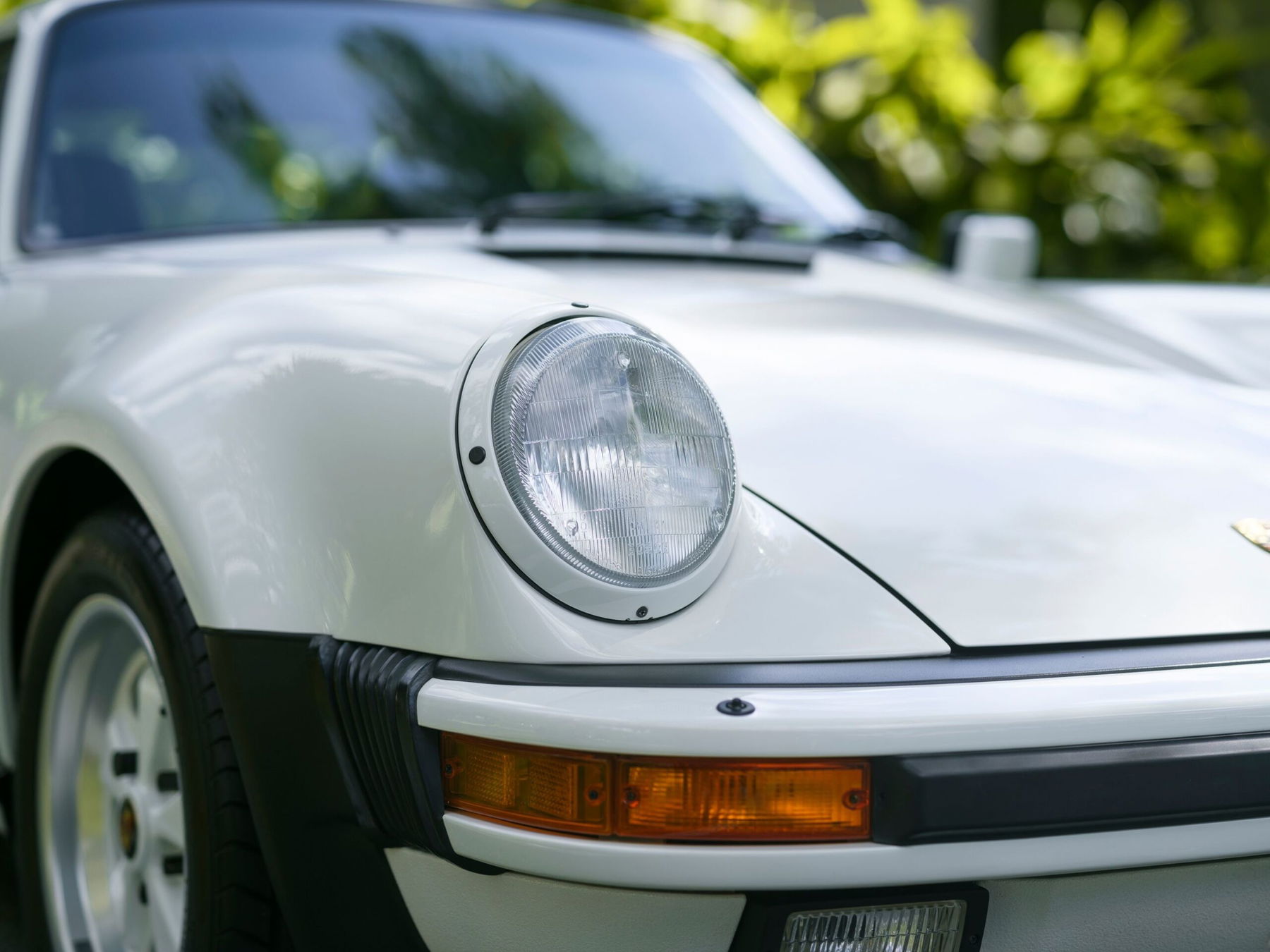
Finished in a classic Grand Prix White, the vehicle boasts a highly original finish that has been untouched from new. The first-rate black leather interior remains stock, emphasizing the car’s state of preservation. The odometer impressively reads just 408 miles, virtually delivery mileage, and it still sits on its original tires.. Cherished and preserved, this museum-quality specimen has been nested in a controlled environment since its birth, an aspect that pays ode to its pristine and factory-fresh condition.
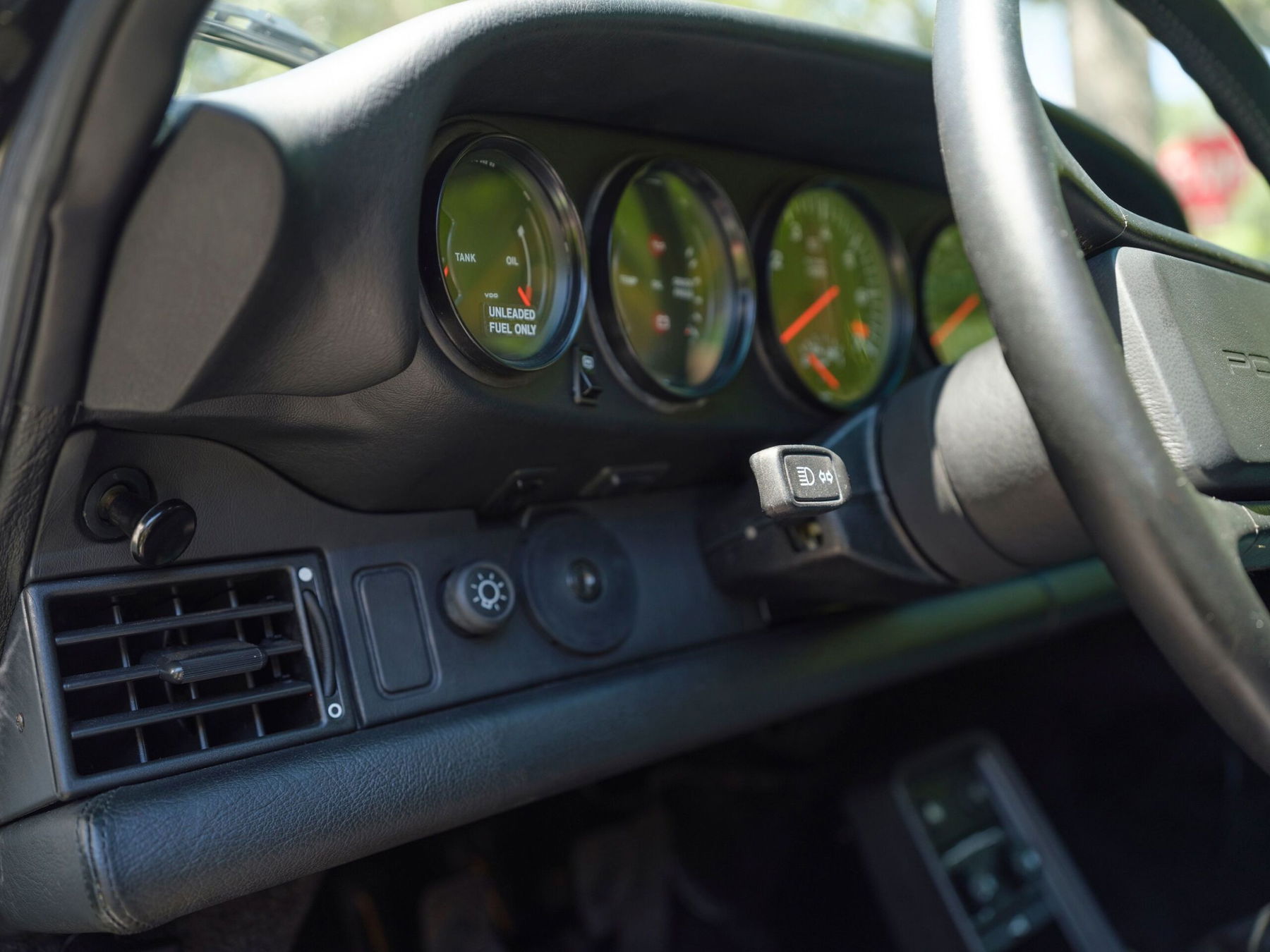
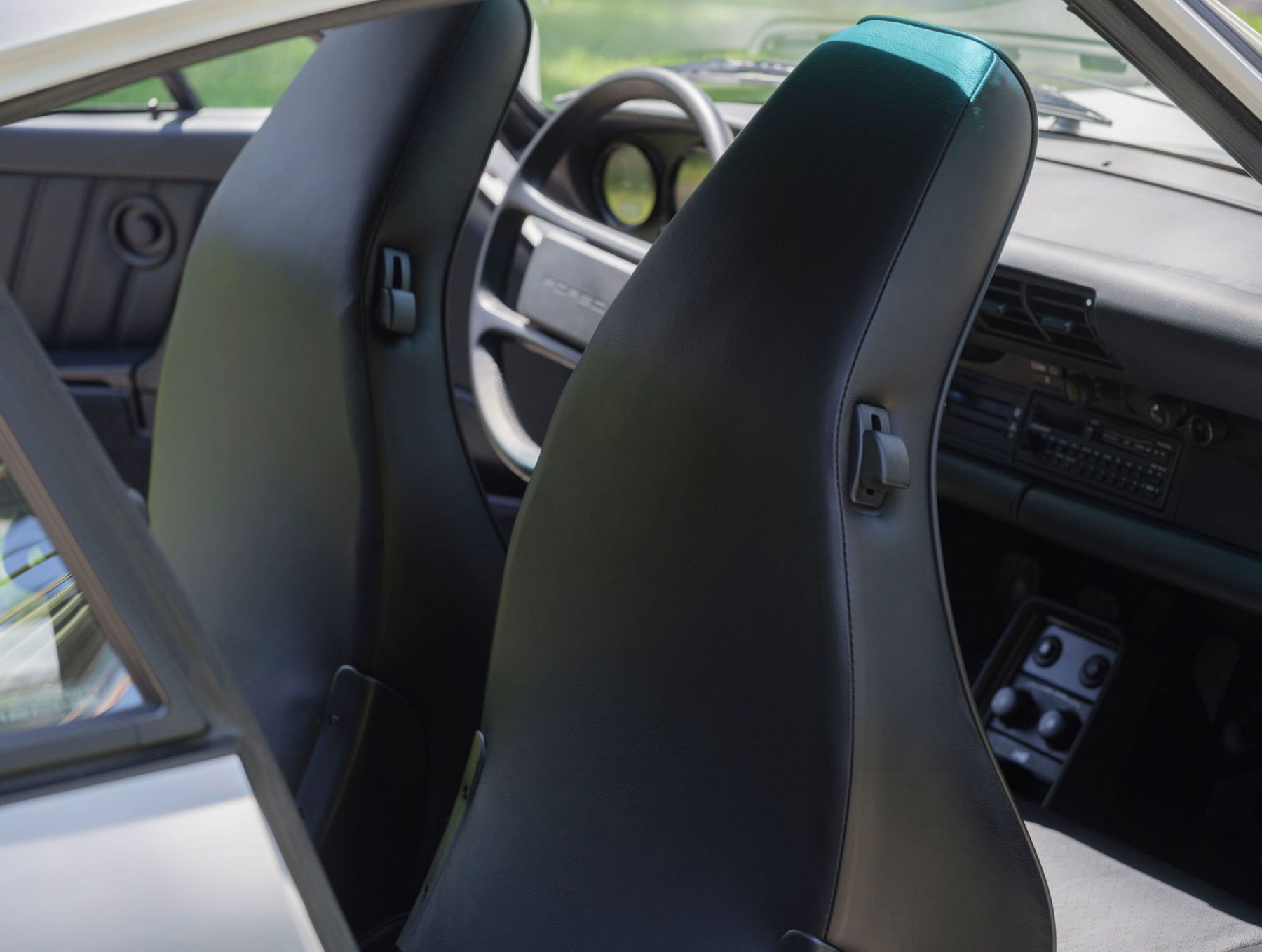
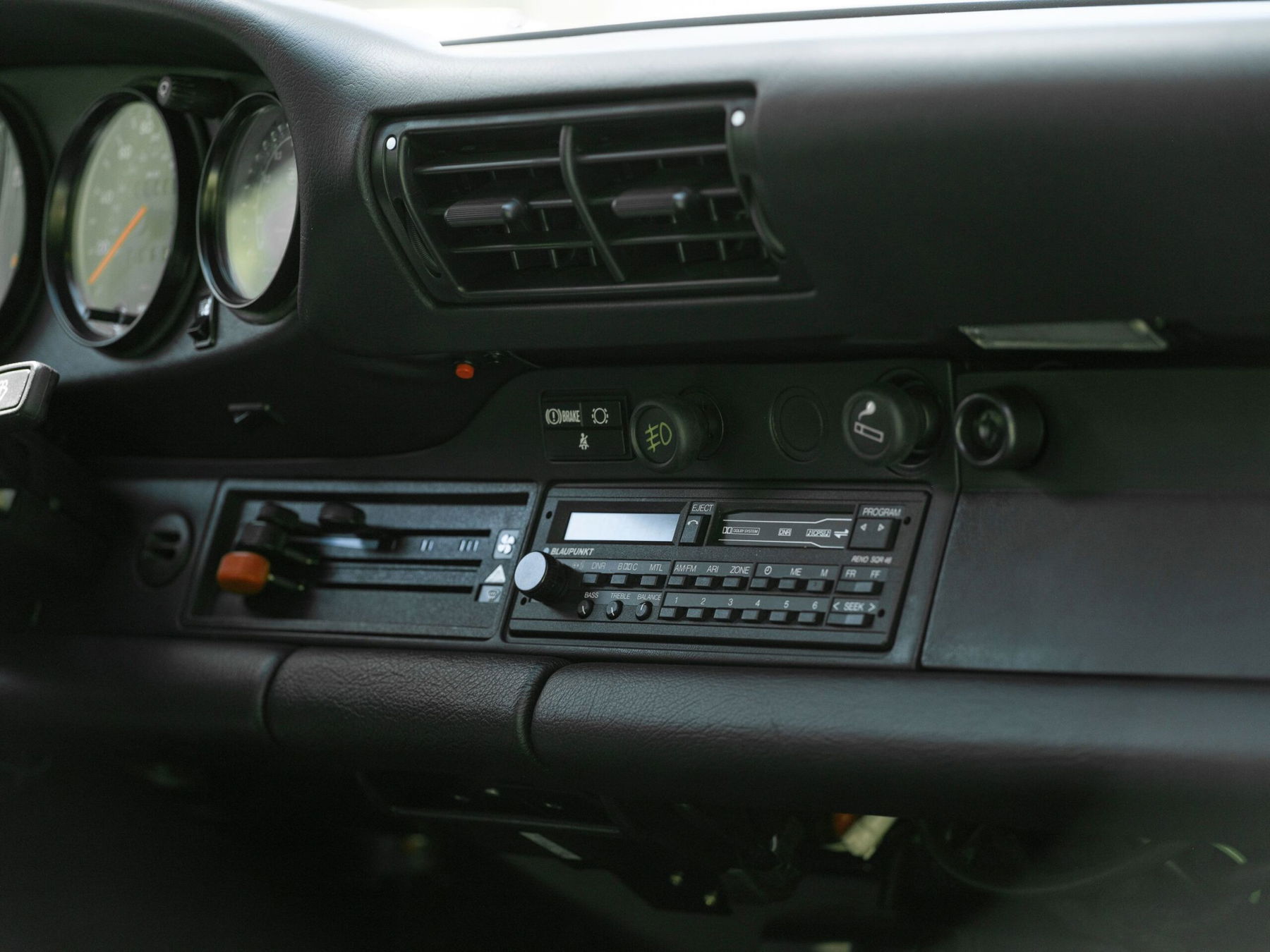
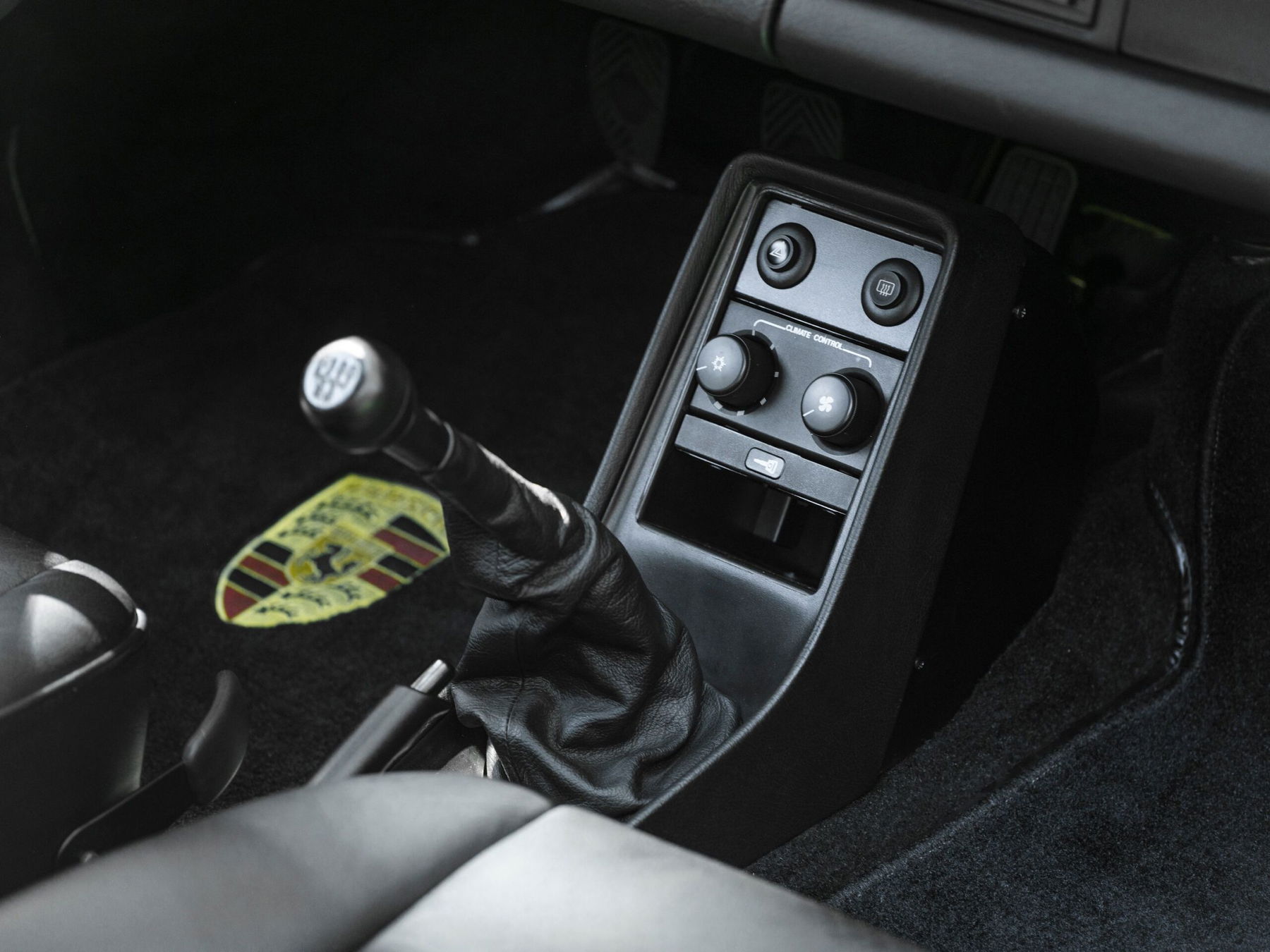
Among its list of standard and unique (Z) options are an electronic boost gauge, shorter gear shift lever, classically configured Sports Seats, and a Blaupunkt ‘Reno’ radio. Additionally, this Turbo is distinguished by a sunroof, limited slip differential, body color matched wheels, and a steering wheel with a raised hub – all cementing its significance within the Porsche lineage.
With such low mileage, meticulously untouched attributes, and carefully curated factory options, it arguably represents one of the finest examples of the final year, 1989 930-series Turbo—not just in the United States, but the world.
Accompanying the vehicle are two original keys, all original manuals, a Certificate of Authenticity, original title, factory documentation, tools, and the factory spare tire. The car also comes with a highly detailed CARFAX report reaffirming its mileage.
Simply put, this Grand Prix White 930 Turbo is a paragon of Porsche’s excellence and for a discerning collector, it offers an unrivaled ownership experience. With all its frank originality, cherished history, and strikingly low mileage, this 911/930 is an extraordinary part of Porsche’s illustrious heritage.
THE PORSCHE 930
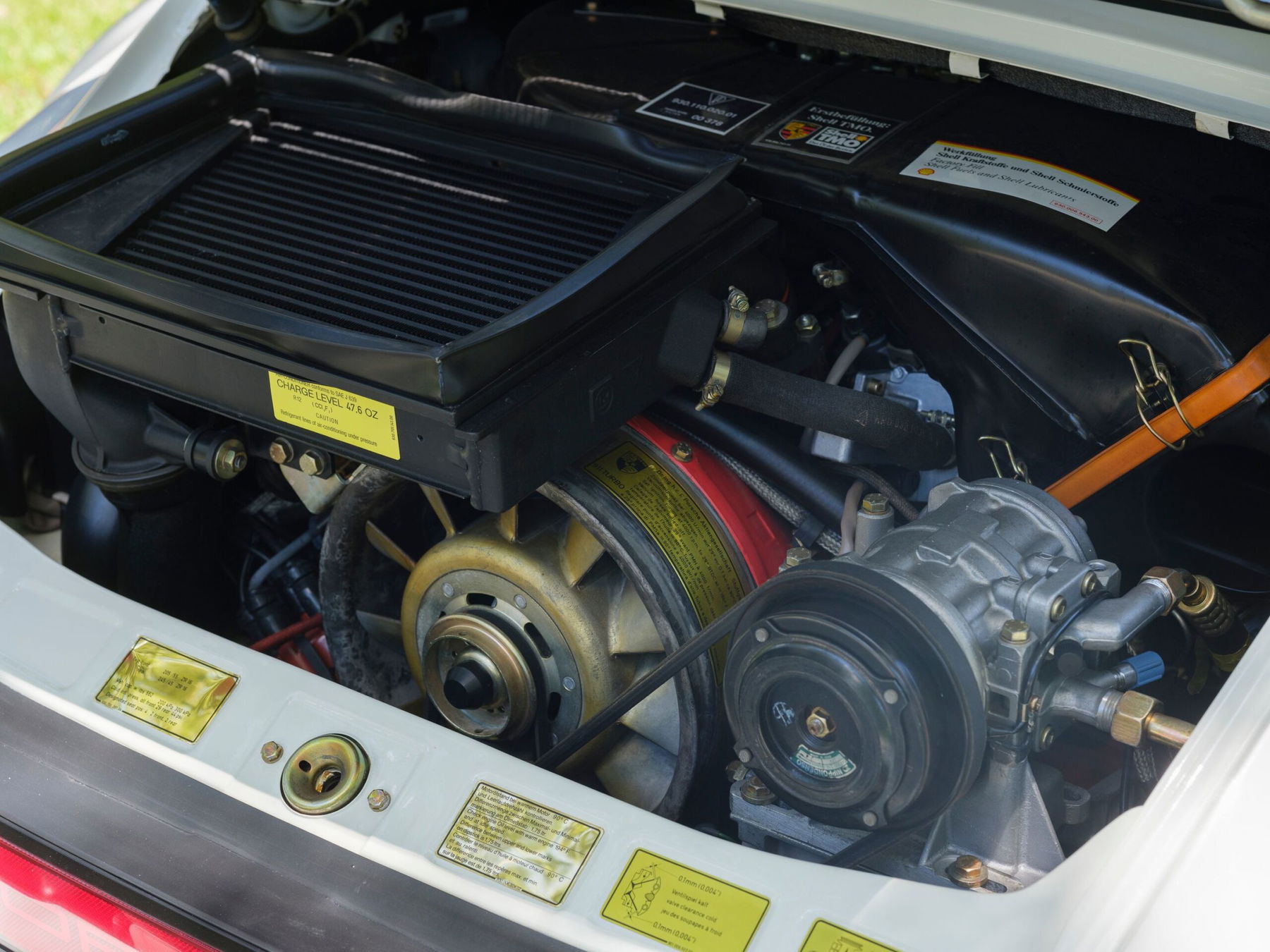
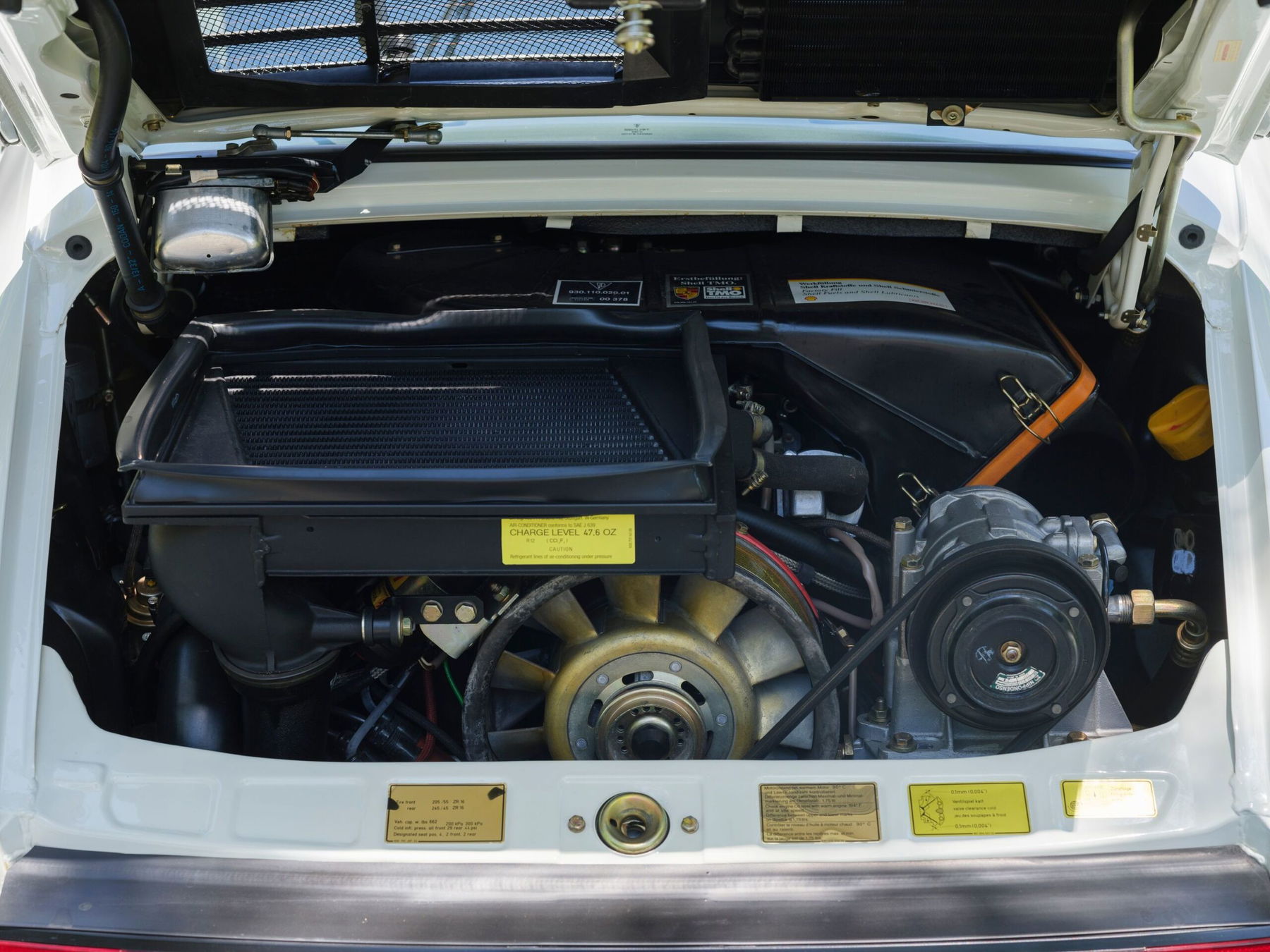
Much of the Porsche 911’s development had resulted from the factory’s racing program, and it was the then FIA Group 4 homologation rules, which required 400 road cars to be built, spurred on the development of ‘Project 930’ – the legendary 911/930 Turbo. In production from April 1975, the Turbo married a KKK turbocharger to the 3.0-liter Carrera RSR engine, in road trim a combination that delivered 260bhp for a top speed of 155mph. But the Turbo wasn’t just about top speed, it was also the best-equipped 911 and amazingly flexible – hence only four speeds in the gearbox – being capable of racing from a standstill to 100mph in 14 seconds.
What set the 930 Turbo apart from its peers was the relaxed way this stupefying performance was delivered. Comparing the Turbo to similarly quick ‘he-man’ cars such as the Holman & Moody-tuned Cobra 427 and the Ford GT40, Motor’s Roger Bell reckoned what made the Porsche so different was that it “hurls you forward with similar velocity but in an uncannily quiet and effortless way. To be shoved so hard in the back that you need high-back seats to keep your head on, yet neither to feel nor hear anything more than a muffled hum, is a very odd sensation indeed in a car.”
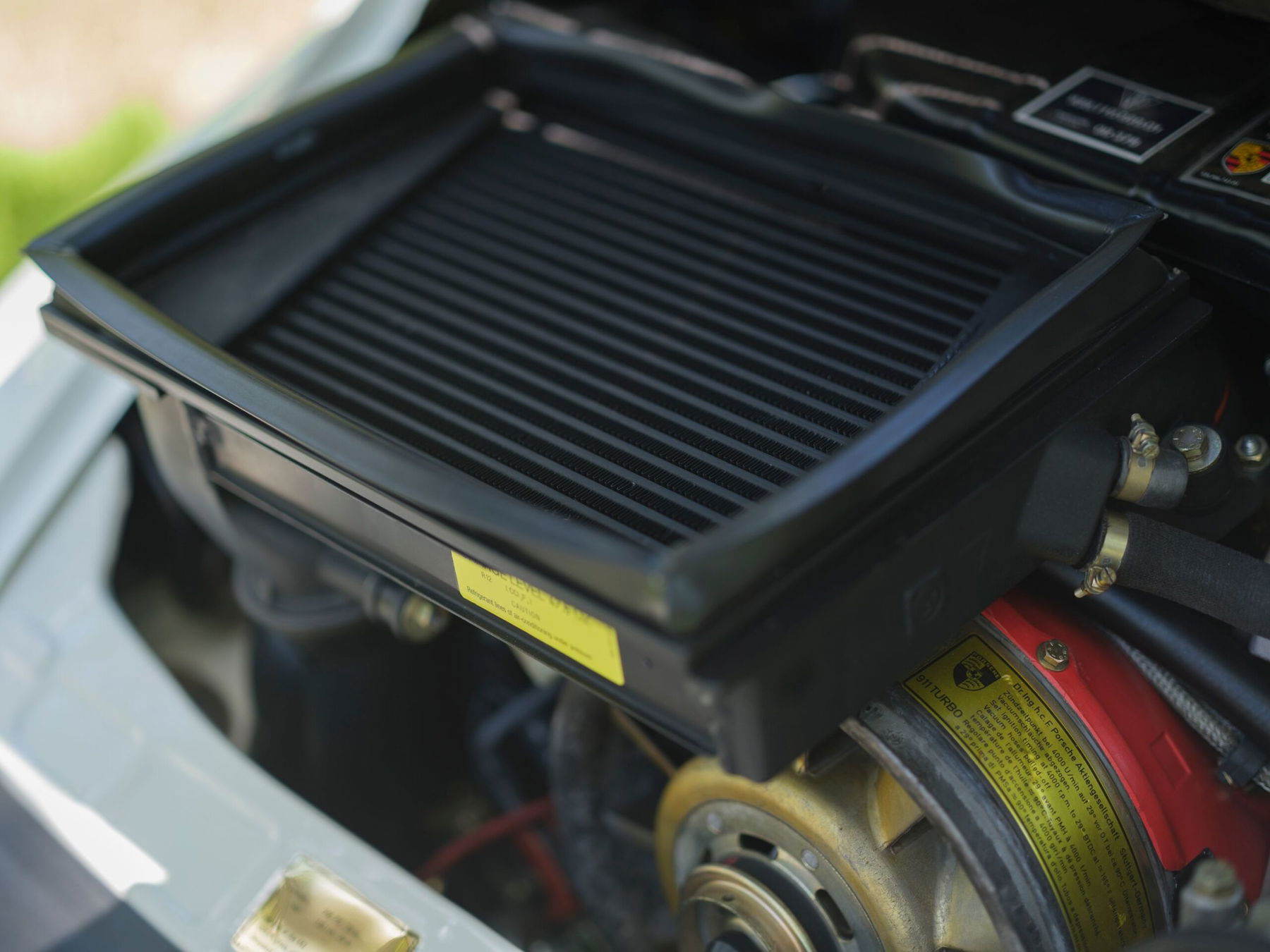
The Turbo’s characteristic flared wheelarches and ‘tea tray’ rear spoiler had already been seen on the Carrera model while the interior was the most luxurious yet seen in a 911, featuring leather upholstery, air conditioning and electric windows. For 1978 the Turbo’s engine was enlarged to 3.3 liters, gaining an intercooler in the process; power increased to 300bhp and the top speed of what was the fastest-accelerating road car of its day went up to 160mph. Due to strong emission regulation in the US, the Turbo was not imported for the US market between 1979 and 1984, but retuned in 1985, now equipped with upgraded Motronic engine management systems. Targa and Cabriolet versions were also introduced.
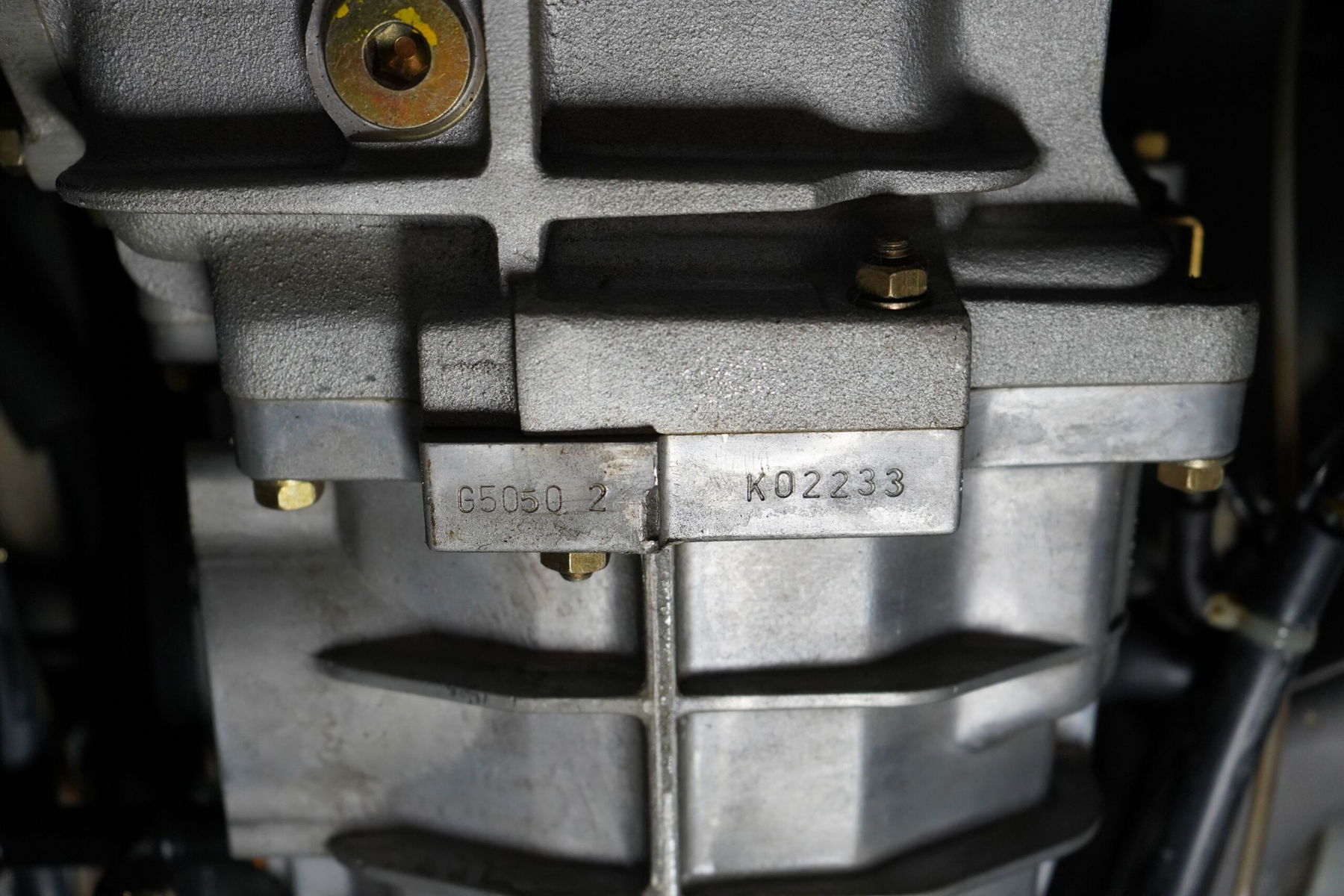
The final production year of the legendary 930 Turbo was 1989, and these desirable end of-the-line cars were fitted with the prized Getrag G50 five-speed transaxle, ensuring few cars would compete with the 930’s unquestionable dominance on street and on the racetrack. More refined than hitherto yet retaining its high-performance edge, the Porsche 930 Turbo sold in the thousands, arguably becoming the definitive sports car of its age.
Continue reading


















 1985
1985 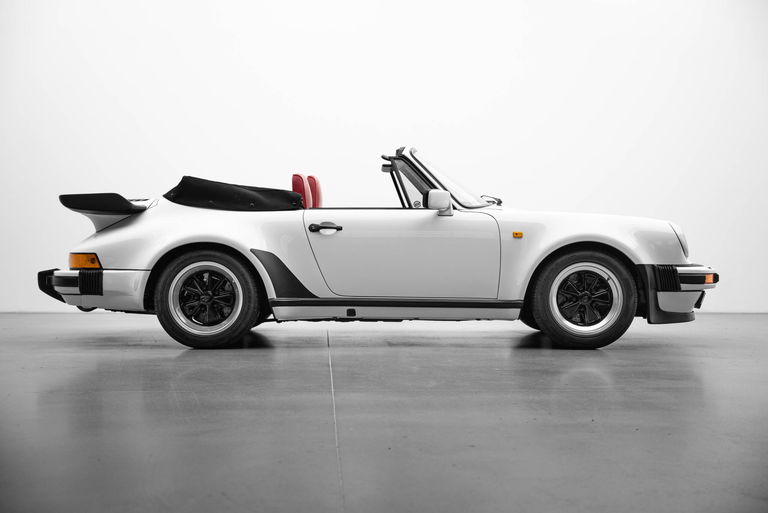
 1987
1987 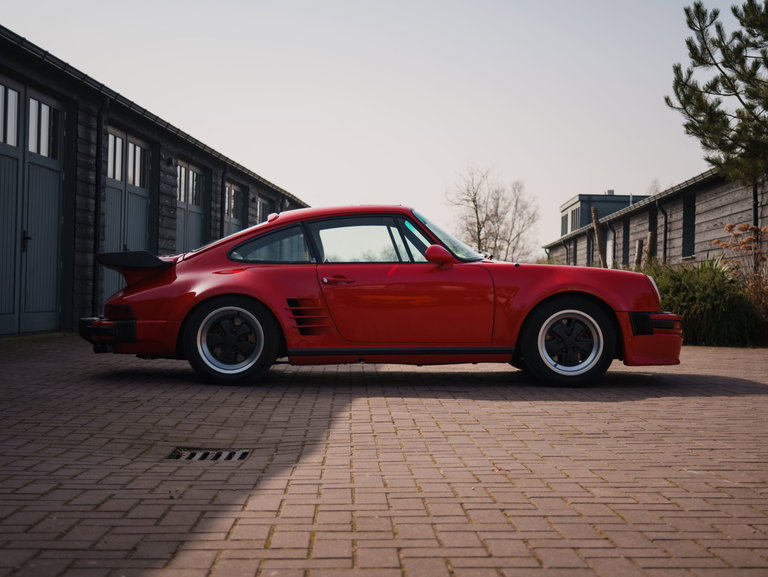
 1978
1978 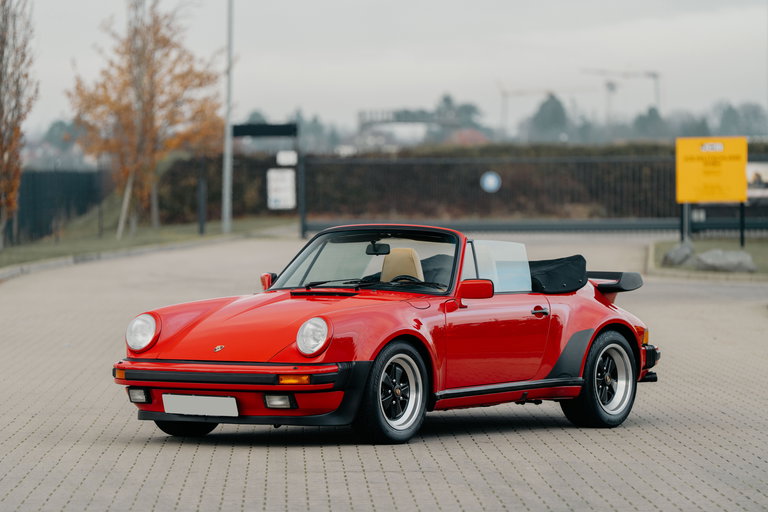
 1988
1988