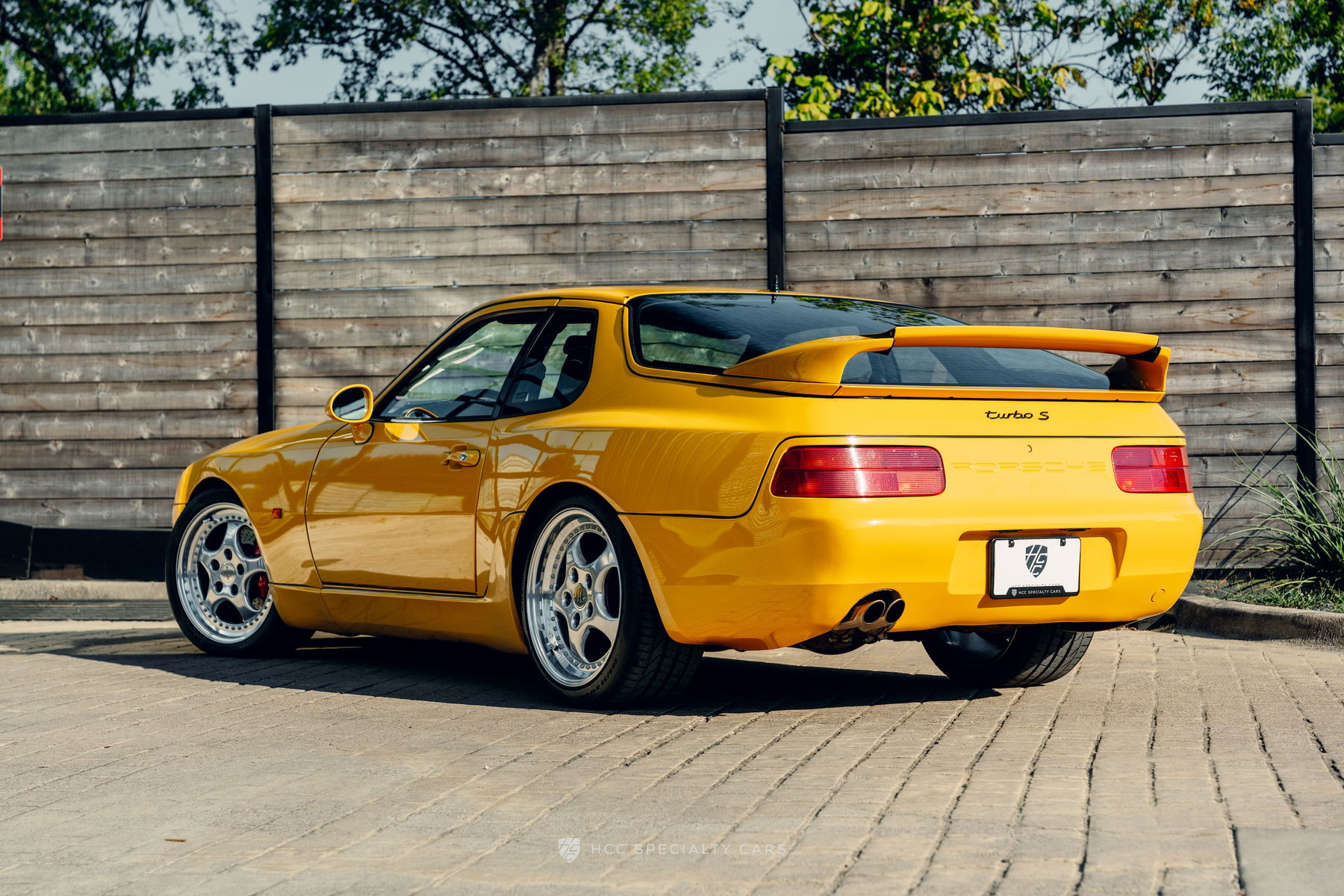
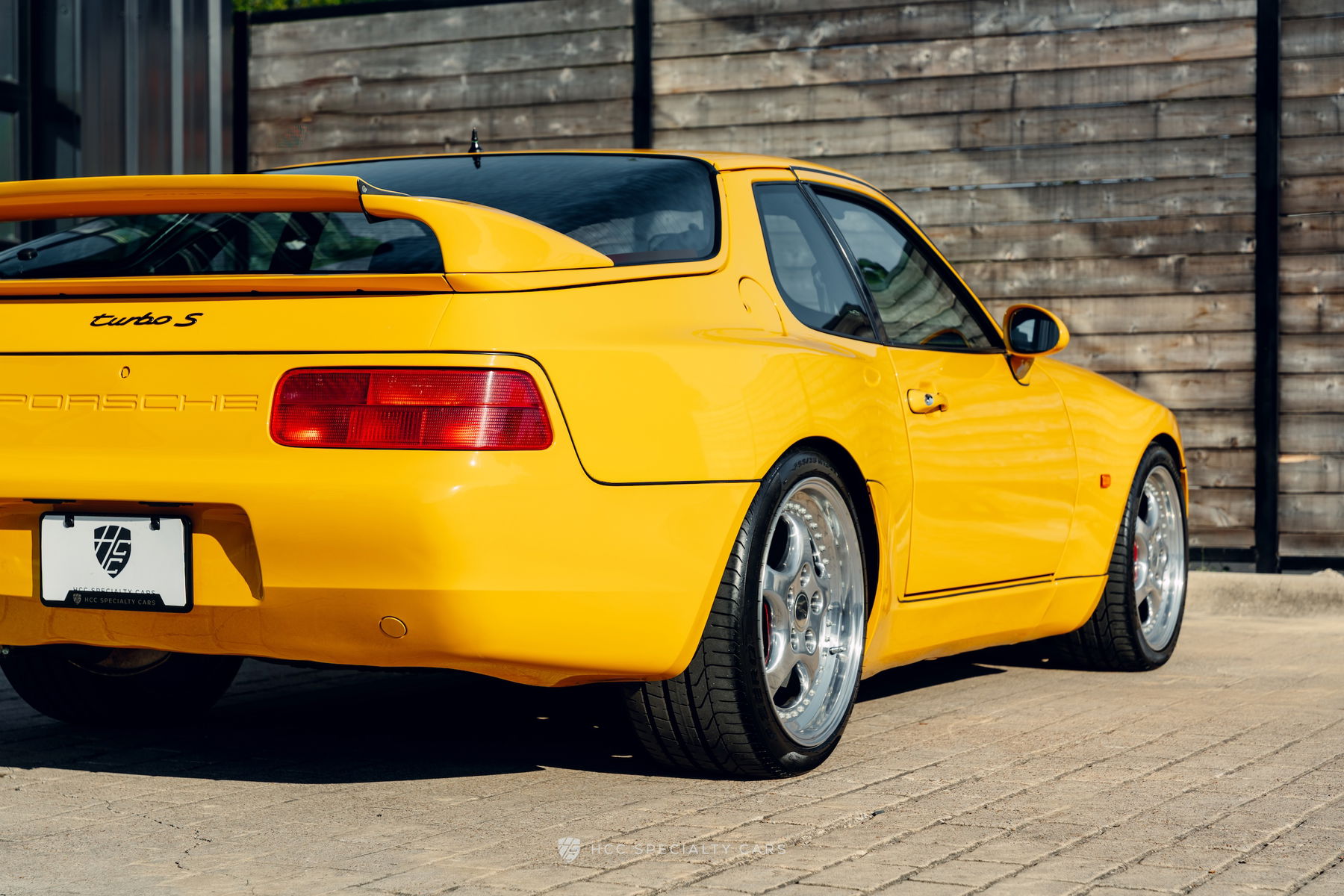
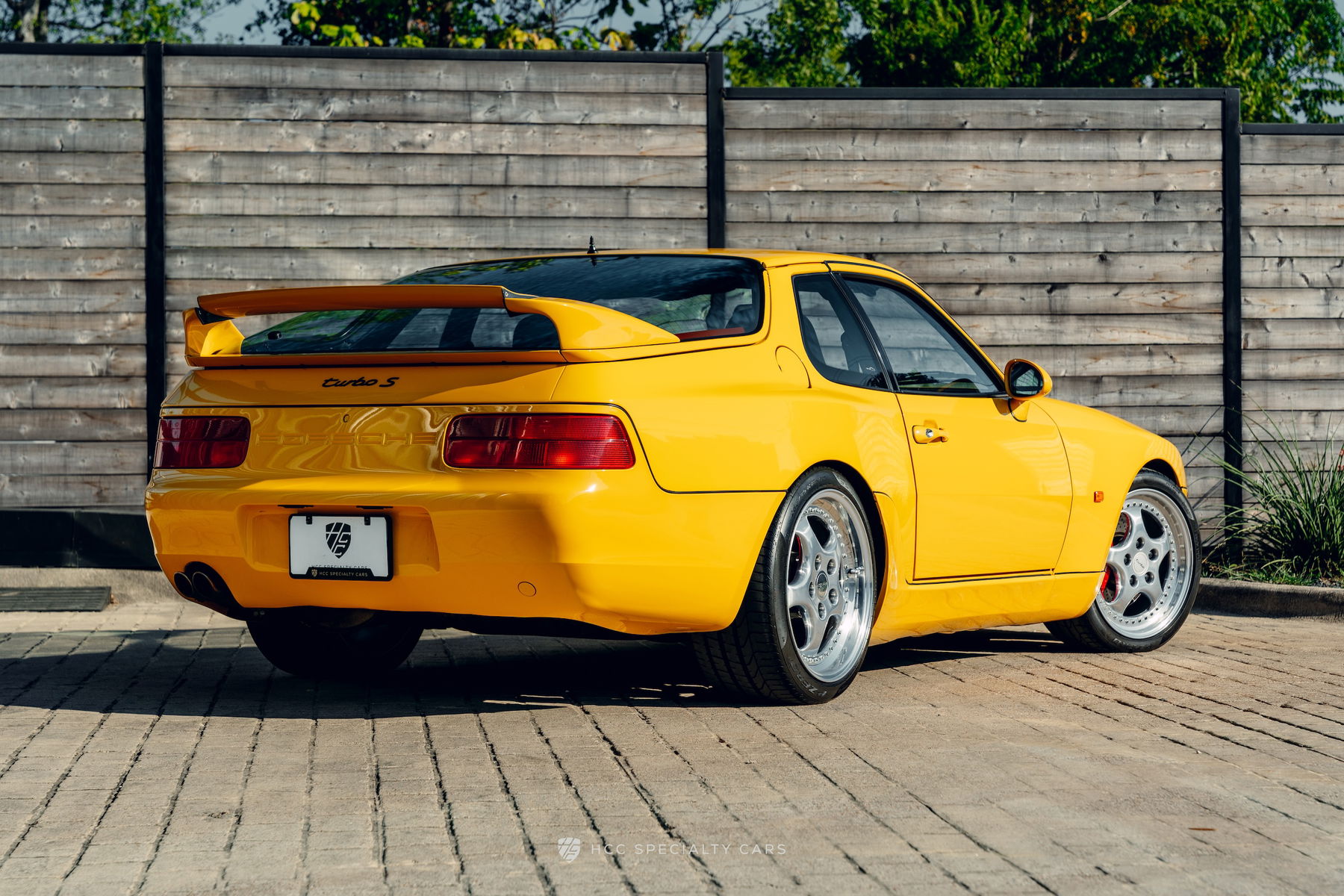
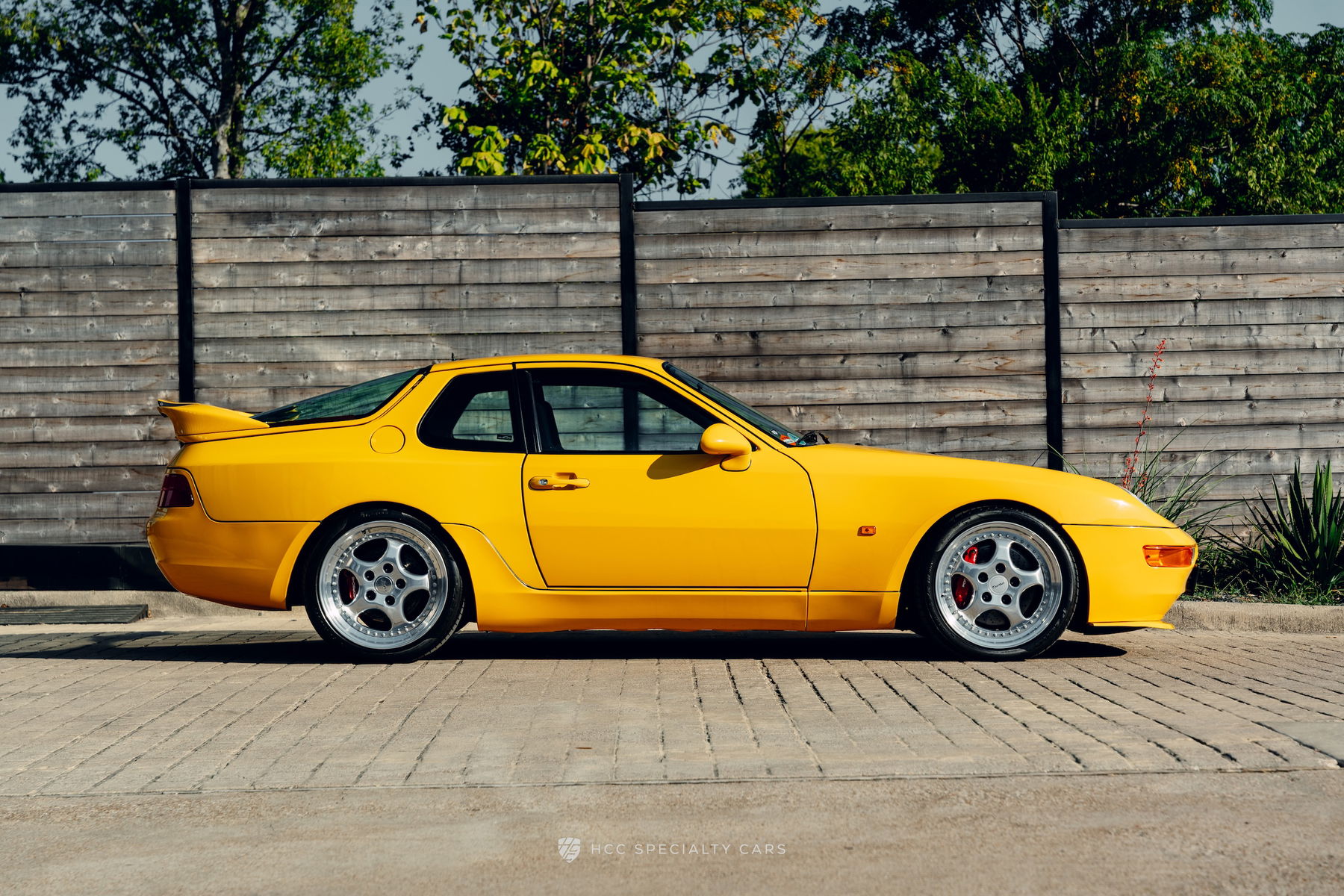
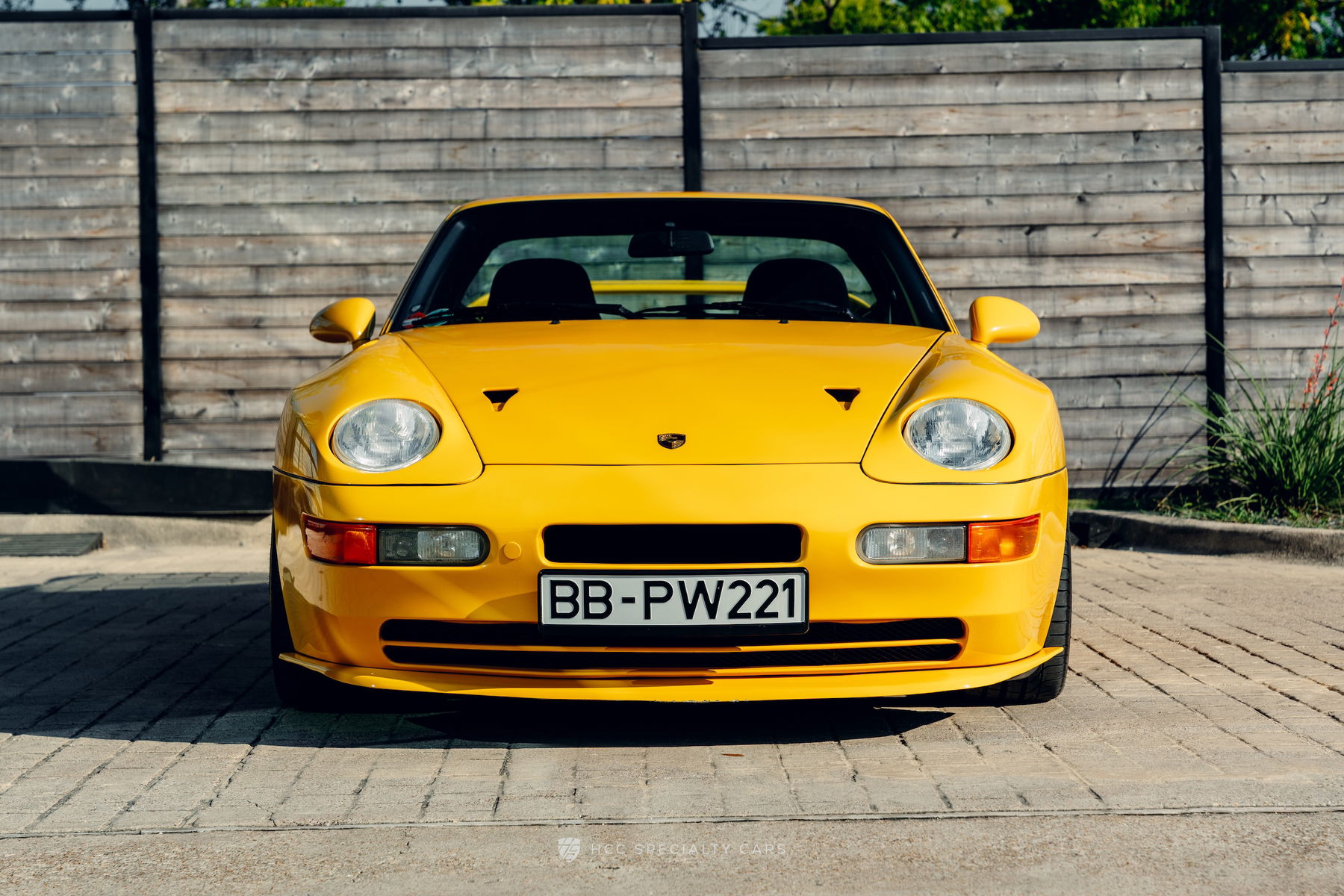
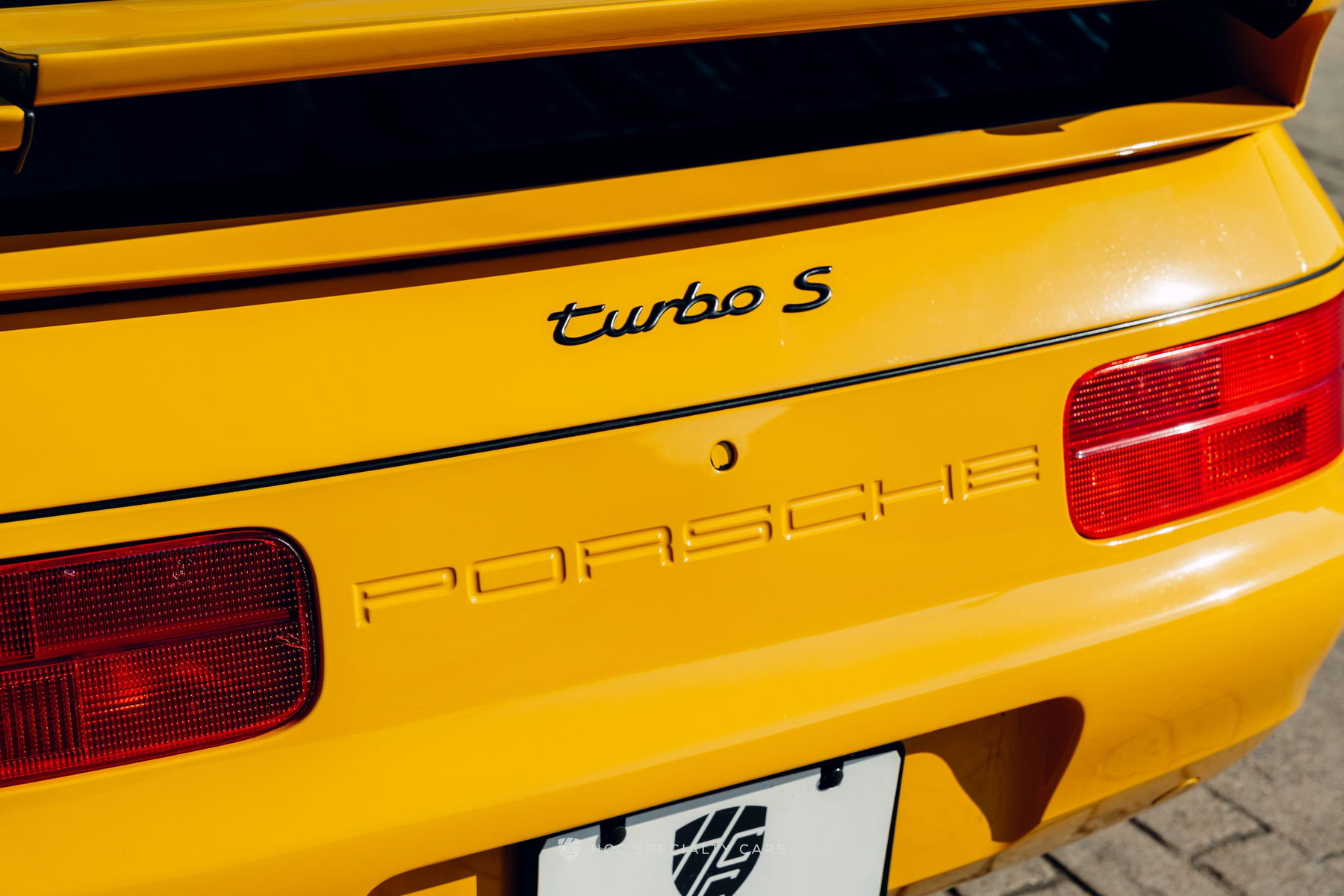
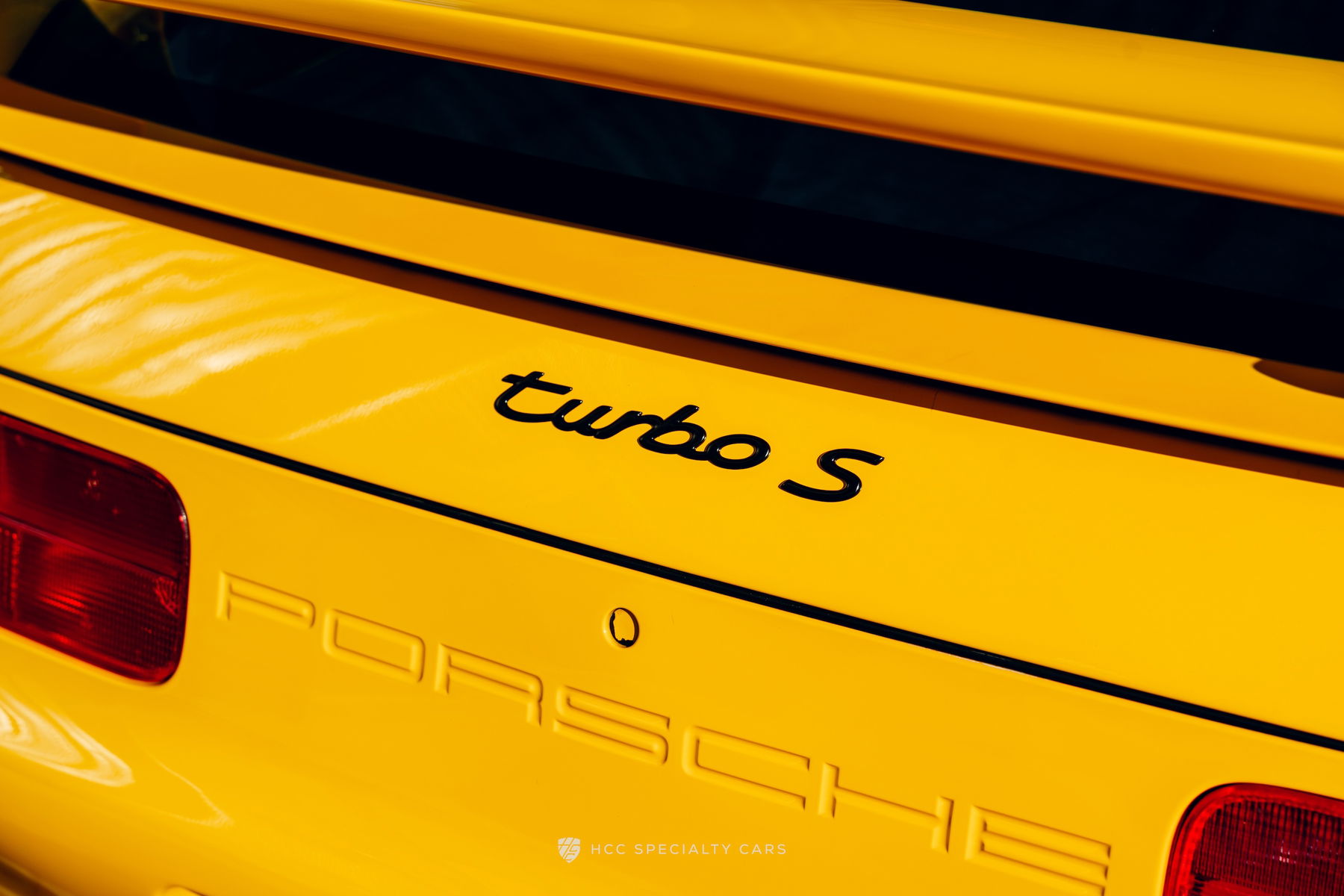
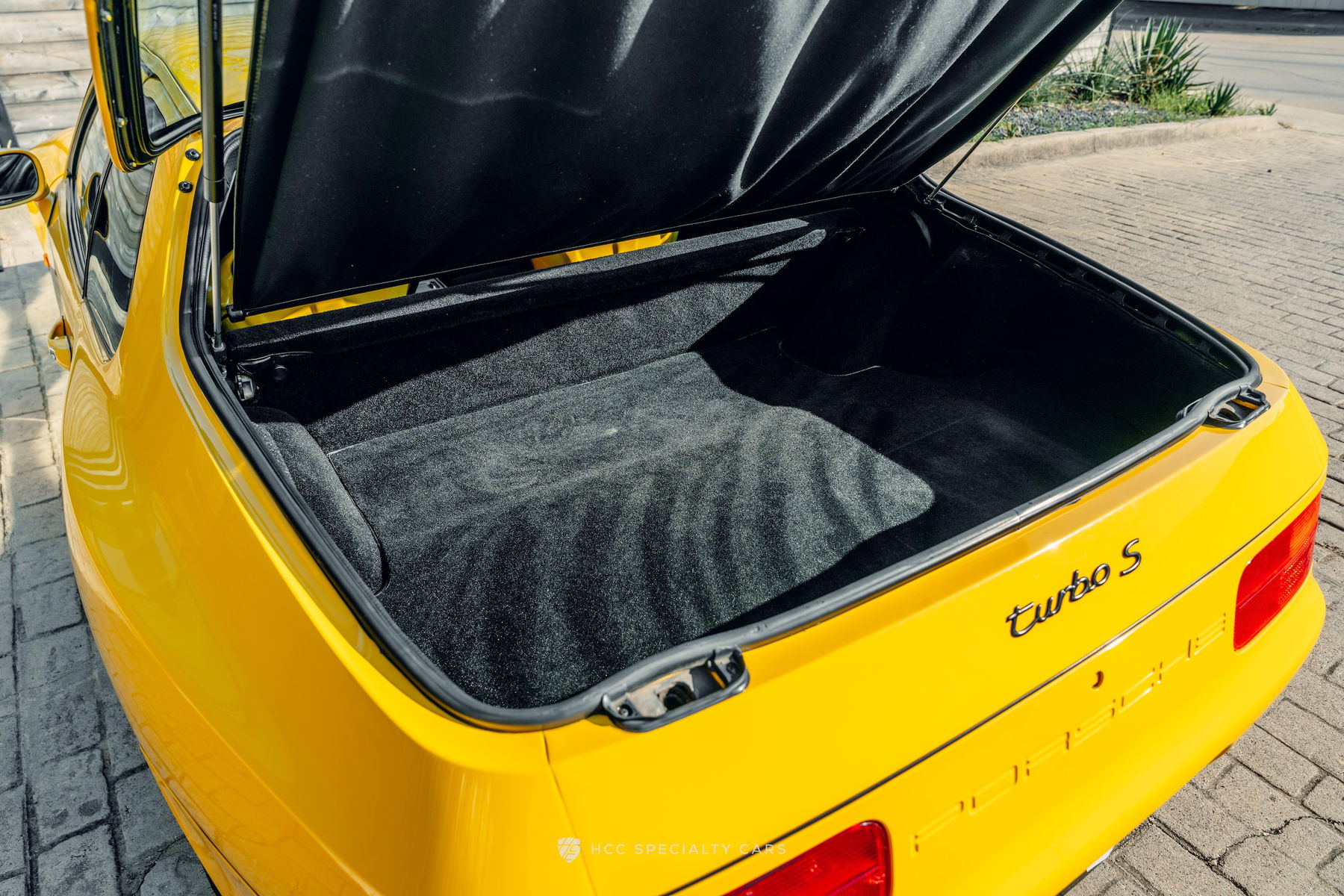
HCC is honored to present what is undoubtedly one of the most compelling and underappreciated chapters in Porsche history: the 1992 Porsche 968 Turbo S Prototype—the one and only factory prototype for what became one of the rarest Porsche production series ever built.
Originally developed to homologate the Porsche 968 Turbo RS for ADAC GT Cup competition, the Turbo S was created as a limited-run road car to meet series requirements. With just 14 examples ultimately built between 1992 and 1994, and this prototype being the very first, the 968 Turbo S represents a stunning technical achievement wrapped in commercial failure; making it even more coveted today.
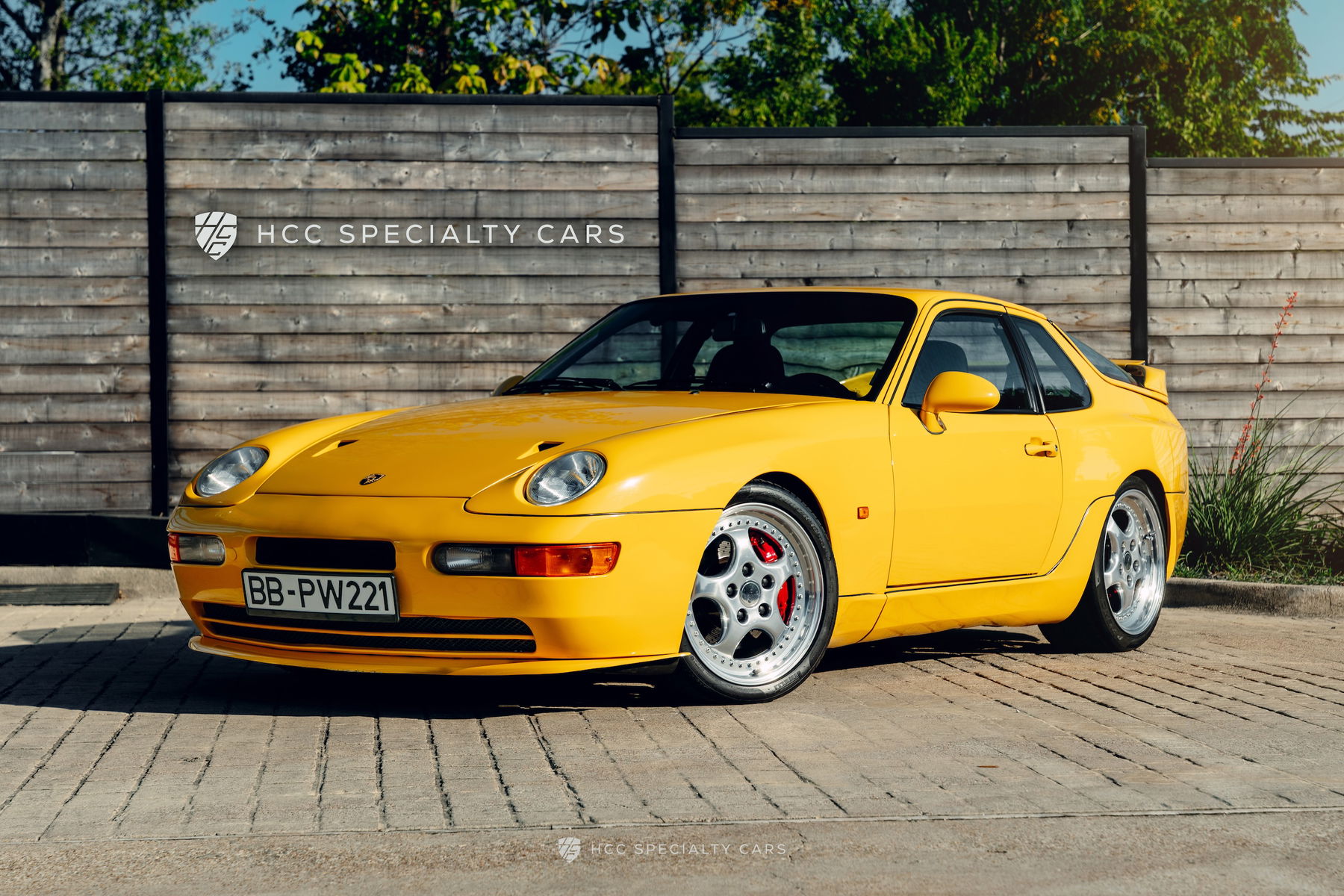
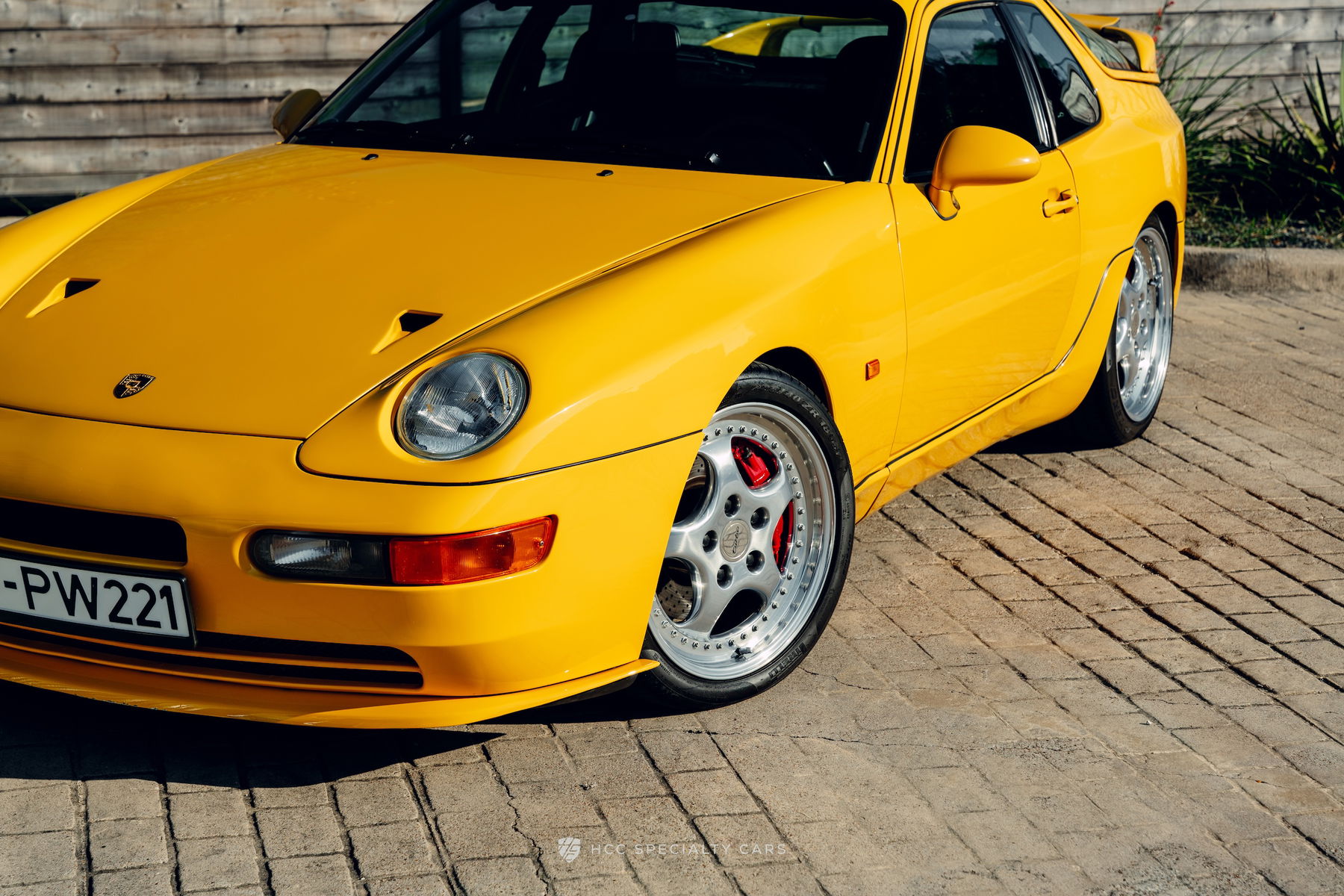
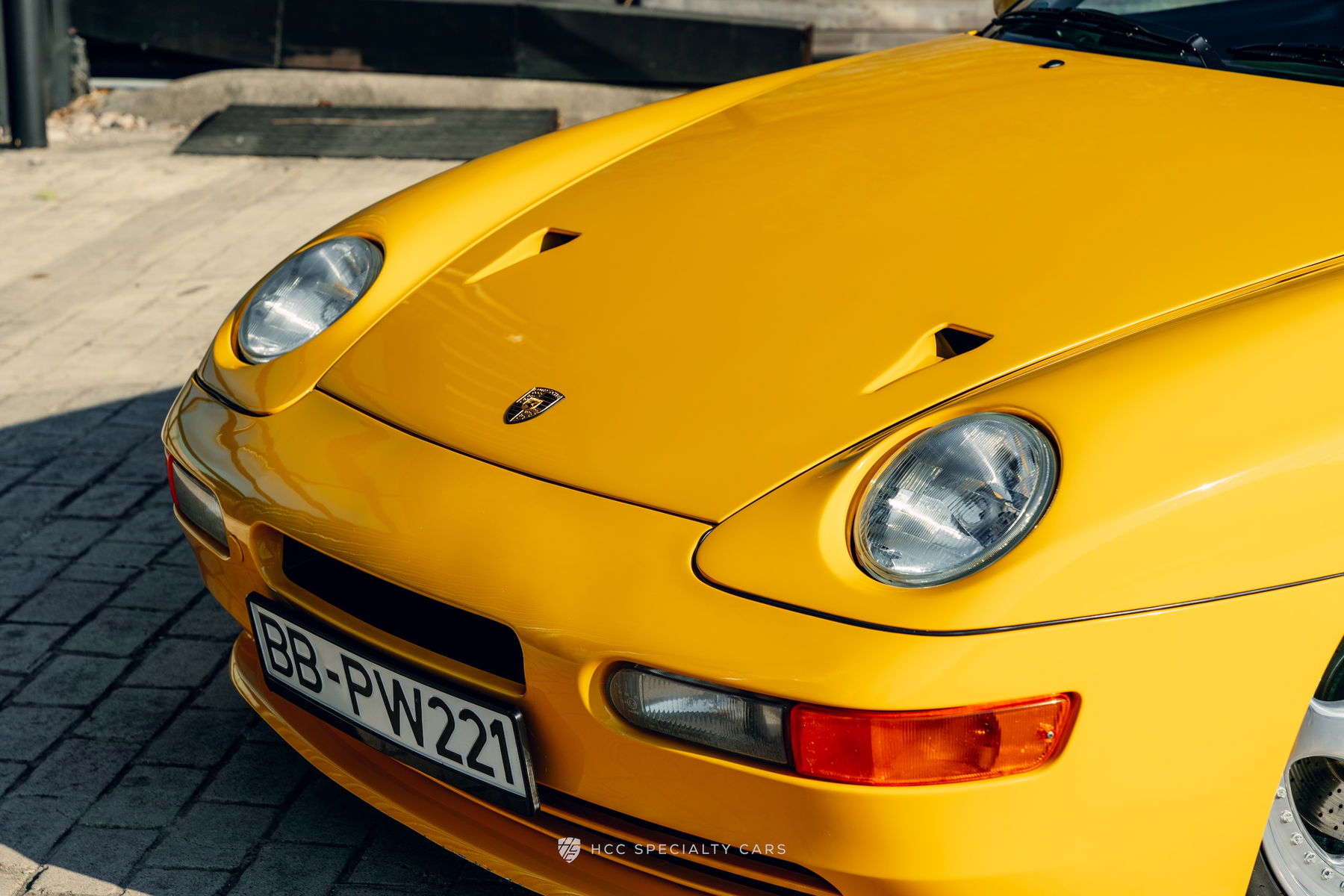
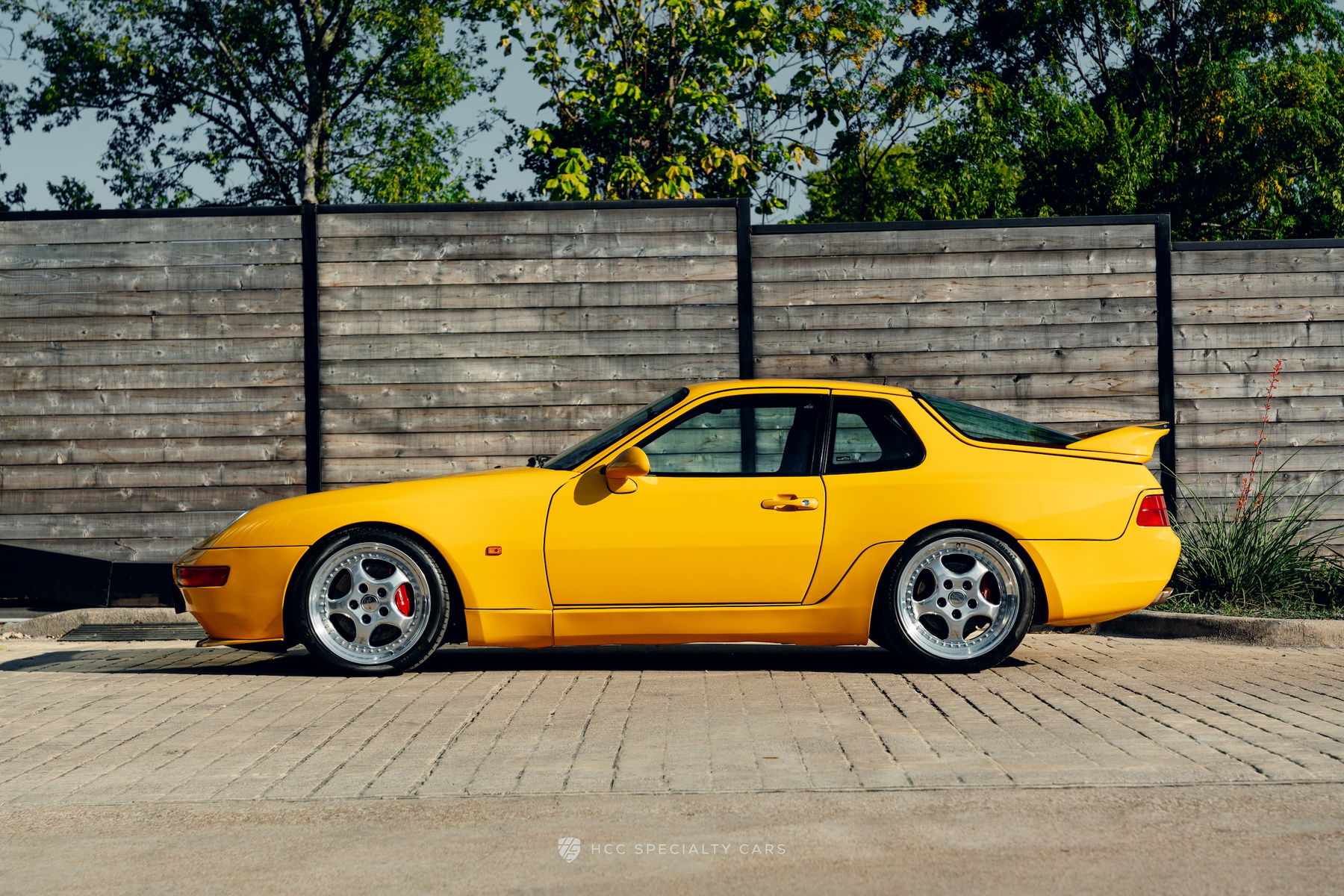
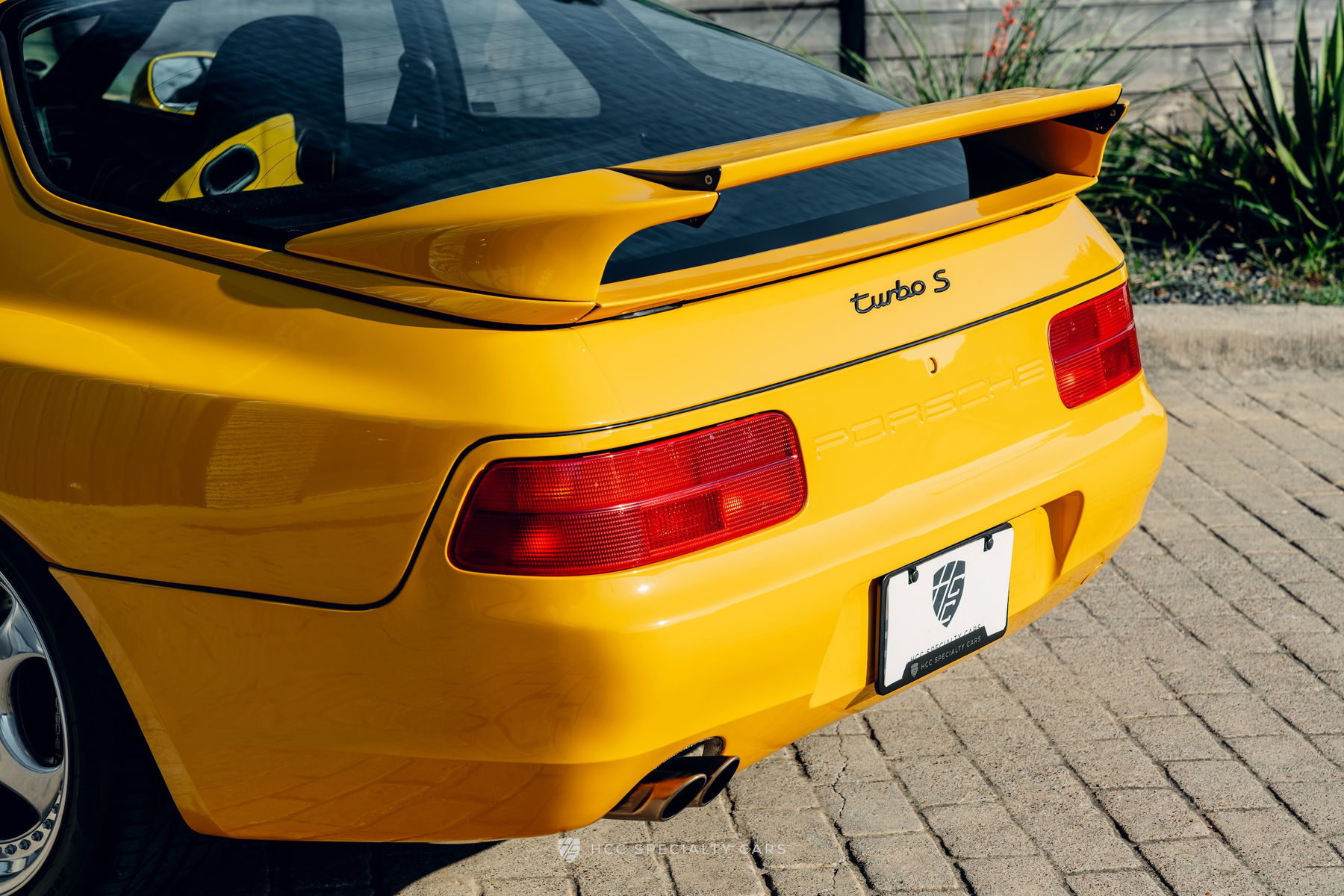
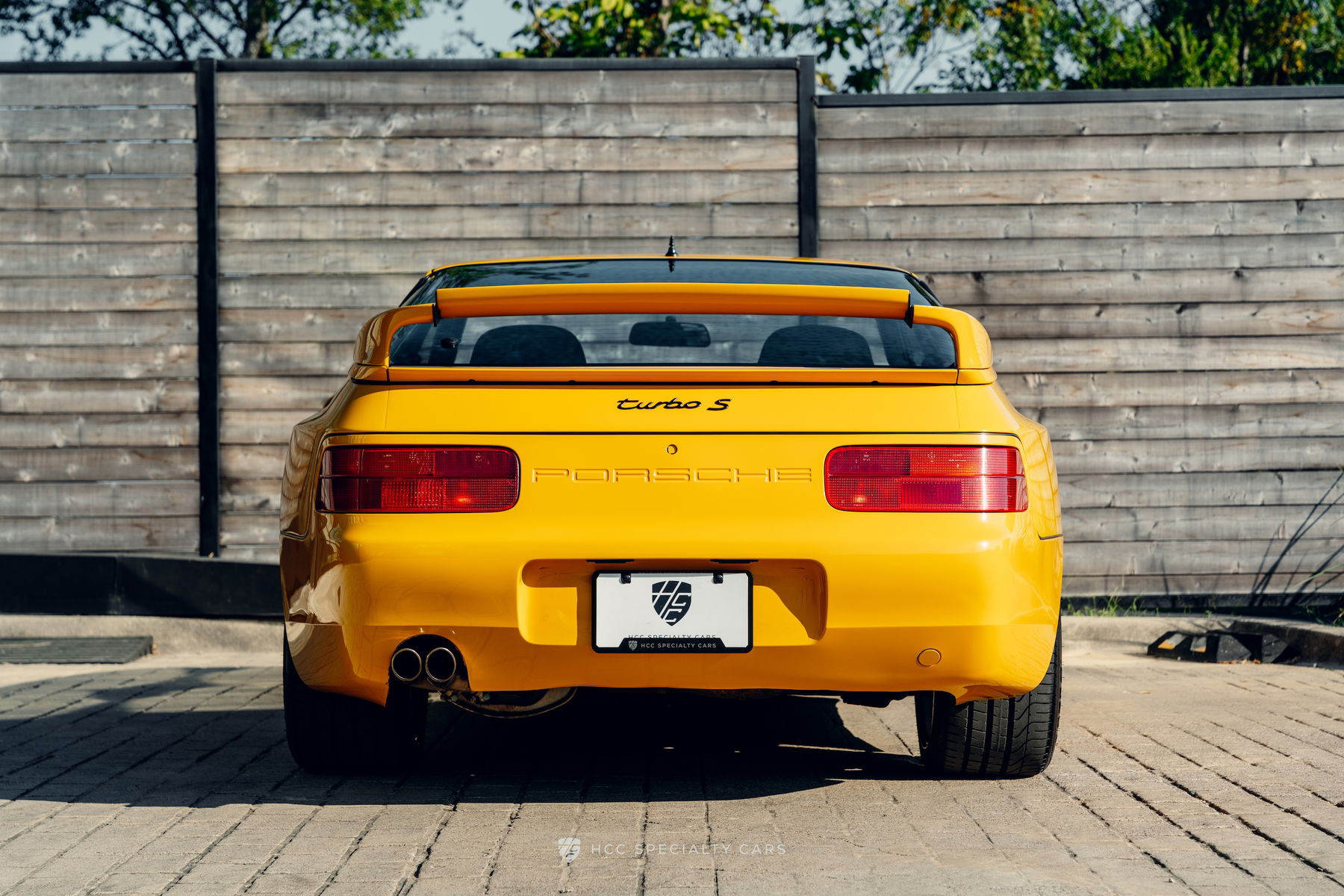
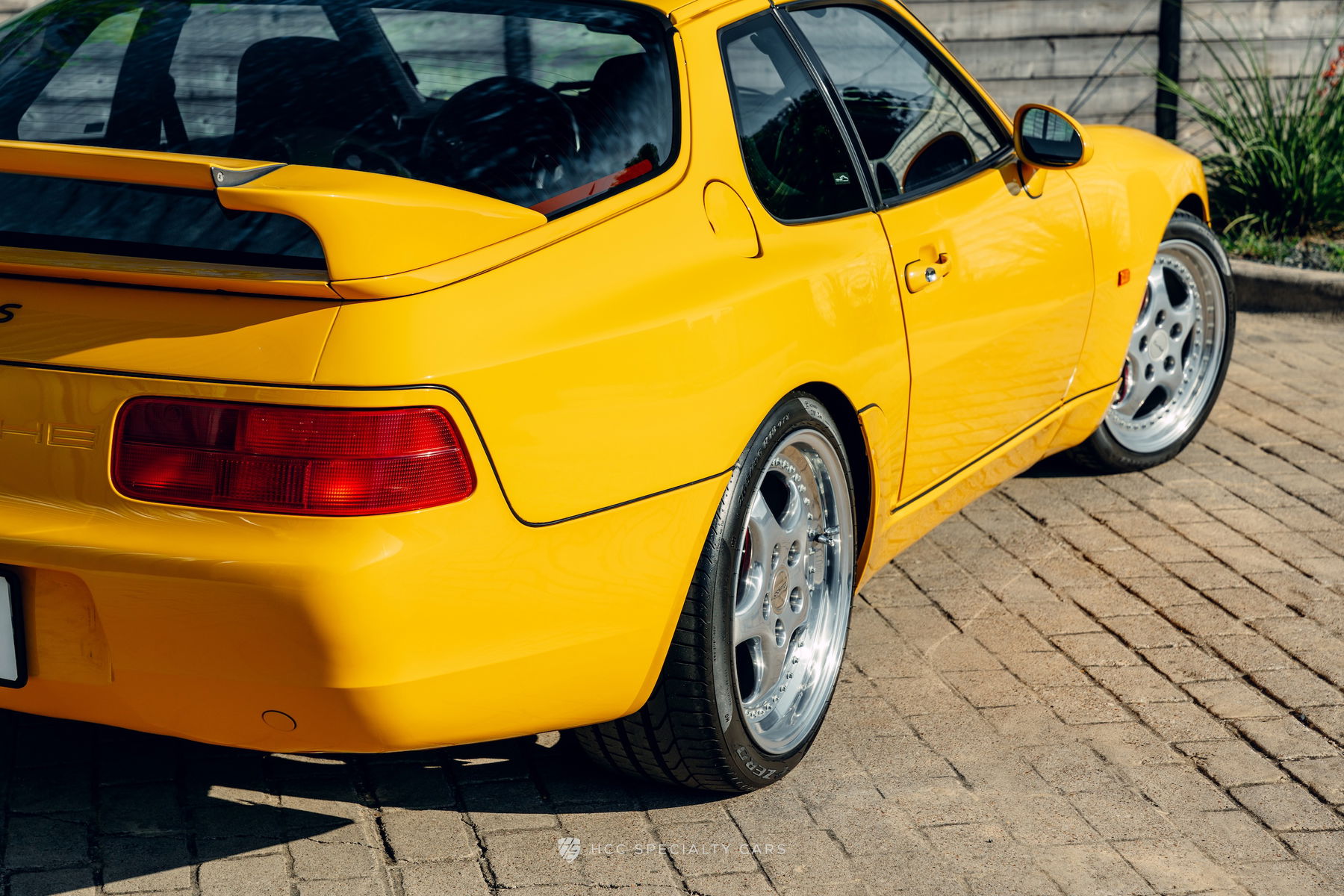
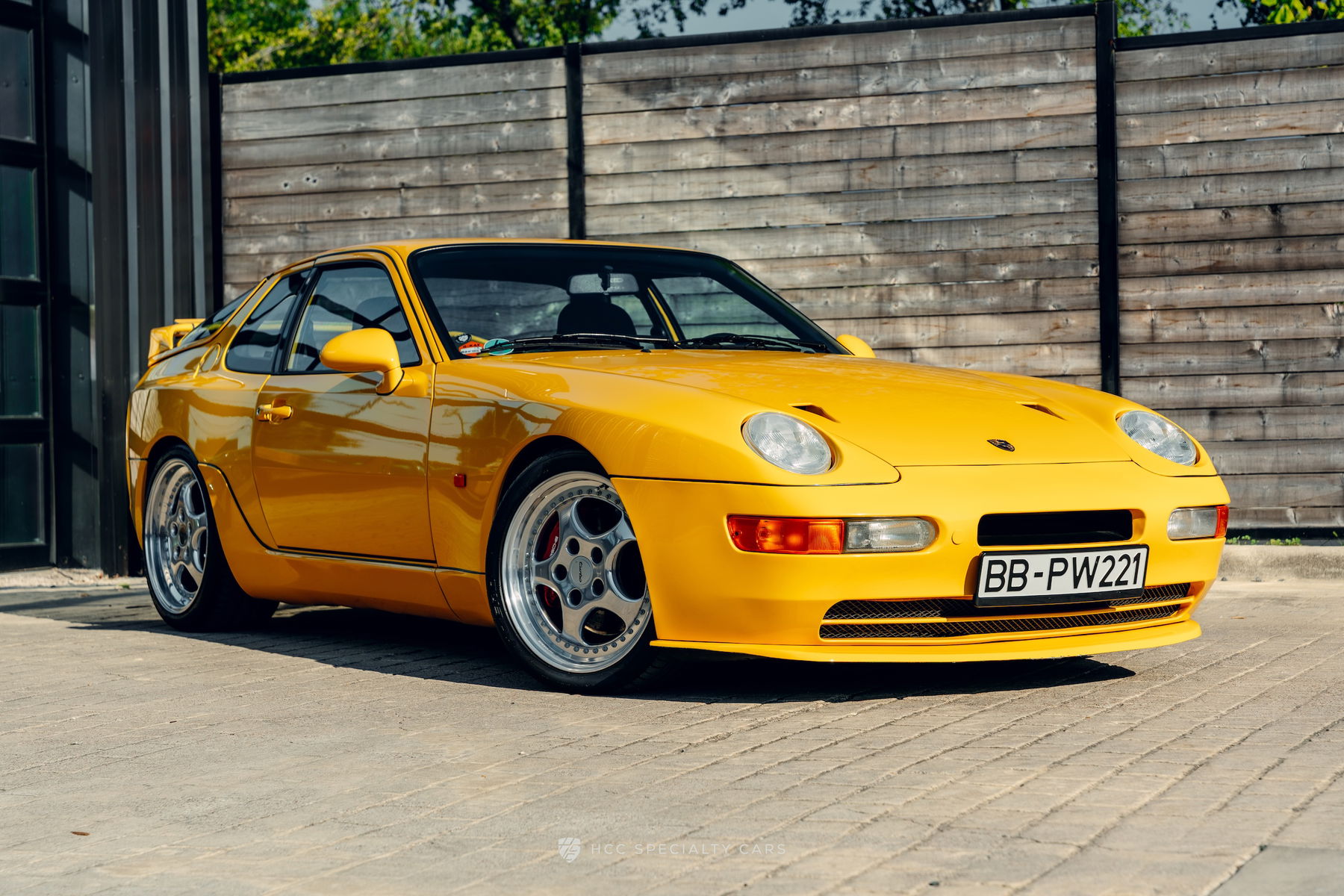
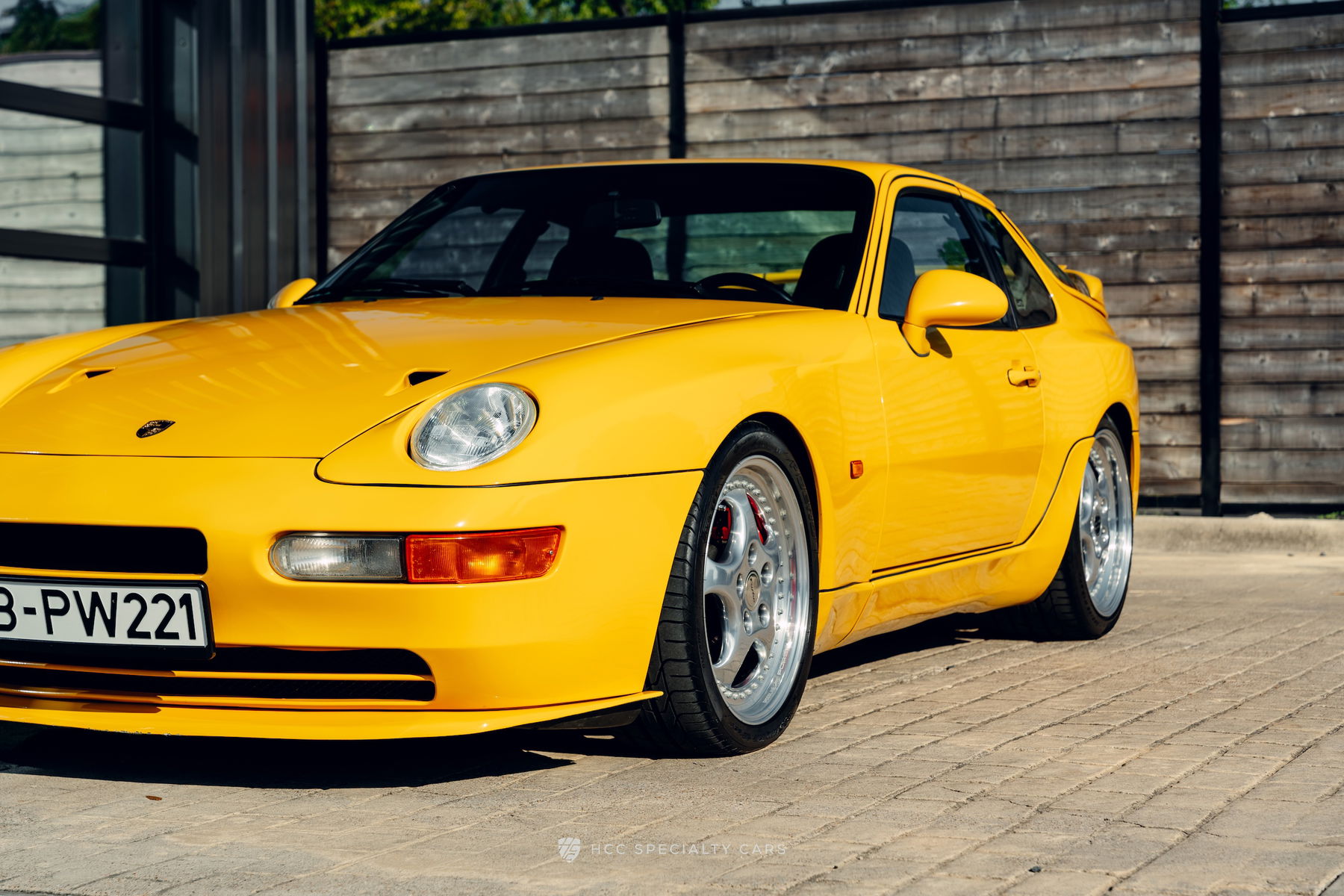
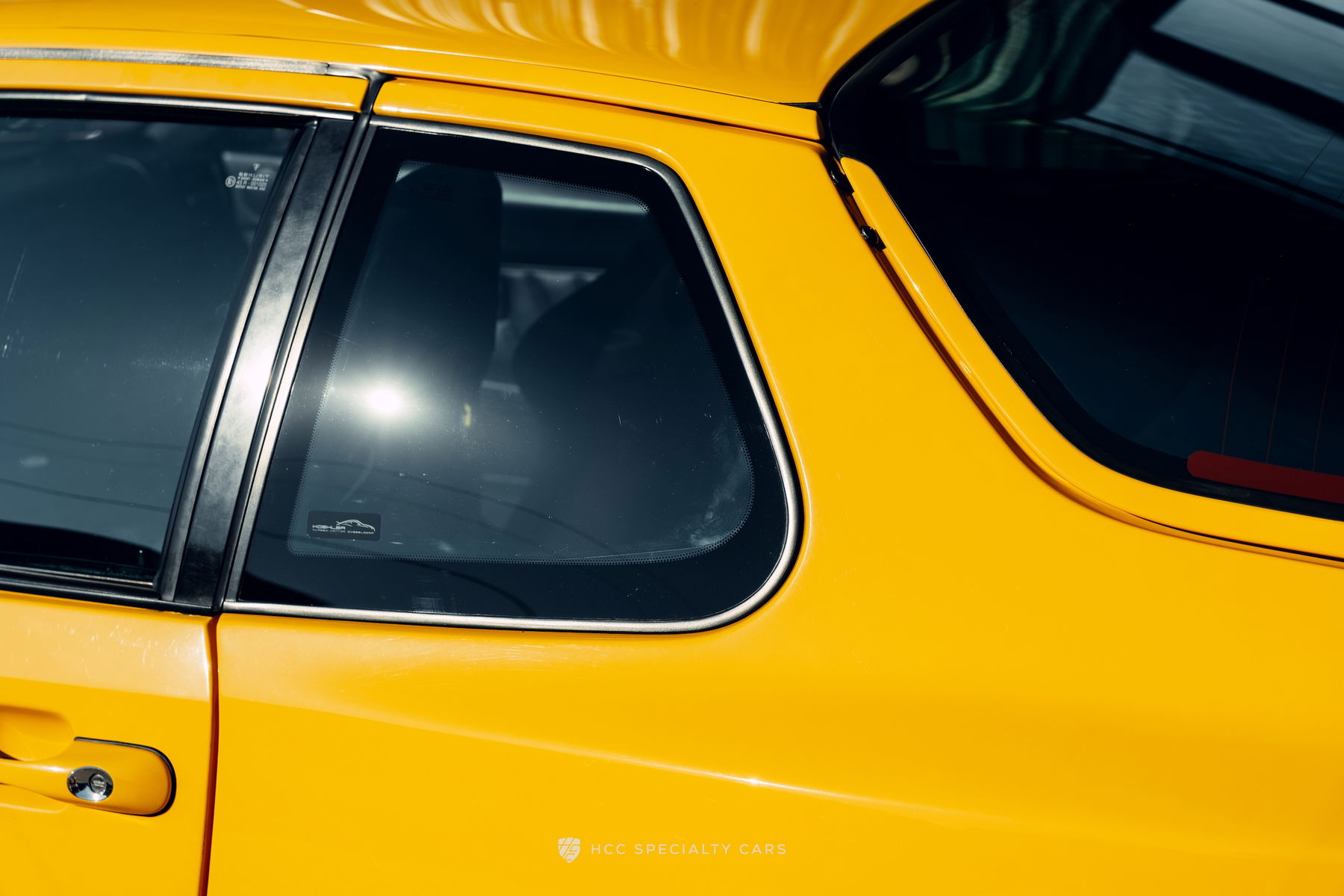
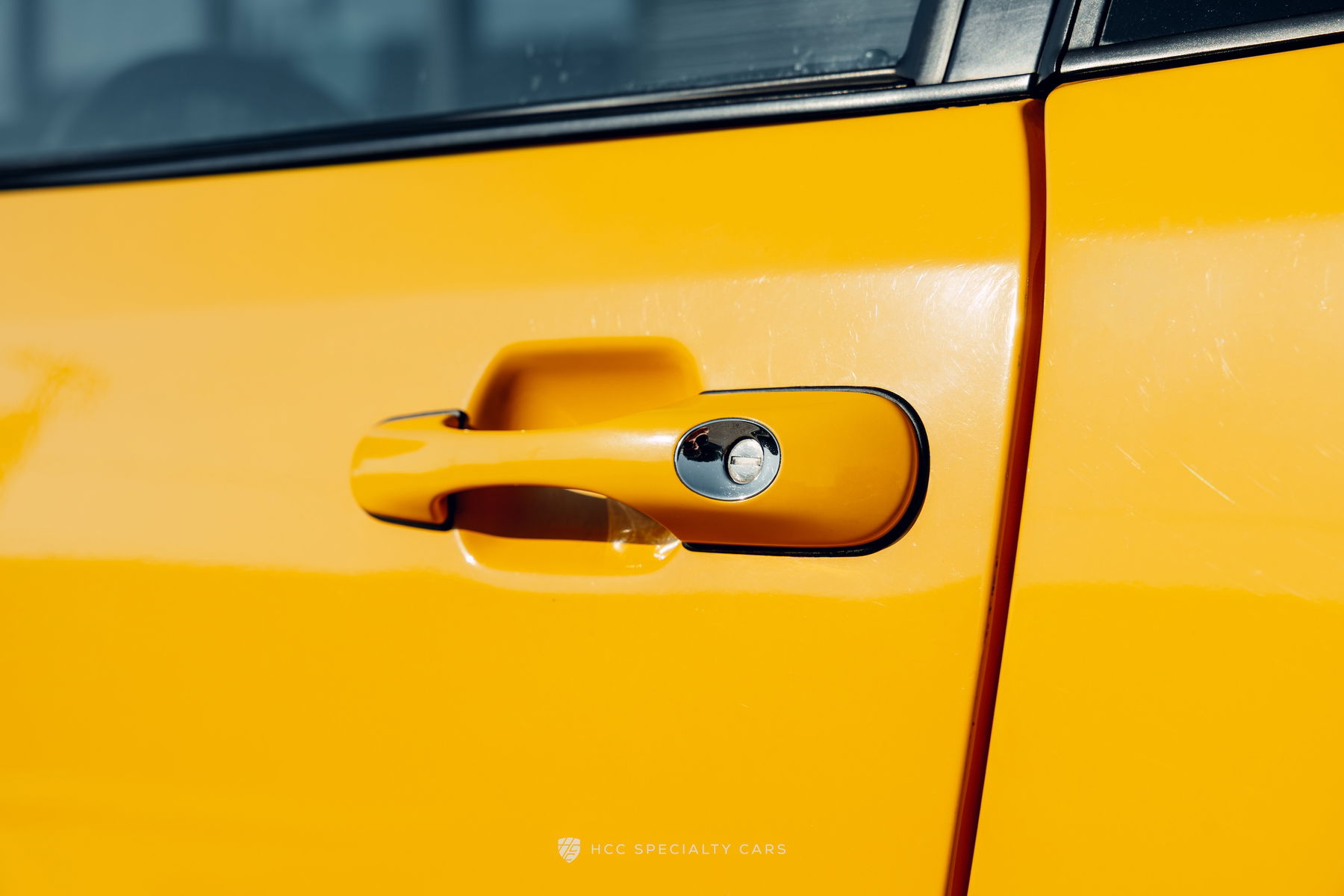
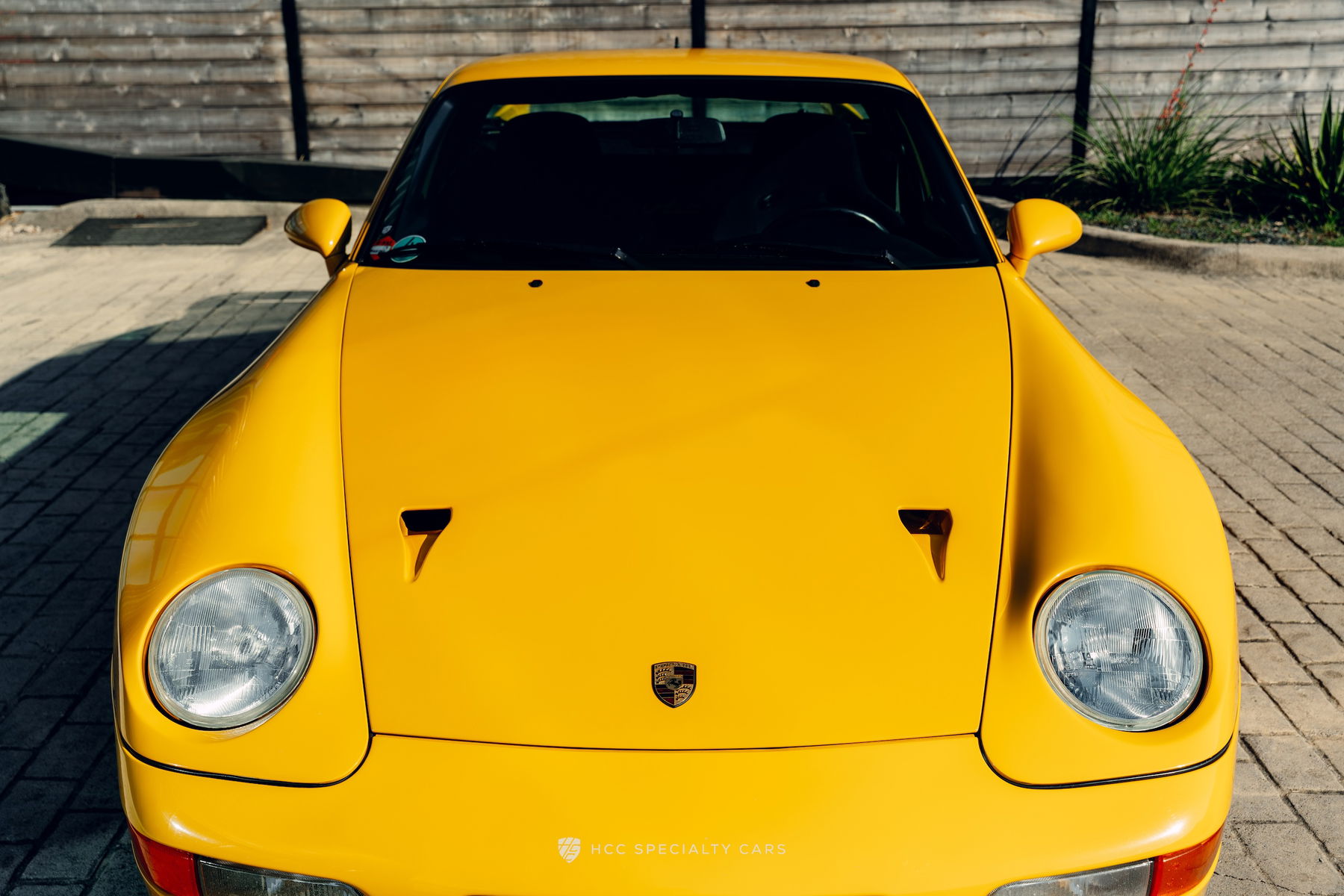
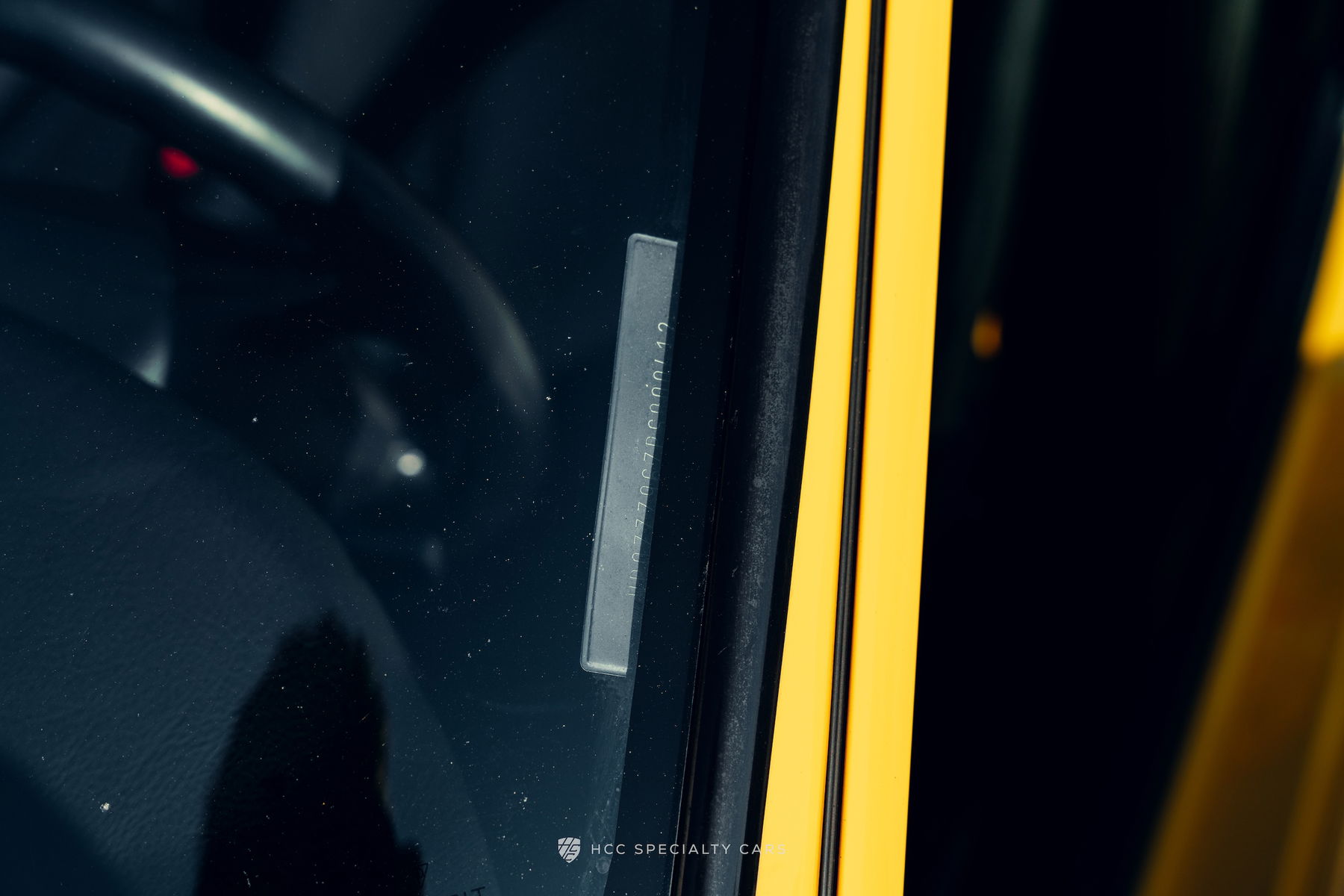
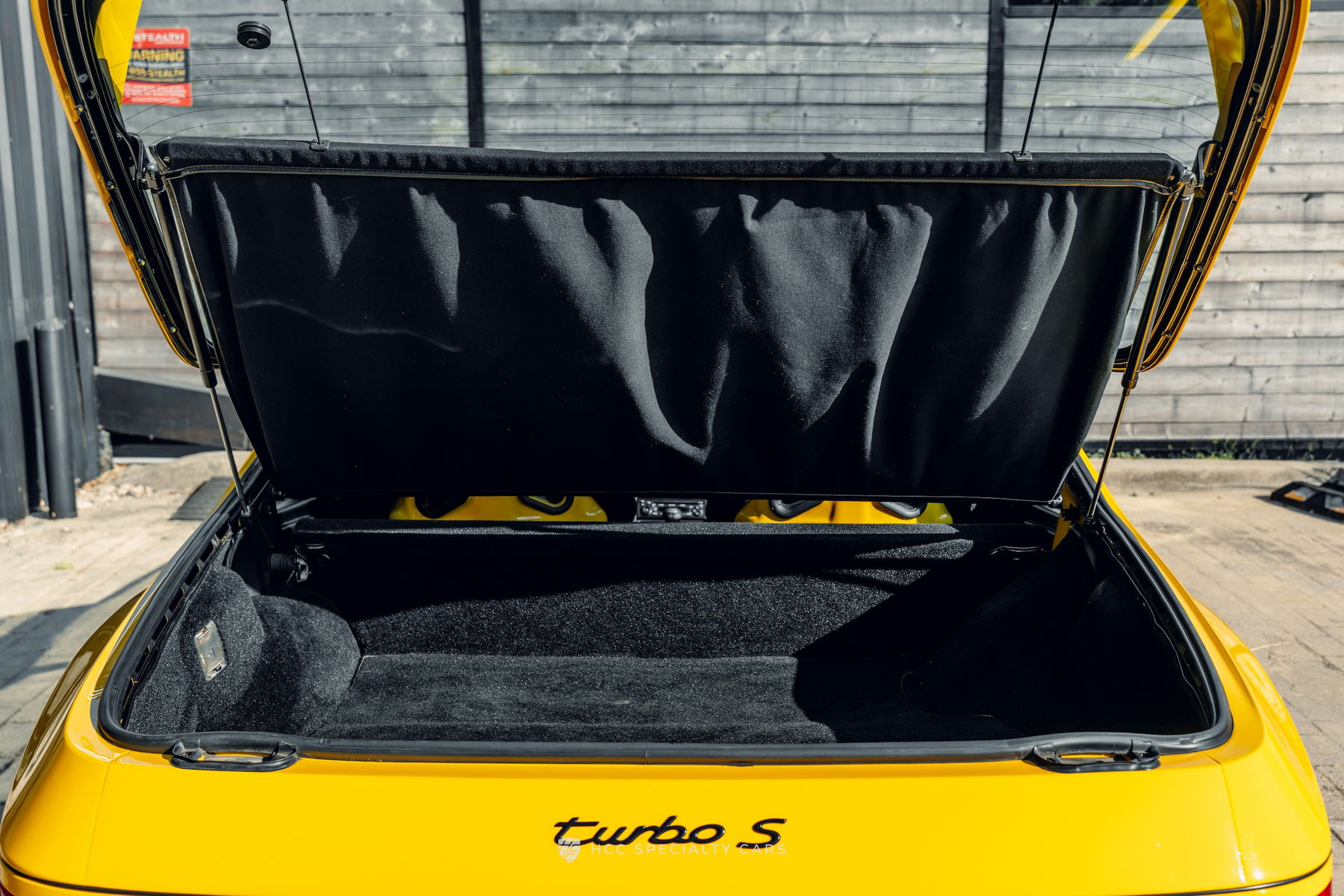
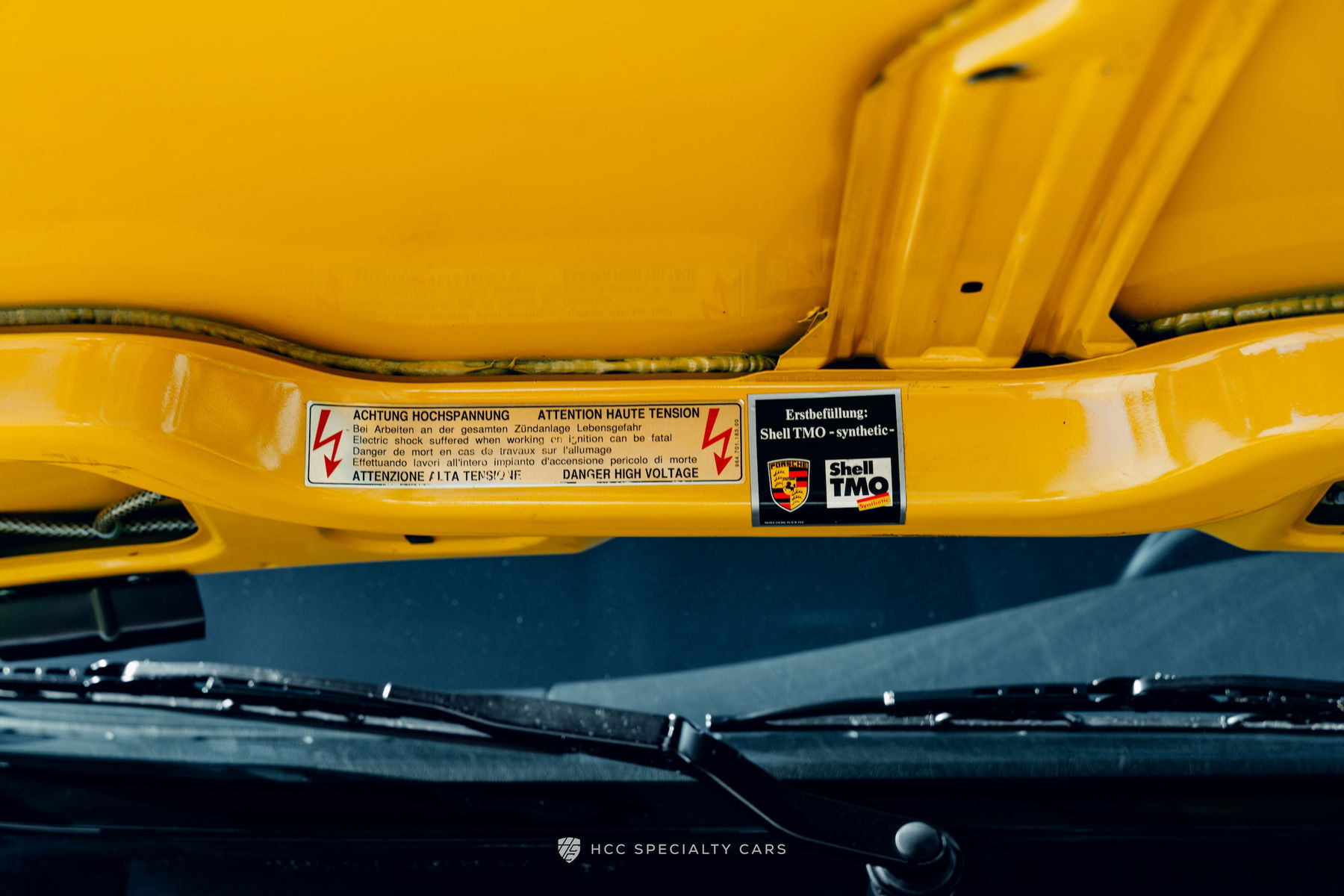
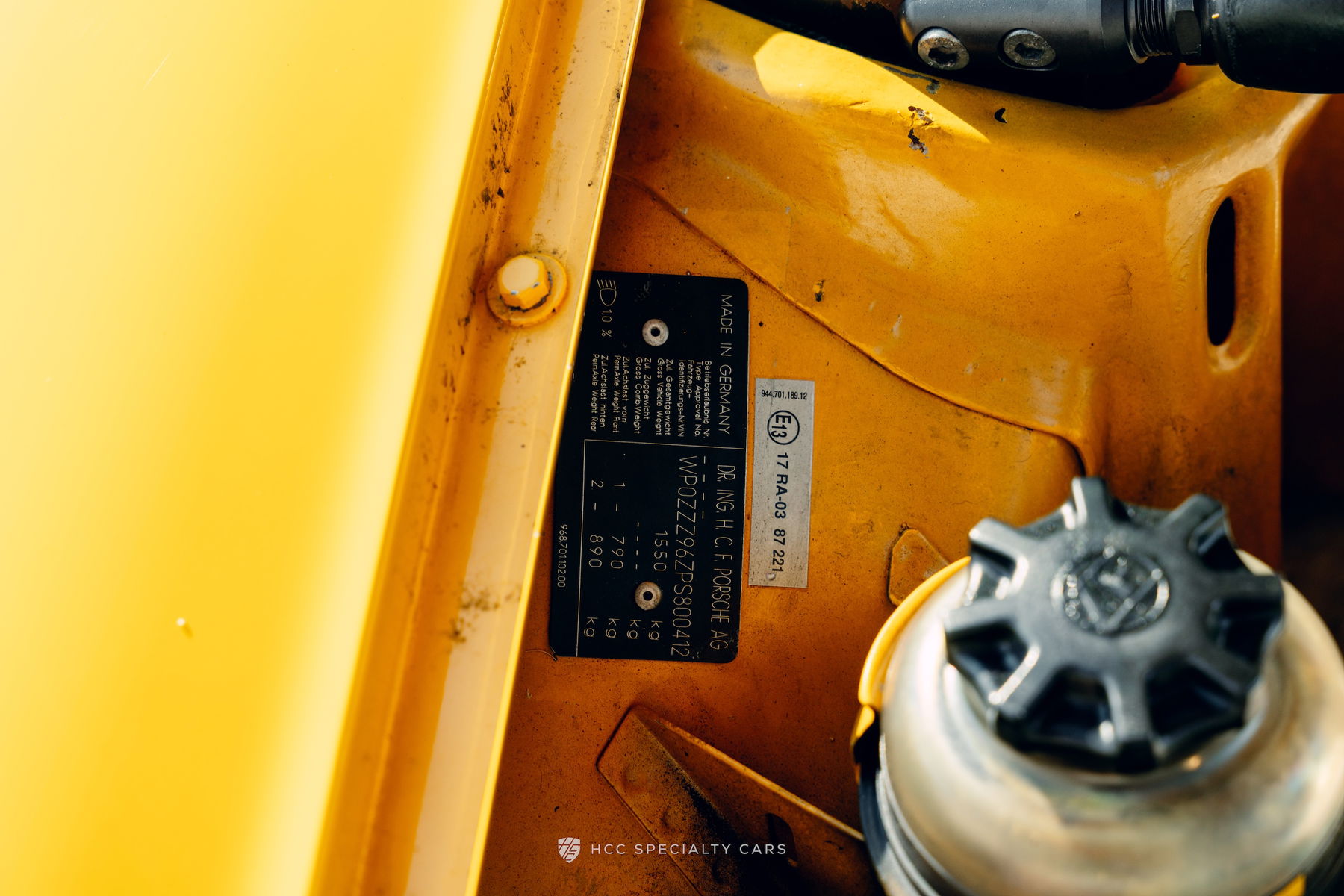
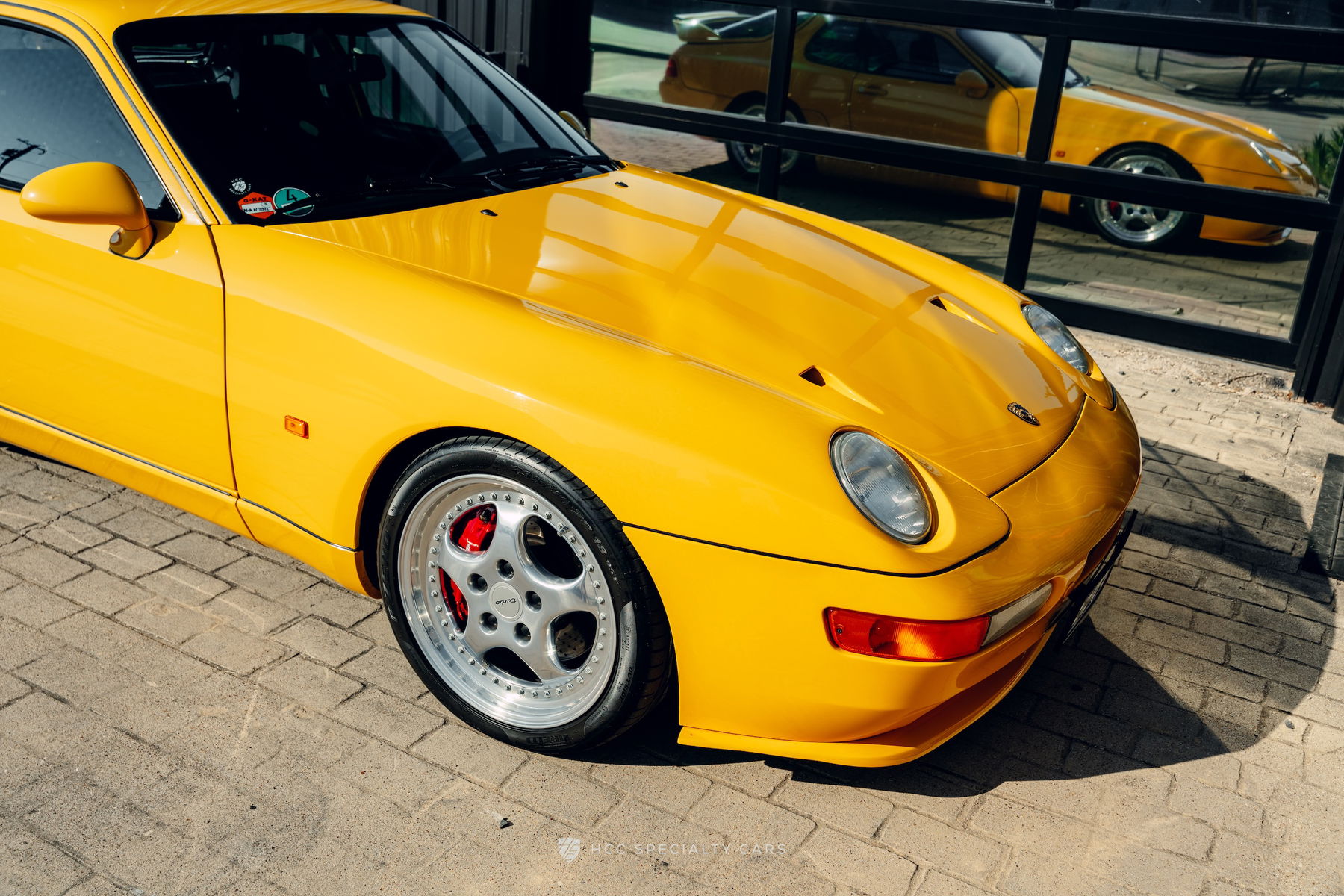
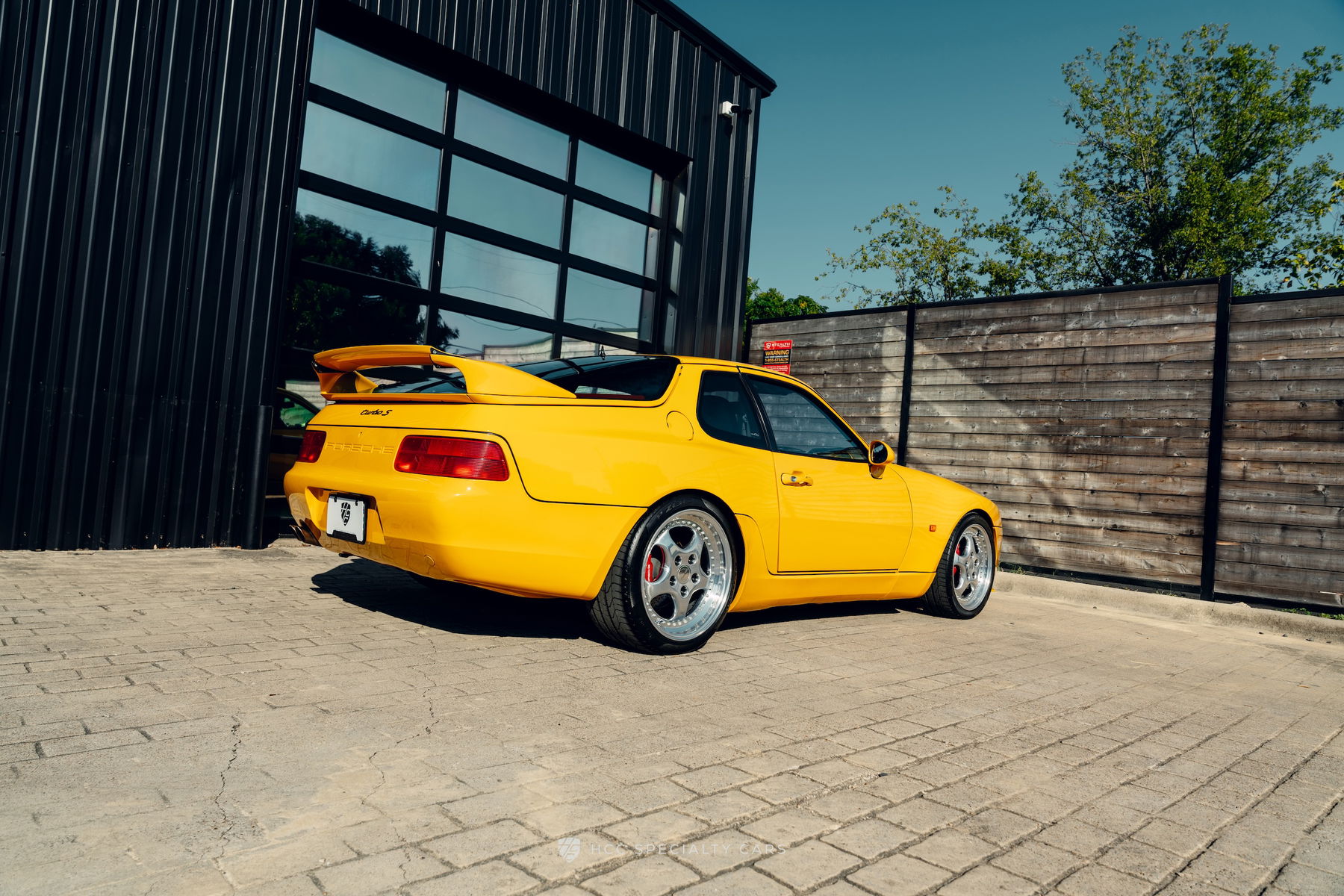
This prototype, chassis 800412, was retained by Porsche through development and press duties, registered under license plate BB-PW221. It was used for homologation, media, and internal validation—essentially the birthplace of the Turbo S model line. It is also the only example painted in Speed Yellow, a paint-to-sample (code 98) color at the time, not offered until 1994.
It was eventually sold by Porsche to Sven Quandt, son of BMW savior Herbert Quandt and founder of X-Raid Racing. Sven retained the car for nearly 30 years, using it initially as a daily driver before placing it on static display in his home. Under his stewardship, it was serviced exclusively by Porsche dealers, and it remains accompanied by a fully stamped service book, original manuals, delivery paperwork, and tool kit.
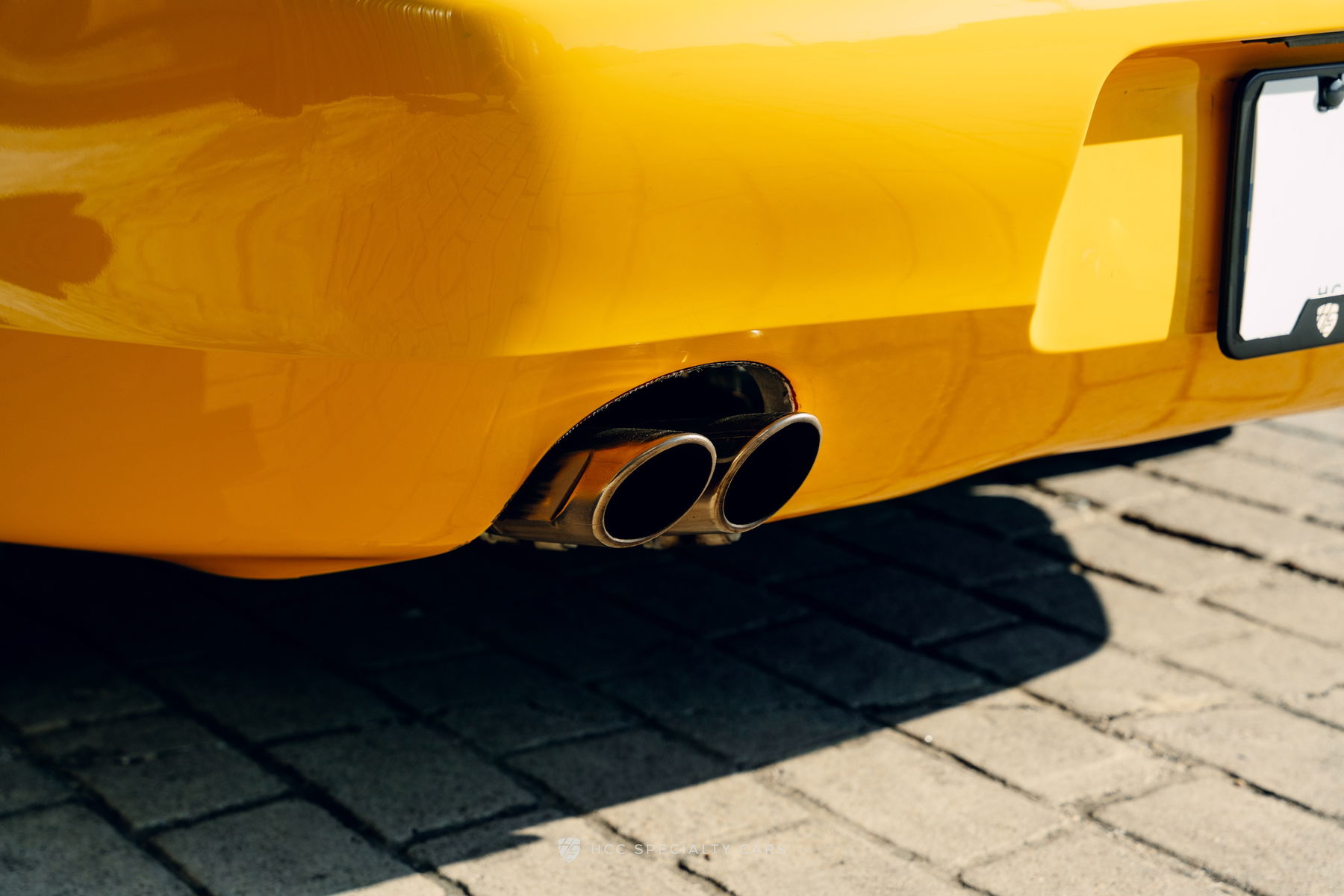
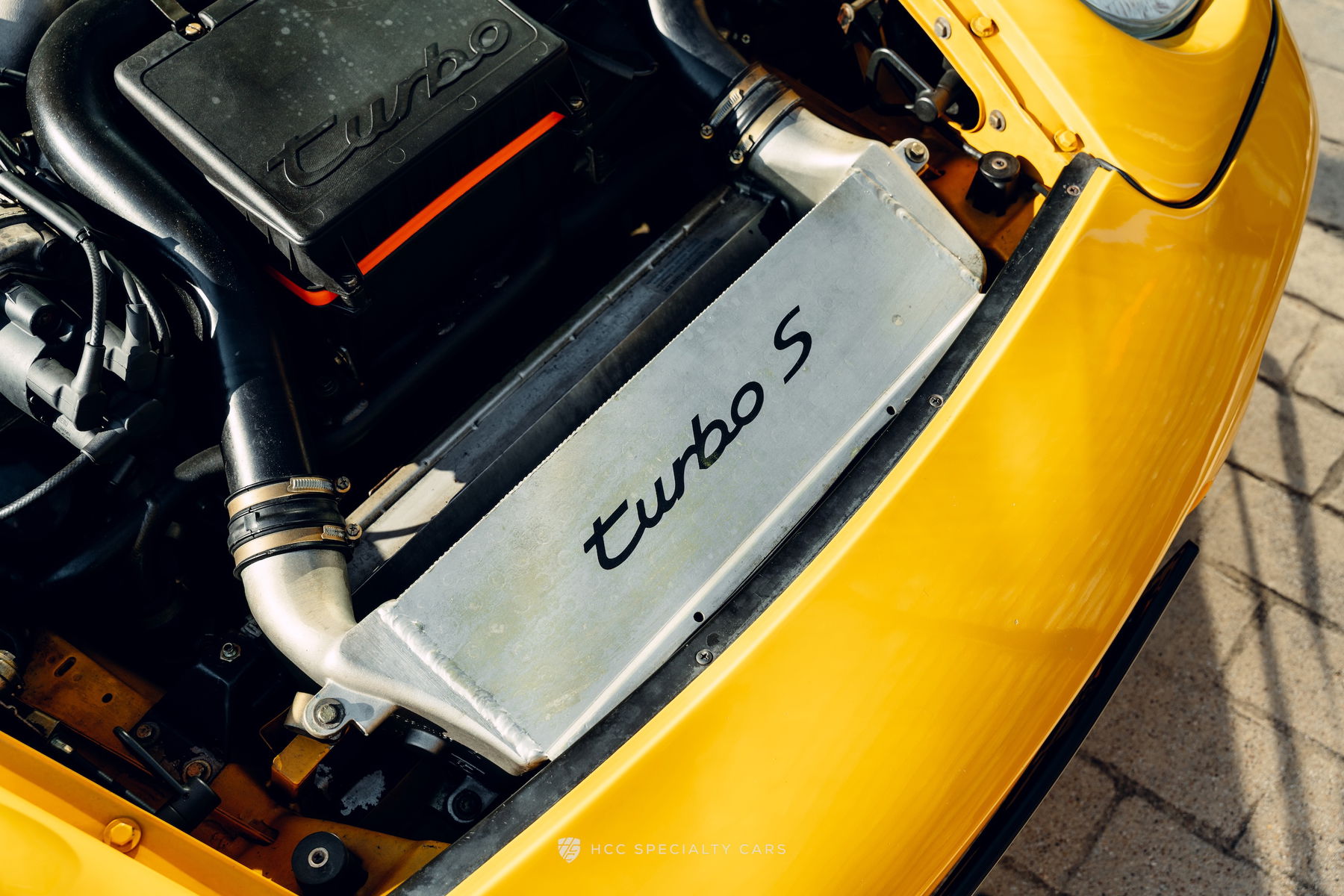
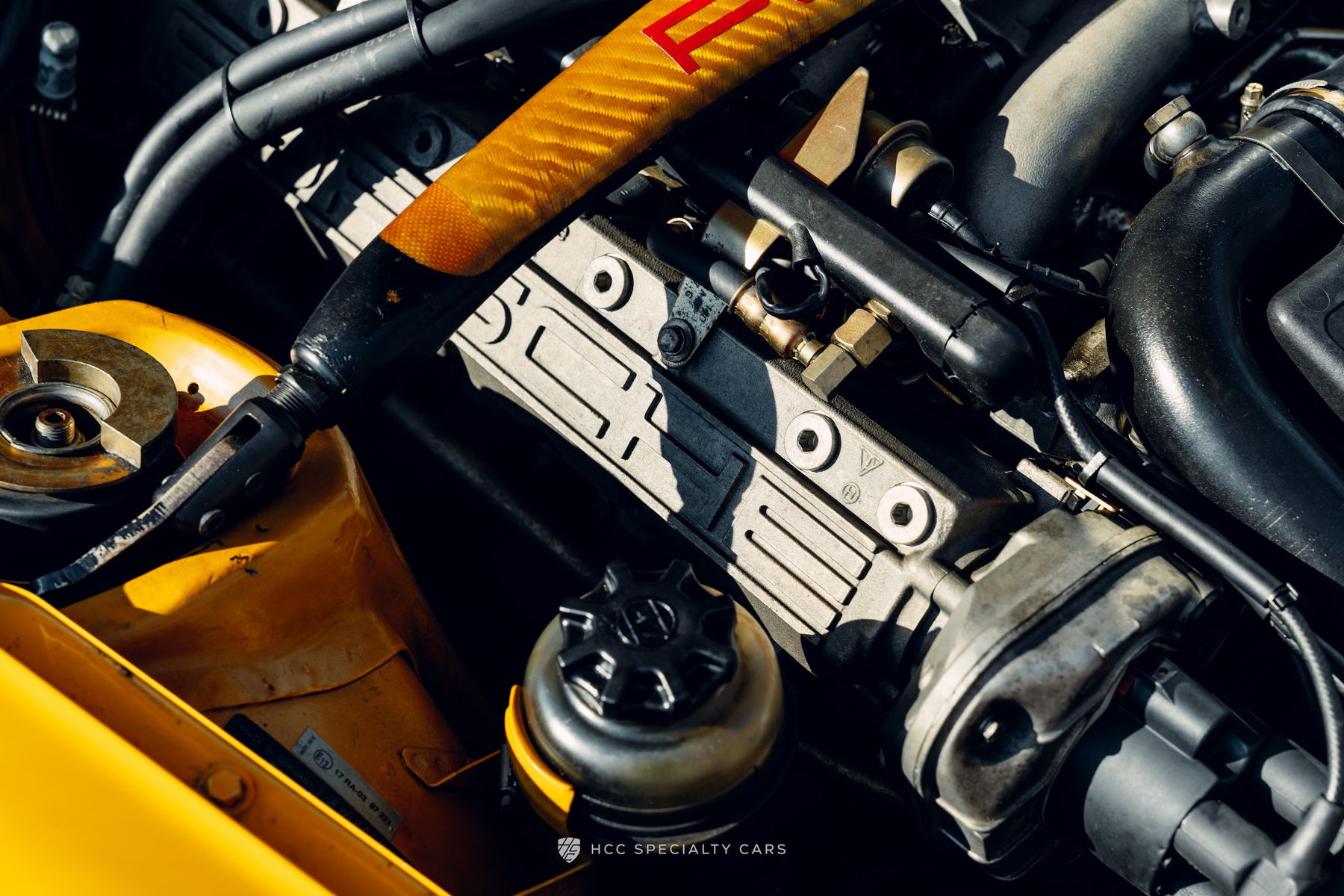
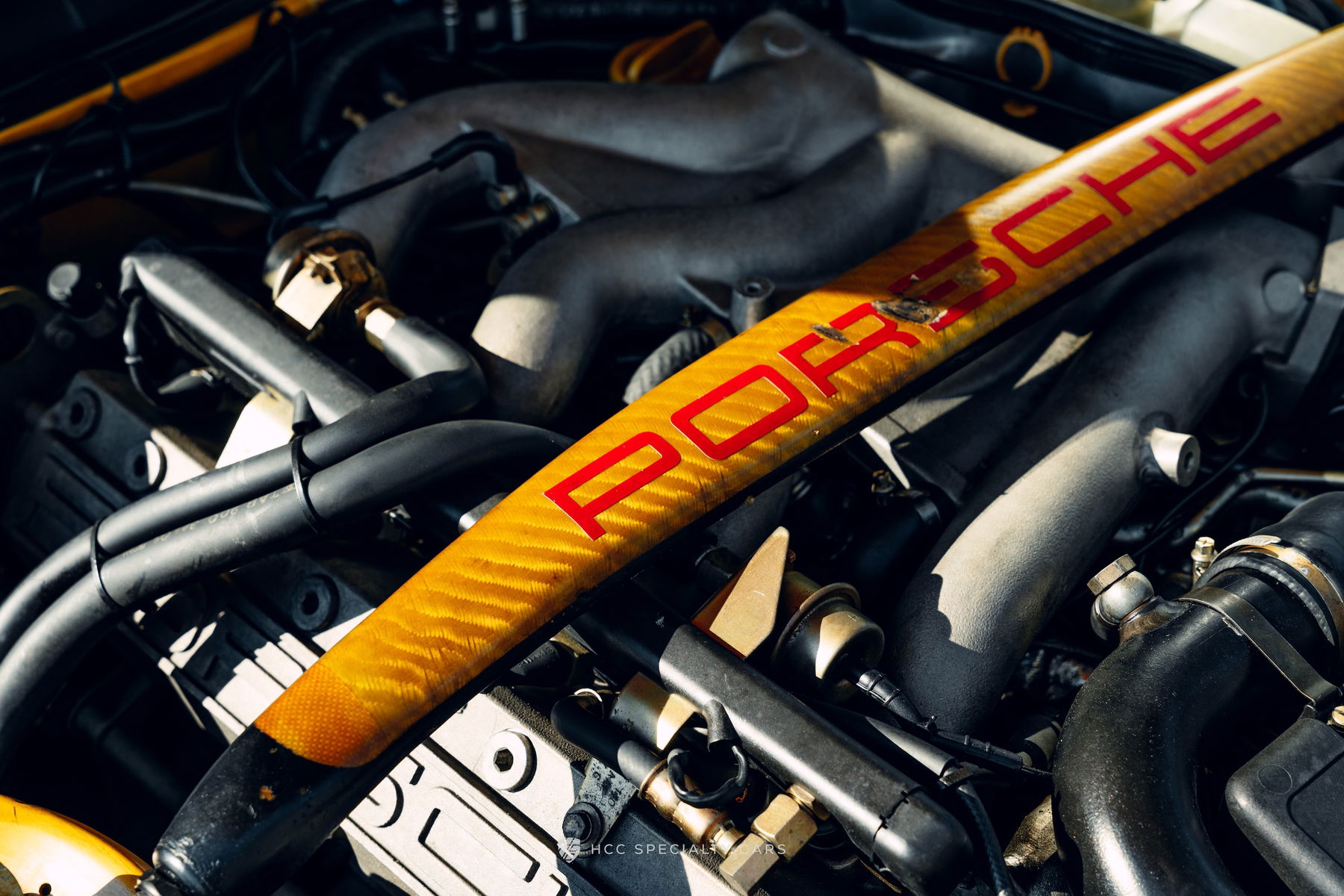
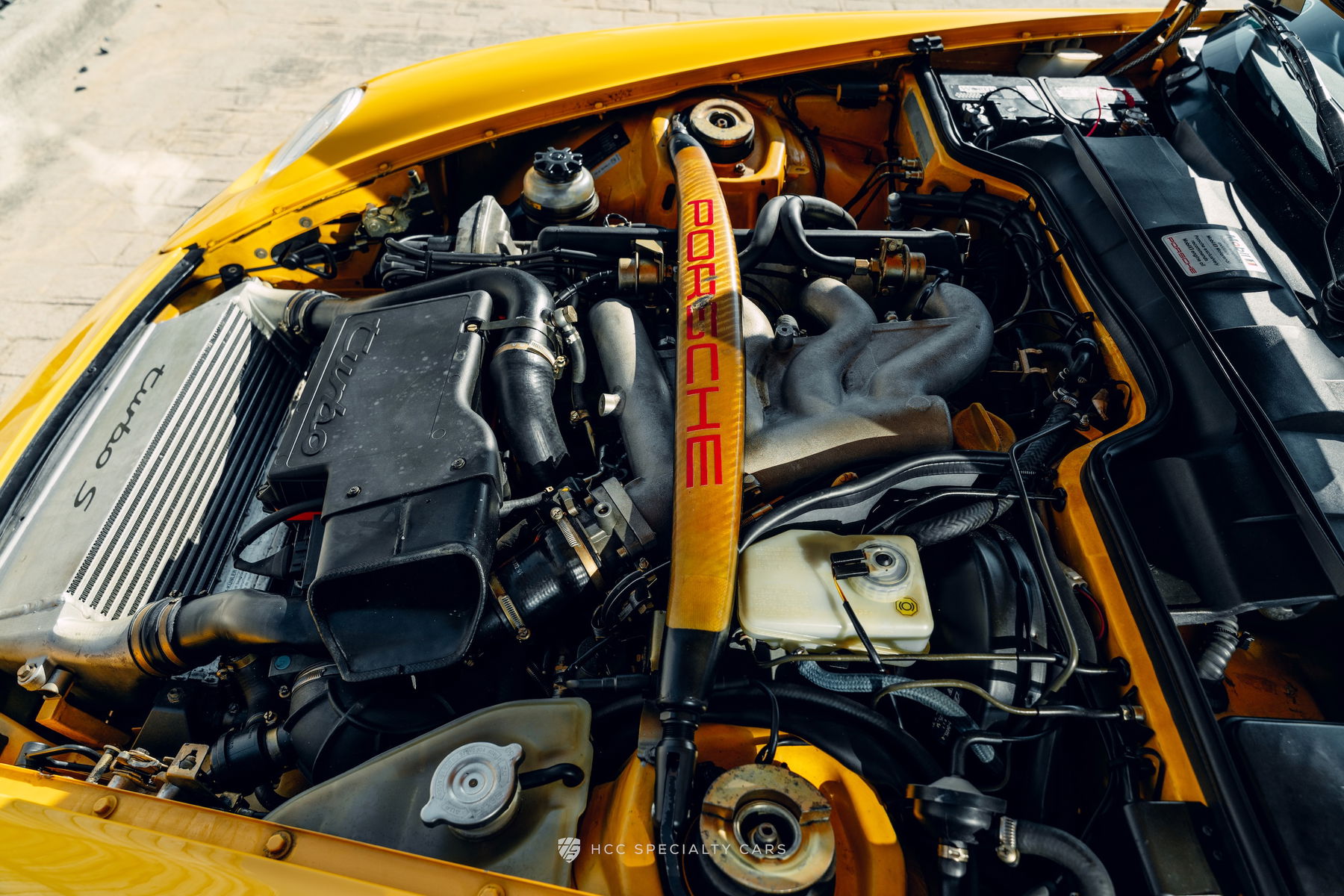
Mechanically, the Turbo S is a study in radical engineering. Its 3.0L inline-four received a complete overhaul: two-valve head, lowered compression (8.0:1), and KKK water-cooled turbocharger producing 1.0 bar of boost. This yielded 305 horsepower and 368 lb-ft of torque, besting all but the 911 Turbo 3.6 in Porsche’s lineup. The intake system and top end were derived from the 944 Turbo, while the turbocharger itself was sourced from the 993 GT2.
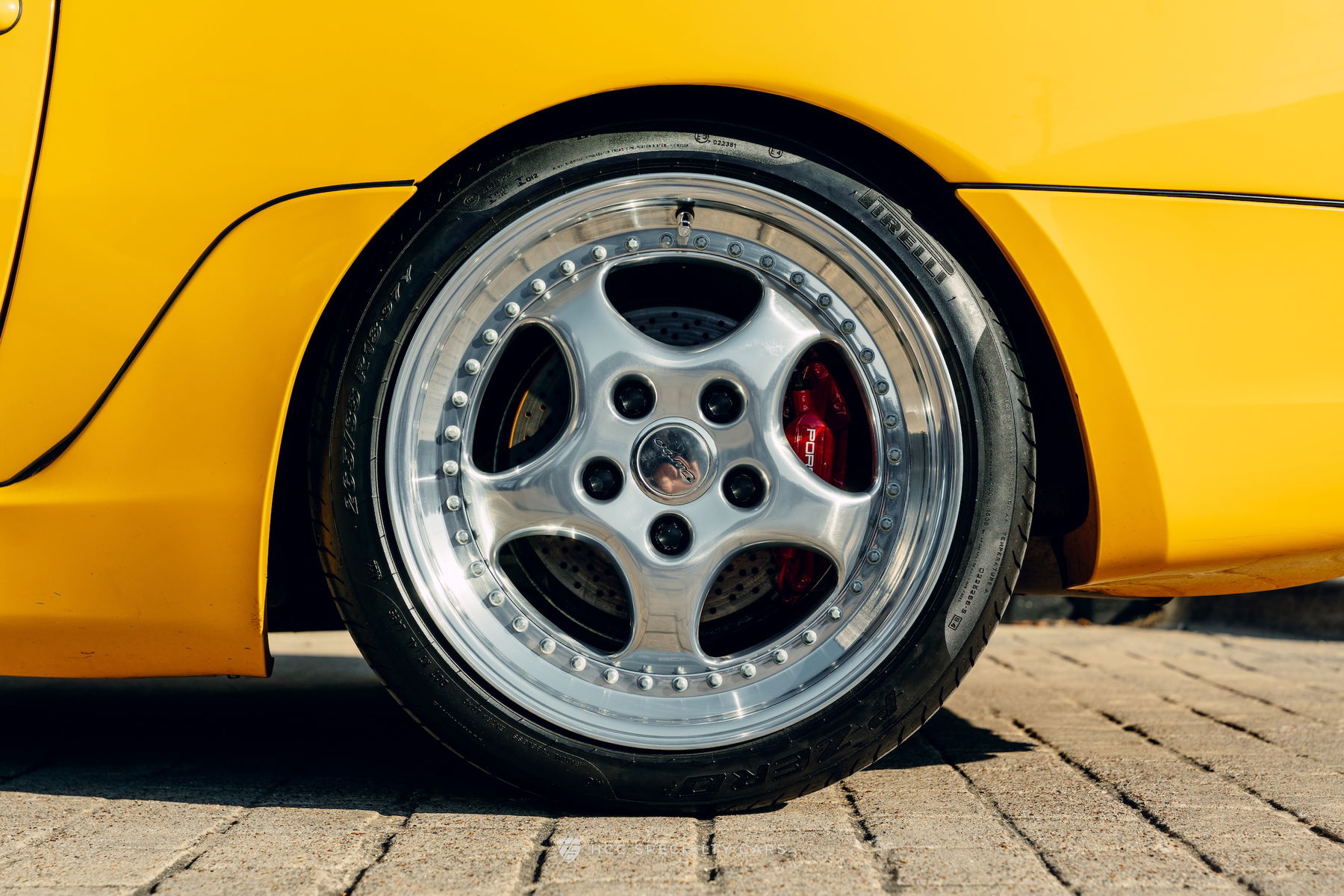
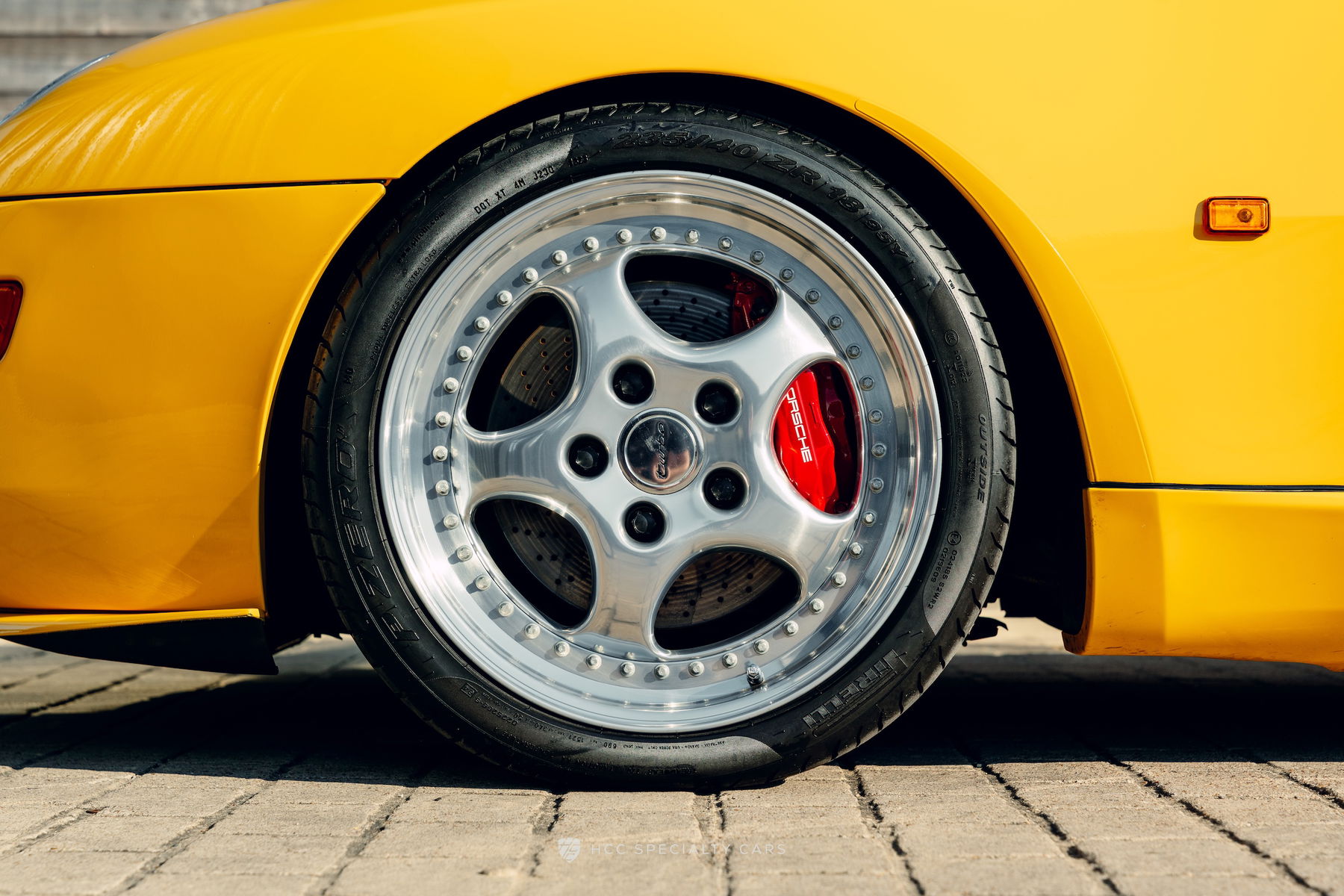
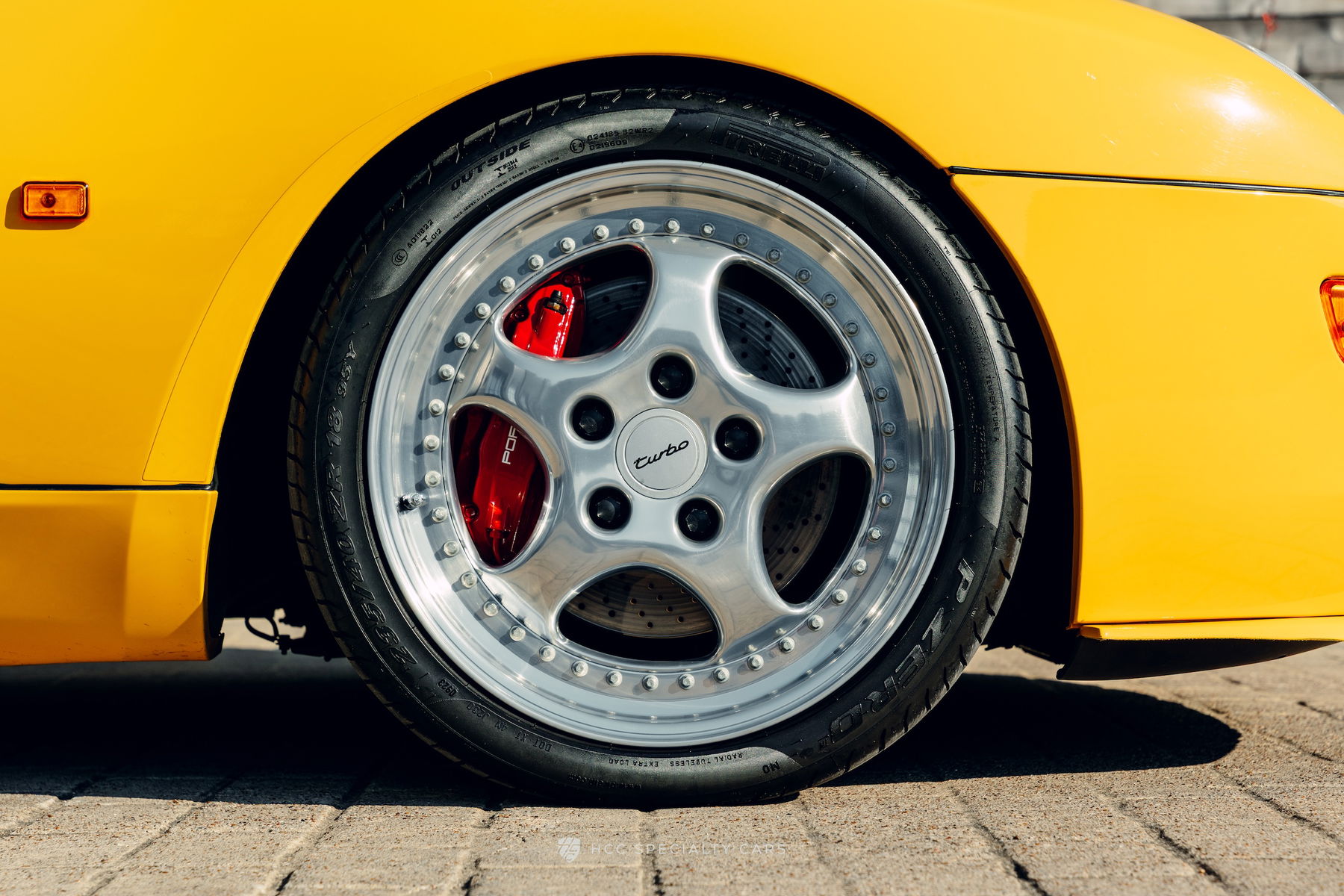
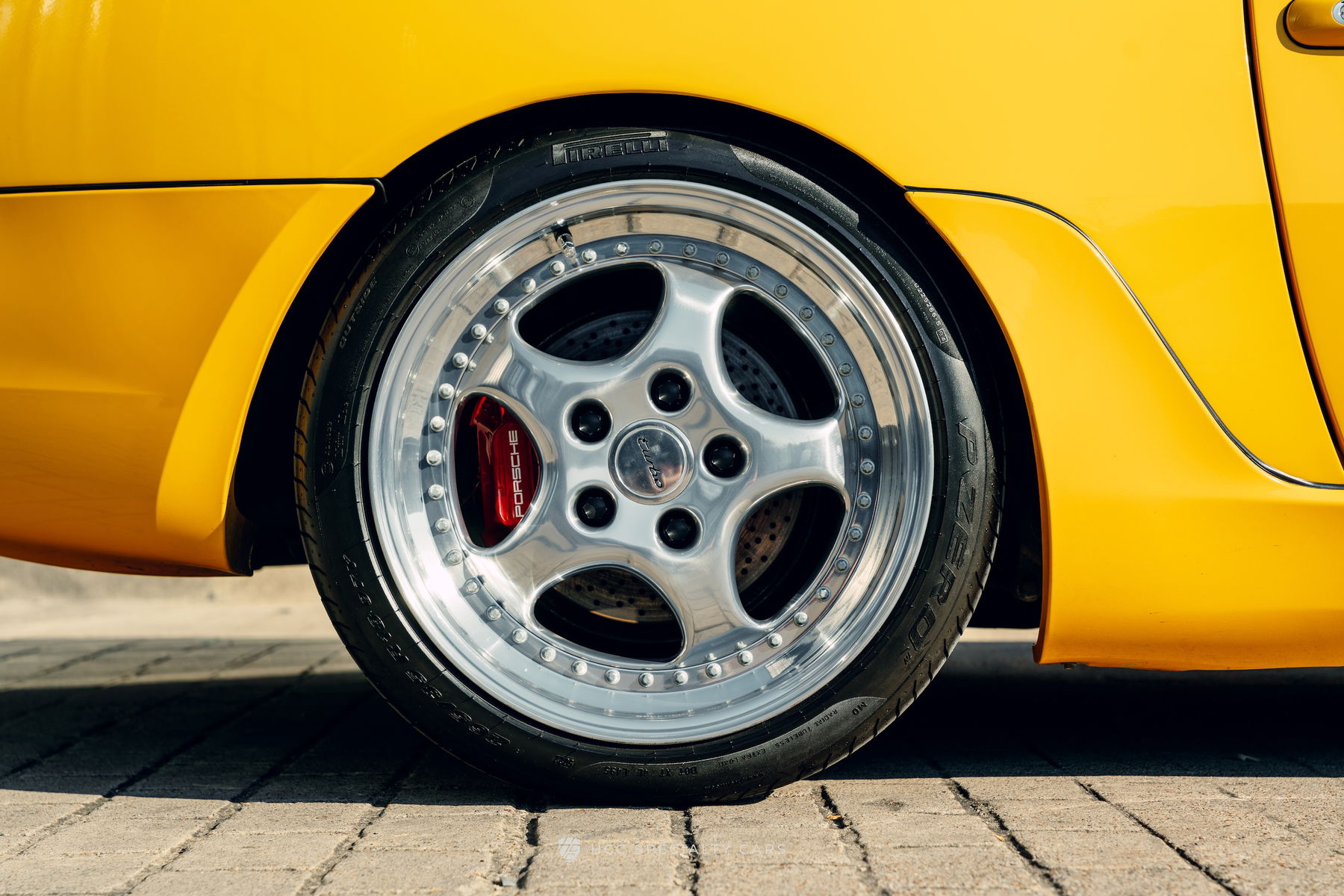
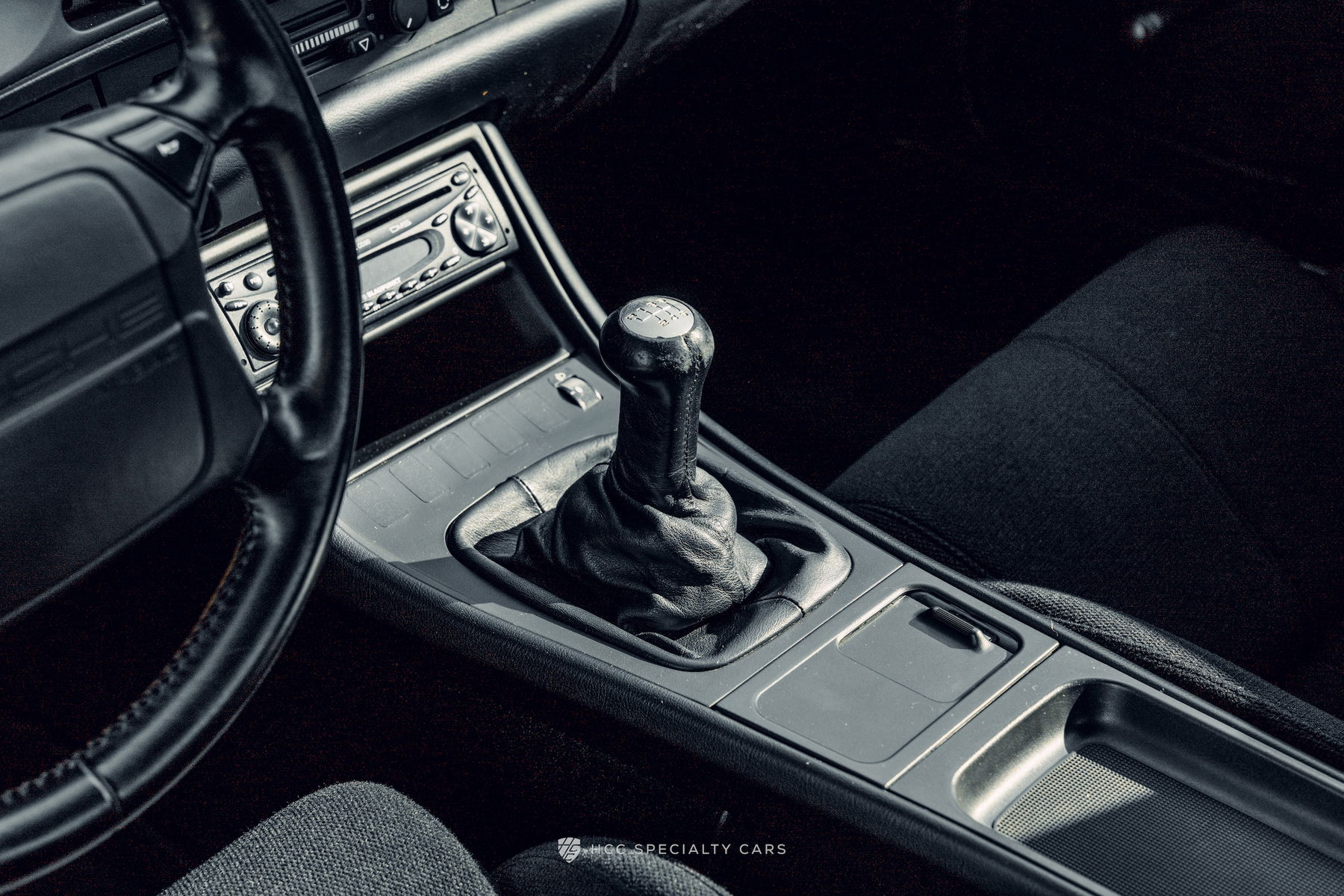
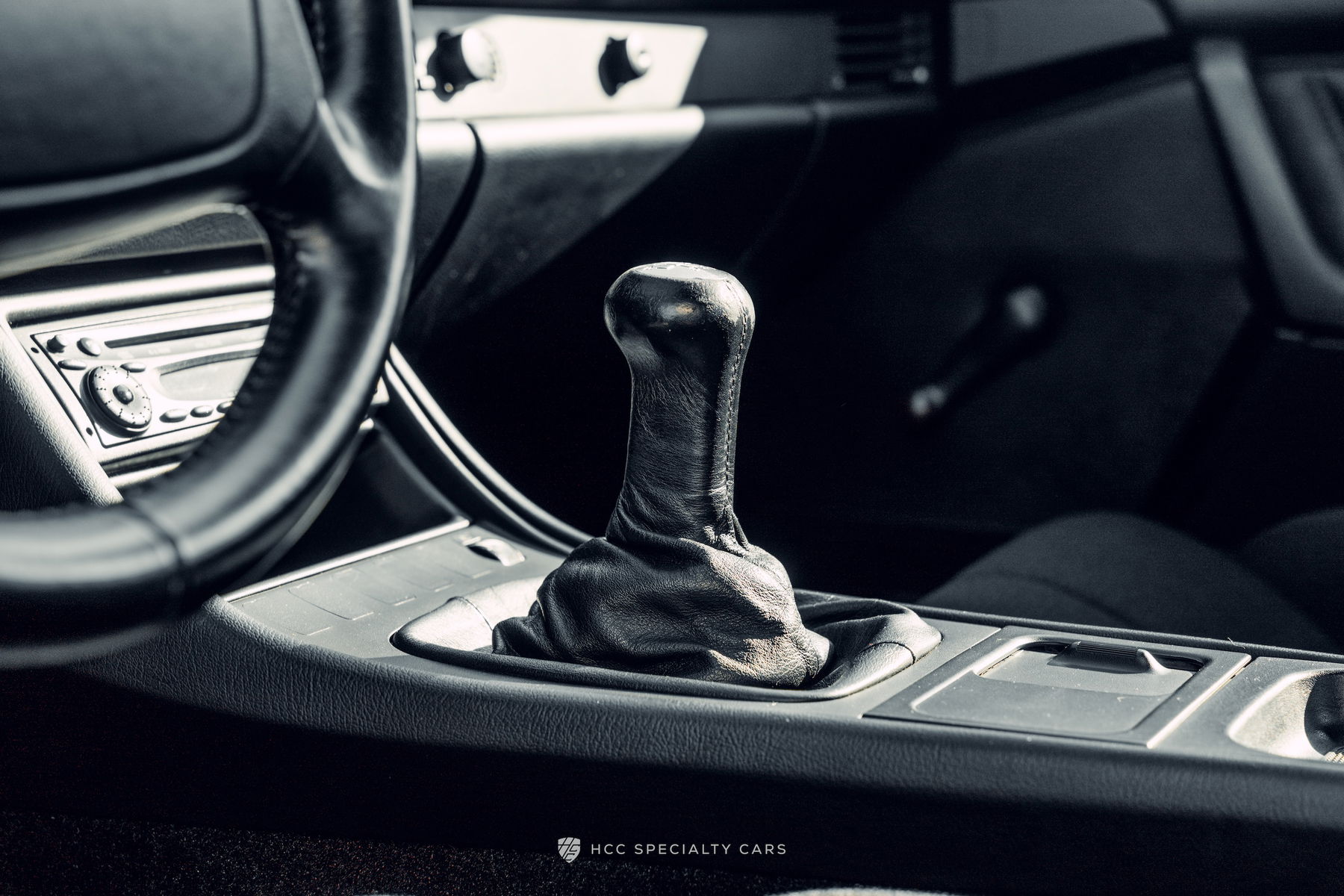
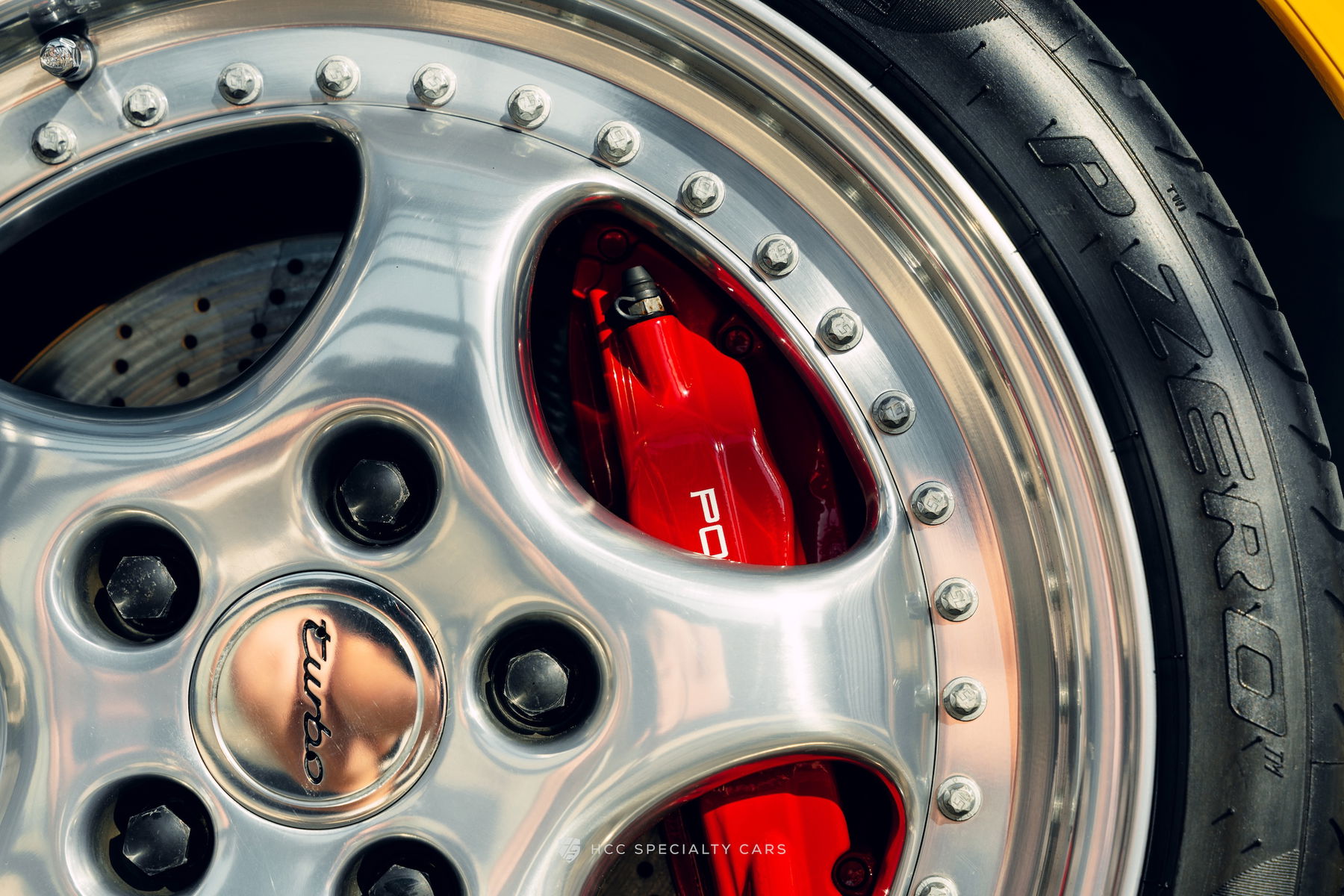
It shares its brakes and suspension with the 964 Turbo, but sits 20mm lower than the 968 Club Sport, and even weighs 20 kg less—a remarkable feat considering the added turbo components. Power is sent through a reinforced 6-speed gearbox and Torsen limited-slip differential (option 220), while chassis tuning is supported by the Sport Chassis package (option 030). The 6-speed transmission features longer gear ratios than the standard 968.
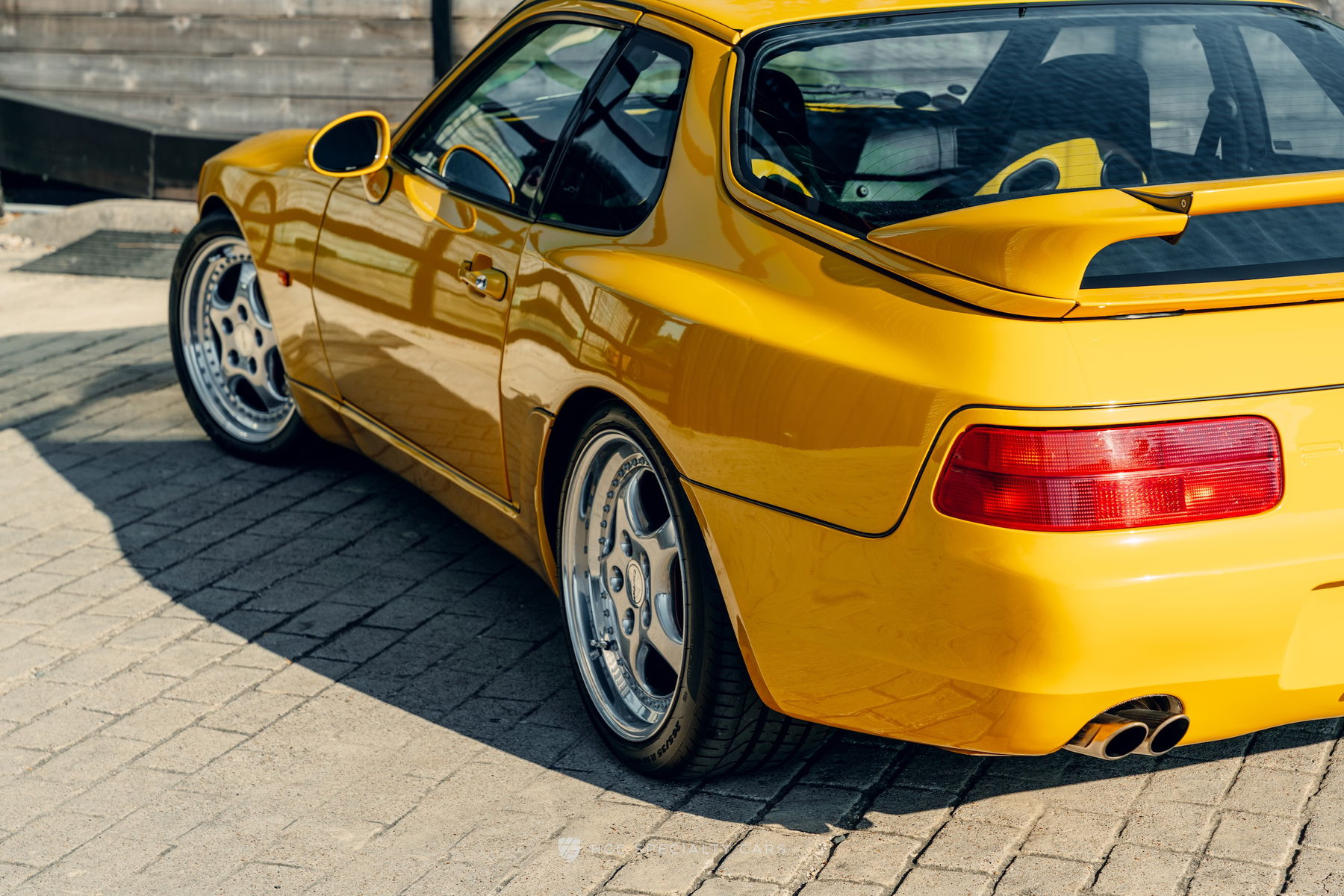
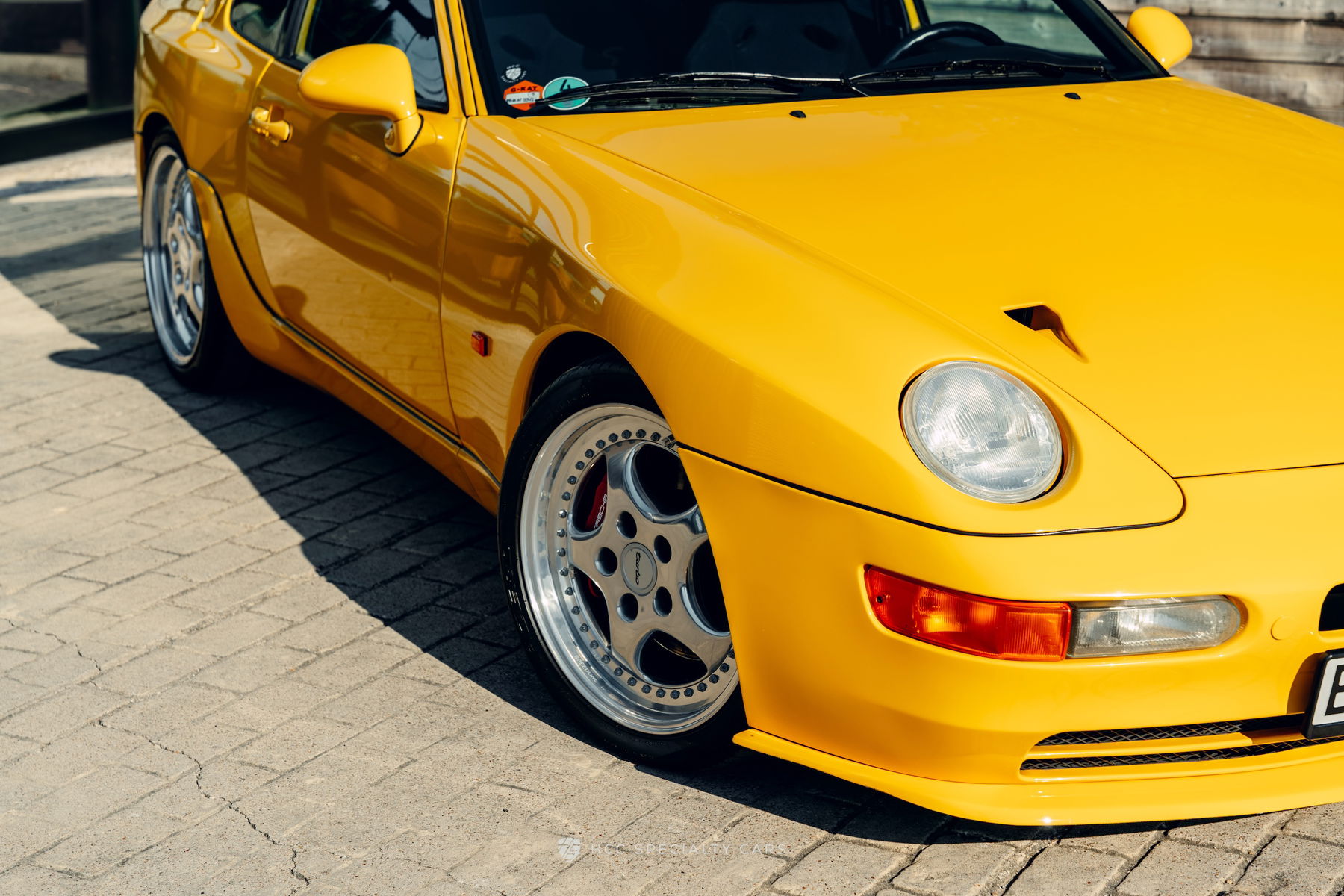
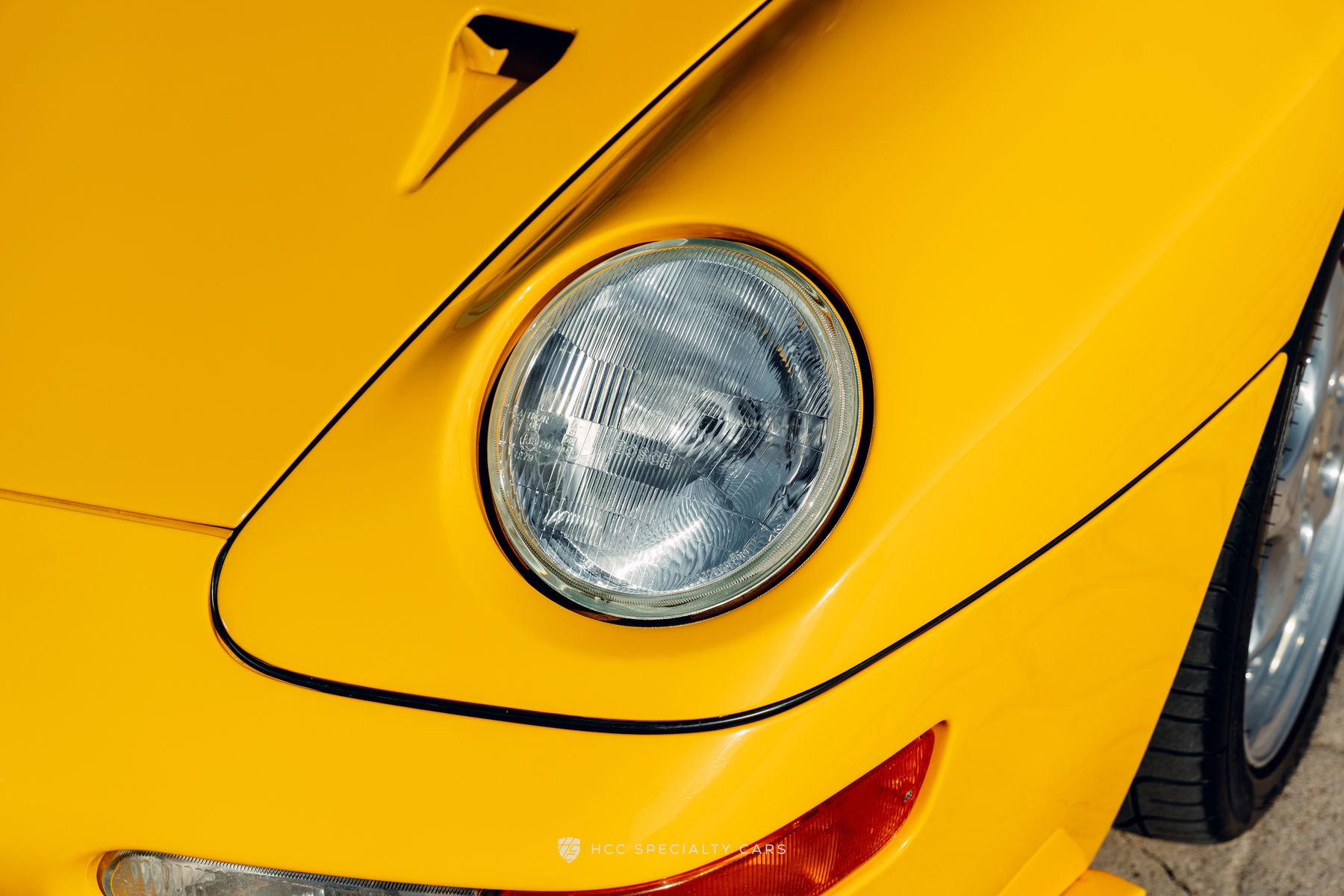
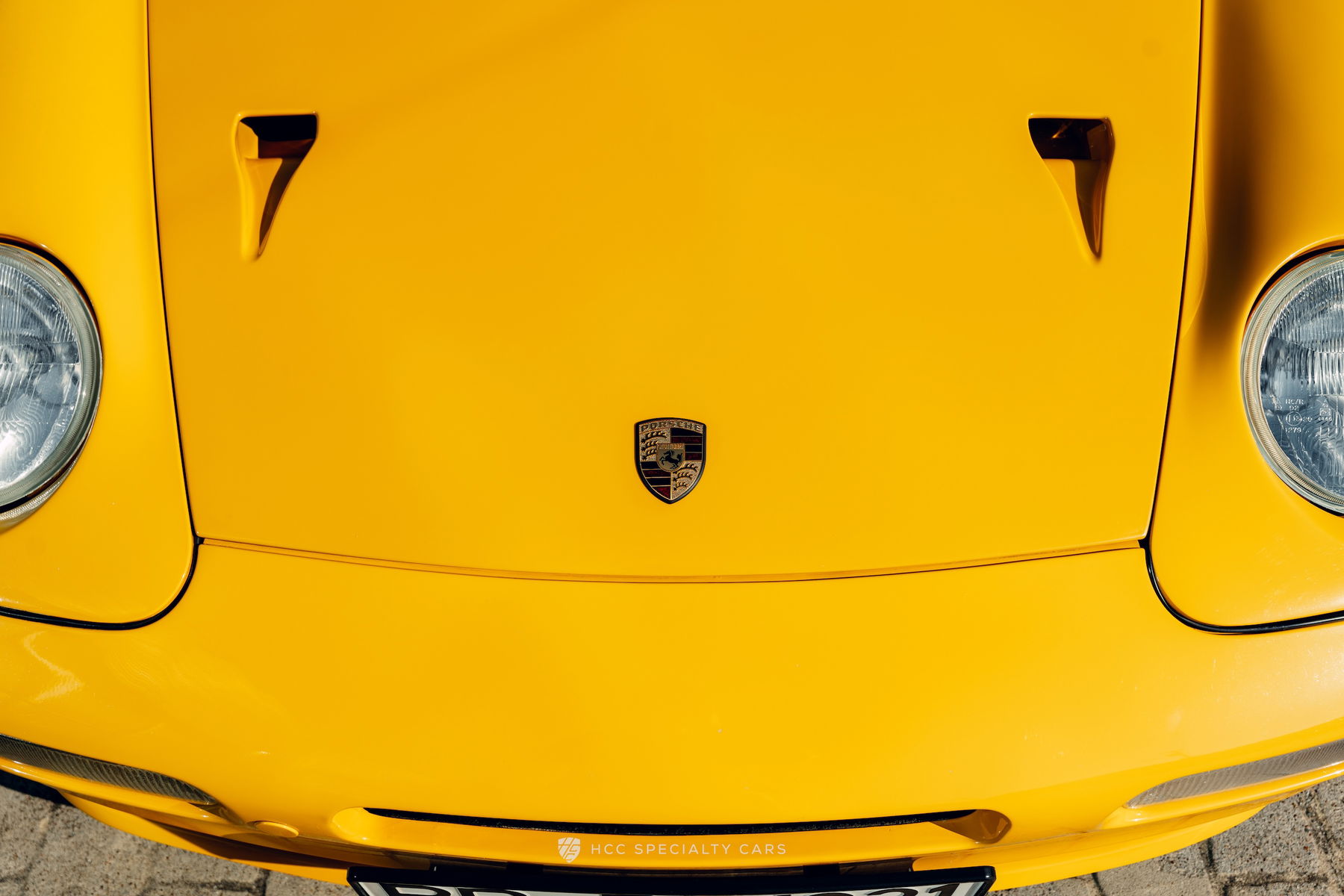
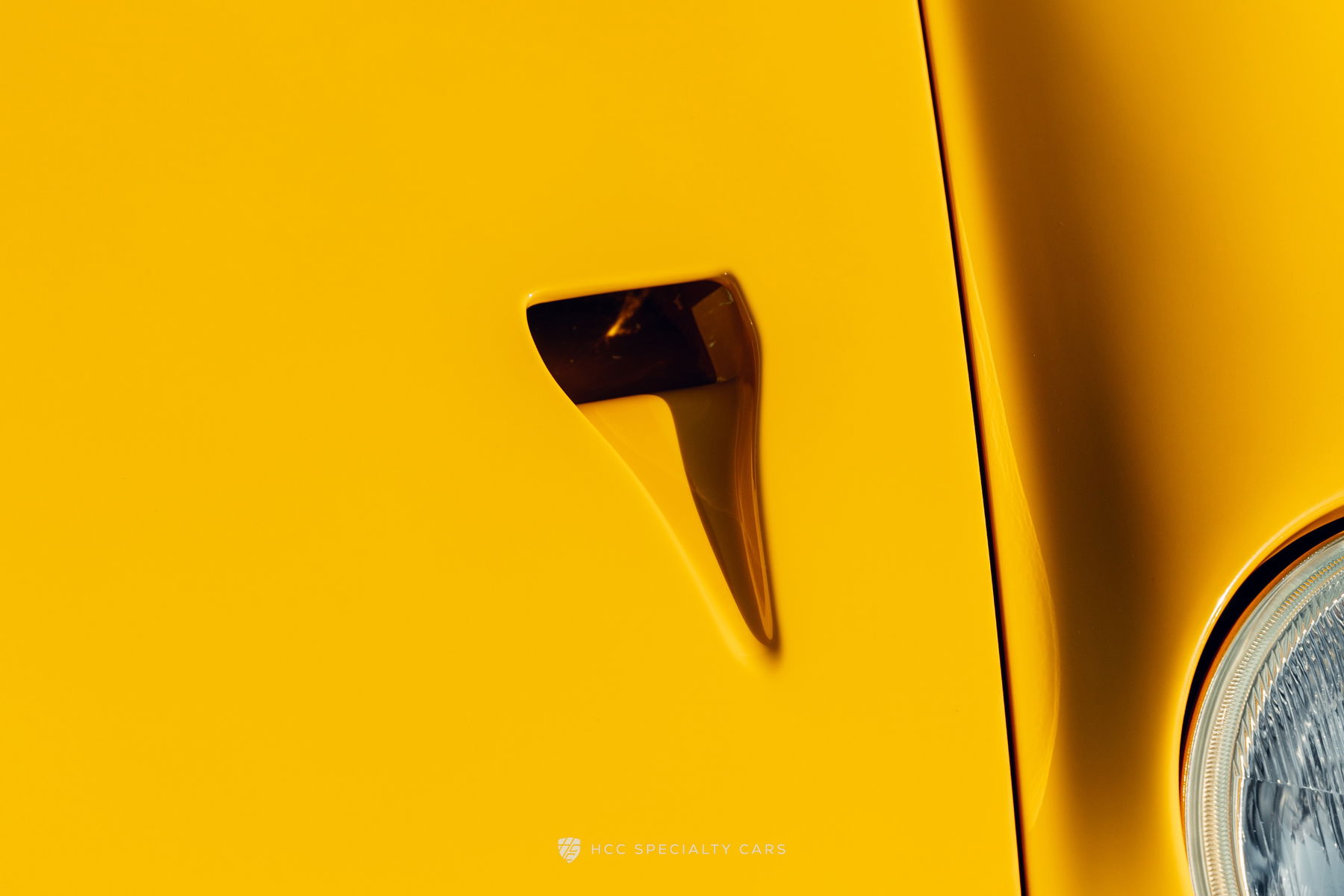
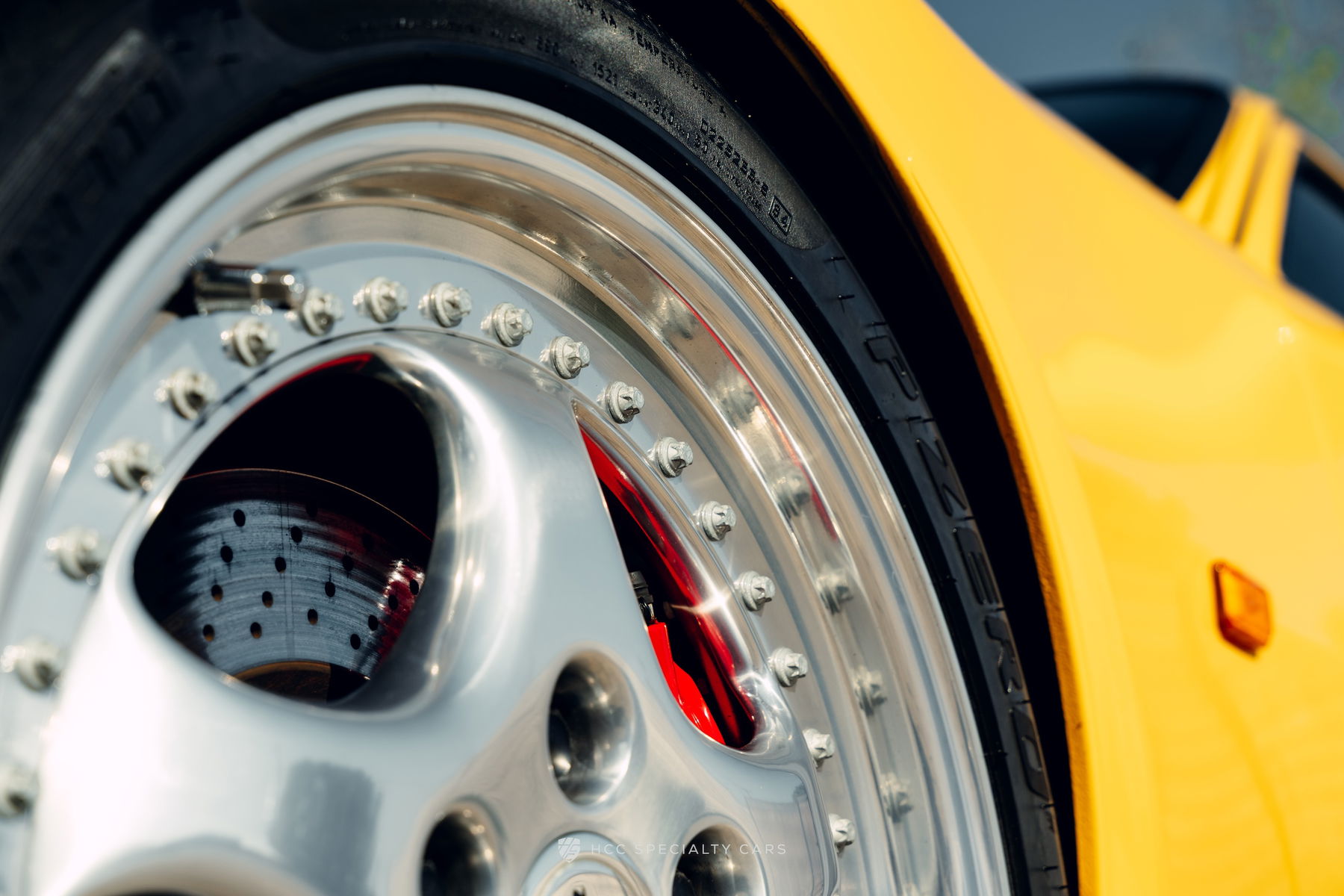
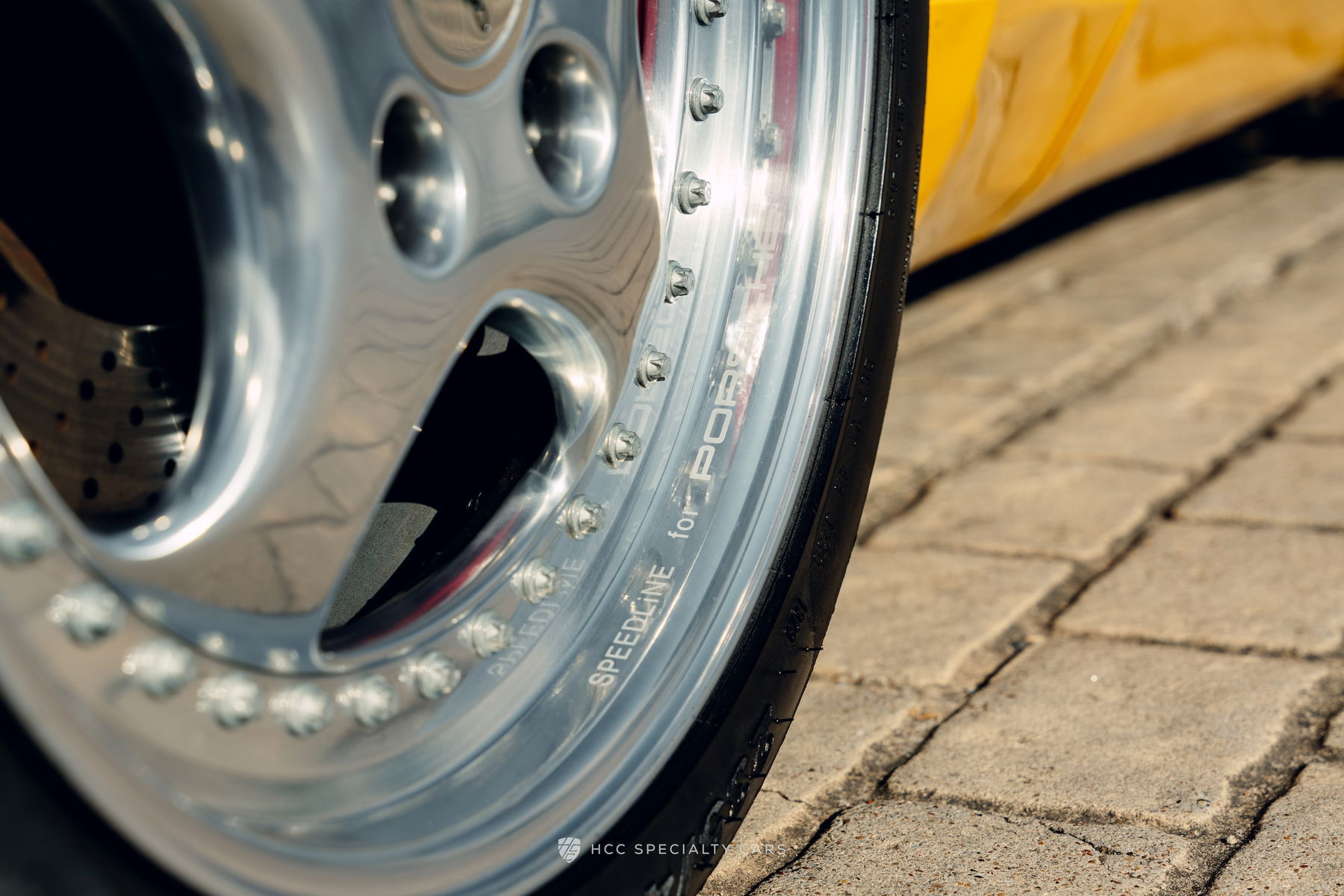
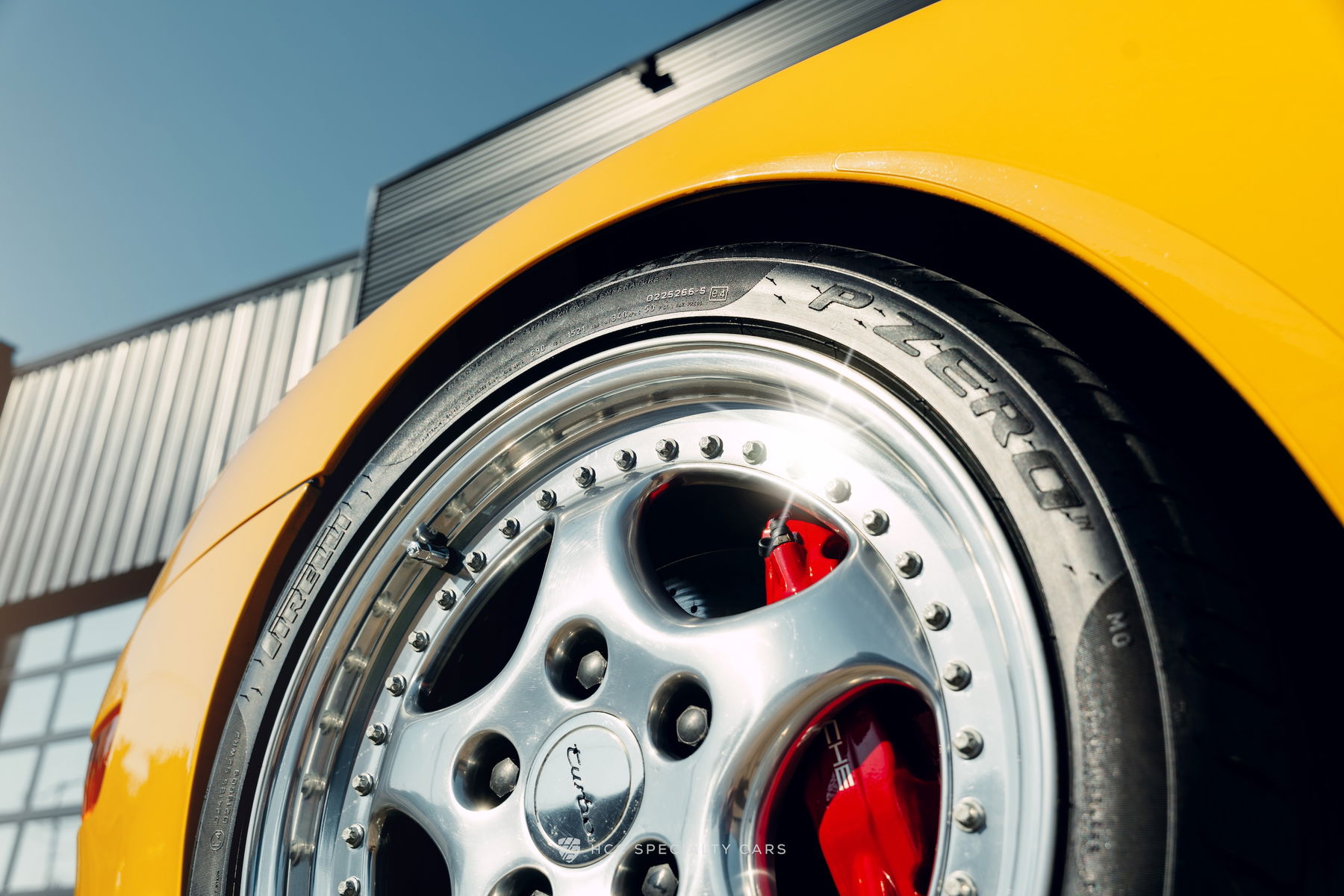
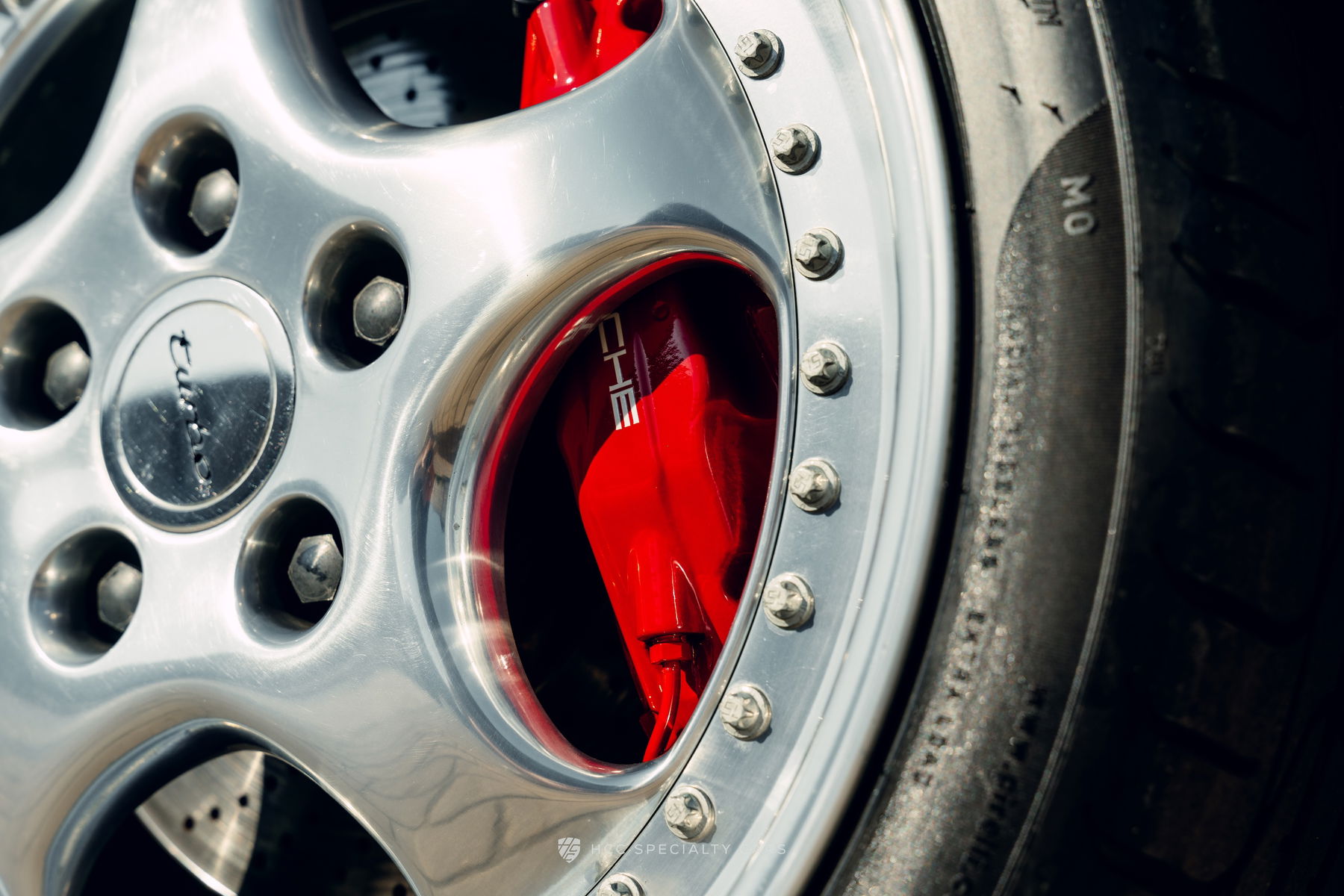
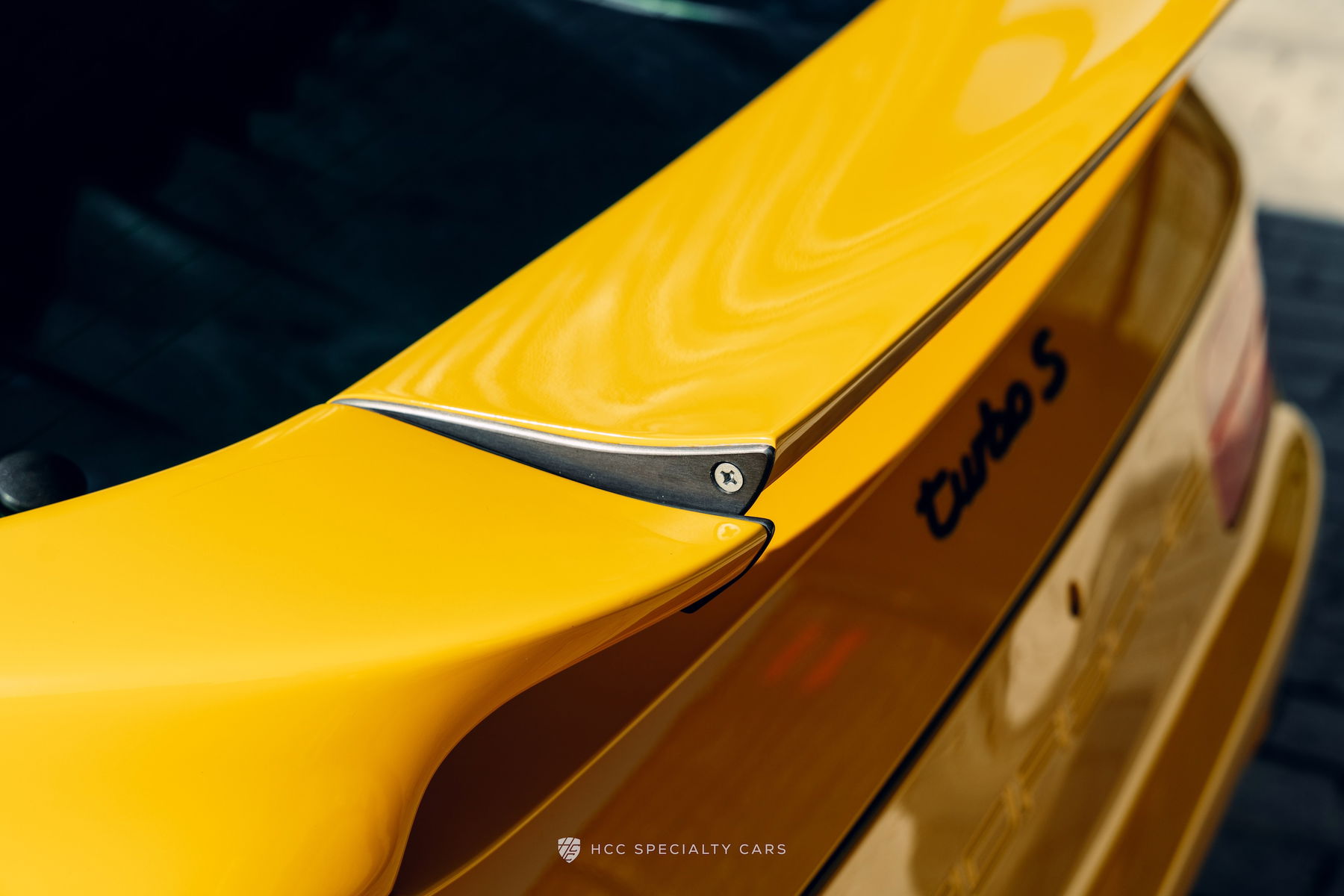
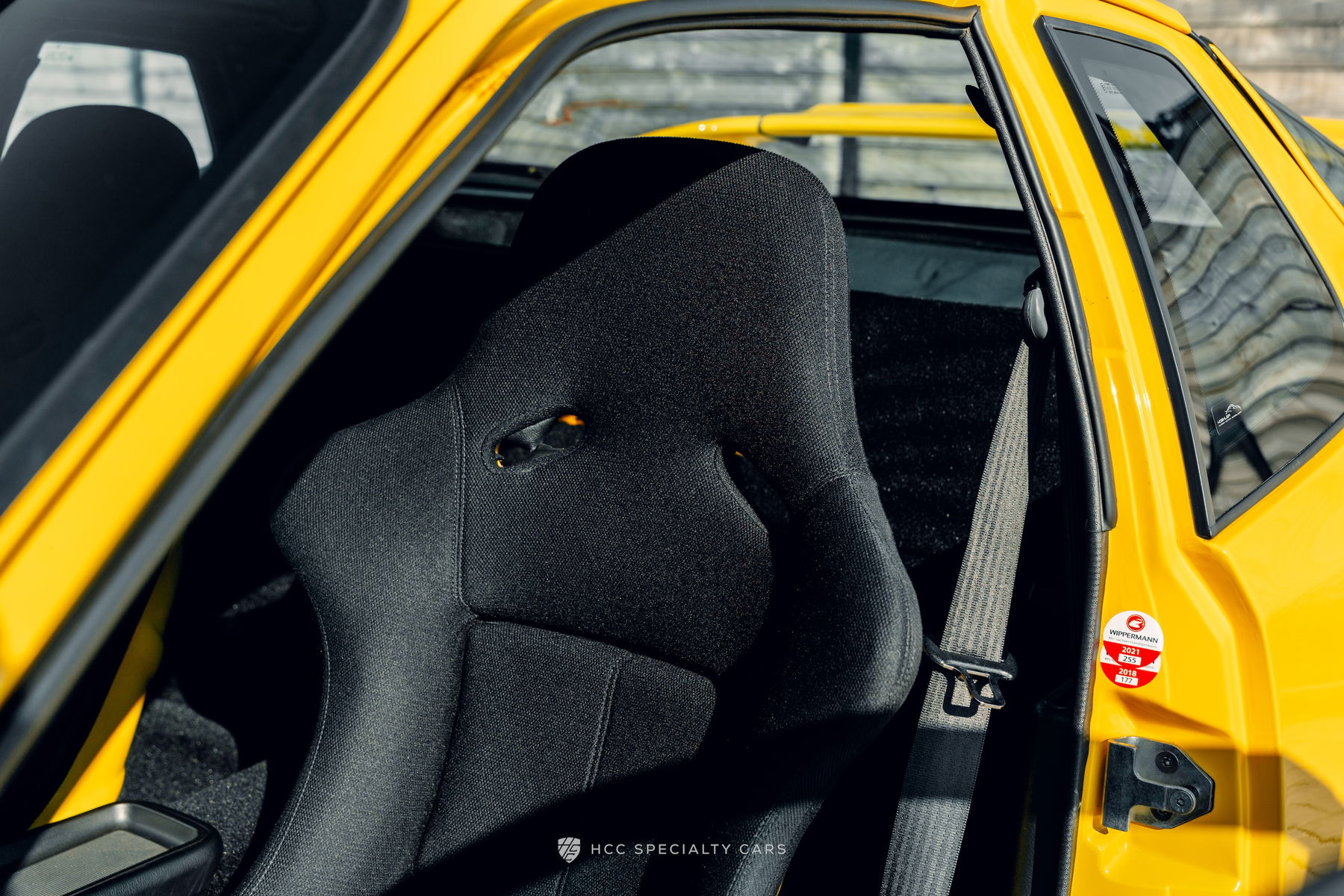
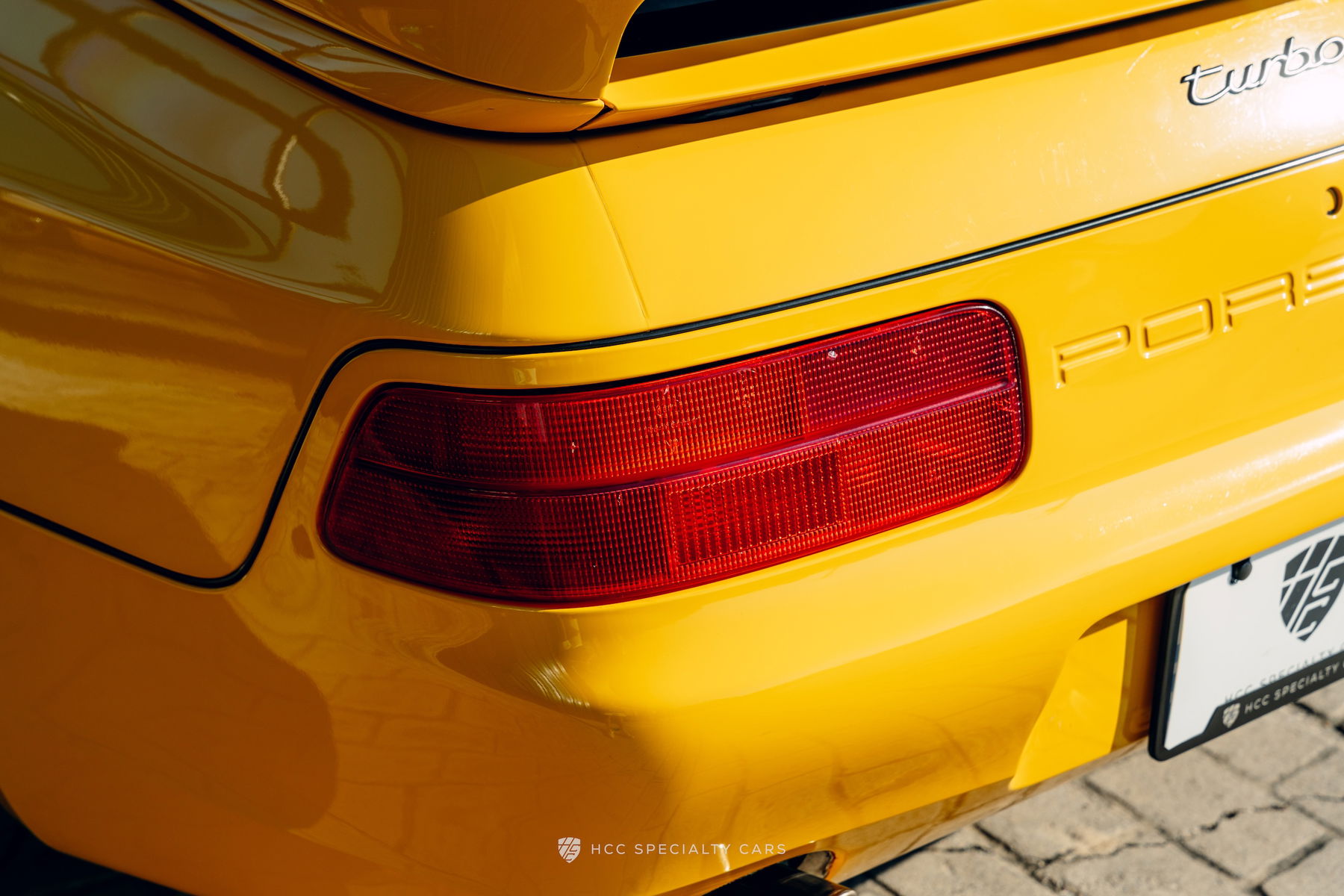
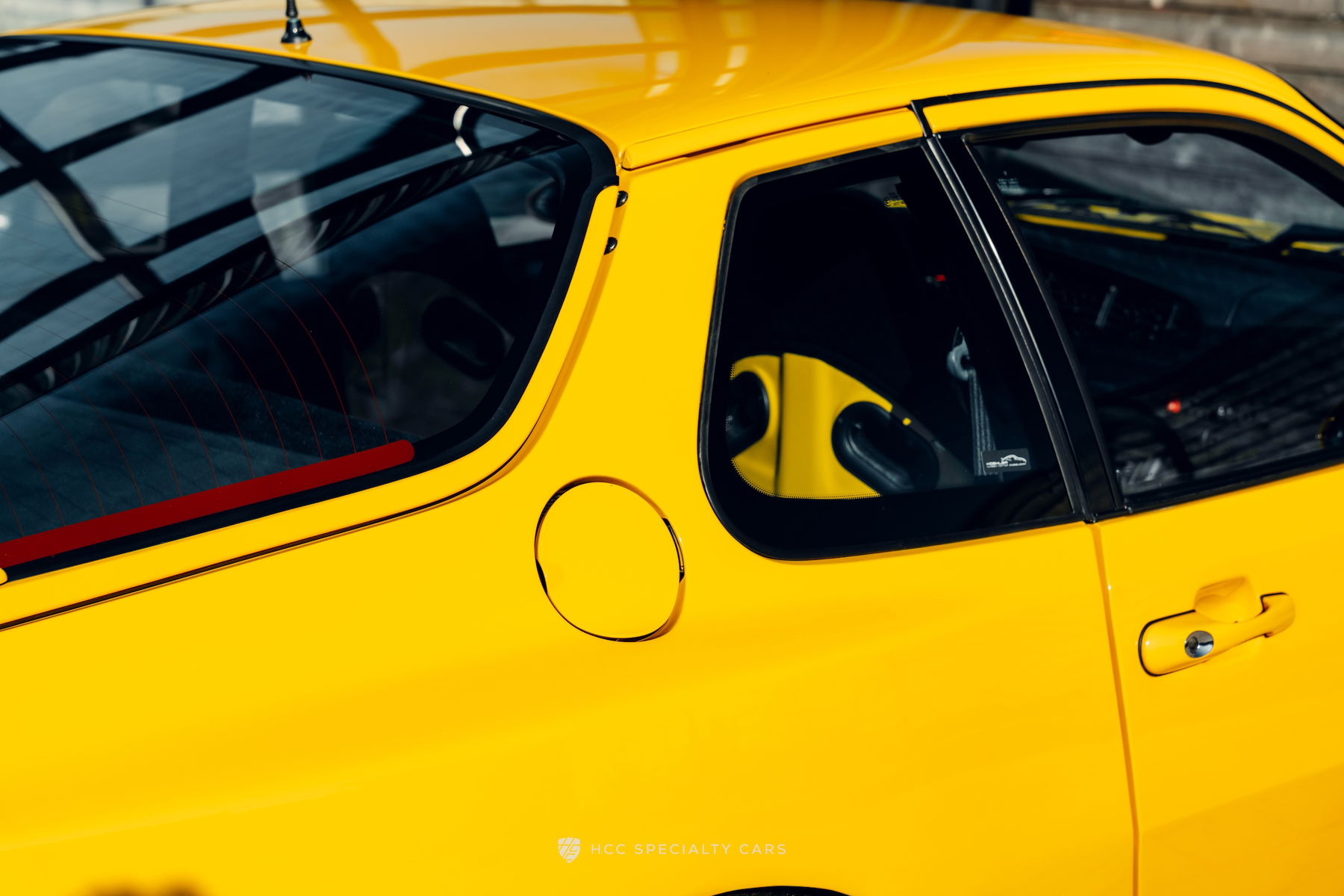
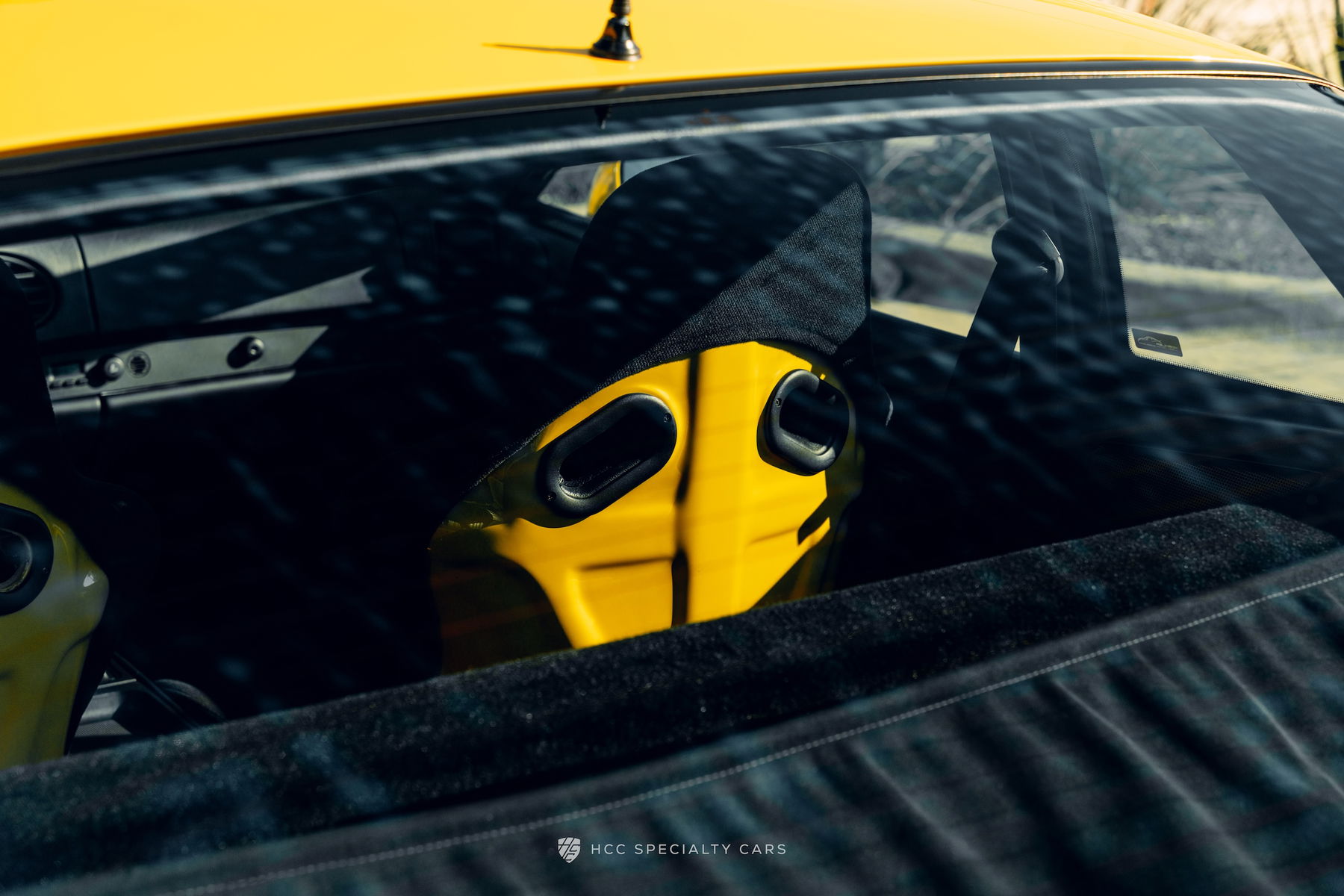
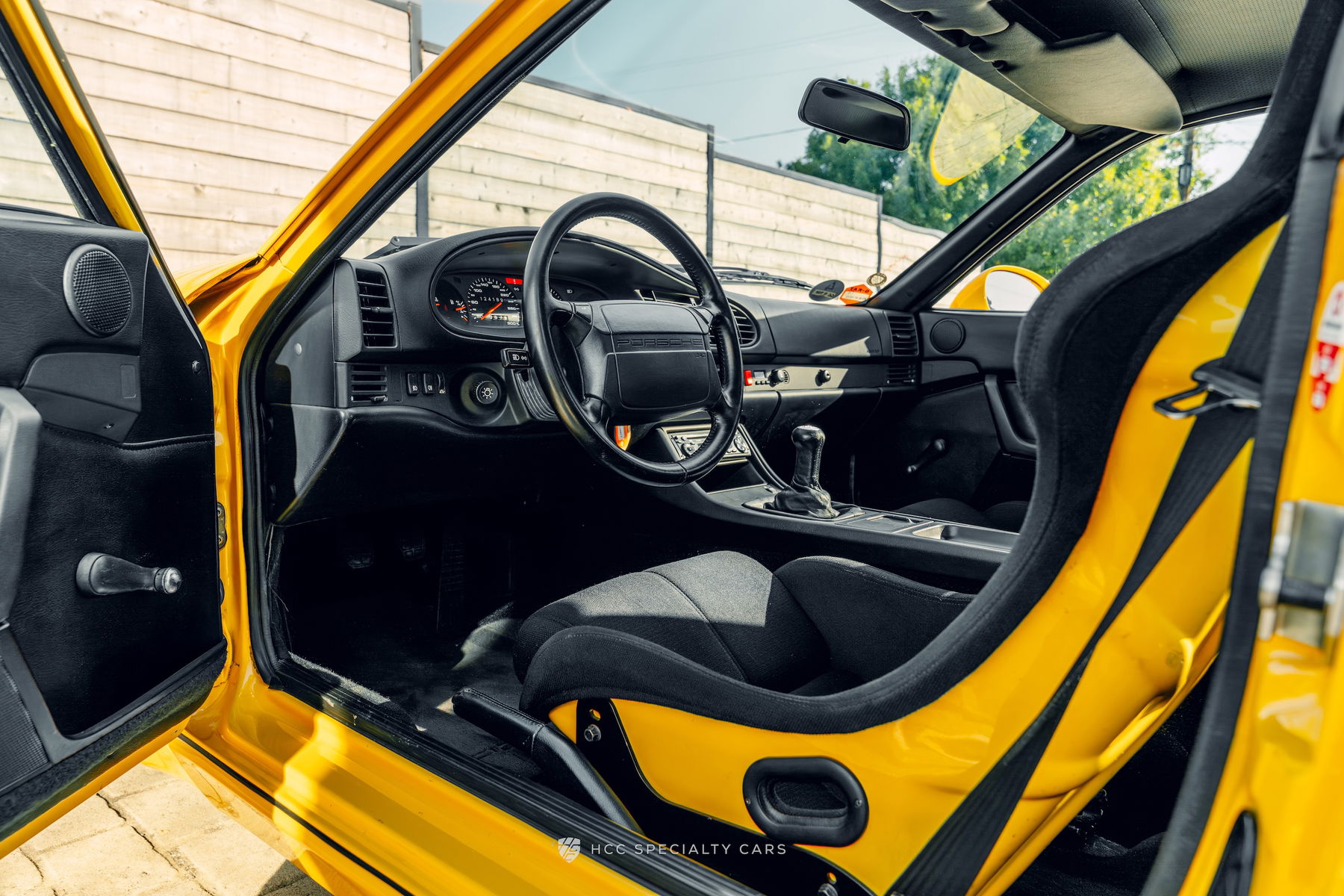
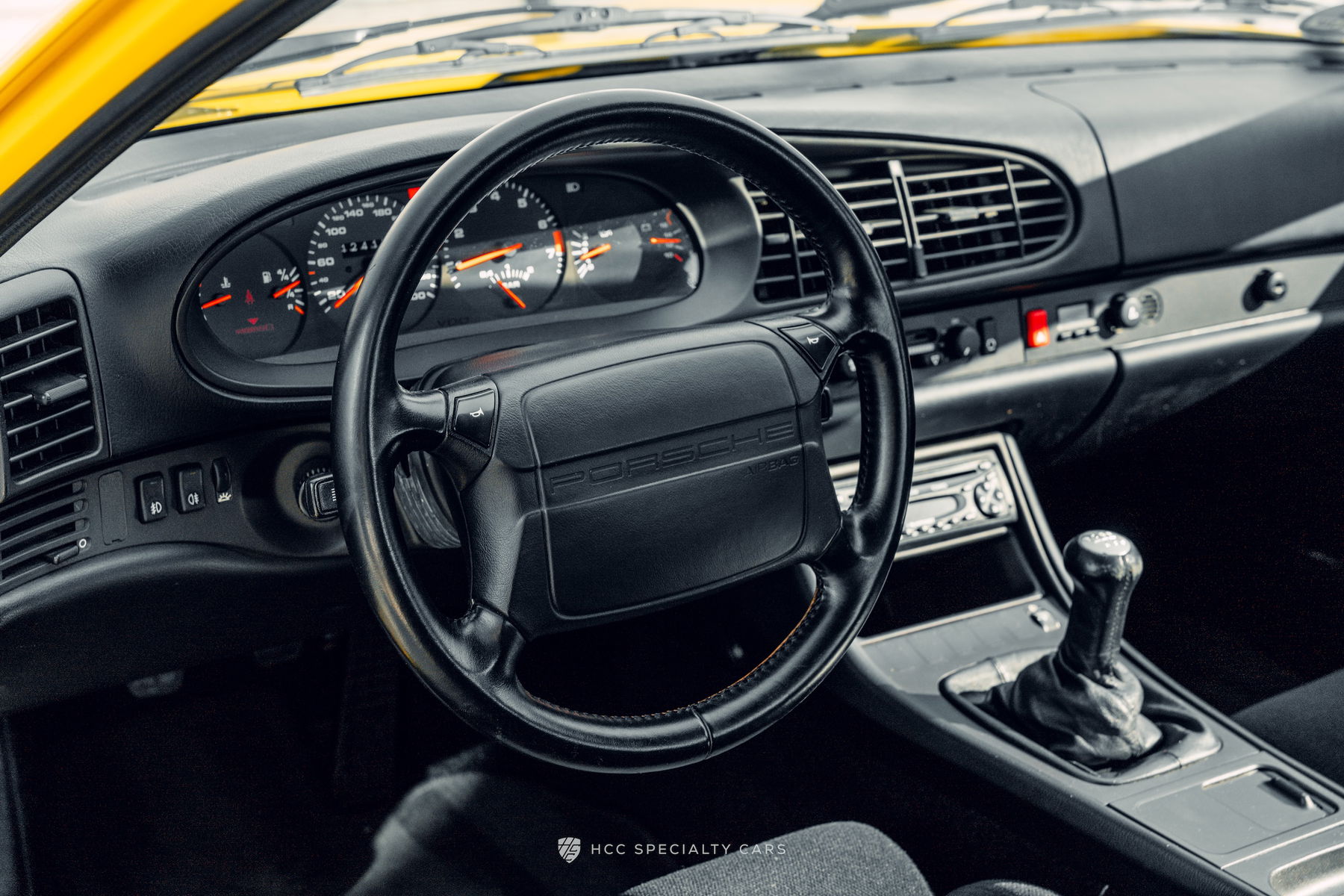
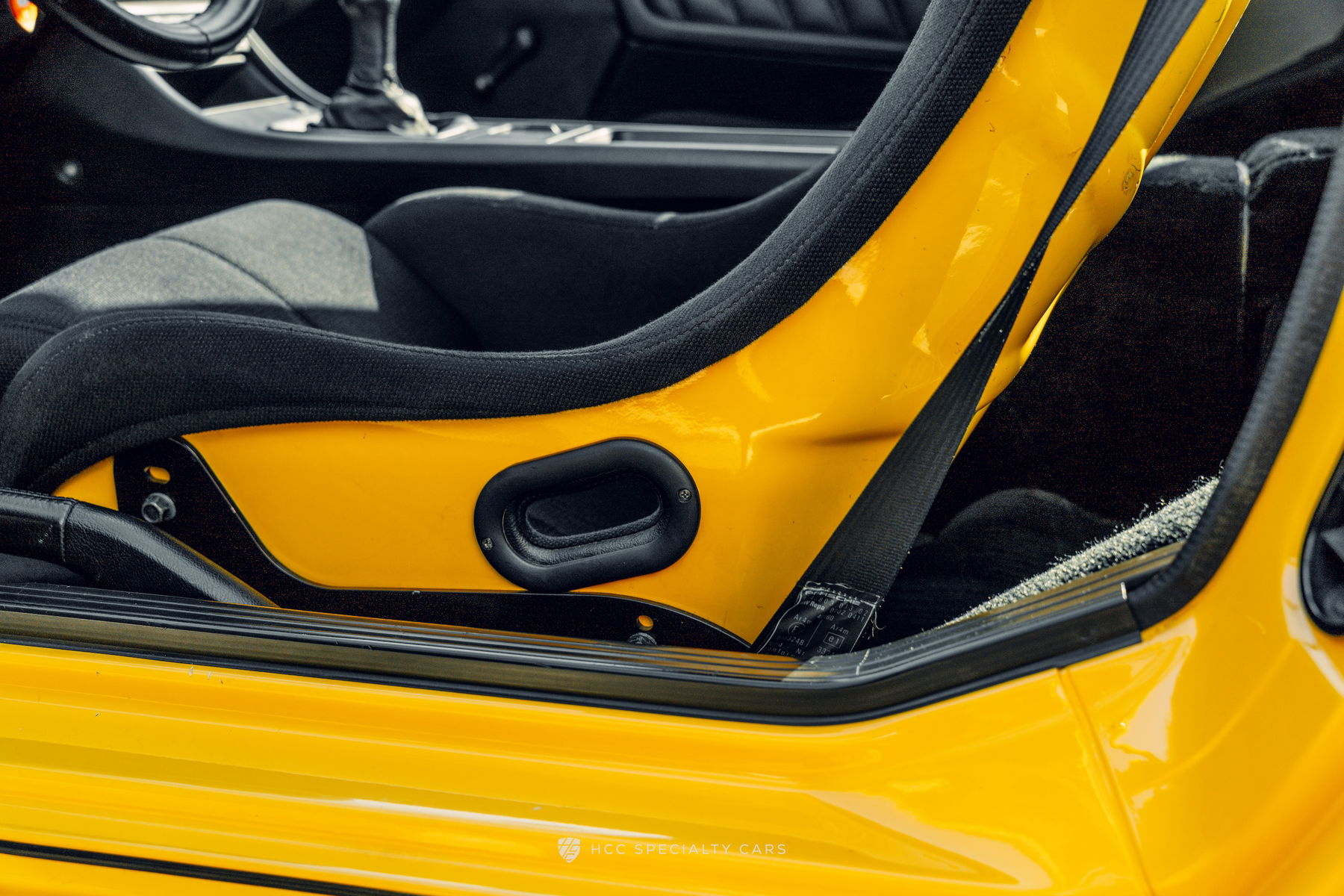
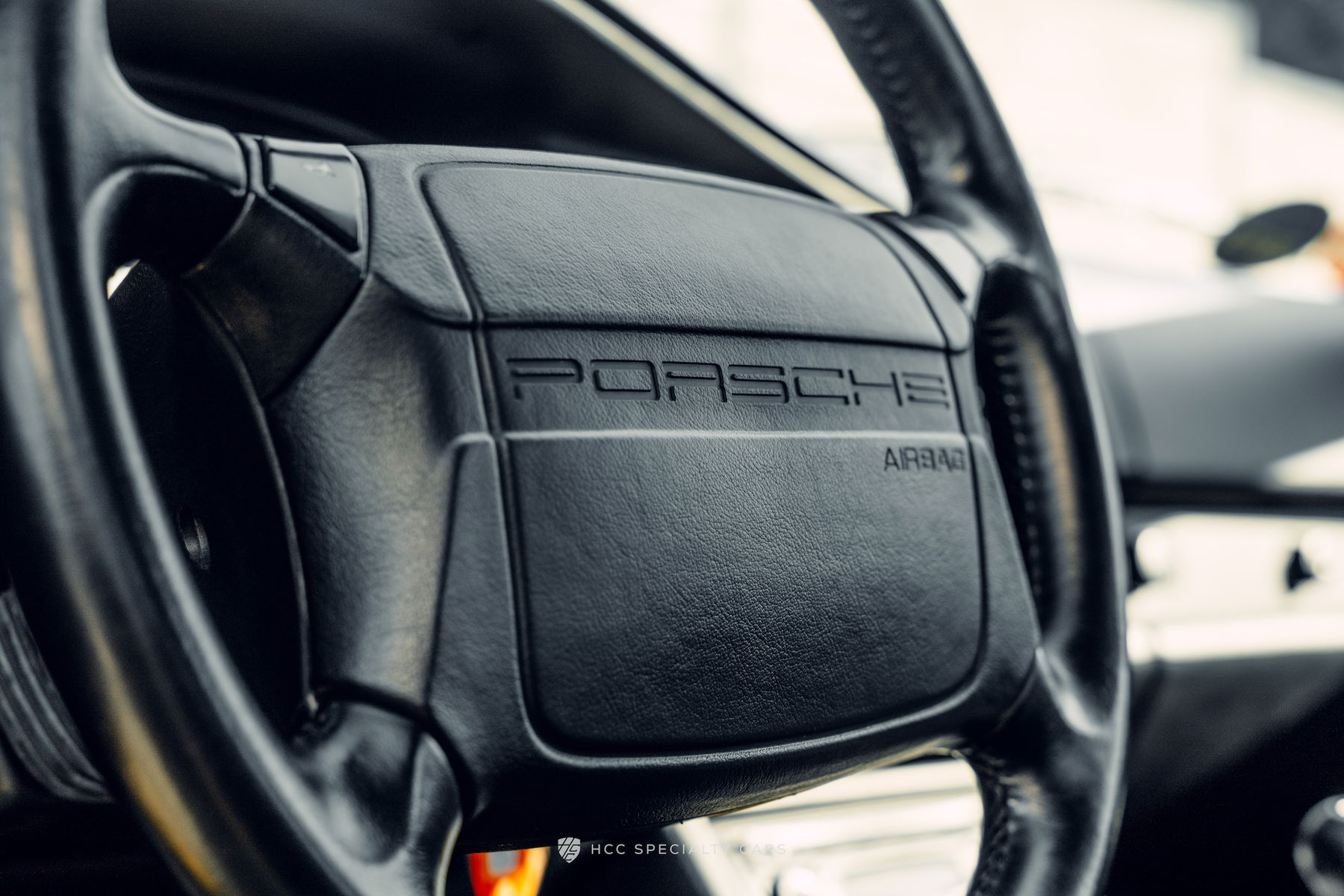
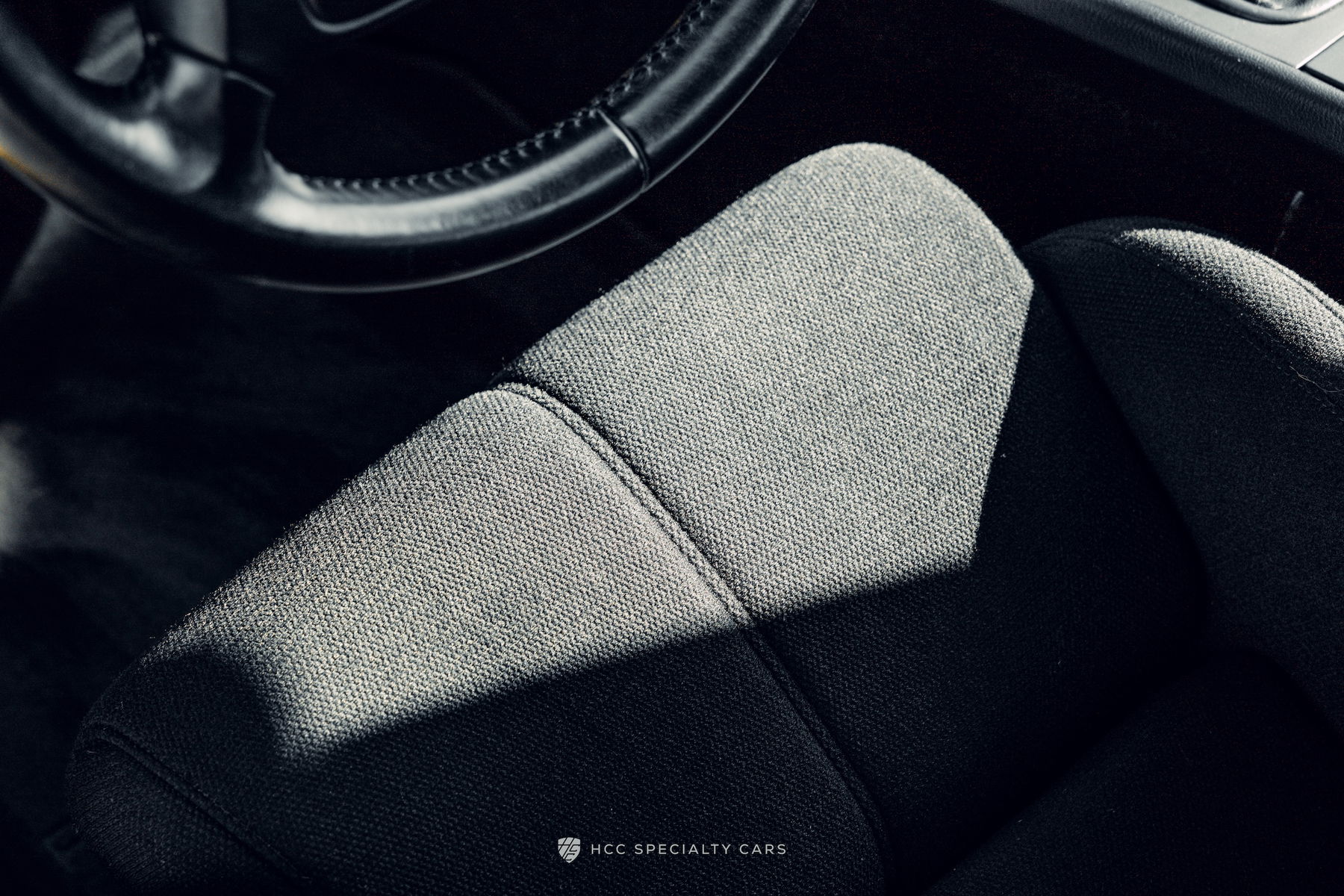
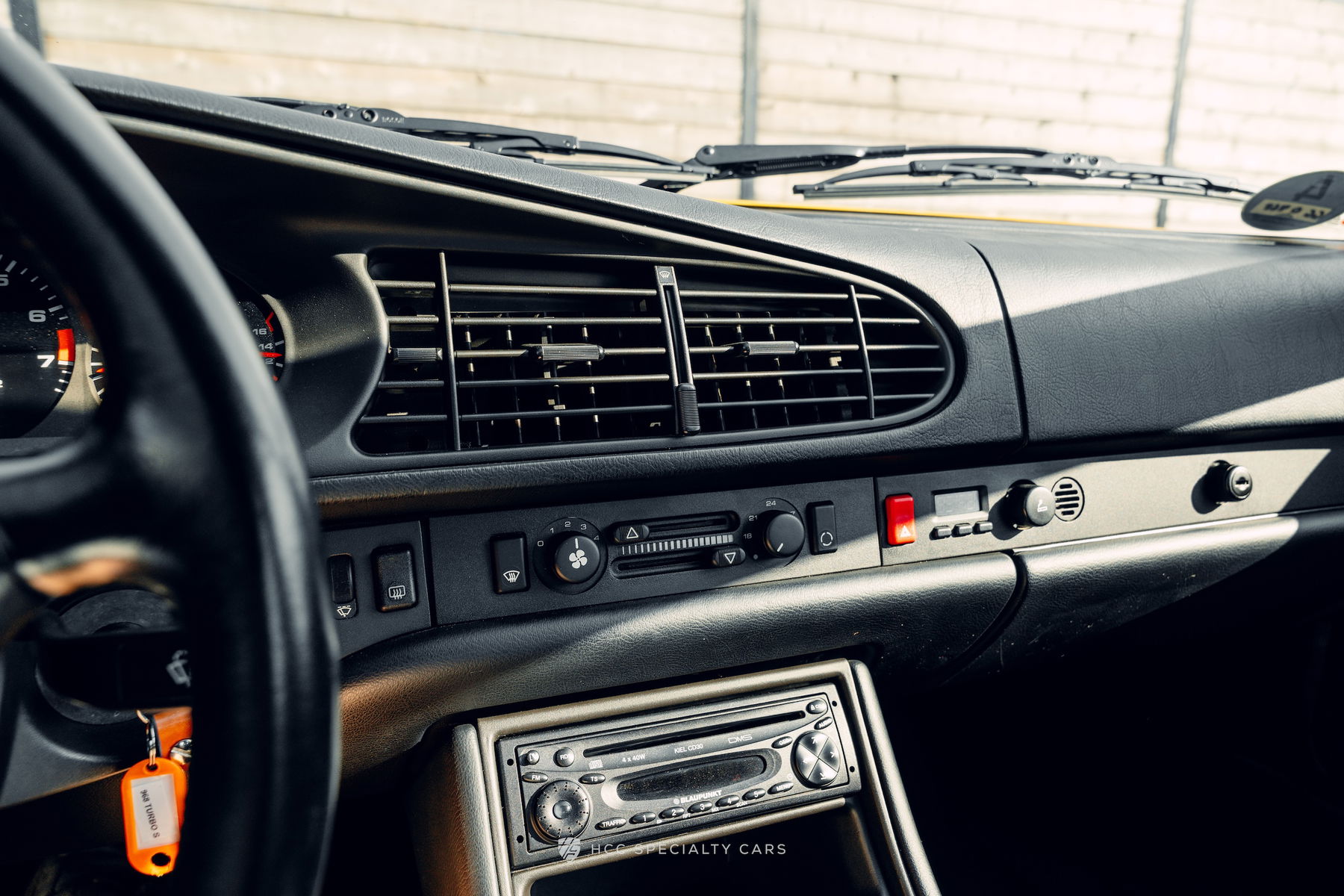
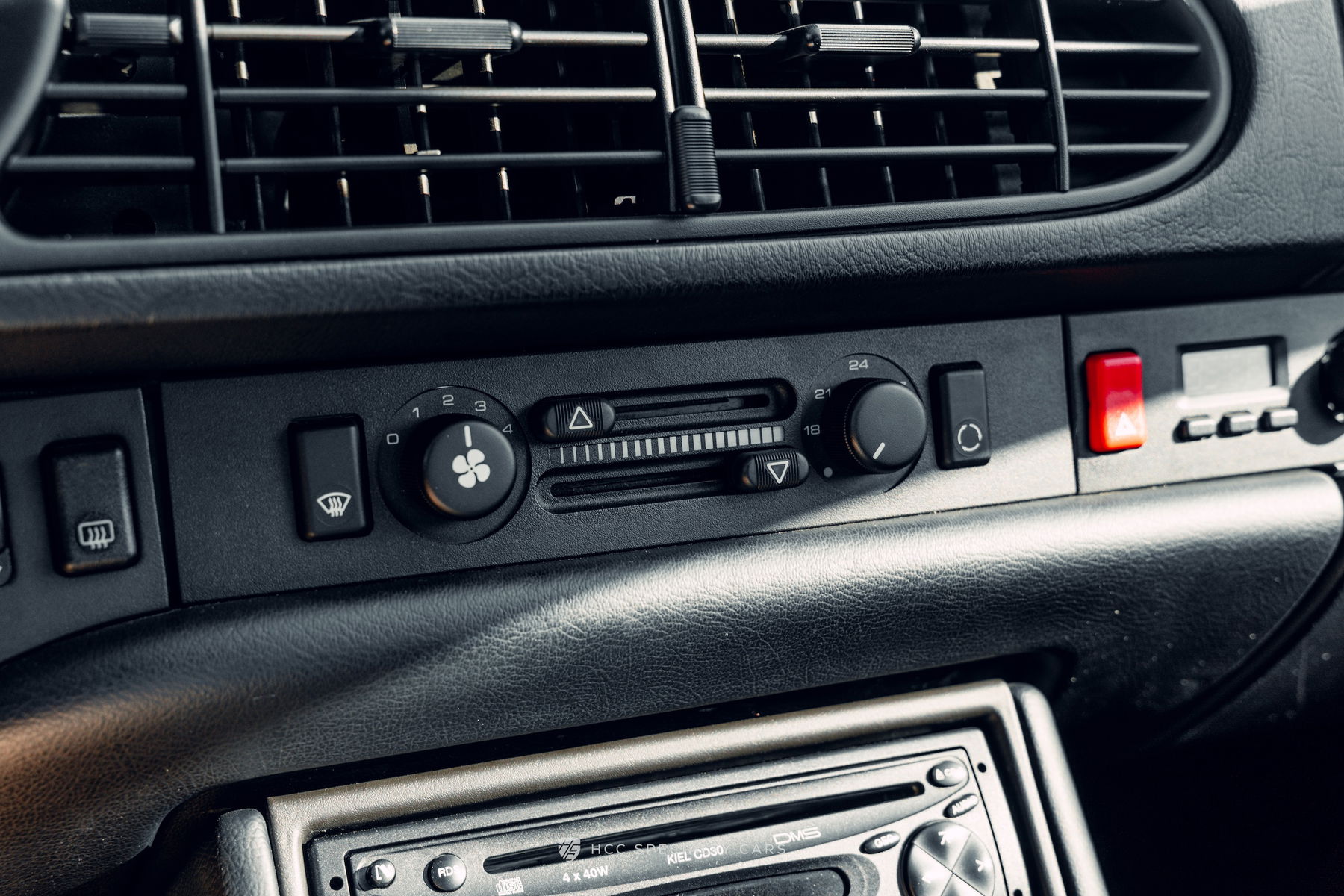
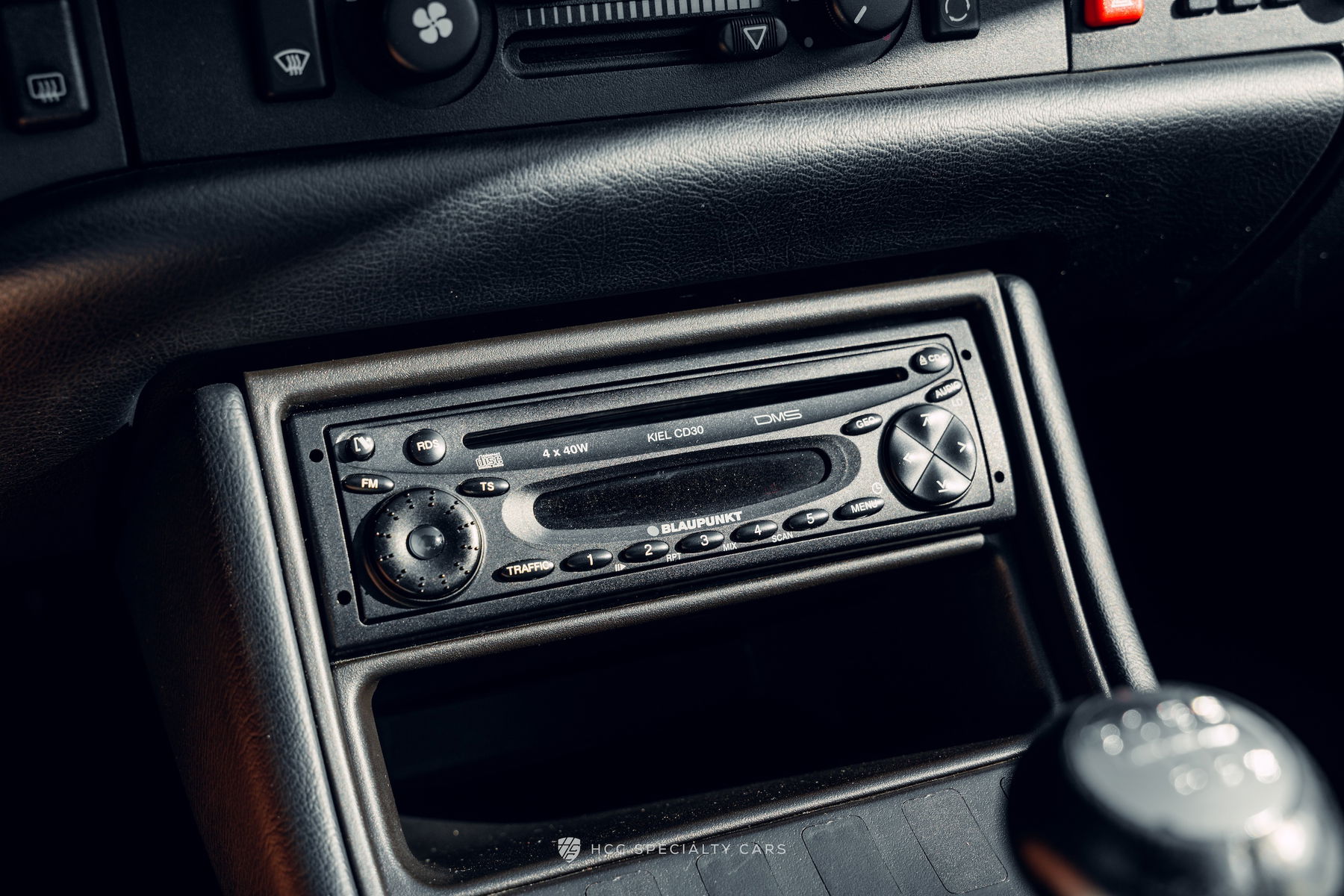
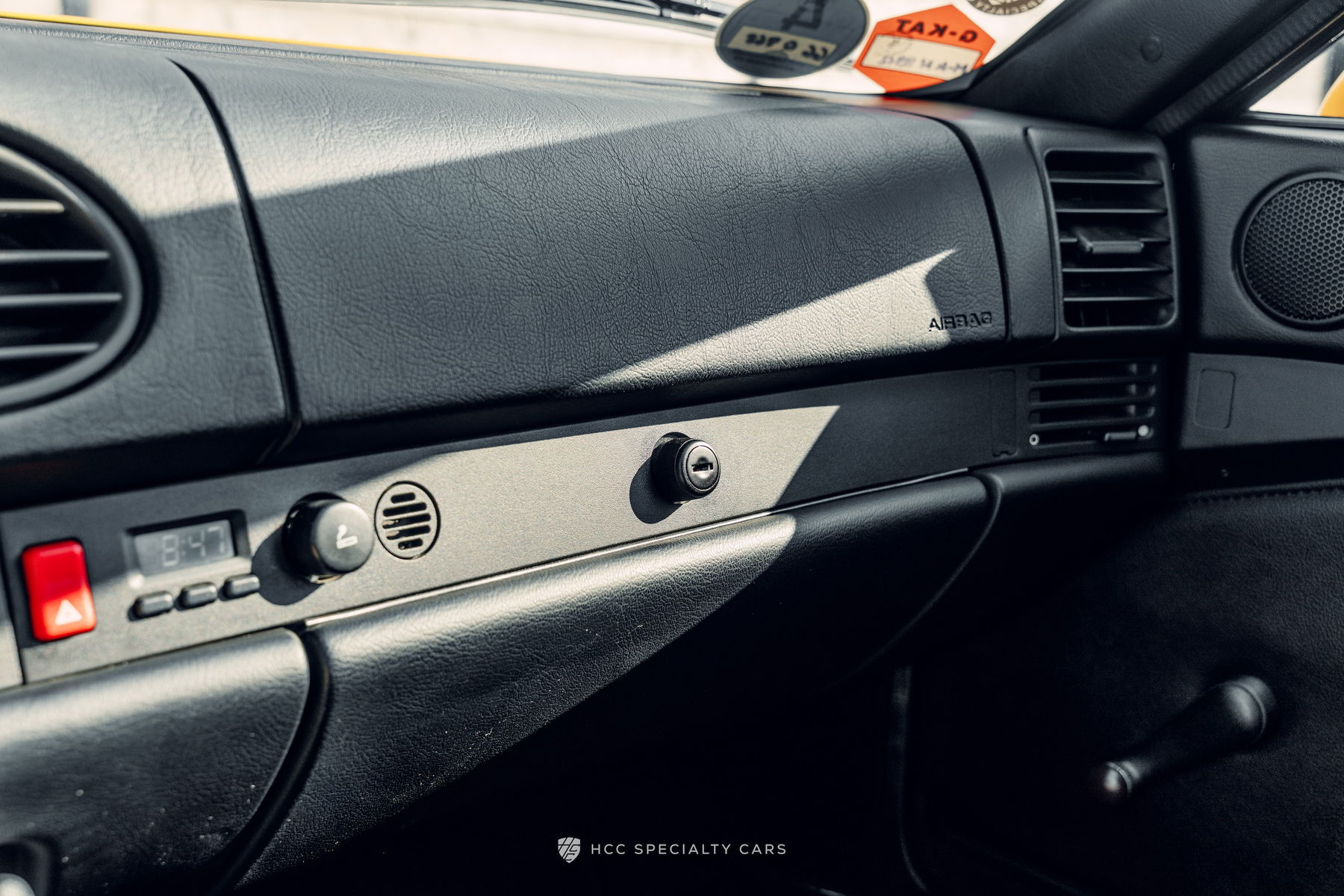
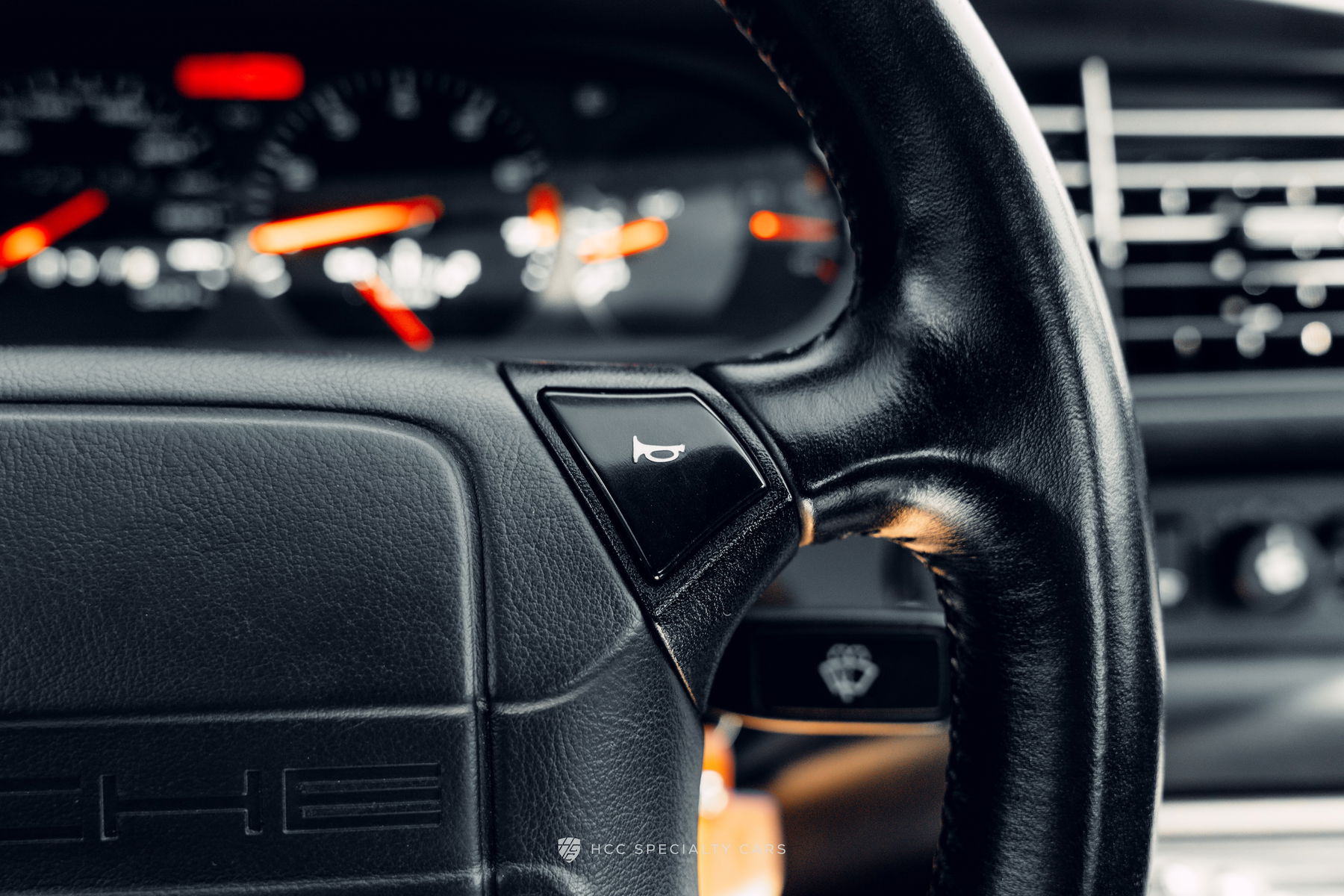
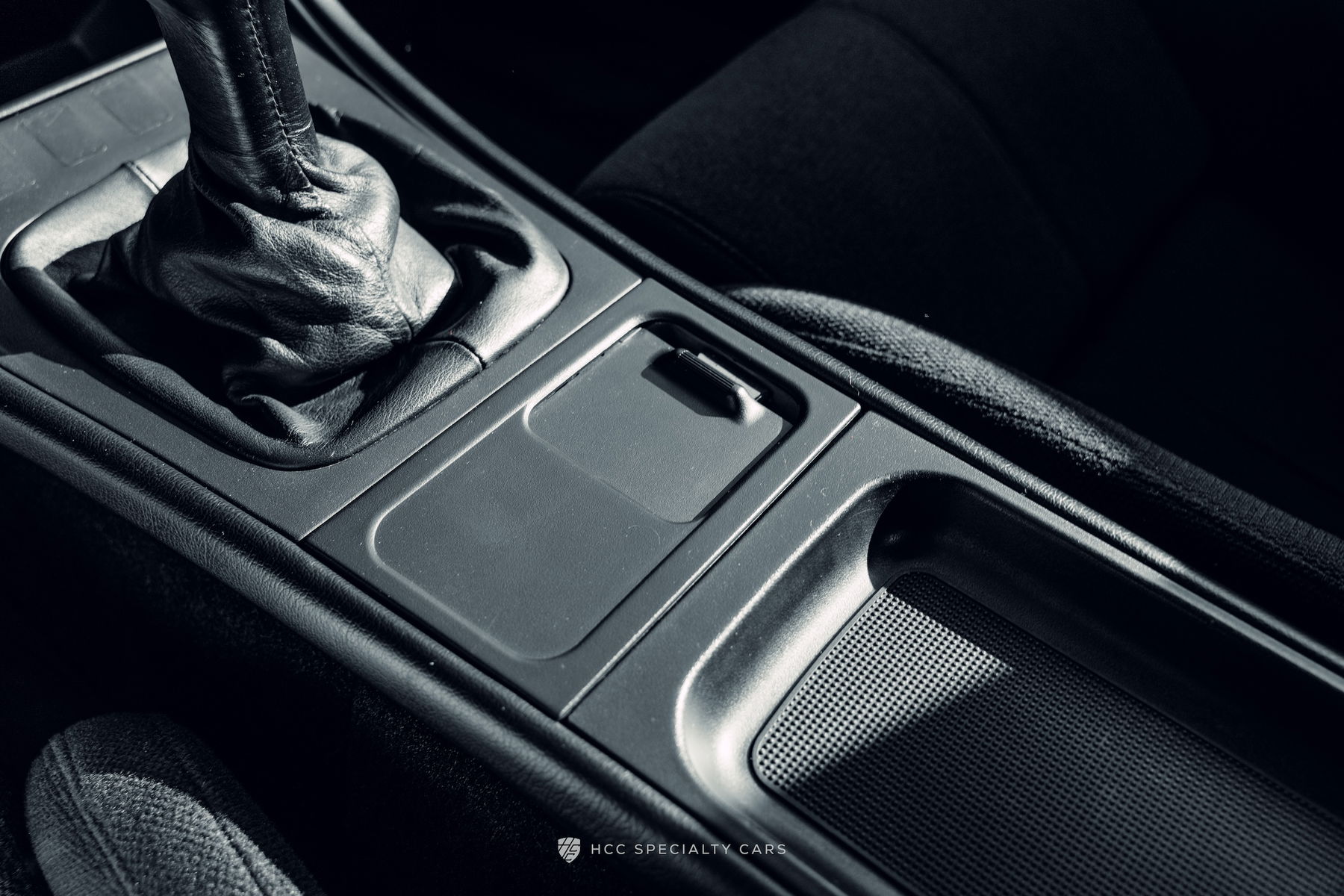
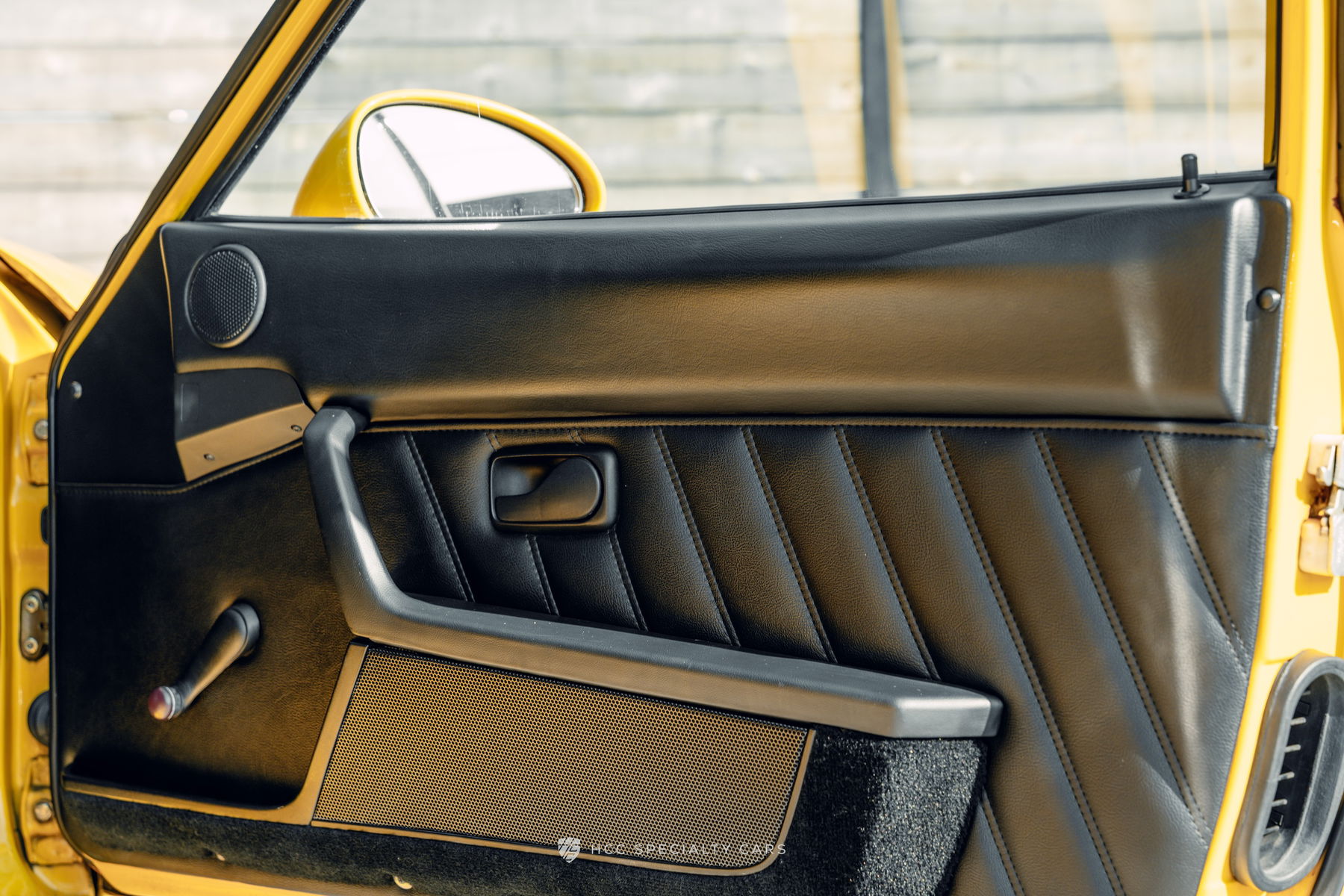
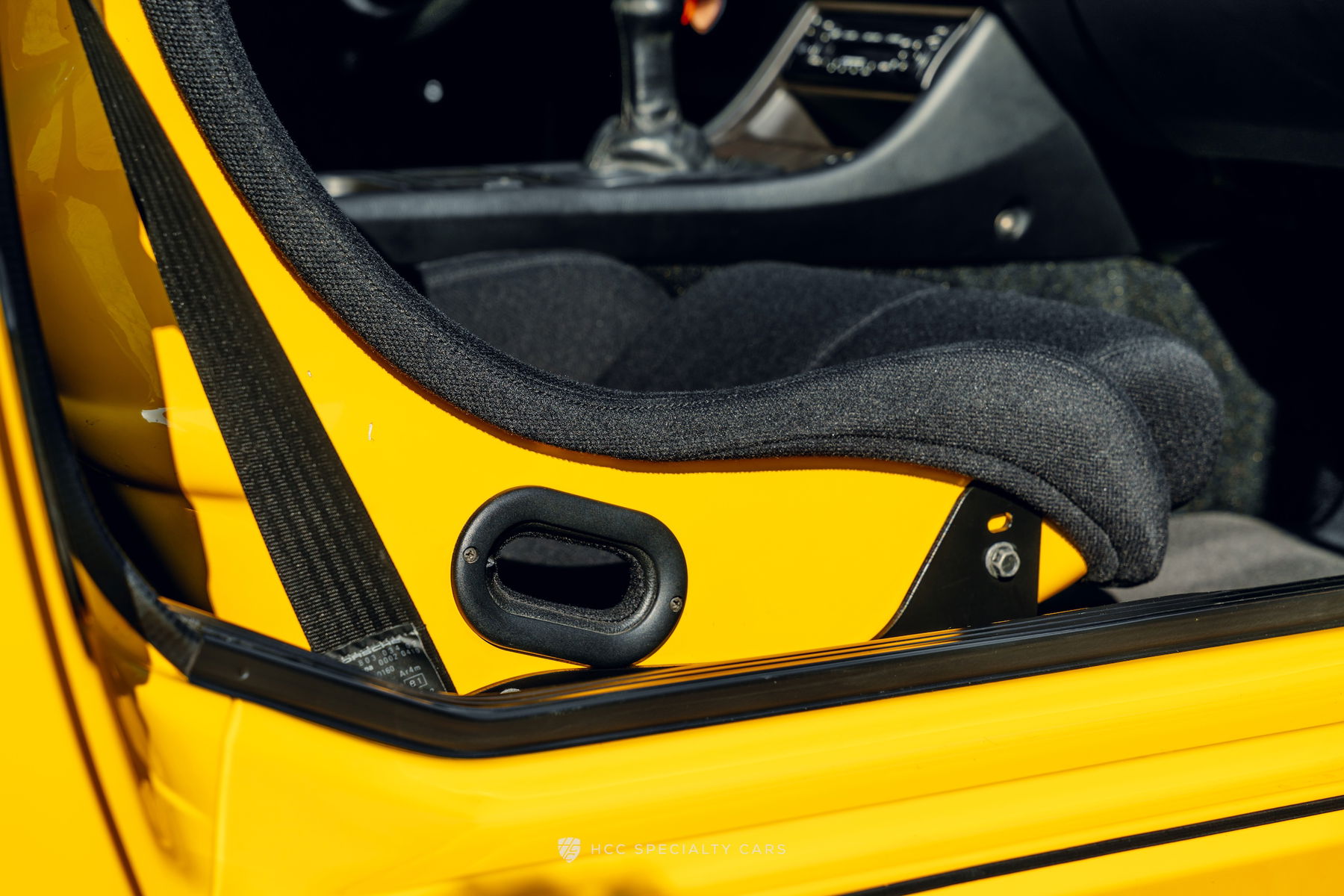
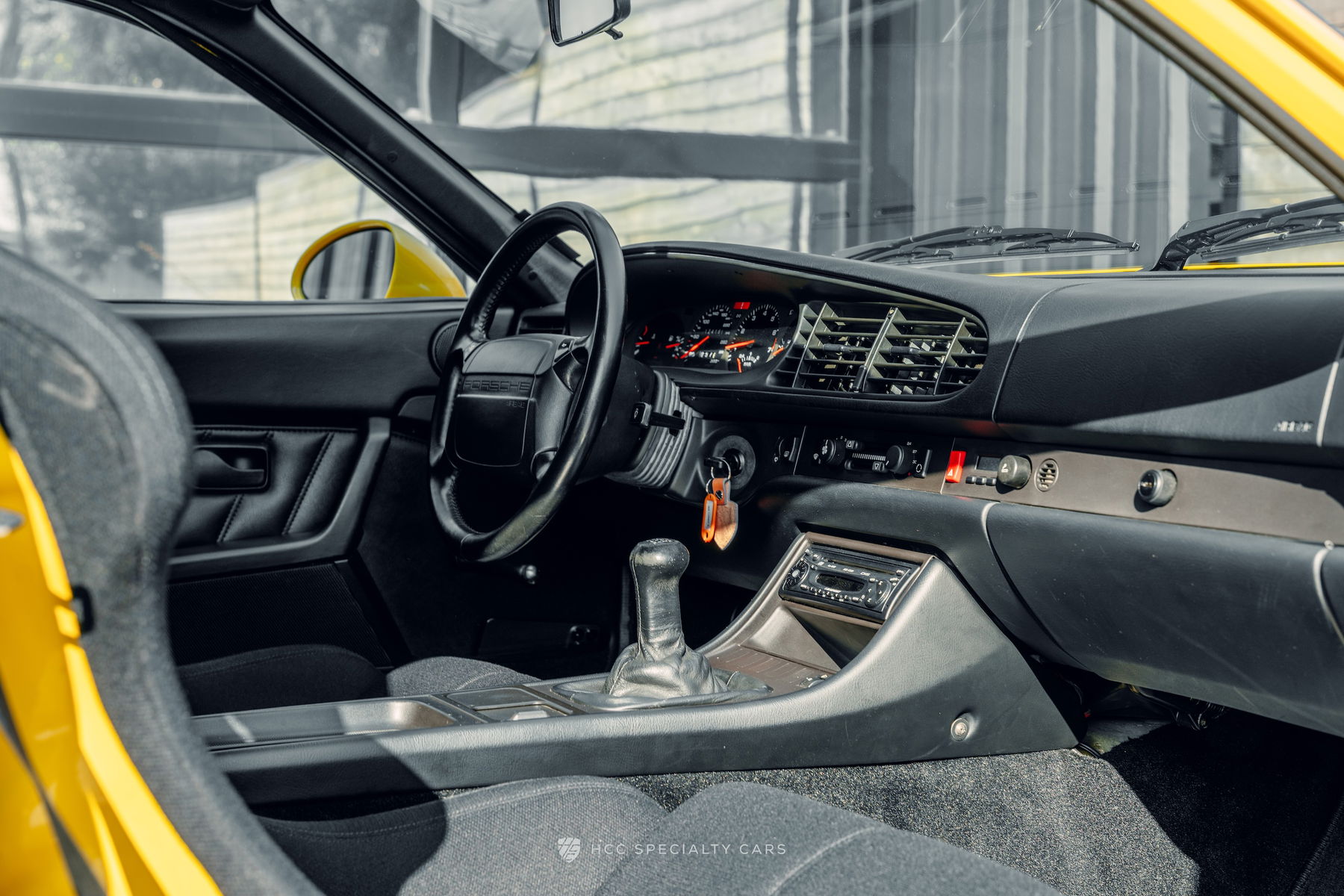
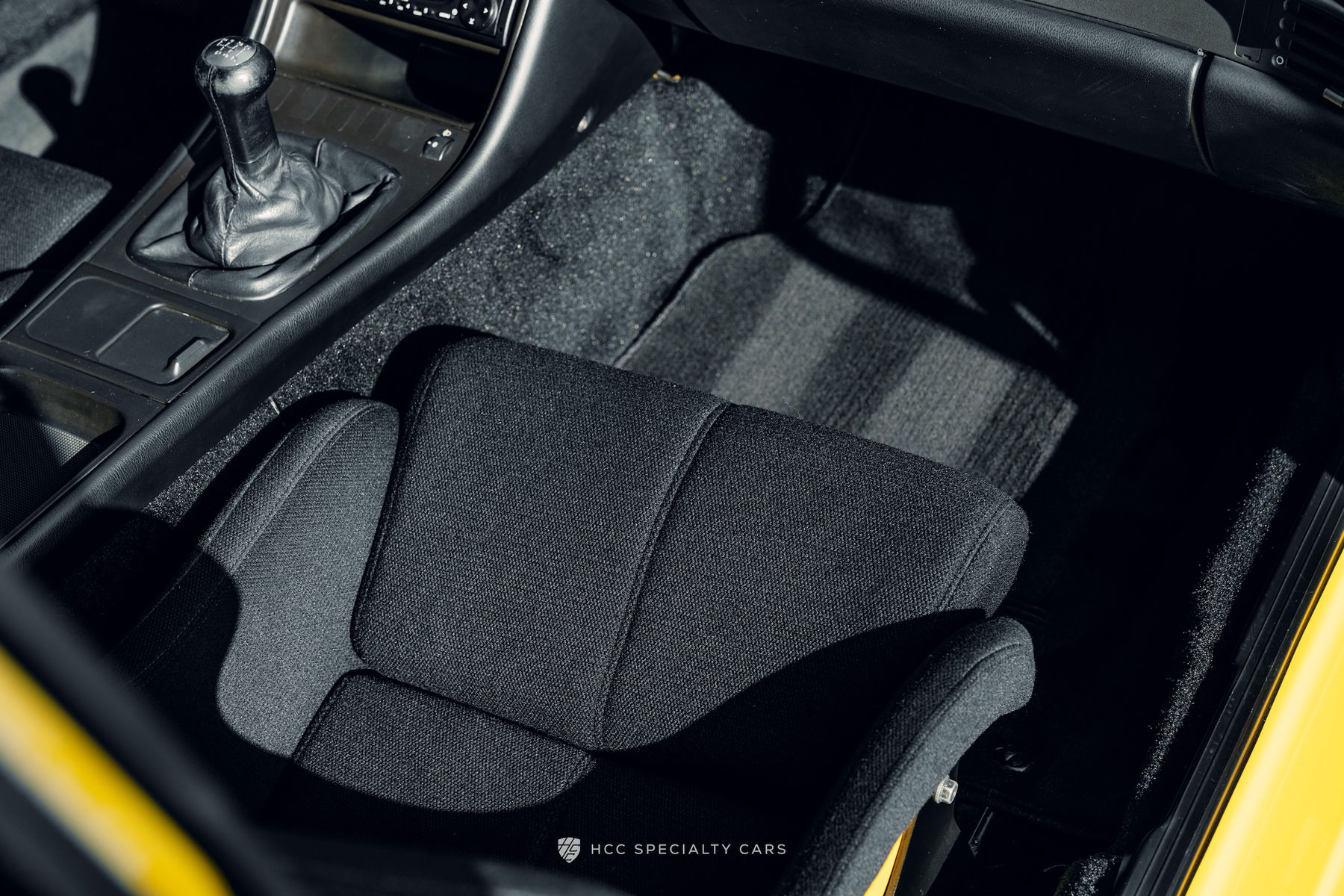
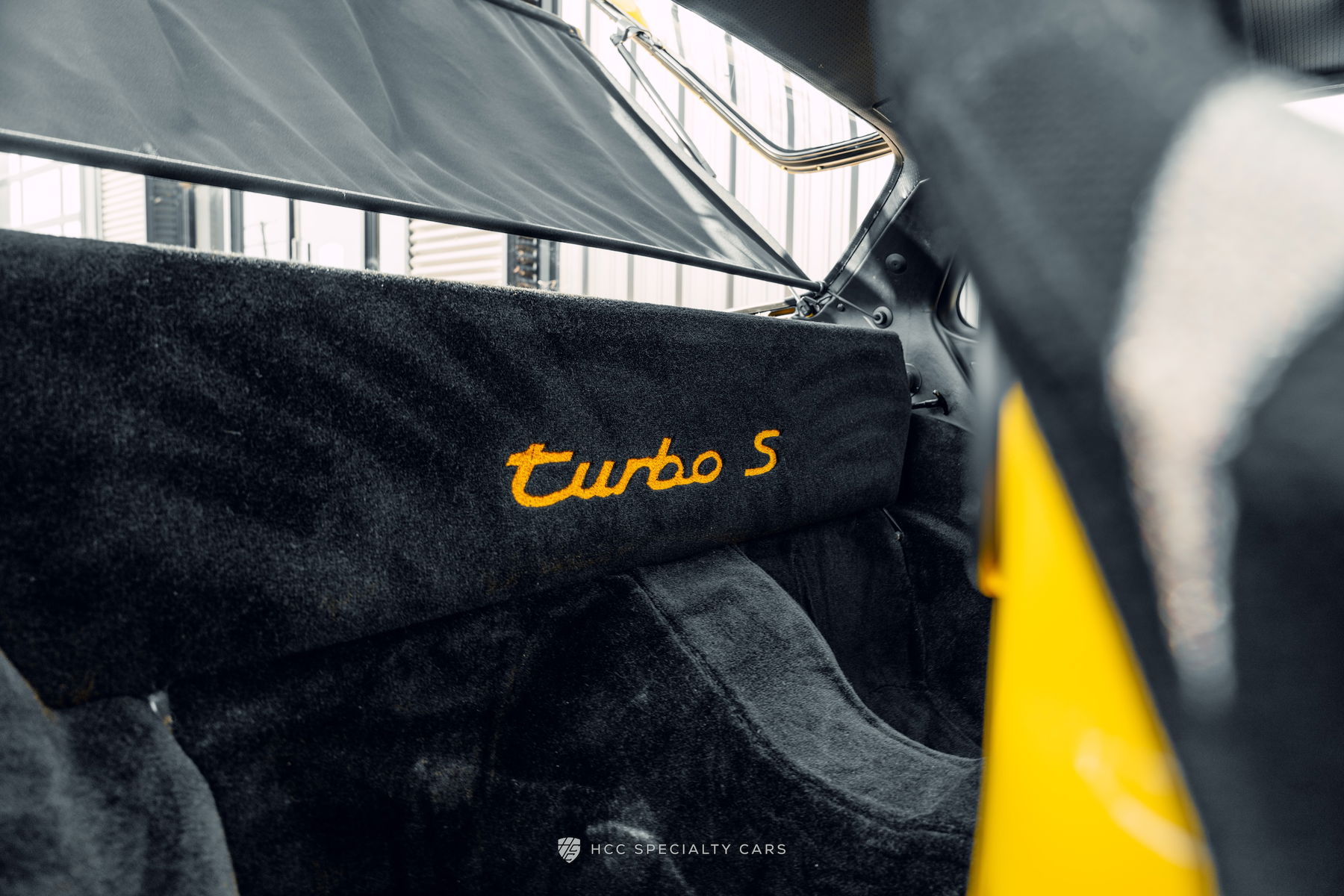
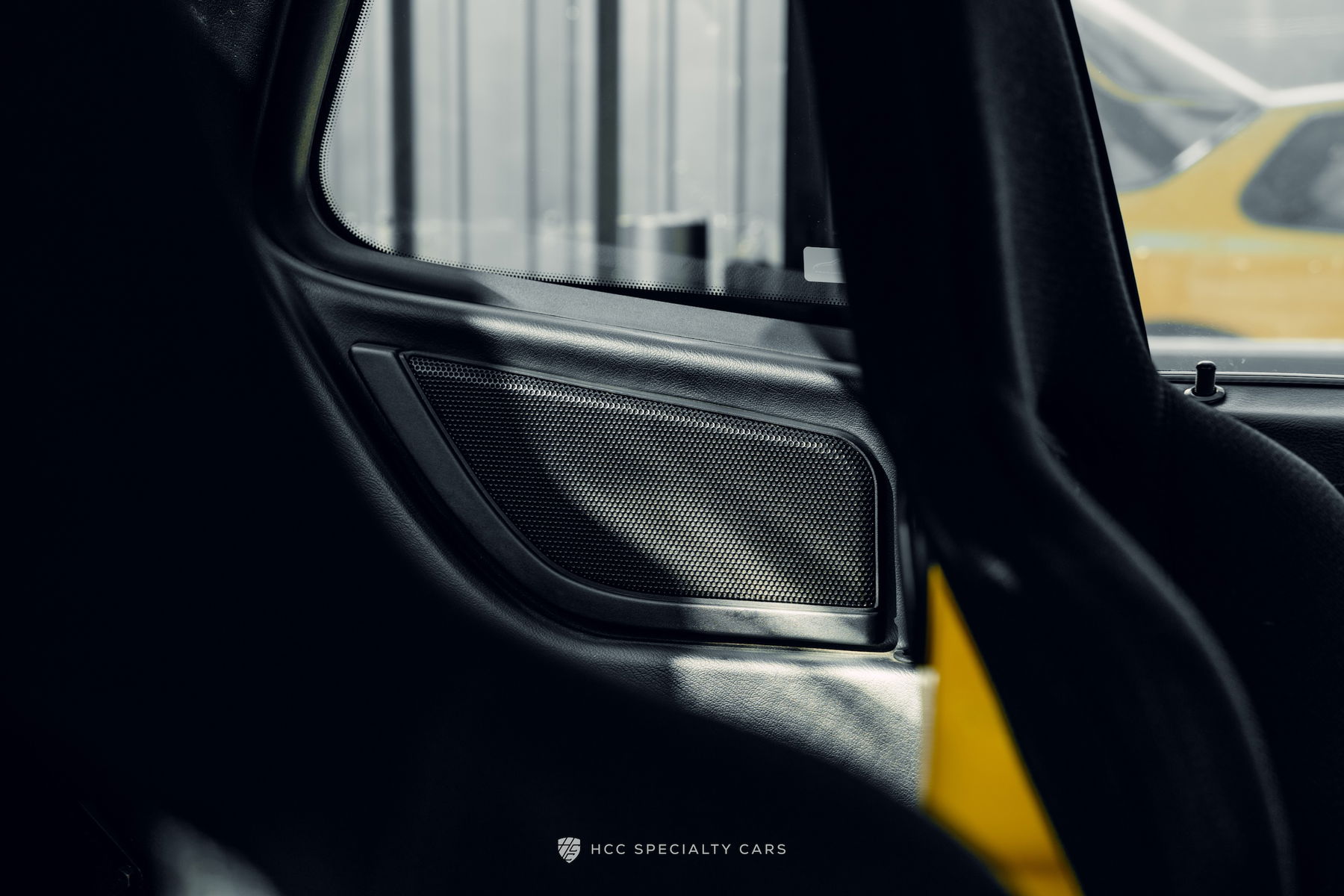
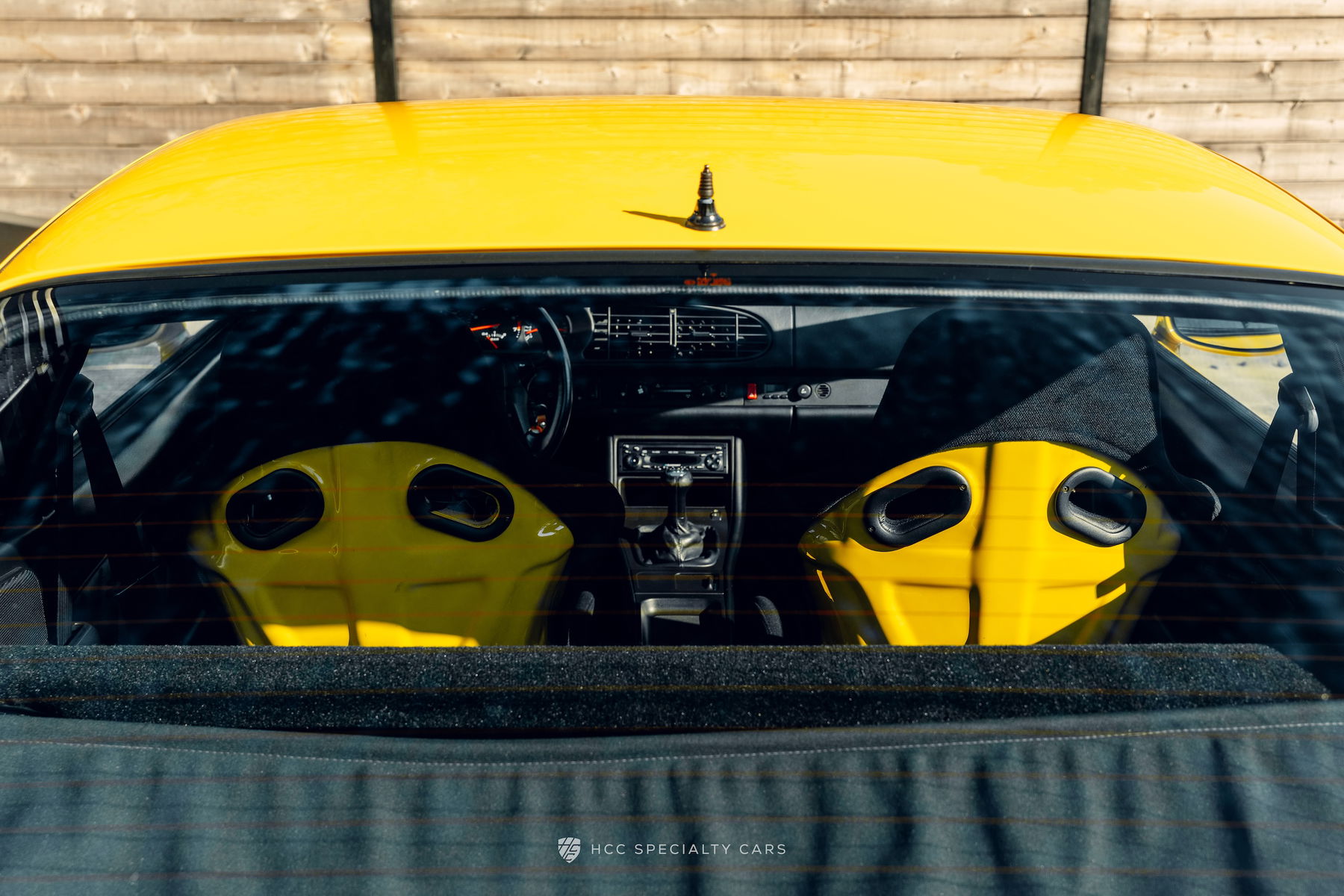
Visually, the Turbo S wears its intent boldly: dual NACA ducts on the hood, larger front intakes, a deep chin spoiler, massive adjustable rear wing, and three-piece 18” Speedline wheels from the 964 Turbo 3.6. Inside, it’s minimalist and purposeful: manual windows, lightweight fixed-back bucket seats, and black cloth trim throughout. The steel bodywork was developed in collaboration with TechArt; the hood ducts are bonded carbon-fiber elements.
Despite plans for 100 units, the Turbo S was a commercial failure. It was too fast for Porsche’s entry-level image, too expensive compared to the 968, and too unconventional for traditional 911 buyers. Internal competition from the Carrera RS and Turbo 3.6, along with the front-engine layout’s inherent unfamiliarity, sealed its fate.
Only 14 road cars and four race cars (Turbo RS) were ever built, and today, the Turbo S stands as a symbol of Porsche’s boldest misstep—and therefore, one of its most desirable collector cars.
This example—the very first and only prototype—comes with a documented history validated by Kundensport’s Gerd Schmid and Porsche legend Jürgen Barth, a fully stamped service book, original manuals, tool kit, and a binder of homologation documents, purchase contracts, media clippings, and technical certifications. Delivery paperwork from Porsche confirms this chassis as the original prototype built, and not a converted production car.
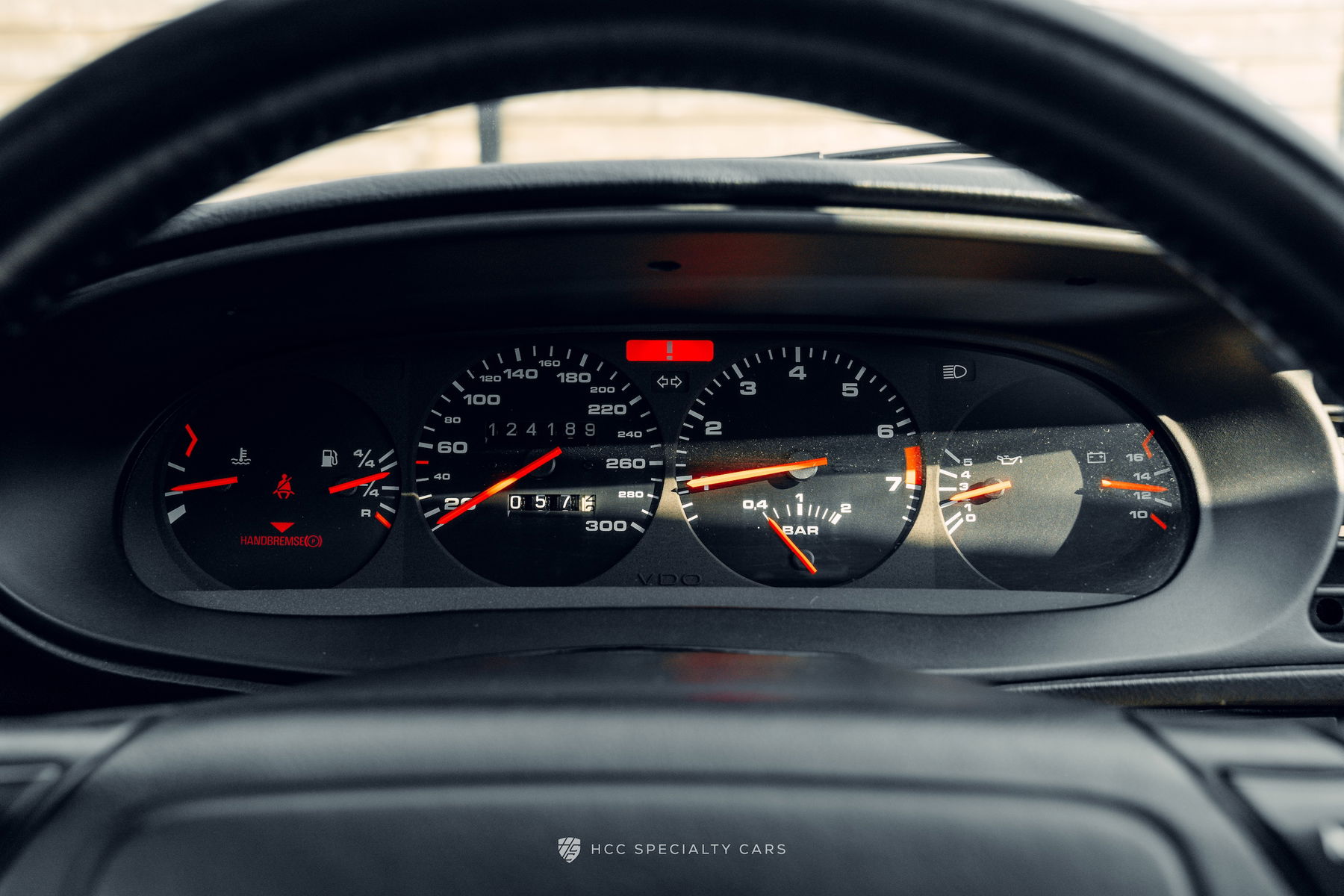
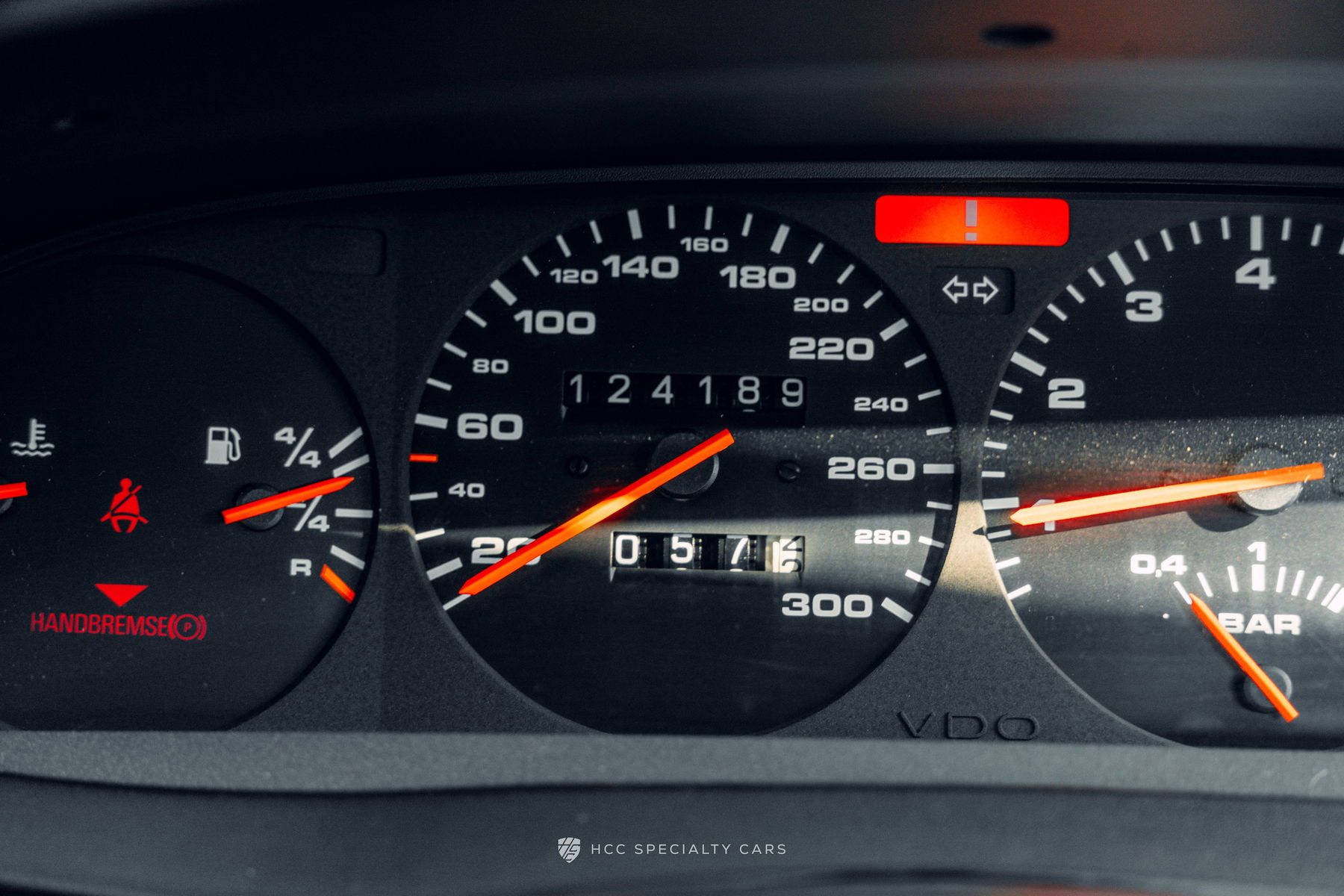
With just 124,981 km (~77,700 miles) and only minor cosmetic touch-ups from road use, this is not just the finest 968 Turbo S in existence—it is the only one that can truly be called the first.



 1994
1994 
 1994
1994