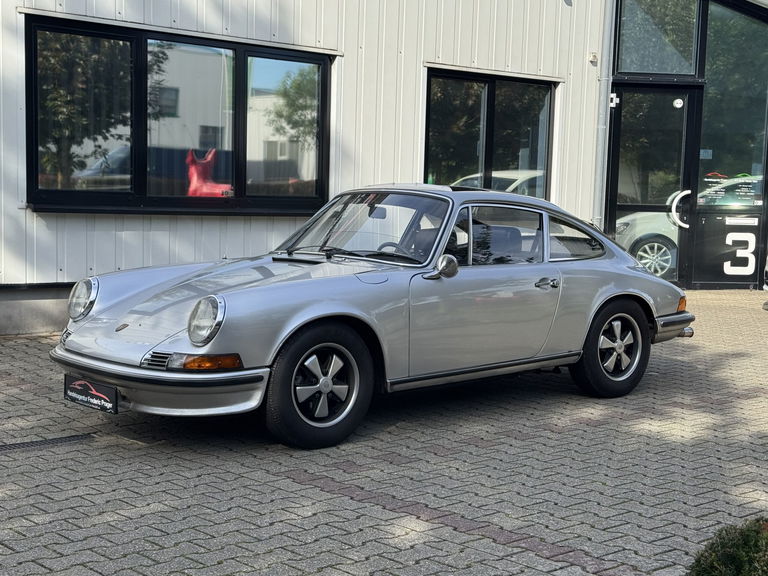
Porsche Sportomatic – What is it and how does it work?
08.04.2026By Richard Lindhorst
Anyone who has taken a closer look at the classic 911 may have already read about the so-called “Sportomatic”. For some, it is a technical aberration from Zuffenhausen, for others a fascinating middle way between a manual transmission and an automatic. It was an unconventional attempt to combine the comfort of driving with two pedals with the engagement of a manual in a sports car. Although the Sportomatic was offered for over a decade, from today’s perspective it is little more than a side note in Porsche’s rich history. But how exactly does the Porsche Sportomatic work? Why did Porsche’s idea of a more comfortable version of the manual gearbox ultimately fail to catch on?
How can the 911 be made more accessible without robbing it of its essence?
After Porsche made a name for itself internationally in the 1950s with the 356, the next big step followed in the 1960s with the 911. The small car manufacturer from south-west Germany opened up new markets and became increasingly well-known. In order to appeal to even more buyers with the Porsche 911, not only the pure performance but also the comfort was to be improved compared to its predecessor. This presented the engineers in Zuffenhausen with a tricky task: how could the 911 be made even more accessible without robbing it of its essence?
Porsche saw a potential opportunity above all in the improvement of everyday utility in heavy traffic, hilly cities or long commutes. To increase the utility value of the 911 in these applications, an alternative to the manual gearbox seemed an obvious option. However, the answer from Zuffenhausen was not a classic automatic transmission. Instead, Porsche developed its own technically unconventional solution – the Sportomatic. It was intended to offer a similar level of comfort to an automatic transmission, while still allowing drivers to change gears themselves.
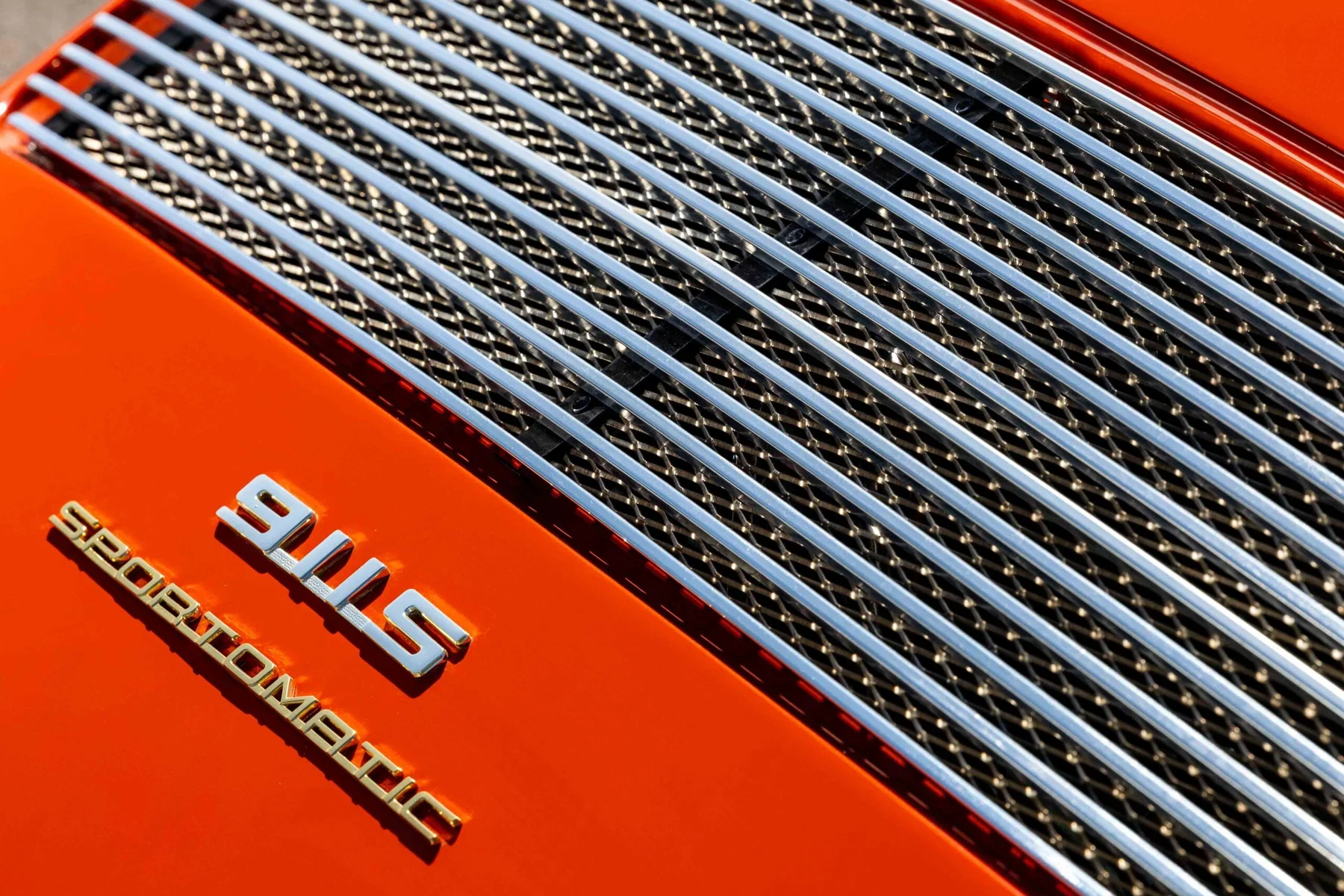
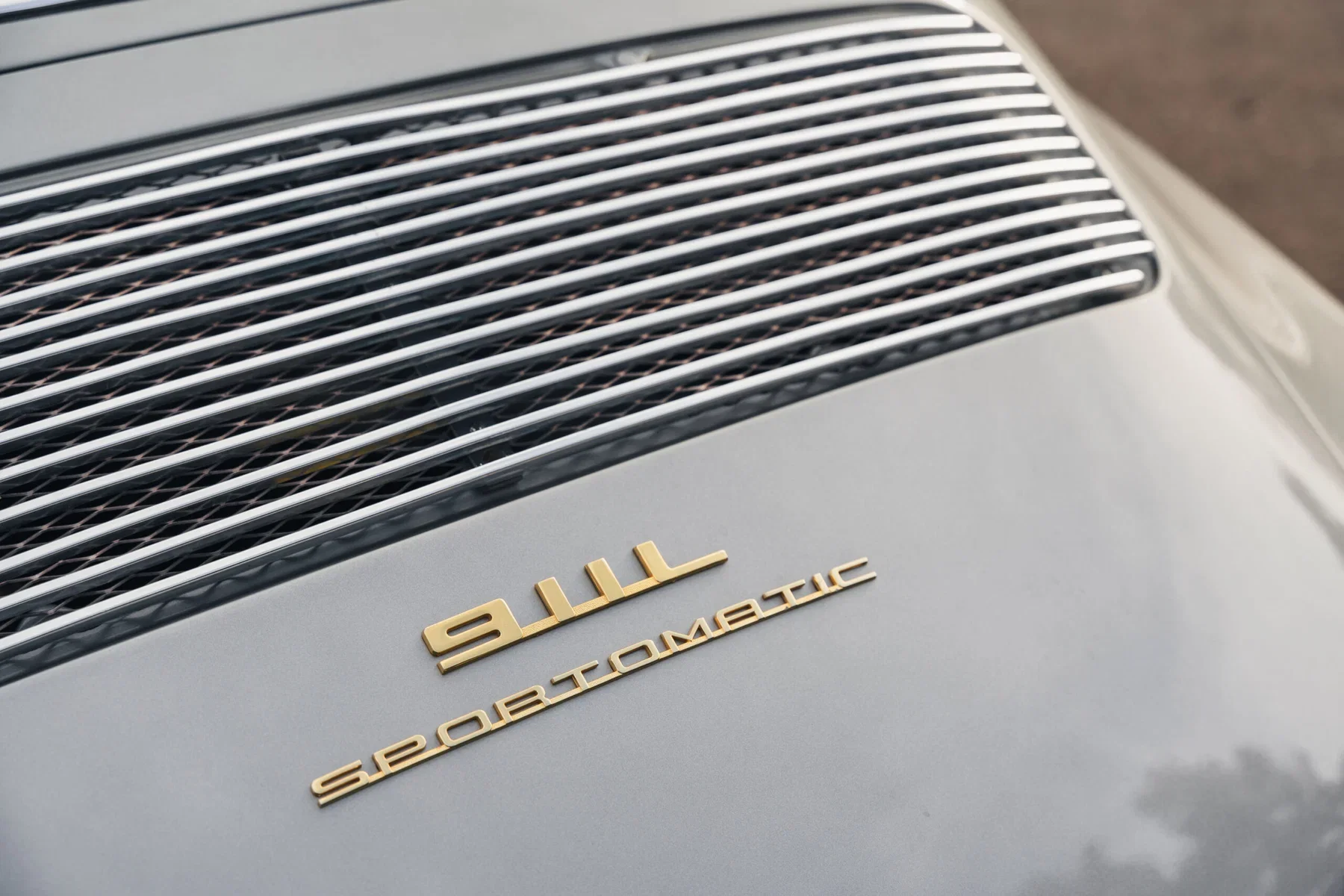
Sport plus Automatic equals Sportomatic – Porsche had a penchant for acronyms even before the Boxster.
The idea behind the Sportomatic: manual gear shifts without the need for a clutch pedal
Porsche’s idea was to make it possible to drive with two pedals yet still be able to change gear manually. As with an automatic transmission, the idea was to eliminate the need for clutching, which is particularly tiring in rush-hour traffic. In cooperation with the company Fichtel & Sachs, Zuffenhausen’s engineers developed a semi-automatic version of the type 901 four-speed manual transmission. Put simply, it combined the regular manual transmission with a torque converter as a starting clutch and a standard clutch that decoupled the engine and transmission during gear changes.
Porsche’s descriptions of the Sportomatic read very promisingly. It was supposed to combine the comfort advantages of automatic transmissions with the driving experience of manual transmissions.
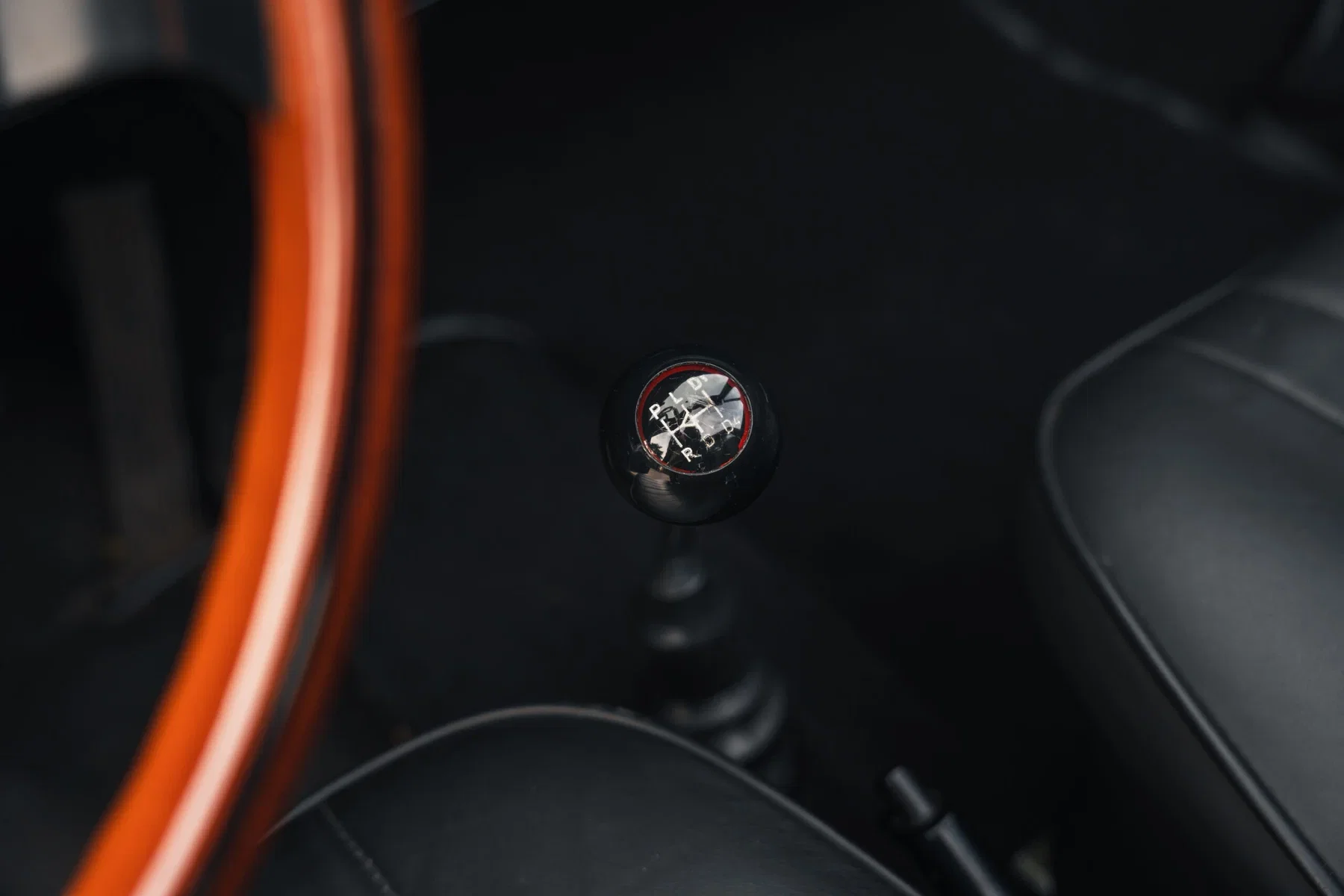
The way it works is as simple as it is elegant: instead of using a pedal, the clutch is activated by a microswitch in the shifter. When force is applied to it, the microswitch activates a vacuum system that disengages the clutch. As soon as the next gear is engaged and the gearshift no longer registers any pressure on the lever, the clutch engages again thanks to the changed signal from the microswitch.
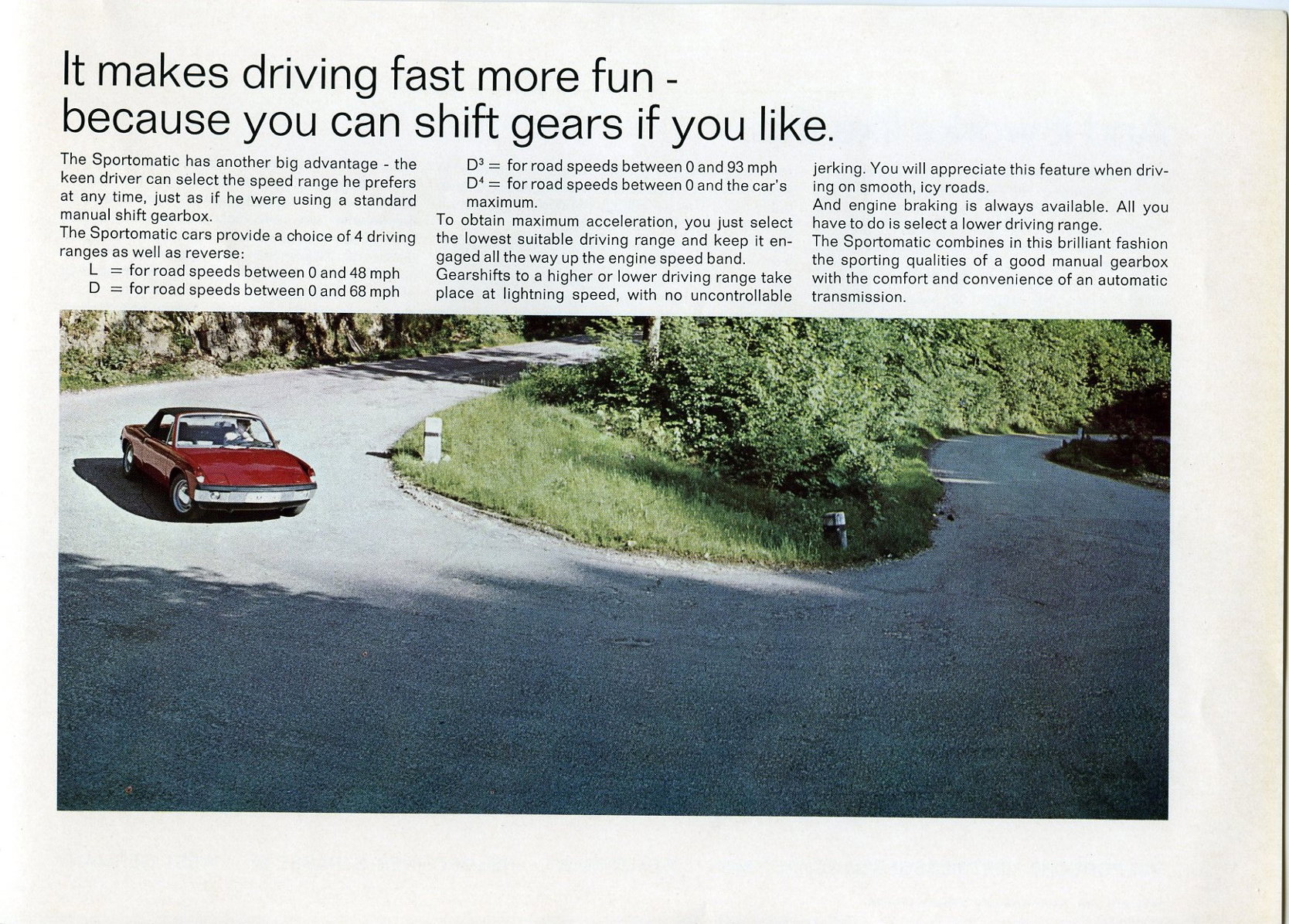
It makes driving slowly more pleasant – because you don’t have to declutch. It makes driving fast more fun – because you can shift gears if you like.
Porsche advertising brochure for the Sportomatic
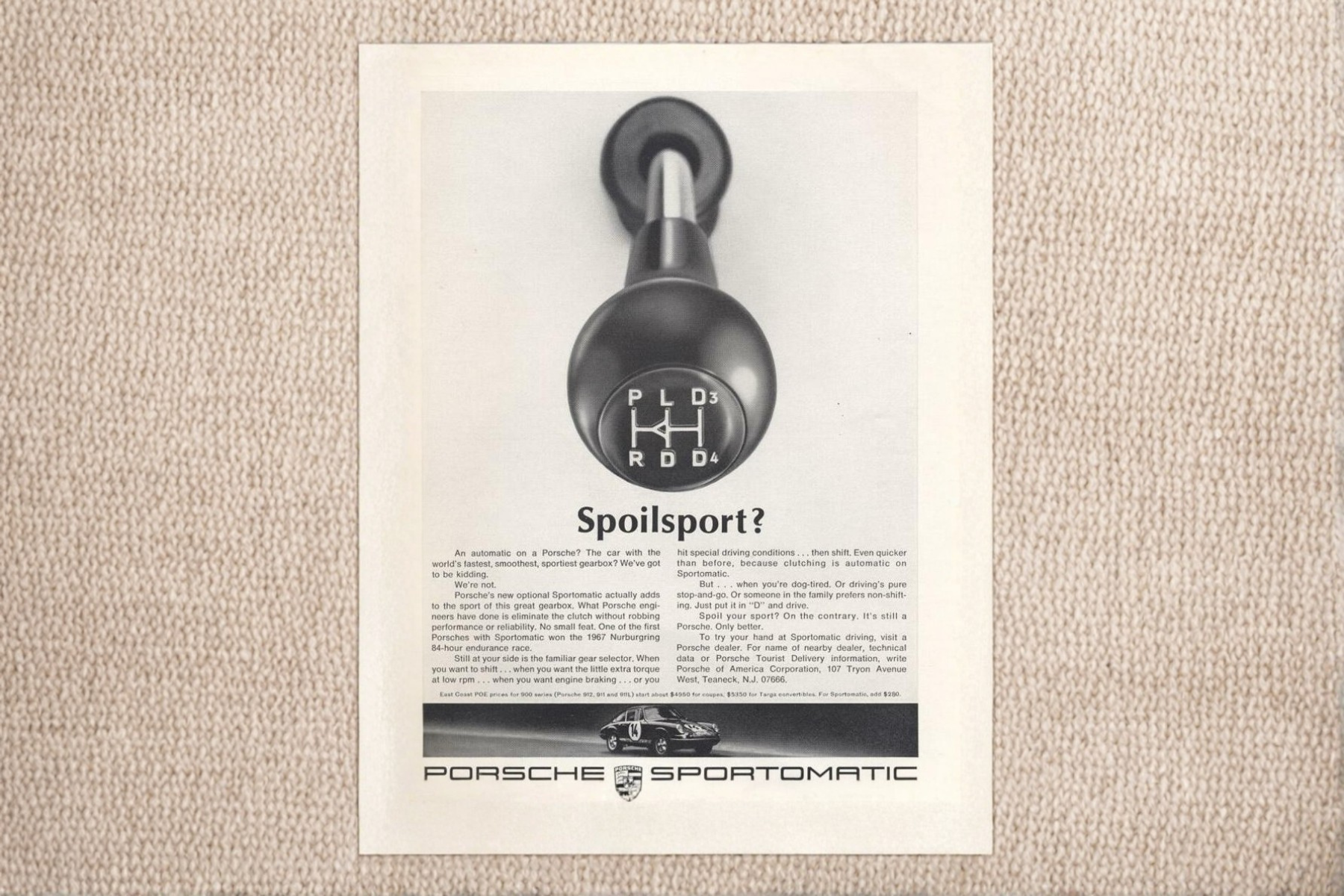
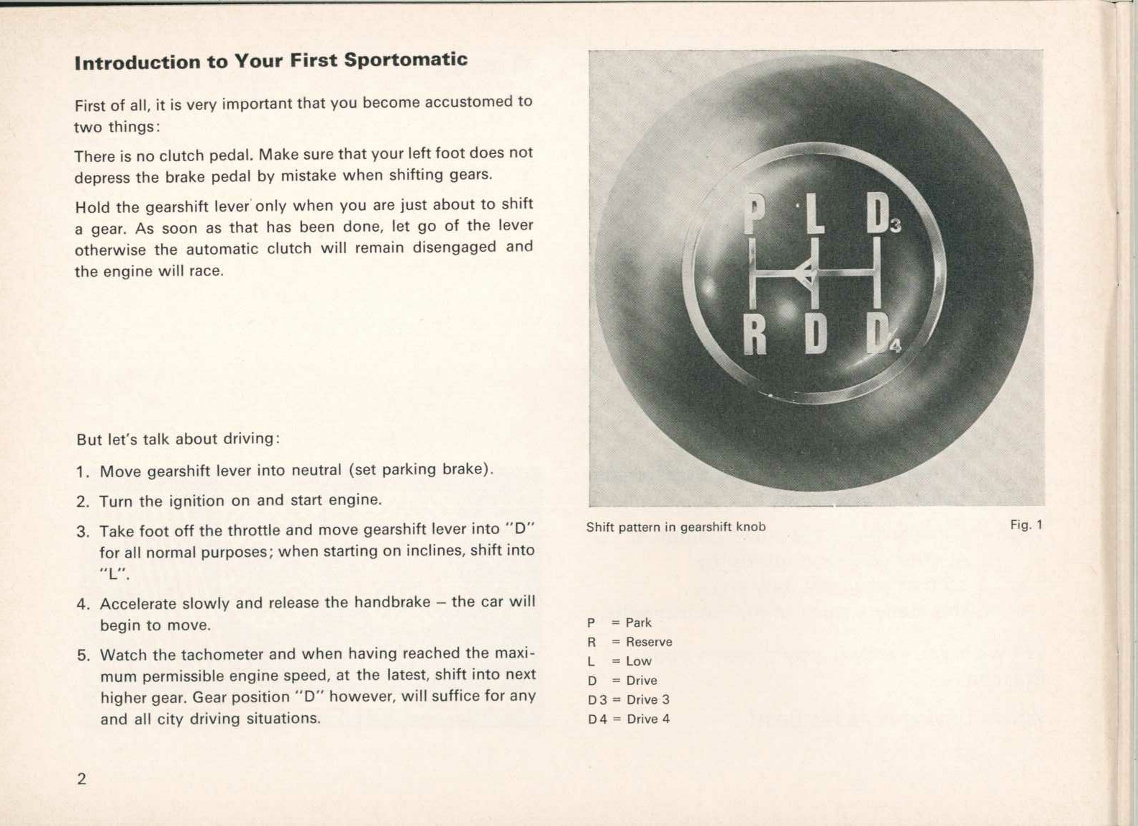
This first iteration of the Sportomatic transmission was given the name 905. Its shifter still has three gates. The parking position is in the left gear at the front and reverse gear at the rear. In the middle gate at the front is gear L. This is intended for extreme driving situations, such as starting off on steep slopes. Behind it is gear D, which is for driving around town up to about 110 km/h. Gears D3 and D4 on the right are primarily intended for highway driving (D4) or overtaking (D3). By the way, starting off is possible in all gears without any problems.
The Porsche Sportomatic was available in the Porsche 911 from 1967 and was revised in 1971
In 1967, three years after the start of 911’s production run, Porsche introduced the Type 905 Sportomatic. However, this idea was not only met with approval. For many enthusiasts, a Porsche without a clutch pedal seemed like a contradiction in terms. The trade press also reacted skeptically at first. Journalists sensed a compromise on comfort rather than technical progress.
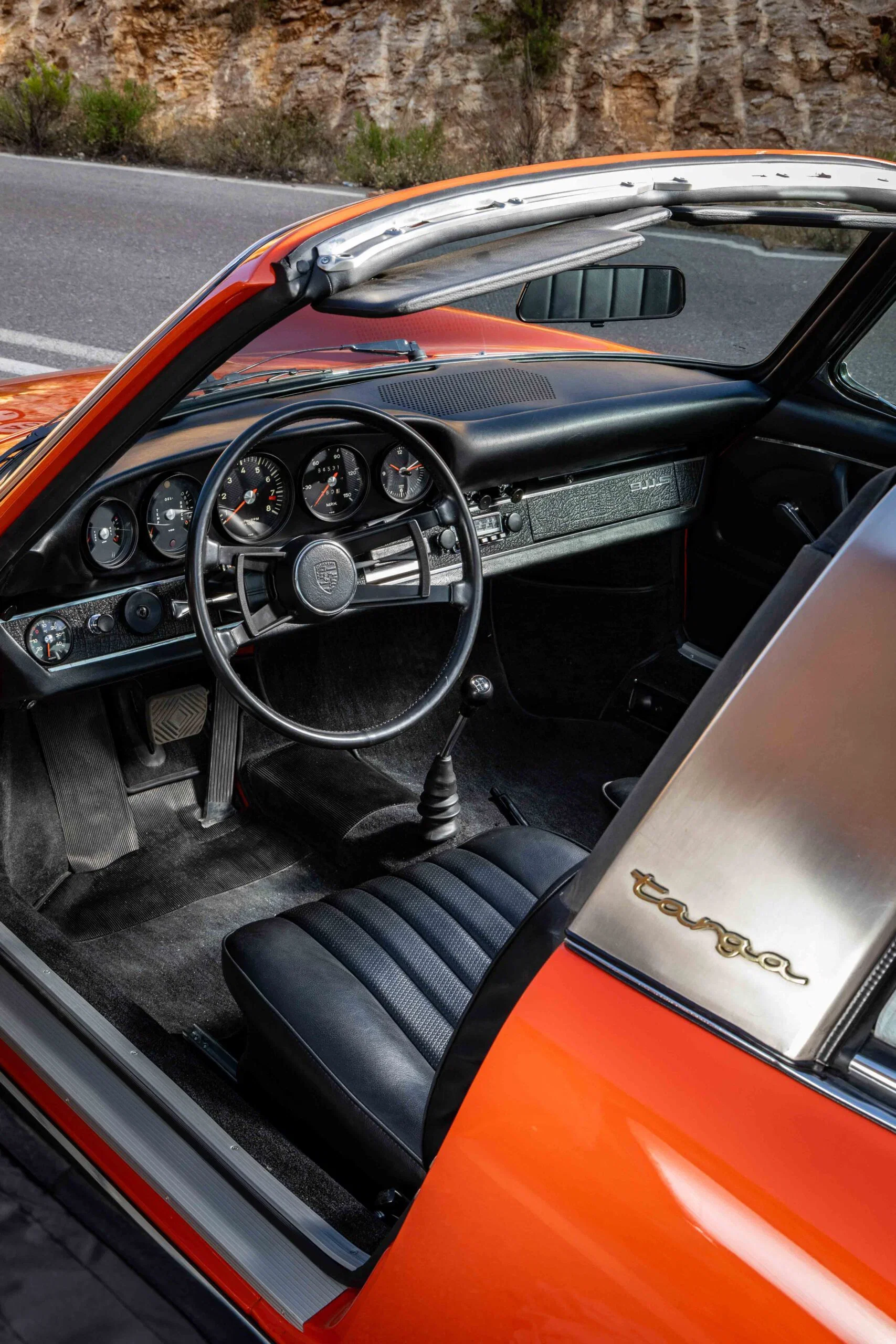
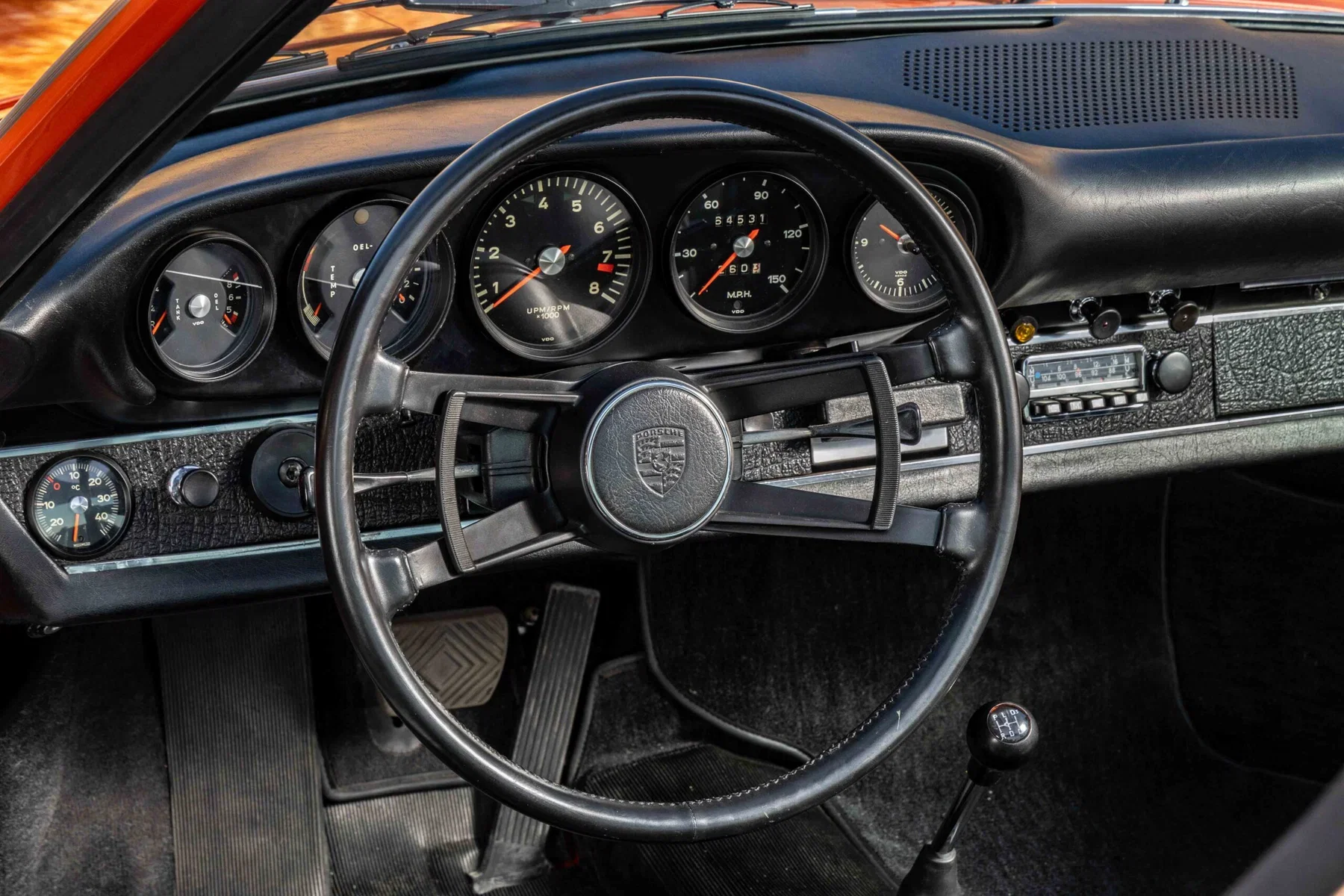
The sight of the footwell of an air-cooled Porsche 911 with just two pedals is anything but ordinary.
In order to convince sporty drivers of the advantages of the semi-automatic transmission, Porsche decided to equip a 911 R and a 911 S with Sportomatic and enter them in the Marathon de la Route. In this 84-hour endurance race on the Nürburgring Nordschleife, the 911 R with Sportomatic won with a total lead of 34 laps. Interestingly, the 911 S with Sportomatic even had better fuel consumption figures than a 911 S with manual transmission that was also used.
Undoubtedly, this victory contributed significantly to the fact that the Sportomatic was well received by a biased Porsche clientele.
Paul Frère
With the introduction of the 911 E and S 2.4, Porsche also brought a new Sportomatic onto the market. The 905 transmission had to be revised due to the increased torque. The result was the Sportomatic 925, which could now withstand up to 230 Nm of torque instead of a maximum of 191 Nm. This was made possible by a larger torque converter, a reinforced clutch and a reinforced bevel and ring gear pair. After a three-year break, a 911 S with Sportomatic was once again available.
The Sportomatic was also used in the Porsche 911 G-model
The revised version of the Porsche Sportomatic transmission with four gears was still used in the 911 G model until 1975. A newly adapted Sportomatic transmission was used in the USA as early as 1974. It only offered three gears, but again featured reinforced components and was developed with the new 911 Carrera 3.0 in mind. The Sportomatic was still offered in the 911, 911 S and 911 Carrera 3.0 until 1980 and was then discontinued without replacement.
What exactly is the Porsche Sportomatic?
Porsche’s Sportomatic is a semi-automatic version of the 901 manual gearbox from the Porsche 911 F-model.
How does the Porsche Sportomatic work?
Power is transmitted from the engine to the transmission by a combination of a torque converter and a vacuum-controlled spring disk clutch. The torque converter helps when starting off, while the clutch only disengages and re-engages when changing gear. A magnetic switch on the gearshift reacts to movements on the gear lever and controls the vacuum via a solenoid valve so that the clutch disengages for exactly as long as it takes to change gear.
How does a Porsche with Sportomatic drive?
Depending on requirements, the Sportomatic can be used like a classic automatic or like a manual gearbox without a clutch. In principle, starting off is possible in any gear and works like an automatic transmission. To change gear, simply take your foot off the accelerator and move the shifter to the desired gear position. As soon as you release the gear knob again, the clutch engages and you can continue to accelerate. However, you should not let your hand rest on the gearshift, otherwise the clutch may disengage without you wanting it to.
Which Porsche models were available with Sportomatic?
Porsche offered the 911, 911 E, 911 L, 911 T, 911 S, 911 2.7 and Carrera 3.0 models with Sportomatic. In addition, 16 Porsche 914-6s with Sportomatic transmission are said to have been built in 1970 and 1971. According to reports, eleven of these were delivered to customers, three were used for test purposes and two were kept in the Porsche family.
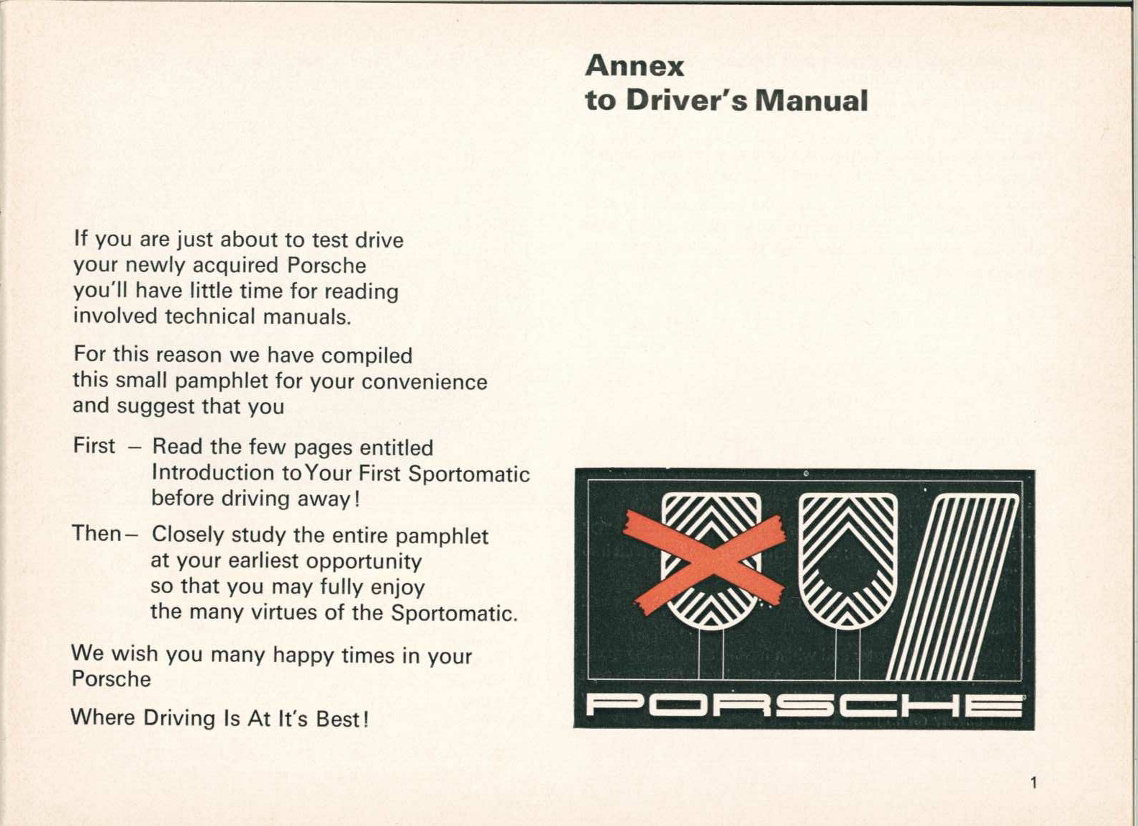
Although the driving performance was on par with the manual gearbox, the Sportomatic didn’t catch on – even a 40-page manual didn’t help
Porsche basically had a clever idea with the Sportomatic. The result is somewhat reminiscent of the later Tiptronic, albeit without the classic automatic mode. The exciting design was also convincing in terms of driving – the acceleration of Sportomatic models was in no way inferior to that of manually shifted Porsches. Especially as it makes quick starts at traffic lights much easier for both the driver and the equipment. The clutch even reacts dynamically to the driver. The quicker full throttle was applied again after the gear change, the quicker the clutch engaged again.
In any case, the Sportomatic wasn’t a sales success.
Despite all its marketing efforts and racing successes, Porsche was unable to sufficiently dispel the skepticism of its customers. The contradiction of an automated transmission in a sports car was too great. Even the lovingly designed 40-page manual to the Sportomatic did not really help. In the end, the Sportomatic became a commercially unsuccessful episode, although its spirit was later revived in the Tiptronic. In this automatic transmission, which was used from the 964 onwards, Porsche once again made it possible for the driver to change gear independently.
Even Porsche’s lovingly designed instructions for Sportomatic newcomers only helped to a limited extent in convincing new customers.
Porsche with Sportomatic transmission extremely rare, but still cheaper than their siblings
Normally, Porsches with particularly rare features become sought-after and expensive over the decades. Sportomatic 911s are obviously an exception to this rule. Although they were rarely sold anyway and many were later converted to manual transmissions, F and G models with semi-automatic manual transmissions cost no more than their siblings. On the contrary – 911 F and G models with manual transmission tend to be more expensive.
So if you opt for an air-cooled 911 with semi-automatic transmission, you not only get something very special, you may even save money. Not only when buying, but possibly even in the long term. For one thing, the Sportomatic transmissions are thoroughly reliable. The automated clutch ensures consistently smooth gear changes. Its torque converter minimizes wear in the drivetrain. Problems such as delayed or unclean clutching are usually due to inaccurate settings or problems in the vacuum system and its control. The mechanics themselves are considered robust.
And who knows, maybe Sportomatic Porsches will become expensive at some point due to their rarity? In the end, it doesn’t matter. Because the Sportomatic is not detrimental to driving pleasure. Anyone who wants to drive to work in a classic car in good weather is probably even better off with it than with a manual gearbox. In one respect, however, the Sportomatic is definitely superior to its siblings: it provides a lot more talking points.
Message
Do you have a tip for a story or just want to get in touch with Richard?







 1968
1968 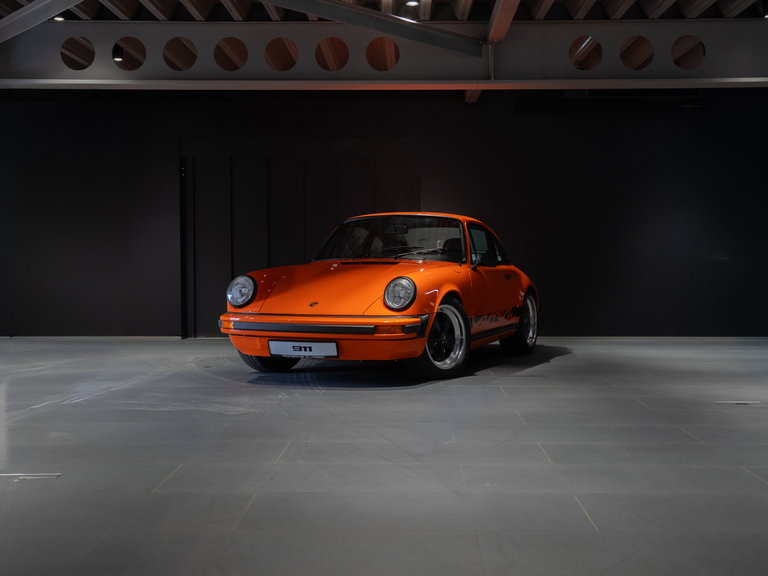
 1975
1975 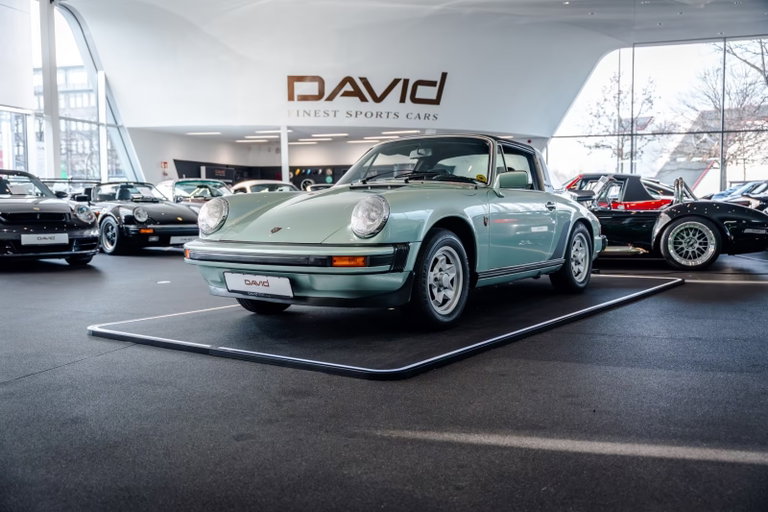
 1977
1977