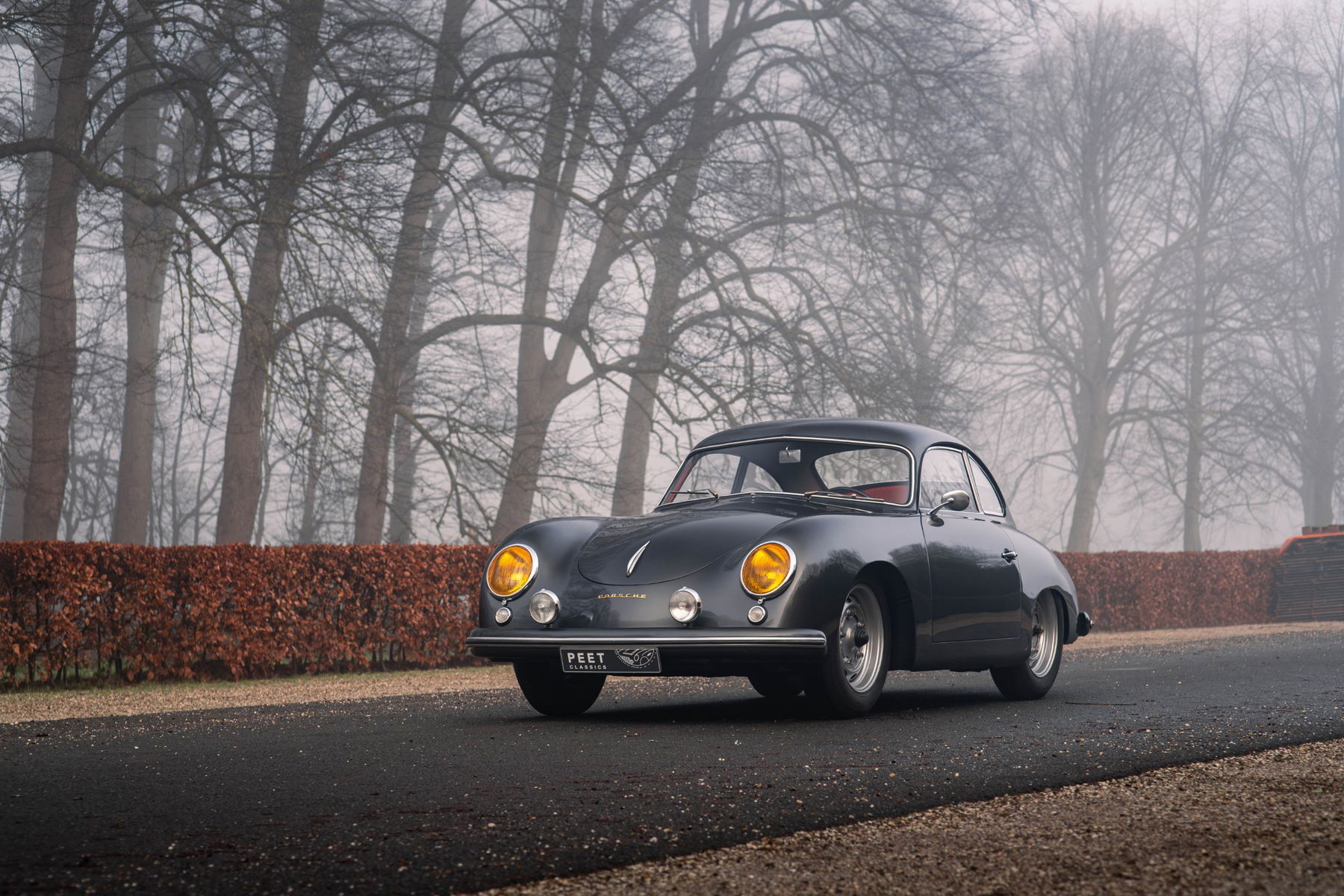
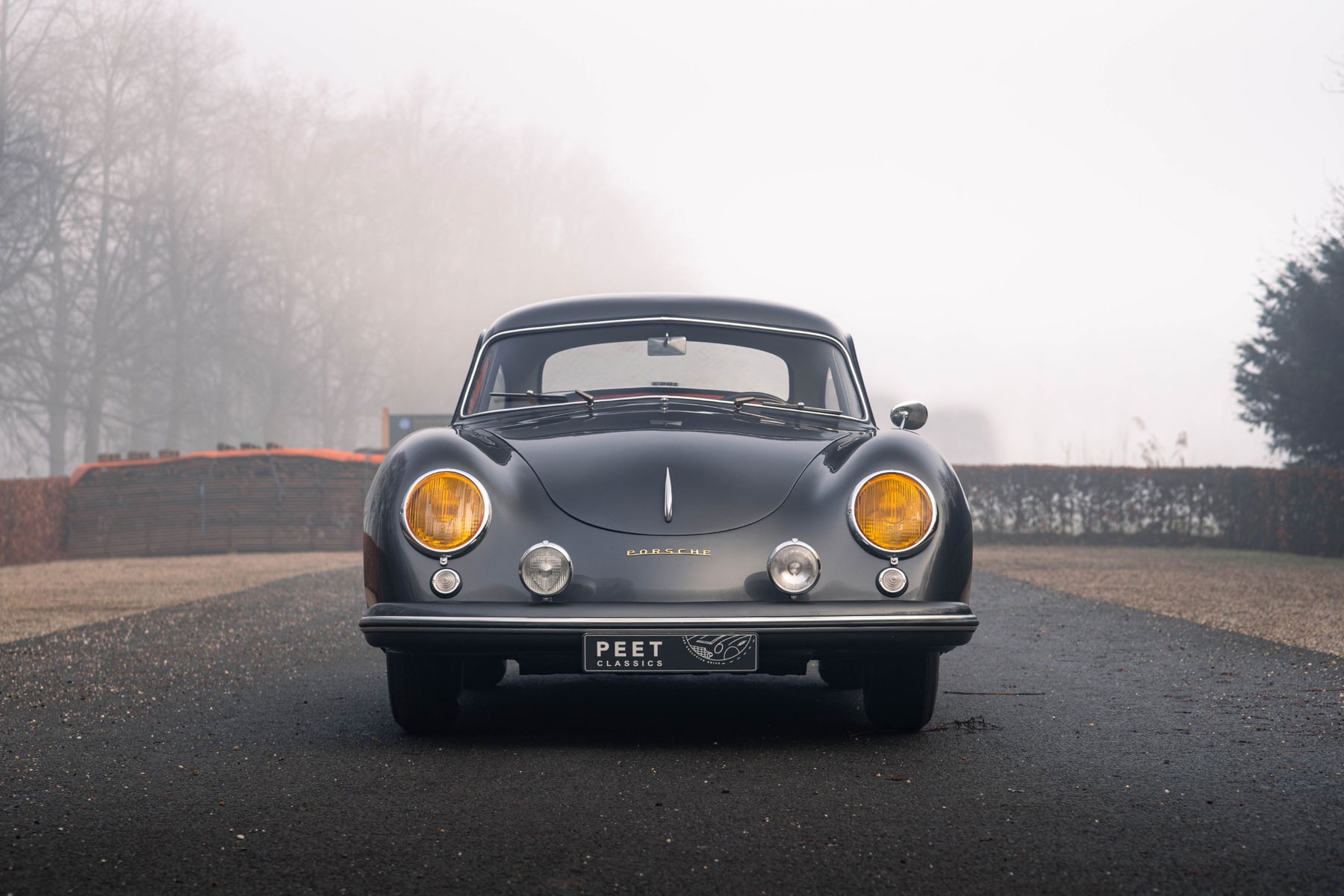
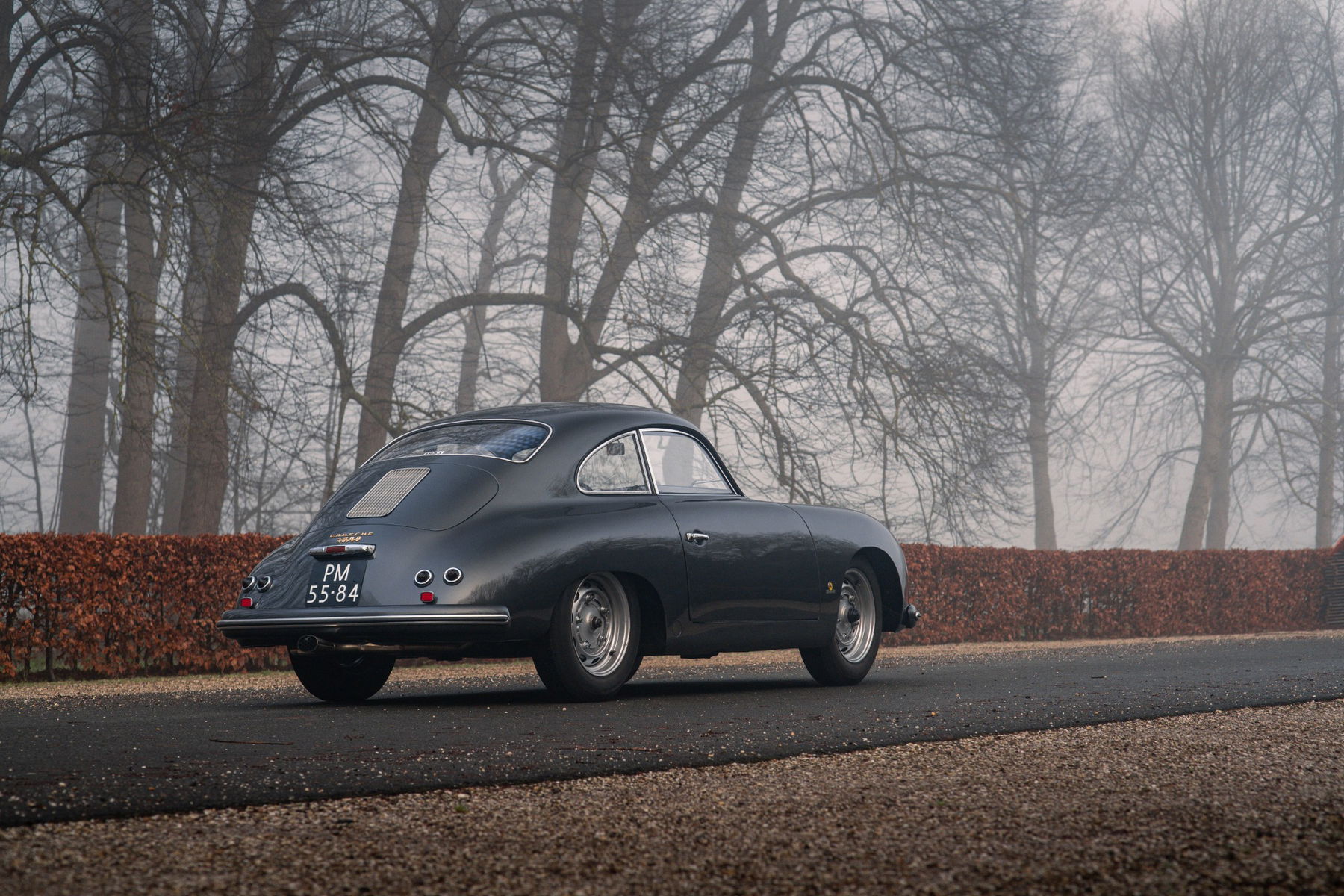
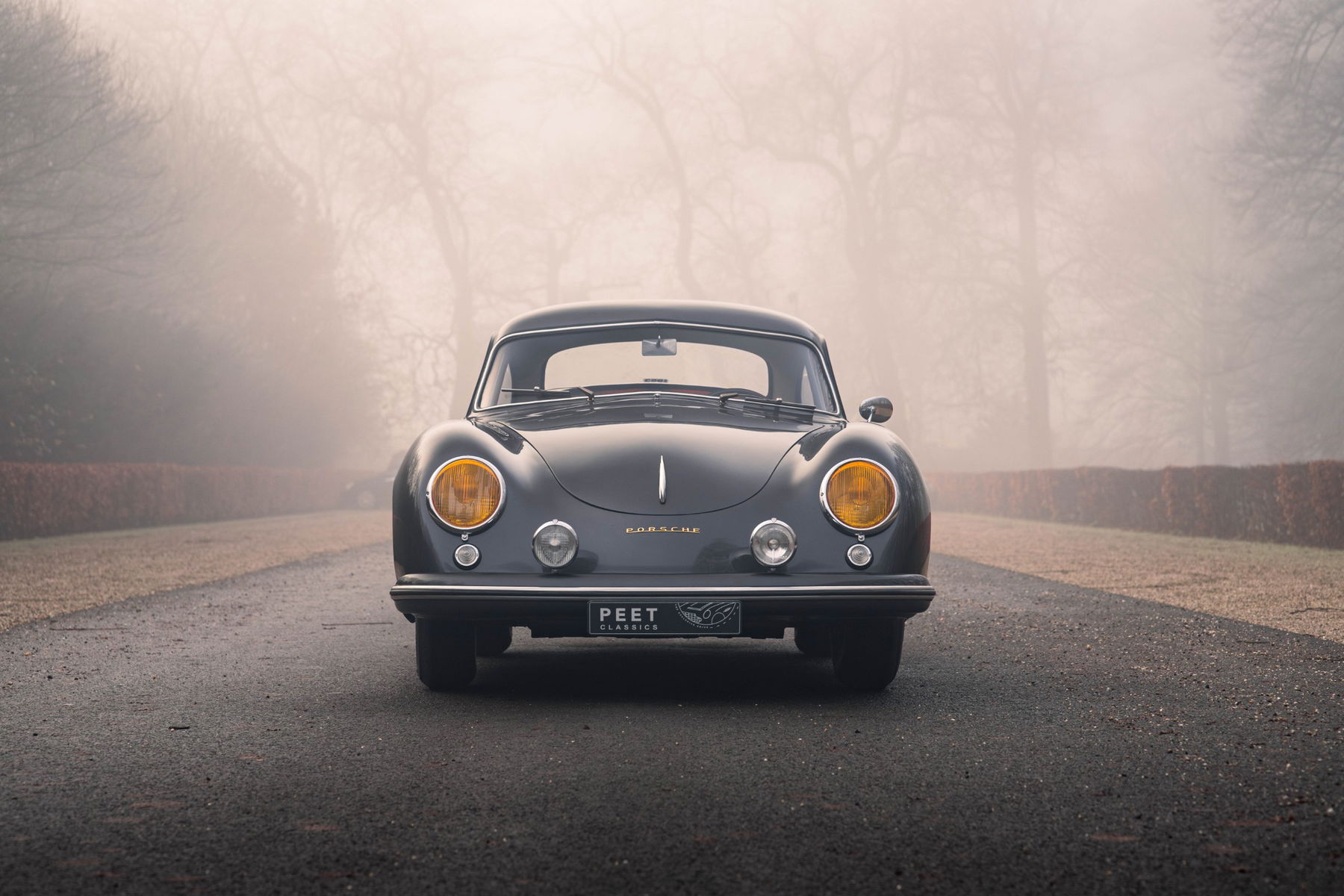
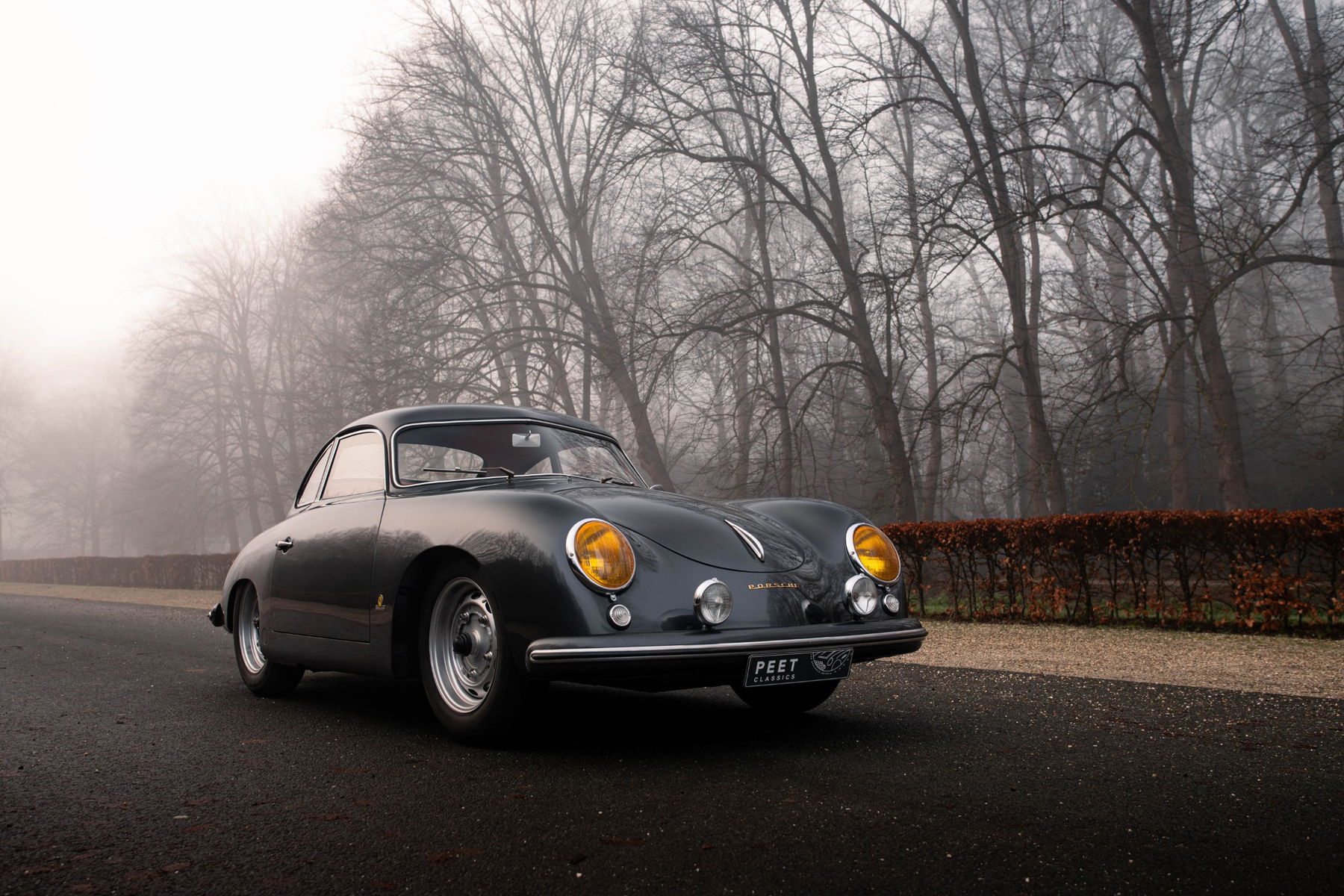
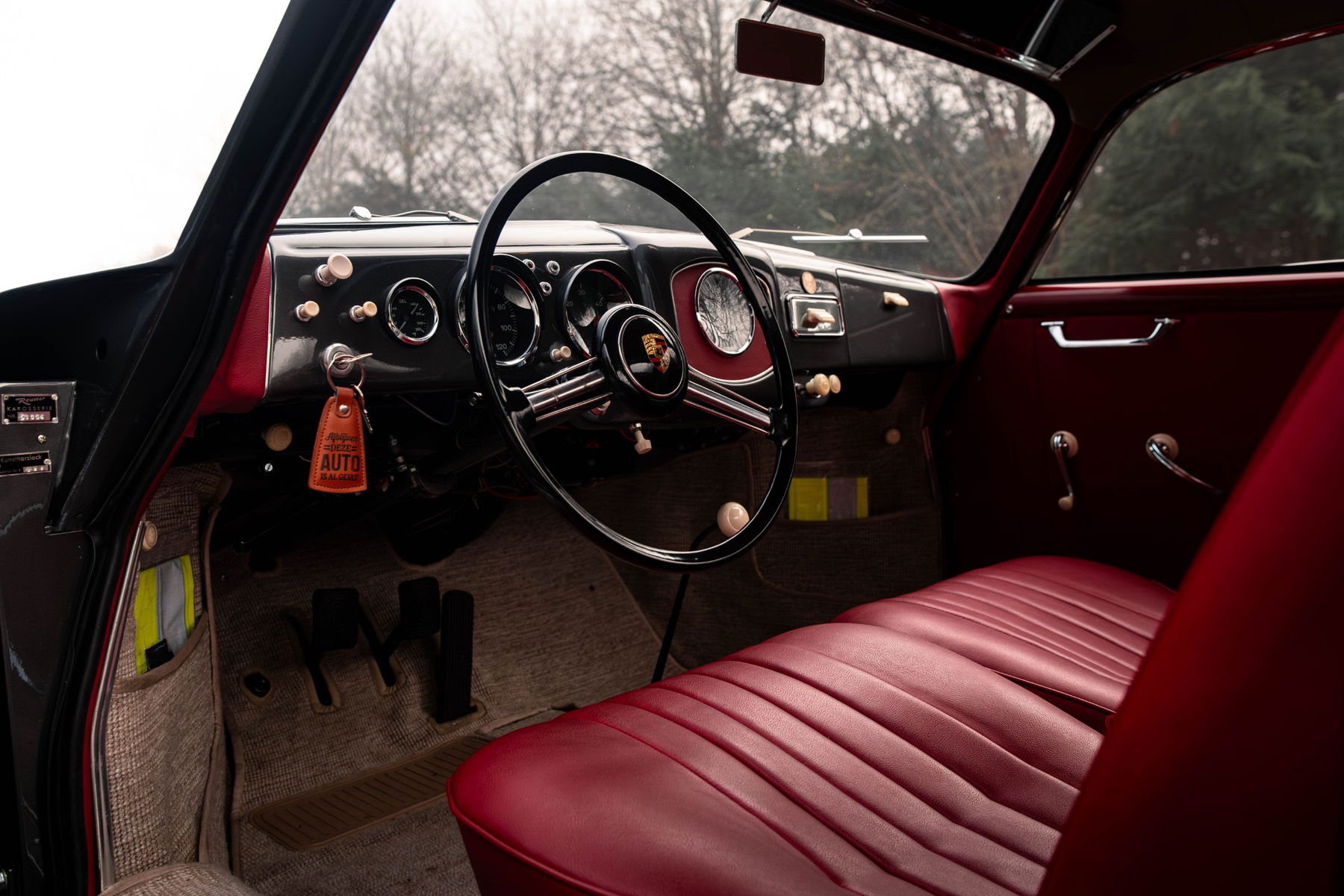
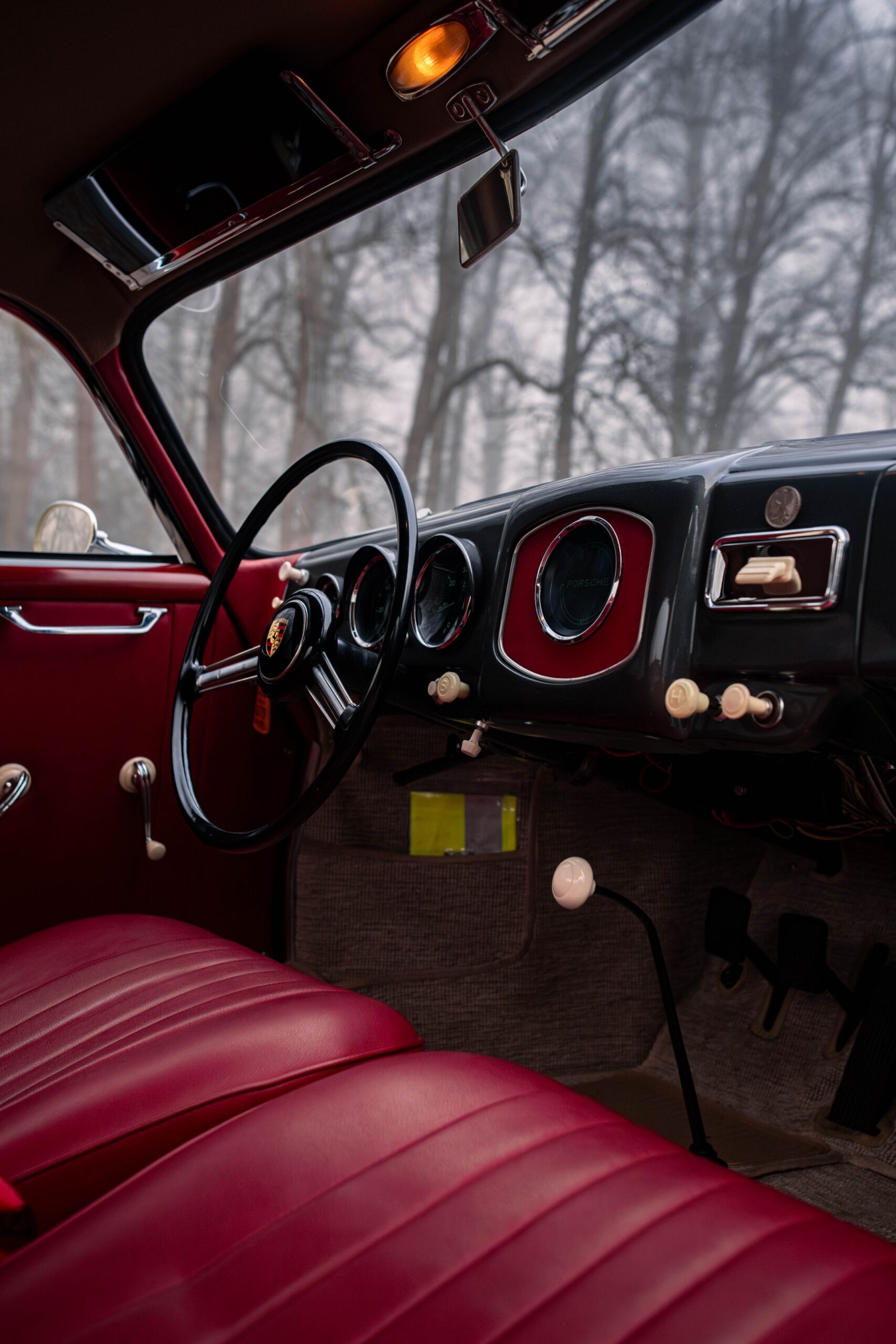
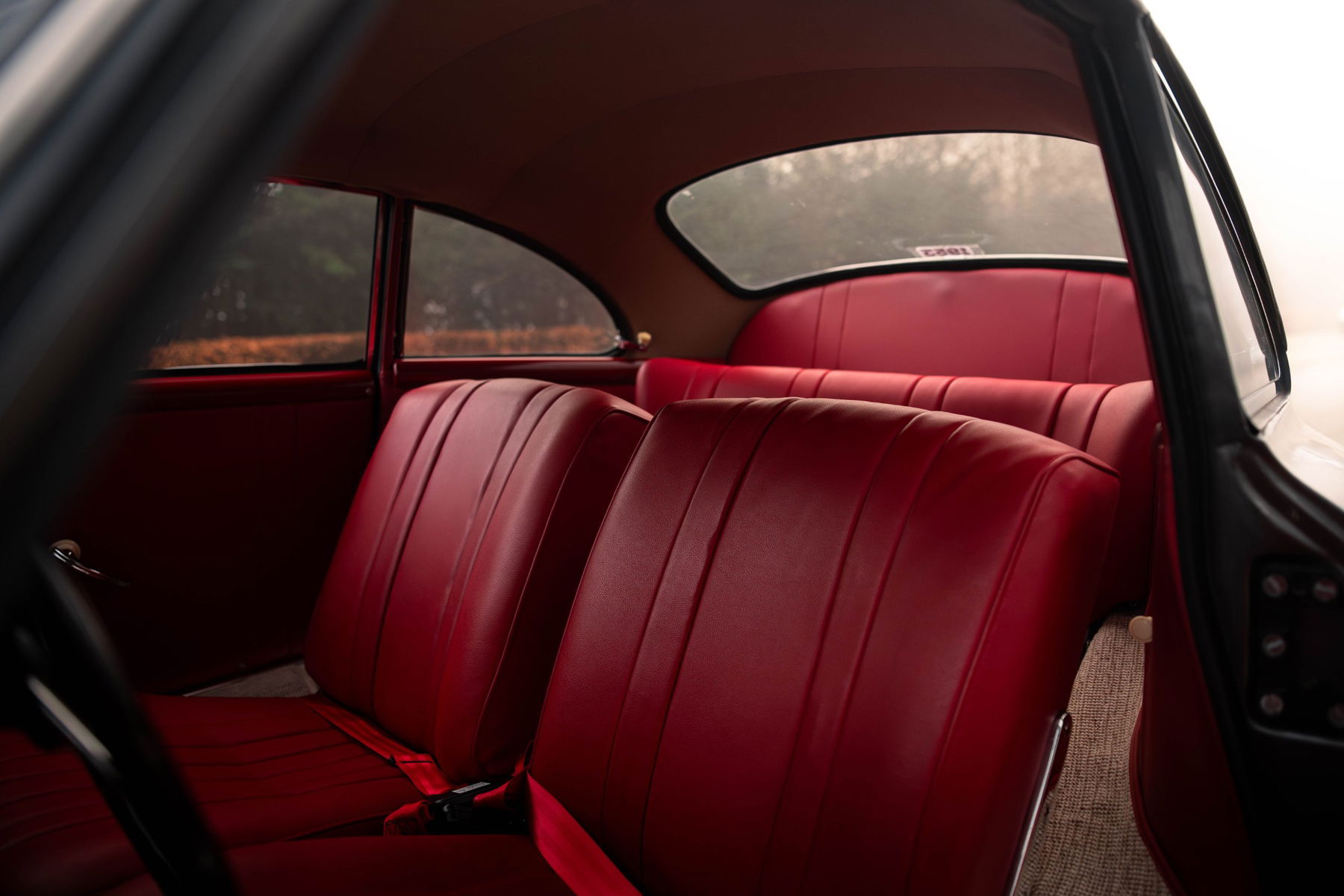
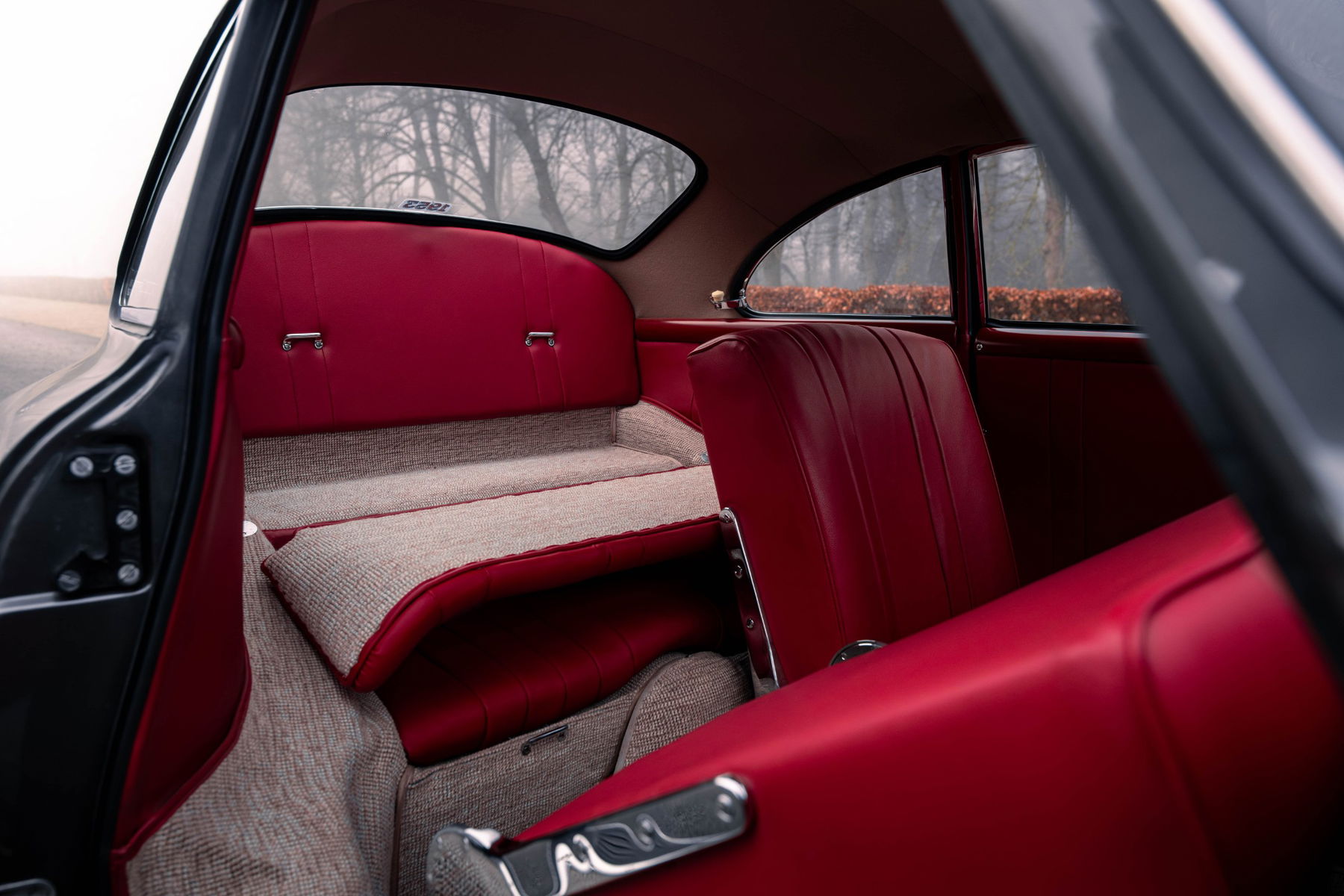
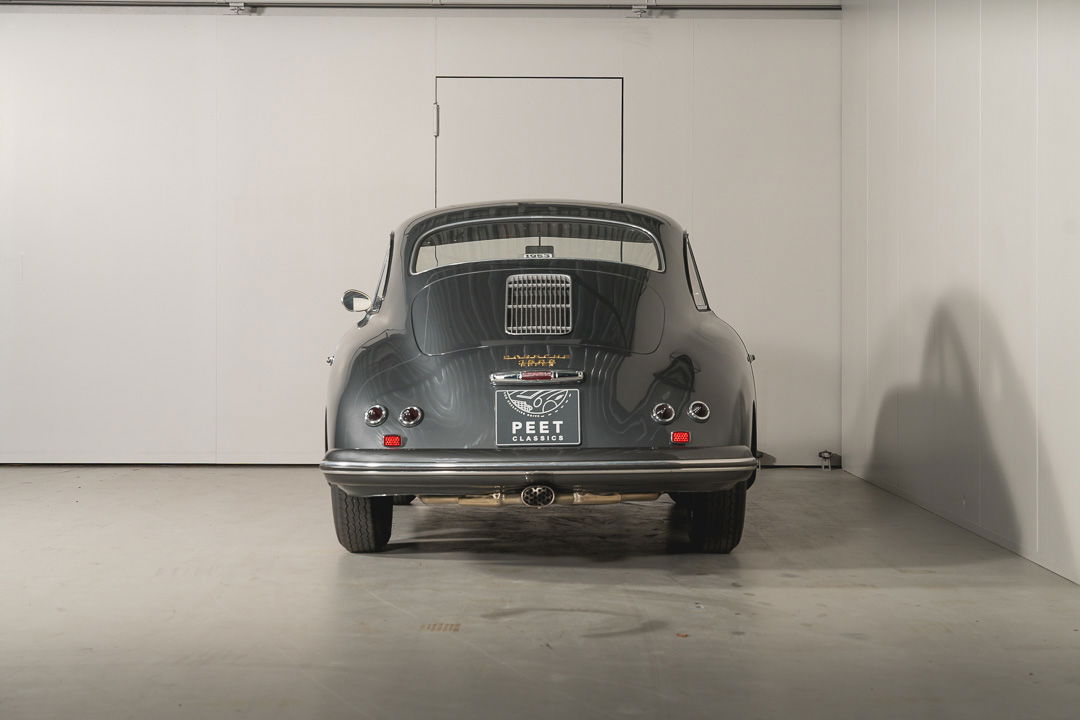
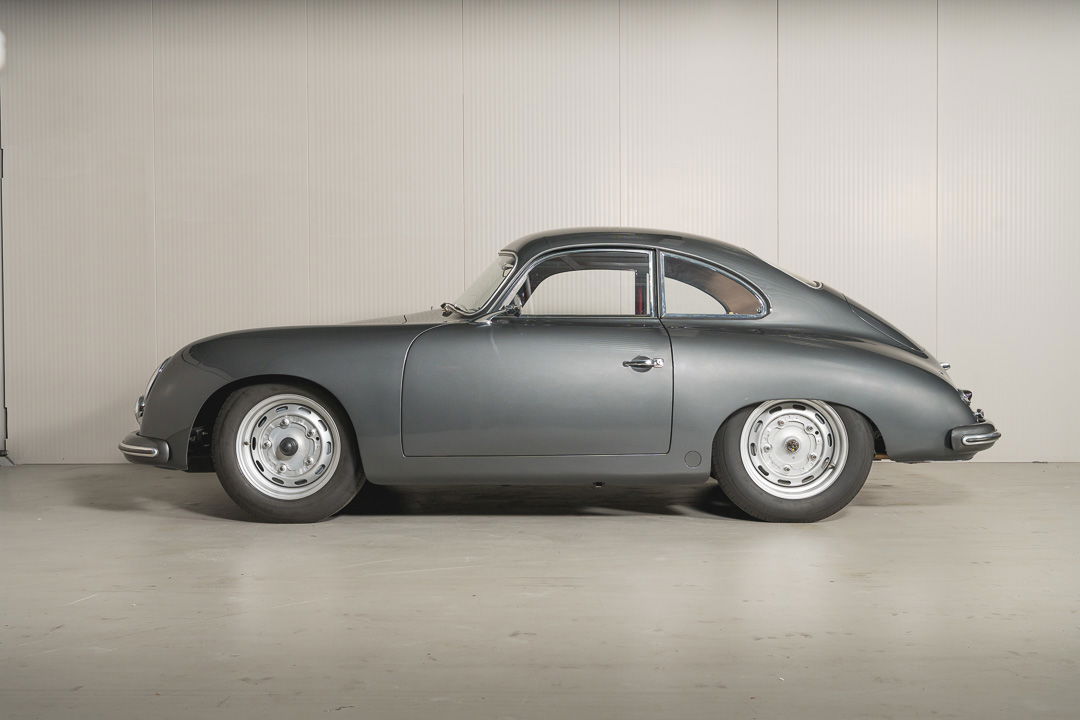
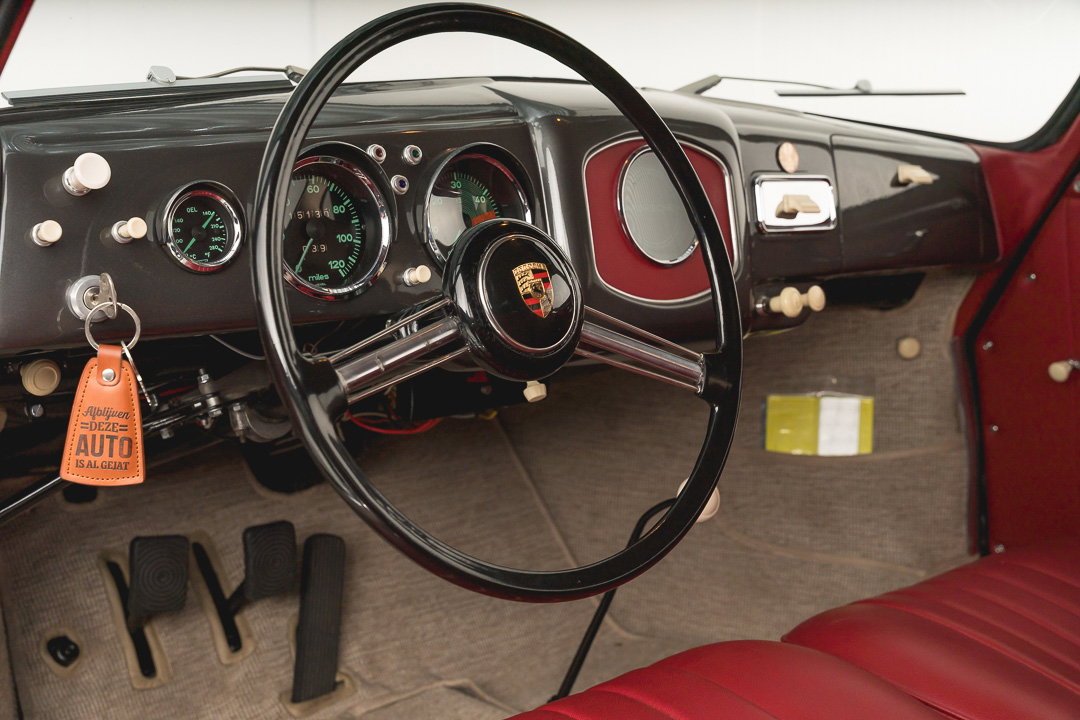
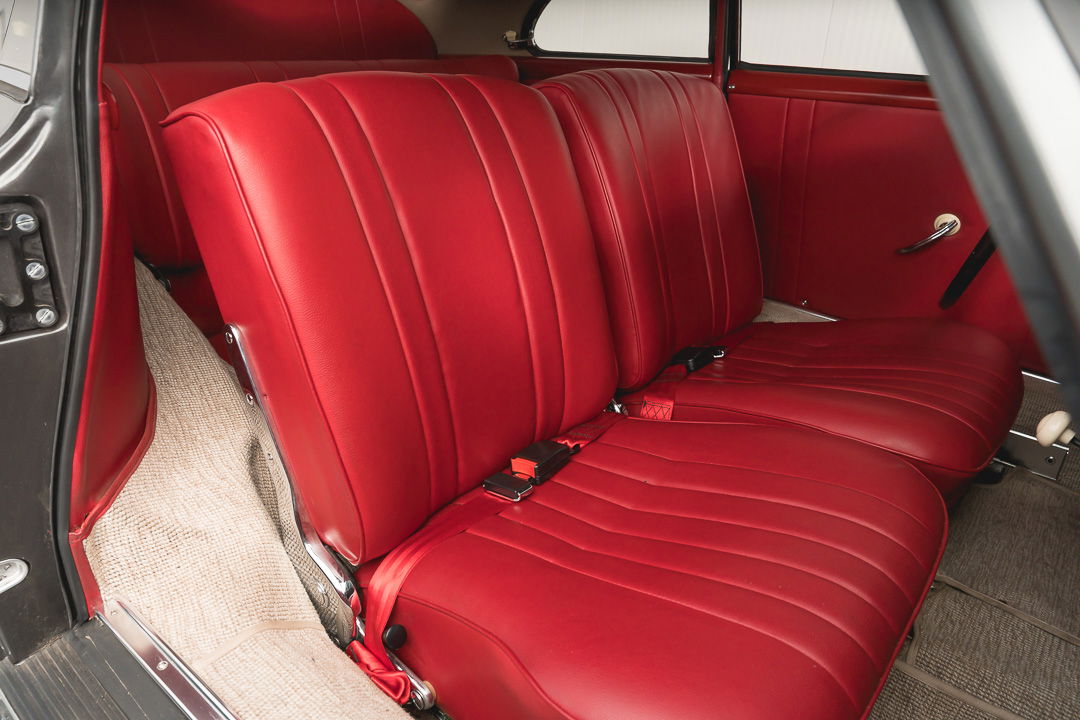
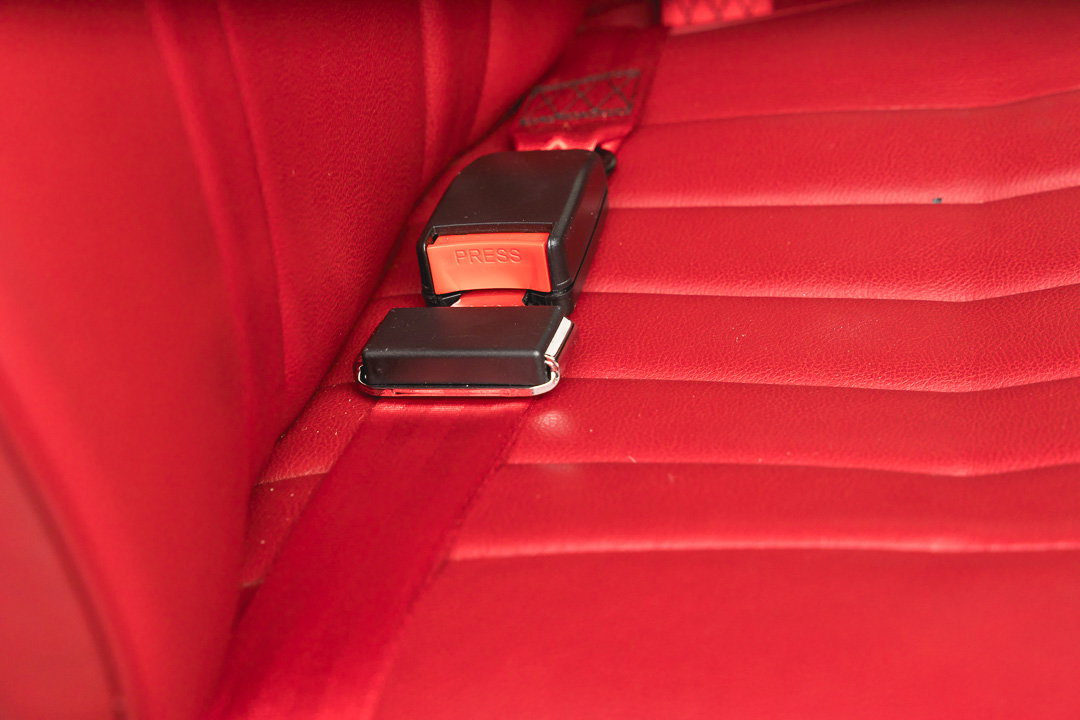
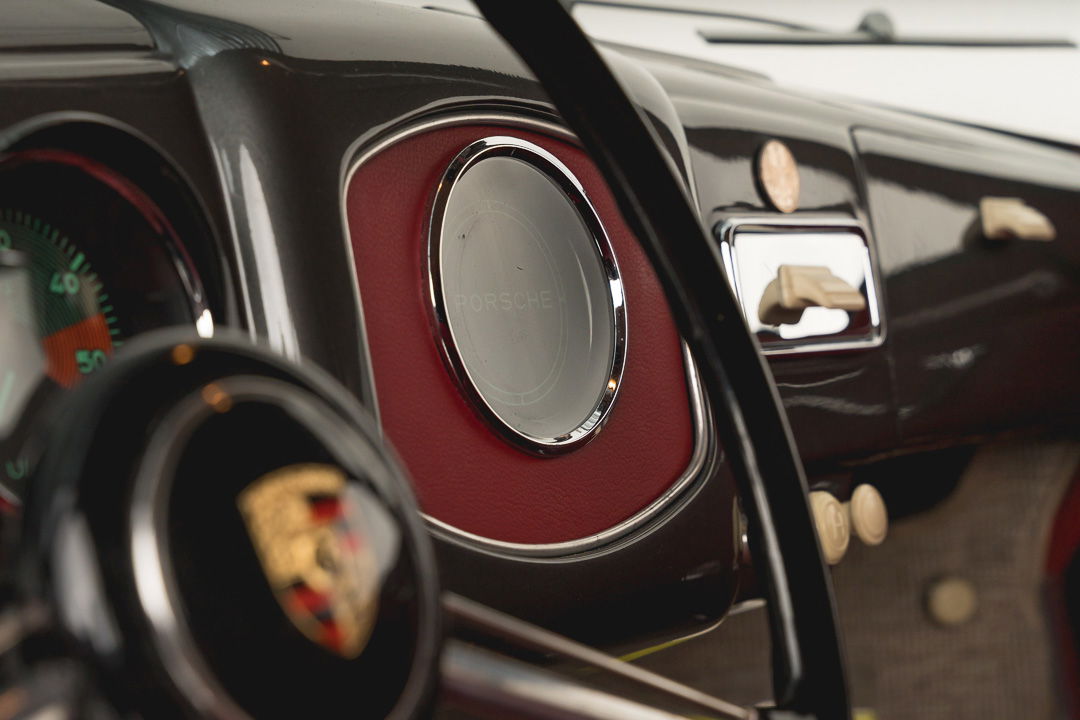
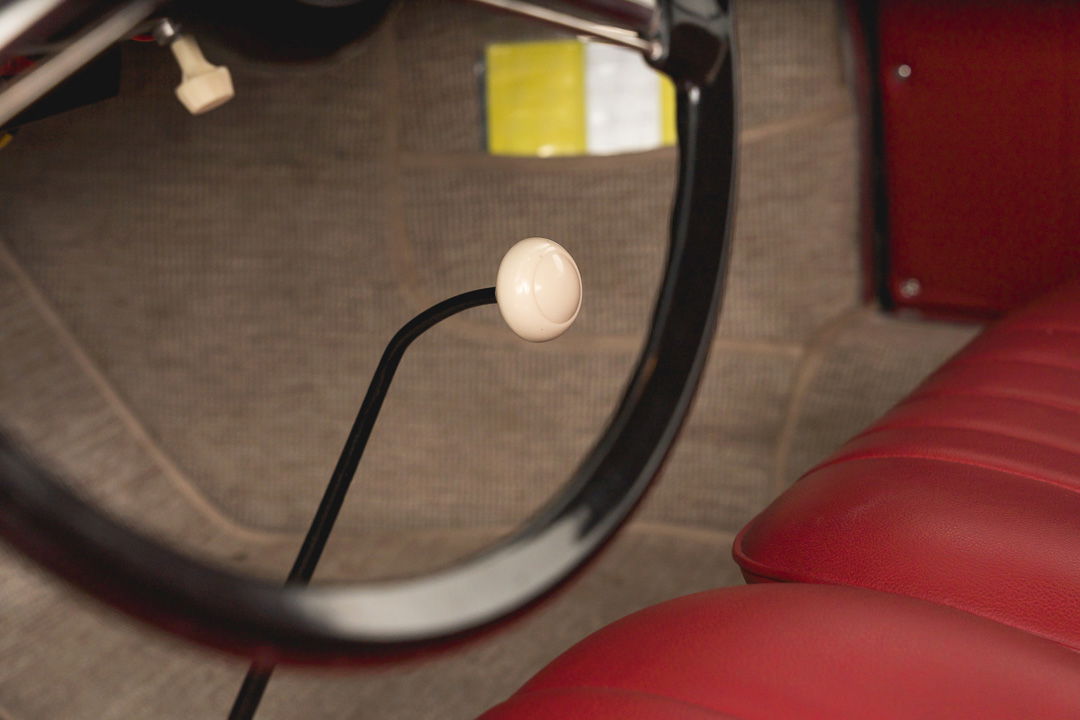
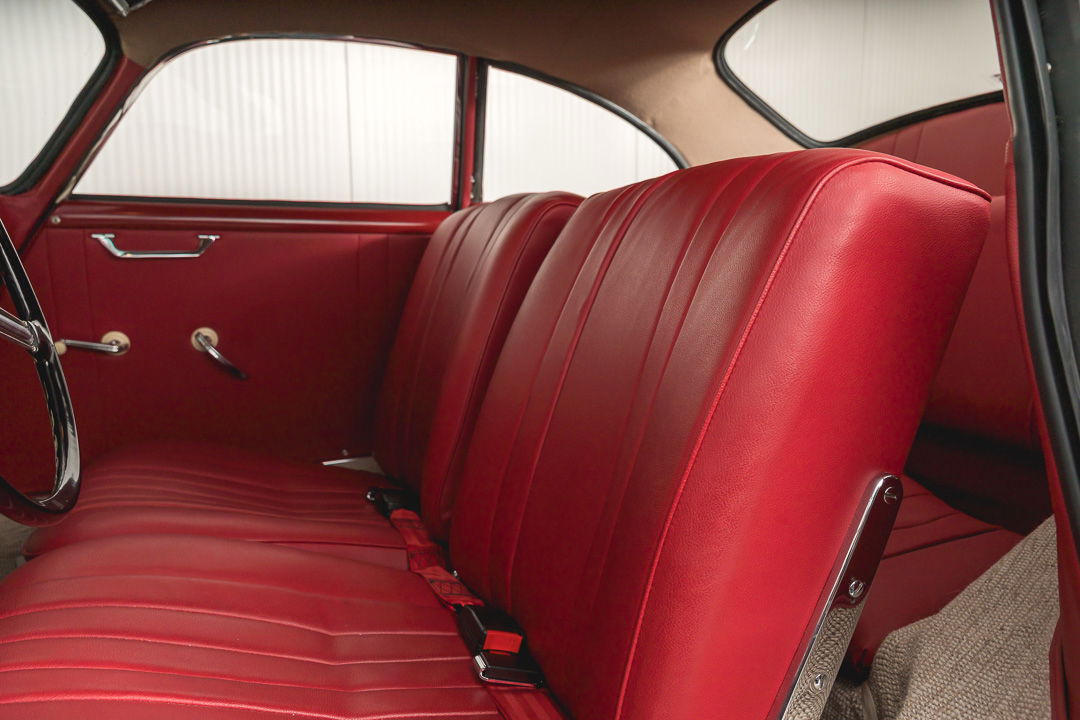
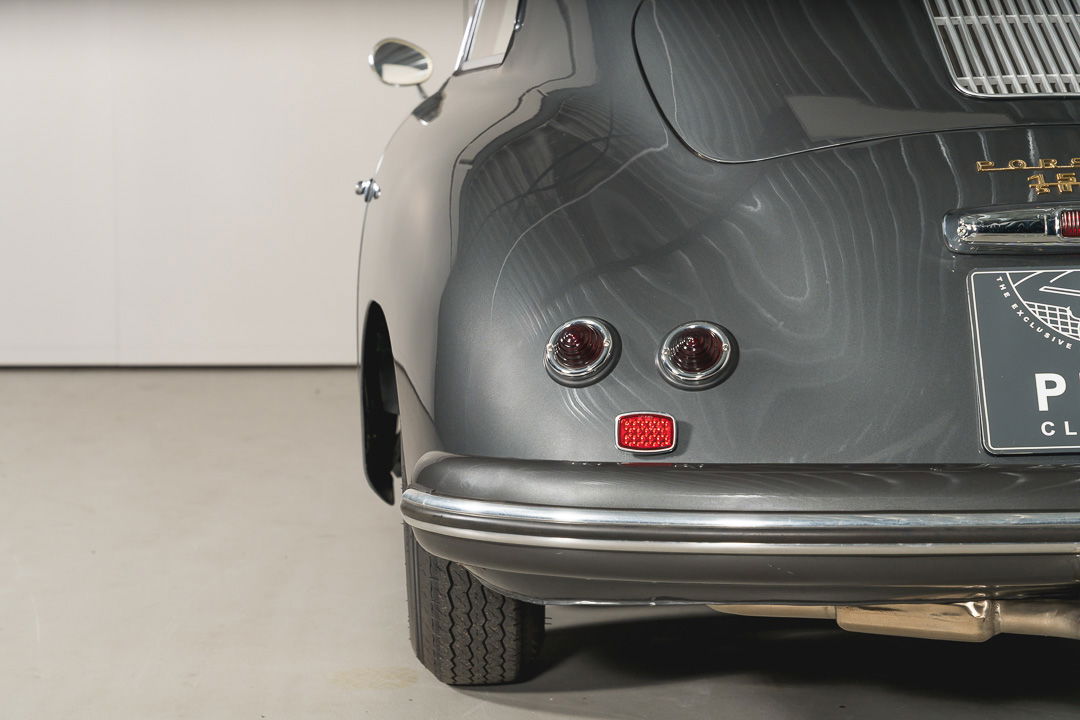
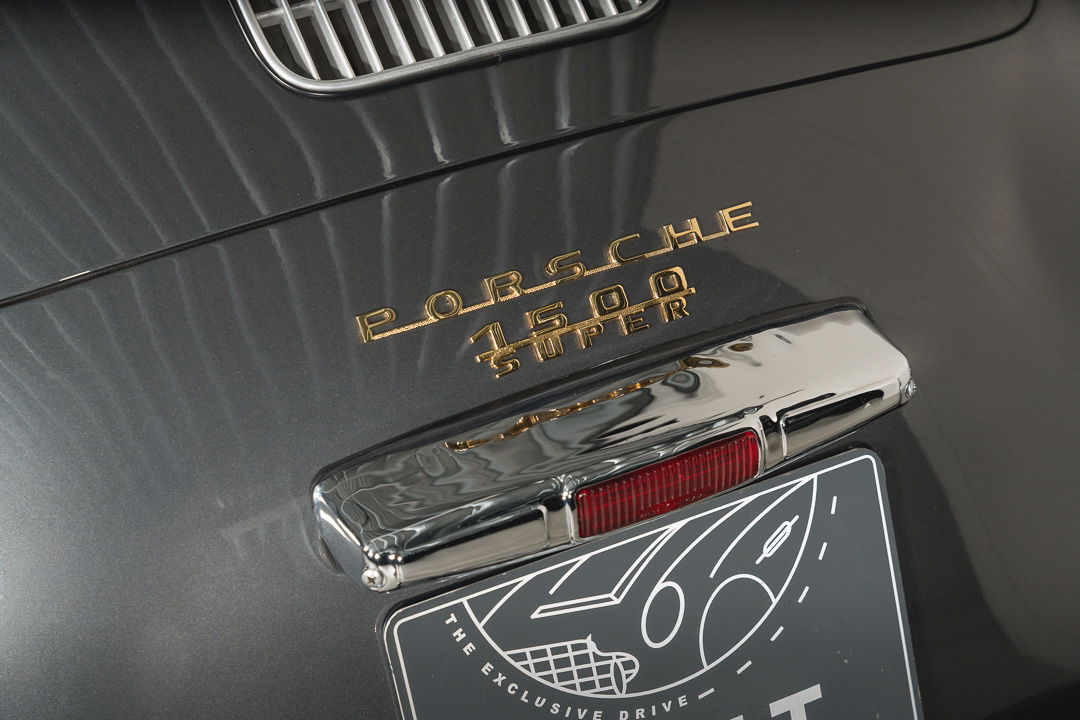
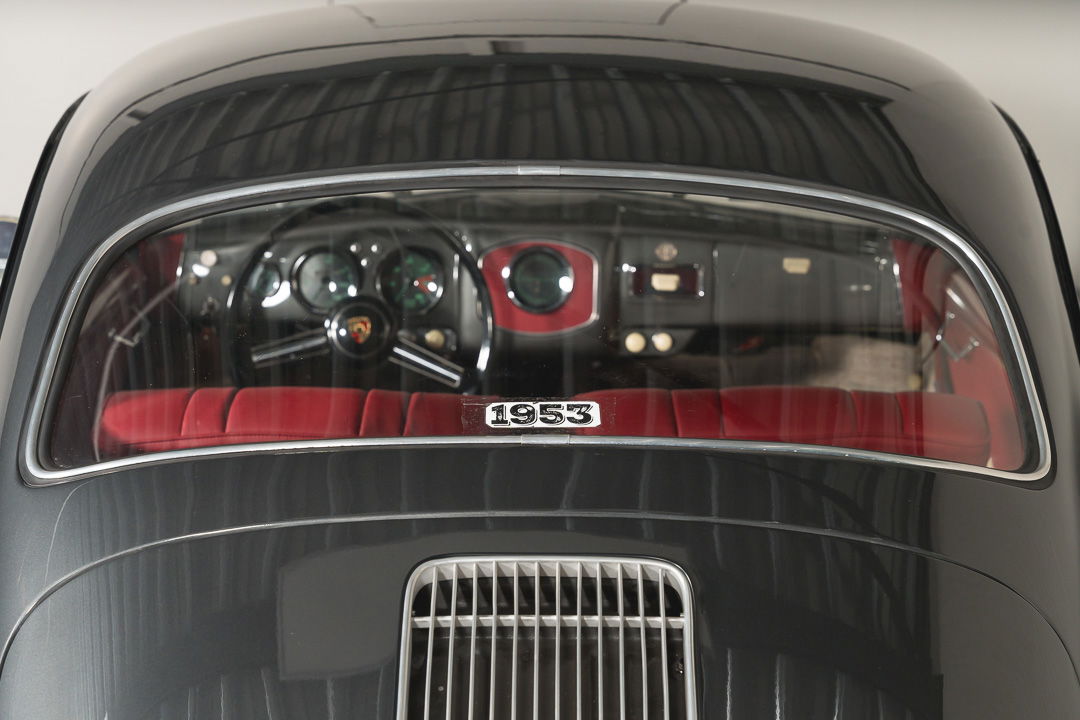
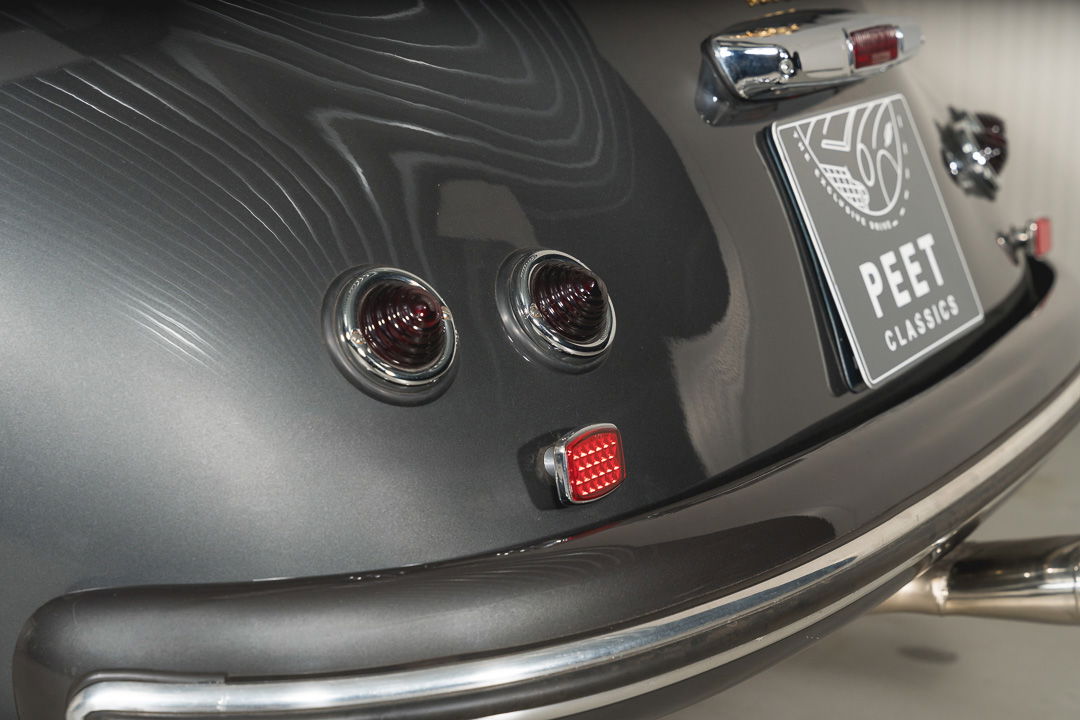
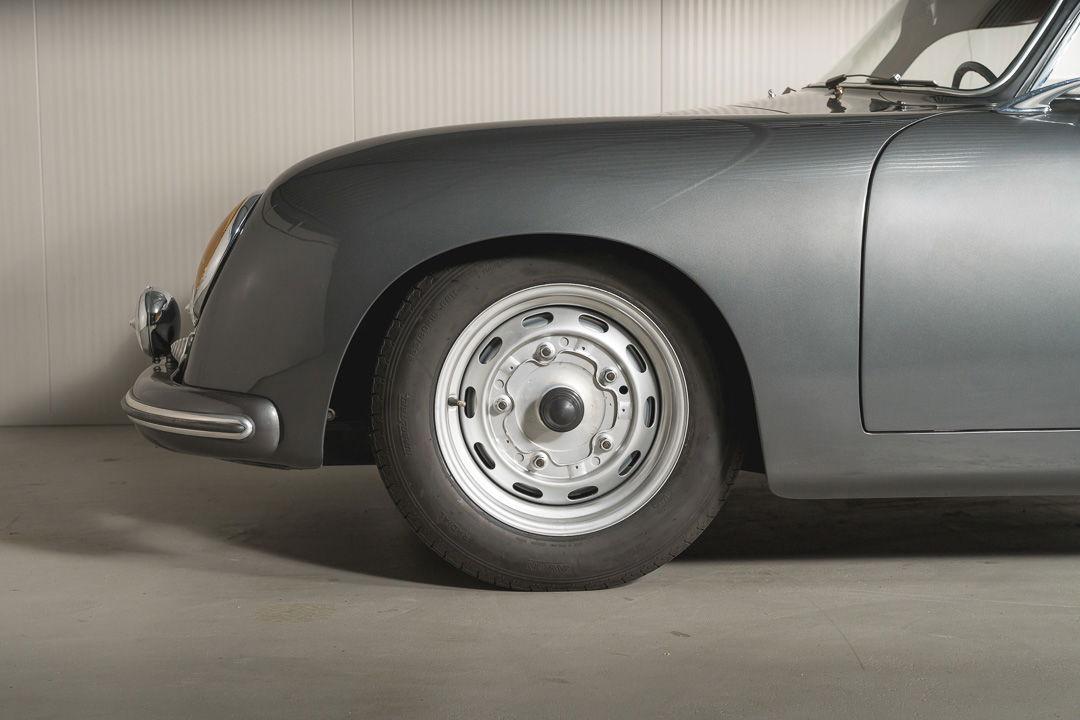
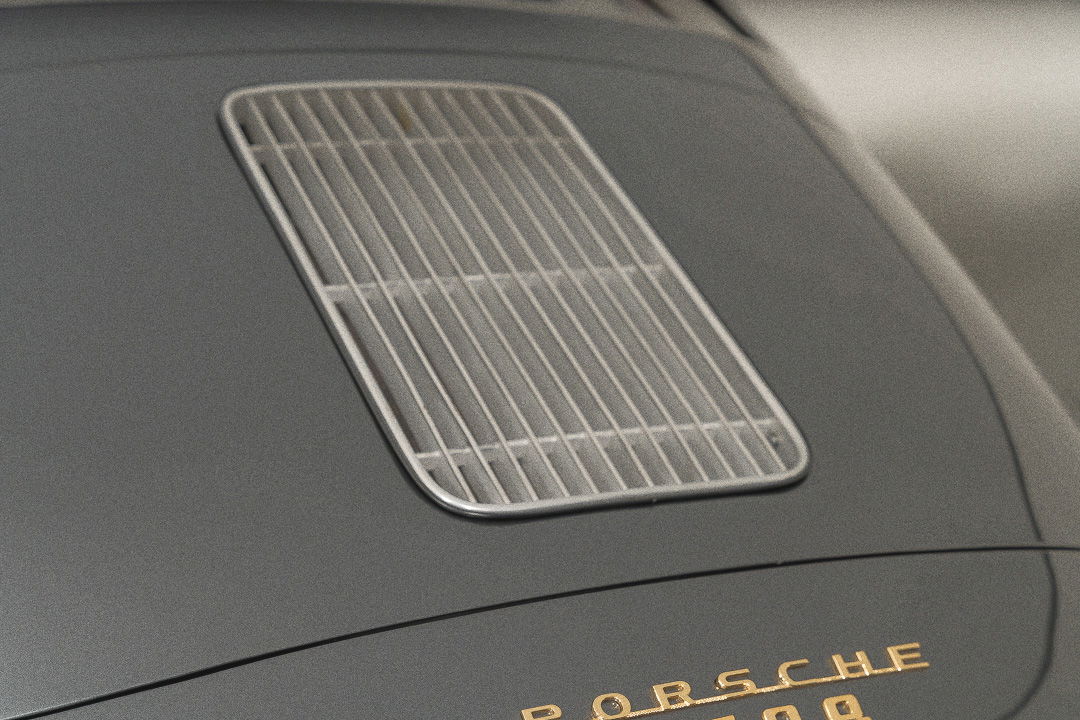
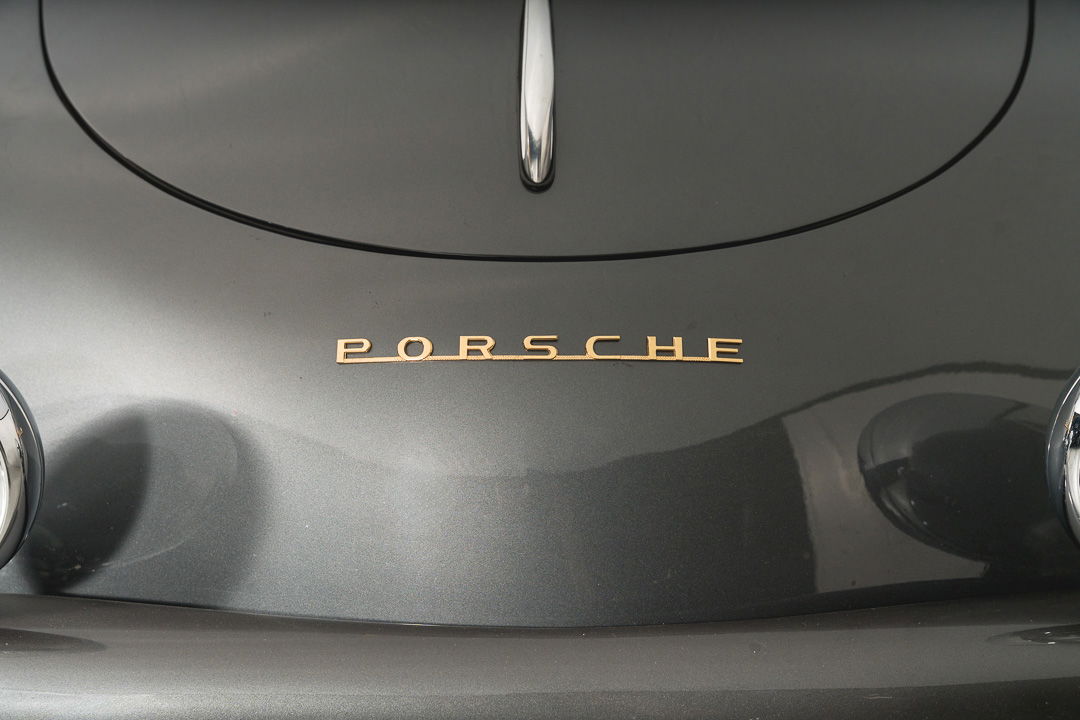
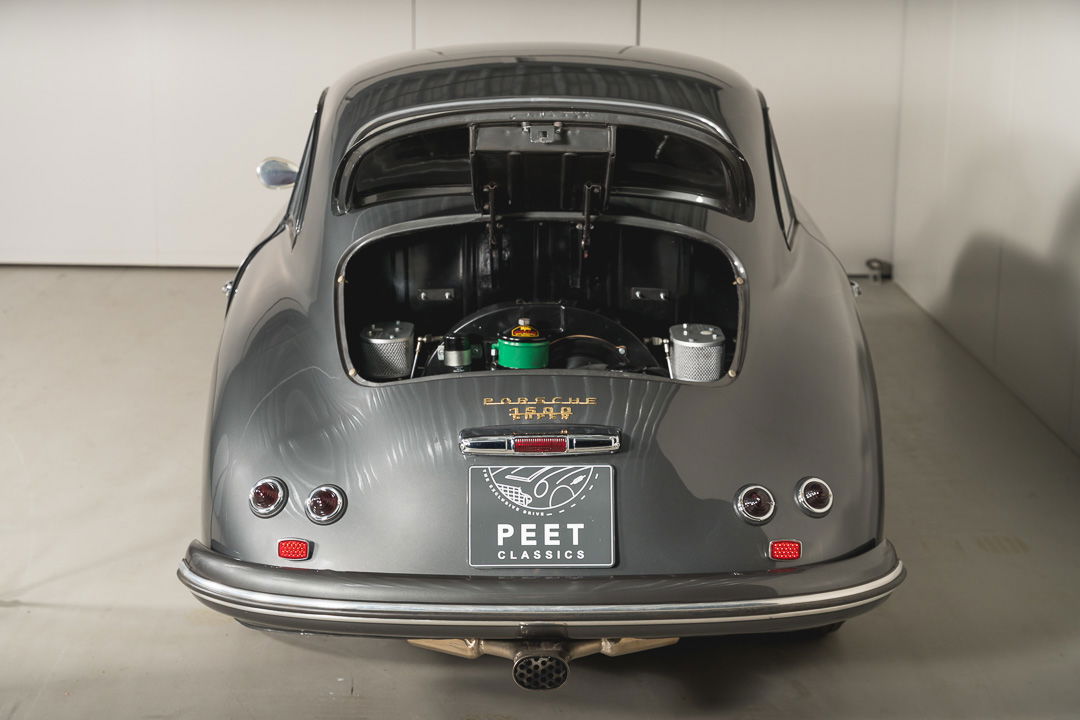
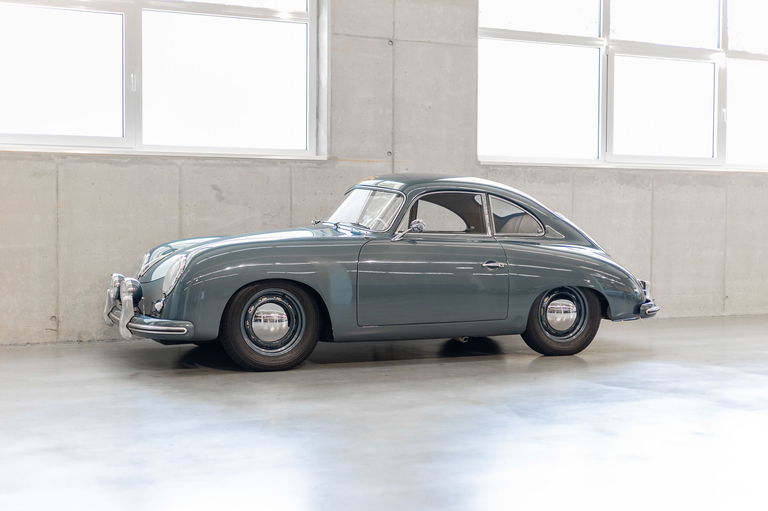
A few years ago, that moment finally arrived. There is a detailed report of the restoration, including lots of photographs and descriptions of the work carried out. After being completely stripped down, the body was sprayed in a beautiful dark grey metallic colour, which combines beautifully with the deep red leather interior. Although wider wheels are now fitted, the original white steel wheels with hubcaps are still included with the car. Special features of the Pre-A are not only the curved windscreen made from a single piece, but also the 70 hp 1500 Super engine, synchronised gearbox and black dials with green markings and hands in the interior. In keeping with the high level of finish of this 356, many original details have been restored to their former glory. The fully reconditioned and original 356 Super 90 engine delivers 120 BHP and is also used in racing in this form, which is one of the reasons why it is FIA-approved. This engine, which not only runs beautifully but also performs and sounds just as well, ensures truly formidable driving characteristics for this highly unique 356. During the restoration, the interior could not be overlooked, of course, and not only the leather upholstery but also the carpets and headlining were renewed with great attention to detail. The independent valuation recently commissioned by the current owner shows just how well the restoration has been carried out. A Porsche 356 is already a rarity in many ways, but a Pre-A Coupé in such a restored condition is even more so. And although it is easy to speak in superlatives, this is by no means an exaggeration for a car like this. The opportunity to participate in many different drives and rallies, including perhaps the coveted Mille Miglia, makes us not only very honoured but also highly motivated to find a new and equally loving owner for this simply stunning Porsche 356 Pre-A!
The car that really started it all for Porsche, was the 356. On 8 June 1948, the very first 356/1 Roadster, built in Austria, received its official type approval. This nicknamed “Gmünd Roadster”, after the town in the Carinthia region where production took place, was powered by a mere 1.1-litre air-cooled 4-cylinder boxer engine, sourced from Volkswagen. For use in the 356, power had been adjusted to a total of 35 hp. Partly because of its remarkably low weight of just 585 kilos, this first 356 still achieved a top speed of about 135 km/h. The original 356, also known to connoisseurs as “pre-A”, is easily identifiable by its split windscreen. From mid-1952, this was replaced by a curved windscreen, made out of one piece of glass. After Porsche had built around 50 356s in Gmünd, production was moved to Zuffenhausen, in Germany. Not only did the factory move, but from the moment the 356’s bodywork was built in Germany, it was no longer made of aluminium, but from more conventional steel. The spiritual father of the 356 was Ferdinand, nicknamed “Ferry”, Porsche. Ferry was the son of Ferdinand Porsche, the actual founder of the sports car brand that later became so famous. According to tradition, Ferry Porsche took his inspiration from his then Volkswagen Convertible, which was equipped with a mechanically driven supercharger. He discovered that a relatively small car, provided with sufficient power, offered more driving pleasure than a large car equipped with an engine with an abundance of power. The 356 would be produced in 4 different series. These were respectively the “pre-A”, the 356 A, 356 B and from the mid-sixties, the 356 C. Of all series, besides of course the Coupé version, there were also open models available, in Cabriolet, Roadster and Speedster variants. From the 356 A, which was delivered from the end of 1955, there was the option of ordering the new Carrera engine, known for its 4 overhead camshafts, which with an output of 100 hp was significantly more powerful than regular power. The 356 B followed in the Autumn 1959, identifiable by a front bumper with larger bumper rosettes and headlights which where placed higher in the bodywork. The horn grilles were also different from before, as was the front lid handle, which was now wider at the bottom. The final appearance of the 356, the 356 C, was, apart from the fitting of disc brakes all round and a more powerful engine, largely identical to the 356 B. With a total of over 76,000 356s produced, production came to an end in 1965, partly because of the recently launched 911.
















 1953
1953 
 1955
1955 
 1953
1953