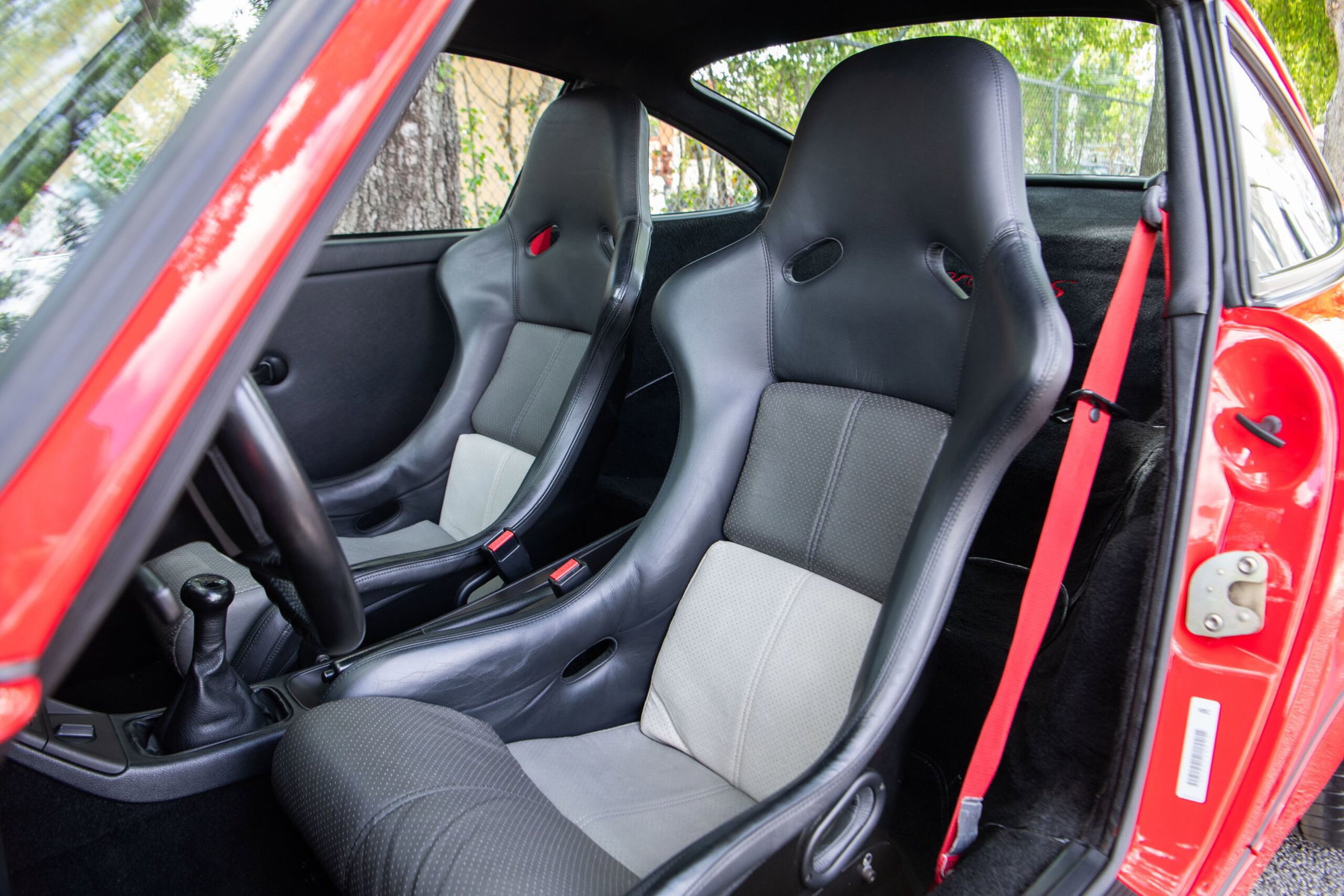
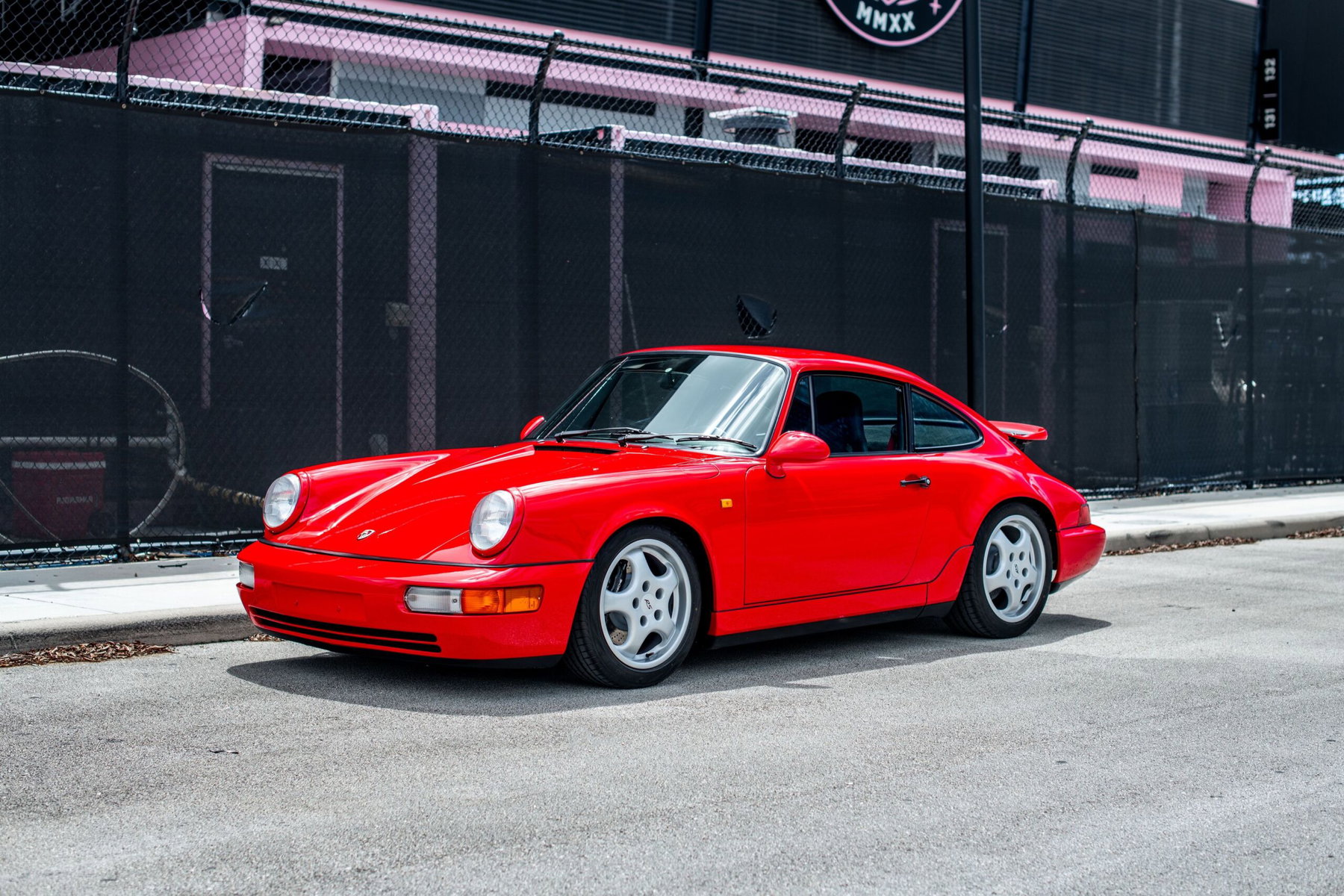
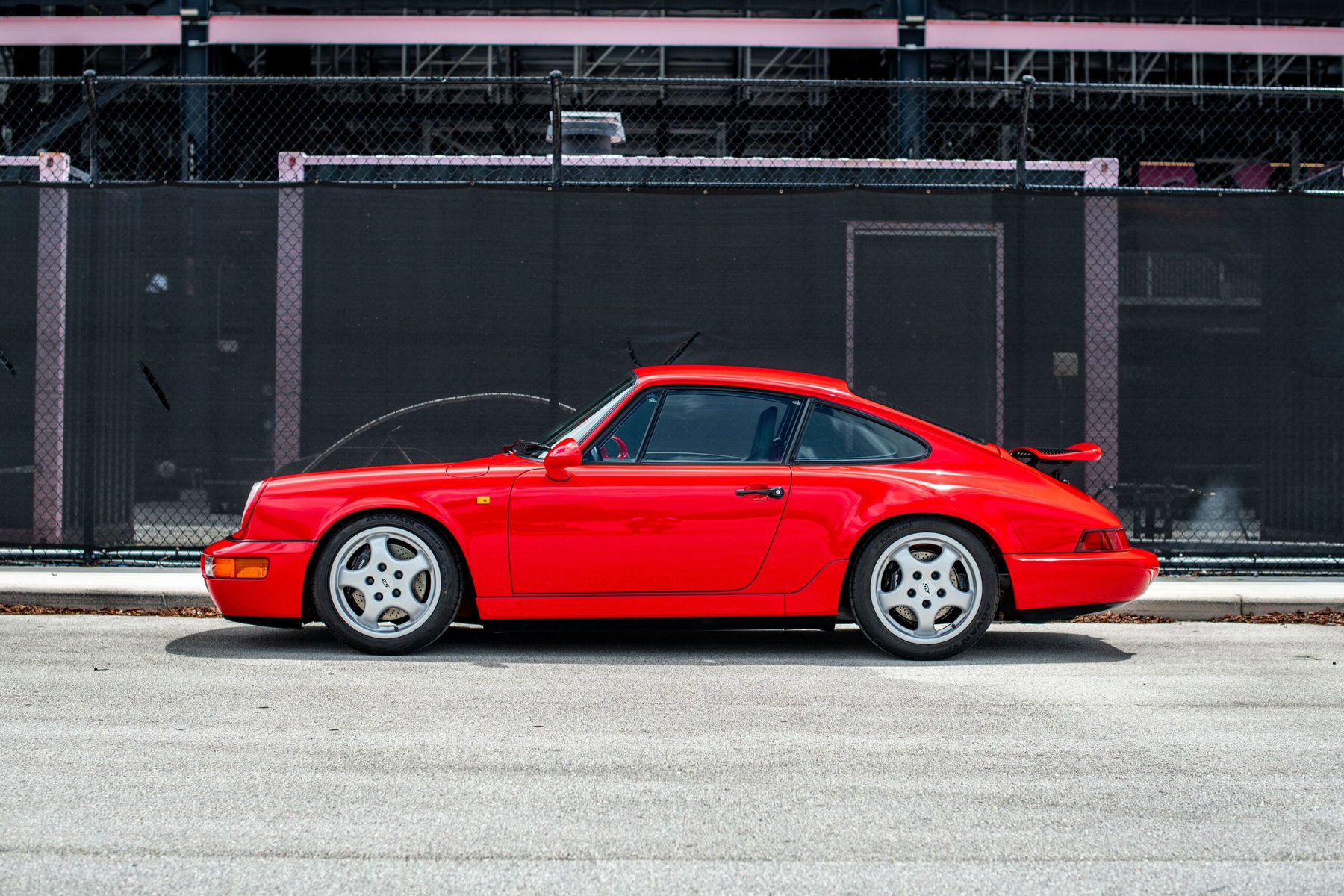
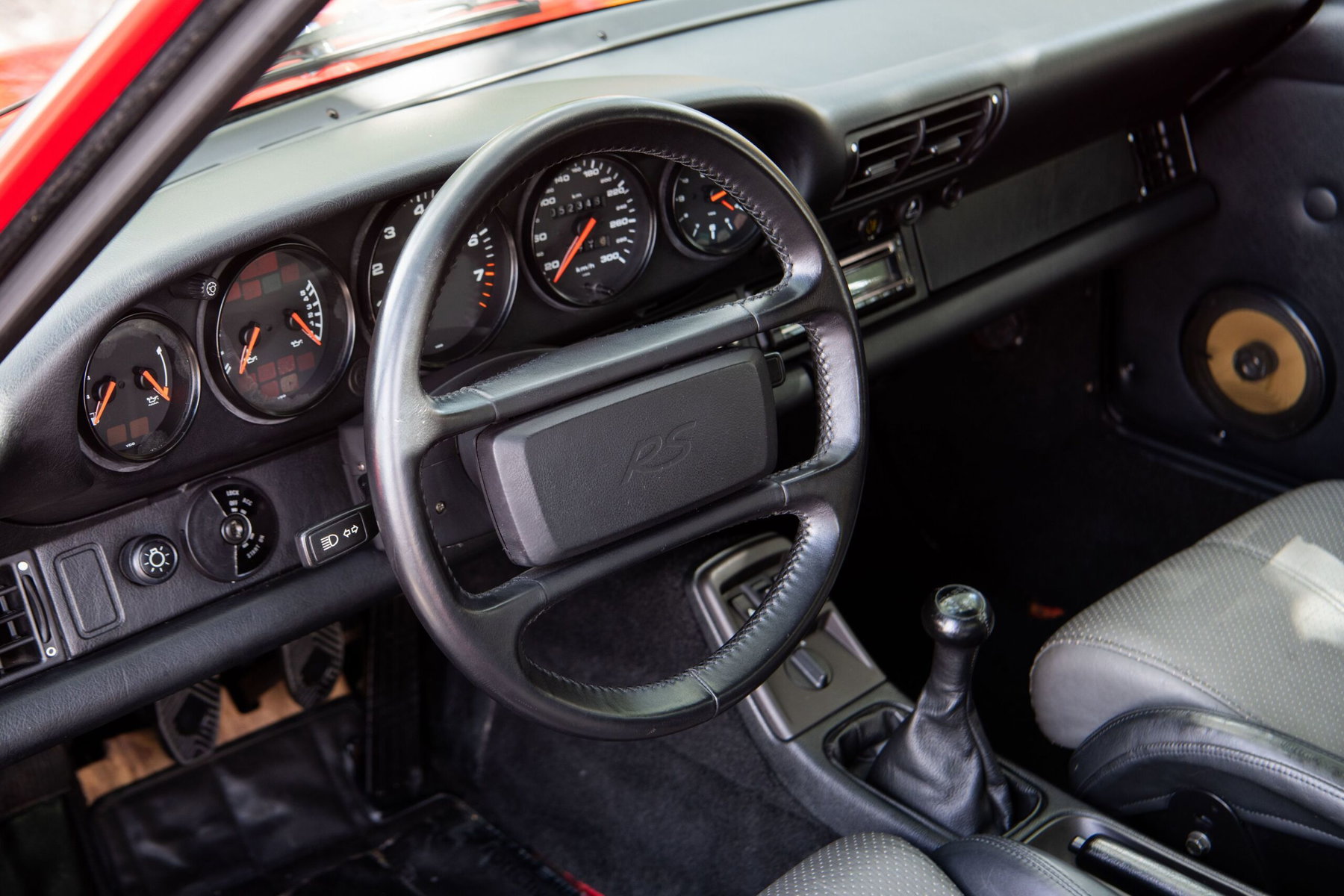
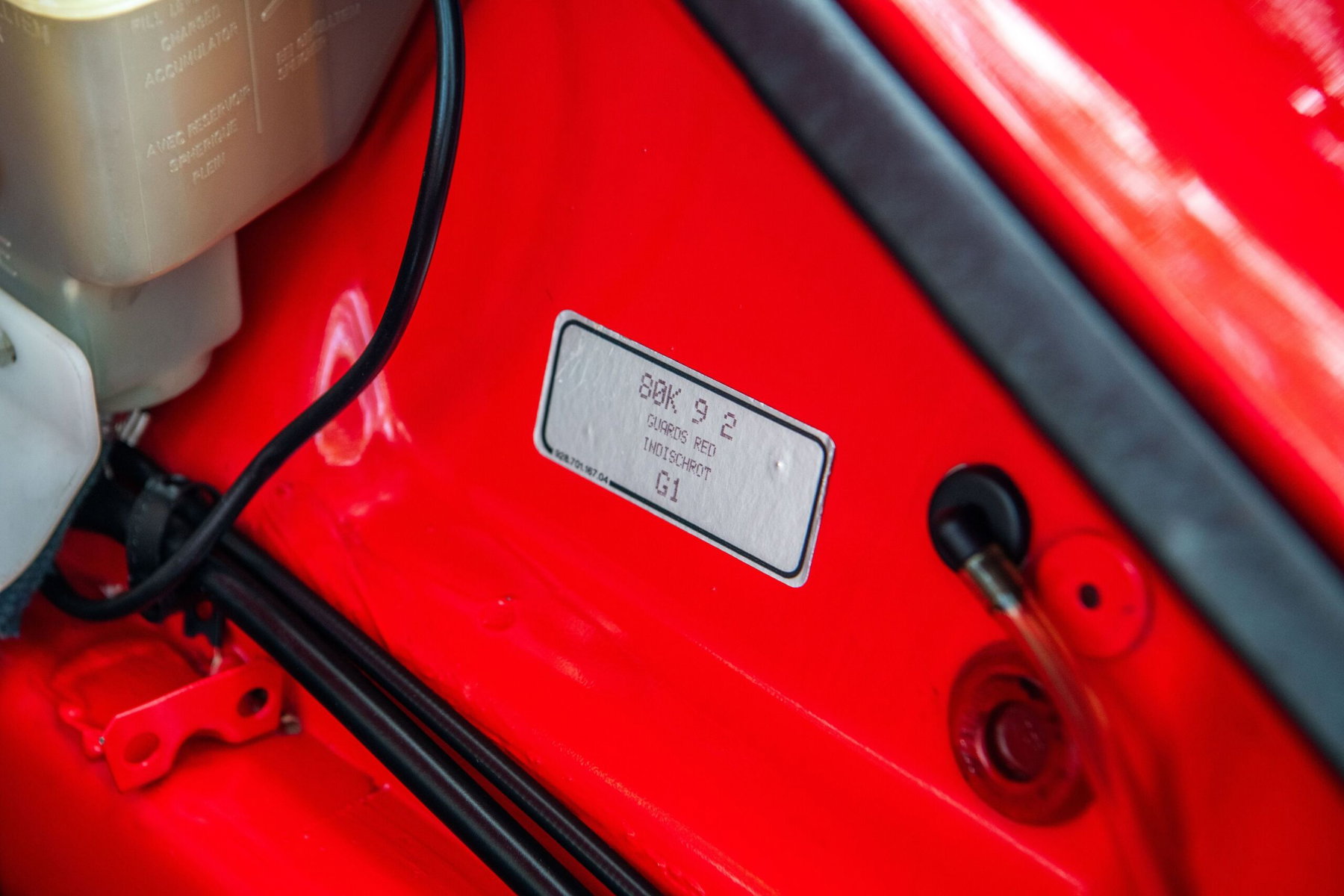
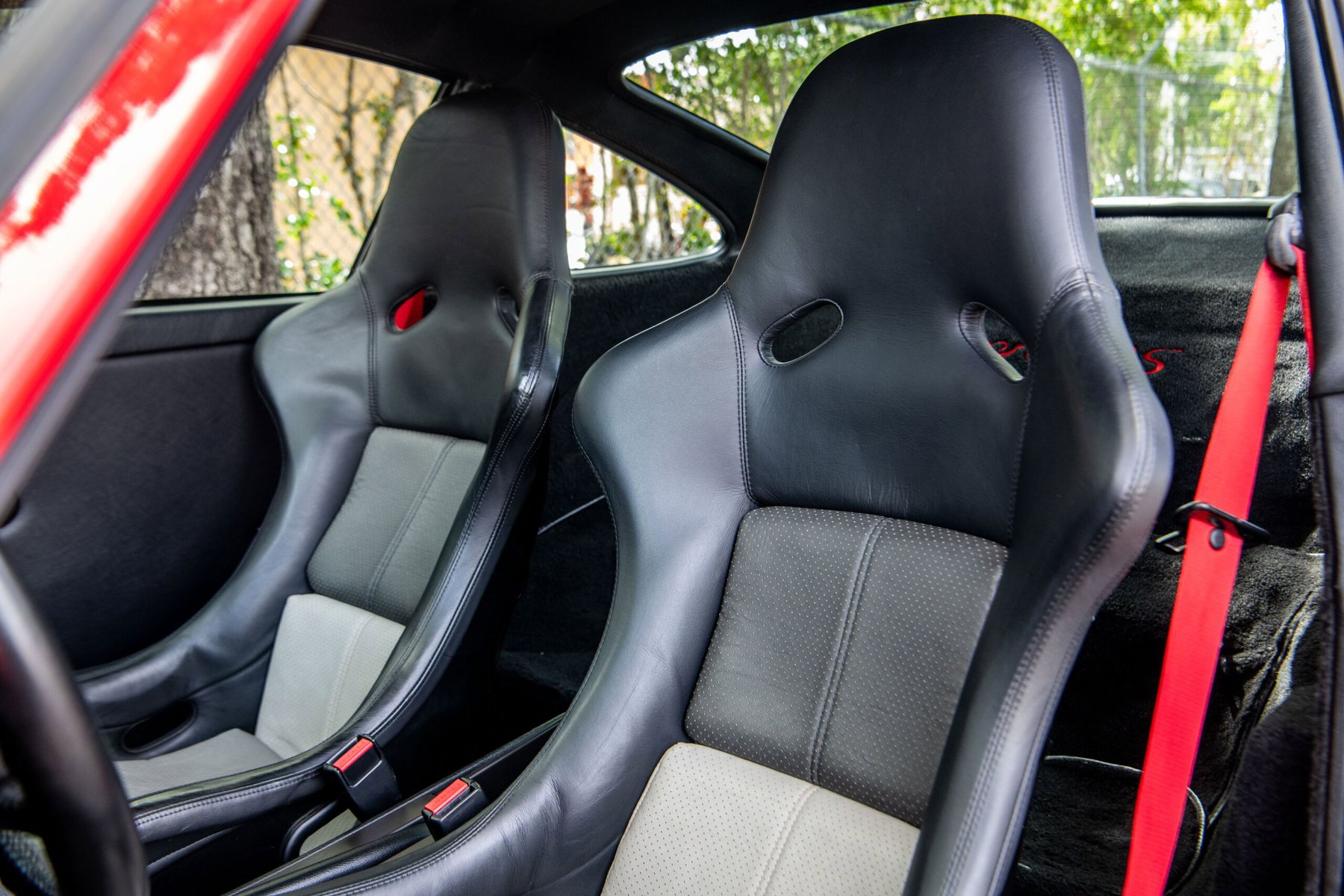
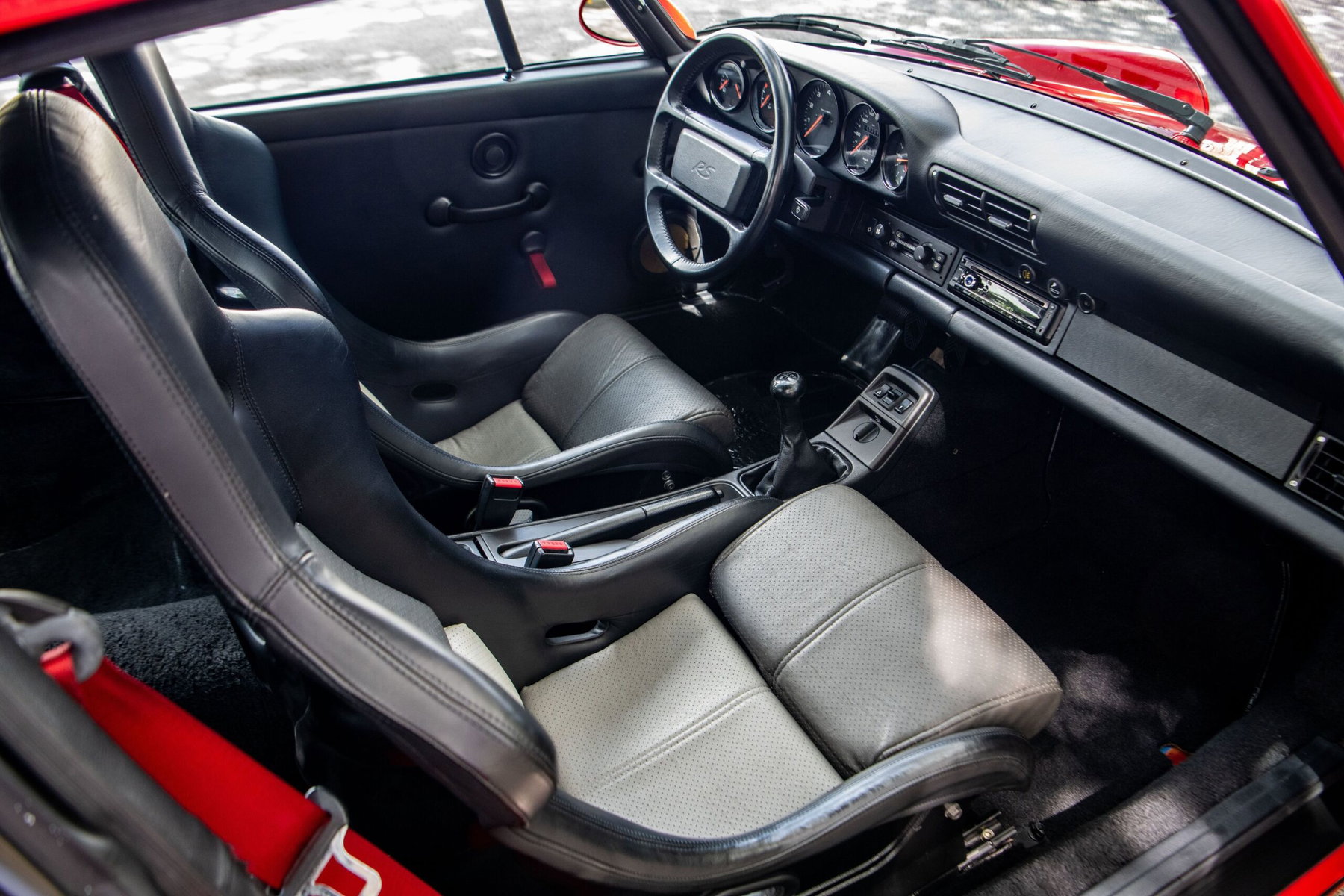
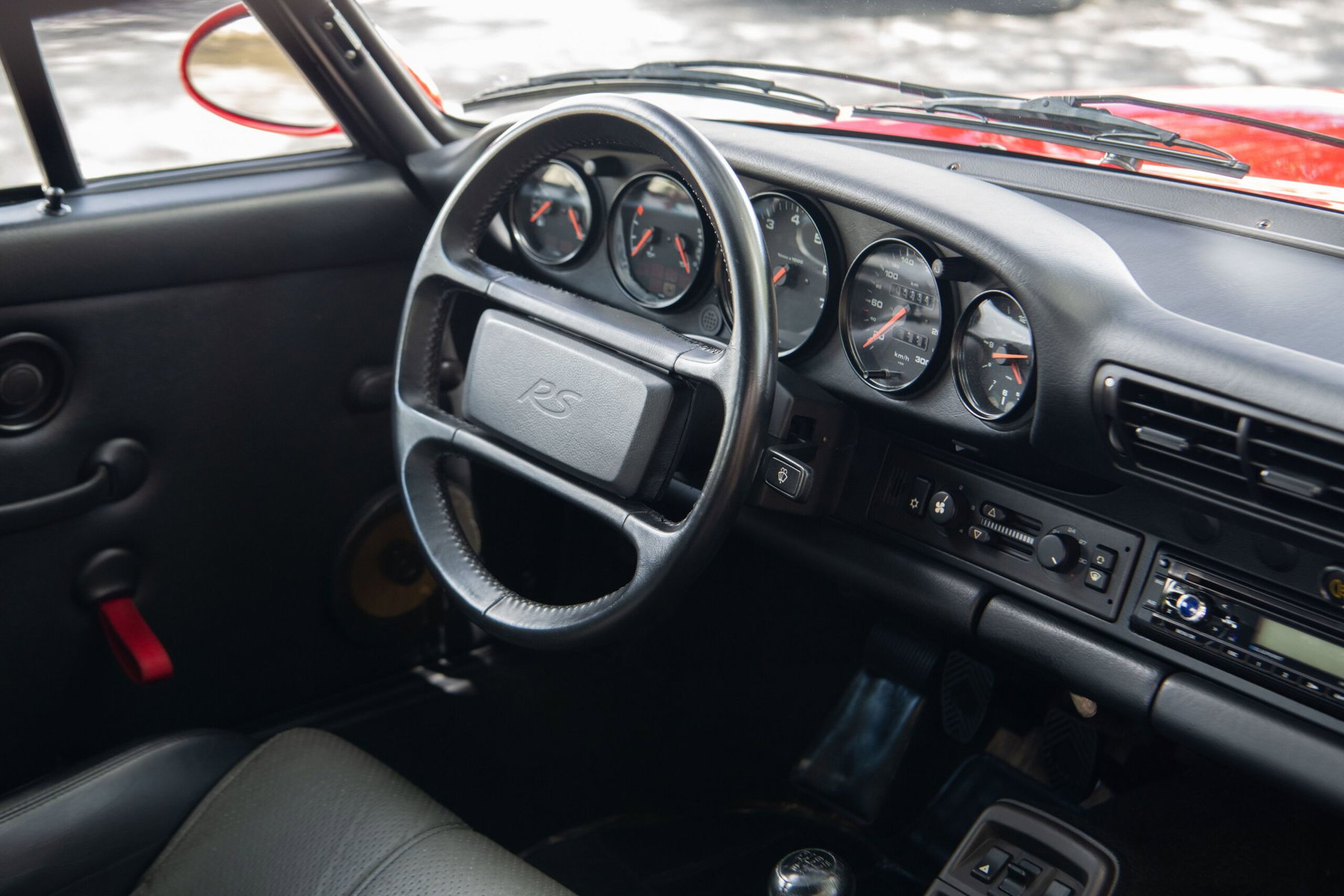
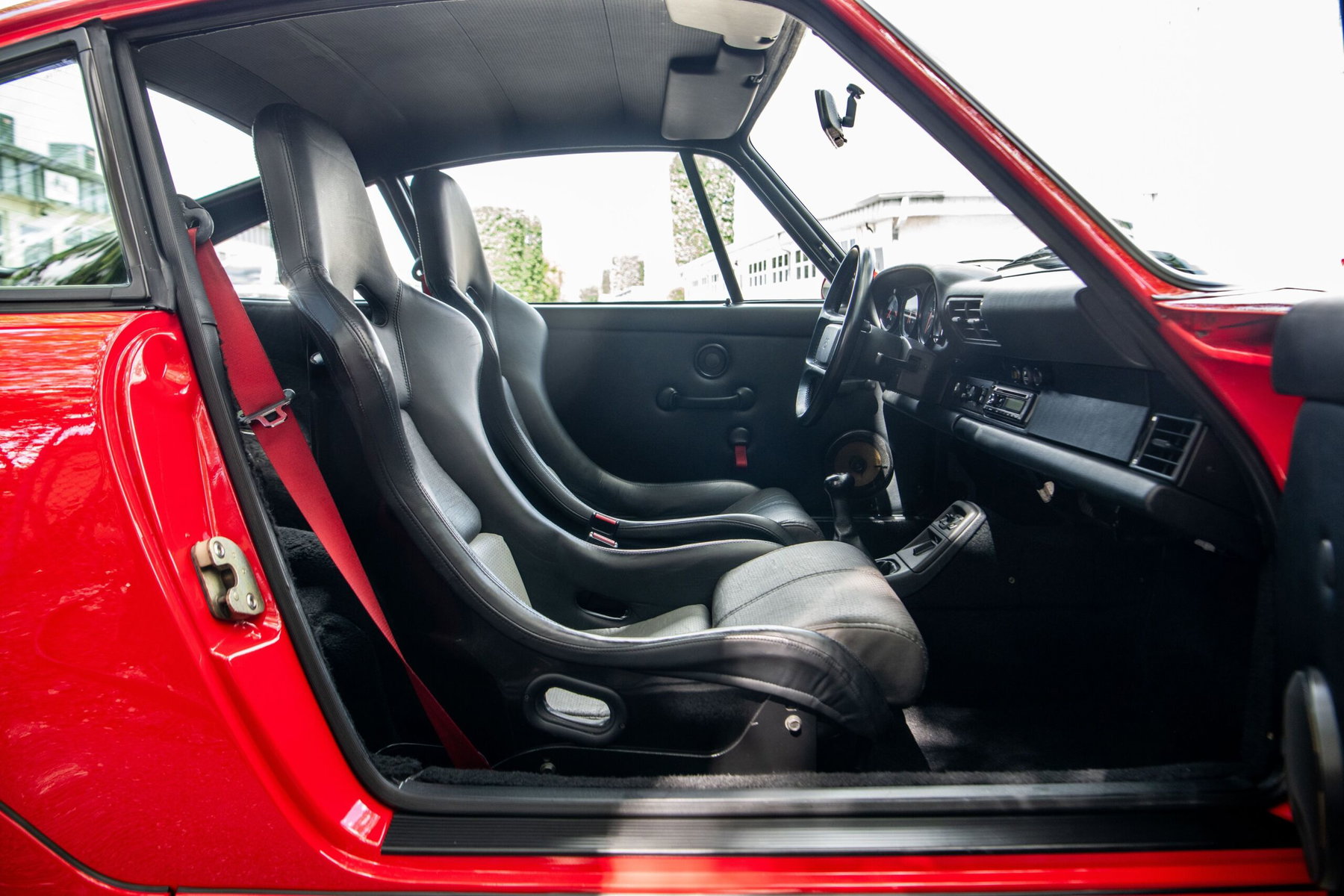
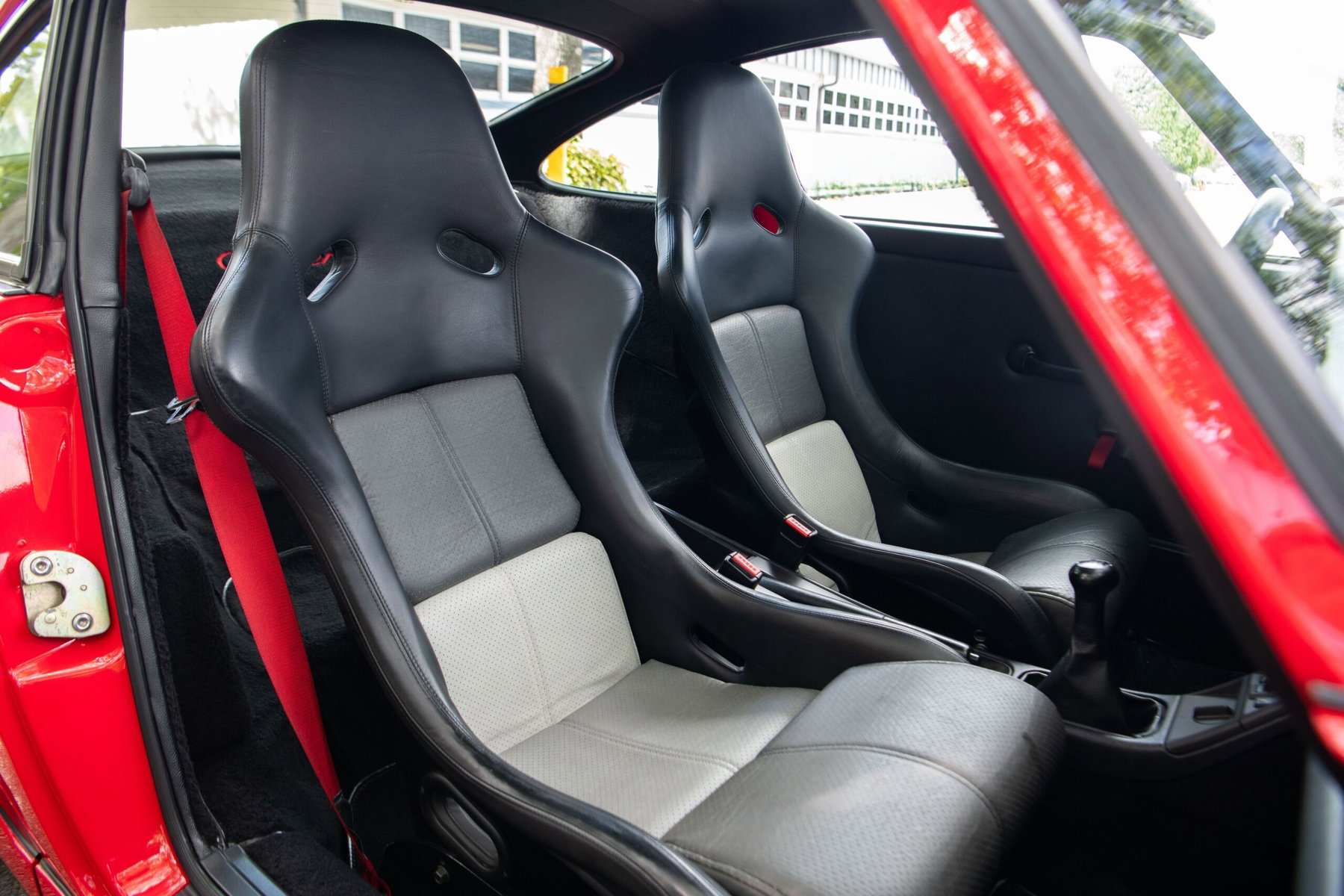
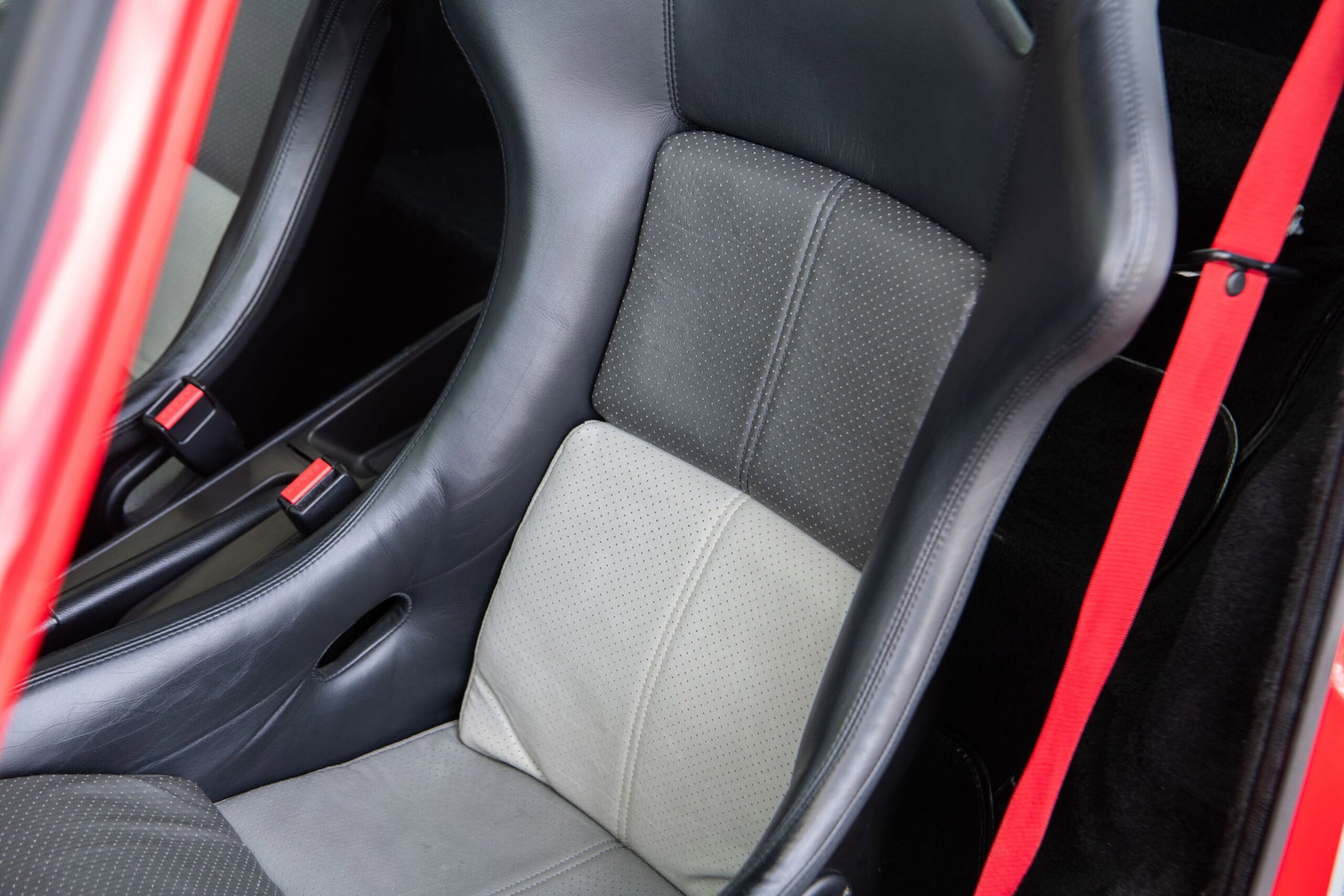
The stripped-down interior fitted with factory Recaro bucket seats and minimally equipped door cards, with tether strap door releases, shows the effort kept in creating a competition focused RS for the road by offering only the essentials for a pure driver focused experience. Mirroring its exterior, the cabin presents in excellent condition, only showing minimal wear on the driver’s seat bolster, and is otherwise beautifully well kept. The red seat belts are a nice touch to match with the Guards Red livery. The car is accompanied by its owner’s manual, tool kit, service records, export documents, and a Porsche Production Specification Certificate.
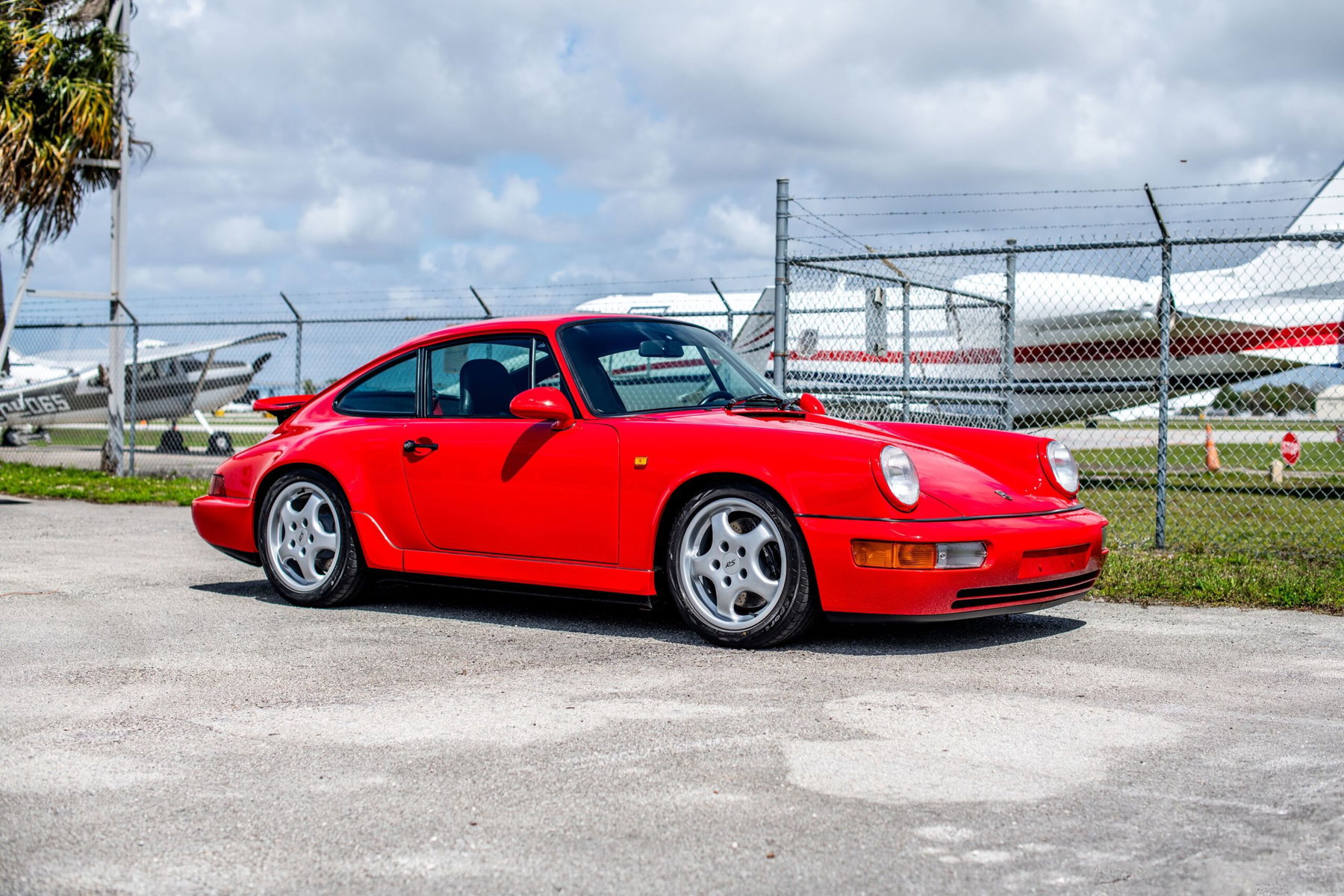
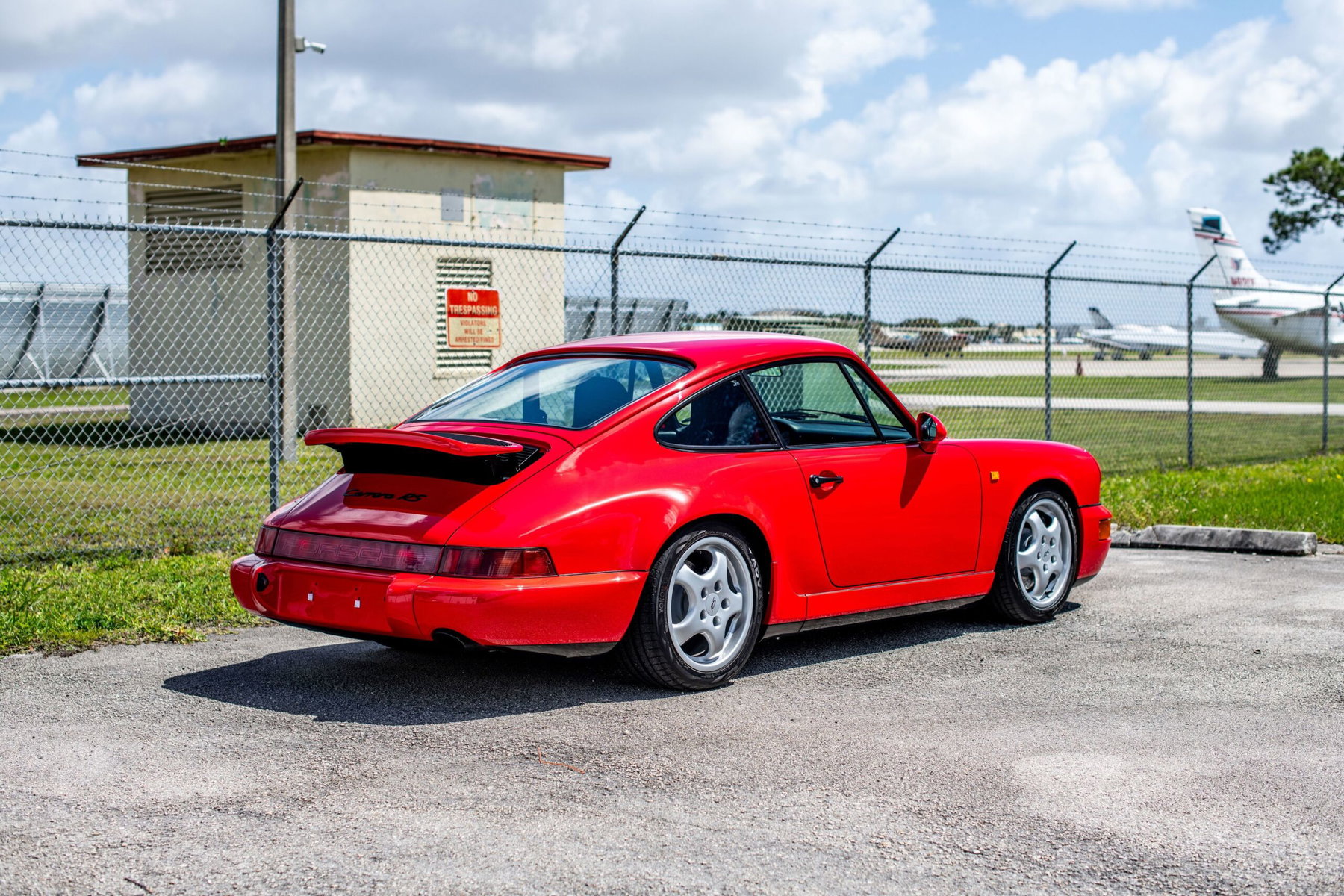
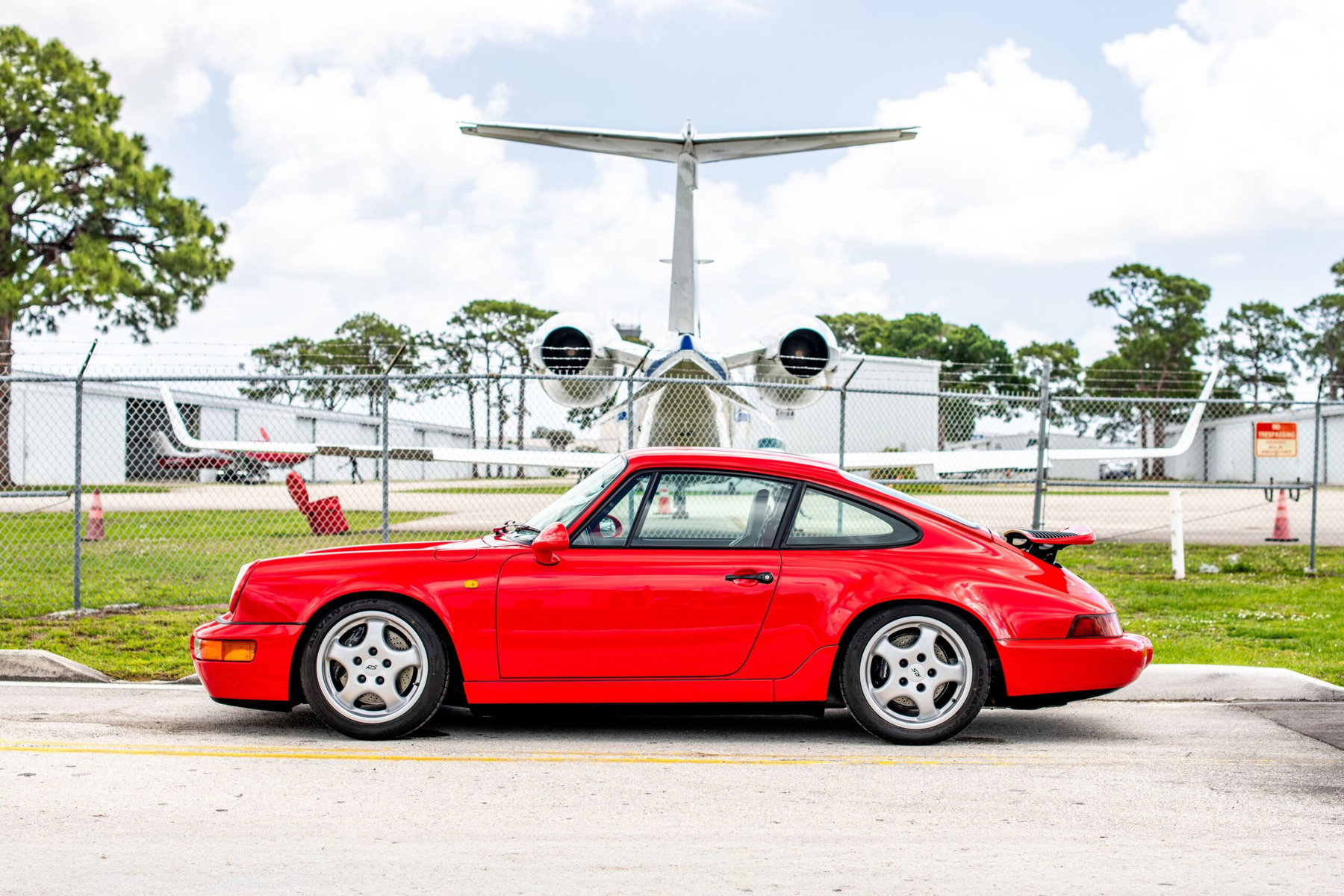
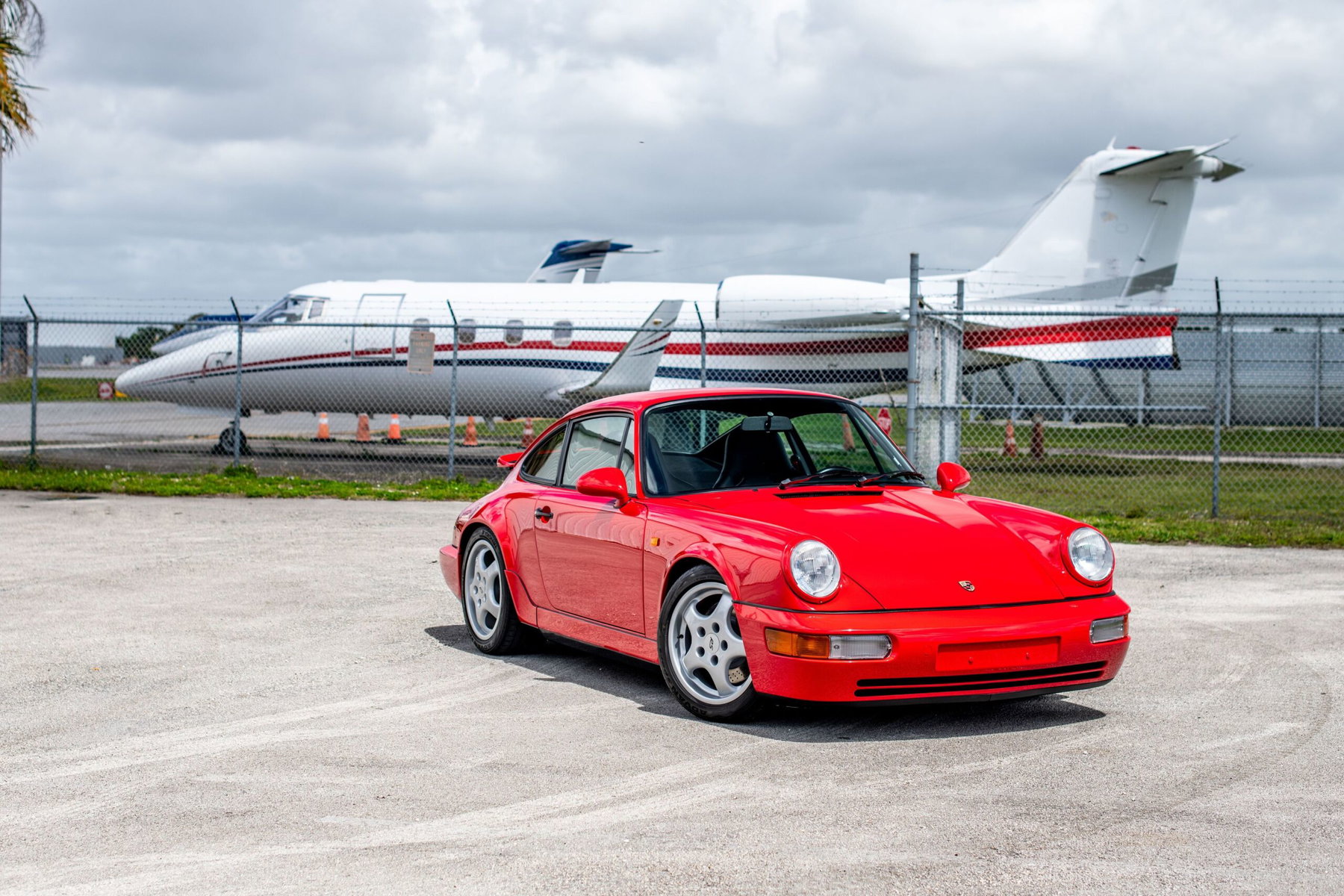
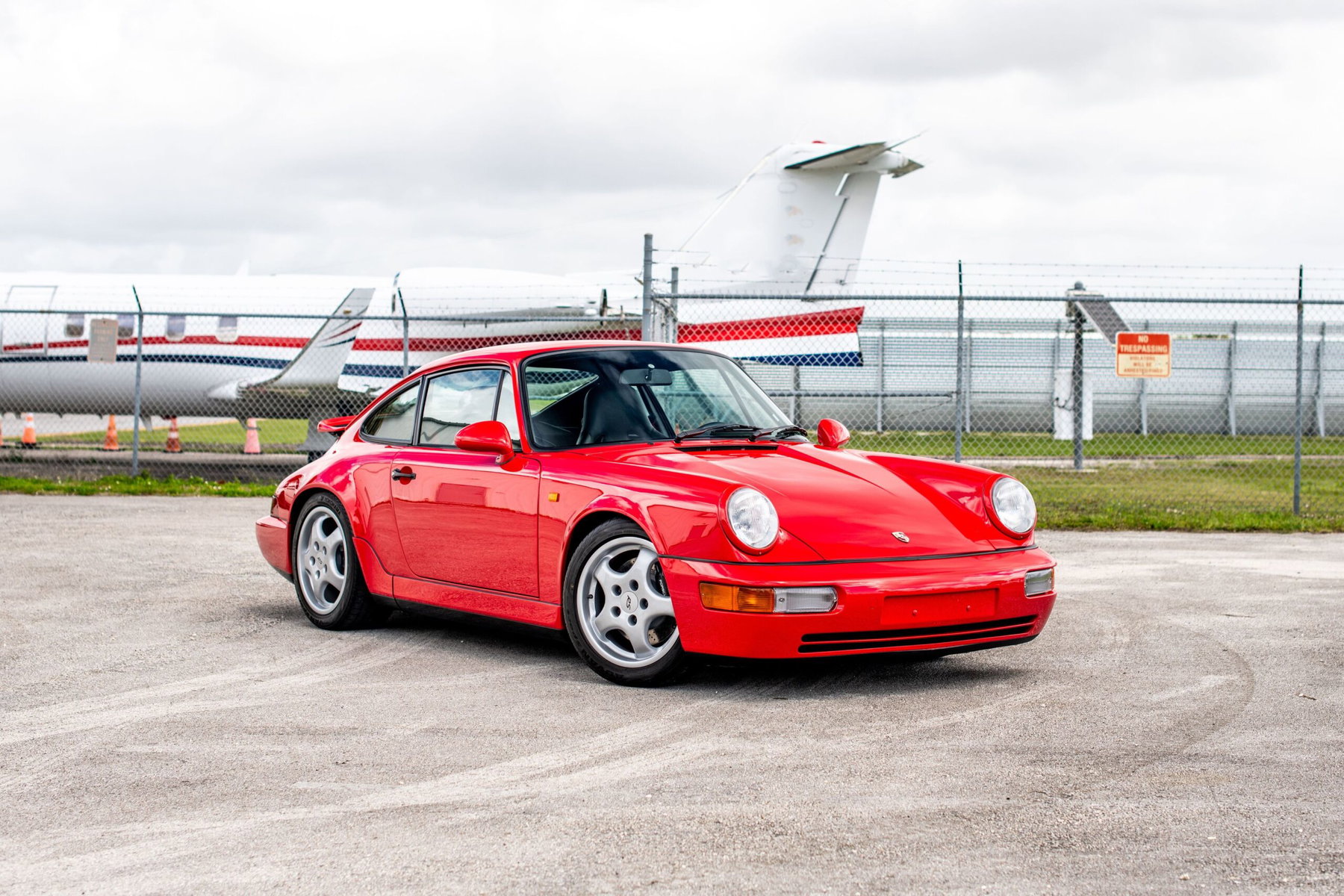
It is often argued that the best Porsches are the lightweight, track-ready variants, and many would argue that the Carrera RS is the most exciting and analog of the 964 generation. Being offered today, this low-mileage example will not disappoint, providing a pure, unhindered driving experience. With the foundation set in Porsche’s legendary motorsports history, this competition derived Carrera RS continues to increase in collectability as low mileage examples such as this are becoming increasingly harder to find.
THE PORSCHE 964 CARRERA RS
‘What the RS has done is take the technical brilliance of the latest Carreras and put back the missing excitement of some earlier, less pampering generations.’ – Brian Laban, Performance Car magazine.
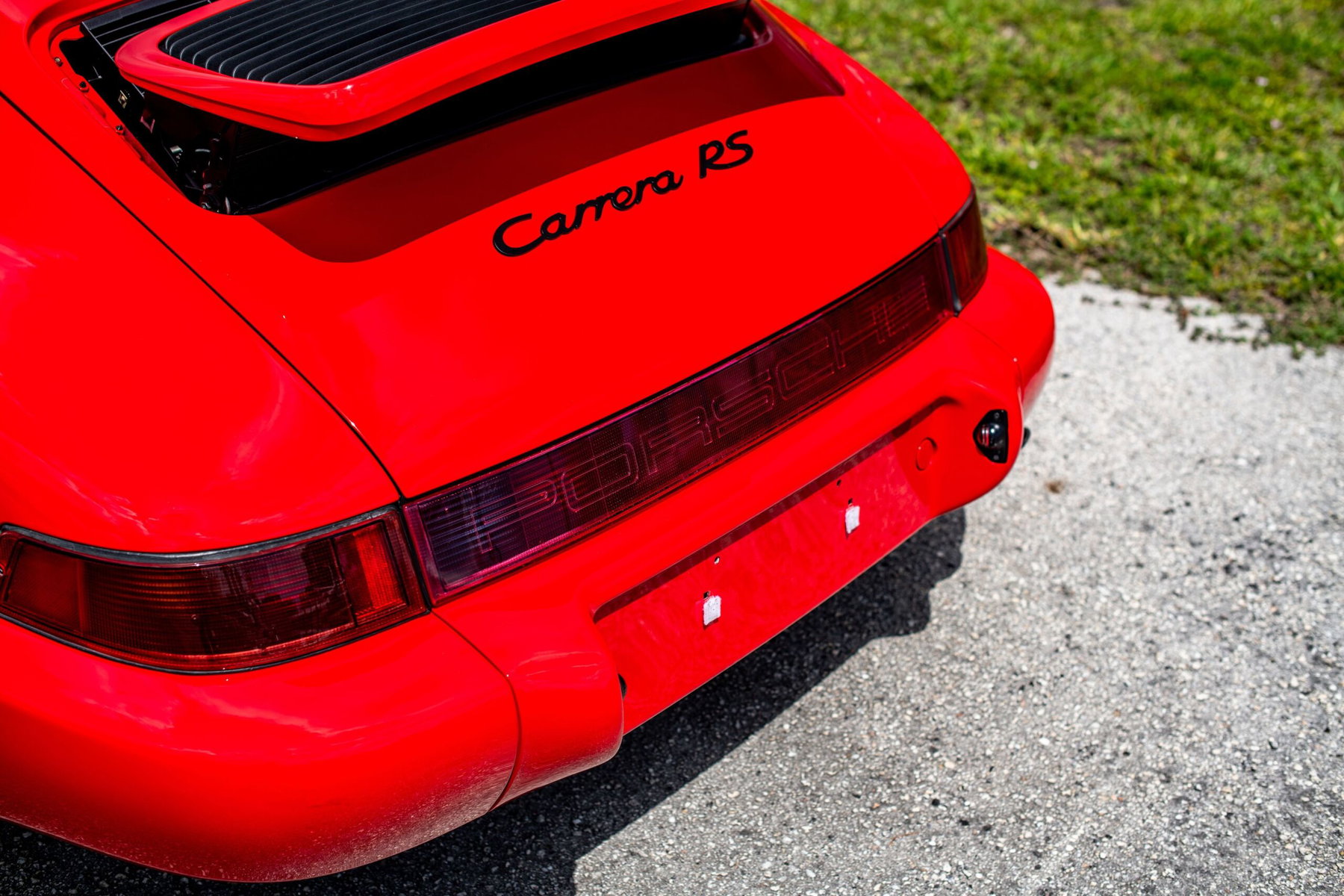
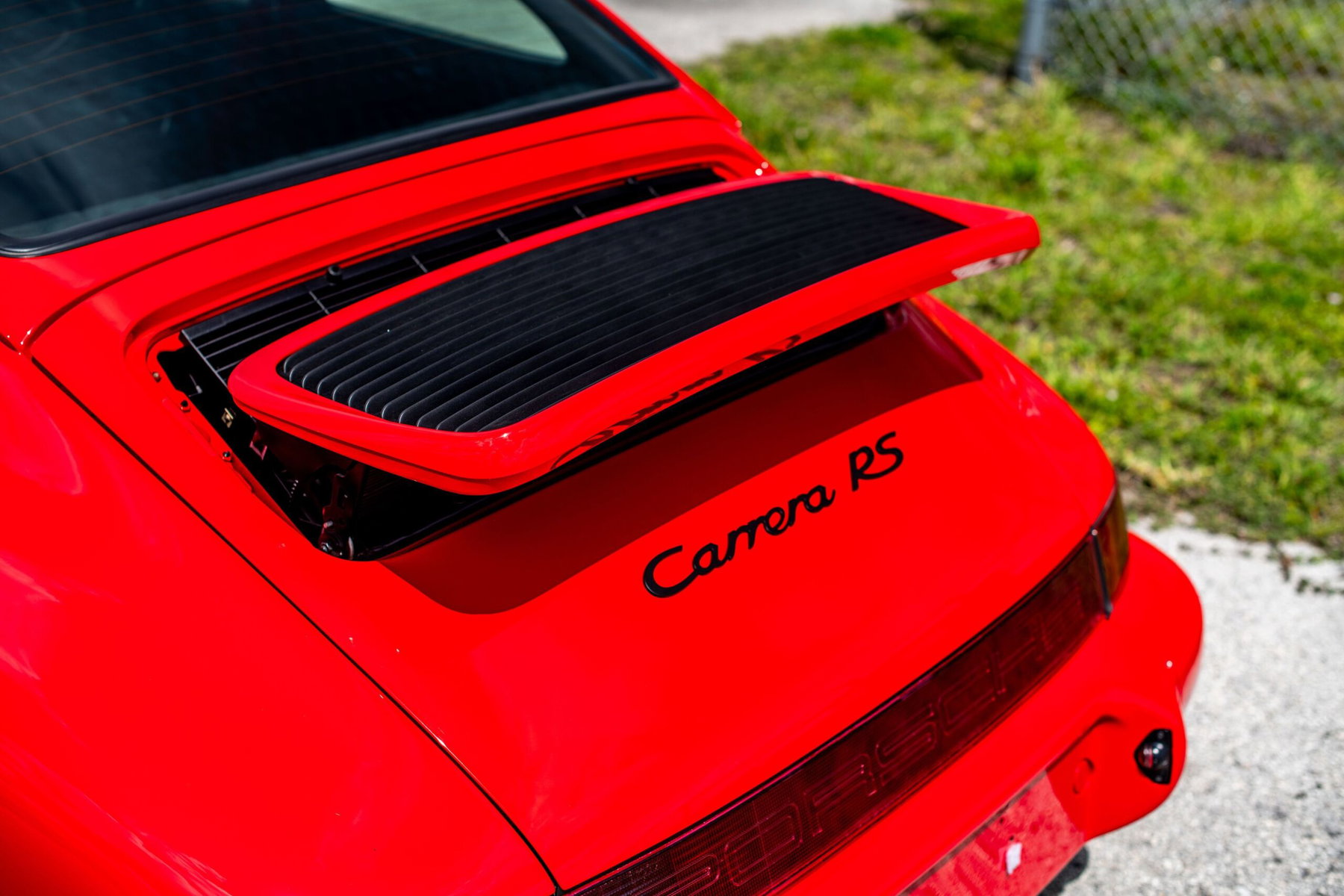
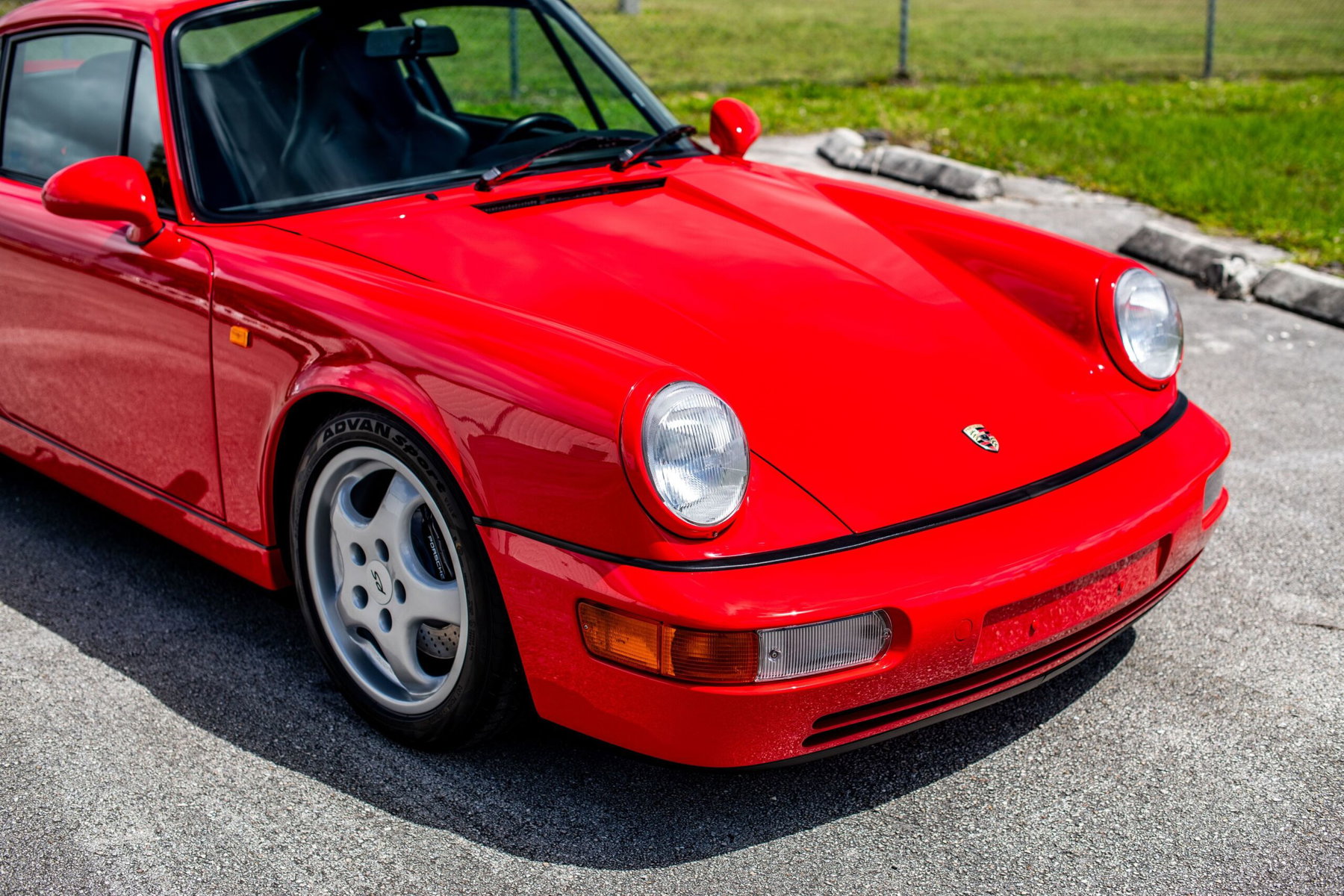
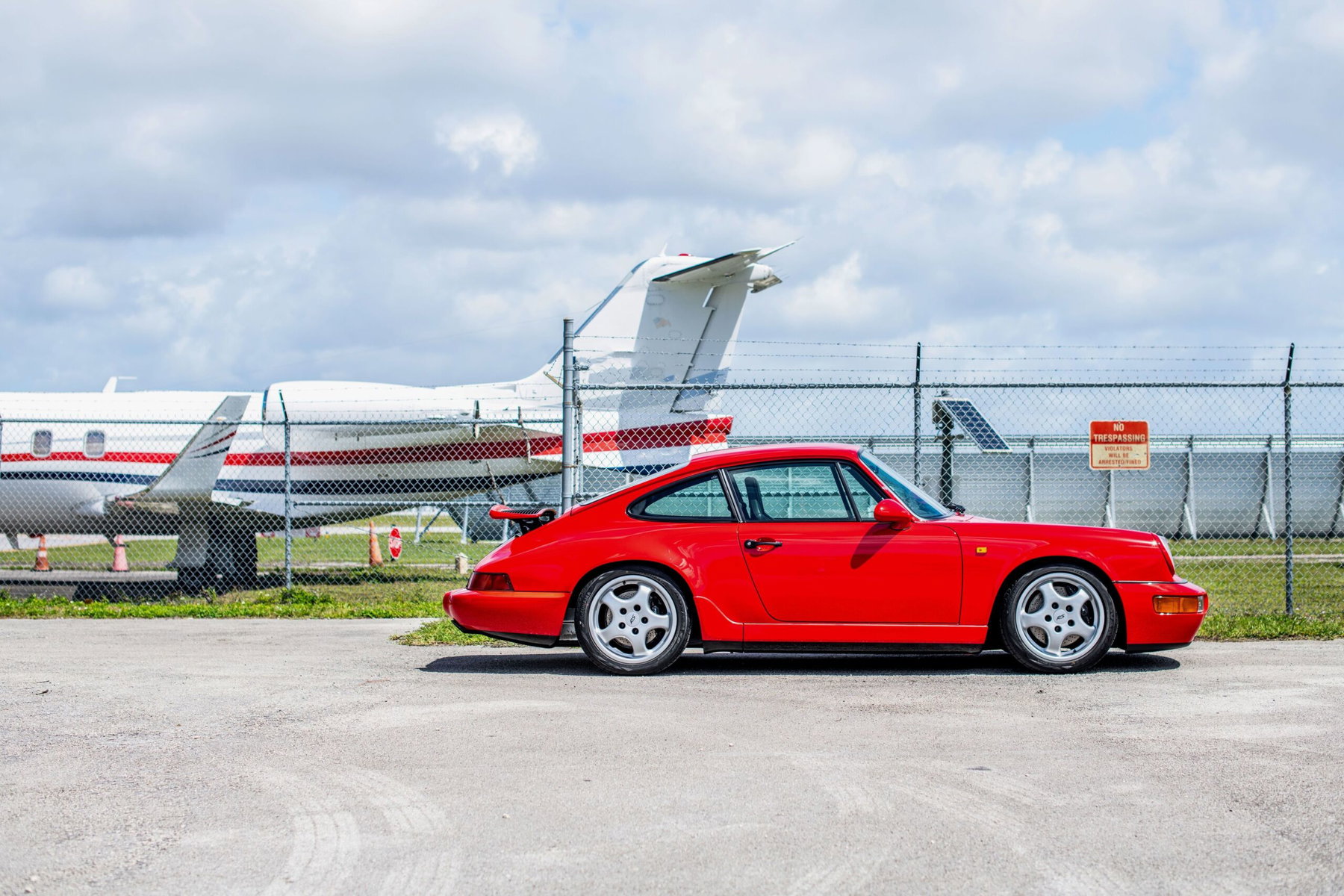
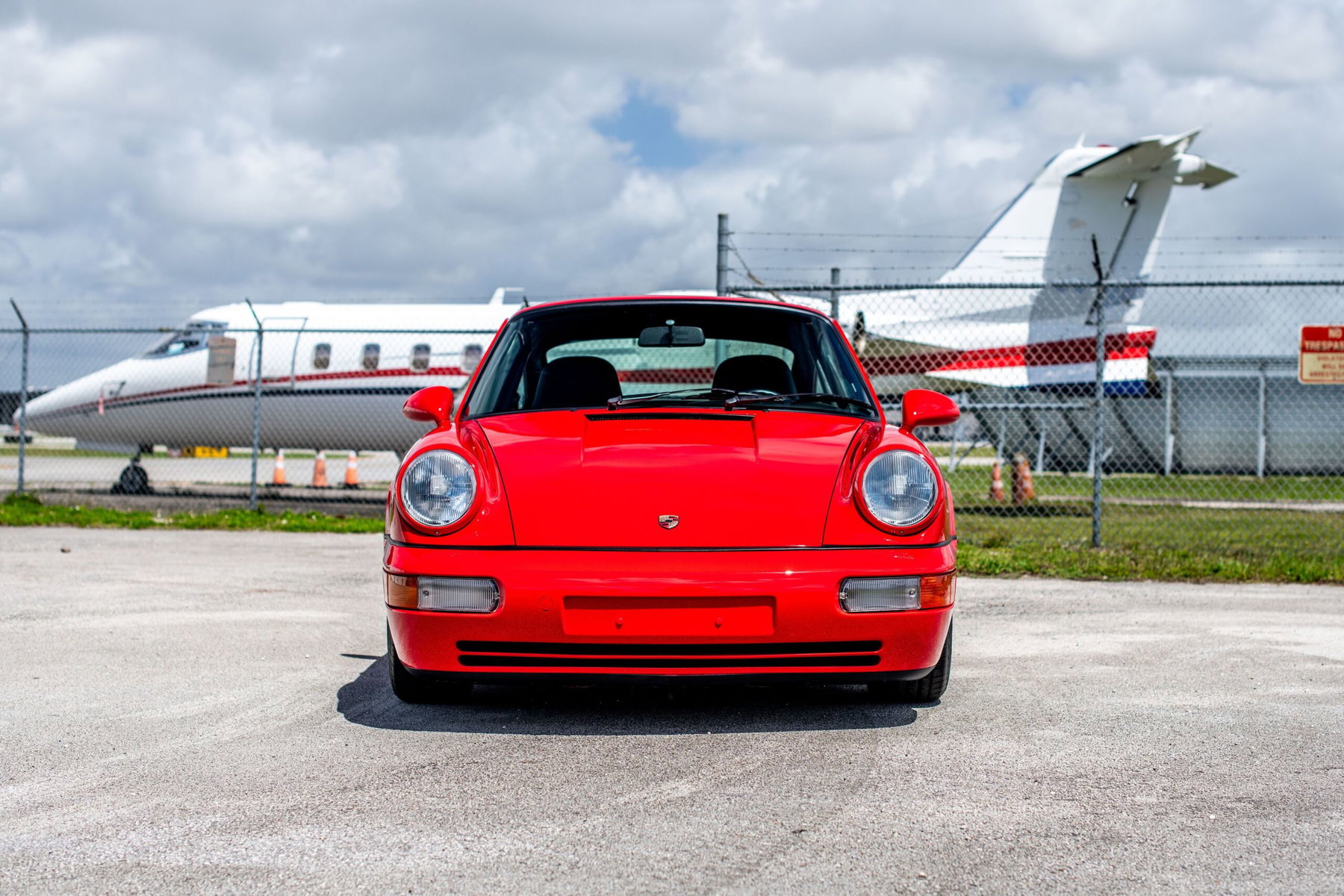
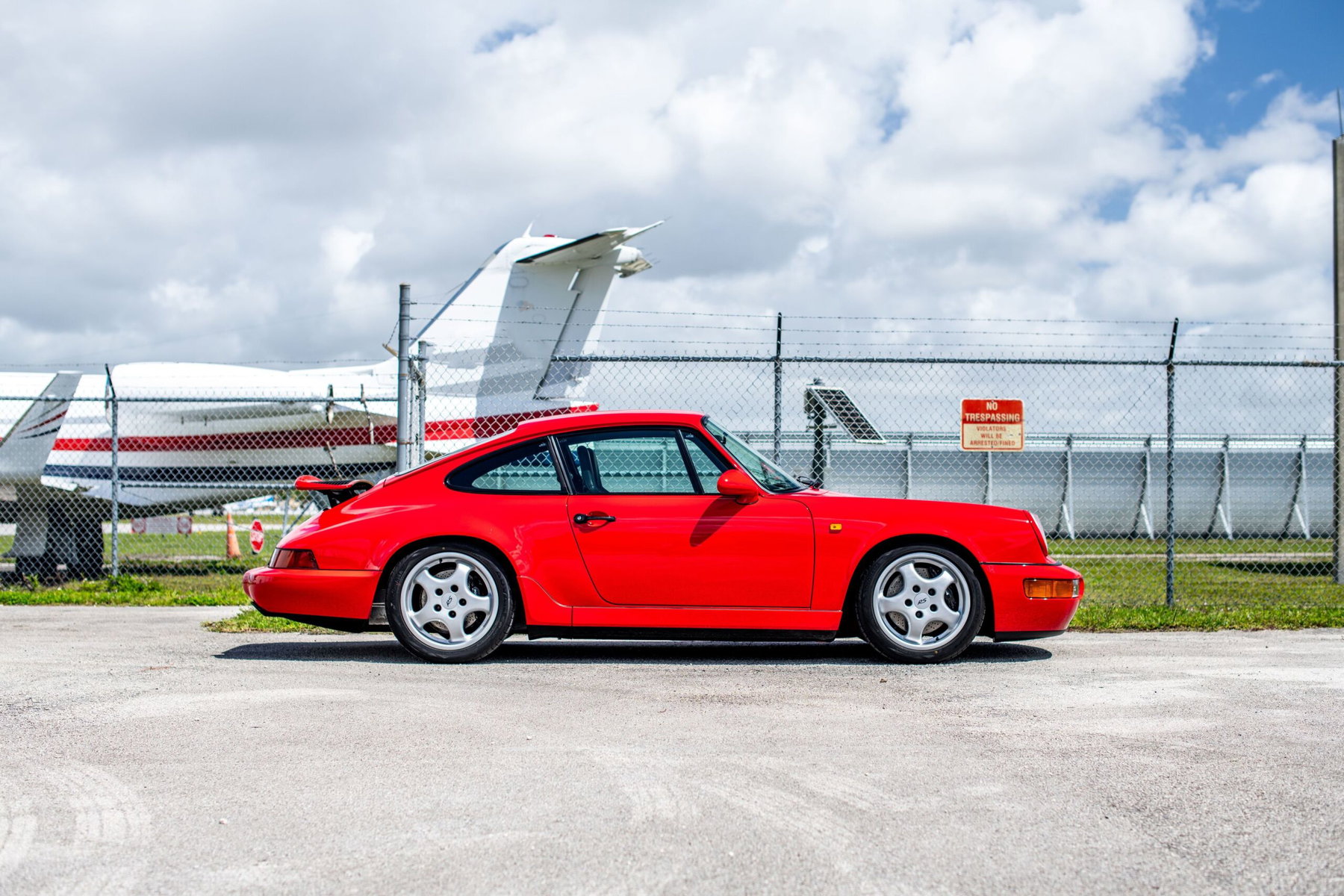
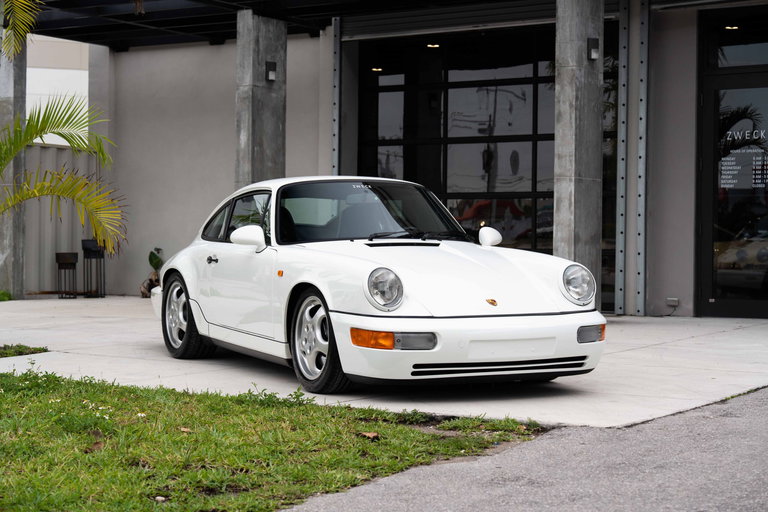
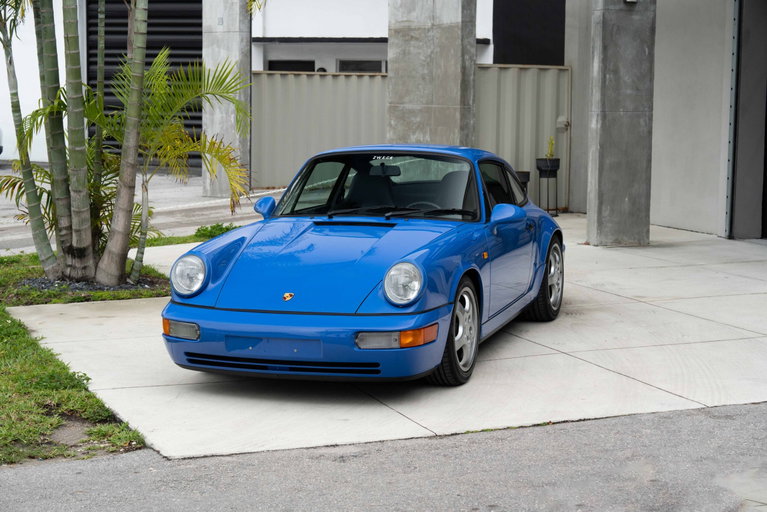
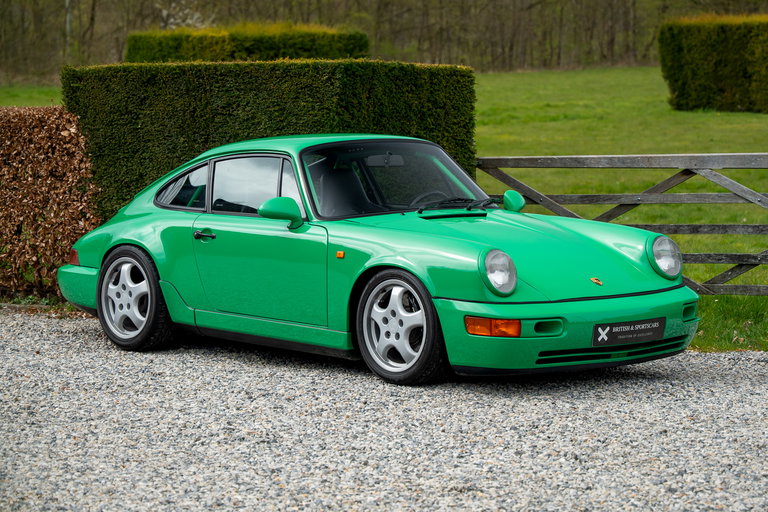
Evoking memories of the legendary 2.7 and 3.0-liter RS and RSR ‘homologation specials’ of the 1970s, in 1991 Porsche introduced the Type 964 Carrera RS. A lightweight variant like its illustrious forebears, the beautiful newcomer was based on the ‘Carrera Cup’ competition car and sold in Europe only, though there was a lower-specification ‘RS America’ for the United States market. There was also a Touring version that kept most of the road equipment fitted to the standard Carrera.
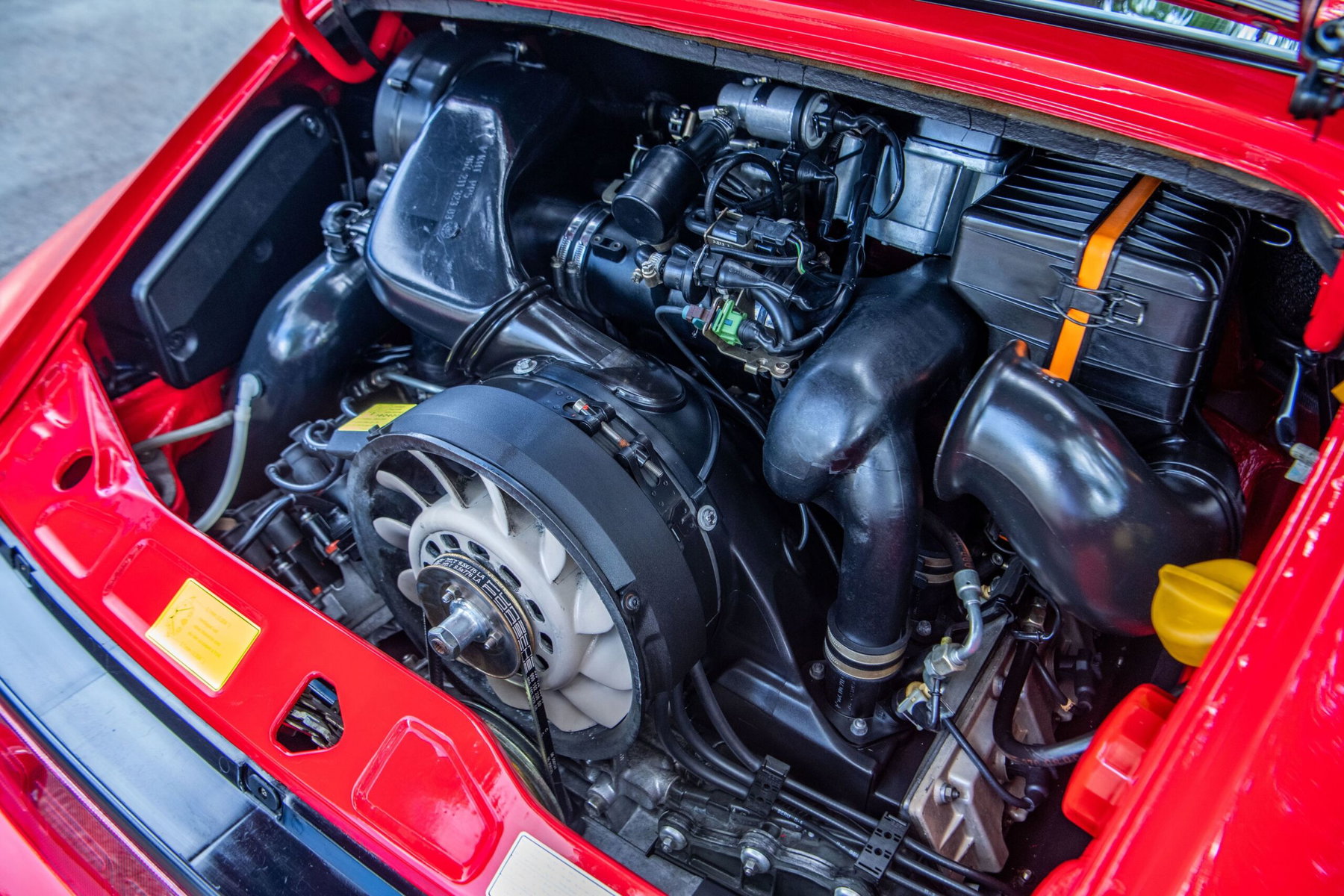
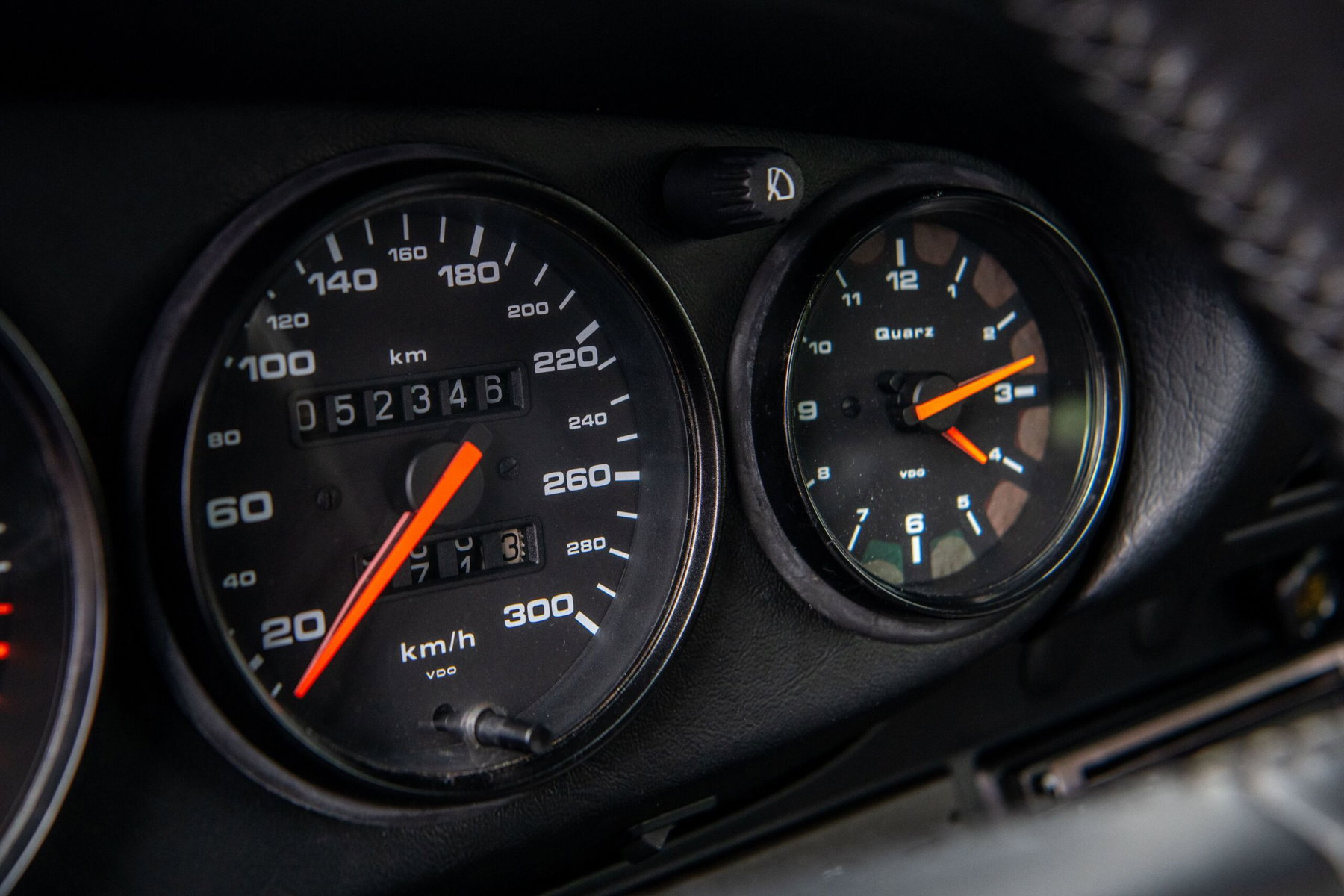
The Carrera RS retained the 3.6-liter engine, albeit boosted in maximum output to 260bhp and equipped with a lightened flywheel for improved response. The G50/10 five-speed transmission featured closer ratios, an asymmetrical limited-slip differential, and steel synchromesh, while the suspension was lowered and stiffened. The 0-100km/h time dropped to 5.4 seconds, and the Carrera RS had a top speed of 260km/h.
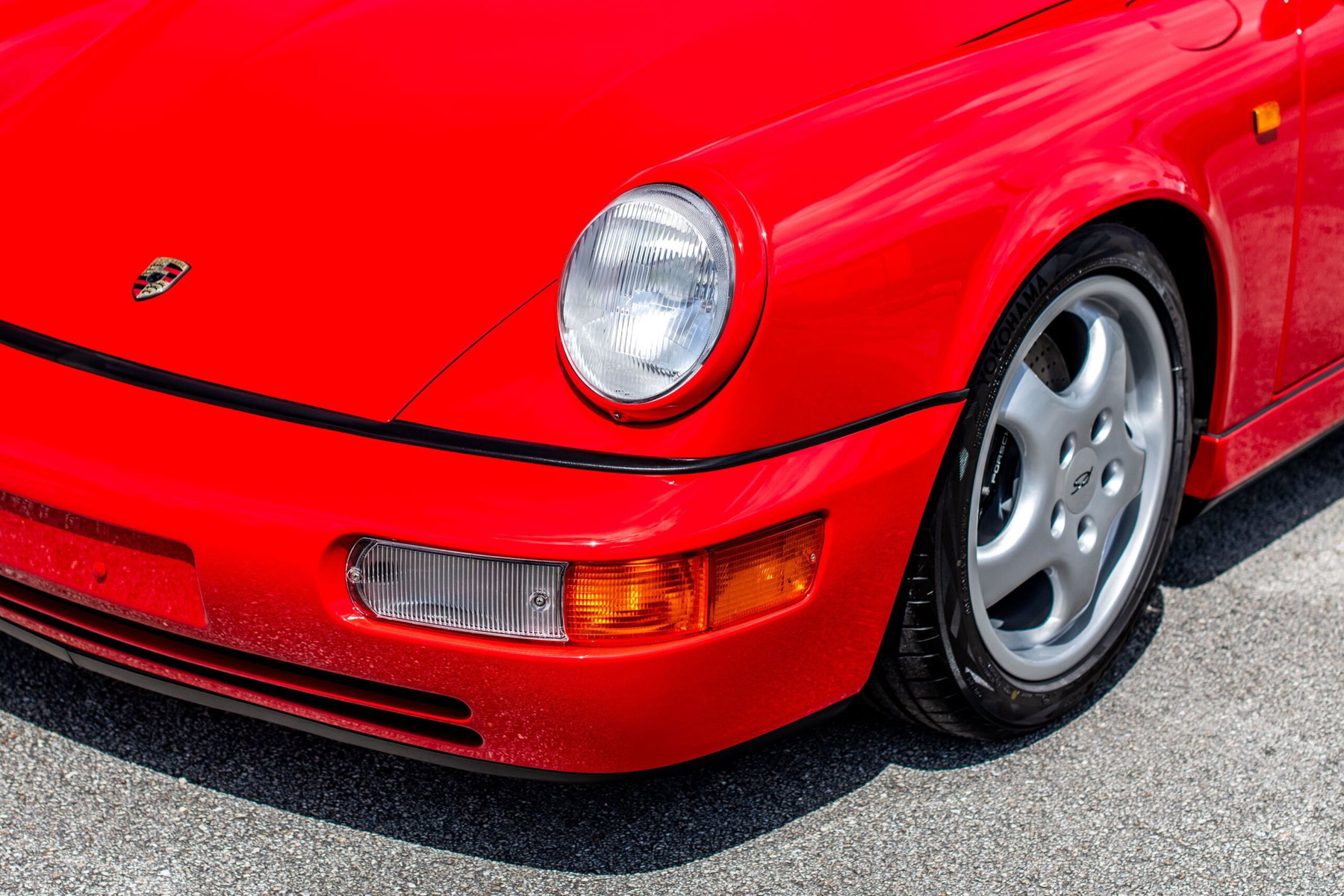
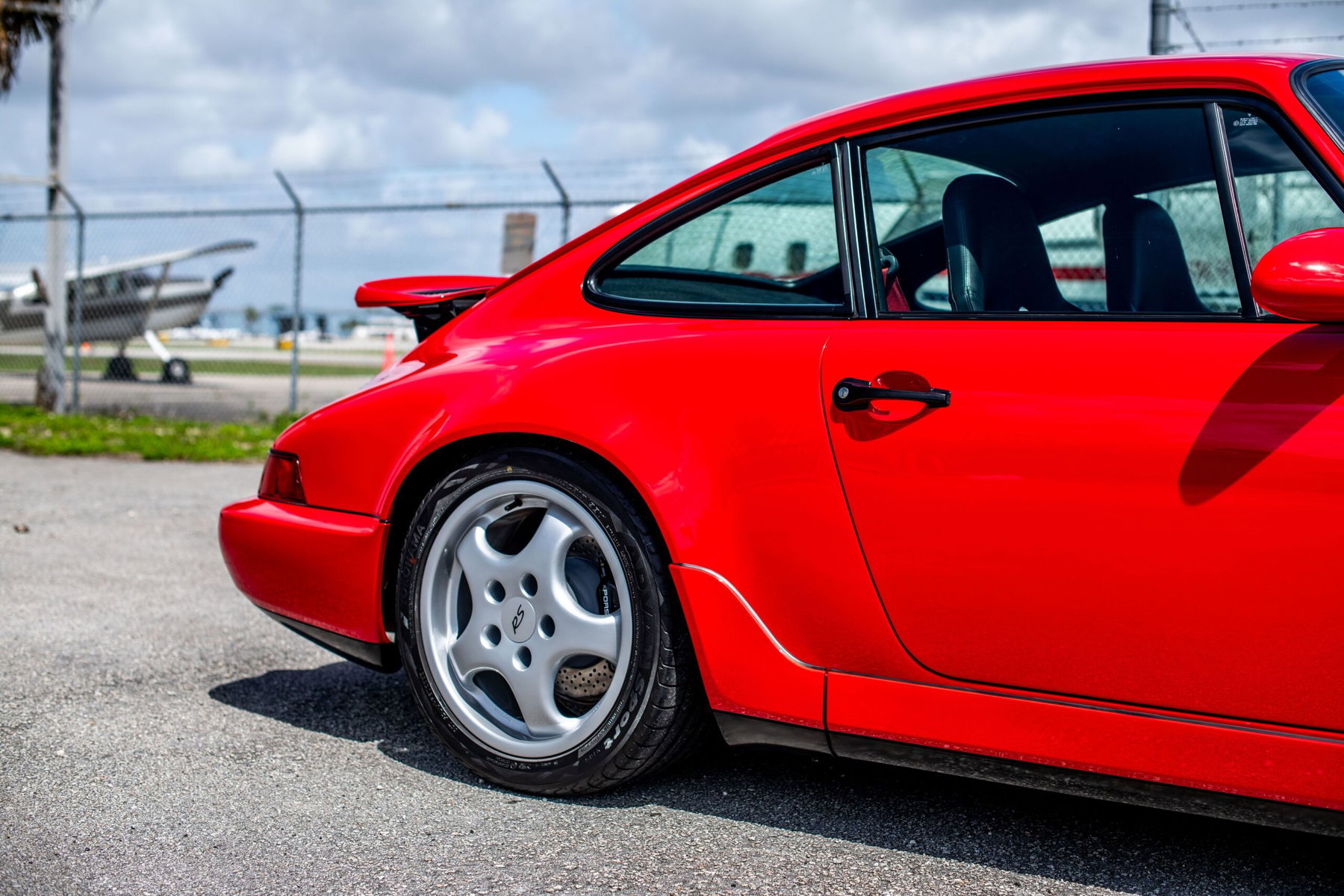
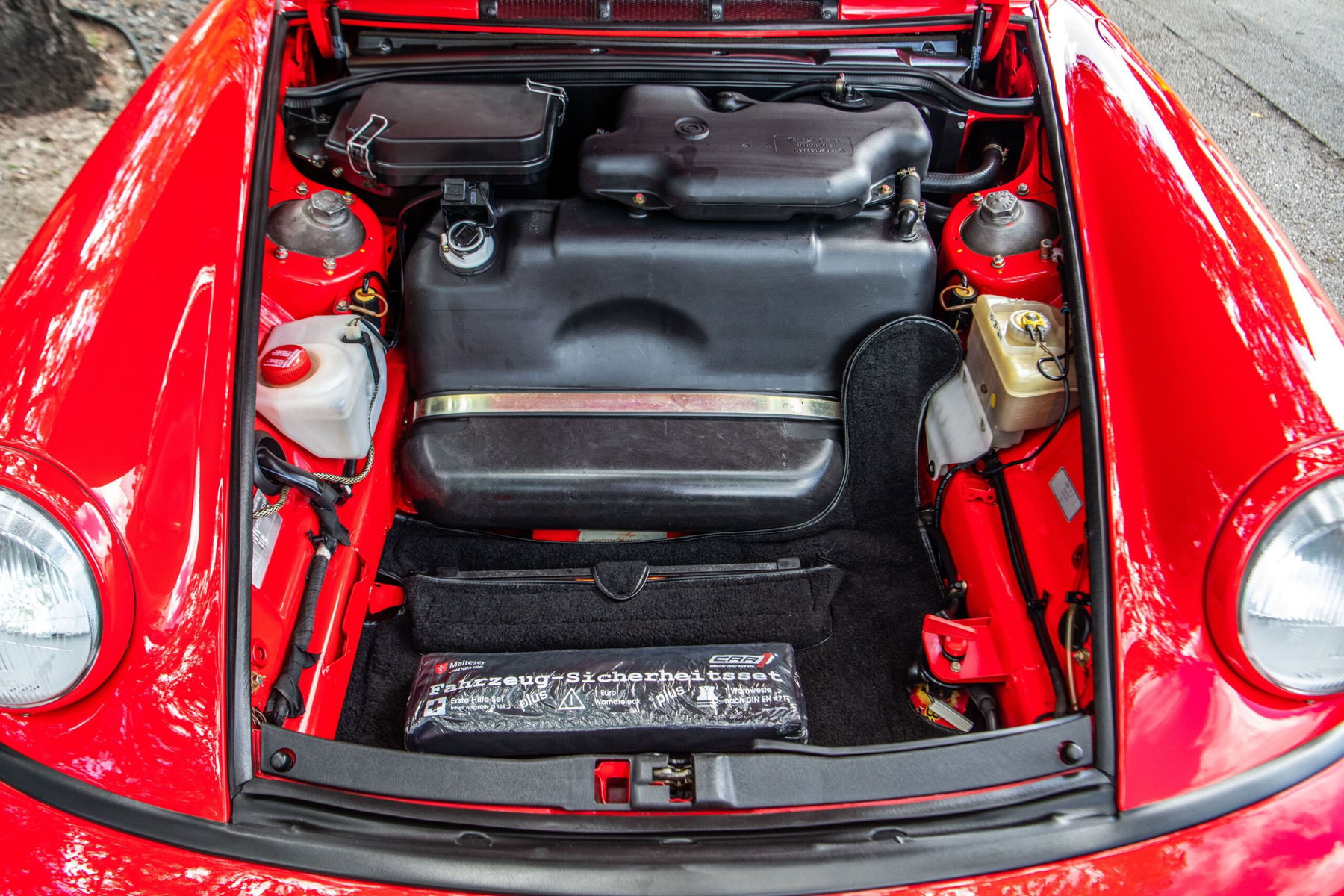
The interior was stripped out completely and the power steering, power windows and seats, rear seats, air conditioning, cruise control, sound deadening material, and stereo system removed. Two lightweight racing bucket seats were fitted instead. The front bonnet was made of aluminum and parts of the chassis were seam welded, while the side windows were made from thinner and lighter glass. Rounding off this radical exercise in weight reduction, the Carrera RS was equipped with 17″ Cup magnesium wheels. The result was a total weight saving of around 150kg compared to the Carrera 2, transforming the RS into a faster, more agile, and more responsive car.
Brian Laban found that any feeling of remoteness or soft touch had gone completely and reckoned that the controls never felt more solid or precise. In his opinion the Porsche could not be faulted, the verdict being that the Carrera RS was ‘exactly what a performance car should be’.
Continue reading




 1992
1992 
 1992
1992