Two WTL Cabriolets in L999 special-order colours – Icons among themselves
12.05.2026By Richard LindhorstSponsored Content
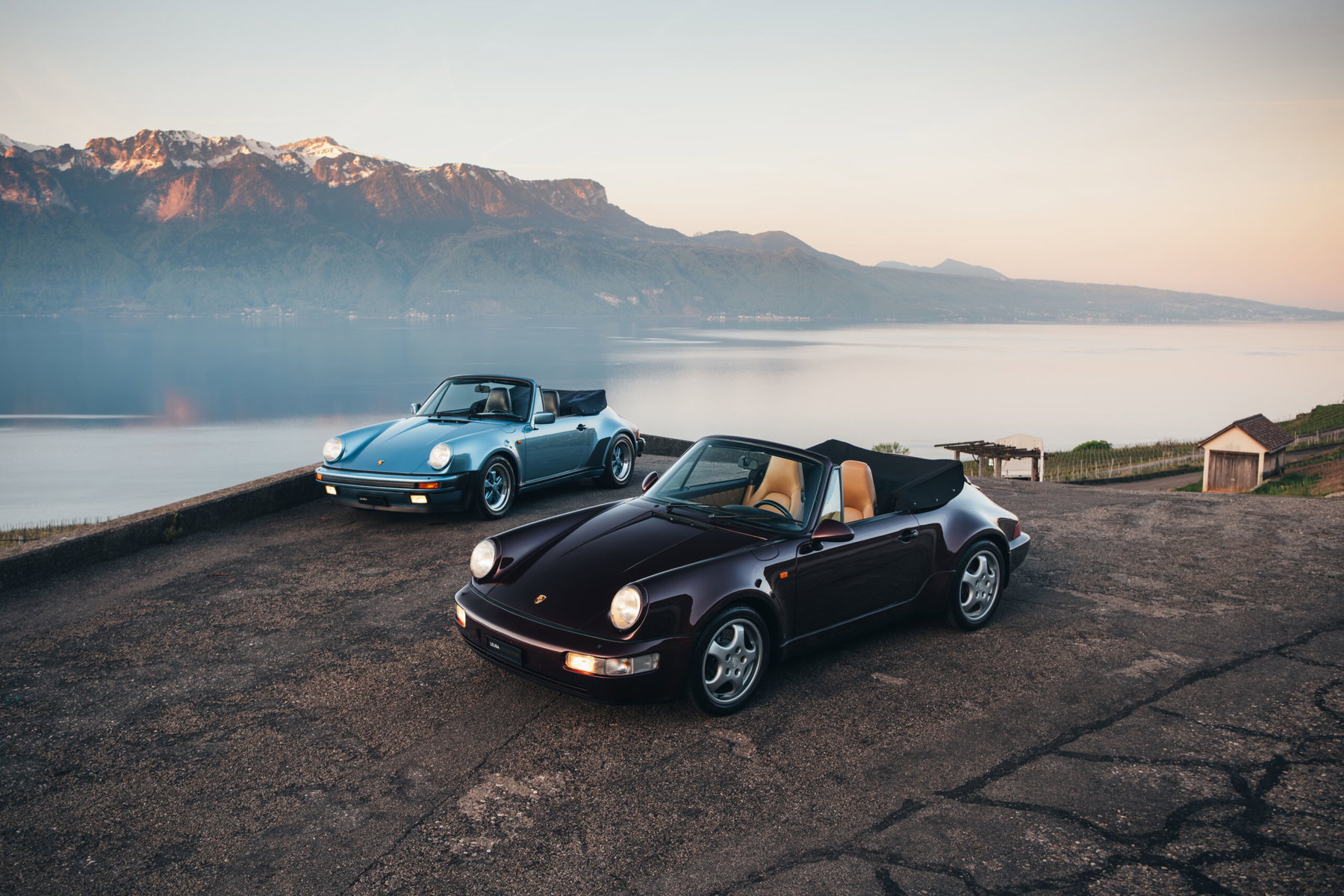
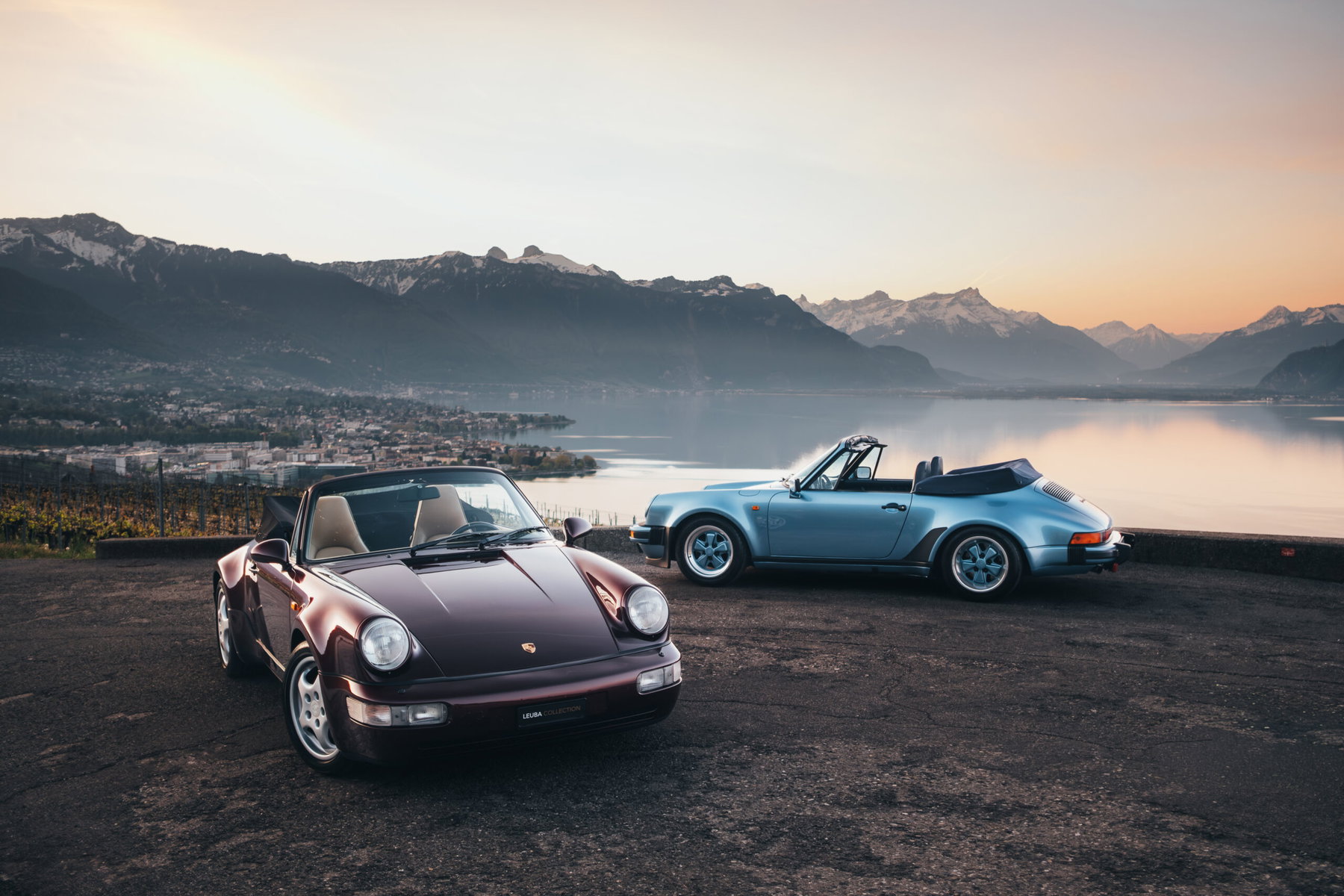
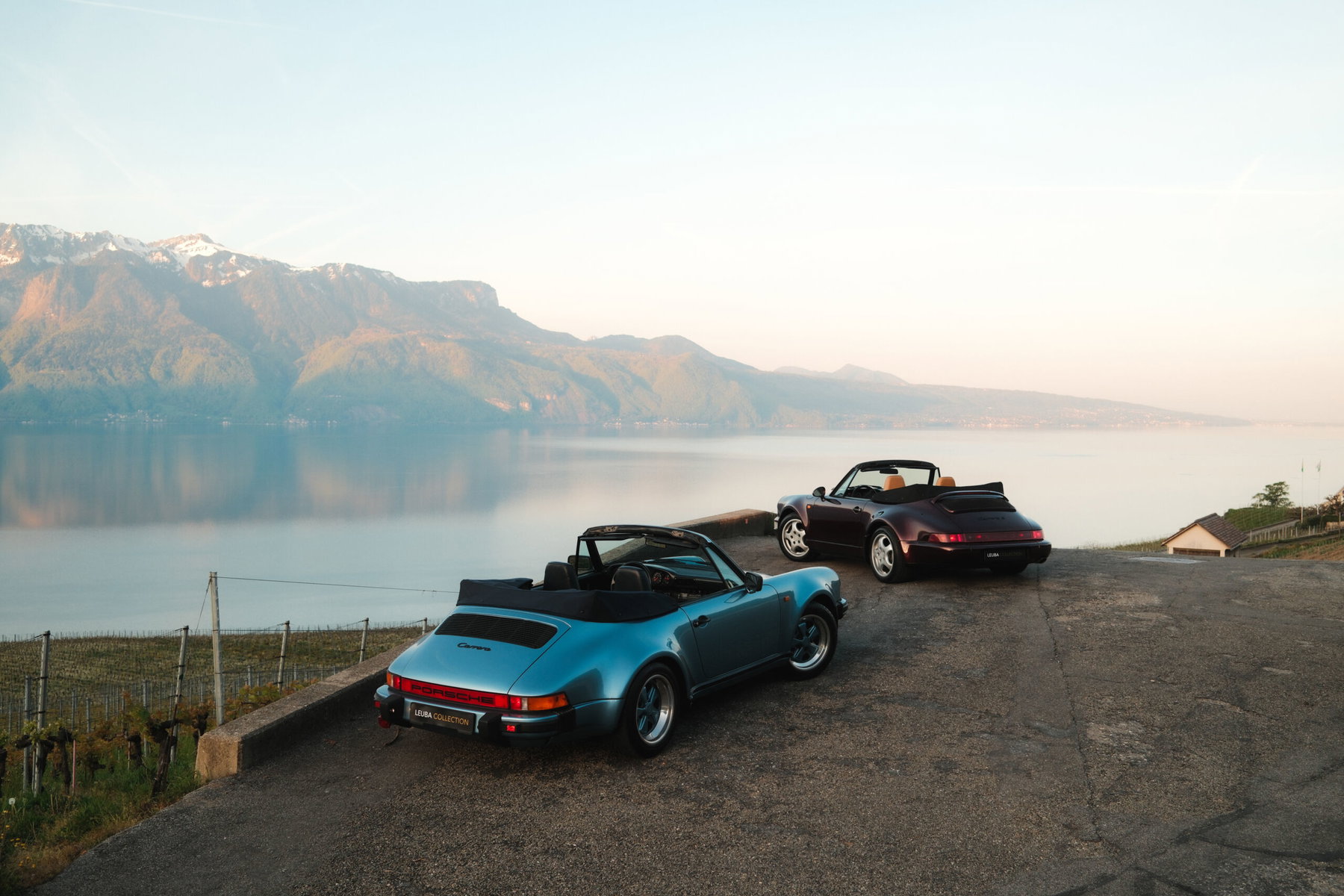
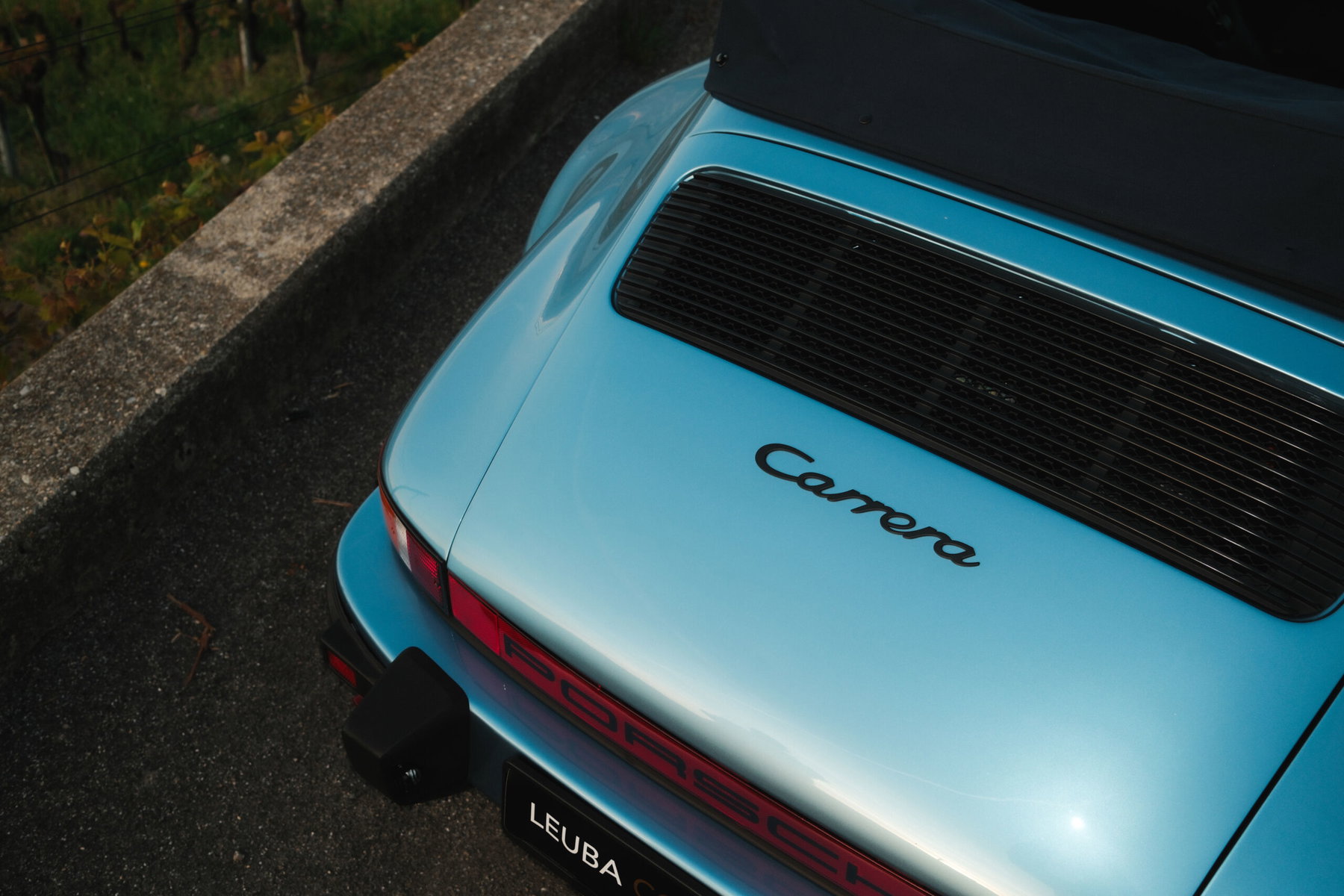
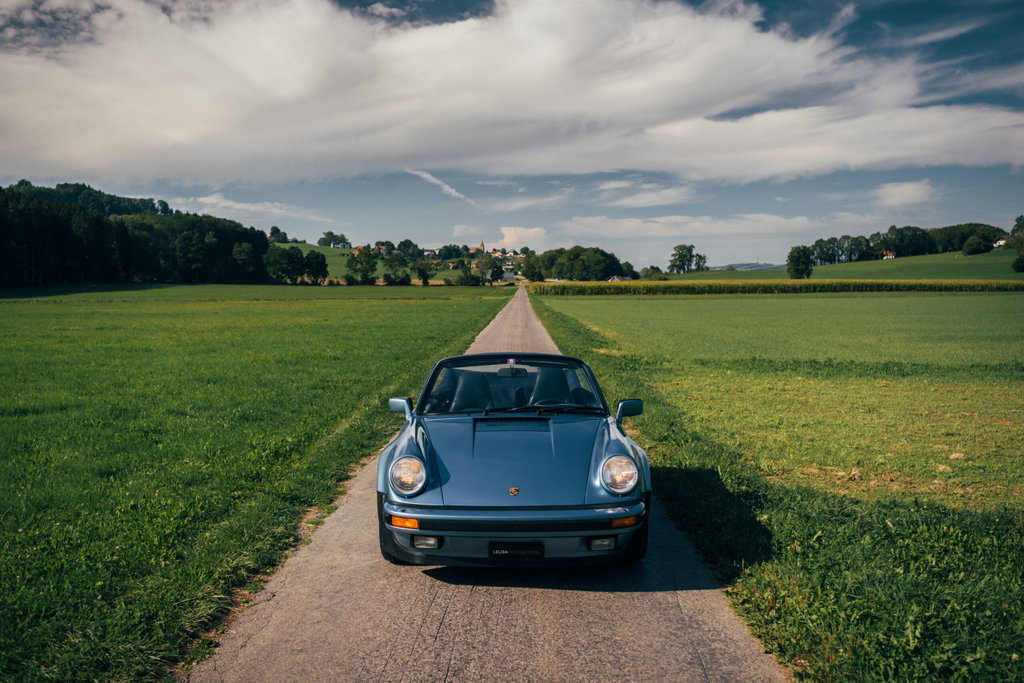
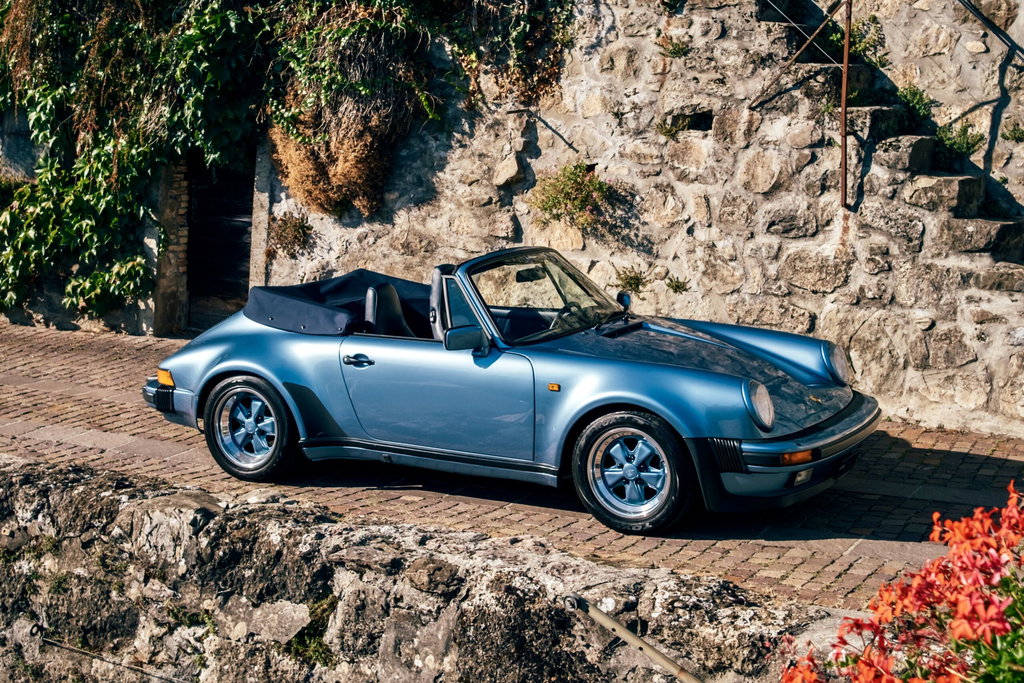
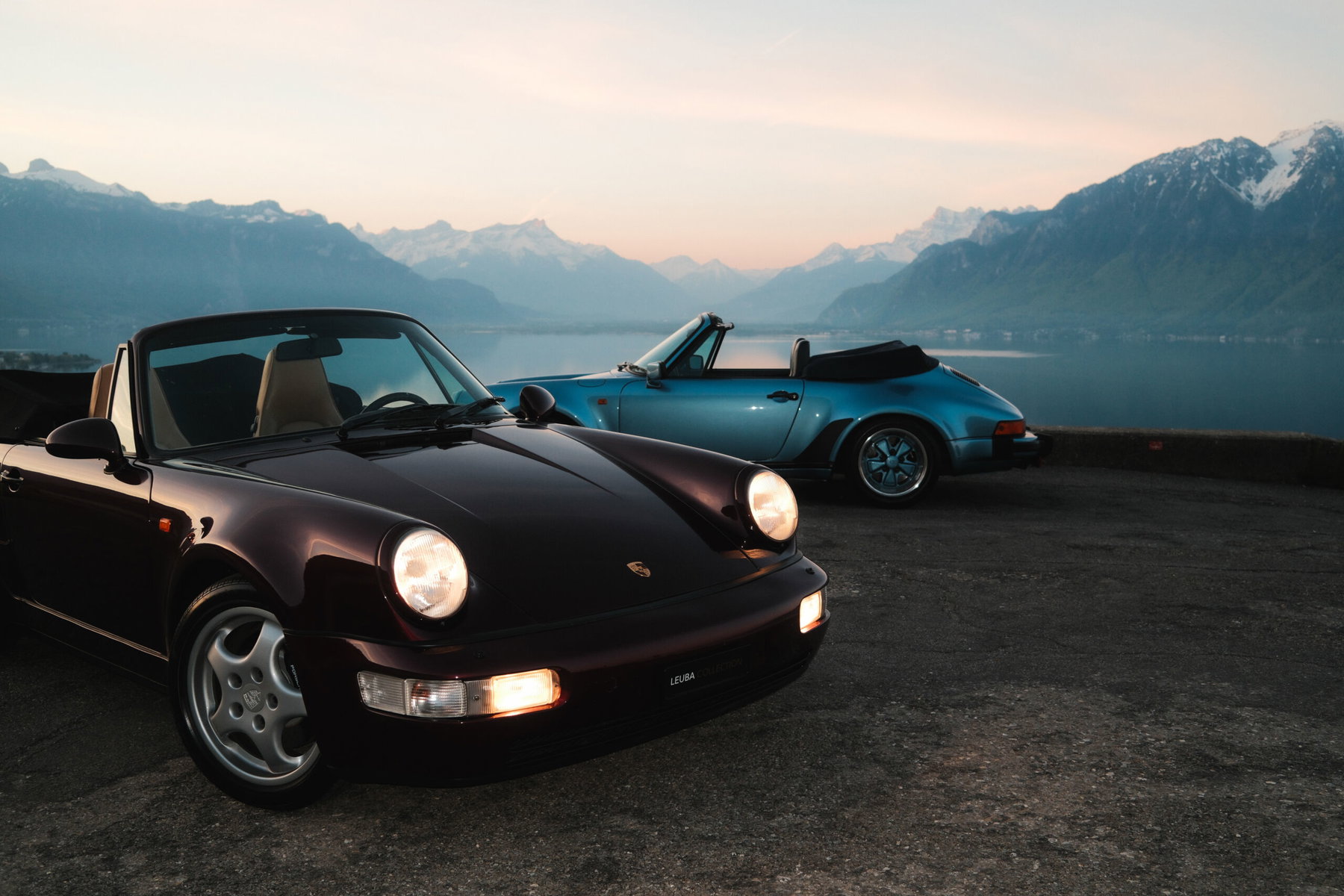
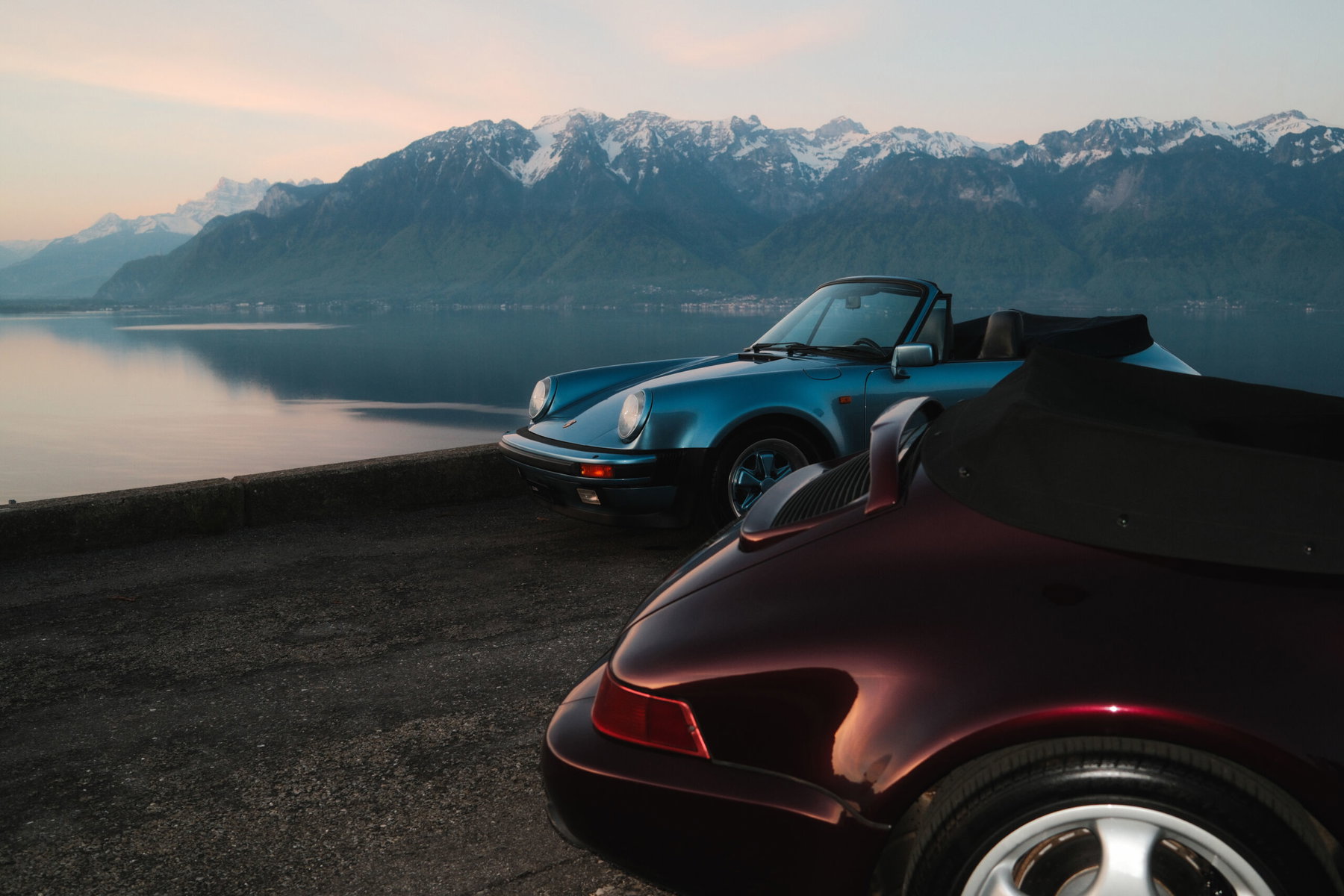
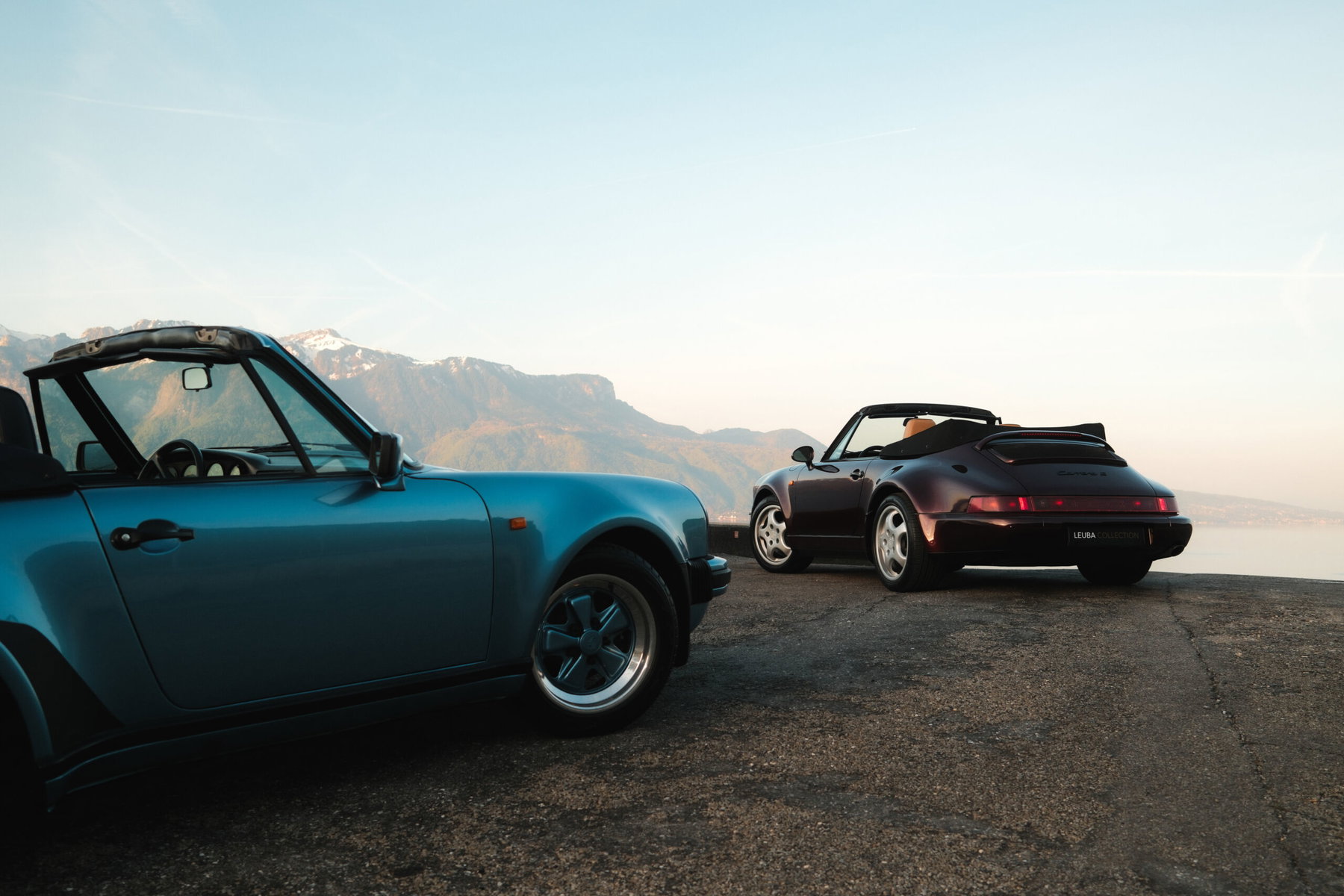
Even one air-cooled 911 Cabriolet with factory Turbo-look bodywork (WTL) is not exactly something you see every day. But when a 1985 Porsche 911 Carrera 3.2 Cabriolet WTL in L999 Iris Blue and a 1992 Porsche 964 Carrera 2 Cabriolet WTL in L999 Zyclam Red appear together, even seasoned Porsche connoisseurs are unlikely to remain indifferent. With these two Cabriolets, every detail feels right.
Porsche’s factory Turbo-look brought Turbo width to Carrera drivers for the first time
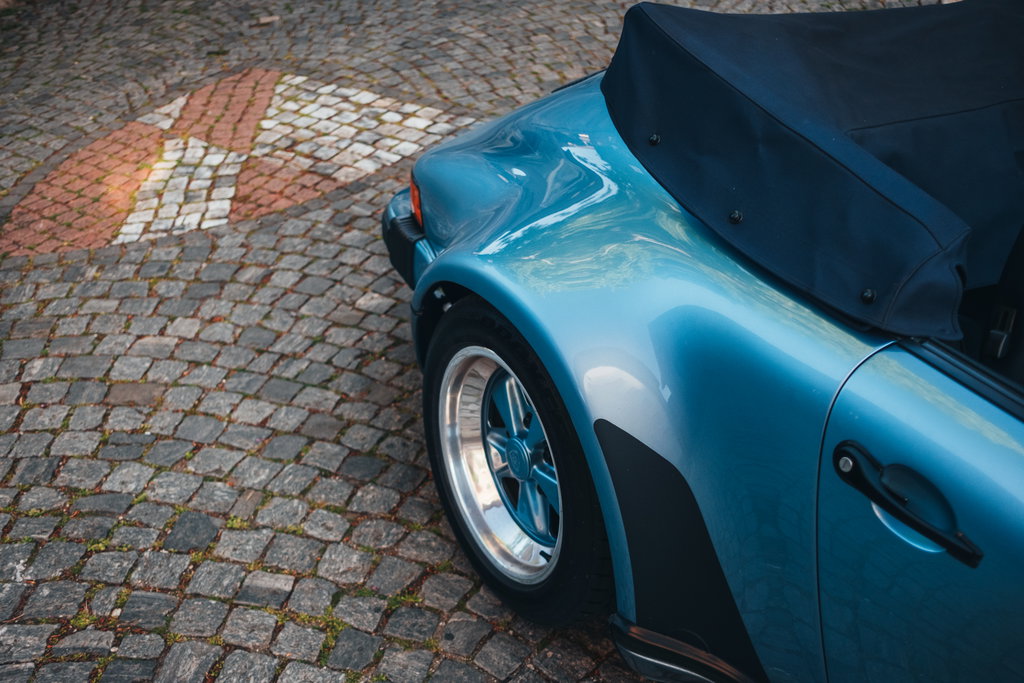
For outsiders, the appeal of WTL may not be immediately obvious. But in the 1980s and 1990s, the 911 Turbo was a very different animal from what it is today. For many, it was simply too extreme, too explosive in the way it delivered its power. At the same time, however, its wide hips were something truly special. The broader body sharpened the classic 911 design in exactly the right places.
And for those who preferred the sound and response of the naturally aspirated flat-six, yet longed for the wider bodywork, Porsche’s factory Turbo-look was almost the answer to their prayers. Thanks to the M491 option, Carrera buyers could enjoy the wider Turbo body. The production figures show just how narrow that target group really was. Fewer than 1,700 911 Carrera 3.2 WTL Cabriolets are said to have been built, while the 964 Carrera 2 WTL Cabriolet is even rarer, with just over 700 examples made.
This Carrera 3.2 WTL Cabriolet is synonymous with elegance
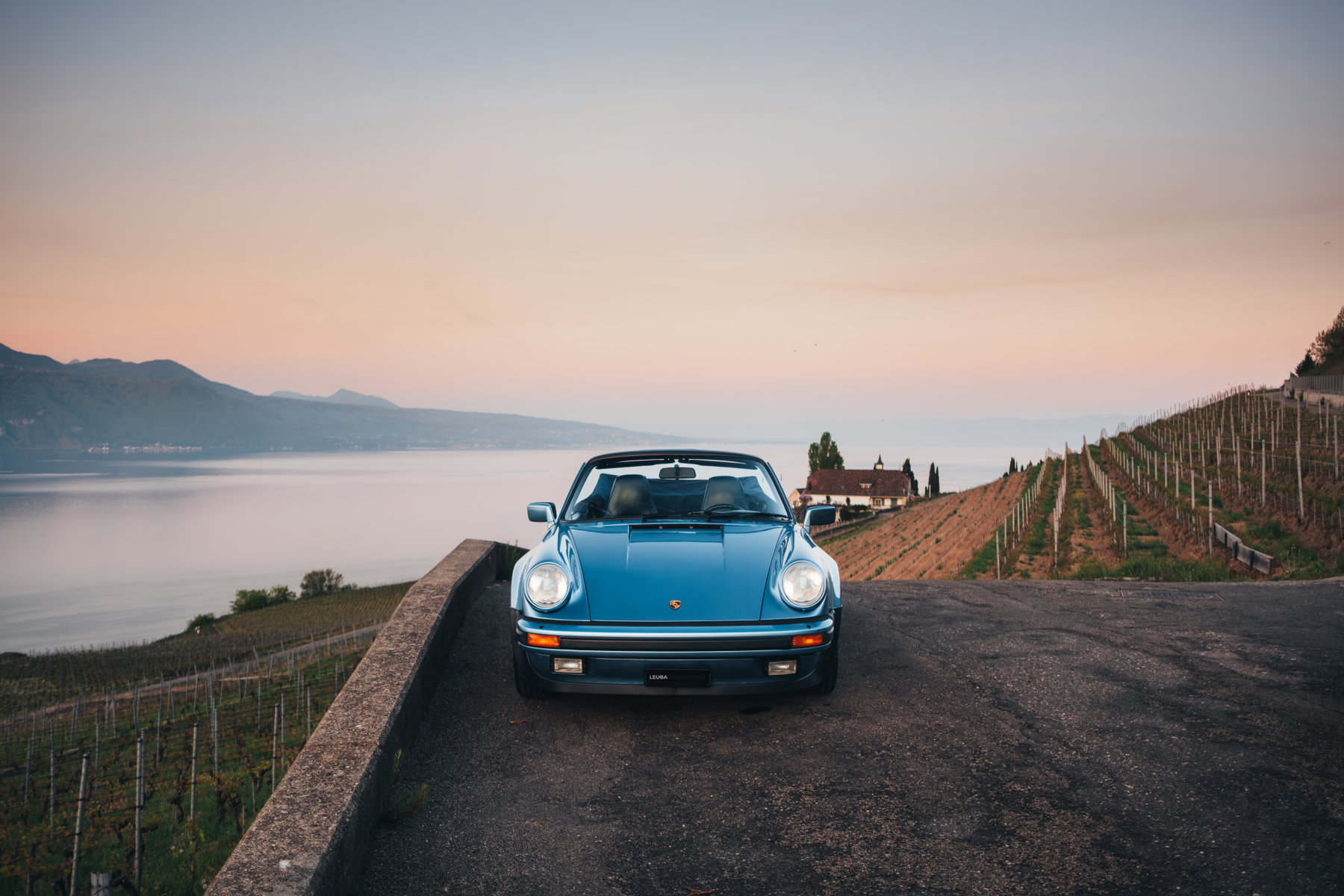
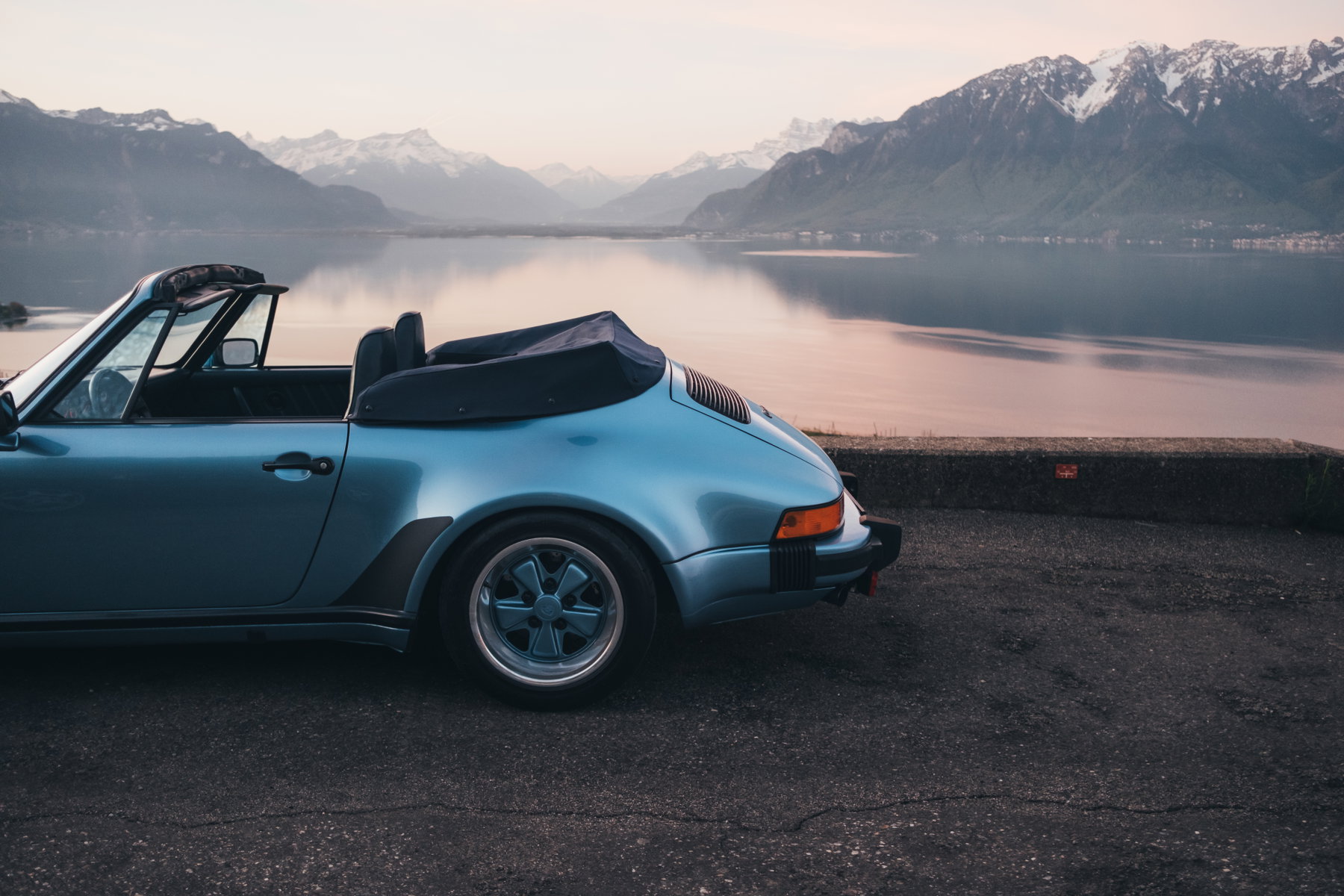
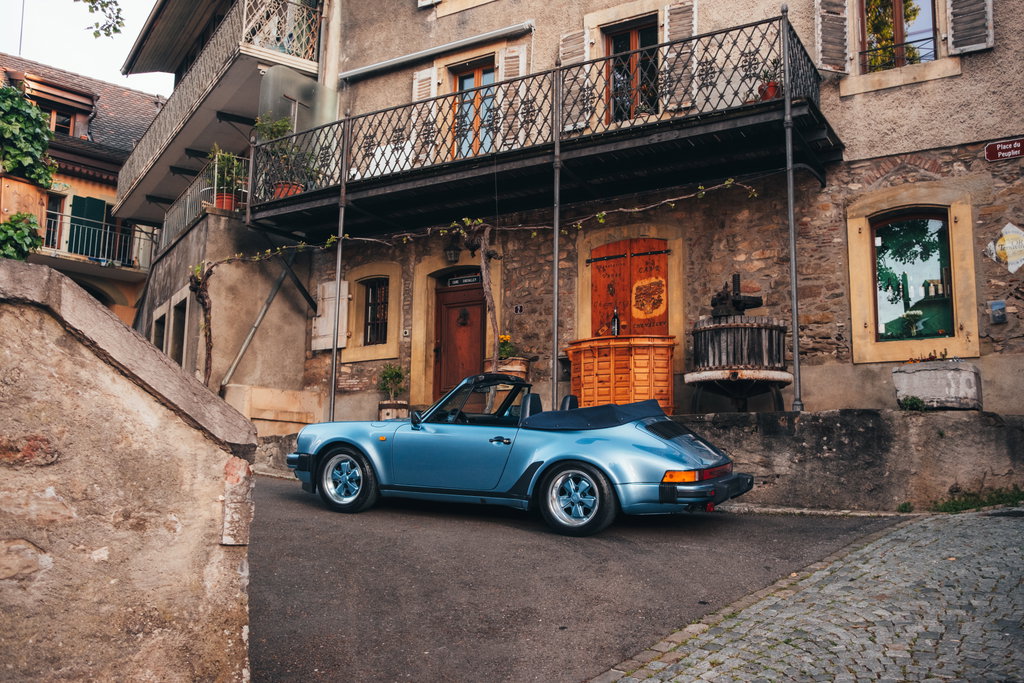
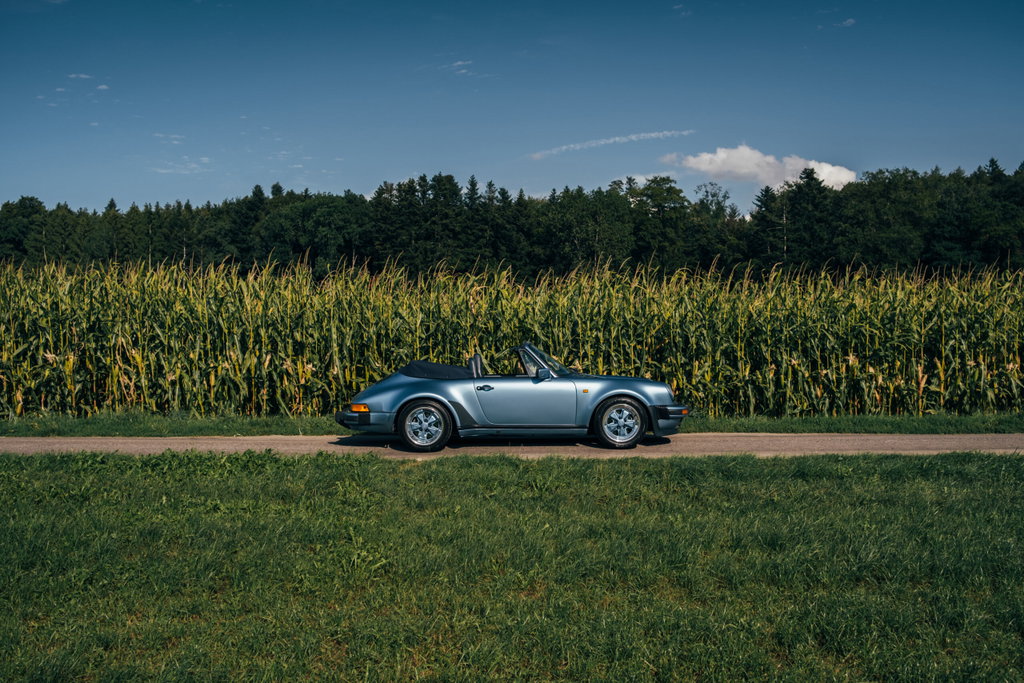
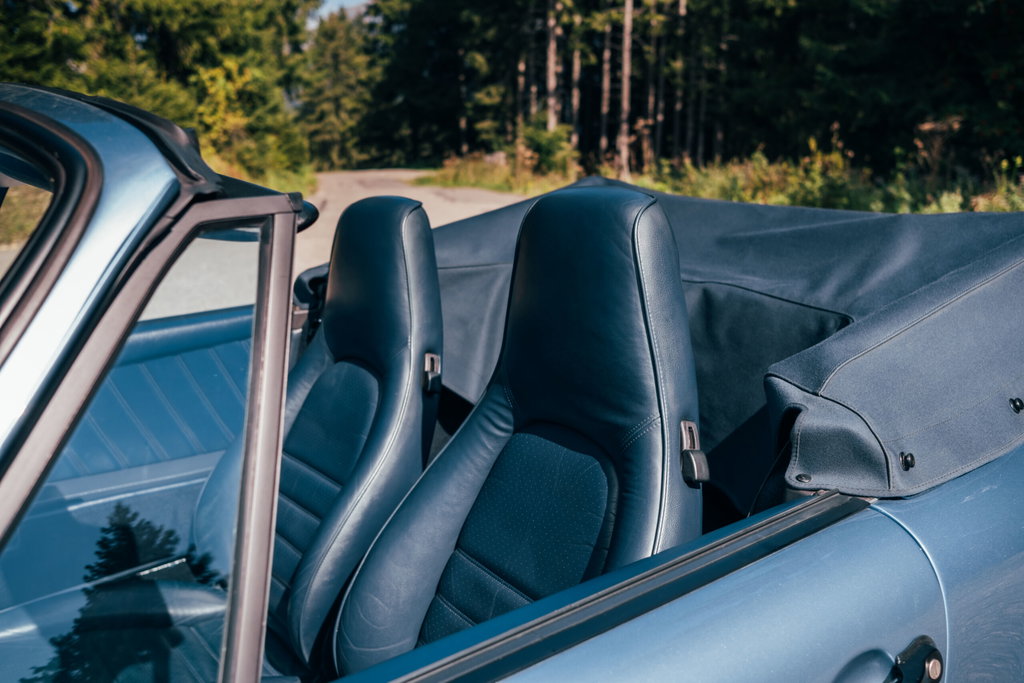
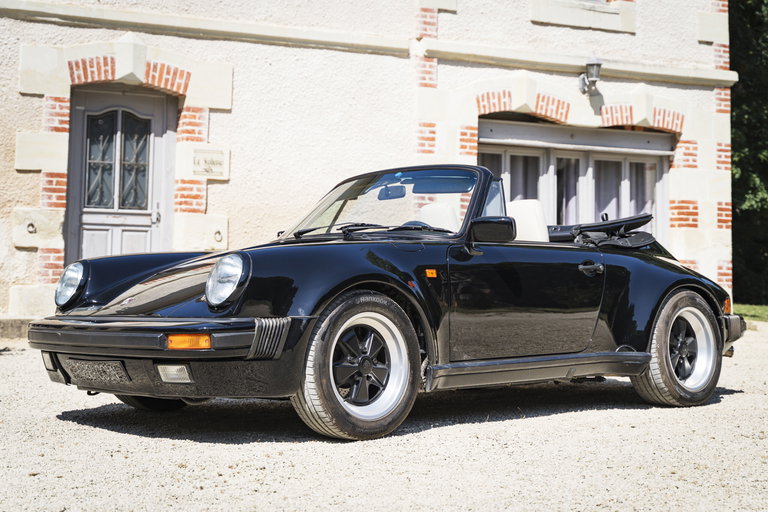
When such a rare car was also specified in a special-order colour at the time, carrying the L999 paint code, it makes the hearts of enthusiasts and collectors beat that little bit faster. Its combination of the wide-bodied G-model in Iris Blue paint with a dark blue interior and matching soft top could hardly be more tasteful. The lightness of the bright exterior colour, which is also echoed on the Fuchs wheels, is immediately captivating.
This 911 Carrera 3.2 WTL Cabriolet impresses with a visual harmony that has something distinctly coachbuilt about it. The way the colour concept is carried through so consistently creates a coherent overall impression that feels wonderfully balanced, without ever trying too hard.
This beautiful Cabriolet was originally delivered to Great Britain – unusual for a left-hand-drive car. Under a later Swiss owner, the car was extensively restored mechanically between 2014 and 2016, using Porsche original parts exclusively. Matching numbers, fewer than 48,000 kilometres and exceptionally good documentation make this car an ideal collector’s item.
Of course, it would be wonderful to see this kind of car out on the road on a regular basis. But the combination of WTL, L999, such low mileage and excellent condition is simply something irreplaceable. Even for well-curated museums and exhibitions, this WTL Cabriolet would be a serious candidate.
The 964 Carrera 2 WTL Cabriolet takes a more extroverted path
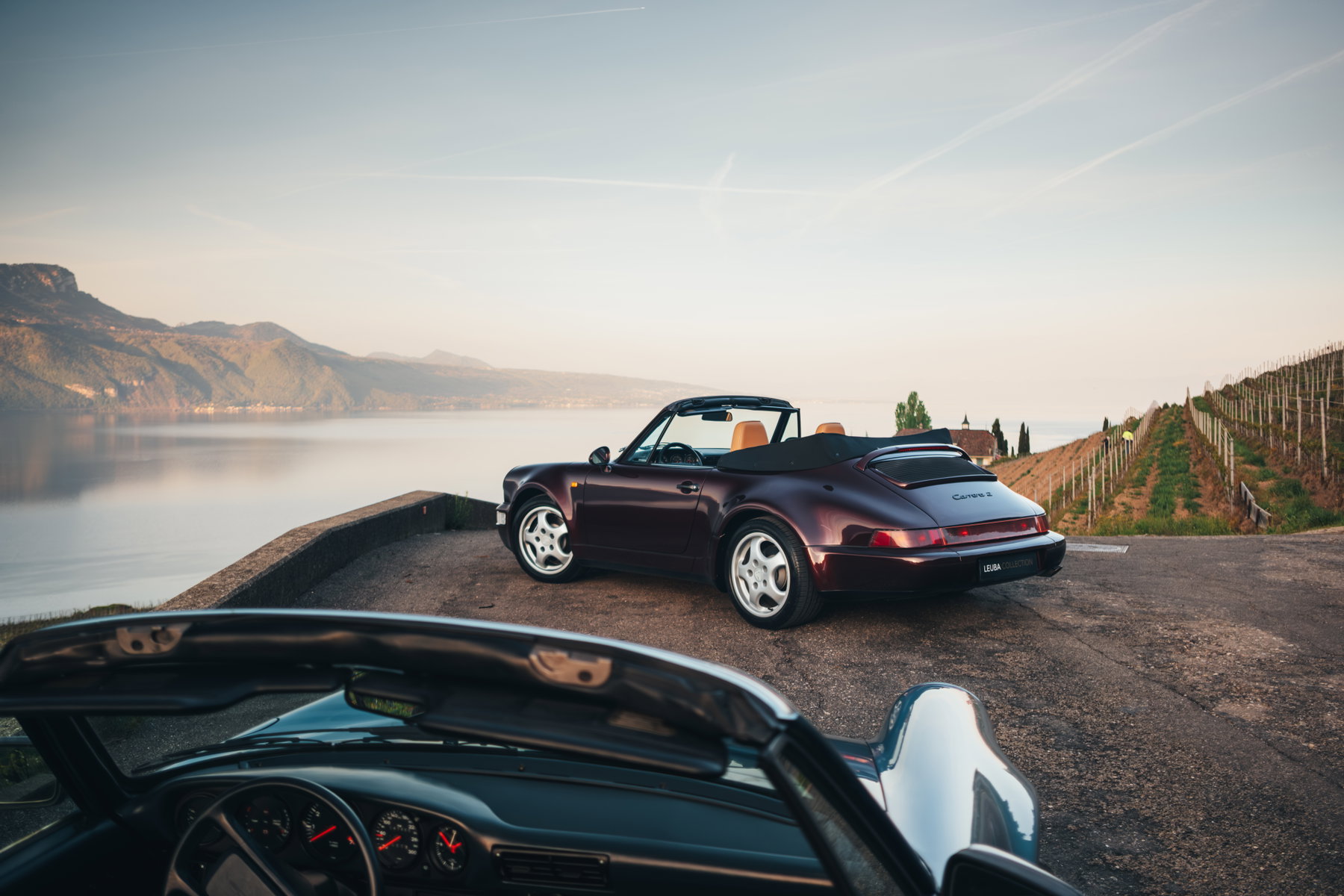
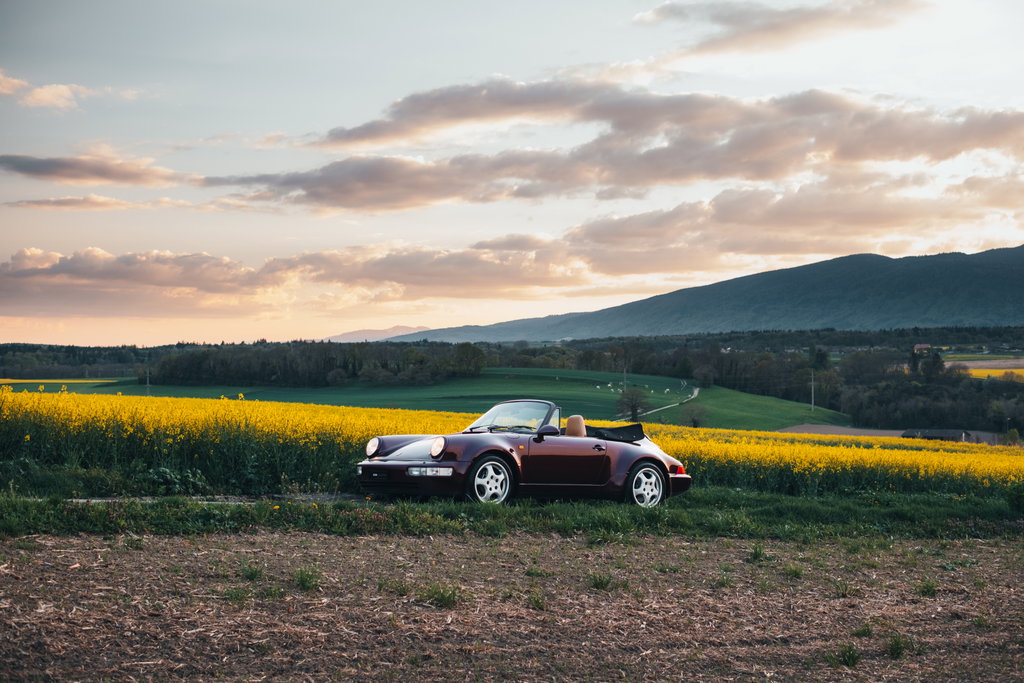
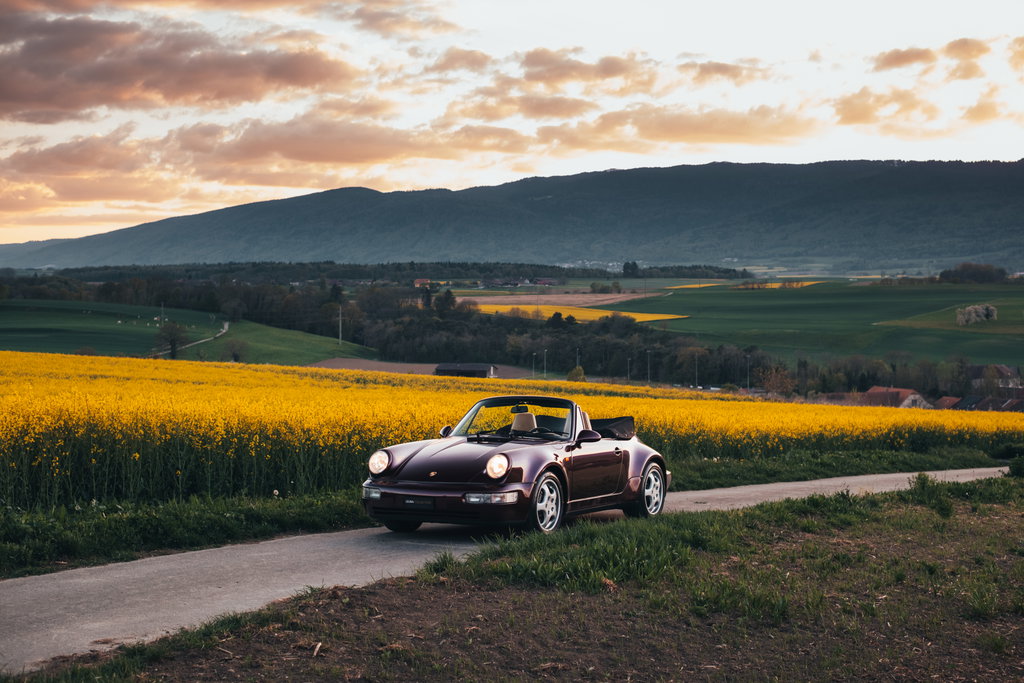
With even lower production numbers, the wide-bodied 964 Cabriolet is exceptionally rare, even within the already specialised Porsche world. The fact that its first Swiss owner chose Zyclam Red, an already extremely rare colour originally known from the transaxle era, possibly makes it a one-off. “Its rarity is not merely numerical. Visually and historically, too, it is something very special. Swiss first delivery, two owners, matching numbers, one hundred percent originality and a complete history from day one make it a true gem,” says Kevin Dufournet of the Leuba Collection.
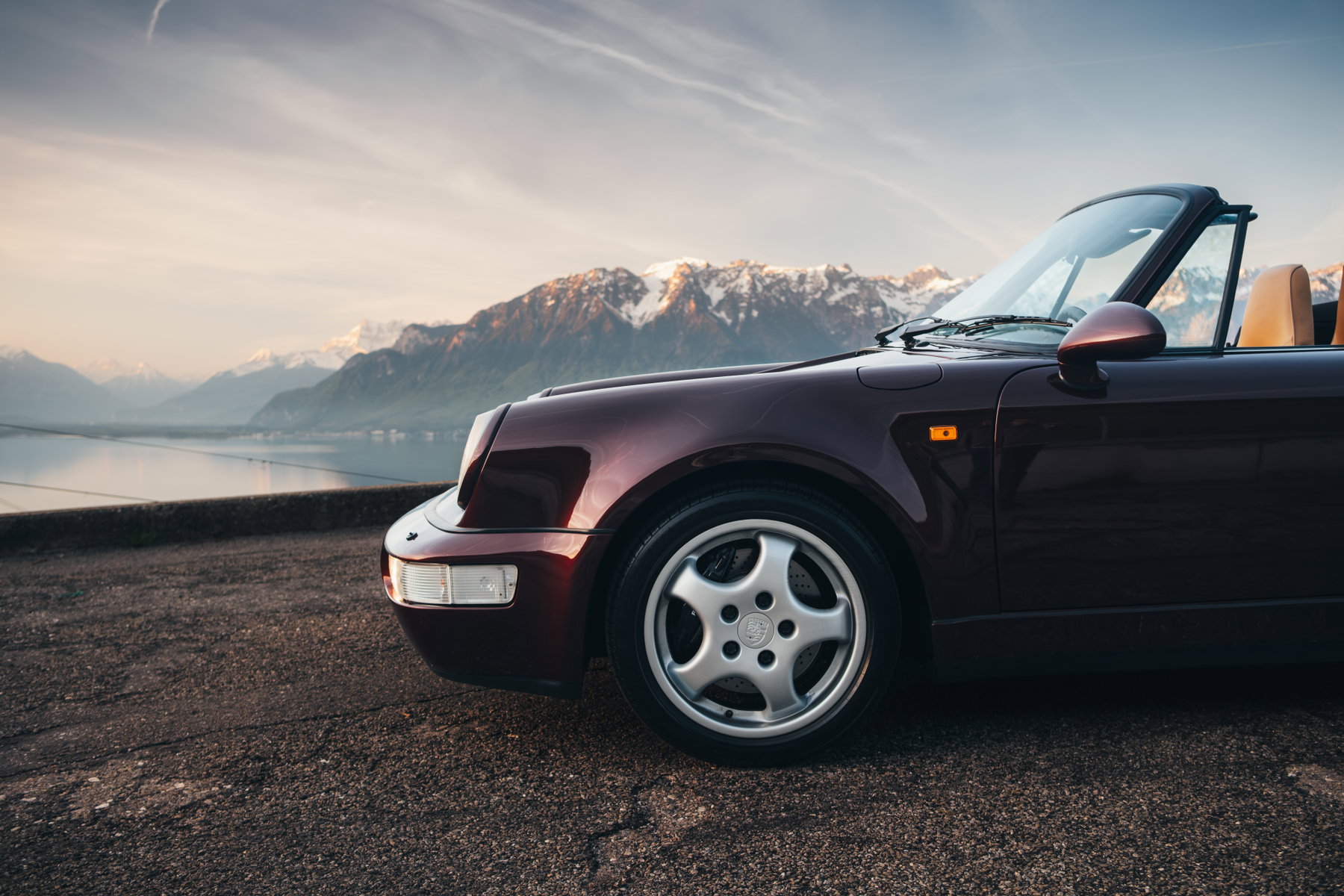
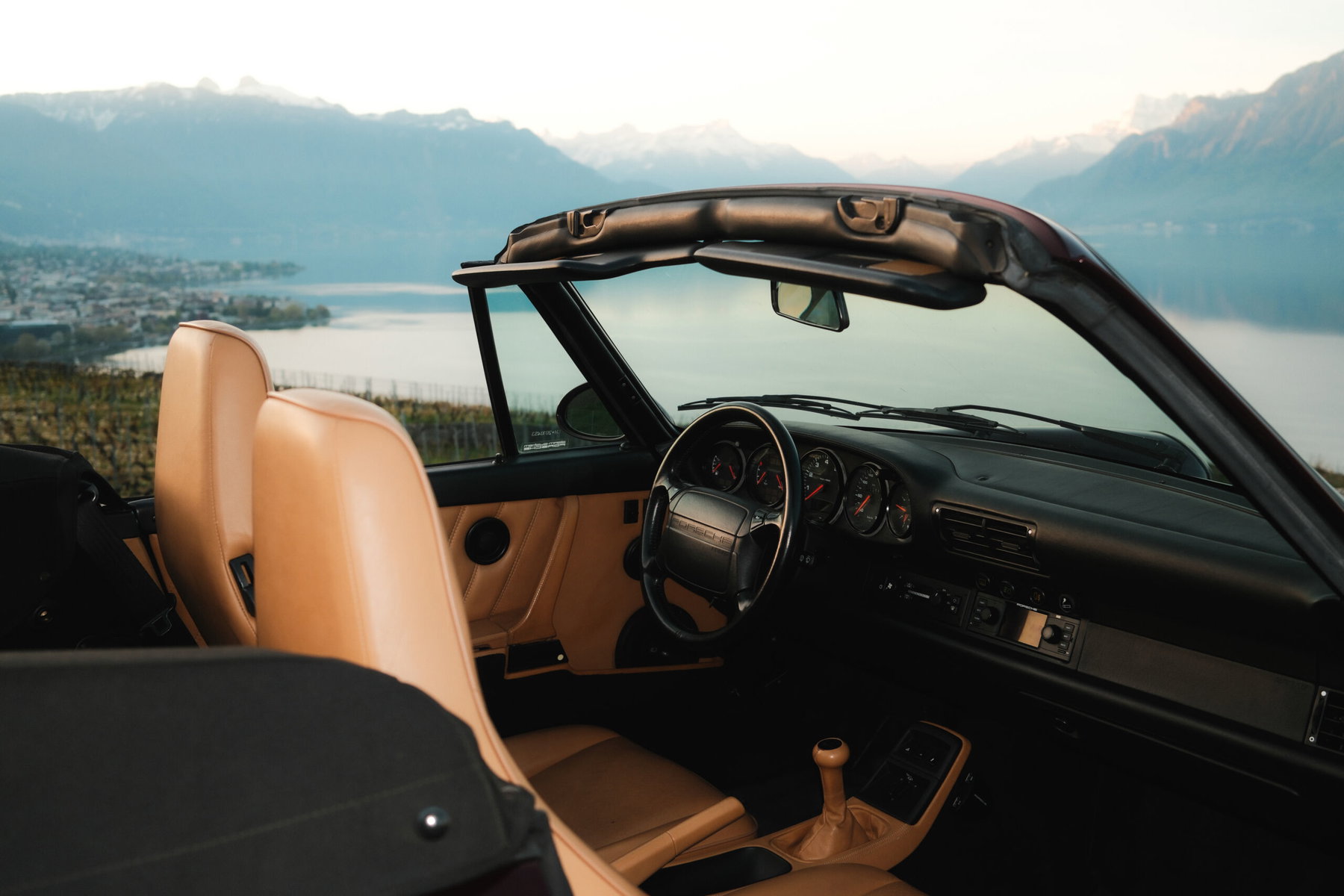
Compared with the Iris Blue 3.2, this Porsche 964 WTL Cabriolet is a little more extroverted. The strong contrast between the Zyclam Red exterior and Cashmere Beige leather gives it a particularly confident sense of individuality. Its beautifully preserved Cup wheels add a distinctly sporting touch. This highly individual configuration turns an already special Cabriolet into a historical artefact. A car like this cannot simply be reproduced at will and stands as a solitaire on the market.
Looking at the mileage, one gets the sense that its two owners enjoyed this rare WTL without using it up. With fewer than 133,000 kilometres, it remains interesting both for drivers and collectors. Perhaps even as a future duo together with the Carrera 3.2 WTL?
Perfection does not come from restoration, but from authenticity
A good 30 to 40 years after these cars were built, individualisation has taken on a different meaning in the Porsche world. Cars with Paint to Sample finishes, the modern equivalent of L999, are no longer a rarity. In the 1980s and 1990s, however, things were very different. Back then, even within Porsche Centres, it is likely that not every salesperson knew the full extent of the individualisation options actually available.
That is precisely why these exquisite, elegant Cabriolets in wide-body dress are so special, so far removed from the ordinary. “What really makes these two WTL models special is not primarily what they offer behind the wheel, but what they convey even at a standstill,” Kevin Dufournet emphasises. “They represent exactly what matters to us in collectible air-cooled 911s: perfection not through restoration, but through authenticity.”
Perhaps these two WTL Cabriolets are a little like great Impressionist paintings. Even without knowing every detail of their creation, you immediately sense that you are standing in front of something special. Those who know about WTL and PTS will recognise not merely two beautiful open 911s, but two exceptionally fine and rare compositions. They are cars that suggest that, in their era, handcrafted individuality in Zuffenhausen still meant more than volume or margin.








 1985
1985 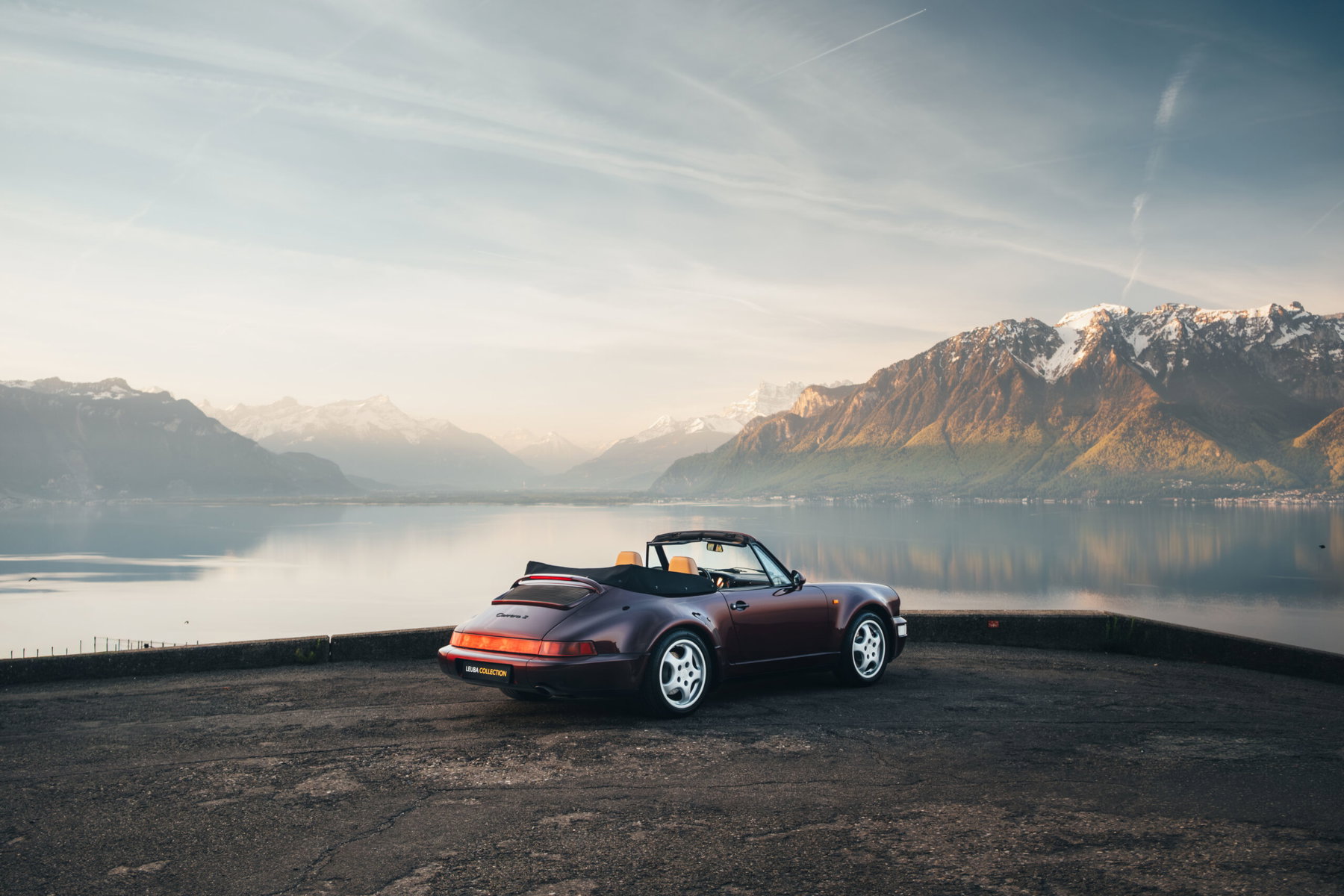









 1988
1988 
 1992
1992