• Vehicle from the U.S., with title and license plate. Last registered in the U.S. in 1997
Performance
• Complete order of new technical parts from Porsche / Mittelmotor
• Installation and final assembly of all suspension components / brakes / axles / lines / hoses
etc. by Mittelmotor
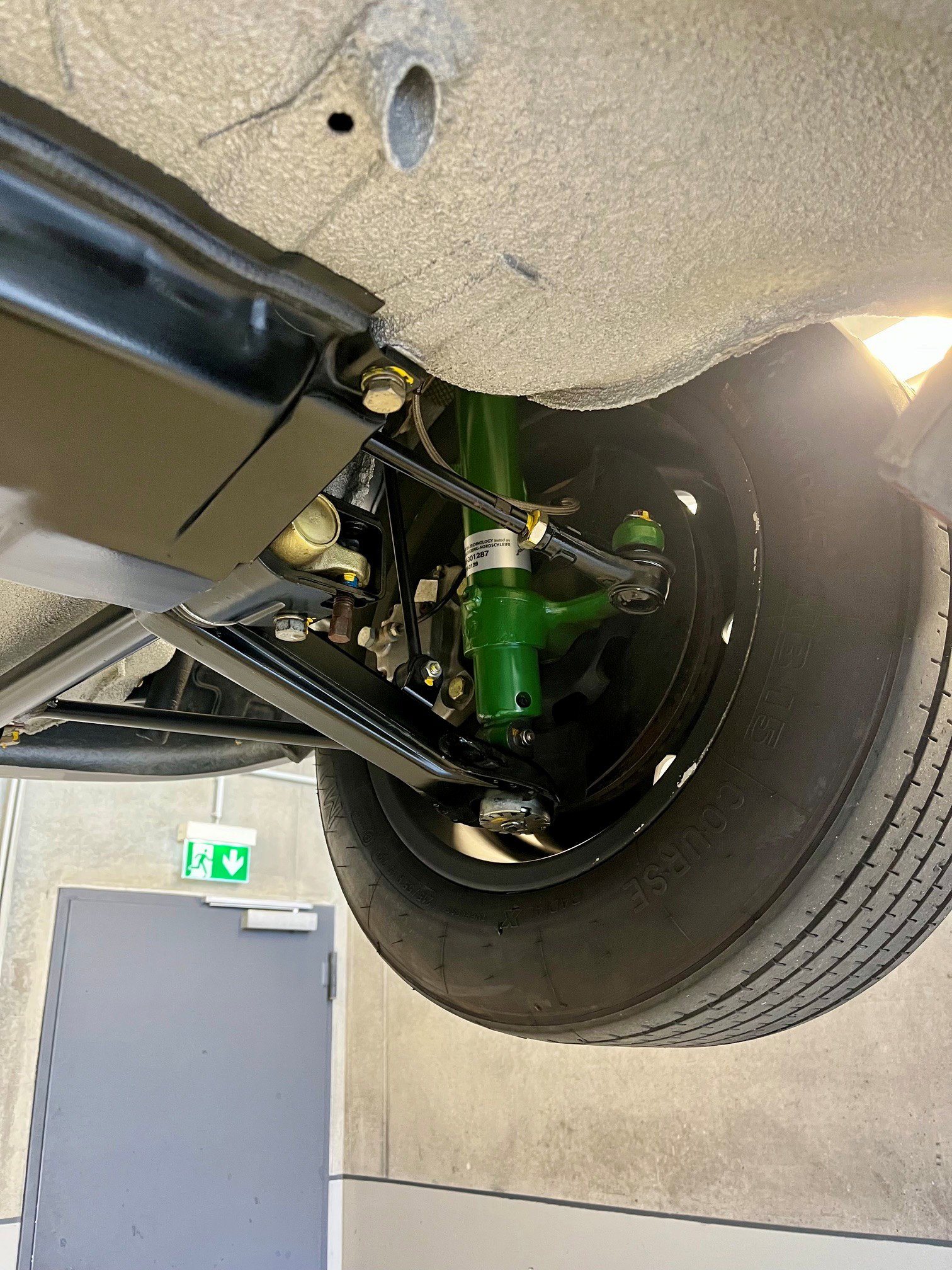
• Vehicle tuning with Bilstein Nürburgring dampers
• 2.7 RS brake system, aluminum calipers in the front, steel in the rear (all brand new…)
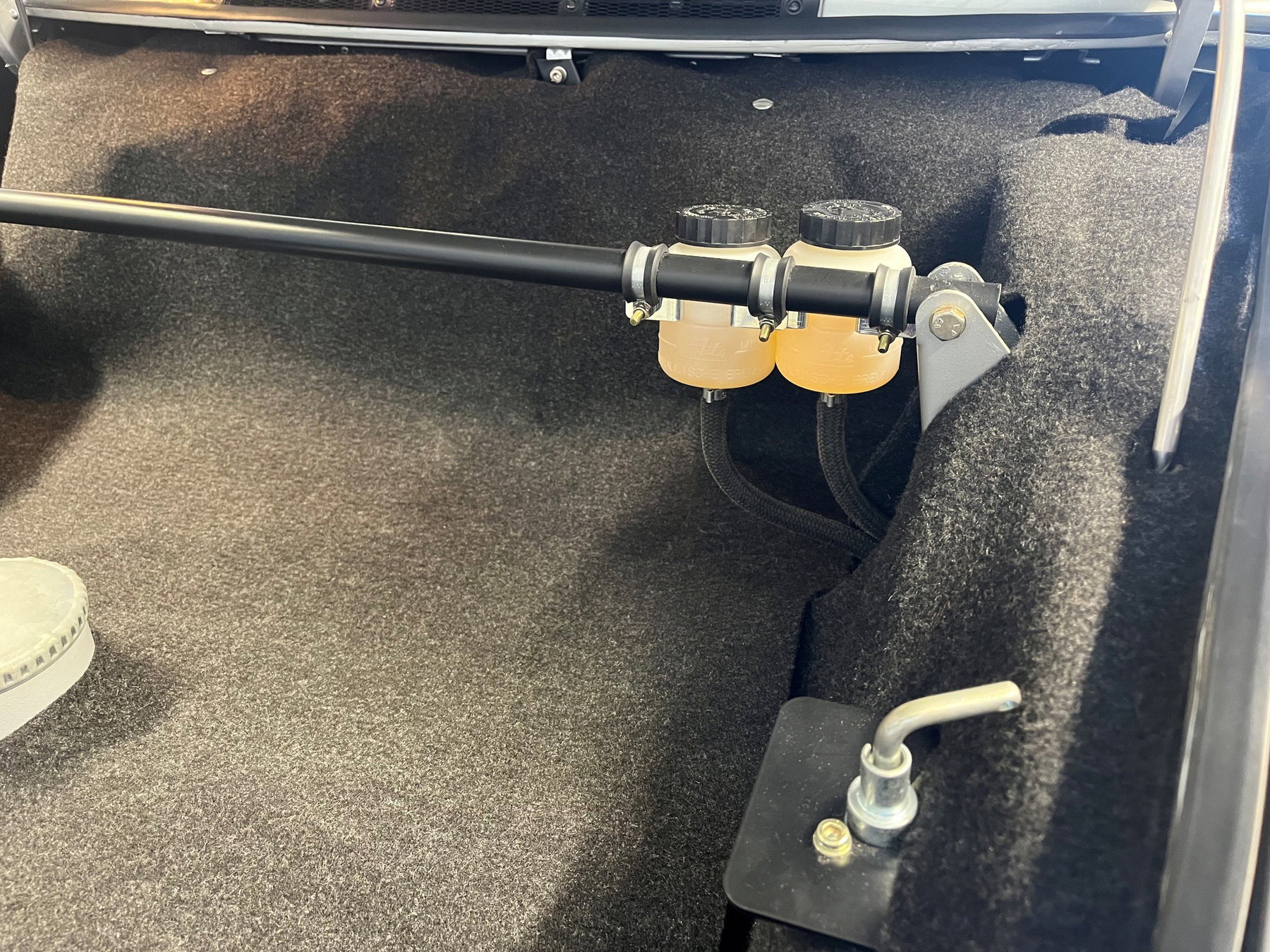
• Balanced pedal assembly (dual-circuit) with adjustable brake force (adjustment mechanism in the secret compartment)
• Reinforced stabilizer bars on front and rear axles
• Reinforced torsion bars front / rear
Engine
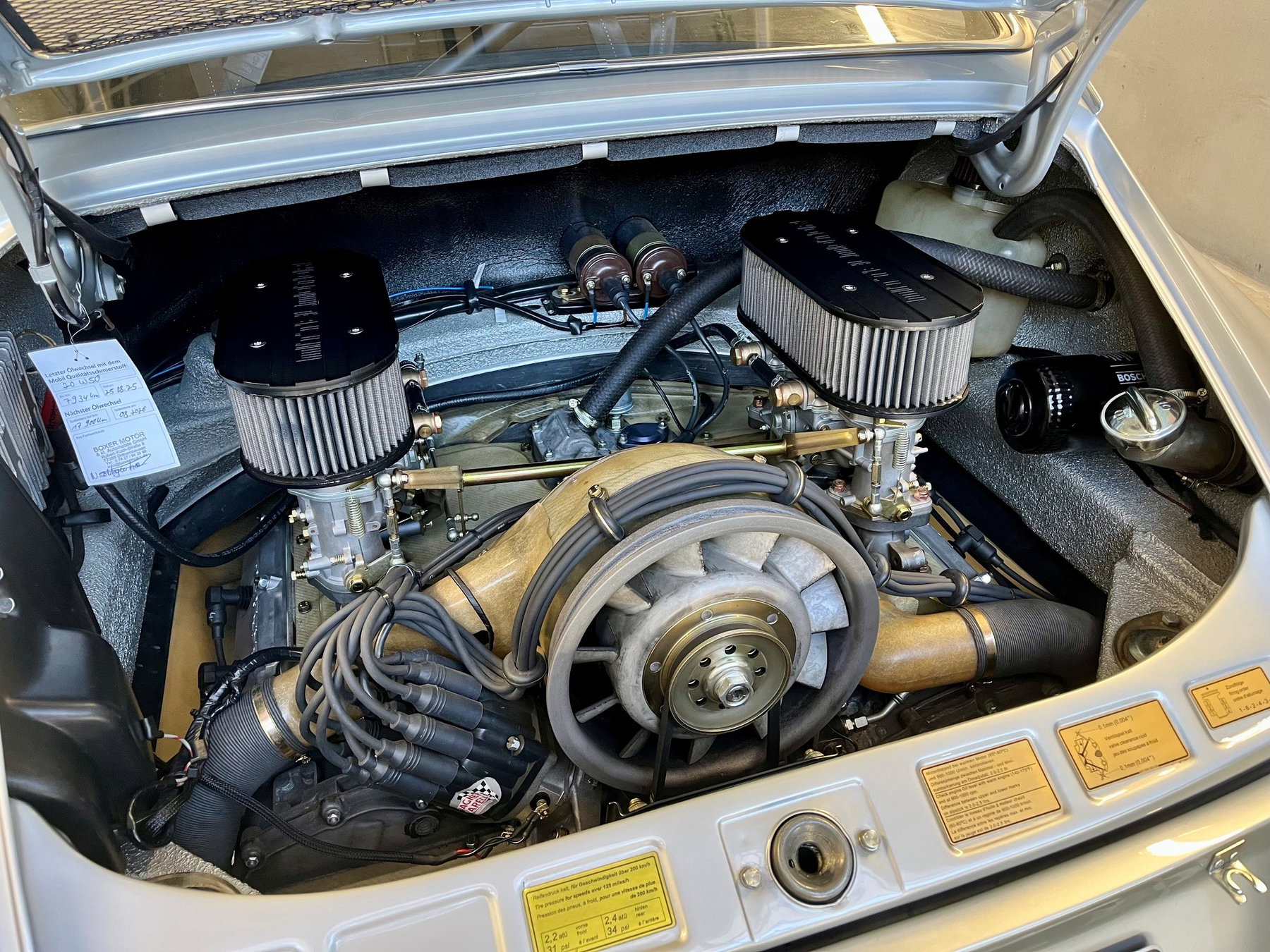
Engine rebuilt by Mittelmotor based on a 2.7L engine
• Power output increased to approx. 190–200 kW
• Built as a 2.8-liter RSR/RS rally engine (street-legal)
• Bore enlarged to 92 mm (displacement 2,808 cc)
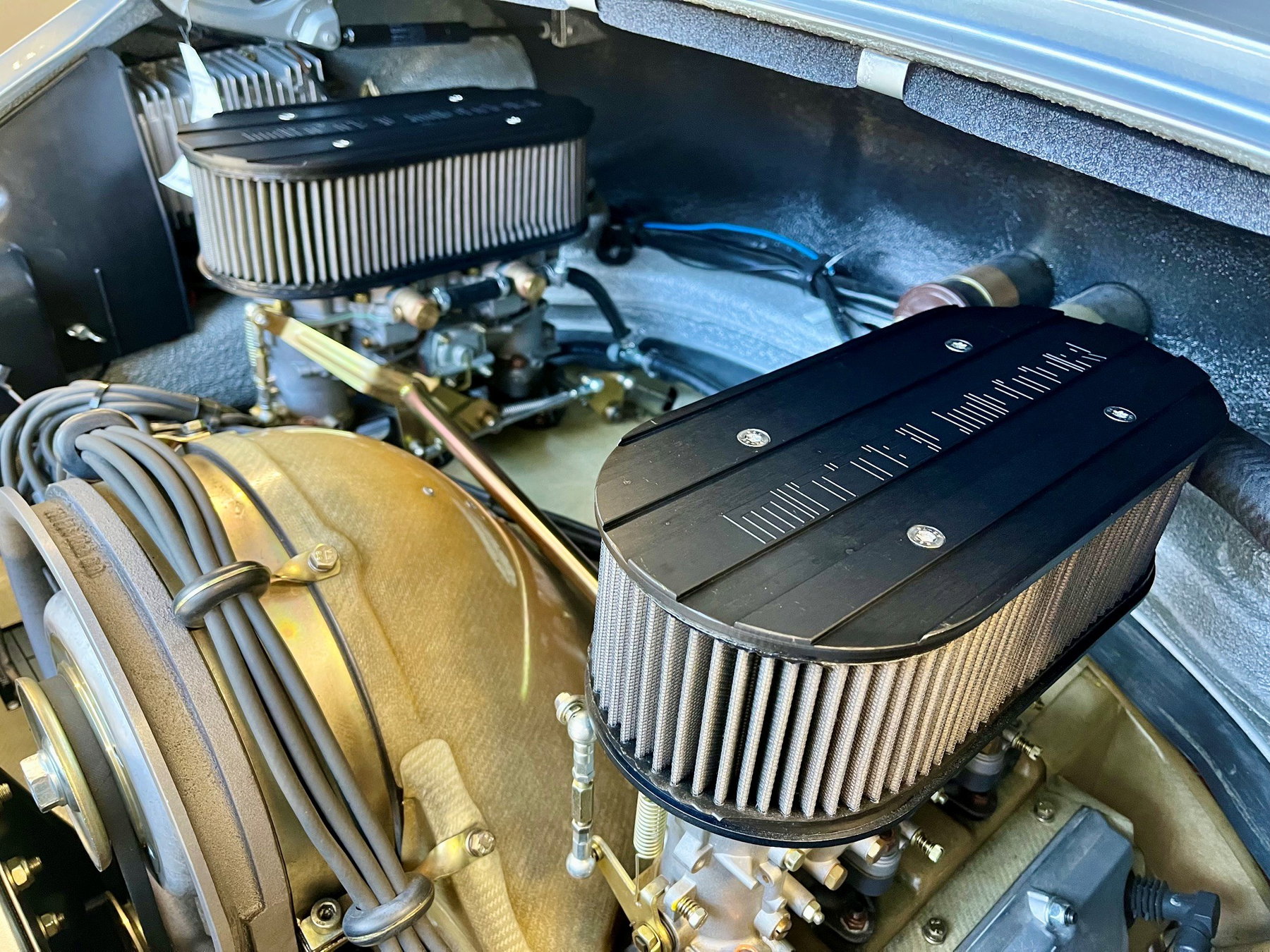
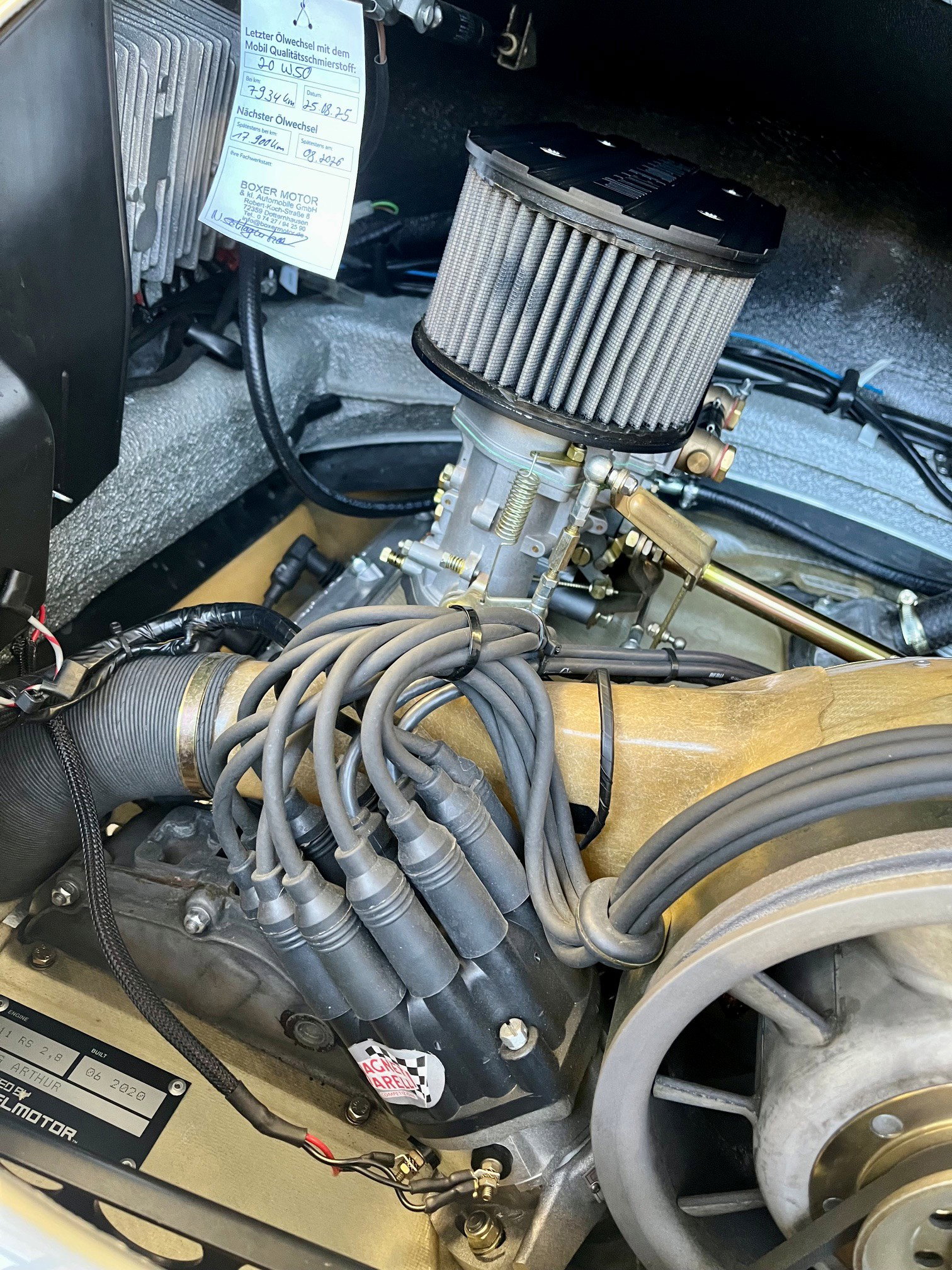
• Weber ID40 carburetor (perfected in 2023 by VGS Motorsport)
• Dual ignition
• Marelli distributor, electronic, 2x Permatune 3-pin HKZ
• Small fan, new alternator
• Complete 3.2-liter oil cooling system with 2.5 ST brass line
• Pressure plate for sport clutch
• Special “mid-engine” camshafts
• Lightweight flywheel
• Yellow GKF engine panels, 2.5 ST compliant
• Catch tank on the right side
• Performance engine oil
transmission
Transmission rebuild by Mittelmotor
• Uses the original, matching No. 901 transmission, 5-speed
• Complete overhaul
• Reinforced racing spacer plate installed
• All attached components are new (clutch, release bearing, speedometer drive, starter, etc.)
Electrical System
• Repair and partial replacement of the original wiring harness in collaboration with Rainer Pfabe
• Emergency stop switch from Bosch
• New starter motor
• New fuel pump
• New windshield washer pump
• Ignition system / 2 new ignition coils
• Second battery (for front-axle weight distribution, not connected)
Original details
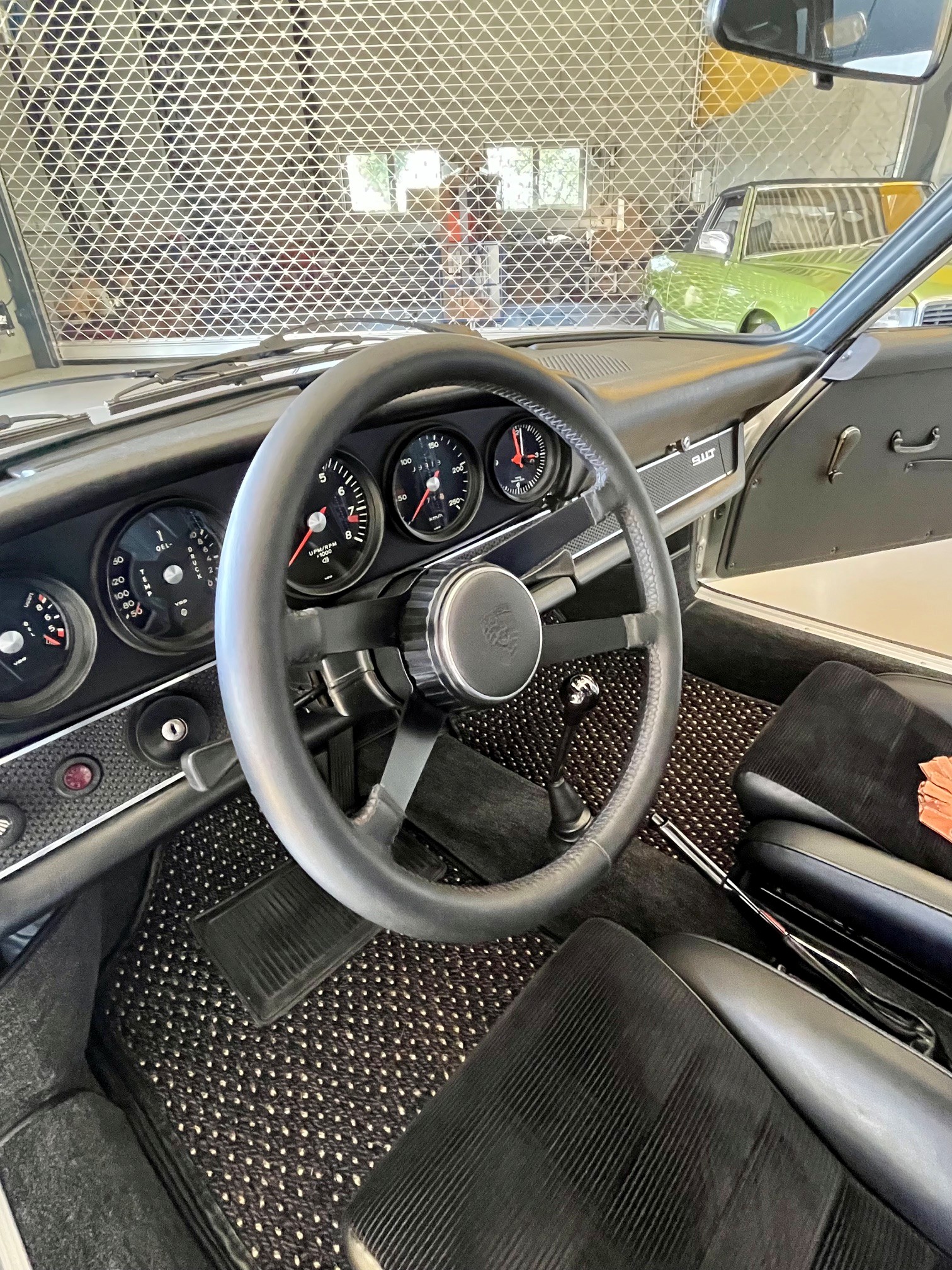
• Original dashboard cover
• Original instruments, completely overhauled (Ritter)
• Tachometer scale (red zone) adjusted to match the 2.8L engine’s RPM range
• 380 mm leather-wrapped steering wheel with a concave design, 2.5 ST compliant, central horn button with Porsche embossing
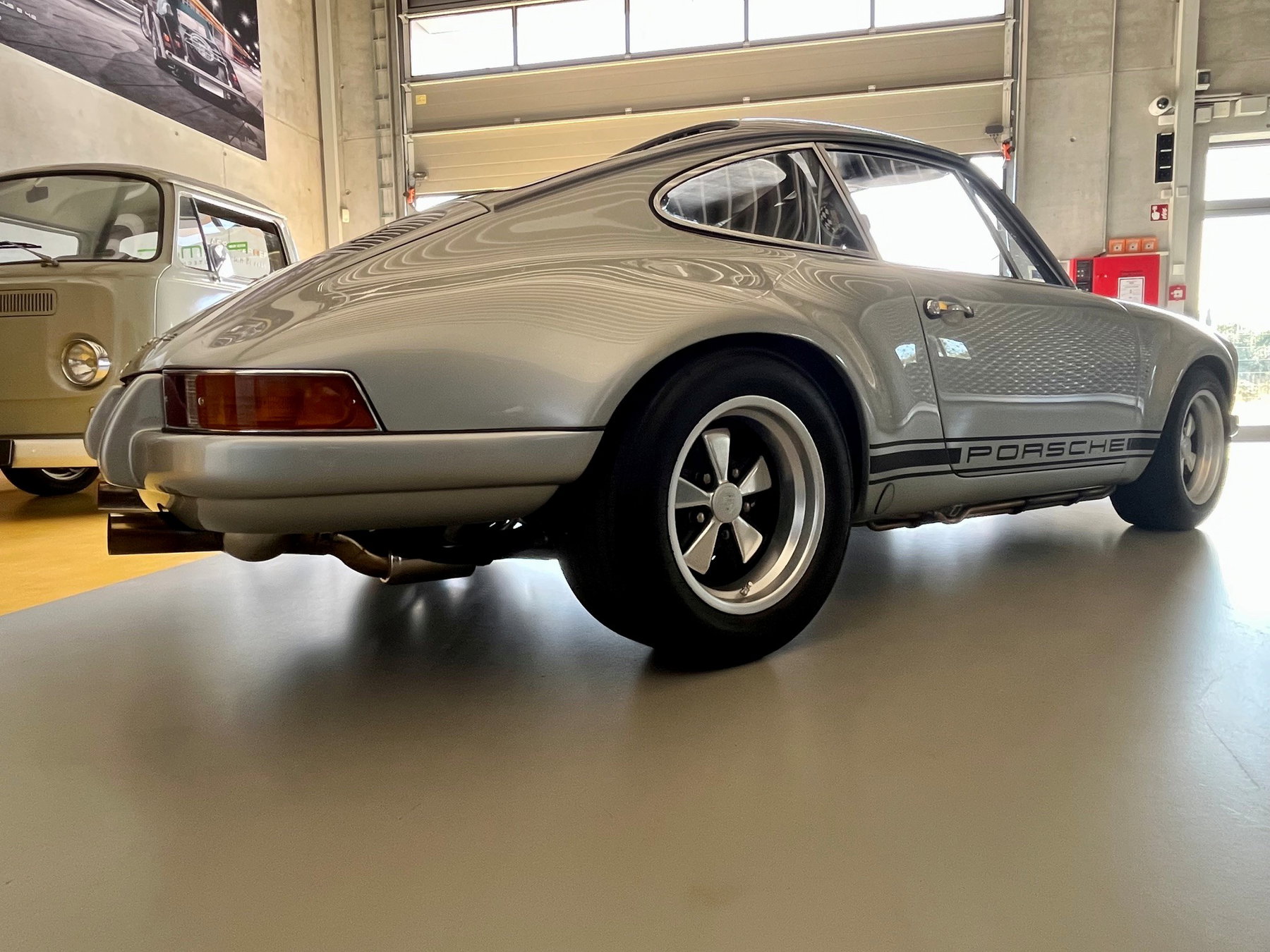
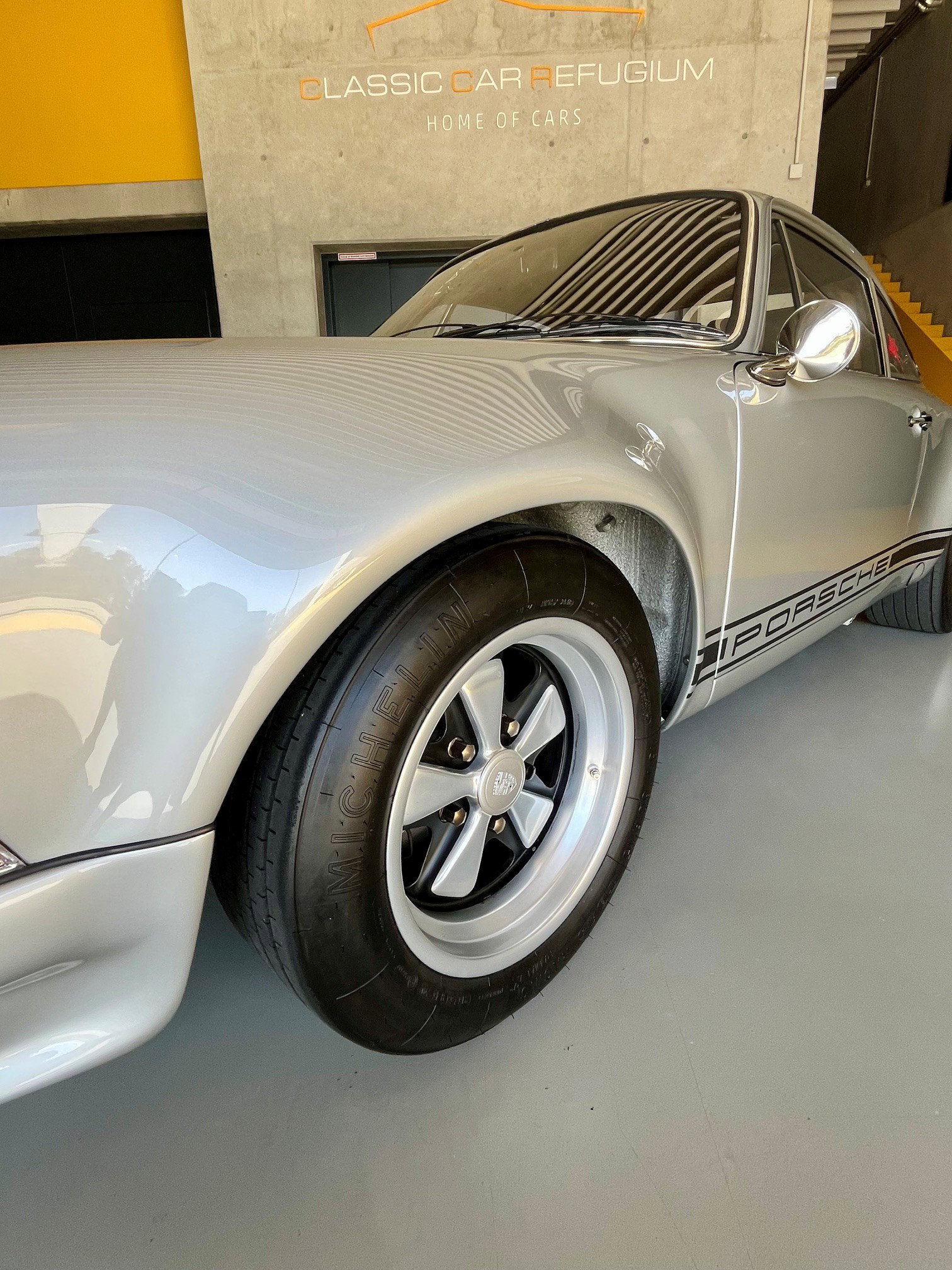
• 15-inch Fuchs rims as NOS original parts, perfectly restored (anodized/painted), 8J front, 9J rear
• Michelin TB15 tires, intermediate, street-legal
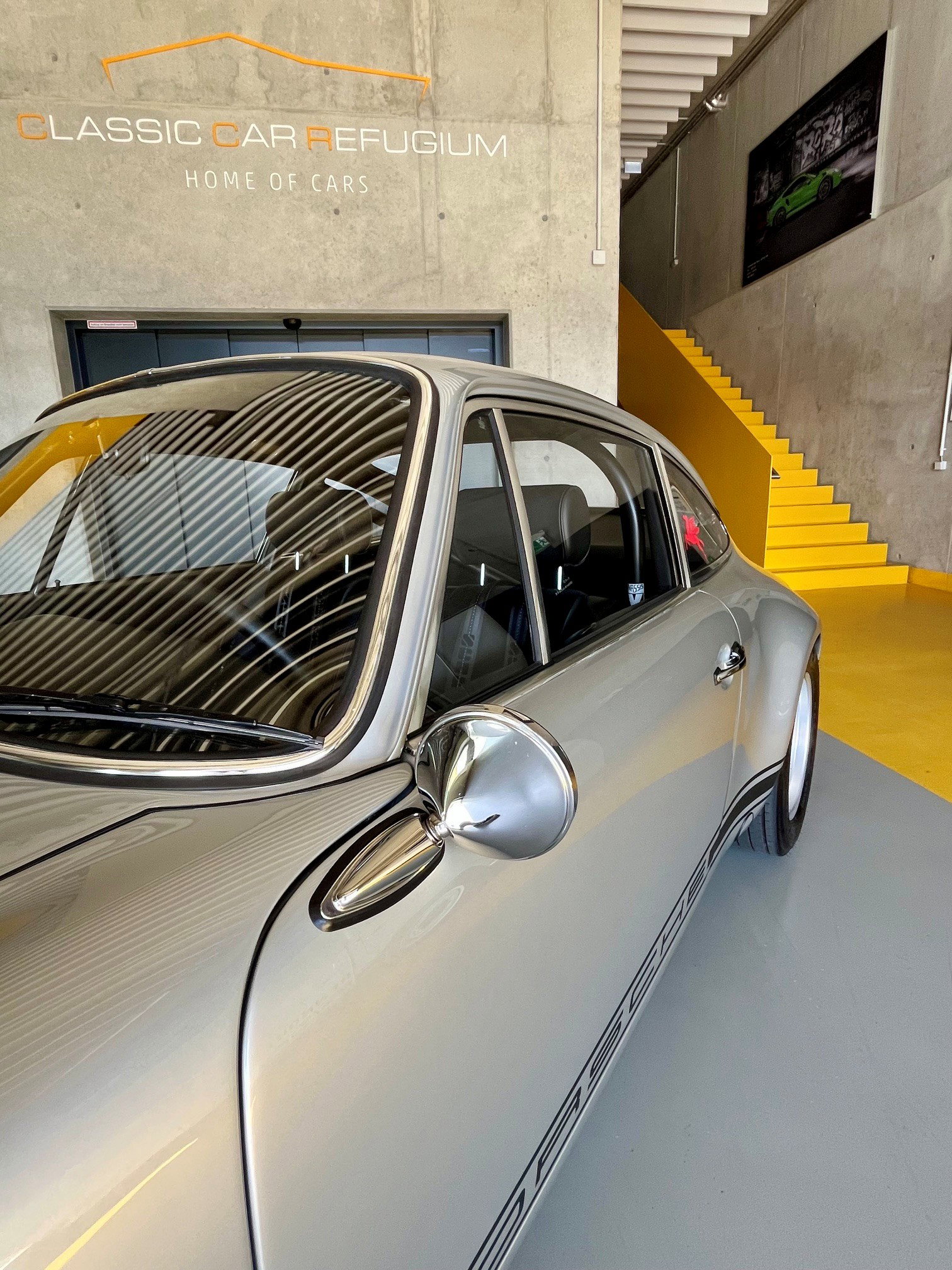
• 1 exterior mirror, round
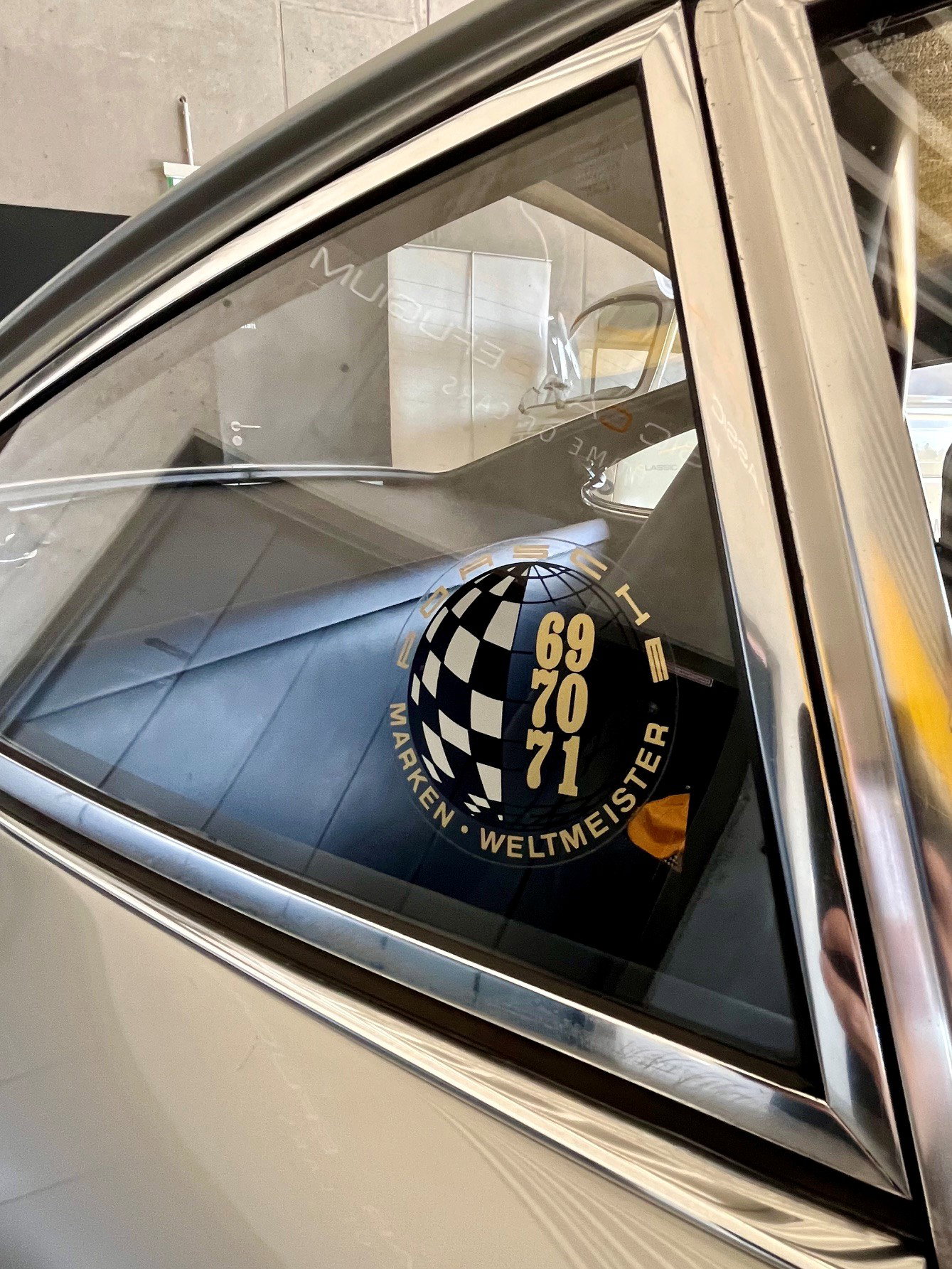
• Original glass except for the windshield
• Door frames / vent windows in original condition
Interior
Finally, a selection of “some” new parts…
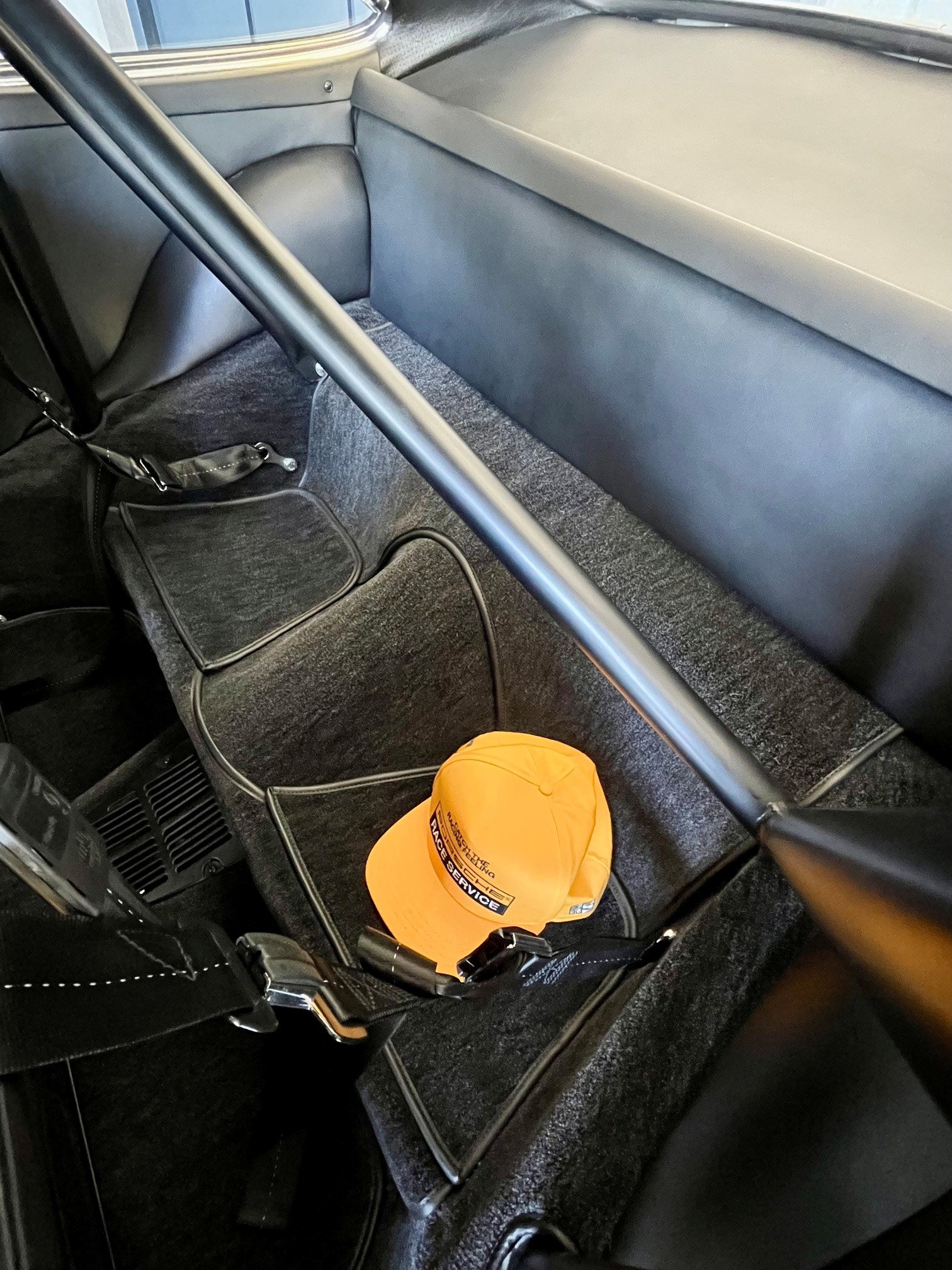
• Thin “heavy-duty” insulation bonded throughout the interior for sound decoupling
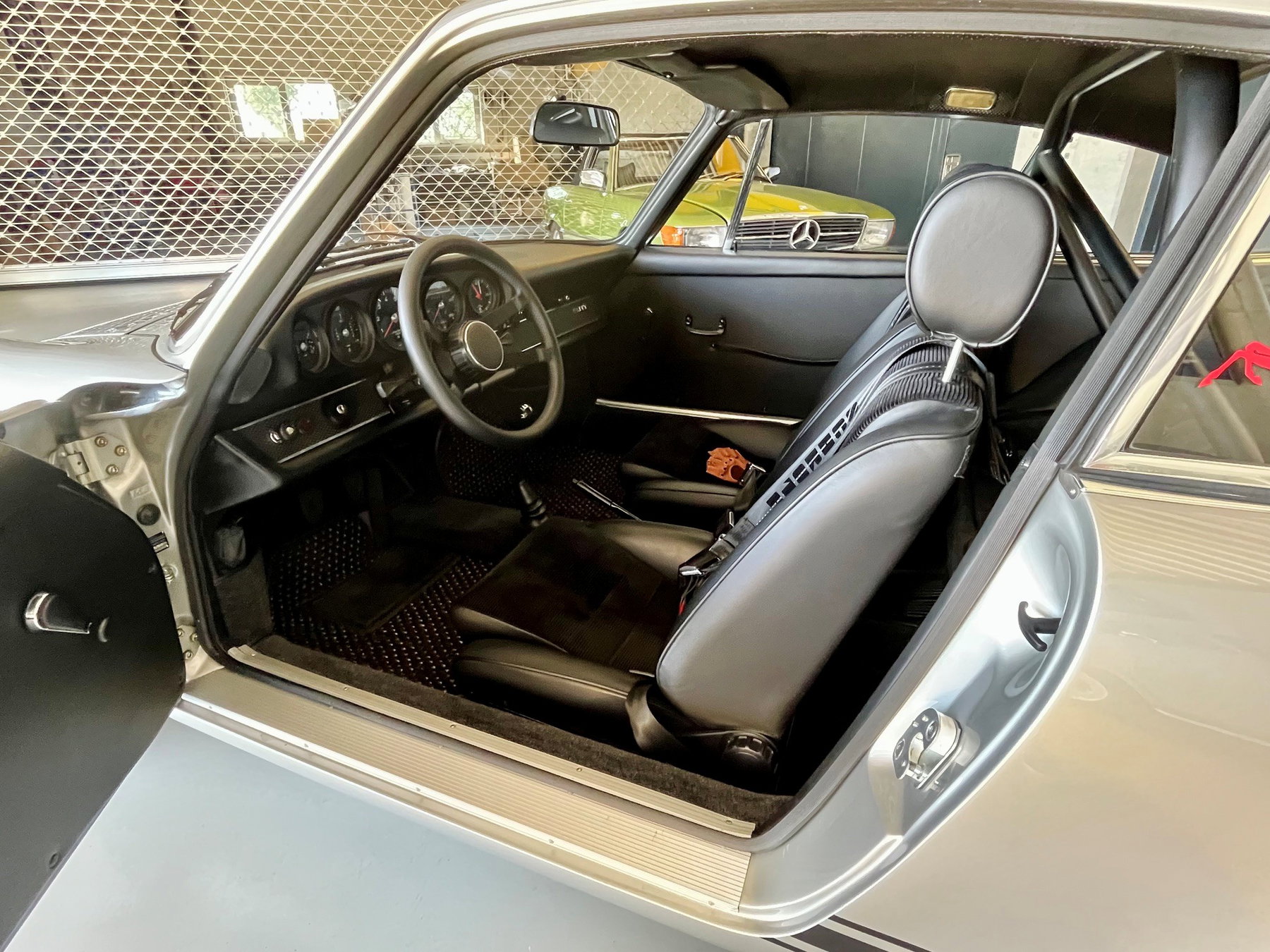
• Original carpet as delivered in 1971, not cheap lightweight material
• Original Coco Mats—but custom-made
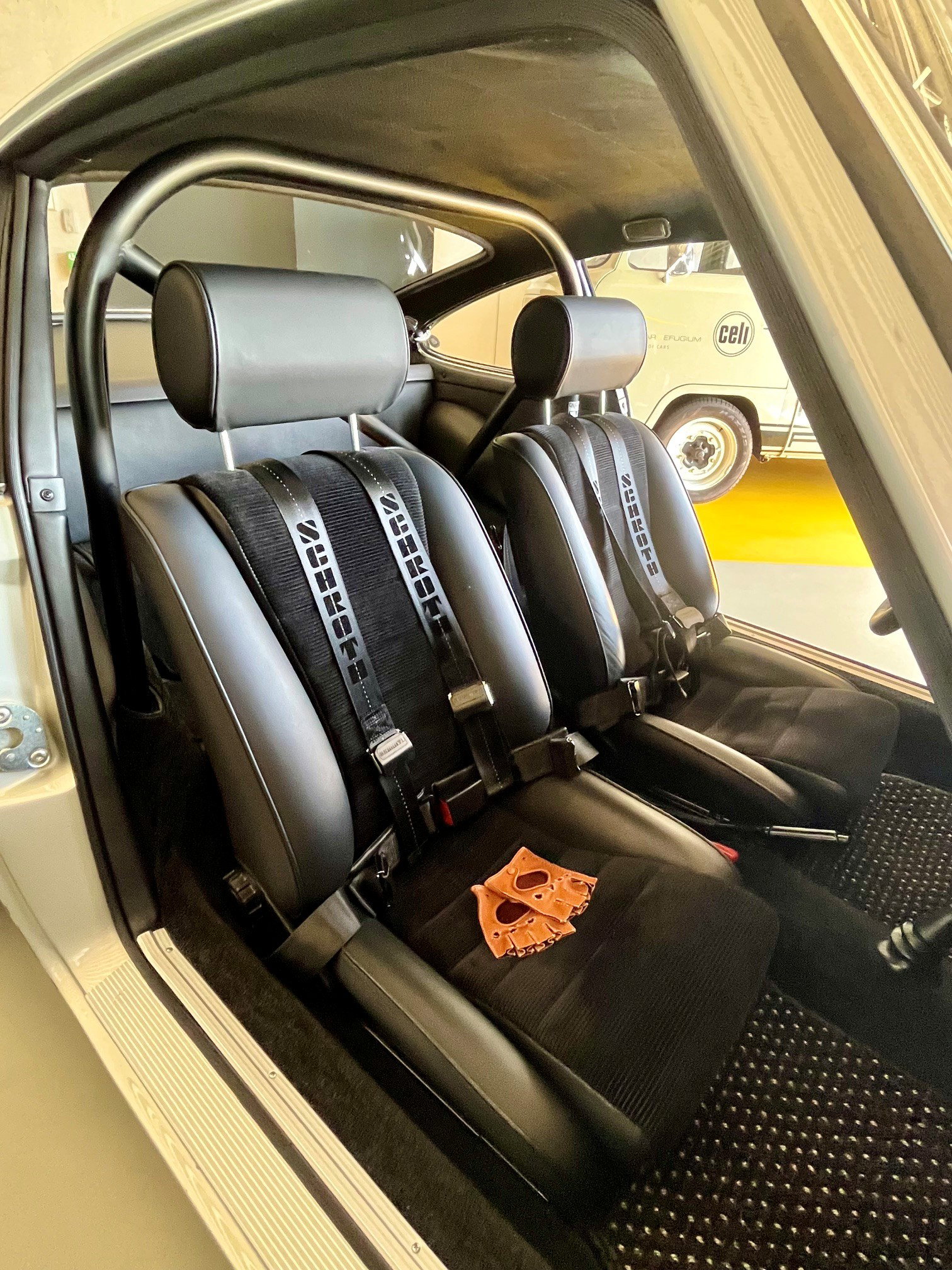
• DP Motorsport seat consoles (sloping backward, suitable even for tall drivers)
• BF Torino S-seats in Recaro S style. Genuine leather + fine corduroy
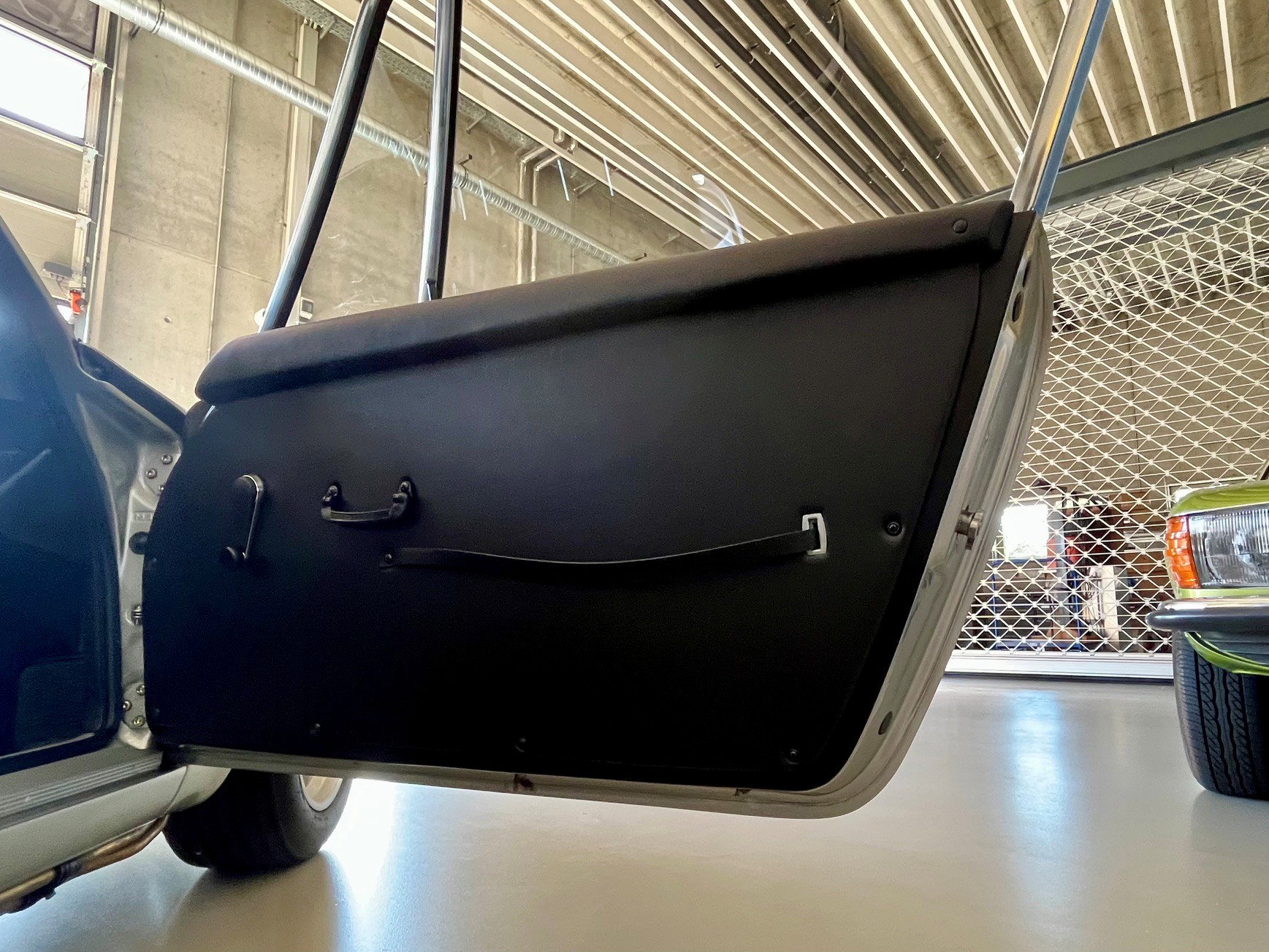
• Leather-trimmed door panels, ST leather loops, and RS/ST handles
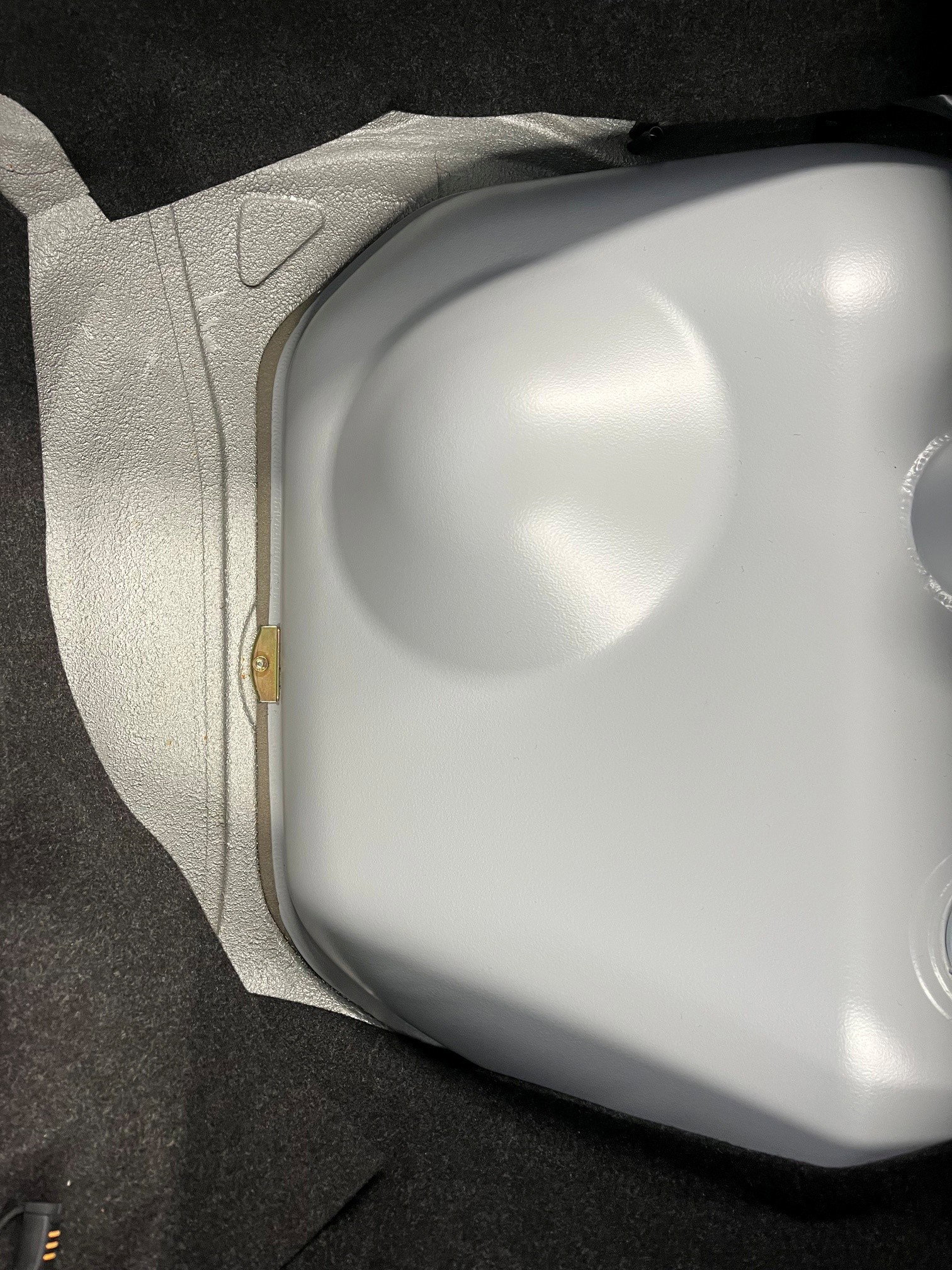
• Rear shelf, trim strips, and rear wheel well covers upholstered in synthetic leather
• Interior mirror
• Windshield
• Black headliner
• Black sun visors
• Woven-grain dashboard
• Wooden footwell panels
• Schroth harness belts approved for street use (black, understated)
911 S/T Story
The Vehicle
After being built at Porsche in Zuffenhausen in 1970, this 911 was first registered in the U.S. in 1971 and spent its entire “first” life there as a standard 2.2-liter 911 T Coupé. The 911 bears the chassis number 9111102079 and was originally delivered in the classic Irish Green color.
The interior was upholstered in black leather and, like the entire cabin, was in very good condition. The last known U.S. owner was from Washington and drove the 911 until its last registration in July 1997. At that time, the five-digit odometer read 78,851 miles. The seats showed no signs of wear, and the original steering wheel was also in good condition. Several factors support this mileage figure, though the actual total mileage has not been confirmed.
In June 2012, the 911 returned to Germany and became part of a larger Porsche and classic car collection near Stuttgart. There, the current owner discovered it in its largely original and untouched condition. As a result, the vehicle provided the perfect and historically appropriate basis for rebuilding a 911 ST modeled after the Porsche limited-production series with the 2.5-liter body. And so its “second” life as a 911 ST 2.5 Rebuild could begin.
Restoration and Bodywork
During the restoration from September 2018 to May 2021, the 911 was disassembled down to the last screw and completely stripped of its paint using a gentle abrasive. Sand was expressly not used in the process.
Some rust spots were found in the typical areas, including the frame areas around the front and rear windows as well as the battery compartment. Overall, however, the body was in very sound condition, with mostly superficial surface rust. The side sills were removed, the underlying areas inspected, sandblasted, and treated with rust inhibitor, and new side sills were then installed.
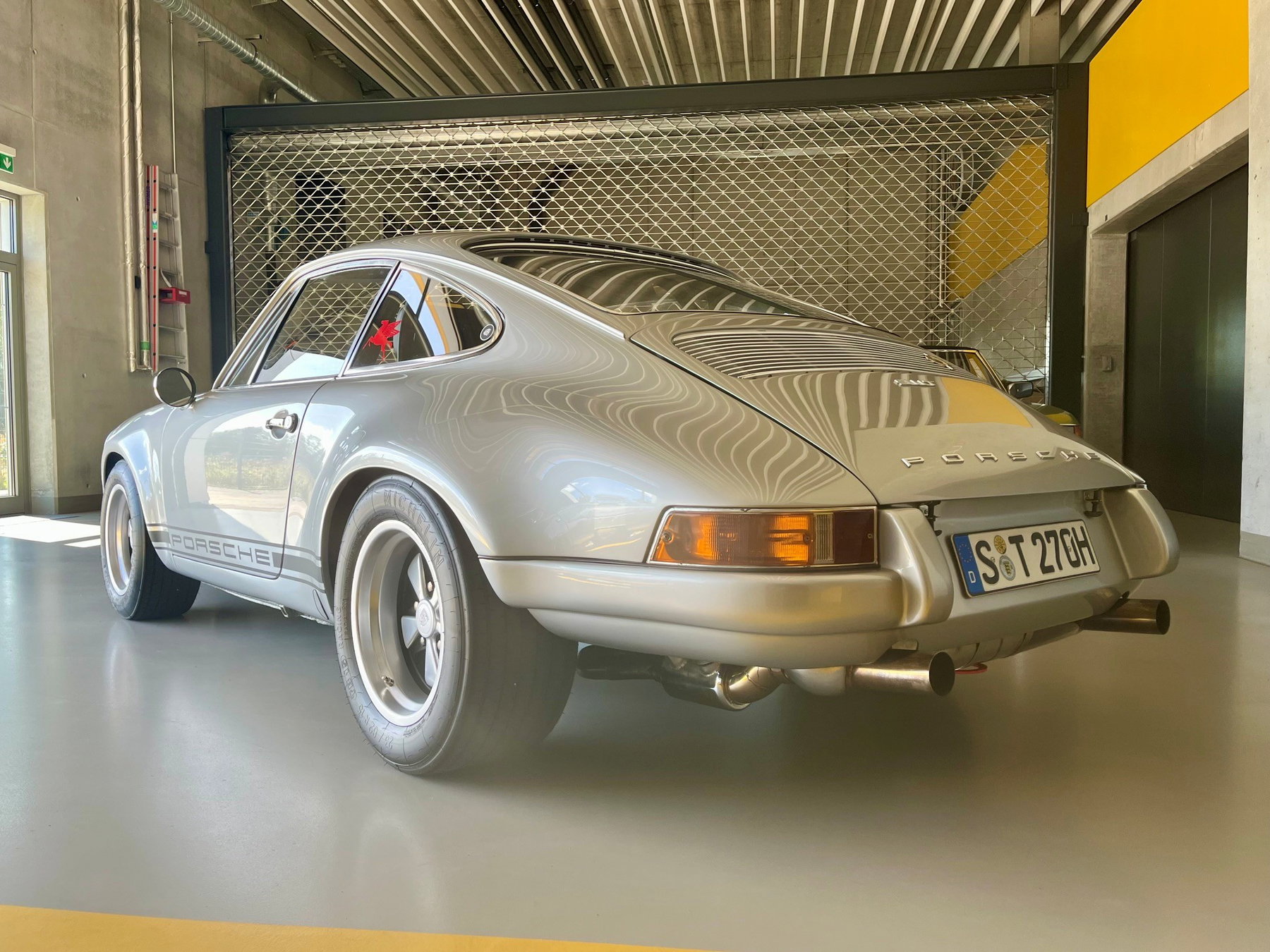
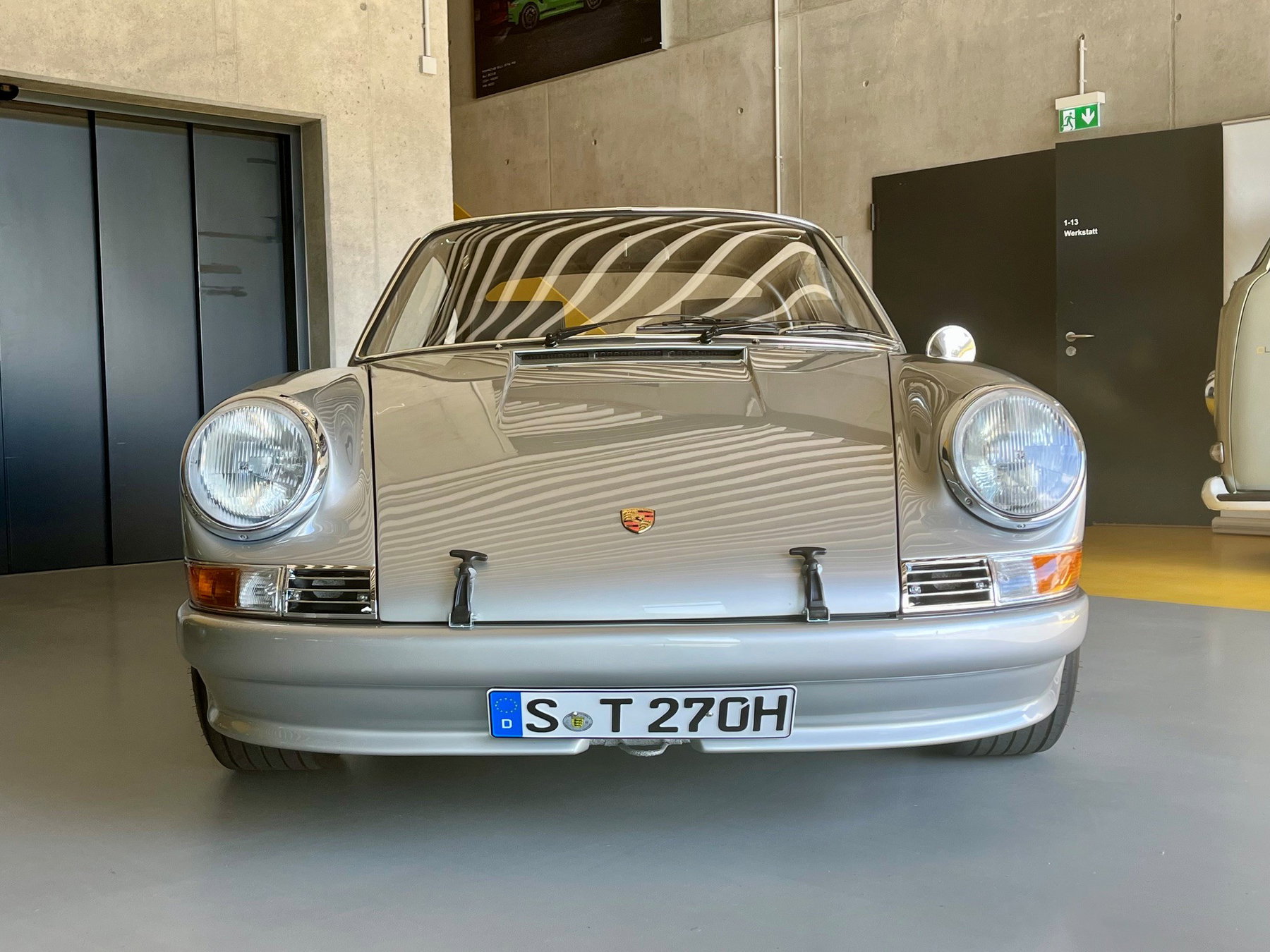
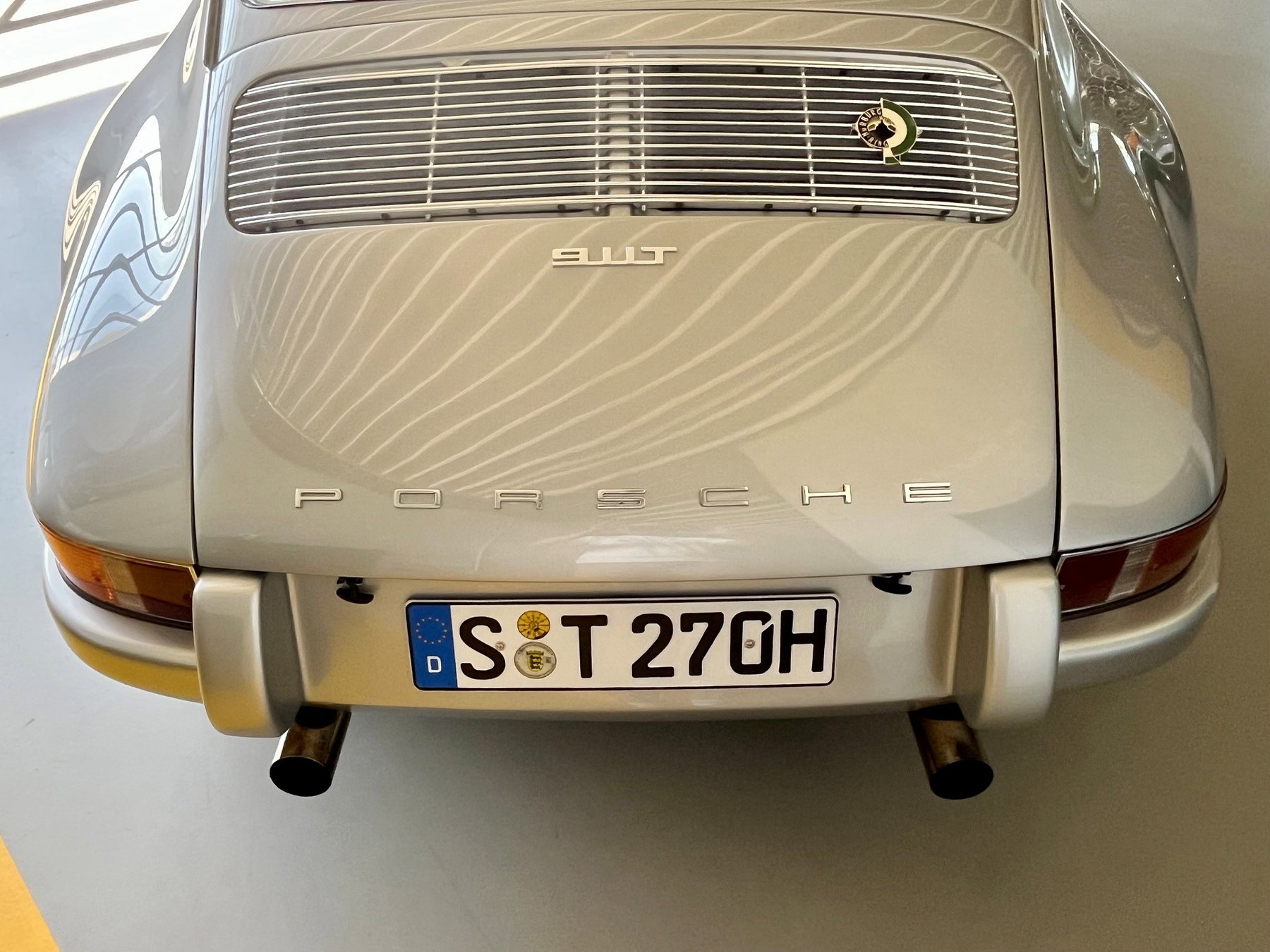
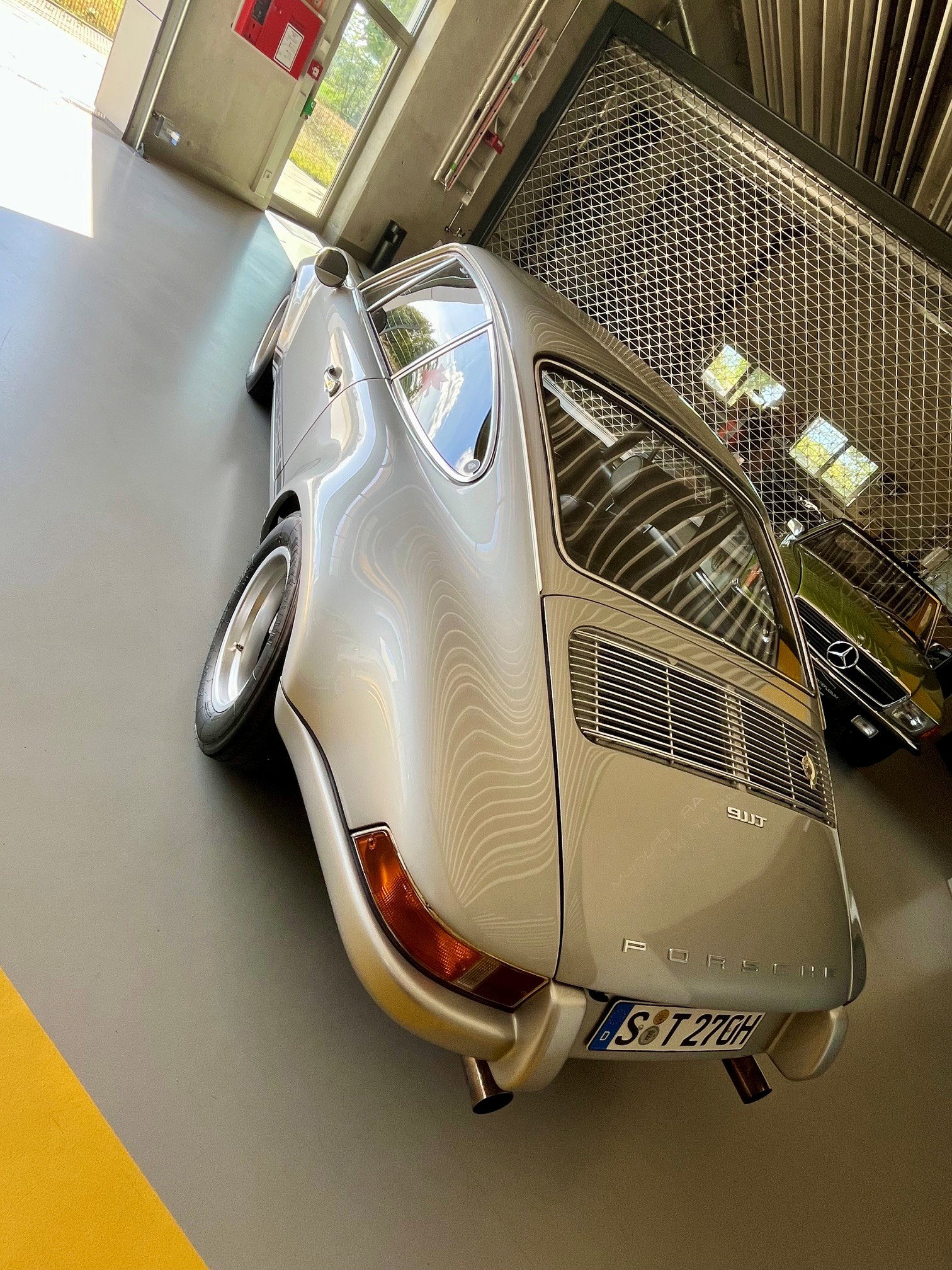
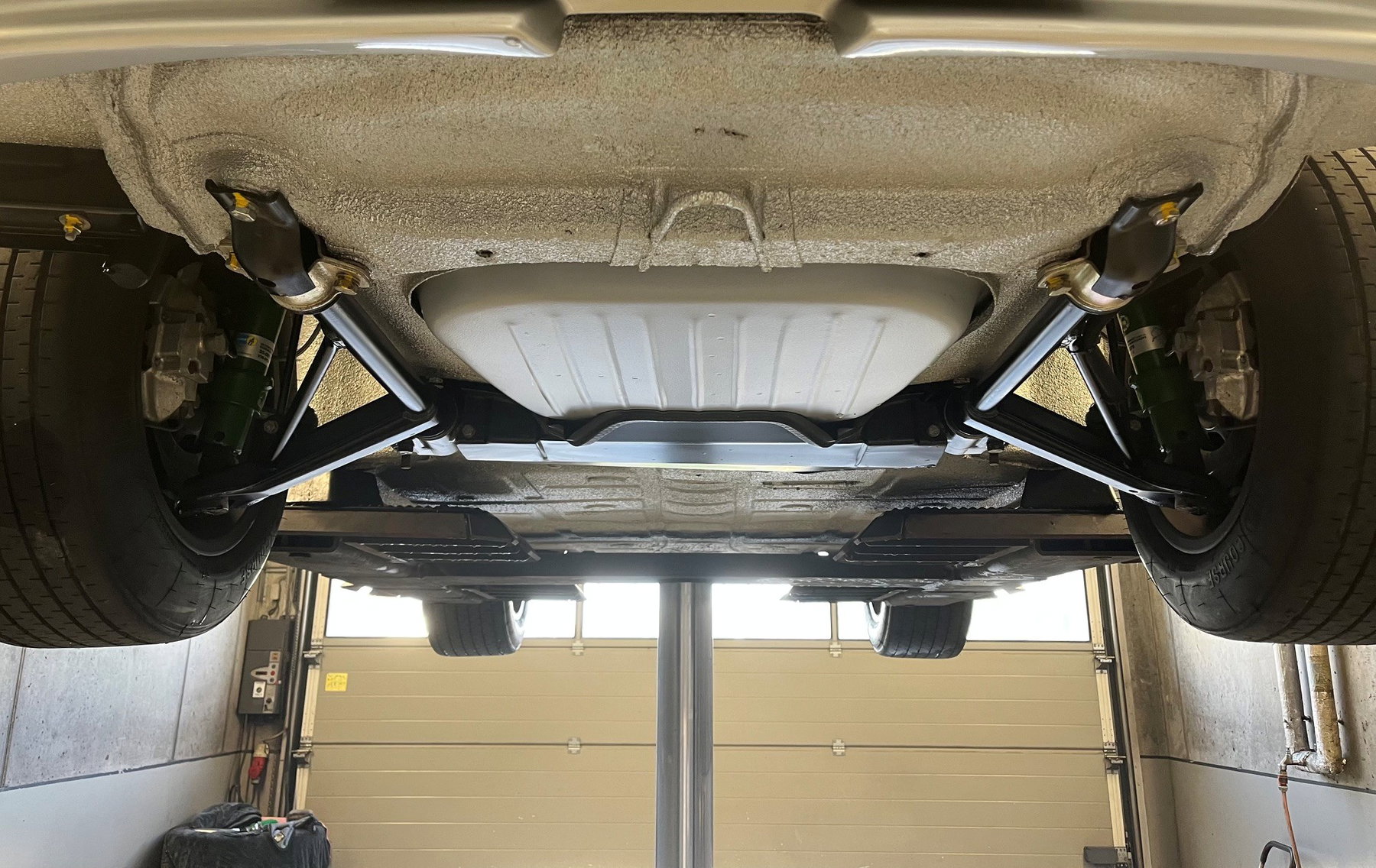
The original underbody was preserved, and the entire body was inspected and measured on a straightening bench. The 2.5 ST’s characteristic rear fender flares are made of steel. The body parts characteristic of the 911 ST—such as the trunk lid, front and rear bumpers, and fenders—were fabricated from fiberglass and installed with precise gap dimensions.
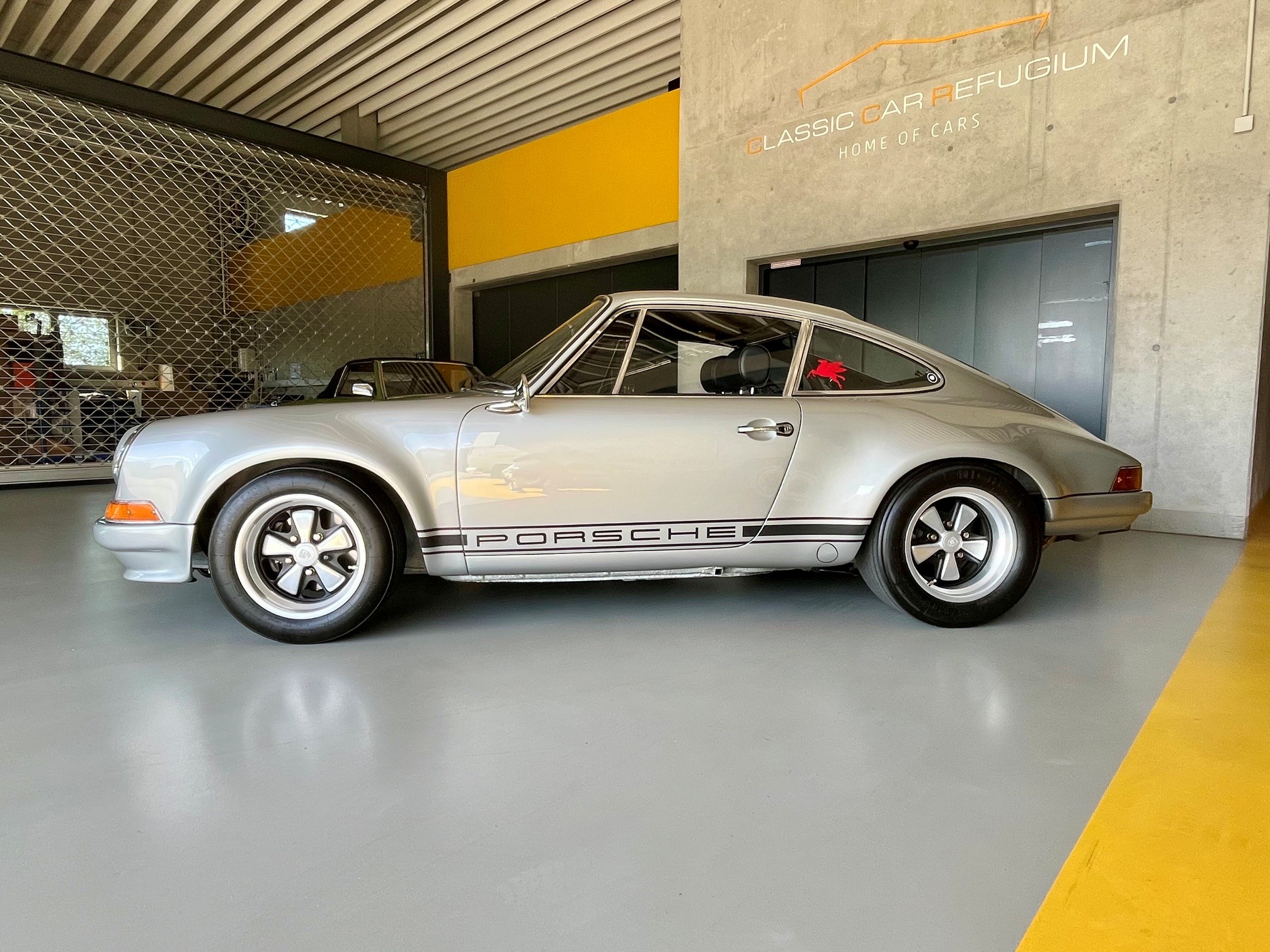
The vehicle was then painted in a period-correct silver metallic, color code 8080. It also features black Porsche lettering on the sides, as well as seat center panels made of black corduroy and genuine leather on the sides and backs of the seats.
The paintwork was renewed according to German standards, with the putty layer reduced to a minimum. Numerous areas, including the rear steel fender flares, were traditionally tin-plated. The paintwork matches the color code of early Porsche 911s from the 1970s.
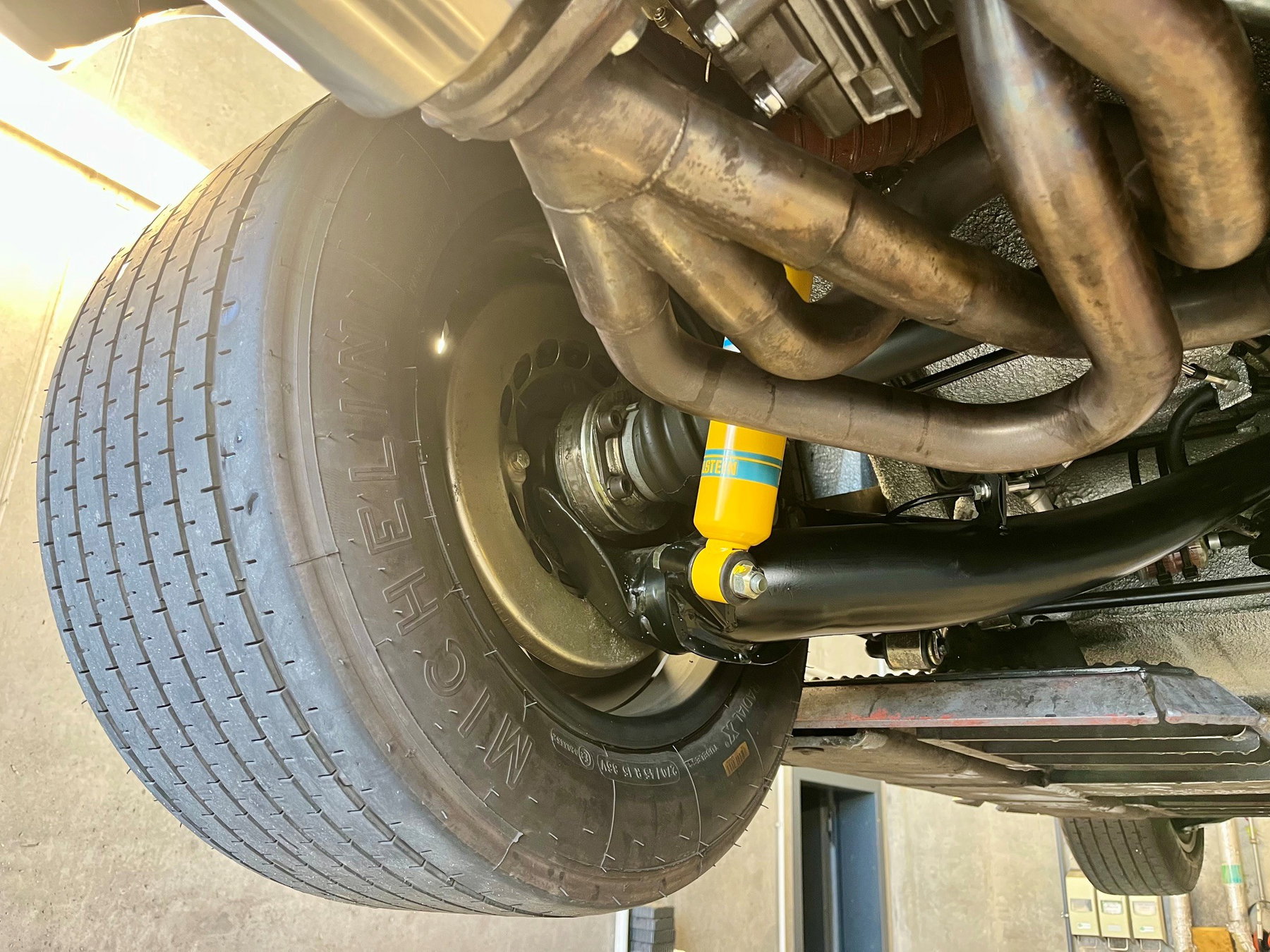
The original dimensions of the 2.5 ST suit the vehicle perfectly. The ride height has been carefully tuned. Combined with original Bilstein shock absorbers tuned for the Nürburgring, the 911 drives reliably and comfortably even at higher speeds.
The polished aluminum on the door frames and vent windows is in its original condition. The air intake grille on the hood is also original. All glass panels are original; only the windshield has been replaced.
Wheels, Suspension, and Brakes
The ST is equipped with original Porsche wheels—8J on the front axle and 9J on the rear axle. The vehicle is fitted with Michelin TB15 tires, which are suitable for both dry and wet roads.
The braking system features an adjustable dual-circuit system derived from racing. The front axle is equipped with the legendary RS aluminum brake calipers, while the rear axle features standard steel brake calipers.
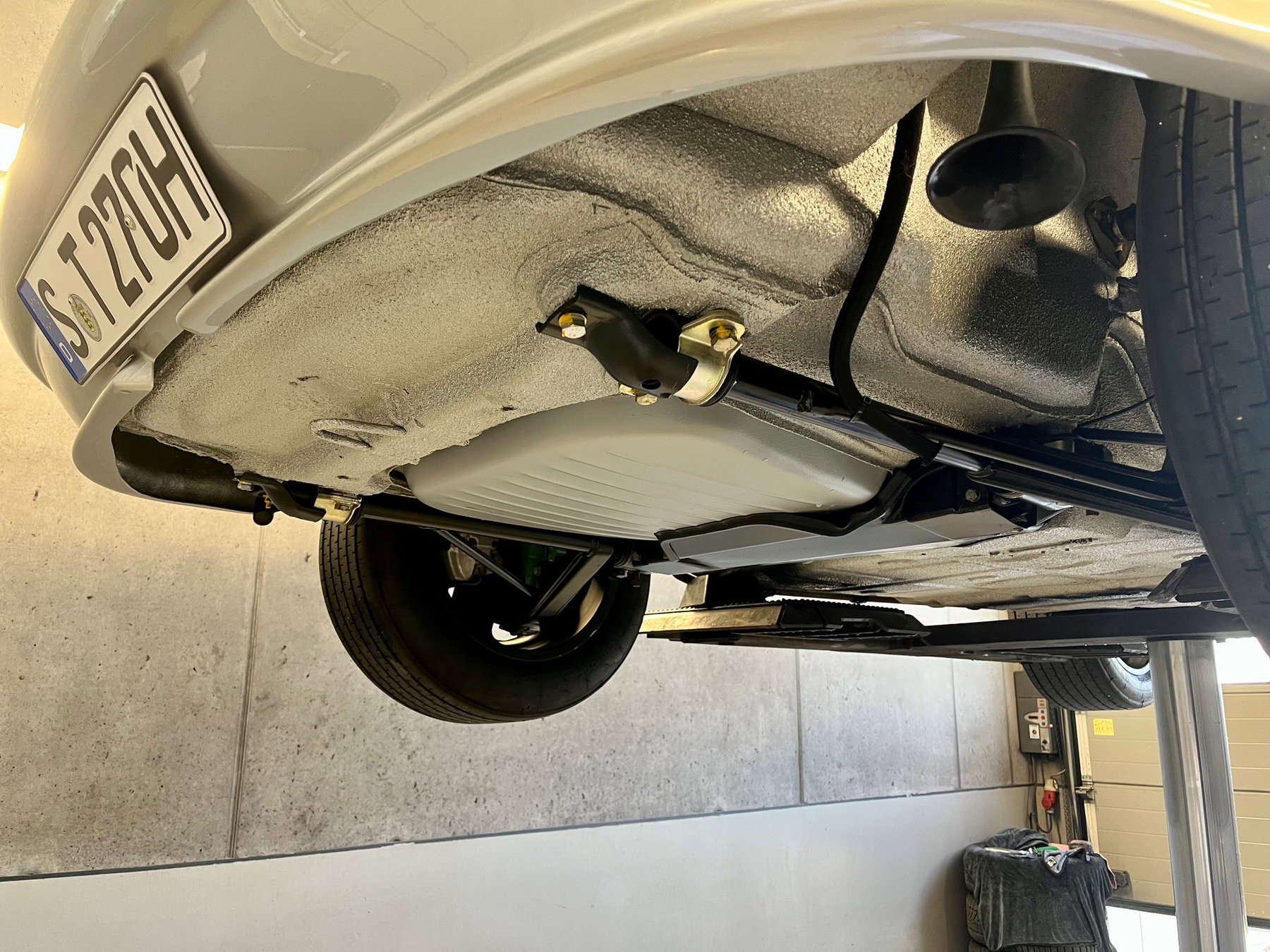
In addition, the 911 features reinforced torsion bars, a complete stabilizer bar system with improved rubber mounts, and a configuration tuned to the suspension and performance.
Interior
The interior was deliberately not stripped down for uncompromising motorsport use. Like the entire vehicle, it was designed for road use with a strong focus on Porsche authenticity.
This includes original carpets, sports seats, the early dashboard trim from the 1968–1971 model years, and period-appropriate details. To add a sportier touch, an original black headliner, harness-style seat belts, a faithfully reproduced 911 ST roll bar, and the classic ST/RS door panels with leather loops were installed.
The leather steering wheel measures 380 mm and has an optimized angle to position it closer to the driver. The instruments are a perfect match for the vehicle and have been completely overhauled. The odometer was reset after restoration, and the tachometer was rescaled to match the current 2.8-liter engine.
All buttons and switches date from 1971 and retain their authentic patina.
Engine
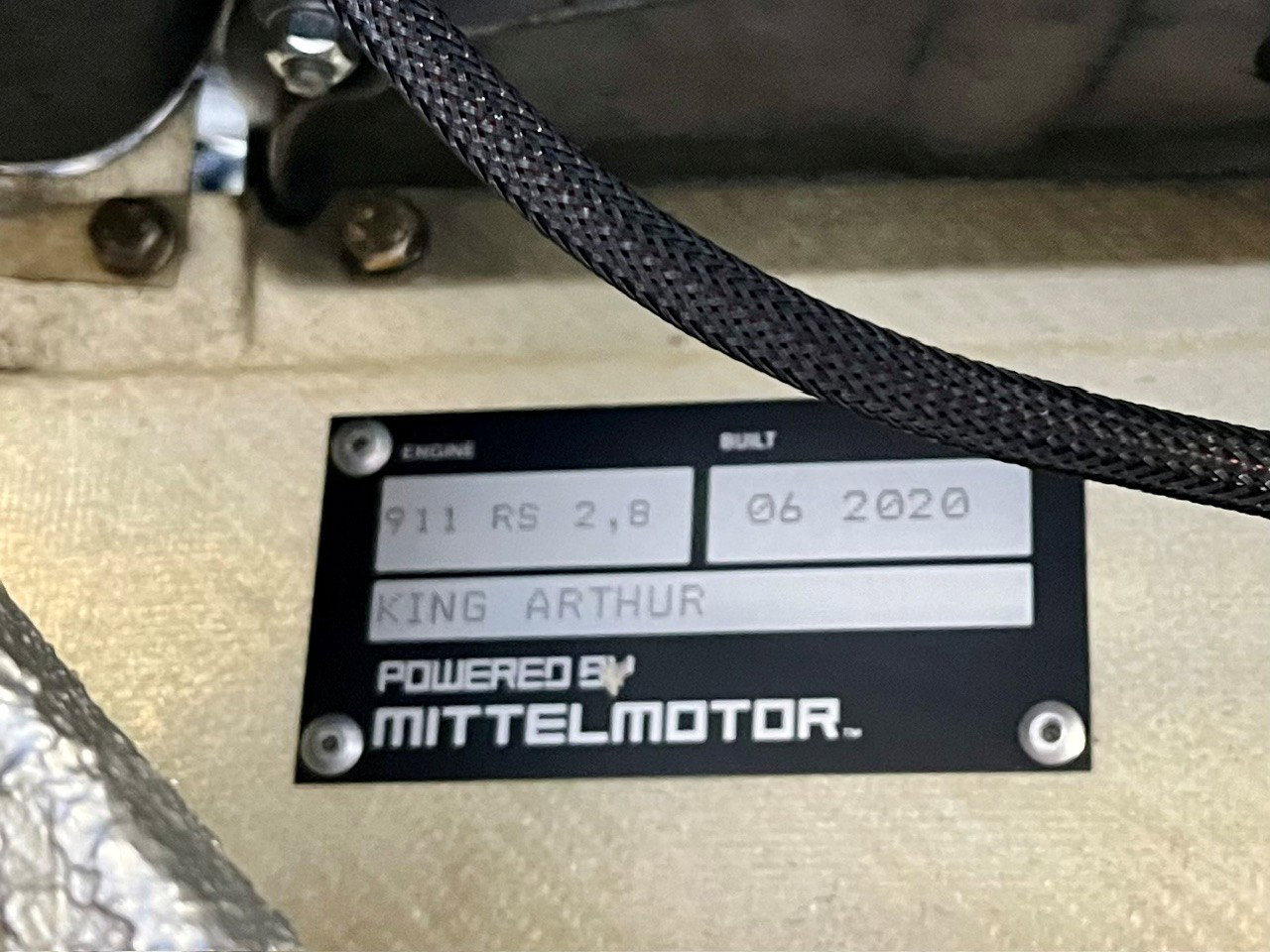
Installed is a Porsche 911 RS engine with dual ignition, built as a 2.8-liter sports engine and delivering 270 PS and 300 Nm. The engine is named “KING ARTHUR.”
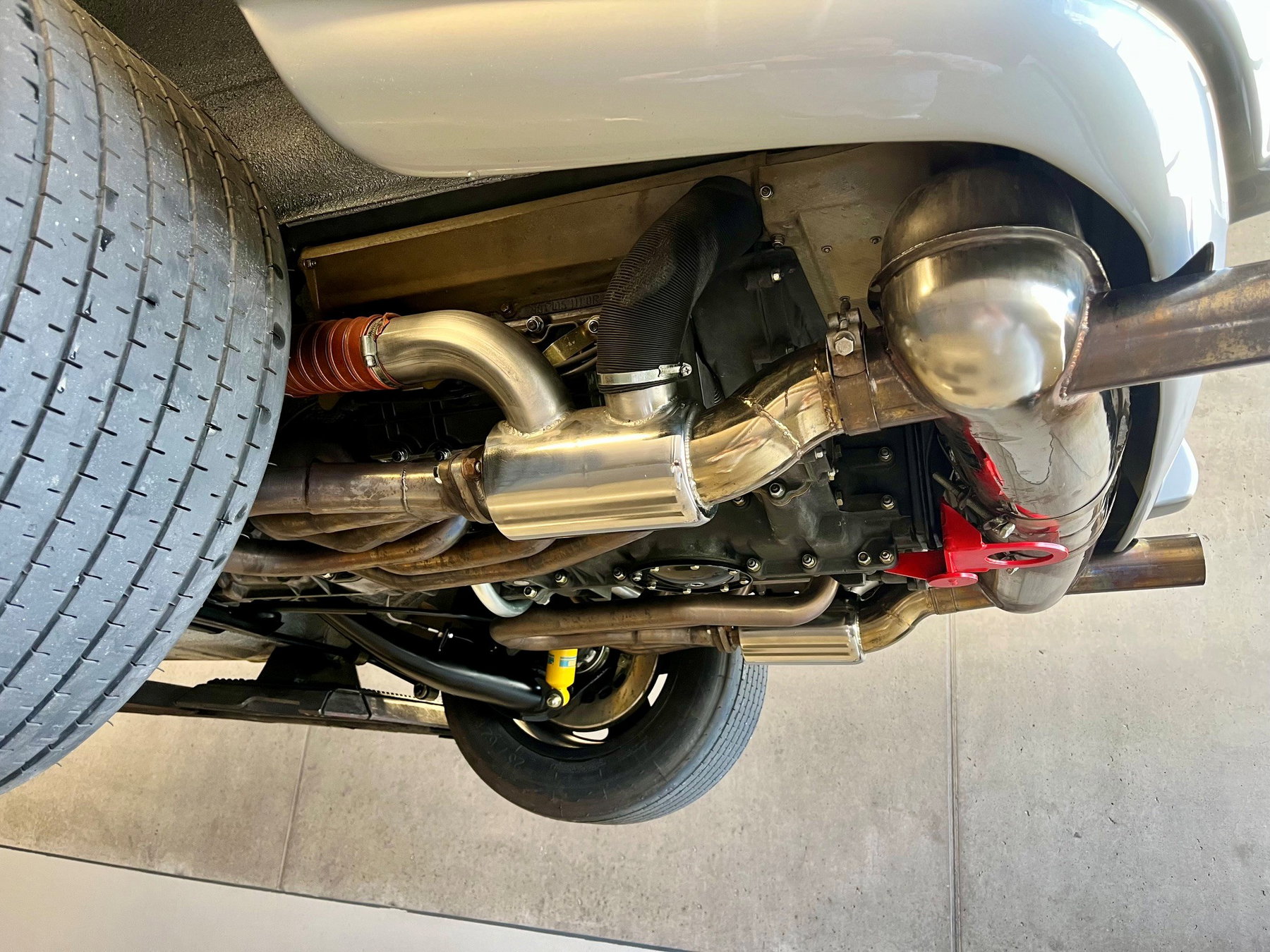
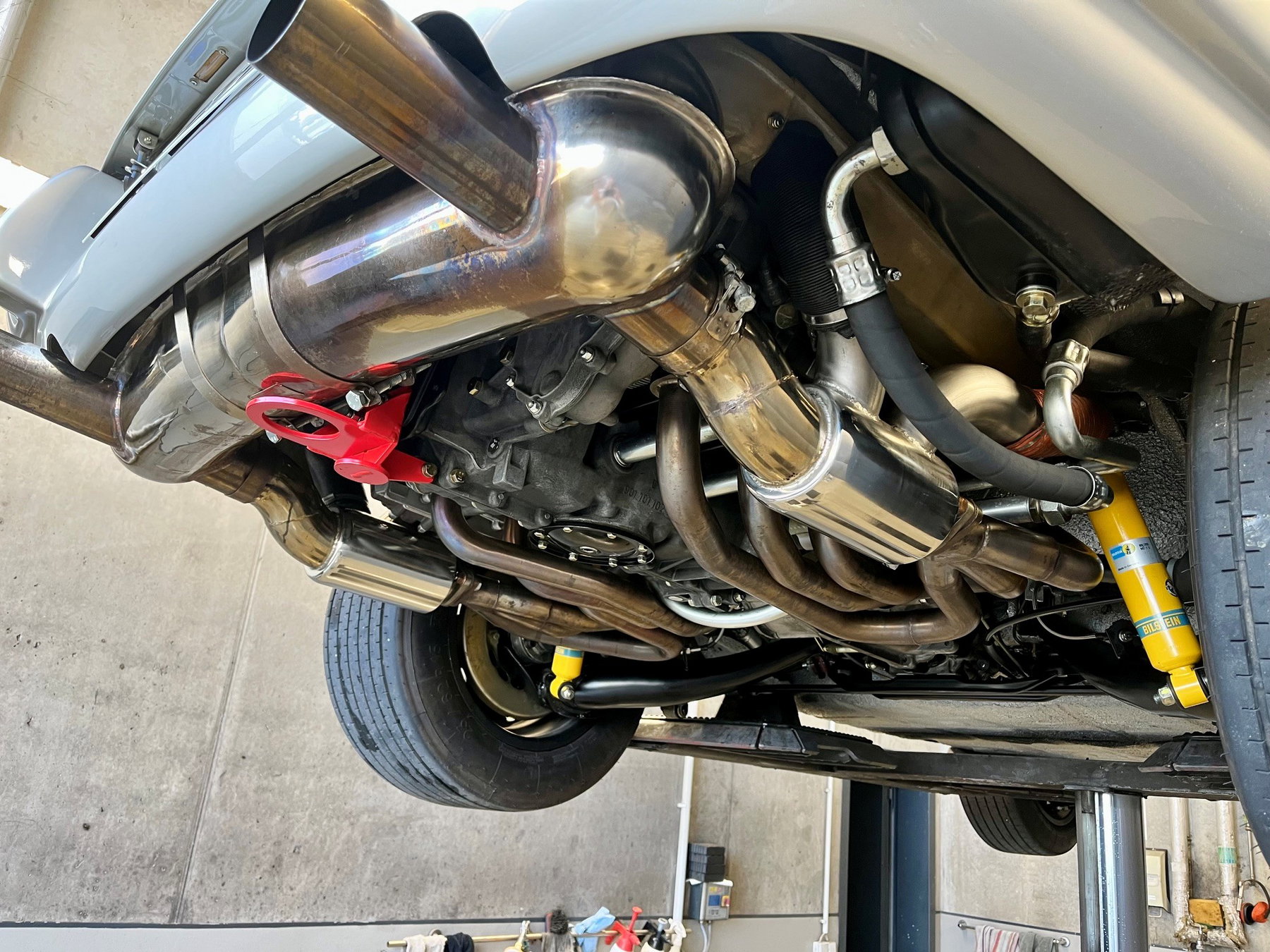
It features the oil cooling system of a 3.2-liter engine with gold-colored brass lines running along the right side sill. Like the entire chassis setup, the engine was built by Mittelmotor in Bochum, a company specializing in Porsche engine technology and historic motorsports.
The engine was specifically designed for a 911 ST that was not intended for use in racing according to homologation regulations, but rather as a street-legal vehicle. The goal was to achieve high driving dynamics with significantly increased torque even at moderate RPMs.
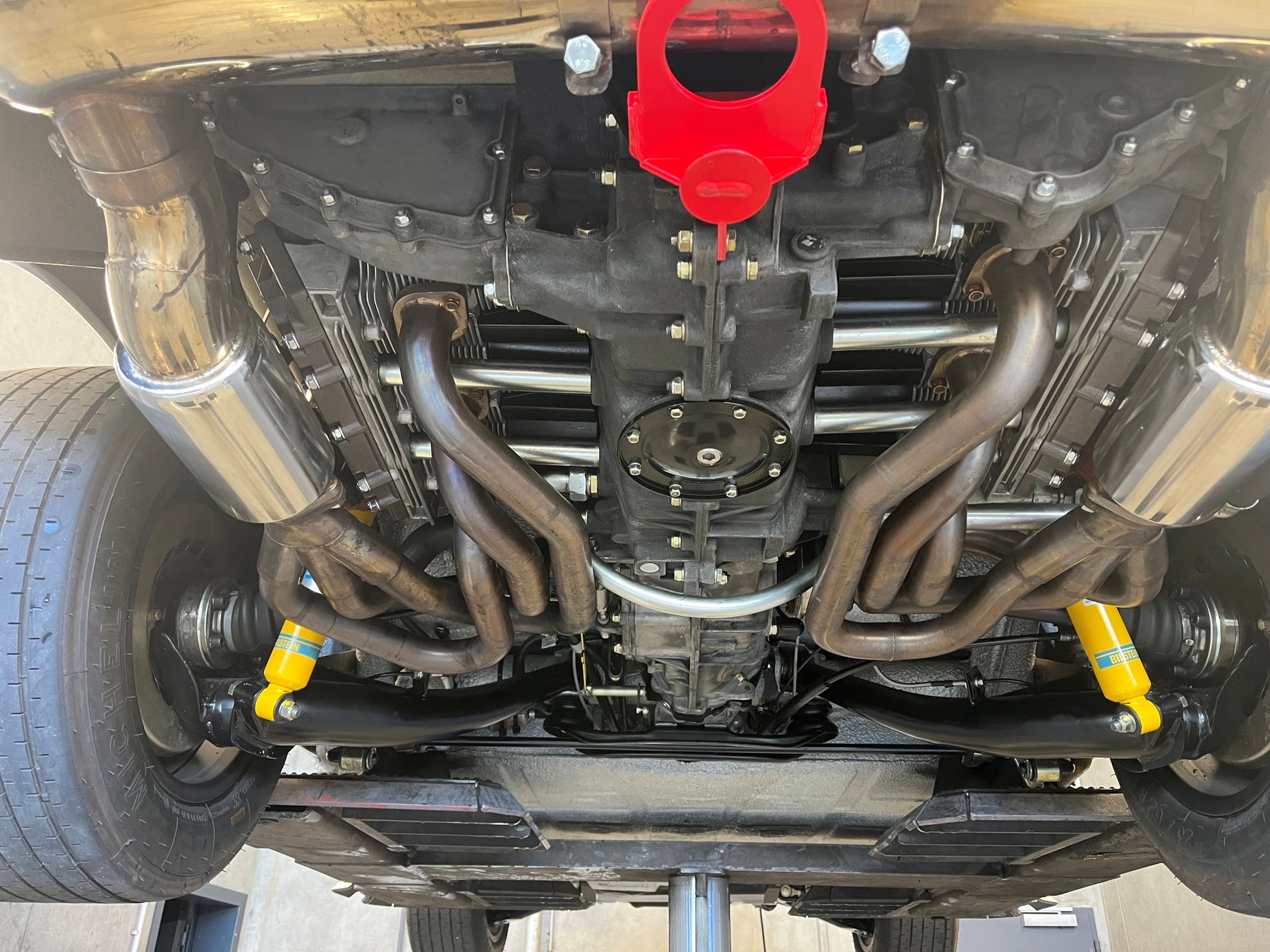
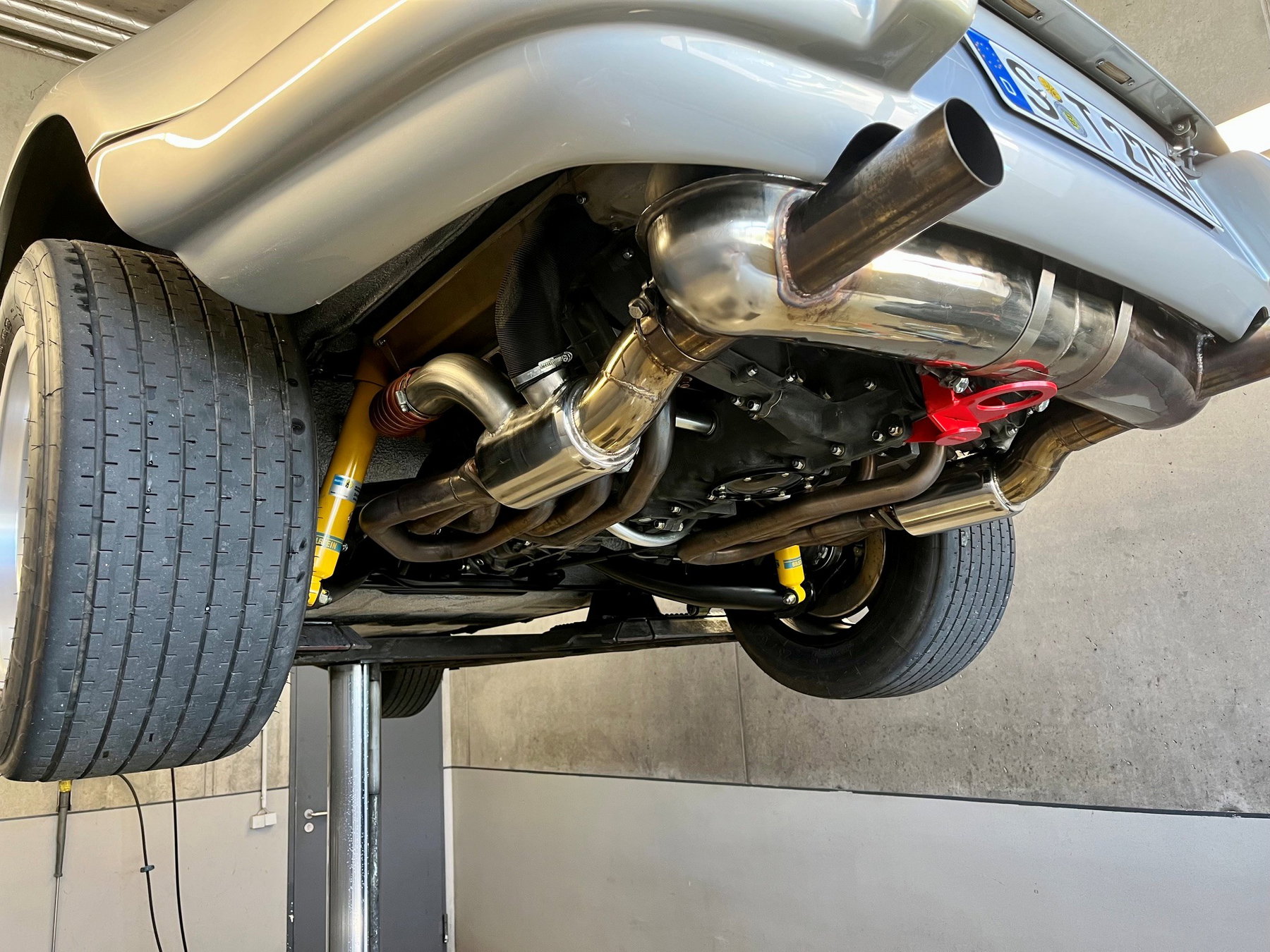
Visually, the powerplant is modeled after the racing engines that Porsche used as factory-spec in 911 ST rally cars. Among other components, it features 40-series Weber carburetors, stock intake manifolds, a small cooling fan, and a stainless steel 911 ST exhaust system.
Inside, high-quality racing components are used, including lightweight forged racing pistons in aluminum/Nikasil cylinders, forged racing connecting rods, a magnesium engine block, and a Magneti Marelli dual ignition distributor. In addition, there are numerous detailed improvements designed specifically to enhance the engine’s durability.
The entire design has been tailored to its intended use. Despite the high maximum torque of 300 Nm, nearly 200 Nm is already available below 2,000 rpm. The maximum power output of 270 PS is reached at 7,100 rpm.
transmission
The original 901 transmission was completely disassembled, cleaned, measured, and overhauled. All synchronizer rings, as well as all clutch bodies and shift sleeves, were replaced.
A racing-spec spacer plate was installed for reinforcement. The shift gate and guide were retained in their original form for aesthetic reasons but were optimized to eliminate play.
The clutch pressure plate is a reinforced racing version designed to transmit the high torque reliably and directly. At the same time, the smooth shifting ensures that the ST drives effortlessly and with great driving pleasure.
Condition and Mileage
The extent of the rebuild is also evident on the underbody: Virtually every screw has been replaced, and all components have either been renewed or restored to their original condition.
Finally, the 911’s cavities were treated with wax for preservation. The vehicle is driven exclusively in good weather on public roads with a historic license plate.
Since the restoration was completed, the odometer reading currently stands at approximately 9,800 km. This means the ST is now perfectly broken in and ready for a new owner who will appreciate the extensive work and the special craftsmanship that went into this vehicle.







 1978


 1974

 1991