With the 992 series, Porsche turned the 911 into the definitive sports car for everyday use. A largely digitalized cockpit, additional driver-assistance systems, and the eight-speed PDK defined the new generation. As used cars, the first Carrera and Carrera S models are now also of interest to those who have previously been looking for a 991. But what about the technology? In our Porsche 992 Carrera buying guide, we’ll show you what known weaknesses exist and what you should look out for when inspecting and test-driving a 911 Carrera or Carrera 4 from model years 2020 through 2024.
How does the Porsche 992 Carrera differ from its predecessor and from the Carrera S?
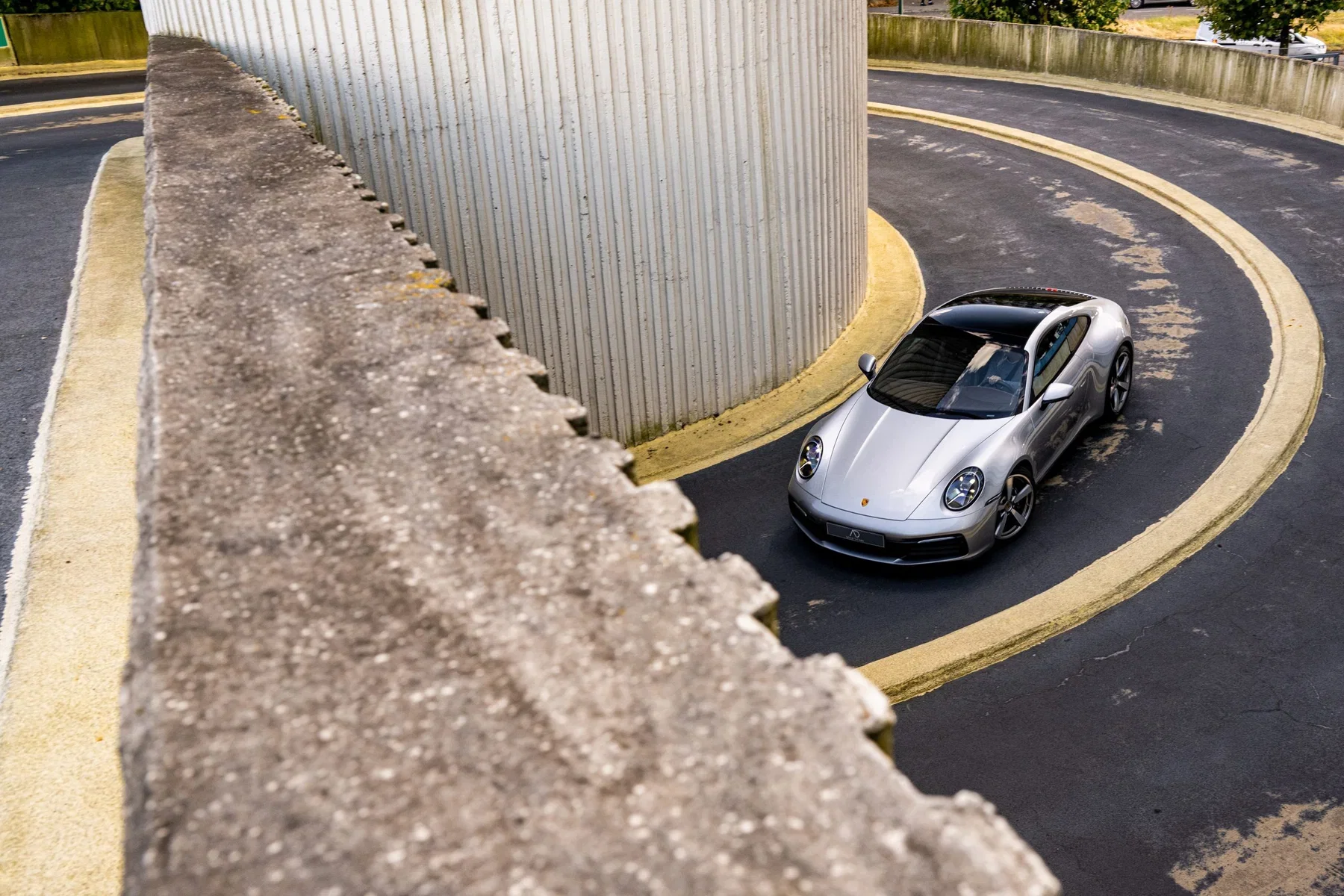
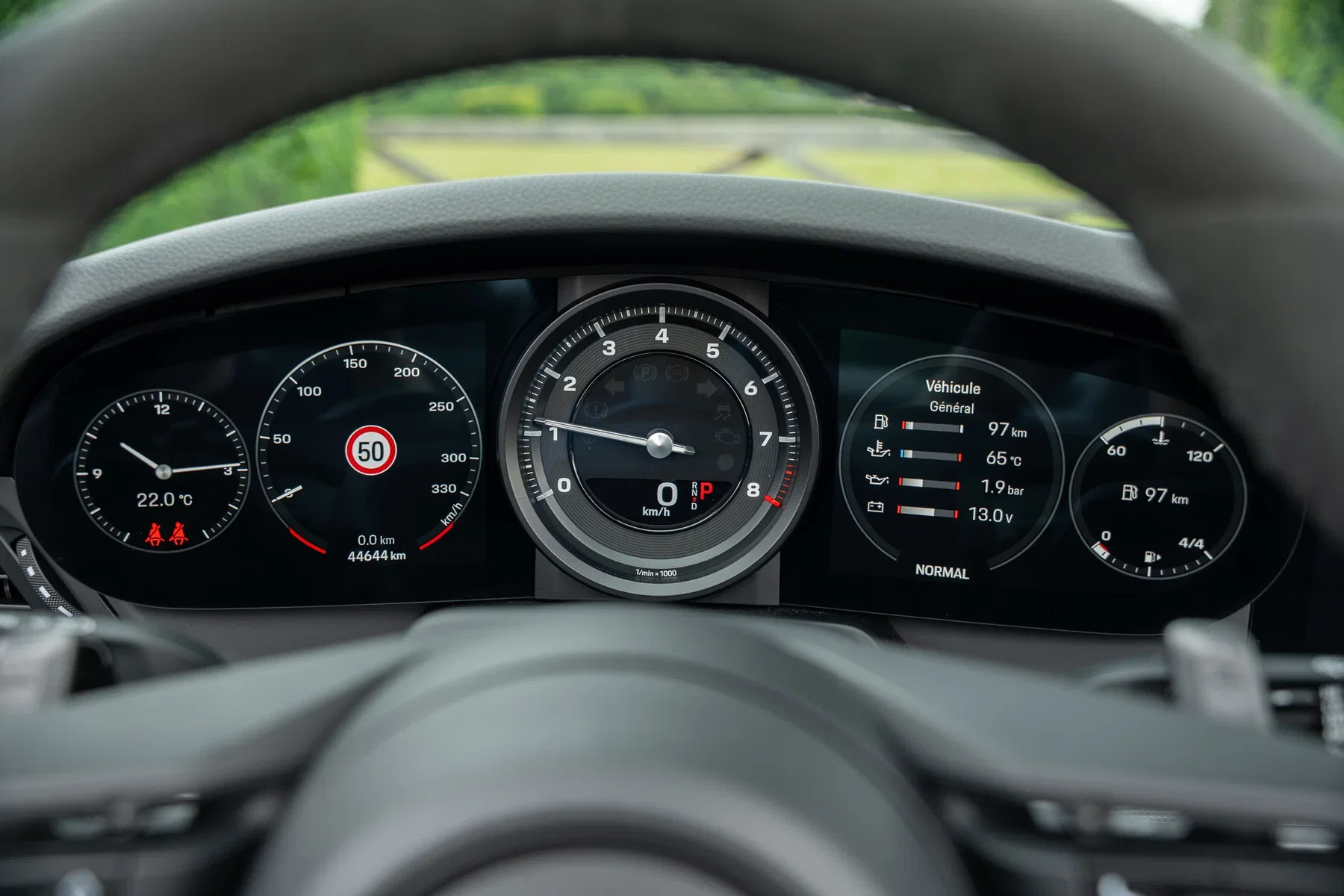
In November 2018, Porsche unveiled the eighth generation of the 911. The lineup began with the Carrera S and Carrera 4S, each producing 450 PS. The Carrera, with 385 PS, followed in the summer of 2019. As with the 991.2, the rear houses six-cylinder boxer engines with a displacement of three liters and two turbochargers. Unlike its predecessor, the 992 series offered only one body width. Since then, the rear-wheel-drive models have been just as wide as the all-wheel-drive 911s. New features included the continuous rear light strip and retractable door handles. Inside, the rev-counter remained analog, while the other instruments were moved to digital displays.
The difference in engine power between the Carrera and the Carrera S/4S is due to the different sizes of the turbochargers. In the Carrera Porsche used smaller turbochargers, which respond more quickly but don’t generate quite as much boost pressure. The wheel sizes are also smaller on the Carrera. It comes standard with 19-inch wheels in the front and 20-inch wheels in the rear. The S and 4S models come equipped with wheels that are one inch larger as standard. Unlike the Carrera S models and the Carrera T, the 992.1 Carrera was only available with an 8-speed PDK.
If you’re looking for a 992 Carrera with a manual transmission, you’ll have to go with the Carrera T, Carrera S, or 4S.
What body styles were available for the Porsche 992 Carrera?
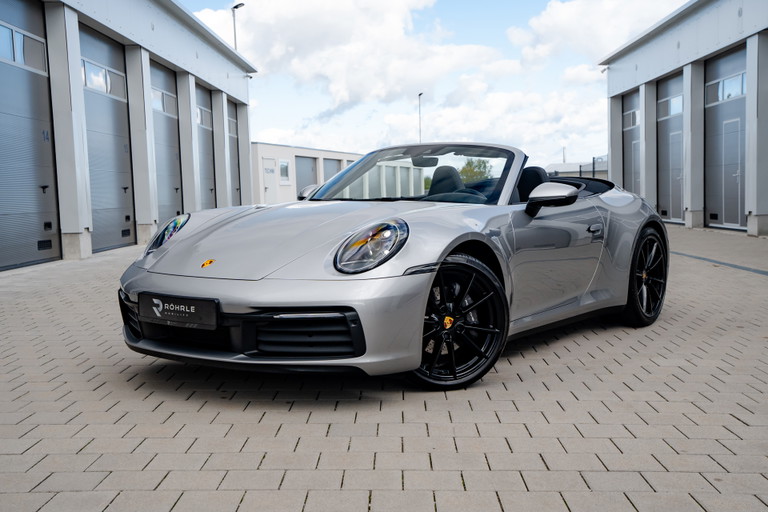
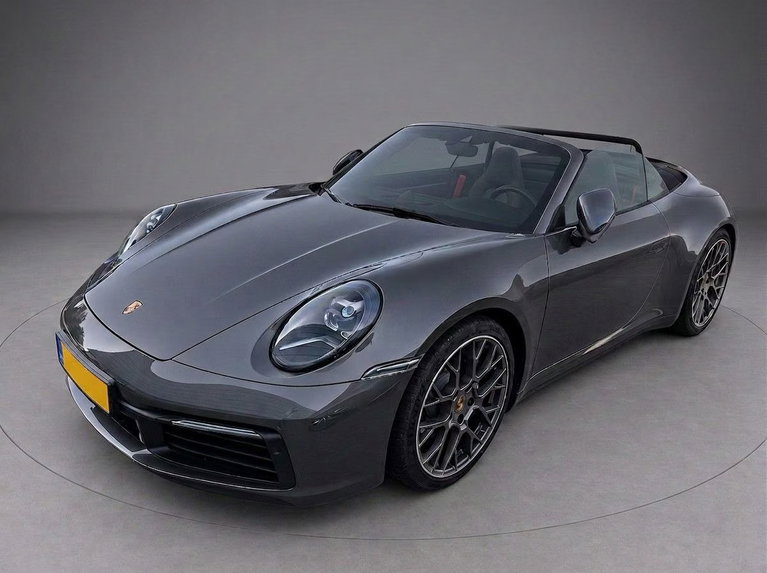
The Porsche 992 Carrera with 385 PS was available as a Coupé and a Cabriolet, each with rear-wheel drive, or as a Carrera 4 with all-wheel drive. The corresponding Targa version is called the 911 Targa 4 and always comes with all-wheel drive. There was no rear-wheel-drive Targa in this generation.
What transmission options were available for the Porsche 992 Carrera?
Porsche offered the 992 Carrera and Carrera 4 with 385 PS exclusively with an eight-speed PDK. This applies to the Coupé and Cabriolet as well as the Targa 4. A manual transmission was not available for these models. Within the model series, manual transmissions were available on the Carrera T, Carrera S, and Carrera 4S, among others.
What’s the difference between the Porsche 992 Carrera and the Carrera 4?
The Carrera has rear-wheel drive, while the Carrera 4 has all-wheel drive. Both produce 385 PS and have 450 Nm of torque. The body width and standard tires are identical. As a coupe, the Carrera 4 weighs 1,555 kilograms instead of 1,505 kilograms. The top speed is 291 km/h instead of 293 km/h.
Porsche 992 Carrera Buyer’s Guide: Exterior
First, the good news: Rust on the body has not been an issue with the 992 so far. Nevertheless, the condition of the body should be thoroughly inspected. After all, the front of the vehicle in particular reveals a lot about the car’s history. Numerous stone chips usually indicate frequent high-speed driving with little distance from the vehicle ahead, such as during fast stretches on the highway. If there are also excessive scuff marks on the underbody, this could indicate track use, such as during track days or public track events. Of course, the body panel gaps should also be carefully inspected to ensure that any accident damage repaired by an unqualified mechanic isn’t overlooked.
There was also a recall in the U.S. for Porsche 992 models with lightweight glass—which was also available as an optional feature on the Carrera. Under recall number 24V-155, the National Highway Traffic Safety Administration (NHTSA) states that approximately 10 percent of a total of 8,101 Porsche 992s built between July 2019 and October 2023 have defective bonding of the lightweight windows. Wind noise or water ingress may be signs of the issue. A Porsche Center must check the vehicle’s VIN to determine whether it is affected and whether the repair has been completed.
You should also operate the power door handles on both sides several times. Porsche has also provided technical information on this matter to the NHTSA. Creaking and squeaking noises may occur and can be eliminated through targeted cleaning and the use of a special lubricant. For convertibles, you should, of course, check the soft top to ensure it functions properly and is watertight.
Porsche 992 Carrera Buyer’s Guide: Interior
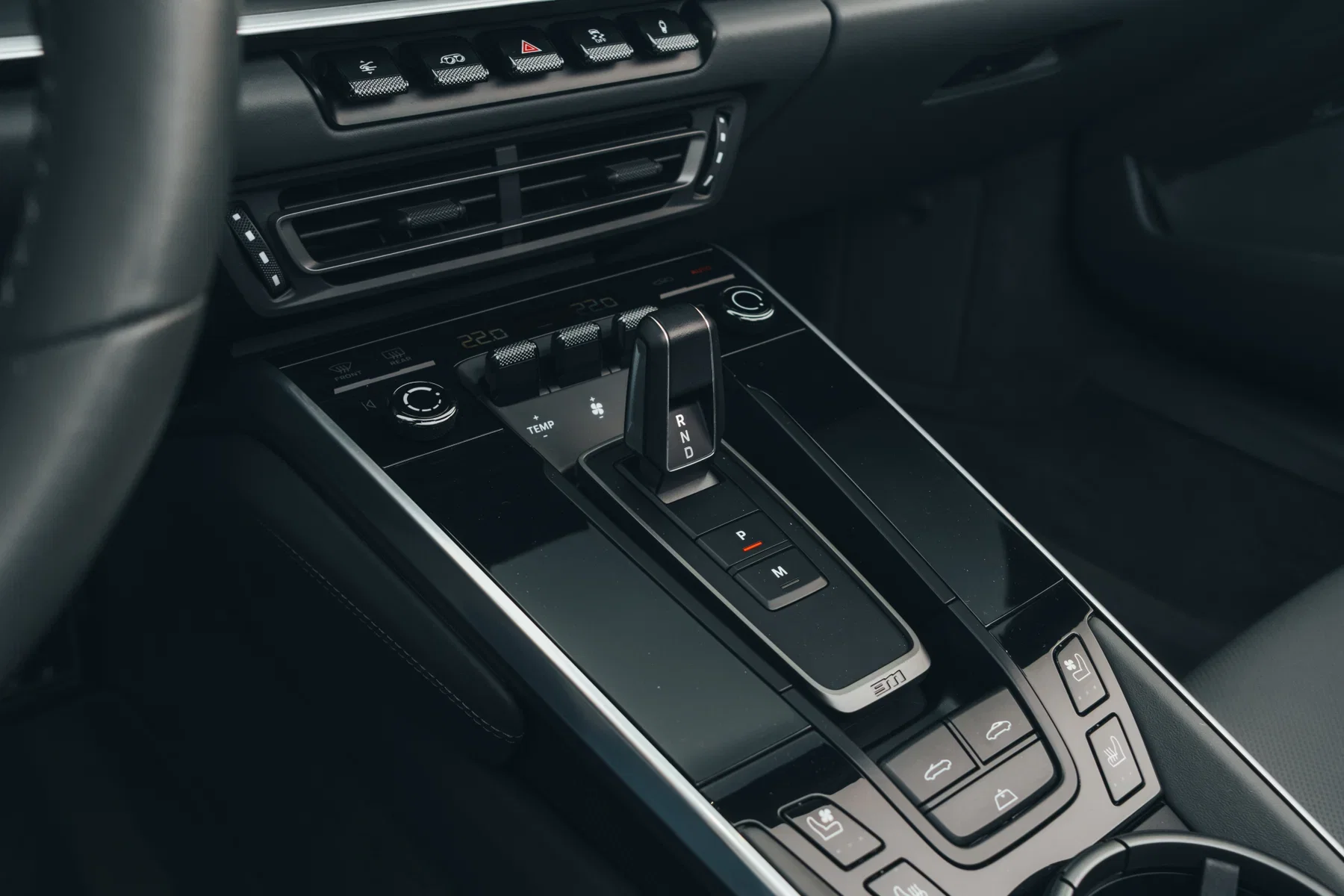
The interior of the Porsche 992 marked a major step toward modernity. Its large displays in the dashboard and the piano-black finishes brought the 911’s interior in line with the spirit of the times, even though these changes were the subject of considerable controversy. In general, the 992’s interior offered even more options for customization. The Carrera alone came with four different seat configurations. Standard equipment included 4-way sports seats with electric height and backrest adjustment. Optional features included fully electric 14-way sports seats with memory, Sports Seats Plus with 4-way adjustment, and Adaptive Sports Seats Plus with 18-way adjustment.
In addition, the interior’s appearance could be fundamentally transformed with optional leather upholstery, various stitching patterns on the seat center panels and door panels, trim strips, and two-tone options. It’s therefore worth taking a look at models with different trim levels in person to get a feel for their appearance and haptics. If the basic features are a good fit but, for example, only minor details are missing from your dream interior, there are retrofit solutions available for many of them. With a mid-four-figure budget, a 992 interior can already be customized quite extensively.
While the abrasion resistance of all materials is generally good, creases and indentations on the seats are not uncommon even at five-figure mileage. In the area of the door panels, improper fastening of wiring can lead to creaking and rattling noises. There is a Porsche repair bulletin on this issue—so the problem is well known. Additionally, foam padding that has shifted or is missing between the fuel tank and the body can cause annoying noises. That’s why it’s advisable to take a test drive before purchasing—and not just on freshly paved roads.
Porsche 992 Carrera Buyer’s Guide: Features & Electrics
When it comes to infotainment, it’s worth taking a closer look at the model year and the actual range of features. Porsche introduced version 6.0 of its Communication Management (PCM) system in the 911 in the summer of 2021. The most significant new feature compared to PCM 5.0—which was initially installed in the 992.1 Carrera—was the integration of Android Auto, although initially only via a cable. Wireless Android Auto connectivity didn’t arrive until a 2022 software update, which introduced colored icons and integrated Apple Music and Podcasts, as well as Spotify directly into the PCM. The update was free at the time, but you should verify that it was actually installed.
The battery also deserves attention, especially in cars that are rarely driven. Depending on the model, the 992 was equipped with different types of batteries. In the case of a lithium-ion battery, its protective function may interrupt the circuit after a certain time. Therefore, a car that appears to be completely dead does not automatically mean that the battery needs to be replaced. In addition, these lightweight LiFePo batteries require a different charger standard than conventional batteries.
Starting when does the Porsche 992 Carrera come with PCM 6.0?
Porsche introduced PCM 6.0 in the summer of 2021 for the 2022 model year. Among other features, this gave the 992 Carrera Android Auto—initially via a cable. The actual range of functions also depends on the software version installed. During the test drive, you should therefore try out the smartphone connection, navigation, and saved settings.
Error codes stored in the ECU are not always displayed on the dashboard. For this reason, it is recommended that you read the codes only after taking the car for a test drive. It’s also a good idea to check for any outstanding recalls and service campaigns using the vehicle identification number. This helps minimize the risk of unpleasant surprises.
Porsche 992 Carrera models equipped with the Sport Chrono Package feature Porsche Active Drivetrain Mounts (PADM). In Sport Plus mode, these dynamic mounts help minimize roll and pitch movements of the drivetrain, resulting in even better road holding. In Normal mode, the mounts provide greater ride comfort. However, faults with these components are not uncommon. They manifest as PADM error messages in the instrument cluster. Rattling noises can also be caused by faulty mounts. In early Carrera models, PADM errors occurred due to water ingress. Porsche remedied this by installing covers and later fitted modified mounts.
Porsche 992 Carrera Buyer’s Guide: Engine
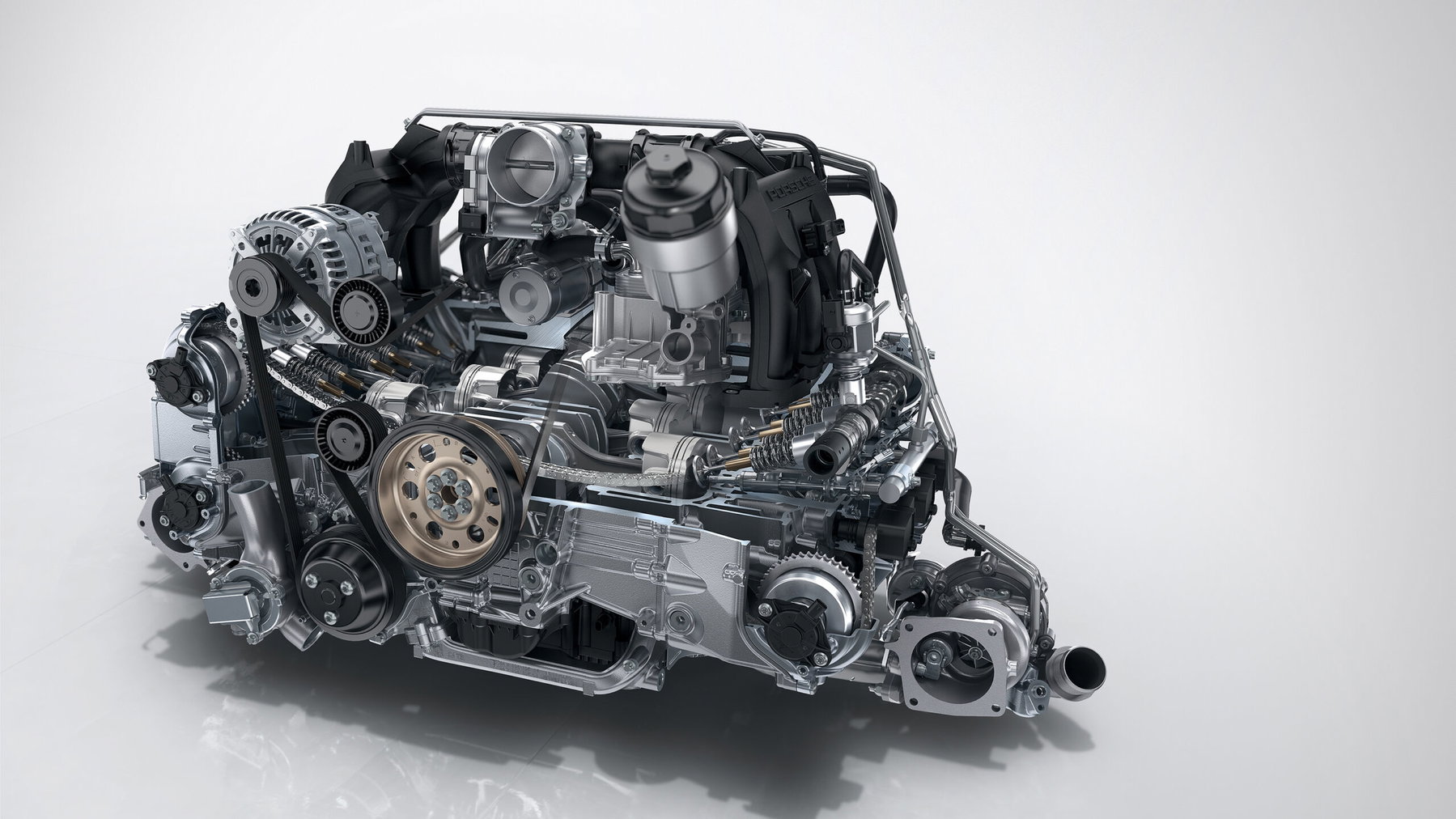
The 992 Carrera was equipped with a 3.0-liter six-cylinder engine with two turbochargers from the 9A2 evo engine family. While these engines do not have any systematic major problems, there are still a few points to keep in mind. For example, during an inspection, the first start should be performed with the engine cold, if possible. Later, the engine should ideally be brought up to full operating temperature during a test drive. This helps detecting any potential leaks. There have also been documented issues in this regard stemming from damage to the oil pan gasket.
Another well-known problem involved electrical faults in the fuel injection system. If the control module had logged errors for two opposing injectors, a repair procedure specified by Porsche was followed. After a software update, the system was tested again. If the error recurred, the wiring to the injectors was inspected, followed by an examination of the engine control unit itself.
The water pump and its vacuum control system aren’t bulletproof
In the Porsche 992.1 Carrera, a leaking water pump can cause coolant to enter the vacuum system, which regulates the coolant flow rate. This can reduce the flow rate to nearly zero. If this is found to be the case, all vacuum lines connected to the coolant pump must be inspected for traces of fluid. If they are contaminated, the repair procedure calls for replacing the affected lines and the valve block. The water pump that caused the problem must also be replaced. Therefore, if the vehicle has already been fitted with a new water pump, it should be determined why it was replaced and whether the vacuum lines were also replaced at that time.
Replacing the water pump in a 992 Carrera should be well documented, because if there are any leaks, coolant may have entered the vacuum lines.
What are the known issues with the Porsche 992 Carrera?
Documented issues include leaking water pumps, oil leaks from the engine and PDK, and faults with the dynamic engine mounts in vehicles equipped with the Sport Chrono Package. In addition, there are PCM glitches and rattling noises from door panels or the area around the fuel tank.
What should you look out for when replacing the water pump on a Porsche 992?
If the water pump has an internal leak, coolant can enter the vacuum control system. Therefore, the repair documentation should indicate whether the connected lines were checked for fluid. In the event of contamination, Porsche recommends replacing not only the pump but also the affected vacuum lines and the valve block.
Porsche 992.1 Carrera Buyer’s Guide: Transmission and Drivetrain
The Porsche 992 Carrera was only available with an 8-speed PDK. During the test drive, it’s a good idea to manually shift through all the gears and switch back and forth between drive (D) and reverse (R) several times while maneuvering. If you notice any jerks in the drivetrain or unusually long delays when shifting from D to R and vice versa, the transmission should be inspected more closely.
If possible, the transmission should also be visually inspected from below after the test drive. This is because oil leaks in the eight-speed PDK can be an issue for all 992 Carrera models from model years 2020 through 2024. Porsche’s technical information on the issue explicitly notes that, in cases of complaints, the transmission oil pan has repeatedly been incorrectly diagnosed as the cause. Leaks must be located on a cleaned transmission after it has warmed up to operating temperature following a drive. Depending on the location of the leak, the scope of repairs required can vary significantly.
Porsche 992 Carrera Buyer’s Guide: Suspension and Brakes
Like the entire model series, the 992 Carrera stands out for its very well-balanced suspension tuning. Regardless of whether the PASM suspension is installed, the suspension should feel firm yet comfortable. During a test drive, the car should also drive straight and smoothly and roll over bumps without any noticeable noises. Uneven tire wear, a misaligned steering wheel, or damaged rims require a more thorough inspection of the wheel alignment and suspension.
The front-axle lift system, if equipped, must operate flawlessly, as must the various chassis modes of the optional PASM. Also worth noting: Unlike the Carrera T, S, and 4S, the 992 Carrera and Carrera 4 were not available with rear-axle steering. You should also check the tires for their age. The so-called DOT number on the tire sidewall provides this information. New tires should be installed after six years. A set of new tires with an “N” rating will cost at least 1,000 euros plus installation. This is a significant factor to consider during any price negotiations.
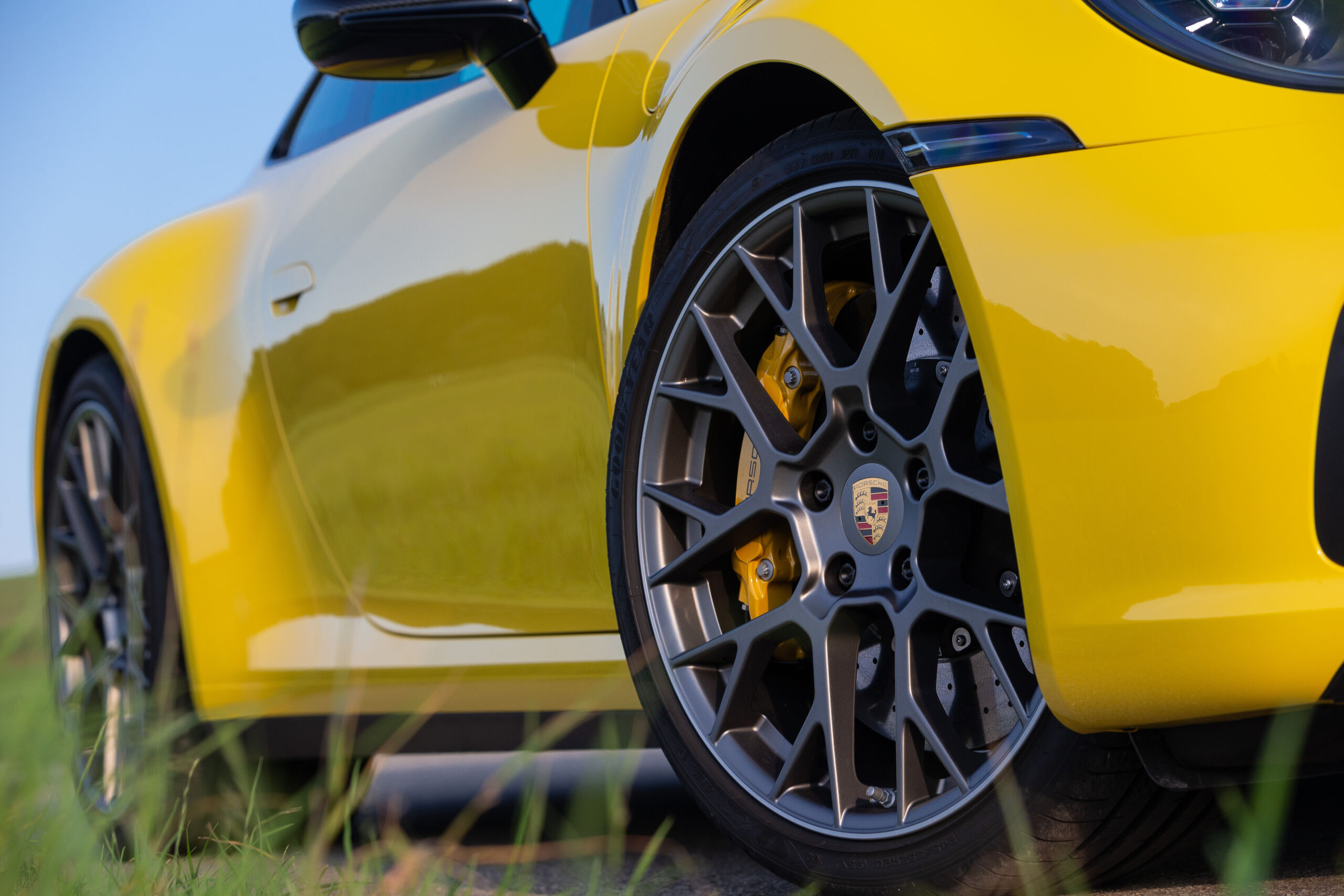
The brakes, which provide excellent stopping power, should also be inspected carefully, as replacement is not cheap. With steel brakes, even non-experts can check the wear pattern on the disc and the thickness of the pads. If the brake discs have grooves or a noticeable lip around the edge, they should be replaced. Brake pads have a wear indicator. If the brakes squeal or the car pulls to one side when braking, a closer inspection is needed. Assessing Porsche Ceramic Composite Brakes (PCCB) isn’t as straightforward and is virtually impossible from the outside. You should consult a professional for this.
Was there a Porsche 992 Carrera with rear-axle steering?
Rear-axle steering was not available as standard equipment on the 992 Carrera and Carrera 4 with 385 PS. Nor was it included in the Sport Chrono Package. The package did, however, include dynamic engine mounts. Within the model series, rear-axle steering was available as an option on the Carrera T, Carrera S, and Carrera 4S, among others.
Was there a ceramic brake system available for the Porsche 992 Carrera?
Yes, the Porsche Ceramic Composite Brake (PCCB) was available as an option for the Carrera and Carrera 4. Its brake rotors measure 410 millimeters at the front and 390 millimeters at the rear; the standard brake system has 330-millimeter rotors on both axles. The PCCB therefore requires larger wheels—20 inches in the front and 21 inches in the rear.
Porsche 992 Carrera Buyer’s Guide: Conclusion and Purchase Recommendation
The Porsche 992 Carrera marked a major step into the modern era for the 911. It became larger, but also more practical for everyday use. At the same time, it delivers driving performance that leaves nothing to be desired on the road. Technically, it is solid, aside from a few well-documented weaknesses. For those who place particular importance on modern connectivity, a Carrera from model year 2022 or later is recommended, as it already comes equipped with the updated PCM 6.0.
Otherwise, there’s no specific recommendation for a particular model year or warning against another. Instead, the focus should be on the configuration and maintenance history. If you want a specific color or interior trim in the 992 Carrera, however, you’ll have to act fast. That’s because extravagant configurations are relatively rare here. Once all the teething problems have been ironed out, the Porsche 992 Carrera is a great sports car—both on mountain passes and for everyday use. It even performs well on the racetrack.
Its performance is so impressive that, frankly, you really don’t need anything more than the base Carrera. After all, whether the sprint to 100 km/h takes 4.0 or 3.5 seconds is just as irrelevant in everyday driving as the fact that the 992 Carrera, with a top speed of 293 km/h, is 15 km/h slower than the Carrera S of the same generation. In that sense, the 992 Carrera may even be a good choice for those who were originally considering a Carrera S but don’t necessarily want a manual transmission. And thanks to the Porsche Approved warranty—which can be extended for many more years—it offers relatively worry-free sports car enjoyment, provided its history and condition are in order.
Wheels: standard front / rear 8.5 J x 19 ET 52 / 11.5 J x 20 ET 67; optional 8.5 J x 20 ET 53 / 11.5 J x 21 ET 67 (required with PCCB)
Tires: standard front / rear 235/40 ZR19 / 295/35 ZR20; with optional 20-/21-inch wheels 245/35 ZR20 / 305/30 ZR21
Brakes: 330 mm front (thickness 34 mm), 330 mm rear (thickness 28 mm); four-piston aluminum monobloc fixed calipers and internally ventilated, perforated cast-iron discs on both axles. Optional PCCB: 410 mm ceramic discs front (thickness 36 mm) with six-piston aluminum monobloc fixed calipers, 390 mm rear (thickness 32 mm) with four-piston aluminum monobloc fixed calipers
Wheelbase (mm): 2,450
Dimensions L x W x H (mm): 4,519 x 1,852 x 1,298 (width excluding exterior mirrors)
Unladen weight (DIN): 1,505 kg (Carrera 4: 1,555 kg)
Acceleration 0 to 62 mph: 4.2 s for both models; with Sport Chrono Package: 4.0 s for both models
Top speed (mph): 182 (Carrera 4: 181)
Important note: We go to great lengths to illuminate the most important topics and facts and to discuss them conscientiously. Nevertheless, we cannot guarantee completeness and accuracy. Our editors work to the best of their knowledge and belief. An Elferspot Buyer’s Guide can only be part of an overall assessment and should not be used exclusively for a purchase decision.
Message
Do you have a tip for a story or just want to get in touch with Richard?







 2023
2023 
 2021
2021