Porsche Boxster Spyder — The Best Deal in the Porsche Universe?
11.09.2026By Richard Lindhorst
If you boil a sports car down to its essential ingredients, you quickly end up with a lightweight, well-balanced vehicle with a mid-engine, two seats, and—ideally—an open roof. The Porsche Boxster Spyder comes remarkably close to this ideal. Since 2010, it has been available as a standalone model in the Boxster lineup, featuring a retractable soft top, a particularly sporty tuning, and the characteristic humps behind the seats. It’s never been a secret that the Porsche Boxster Spyder drives fantastically. But could it be that the particularly sporty Boxster models now offer the best overall value for money in the Porsche market? We’ll tell you which variants were available and which ones are in particularly high demand!
Starting Point: Porsche 550 Spyder
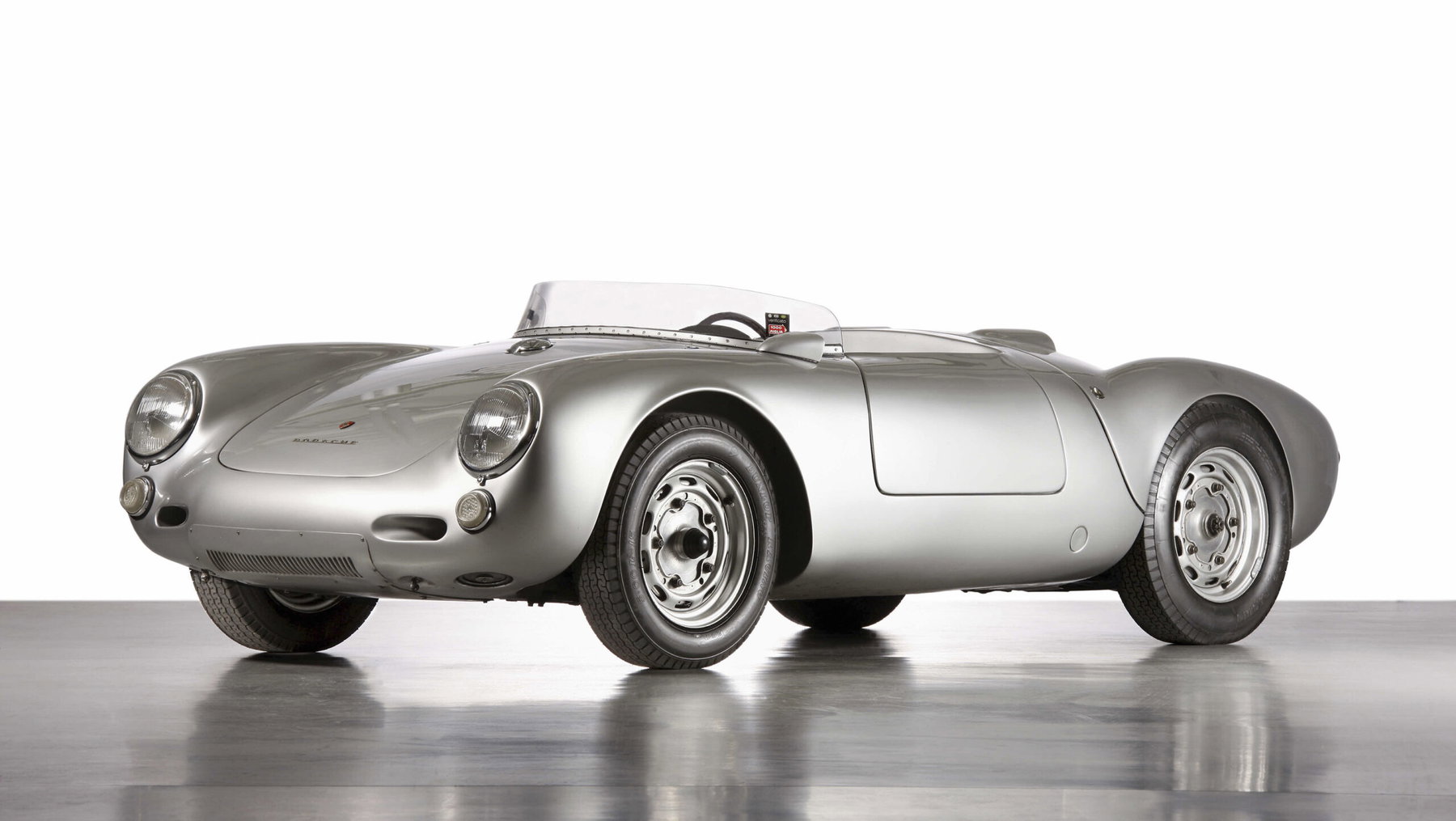
With the Boxster, Porsche revisited an idea in the mid-1990s that had already brought it numerous successes in motorsports in the 1950s. The Porsche 550 Spyder, weighing just 550 kilograms, was a mid-engine, open-top two-seater. Porsche brought this relatively simple formula into the modern era with the Boxster.
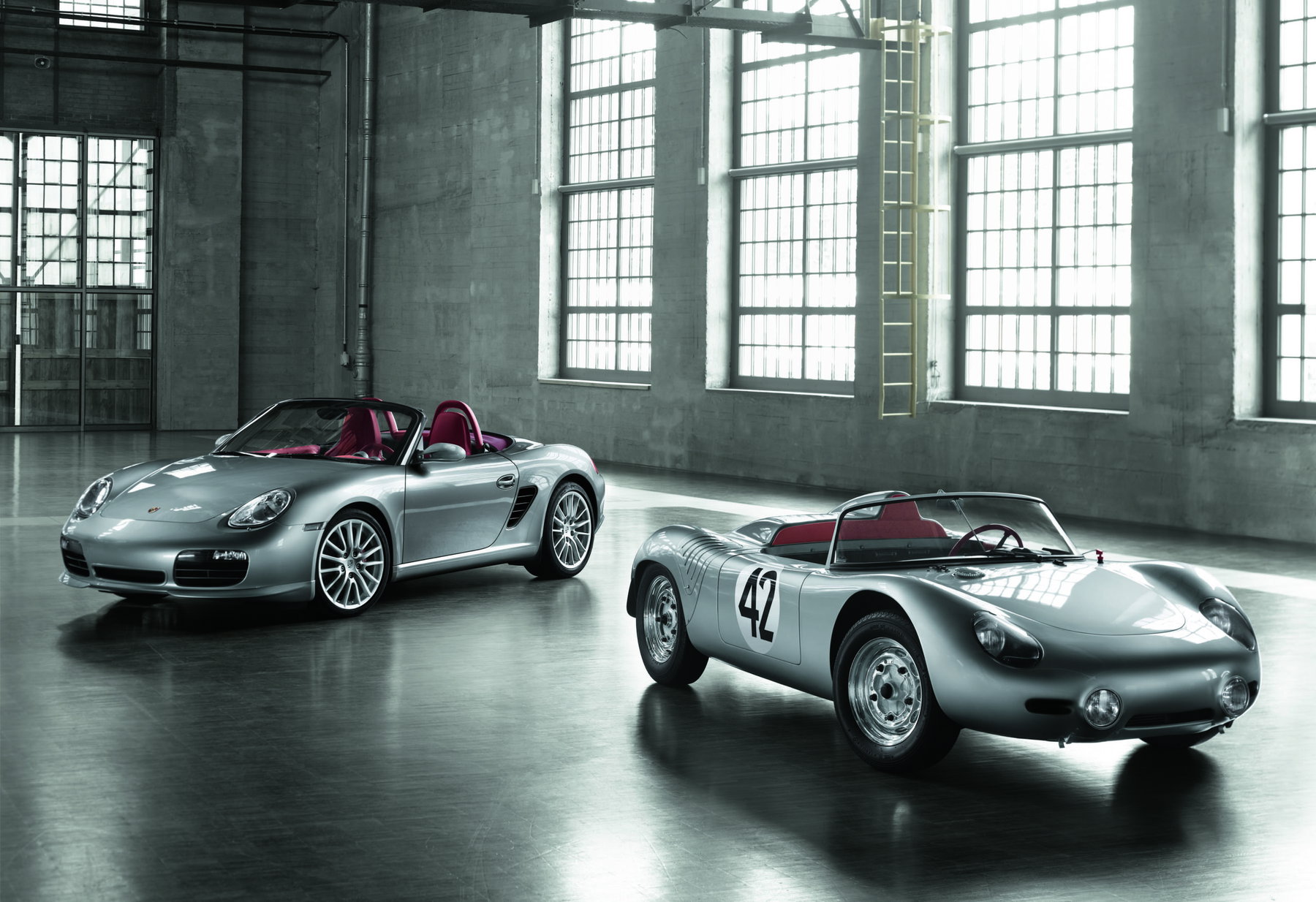
In 2003, the Spyder name reappeared for the first time in a special edition model. However, the Porsche Boxster S “50 Years of the 550 Spyder”—produced in a run of 1,953 units—was not a Spyder in the classic sense. It was a refined Boxster S featuring exclusive trim details and a limited production run. The same conclusion applies to the Porsche 987 Boxster RS 60 Spyder, of which 1,960 were built. It was indeed intended as a tribute to an earlier race car, the RS 60 Spyder. But as with the 986, it was not a completely new model, but rather a special equipment line.
The Porsche 987 Boxster Spyder launched the new model series
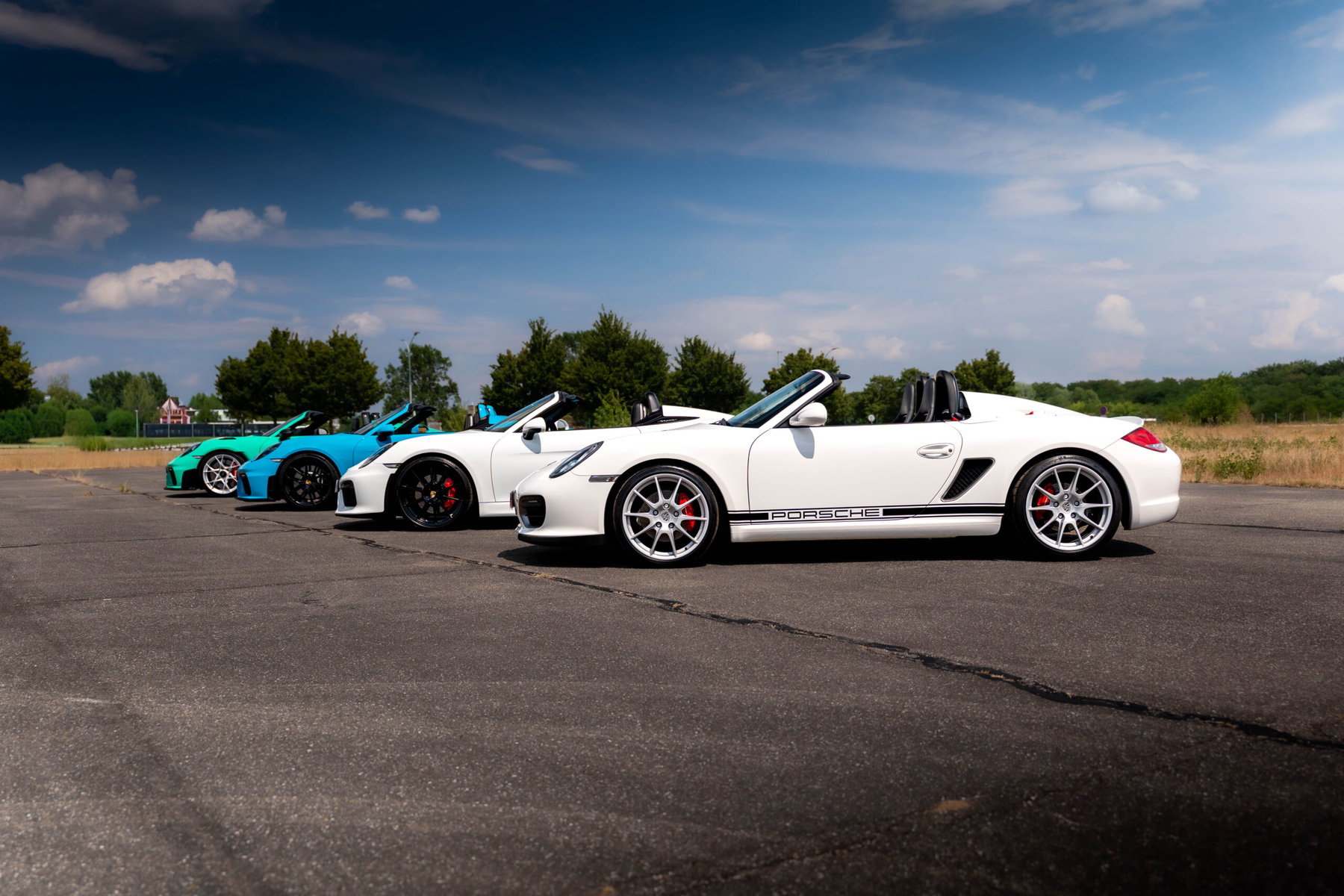
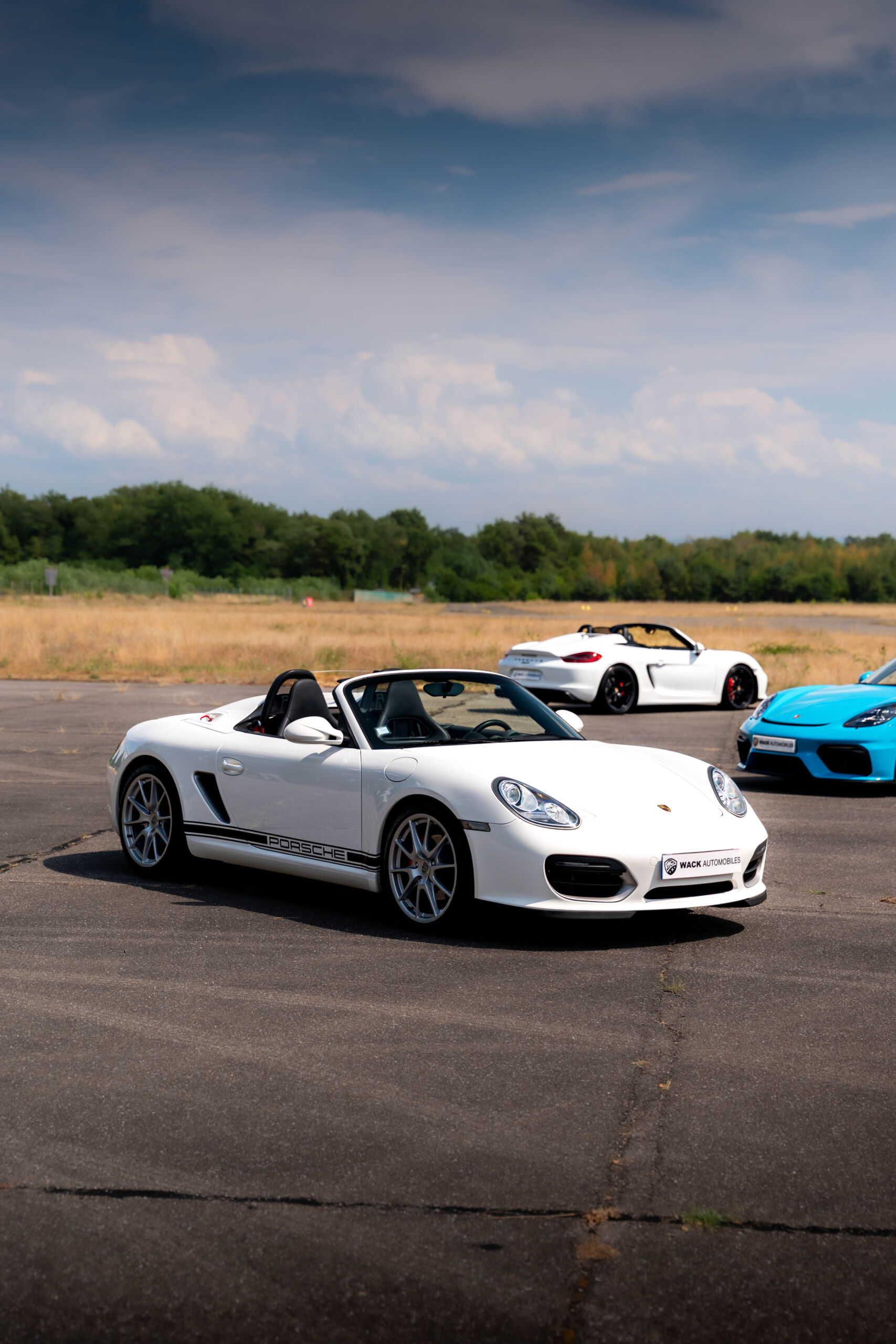
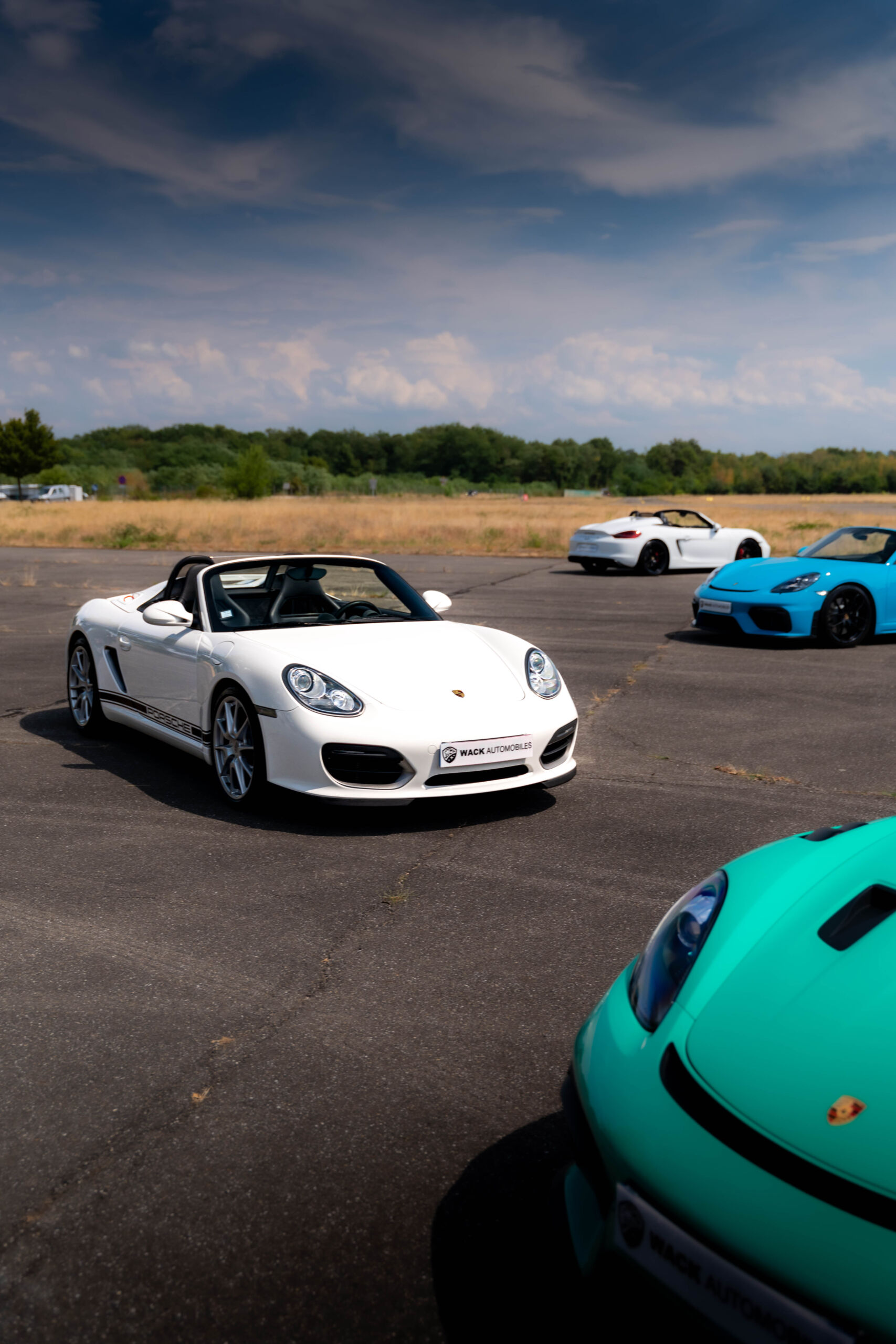
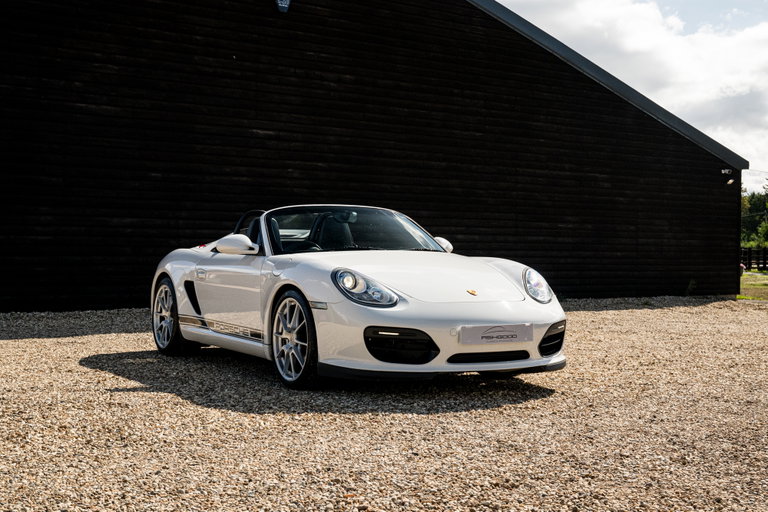
In late 2009, Porsche introduced the Spyder as a standalone Boxster model for the first time. Although the 987 Boxster Spyder was based on the Boxster S, it had been significantly refined both technically and conceptually. The primary focus was on weight. Weighing in at 1,275 kilograms, it was about 80 kilograms lighter than a comparable Boxster S and, at the time of its debut, was even the lightest model in the entire Porsche lineup.
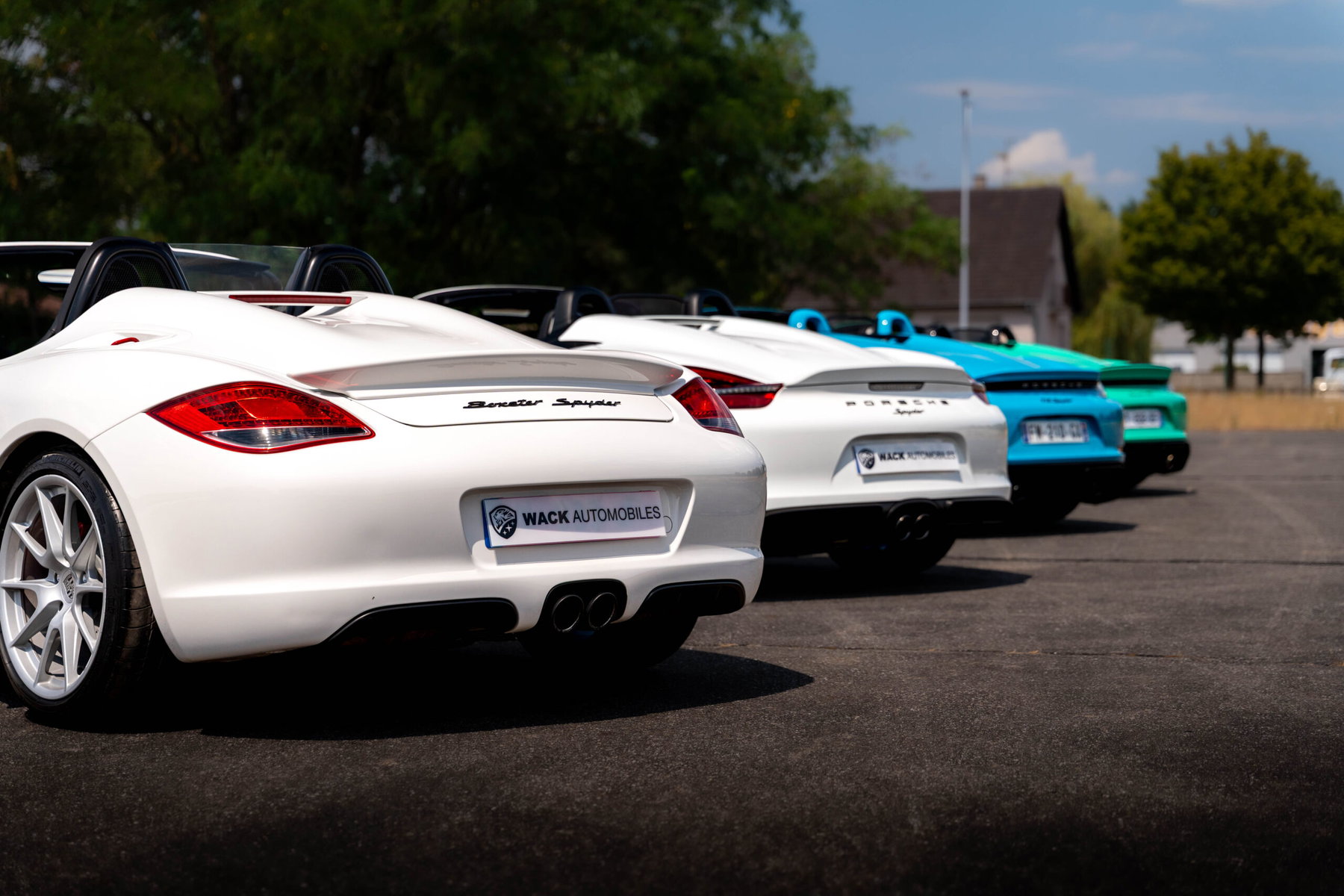
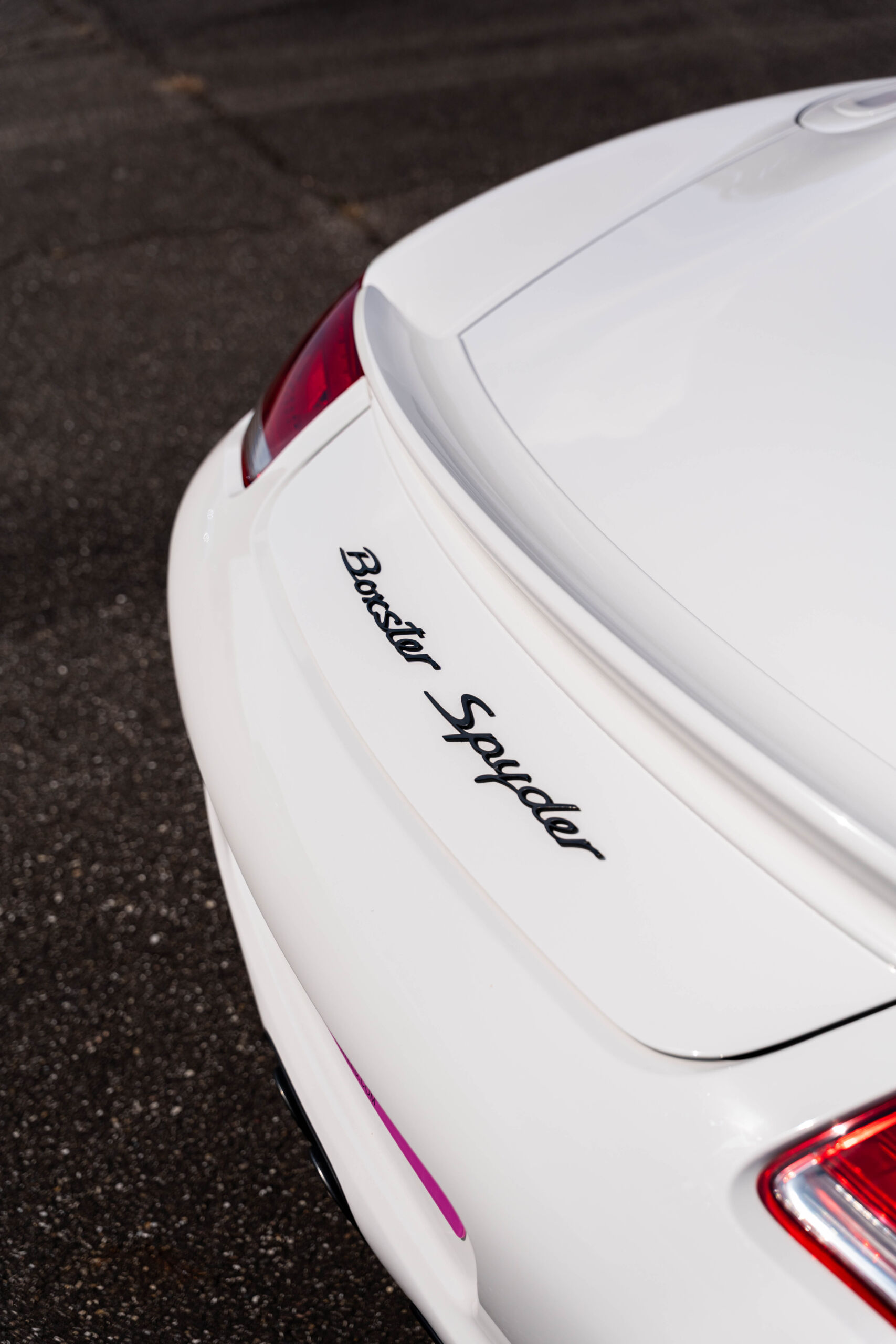
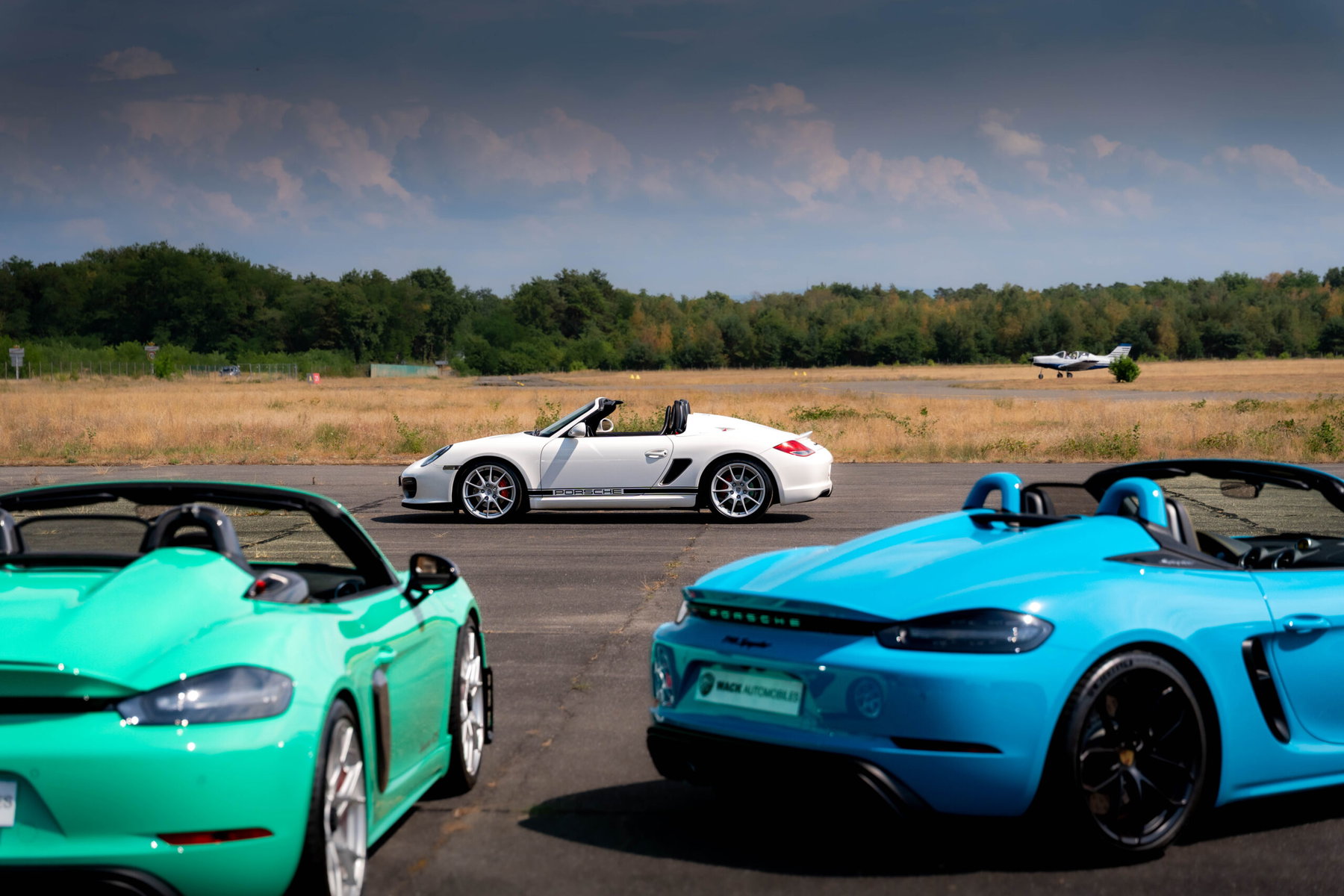
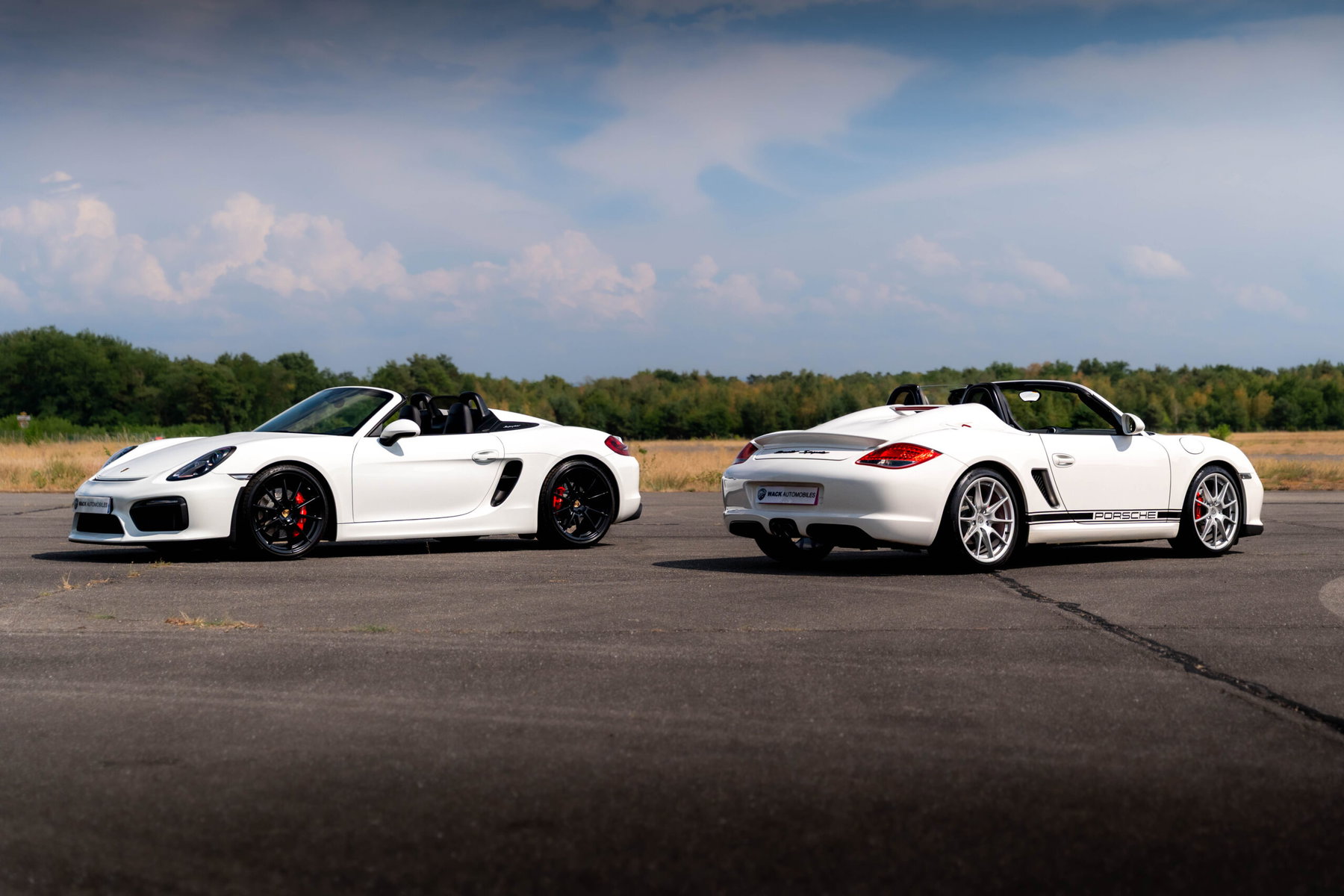
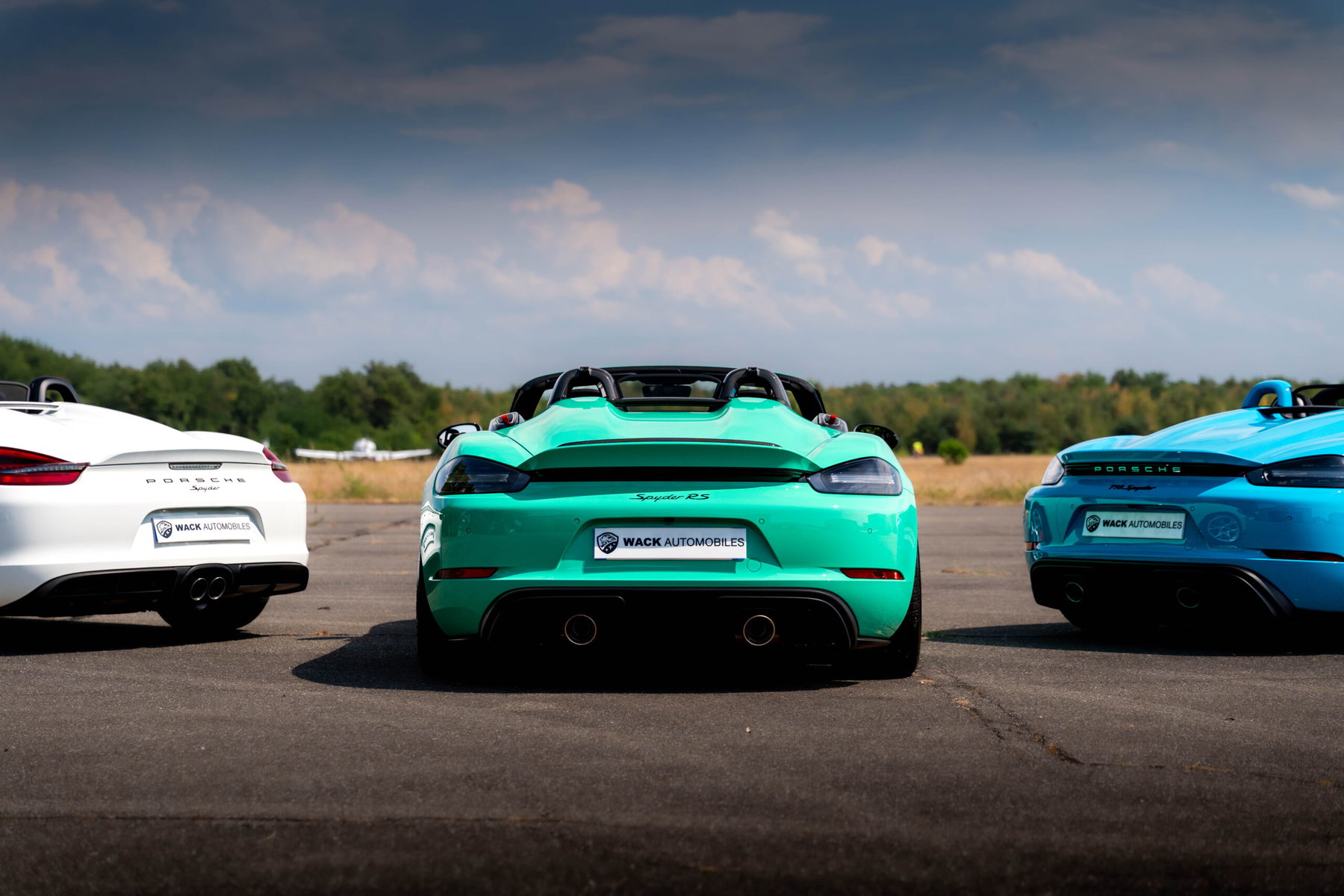
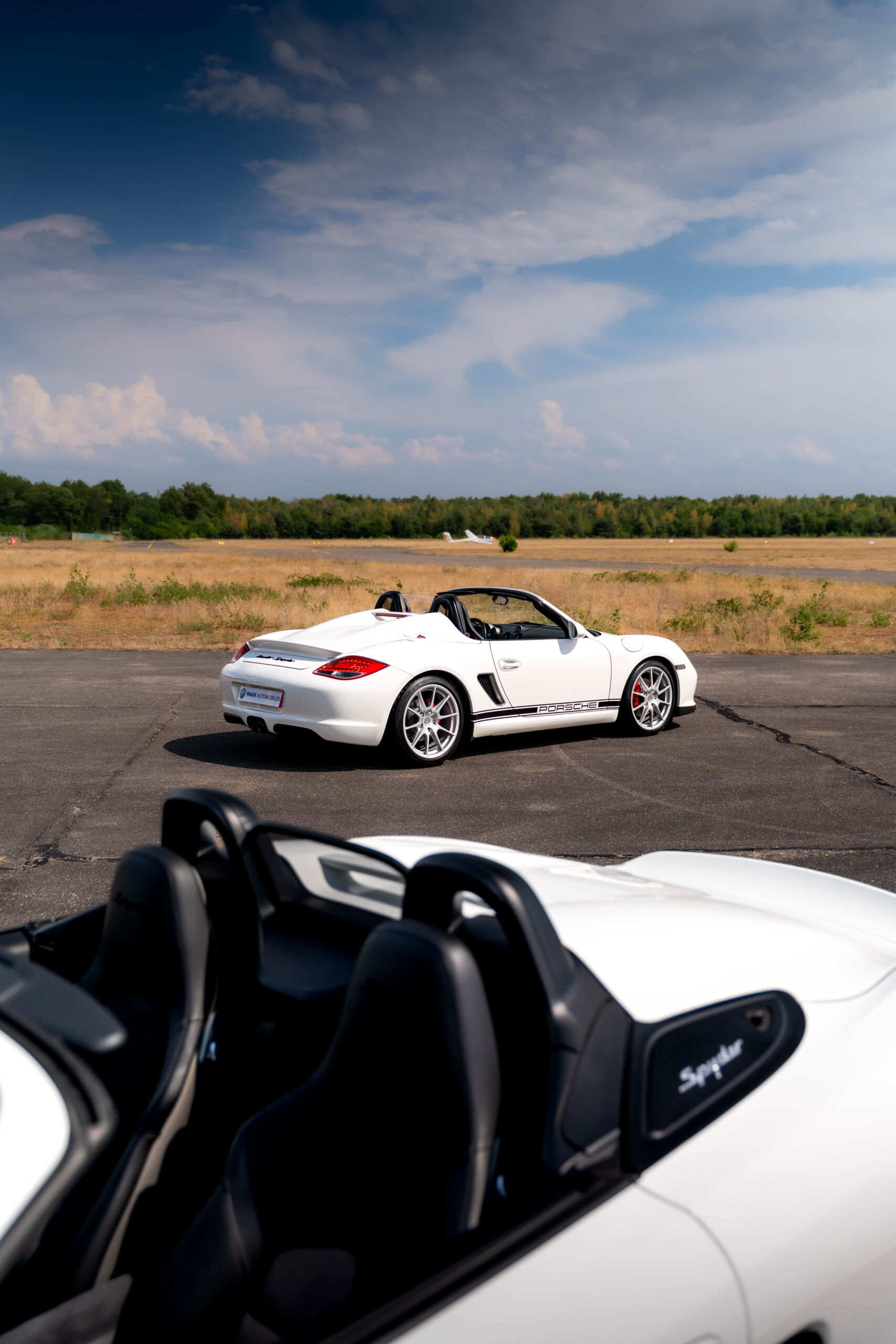
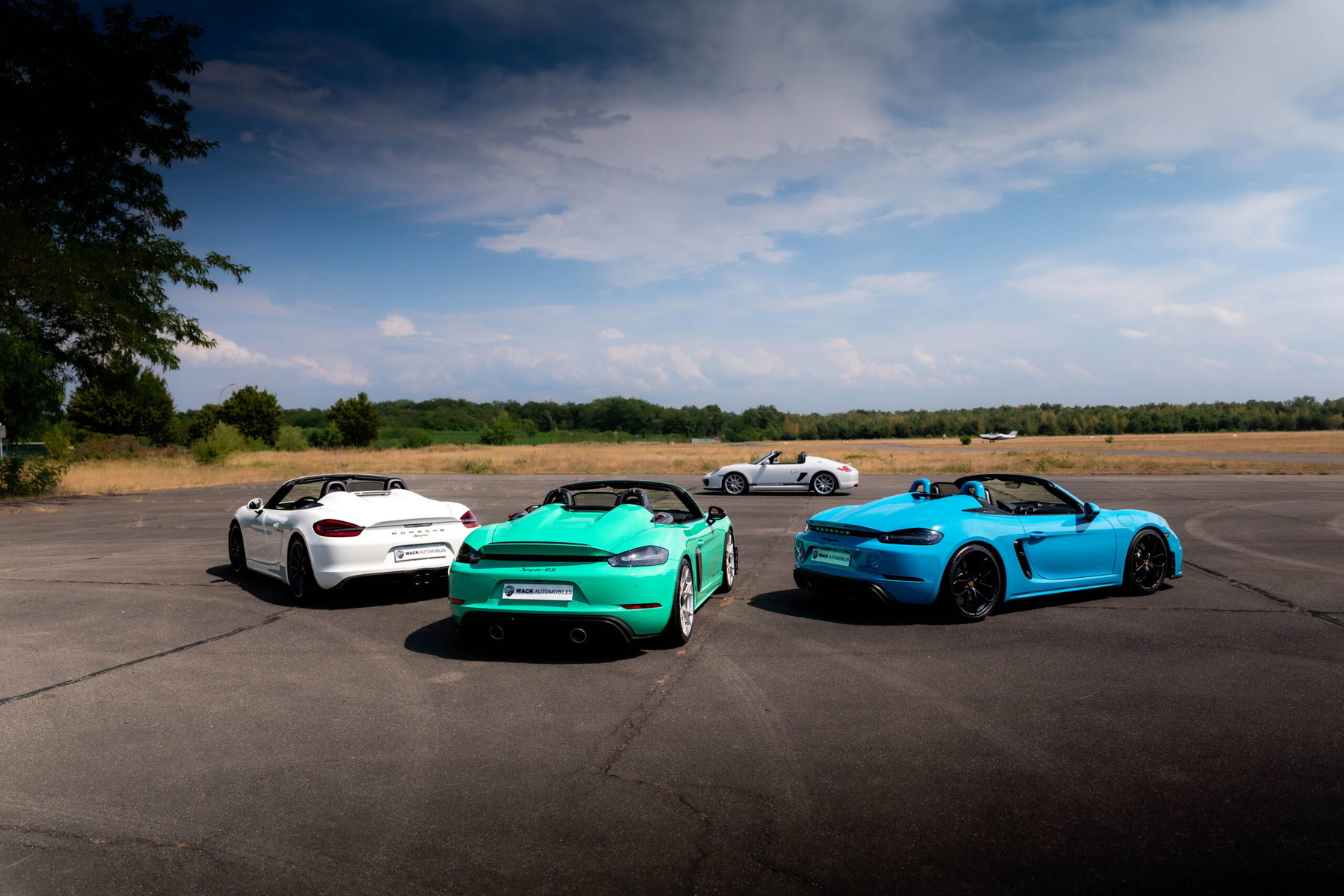
The rear end of the first standalone Porsche Boxster Spyder, in particular, appears to have been inspired by the legendary Carrera GT.
This was made possible by cutting back on features. The electric fabric convertible top was replaced by a simple, hand-fitted emergency top. The doors were made of aluminum, and lightweight sport bucket seats were installed in the interior. Air conditioning and the audio system were also omitted from the standard equipment, but were available as free optional extras. In addition, the Spyder received a sport suspension lowered by 20 millimeters, a unique suspension setup, and the two distinctive humps on the trunk lid, reminiscent of the 718 RS and RSK Spyders of the 1950s and 1960s.
The Stuttgart-based automaker also optimized the powertrain of the first Boxster Spyder compared to the Boxster S. Its 3.4-liter engine produced 320 instead of 310 PS. For the transmission, customers had the choice between a 6-speed manual and a 7-speed dual-clutch transmission. Priced at 63,404 euros, the Spyder was available at Porsche Centers at the time, costing a good 7,000 euros more than the Boxster S. However, with a total of 1,667 units produced between 2010 and 2011, the Boxster Spyder remained a rather rare sight.
The Porsche 981 Boxster Spyder was powered by the Cayman GT4 engine
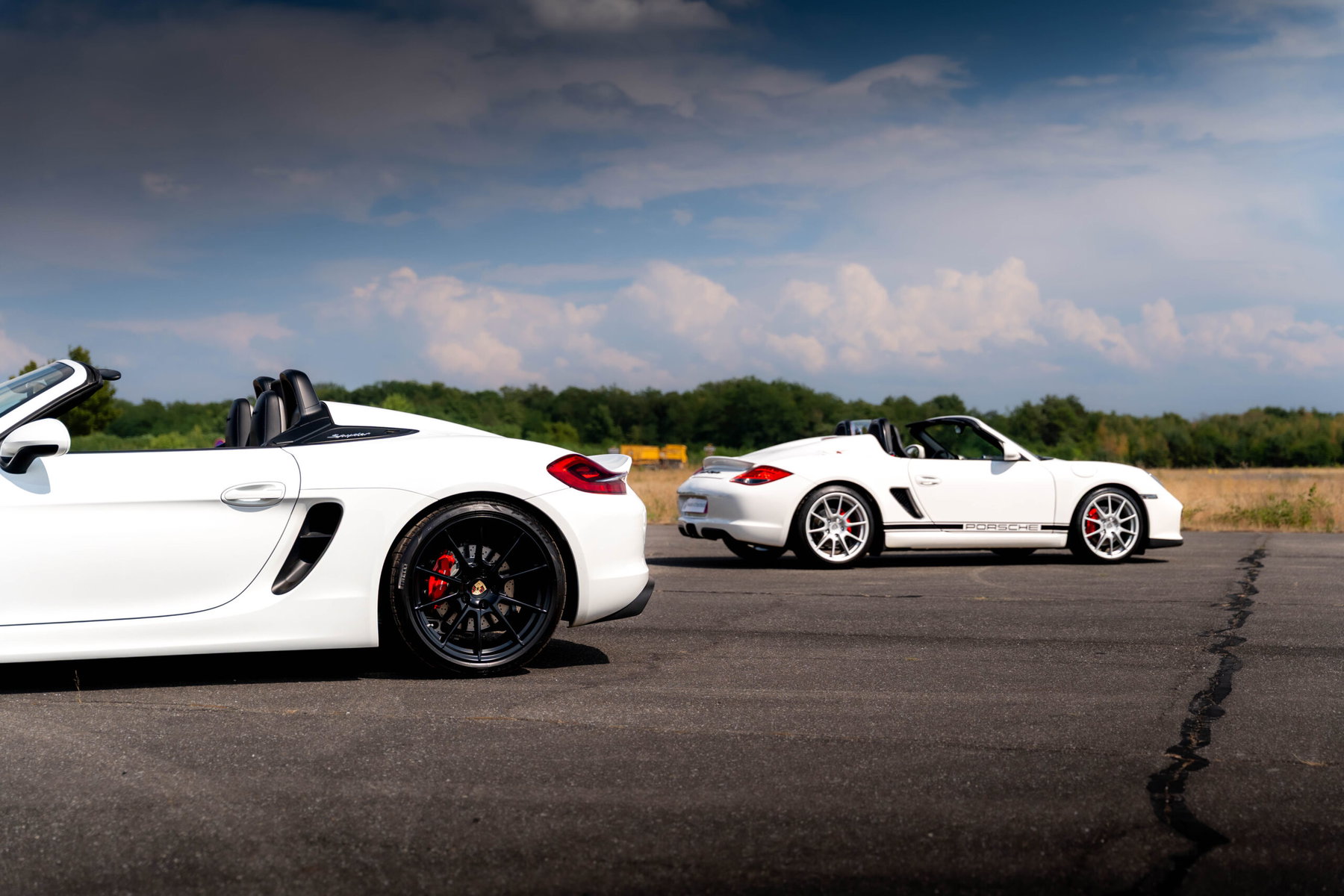
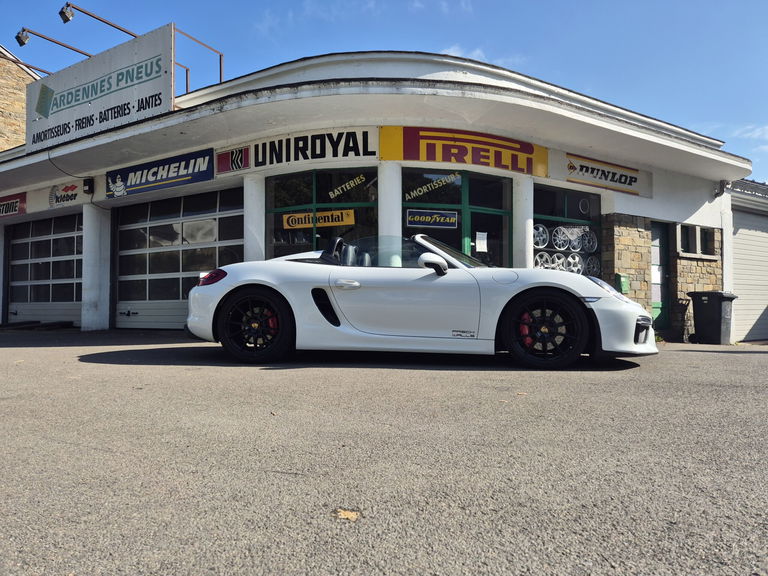
The third generation of the Boxster, the 981 series, also featured a Spyder. In 2015, the Porsche 981 Boxster Spyder—essentially a Cayman GT4 variant with a fabric top—was available at Porsche Centers. Although the roof still had to be operated manually, it required significantly less dexterity than the emergency soft top on its predecessor. Overall, the 981 Spyder presented itself as a much more mature model, even though, at 1,315 kilograms, it was once again the lightest Boxster in its series.
Instead of the 3.4-liter engine found in the Cayman S and GTS, the 981 Boxster Spyder was equipped with a slightly modified version of the 3.8-liter engine from the Cayman GT4, producing 375 PS. Available exclusively with a 6-speed manual transmission, the Spyder thus reached new heights in terms of longitudinal dynamics as well. It accelerated from 0 to 100 km/h in 4.5 seconds, before reaching a top speed of 290 km/h.
These performance figures not only made the 2015 Boxster Spyder a sports car to be taken very seriously; they also came at a price. With a base price of just under 80,000 euros, it was a good 10,000 euros more expensive than the Boxster GTS and nearly 20,000 euros more expensive than a Boxster S. Nevertheless, with 2,486 units produced, the Porsche 981 Boxster Spyder achieved sales figures nearly 50 percent higher than those of the 987 Boxster Spyder.
The 718 Spyder and Spyder RS as the crowning jewels of the 982 Boxster series
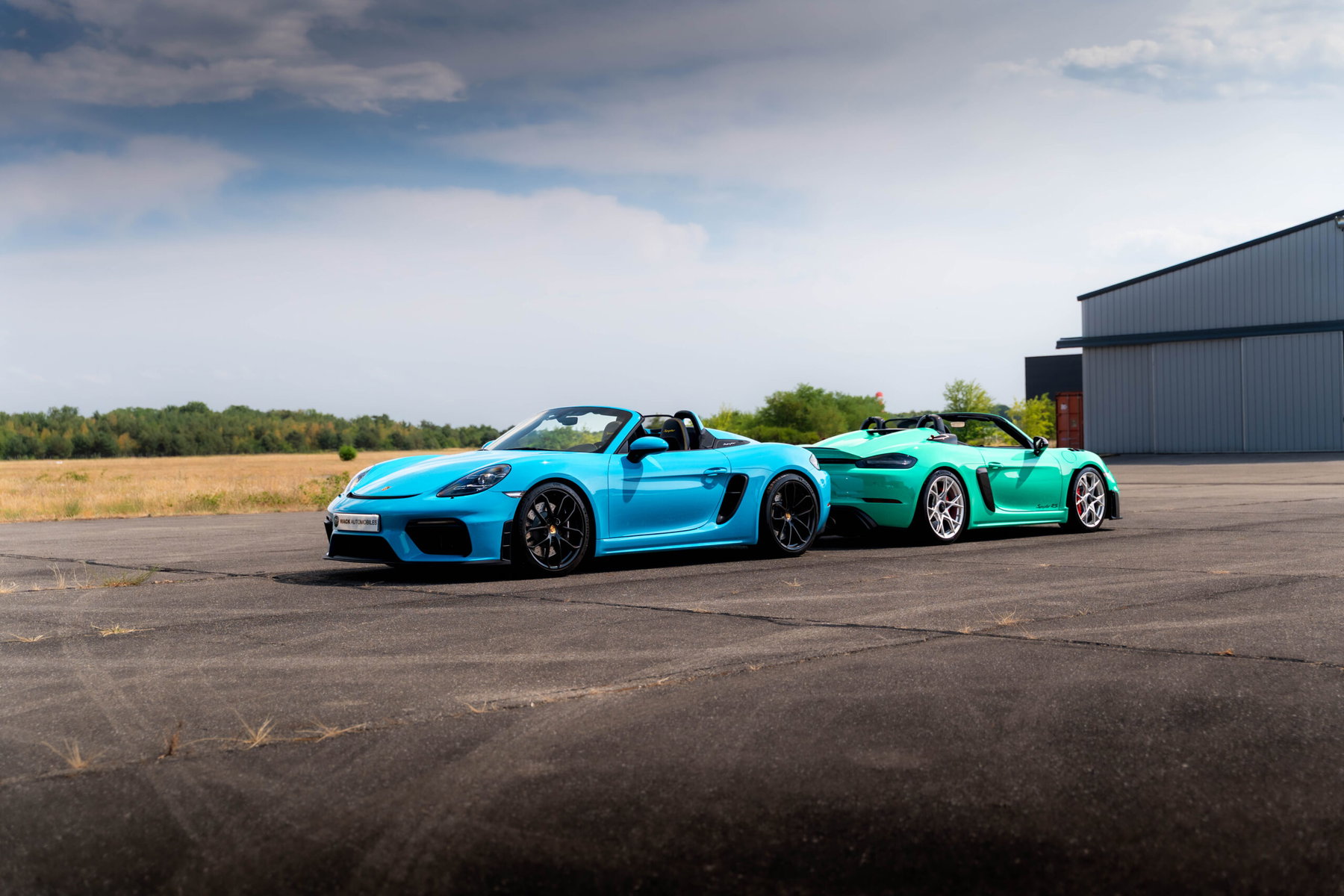
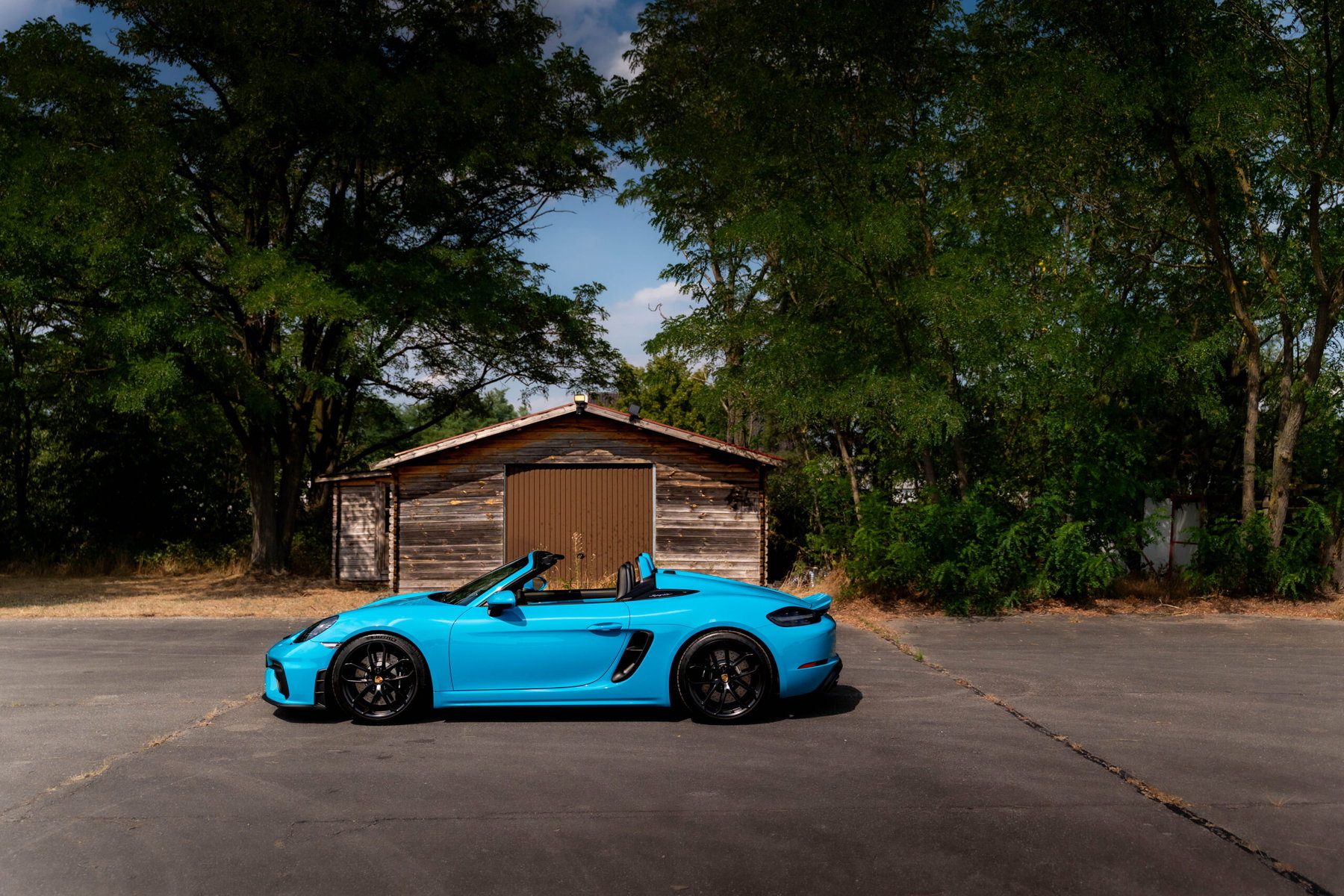
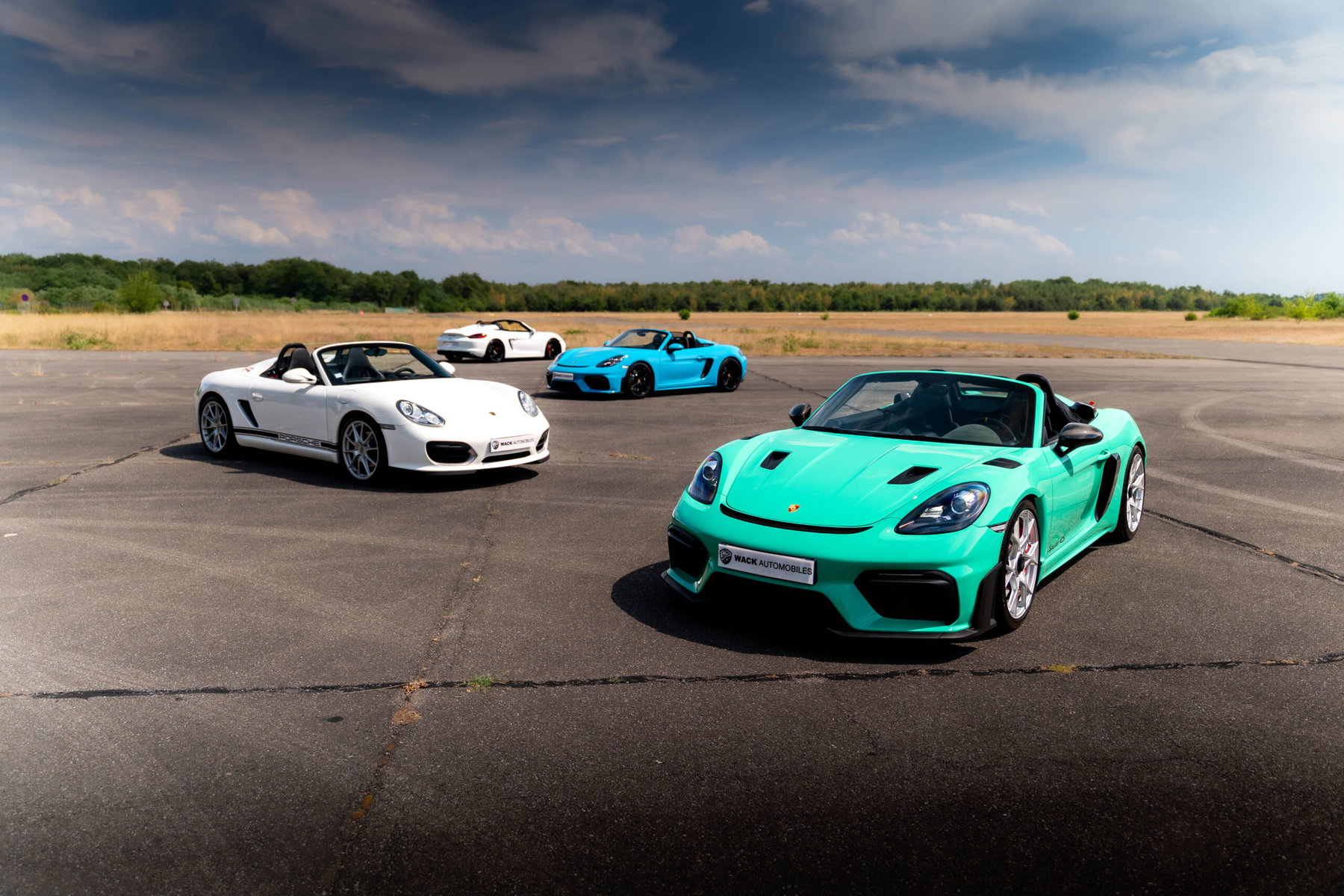
With the 982 series, more than just the name changed. The Porsche 718 Boxster Spyder, introduced in 2019, now shared virtually the entire technical platform with the Cayman GT4. This included the newly developed, 420 PS 4.0-liter naturally aspirated engine, as well as the suspension developed by Porsche’s GT division, featuring PASM, a 30-millimeter lower ride height, and a mechanical rear differential lock. It accelerated from 0 to 100 km/h in 4.4 seconds, with a top speed of 301 km/h. Later, PDK was added as well.
At its launch, the 718 Spyder was priced at 93,350 euros, significantly higher than the Boxster S and GTS. Compared to the GTS of that time, which featured a four-cylinder turbo engine, the price difference was around 15,000 euros. The price difference compared to the 400 PS 718 Boxster GTS 4.0, introduced in 2020, was just over 9,000 euros.
Porsche itself did not release exact production figures for the 718 Spyder and Spyder RS. Extensive analysis by the community suggests that approximately 8,000 718 Spyders and just over 6,700 Spyder RS models were built.
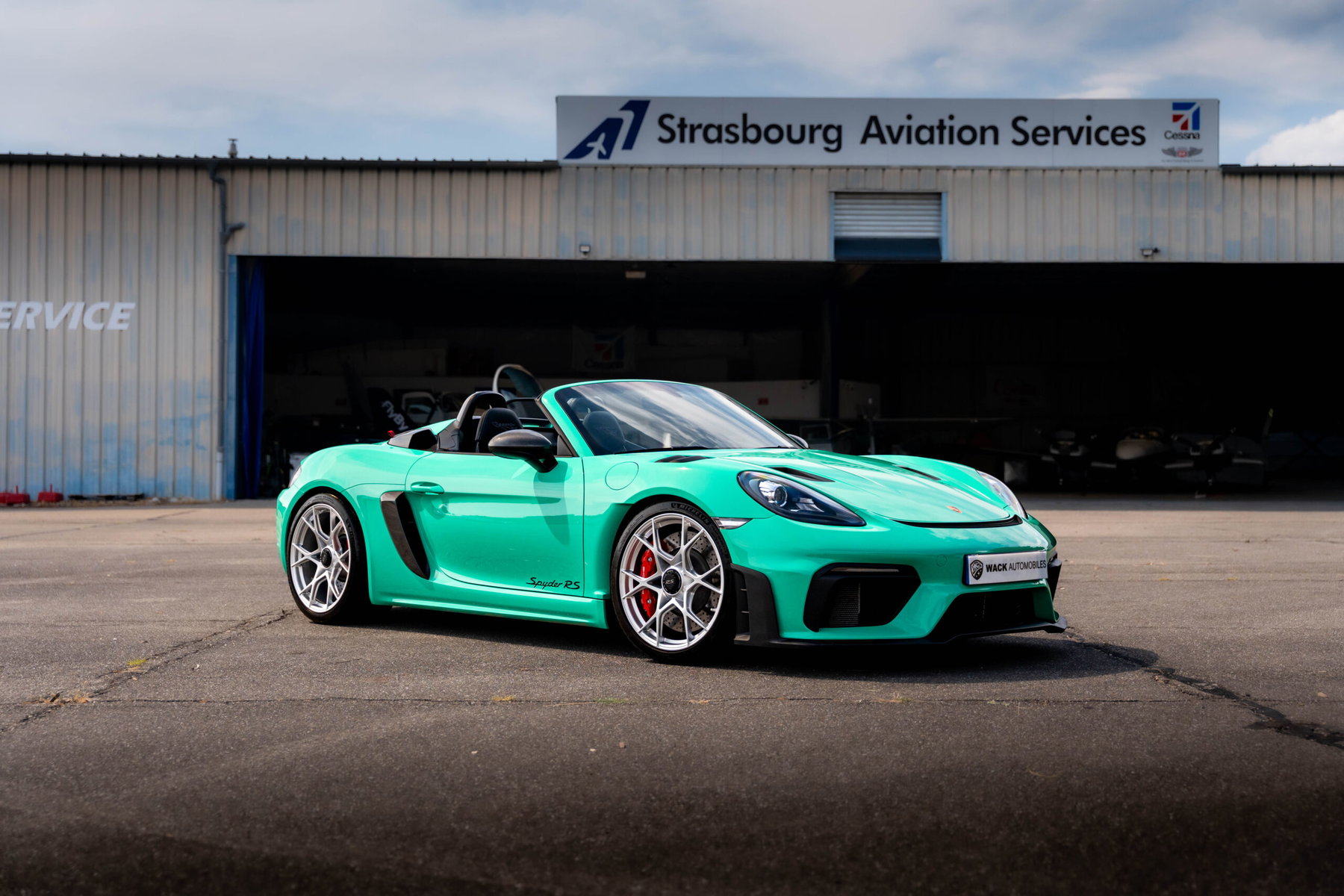
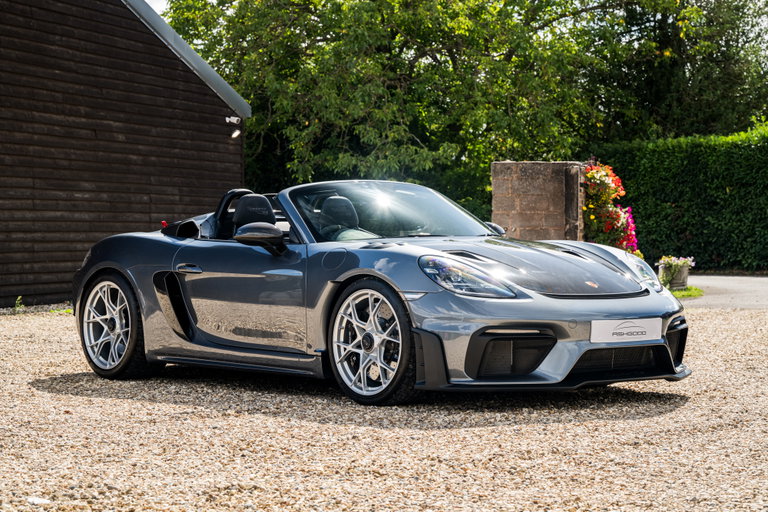
In 2023, Porsche took things up a notch with the Spyder RS. Its 500 PS engine came straight from the 718 Cayman GT4 RS and revved up to 9,000 revolutions. Weighing just 1,410 kilograms, it was—despite its PDK—another 10 kilograms lighter than a manual 718 Spyder. To date, it is the most extreme Boxster Spyder ever built and also the most expensive Boxster that has ever existed—even though it was no longer called a Boxster. With a base price of just under 156,000 euros, it cost more than 60,000 euros more than the 718 Spyder.
Porsche Boxster Spyder Market Review — How Much Sports Car Do You Get for Your Money These Days?
The evolution from the 987 Spyder to the 718 Spyder RS was thus not only accompanied by a dramatic increase in performance. New-car prices also rose significantly. At the same time, the cars became less and less exclusive. Production numbers rose from 1,667 units for the 987 to an estimated 8,000 units for the 718 Spyder. This makes it all the more surprising that prices on the used-car market all follow a similar trend and, in some cases, are surprisingly close to one another.
Model
Retail price at launch
Median mileage
Median Price in 2026
Quantity
987 Spyder
63,404 €
45,500 km
approx. 75,000 €
1.667
981 Spyder
79,945 €
22,000 km
approx. 103,000 €
2.486
718 Spyder
93,350 €
15,000 km
approx. 110,000 €
presumably about 8,000
718 Spyder RS
155,575 €
2,600 km
approx. 167,000 €
presumably about 6,700
In general, the asking prices for all generations of the Porsche Boxster Spyder exceed their original list prices. While experience shows that this is more common for rare Porsches that are more than 15 years old, the prices of the 981 and 718 Spyder are particularly surprising. Officially, neither model was a limited edition. Nevertheless, there has been virtually no depreciation. Instead, used car prices have largely kept pace with inflation. Does this mean that a Porsche Boxster Spyder is a crisis-proof investment?
Similar trends across all model series, with peaks in 2023 and 2024
Since 2021, the 987 Boxster Spyder, 981 Boxster Spyder, and 718 Spyder have followed relatively similar price trends. In 2023 and 2024, all three models reached their peak prices. This was followed by a correction back to the price levels seen in 2021 and 2022. It is notable that the price gap between the 981 and 718 Spyder has remained nearly constant.
The small price difference can likely be attributed to several factors. For one thing, there’s the design. Even though the 981 and 982 are very similar in principle, the 981 looks more appealing, especially from the rear. Its taillights feature an integrated spoiler lip that blends seamlessly into the rear spoiler.
In addition, the 981 Boxster Spyder stands out with an even more authentic sound than the 718. That’s because the 4.0-liter engine in the 982 series comes standard with an Otto particulate filter. As a result, the 718 Spyder sounds somewhat more muffled and less exciting than the 3.8-liter engine in its predecessor. Combined with its lower production numbers, this has now made it a sought-after, up-and-coming classic.
It seems that some buyers may have misjudged the Porsche 718 Spyder RS
The Porsche 718 Spyder RS, however, is a special case. It was released at a time when most Porsche GT models were selling on the used car market for more than their original list price. Speculators—known in the scene as “Flippers”—who bought these cars with the intention of quickly reselling them at a higher price also anticipated such a trend for the 718 Spyder RS.
Note: A unique feature of the Porsche 718 Spyder RS is that prices can vary significantly—sometimes considerably—depending on the specifications. A car with a Paint to Sample color and the Weissach Package can easily cost tens of thousands of euros more.
While this forecast initially seemed to hold true after the market launch in 2023, the picture changed just one year later. Since 2024, prices for this open-top sports car have fallen dramatically. Even vehicles with extremely low mileage can be found for less than 150,000 euros. It remains to be seen whether prices have already bottomed out.
The reasons for this are complex. On the one hand, supply has remained consistently high. While the 987 and 981 Boxster Spyder models are rarely seen on the market due to their low production volumes, potential buyers of the 718 Spyder RS have, in a sense, a wide selection to choose from. This is another reason why selling a 718 Spyder RS tends to take longer than selling a 981 Boxster Spyder. In 2025, sellers had to be patient for over three weeks longer; in 2026, there is still a nine-day difference (981: 46 days, 718 Spyder RS: 68 and 55 days, respectively).
The 987 Boxster Spyder could be one of the last hidden gems
The Porsche 987 Boxster Spyder holds a particularly interesting position. With only 1,667 units produced, it is rarer than its successors. At the same time, with a median price of about 75,000 euros, it remains by far the most affordable entry point into the world of the purest Boxster models. Even compared to its direct successor, the 981 series, the price difference is nearly 30,000 euros.
Of course, you have to make some compromises with the 987. In terms of power and acceleration, it can’t keep up with later Spyder generations; the emergency soft top requires a bit of dedication; and, naturally, most of these cars have slightly higher mileage. But at 1,275 kilograms, the 987 Boxster Spyder is the lightest of its kind. As such, it embodies the original concept behind the model even more faithfully than its significantly more powerful successors.
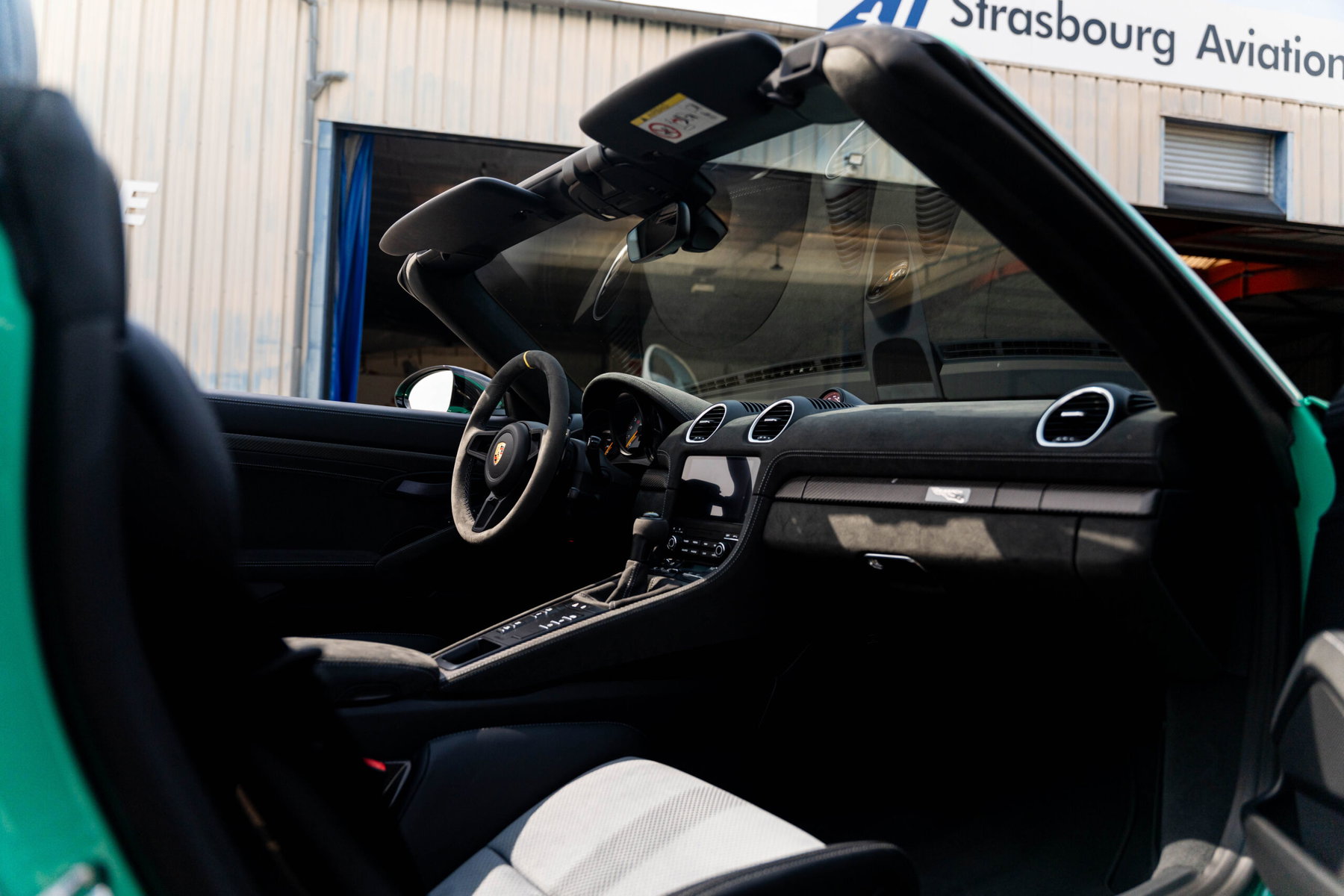
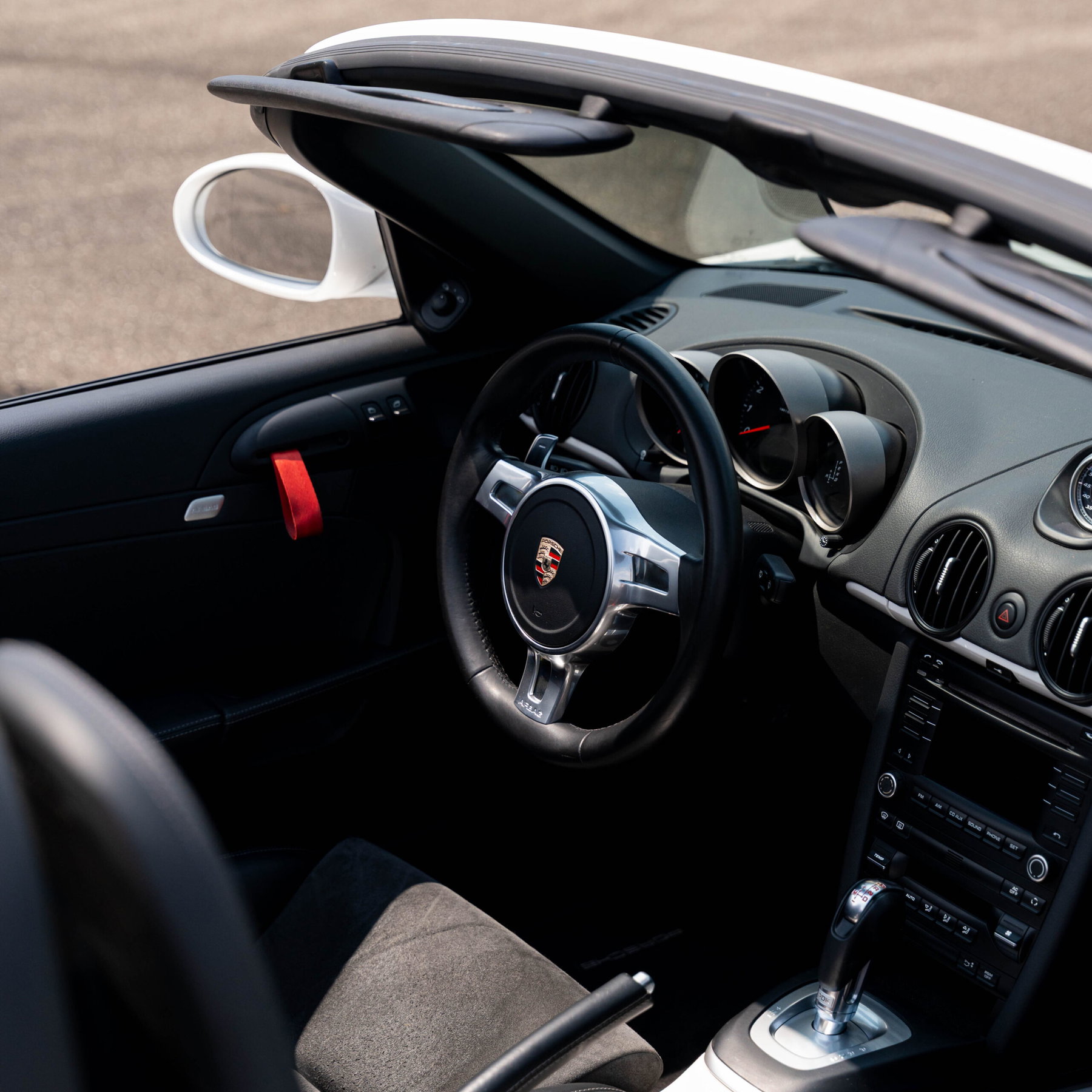
Inside, every generation of the Porsche Boxster Spyder is timeless and exudes high-quality craftsmanship.
For around 75,000 euros, the Porsche 987 Boxster Spyder offers a manual-transmission, mid-engine Porsche with a naturally aspirated engine, a distinctive design, and a production run of well under 2,000 units. If you’re looking for maximum performance, the 718 Spyder is undoubtedly the better car. But if you’re looking for a particularly purist sports car, the 987 currently offers exceptional value for the money.
What Makes the Porsche Boxster Spyder So Interesting Today
Of course, questions about the “best deal” in the Porsche universe cannot be answered objectively. Yet they form the basis for fascinating analyses and discussions, as is the case with the Boxster Spyder models. After all, there’s no denying that these models, in particular, offer an enormous amount of pure driving pleasure within their respective price ranges. And isn’t that exactly what enthusiasts want? Precisely the kind of driving pleasure that many modern sports cars lack? Even within the Porsche model lineup, these qualities have become rare.
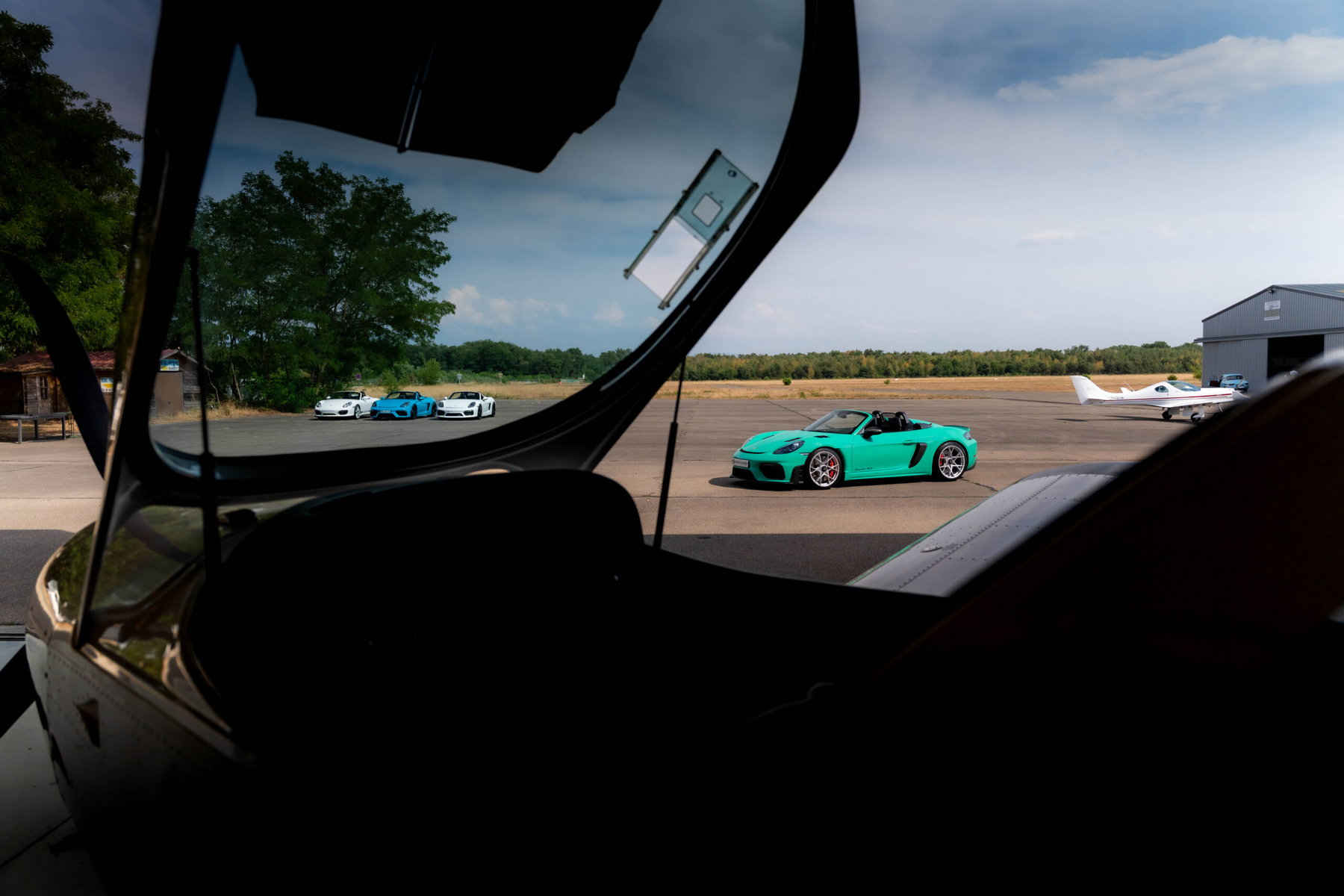
This becomes particularly evident in the price range between 75,000 and 110,000 euros. The 987 and 981 offer driving pleasure in its purest form, coupled with low production volumes. The 718 Spyder takes driving dynamics to an even higher level. It’s difficult to find a Porsche in this price range that’s designed with such unwavering dedication to sporty driving thanks to low weight and perfect balance. The Spyder RS is in a different league price-wise, but it serves, in a sense, as proof of just how far Porsche has been able to push the fundamental concept of the open-top mid-engine sports car.
The sometimes volatile prices of the recent past mean that no Boxster Spyder is a crisis-proof investment. But it doesn’t have to be. After all, the Porsche Boxster Spyder was designed from the outset for enthusiasts who value a nimble driving experience more than winning top trumps. And ultimately, whether it’s a 987, 981, or 982, the Boxster Spyder offers a particularly generous dose of what is arguably the most beautiful—albeit unmeasurable—return on investment: driving pleasure!















 2024
2024 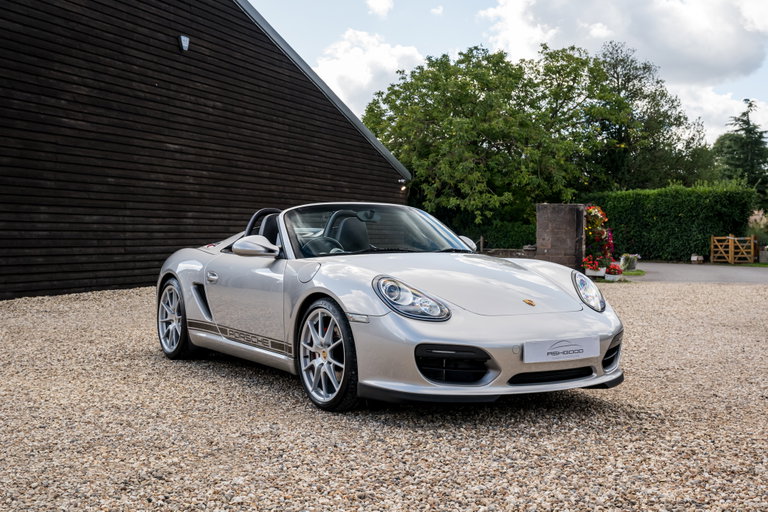
 2015
2015